
PIXEL / PALETTE / PLACE
Small Squares,Big Worlds
A little information can open an enormous view.
SIGNE HAIMHOLM / 04 / AOI LOOKBOOKS

Pixel art makes small decisions unusually visible. A cluster becomes a sail; a stepped edge becomes a roof; a few alternating colors suggest a rounded pear. This collection moves from a familiar landscape to spare shapes, patterns and miniature worlds. The AOI images are contemporary generated interpretations of pixel-art approaches. They are useful visual studies, not certified console assets or records of hand-placed pixels.

AOI database illustration

AOI database illustration
STUDY 02 / Minimalist Pixel Art
The room around a boat
A tiny orange sail and its short reflection occupy a broad teal field. Minimalist pixel art gives empty space an active role. The water does not need texture everywhere: the concentrated warm shape is enough to establish a focal point and a surprisingly large sense of distance.
Contemporary pixel-art approach
Explore Minimalist Pixel Art ↗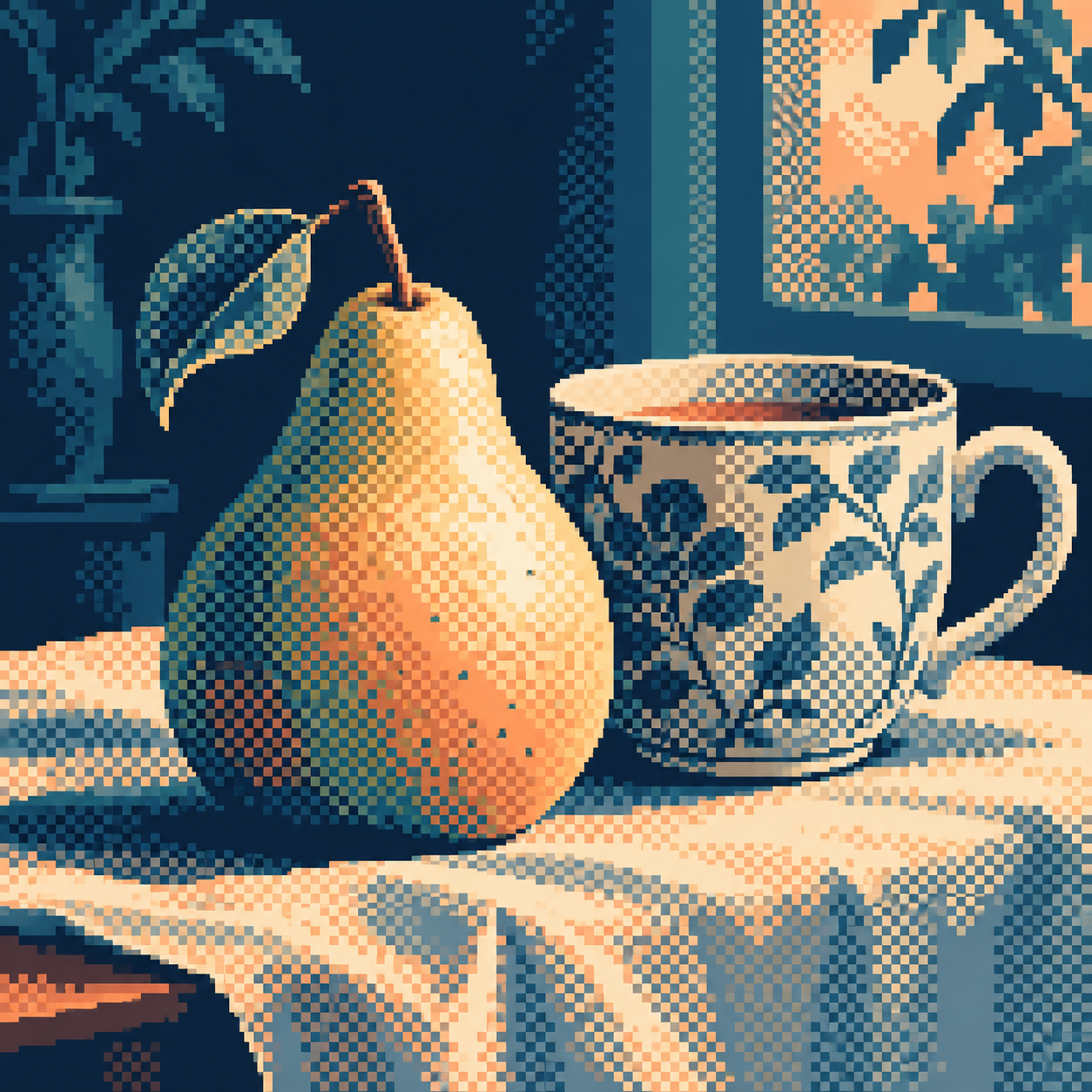
AOI database illustration
STUDY 03 / Dithering Pixel Art
Two colors make a surface
A pear and a patterned cup invite attention to alternating light and dark marks. Dithering can suggest tonal transitions through the arrangement of contrasting pixels. The lesson is perceptual, not a promise that this generated illustration obeys a strict palette. Compare the patterned shade with the cleaner silhouette.
Pixel-art technique
Explore Dithering Pixel Art ↗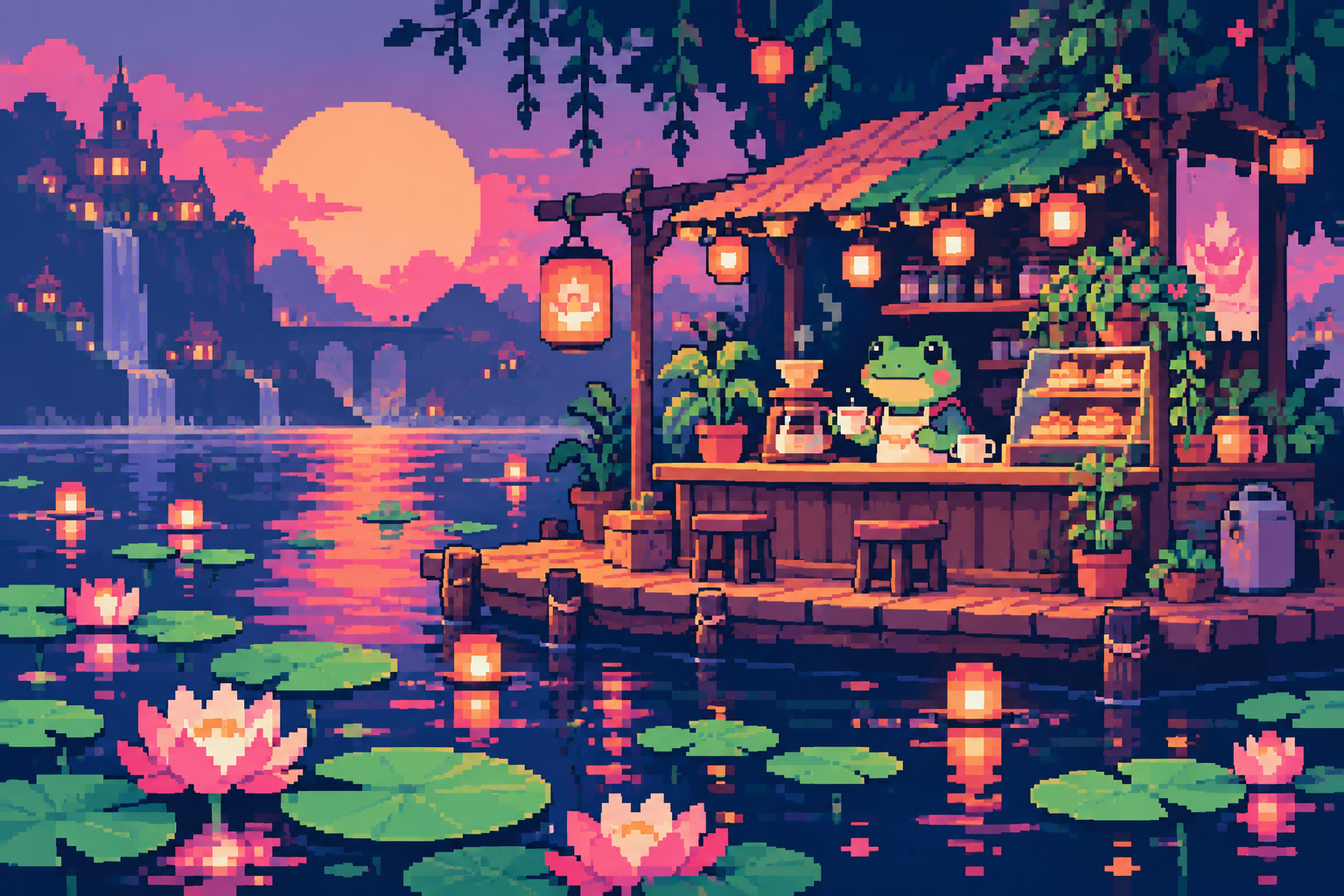
AOI database illustration
STUDY 04 / PICO-8 Pixel Art
A tiny café, an entire evening
A frog sits in a lantern-lit café beside water and flowers. The PICO-8 entry connects compact image-making with deliberately restricted tools. This illustration is inspired by that world rather than a verified PICO-8 screenshot. Its small setting feels generous because light, foreground and distant sky are clearly separated.
Fantasy-console-inspired interpretation
Explore PICO-8 Pixel Art ↗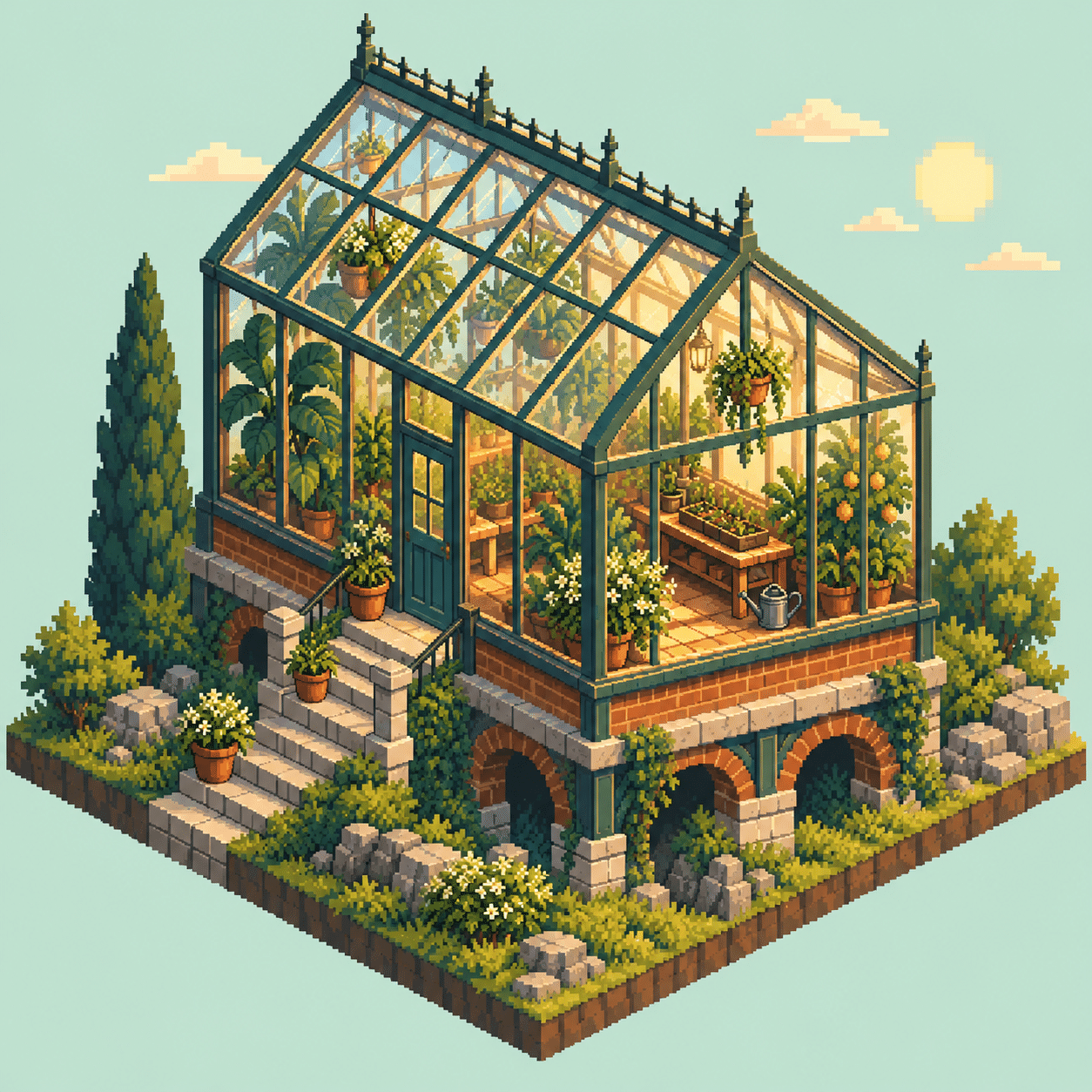
AOI database illustration
STUDY 05 / Isometric Pixel Art: Build Small Worlds with a Consistent Grid
A greenhouse with visible rules
The glasshouse, planted beds and paths agree on a common set of parallel directions. Isometric-style pixel art makes miniature environments coherent through a shared grid; many familiar examples use a dimetric construction. The readable plant groups keep this generated greenhouse from becoming a diagram without atmosphere.
Spatial pixel-art approach
Explore Isometric Pixel Art: Build Small Worlds with a Consistent Grid ↗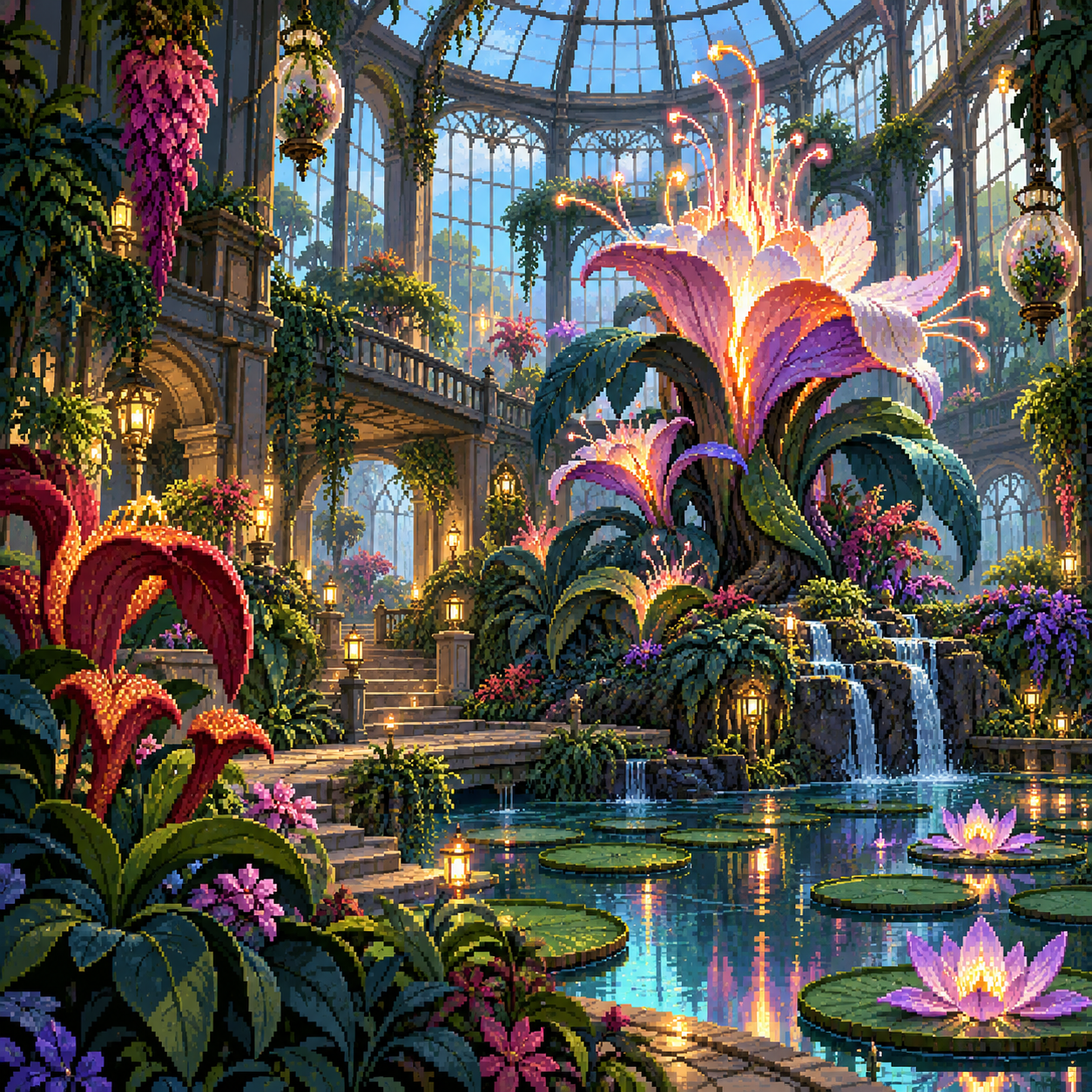
AOI database illustration
STUDY 06 / Hi-Bit Pixel Art
Let the small world overflow
A luminous greenhouse offers layered flowers, water and warm glass. Hi-bit is a loose label for more detailed pixel-art aesthetics, not a standard bit depth. This study closes the book by showing what richness can add after silhouette, palette and spatial order are already doing their work.
Contemporary aesthetic label
Explore Hi-Bit Pixel Art ↗LOOK AGAIN
A question to stay with
Which image communicates its subject with the fewest marks? Which uses detail to suggest a place you could explore?
TAKE IT OFF THE SCREEN
A small experiment
Use a 12-by-12 grid and four colors to invent a small place. Begin with its silhouette, then add one light source or reflection. View the drawing from across the room before adding another detail. The Kids edition includes a classroom worksheet and a working pixel grid.
Artwork & reading. Each artwork comes from the linked AOI art-style record. The collection combines contemporary generated studies with archive illustrations. Original AOI concepts, descriptive labels and established references are identified beside the works. The captions and curatorial readings are by Signe Haimholm; these images are not presented as works by historical artists or as technical demonstrations. Published 31 October 2026. Use the style links for the underlying descriptions and sources.
A FEW THINGS WORTH ASKING
Questions,
answered.
Pixel-art ideas, economical marks and a world built from small choices.
What is Small Squares, Big Worlds about?
This lookbook explores how a limited set of visual decisions can suggest a landscape, a still life or a tiny fictional place. Its six art-style references let you compare palette, stepped edges, texture and the amount of detail a picture needs.
Are these original game screenshots?
No. The selected images are contemporary AOI studies of pixel-art approaches. Some details approximate a pixel-like appearance rather than following a strict technical grid. The book does not present them as historical game assets.
What is dithering in the pear study?
Look for small light and dark marks placed beside each other on the pear’s shaded side. Their arrangement suggests a larger area of tone. The AOI image illustrates that visual idea; it is not a technical specification for a particular device.
Does the PICO-8-inspired café use a verified console palette?
The café is an AI-generated interpretation associated with the PICO-8 Pixel Art entry. Its appearance does not verify compliance with the console’s palette or other constraints. Use it for looking and comparison, not as a technical reference image.
Is there a classroom version for children?
Yes. Small Squares, Big Ideas is the Kids child edition for ages 7–11, linked in this book’s school callout. It has four selected pictures, observation prompts, a teacher guide, a printable worksheet and an optional drawing grid.
How can I make my own small picture with ordinary materials?
Choose a simple subject, use a square grid and limit your colors. Build the main silhouette first, add one useful detail and leave space around it. Compare two versions by changing the palette or position of the same shape.
What is the difference between pixel and voxel imagery?
Pixel imagery organizes a picture through a two-dimensional grid of picture elements; voxel imagery suggests forms built from small three-dimensional volumes. Compare the stepped shapes here with the cube-like kitchen in Architecture After Gravity. These AOI illustrations help you observe the distinction, but do not verify the production method of either image.
Why use a limited color palette for a small pixel-art study?
A limited palette makes each color choice easier to compare. Give the background, main silhouette and one detail distinct jobs, then check whether the subject remains readable at a small size. In the classroom activity, four colors provide a manageable starting constraint; they are a teaching choice, not a rule for all pixel art.
How can a small pixel-like image suggest atmosphere with very few details?
Look at the position of the main shape, the amount of surrounding space and the balance between light and dark. The small boat needs relatively few marks because the surrounding field does much of the work. Quiet at Full Resolution places that image beside abstract studies so you can compare the role of spacing across different subjects.
STUDY 01 / Pixel Drawing
A sunset in deliberate steps
Orange clouds and a low sun meet dark pine silhouettes around a lake. Pixel drawing uses clusters, stepped contours and a consistent apparent scale to make a scene readable. This generated study borrows that language. It invites a closer look at how large color areas carry the image before individual marks are noticed.
Drawing approach
Explore Pixel Drawing ↗