
SCALE / STRUCTURE / POSSIBLE WORLDS
ArchitectureAfter Gravity
An impossible building still needs somewhere for the eye to stand.
SIGNE HAIMHOLM / 09 / AOI LOOKBOOKS
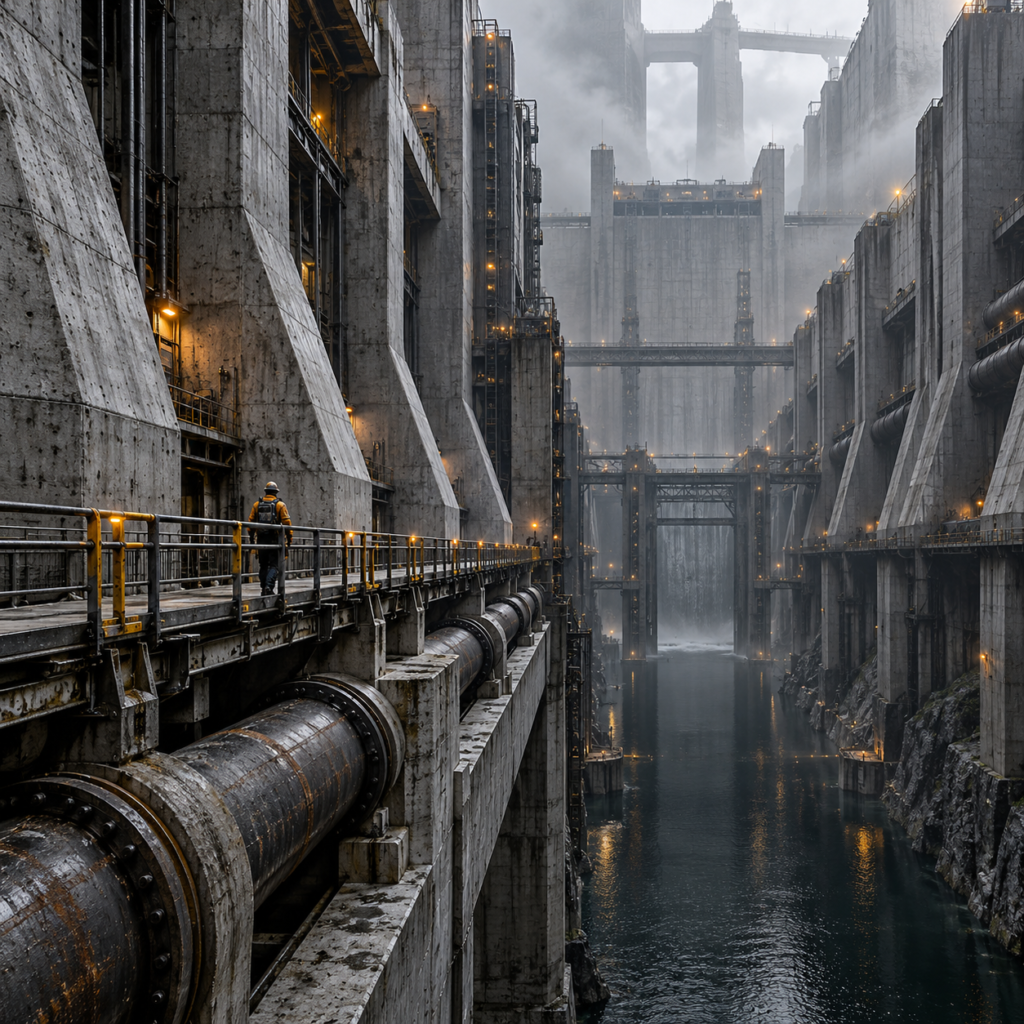
Speculative architecture becomes persuasive through scale, light and a coherent point of view. This book moves from a service canyon to a sweeping skyline, an ordinary kitchen rebuilt from cubes, a room of disagreeing mirrors and a luminous fantasy city. The title is a curatorial invitation, not an engineering claim. These images explore how a world is pictured, not whether it could be built.
AOI database illustration

AOI database illustration
STUDY 02 / Neo-Futurism
A skyline drawn as a gesture
Curved towers and sweeping foreground structures turn the city into a sequence of rising lines. The Neo-Futurism archive image is used here as a speculative design reference. Its historical associations remain outside this lookbook's claims; the visible subjects are silhouette, rhythm and the suggestion of continuous movement.
Architectural visual reference
Explore Neo-Futurism ↗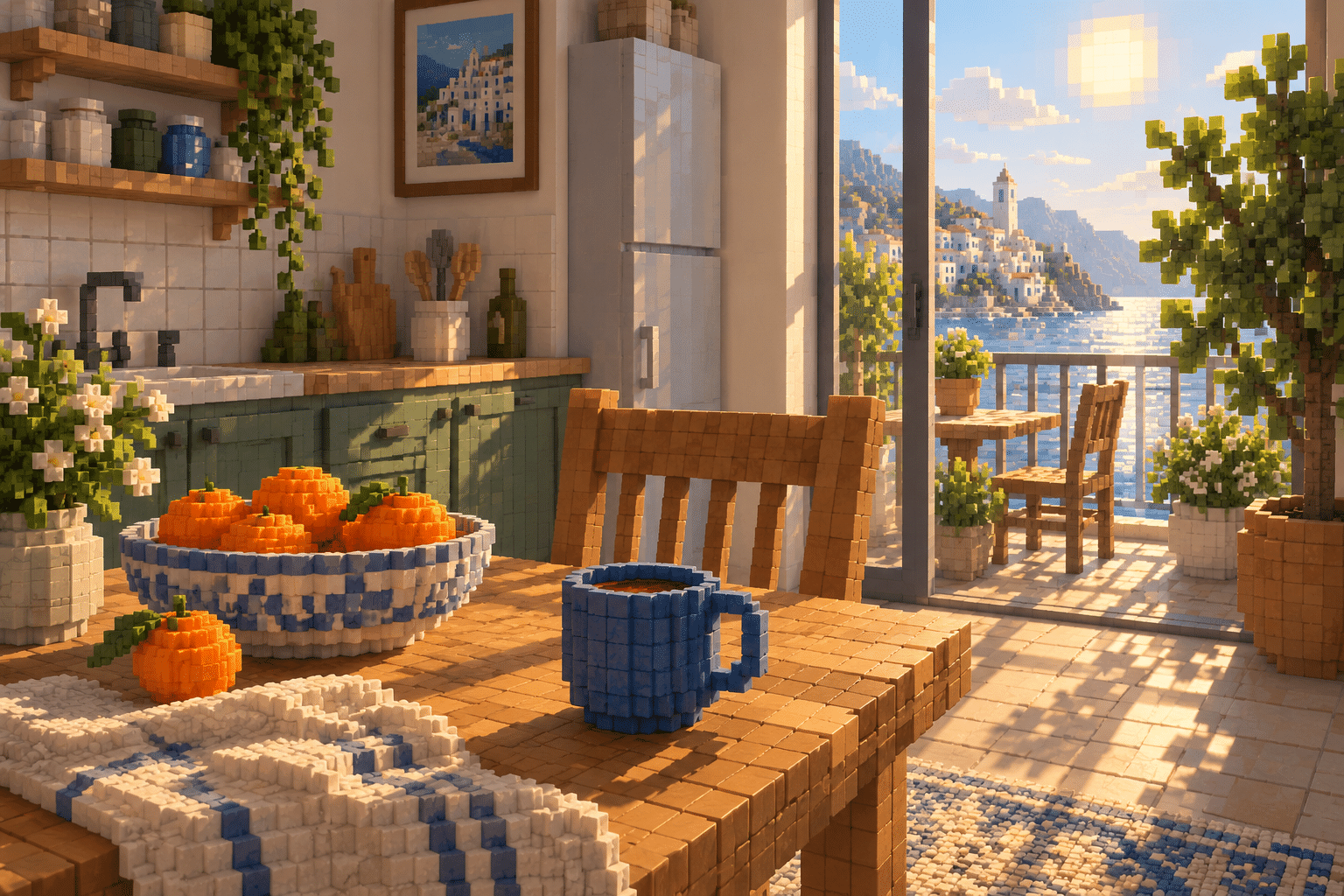
AOI database illustration
STUDY 03 / Voxelized Reality
The everyday, rebuilt in cubes
A sunlit kitchen retains a cup, fruit, cloth and plants while the objects take on small cubic volumes. Voxelized Reality depends on believable light and familiar proportions. The image makes an unusual material system feel inhabitable by keeping the ordinary relationships between things intact.
Original AOI concept
Explore Voxelized Reality ↗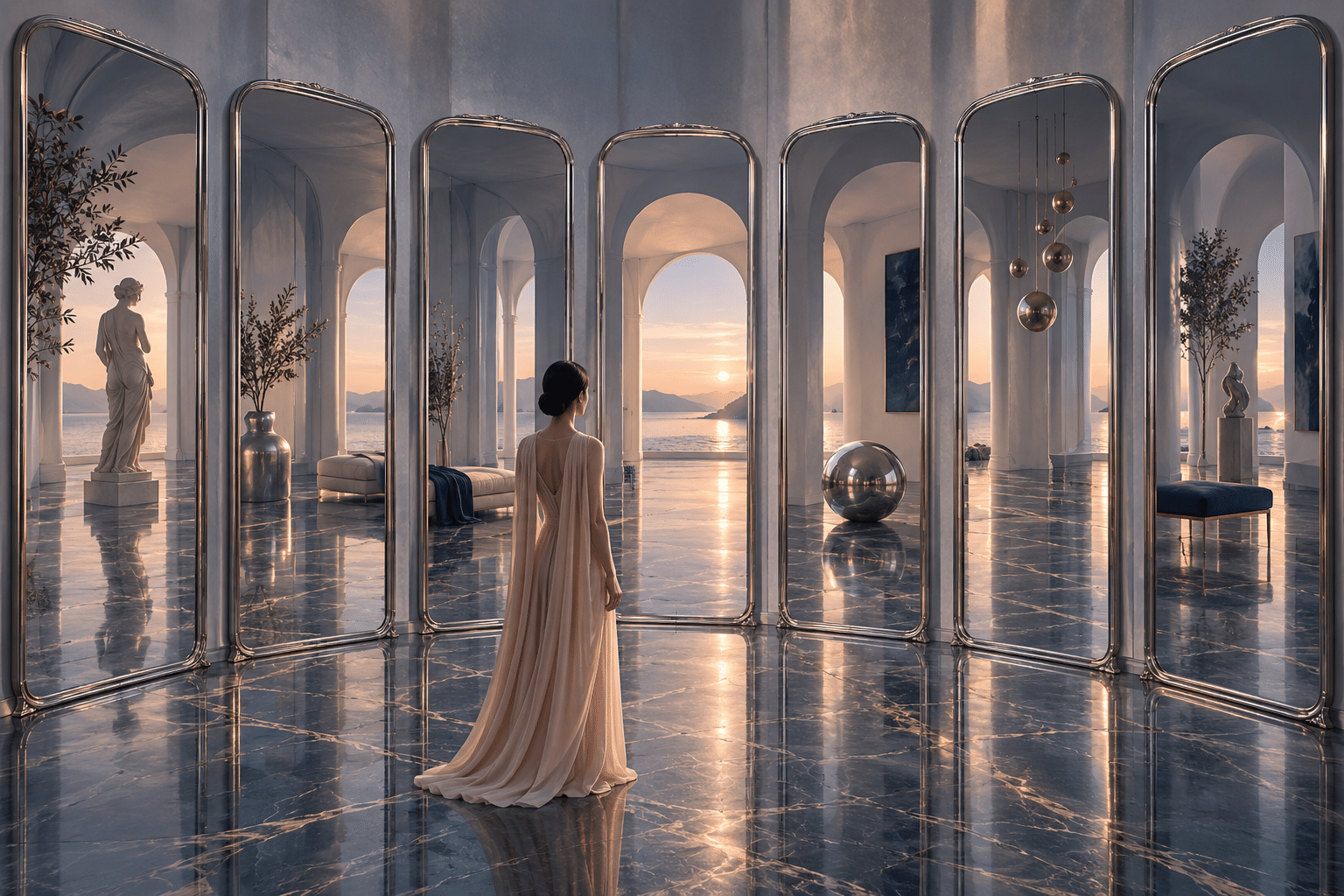
AOI database illustration
STUDY 04 / View Synthesis Mirror Rooms
One floor, several rooms
Tall mirrors repeat a calm gallery while their contents appear to disagree. View Synthesis Mirror Rooms uses continuity in the floor to hold competing views together. The title names an imagined visual construction, not a demonstration of a particular machine-learning view-synthesis system.
Original AOI concept
Explore View Synthesis Mirror Rooms ↗
AOI database illustration
STUDY 05 / Synthetic Aetherism
Atmosphere becomes architecture
Domes and bridges remain visible beneath curling green-gold forms in the sky. Synthetic Aetherism places legible structures inside an unfamiliar luminous atmosphere. Warm windows provide small anchors in the cool scene. This archive fantasy closes the book at the point where a building begins to merge with its weather.
AOI visual concept
Explore Synthetic Aetherism ↗LOOK AGAIN
A question to stay with
Find the smallest detail that tells you how large the setting is. Would the scene feel different without that measure?
TAKE IT OFF THE SCREEN
A small experiment
Draw an unusual building, then add the same small door to two versions at different scales. Compare the implied size. Add one consistent light source before inventing any more architectural features.
Artwork & reading. Each artwork comes from the linked AOI art-style record. The collection combines contemporary generated studies with archive illustrations. Original AOI concepts, descriptive labels and established references are identified beside the works. The captions and curatorial readings are by Signe Haimholm; these images are not presented as works by historical artists or as technical demonstrations. Published 31 October 2026. Use the style links for the underlying descriptions and sources.
A FEW THINGS WORTH ASKING
Questions,
answered.
Speculative spaces, readable structures and the small details that establish scale.
Are the buildings in Architecture After Gravity real?
This is a collection of speculative images and architectural visual references. The lookbook does not establish that the pictured structures exist, could be built or meet any engineering requirement.
What does “after gravity” mean in the title?
It is Signe’s curatorial invitation to imagine unusual spaces. The book explores how a world becomes persuasive through scale, light and viewpoint; the title is not a claim that gravity has been overcome.
Why is an ordinary kitchen included among monumental buildings?
Voxelized Reality rebuilds familiar objects from small cubic volumes. The recognizable cup, fruit and cloth provide a useful contrast with immense structures: an unusual material system can become believable through ordinary relationships.
How does the concrete canyon establish its scale?
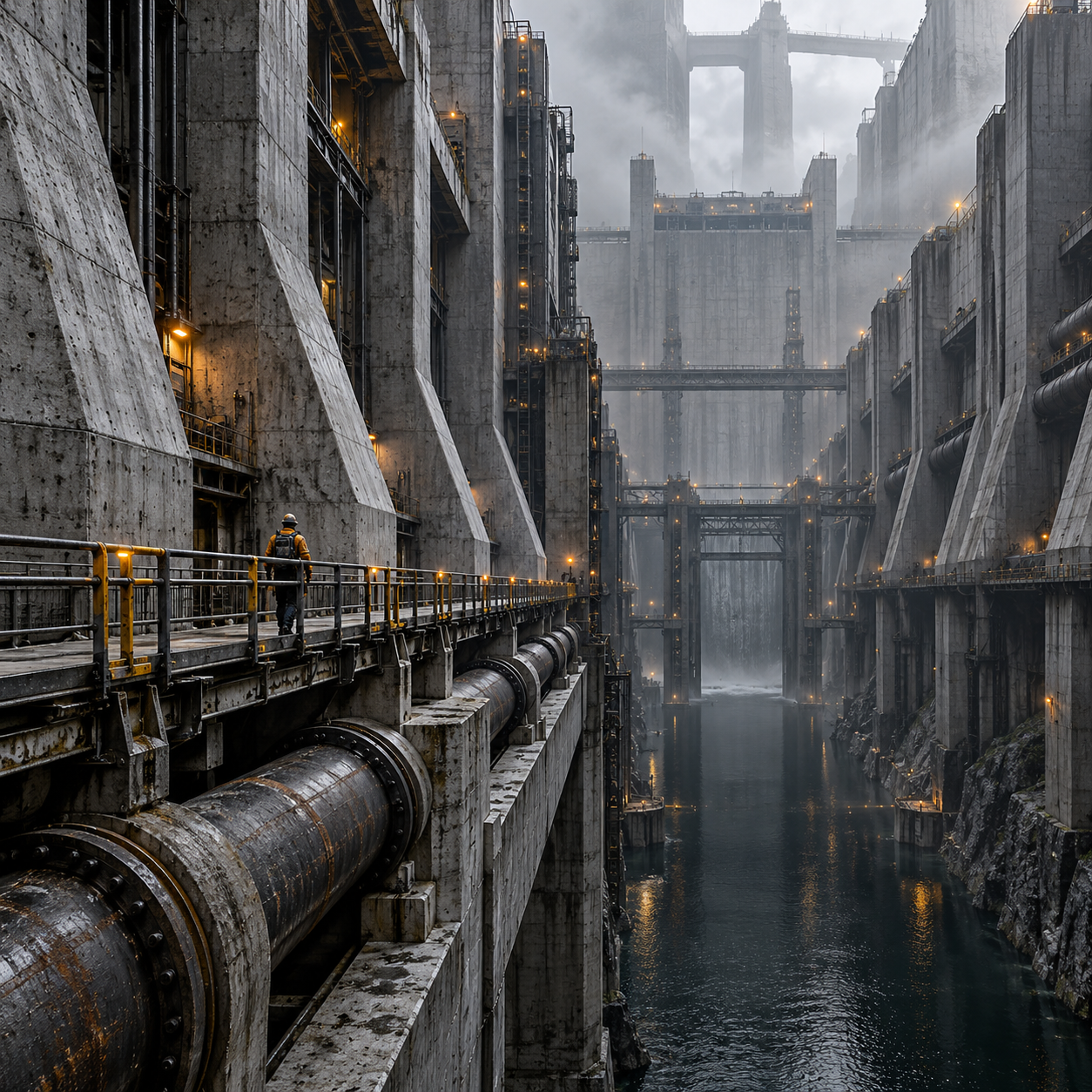
A small maintenance worker, walkways and pipes give the large walls a human measure. Find those details before looking upward, and compare how the scene feels with and without them.
Does View Synthesis Mirror Rooms demonstrate a particular AI method?
The title names an original AOI visual concept. The selected image uses a continuous floor and competing reflections to suggest possible rooms. It is not presented as a verified demonstration of a machine-learning view-synthesis system.
How can I explore architectural scale in a sketch?
Draw an unusual building, then put the same small door into two versions at different scales. Compare the implied size. Add one consistent light source before adding more architectural features.
How do the Brutalist and futuristic references differ in this selection?
Compare apparent mass, openings and the route your eye takes through a space. The concrete canyon makes weight and scale prominent; other references introduce less familiar arrangements of volumes, reflections or atmosphere. These are observations about the selected illustrations, rather than a claim that all Brutalist or futuristic architecture looks the same.
How can I use speculative architecture images in a design study?
Choose one spatial question, such as how light enters, how a person finds a route or how a doorway establishes scale. Sketch that relationship using simple shapes, then change one variable. Keep the result labeled as a visual exploration: a persuasive image does not supply dimensions, structural calculations or a buildable design.
Where can I compare monumental architecture with smaller material details?
Signe’s Favorites moves from architectural space toward wood-like, ceramic-like and classical references. Its sequence offers a change of scale: after examining an immense wall, you can look at an edge, grain or small object. Matter Made of Light provides another route, concentrating on how imagined surfaces change the space seen through them.
STUDY 01 / Crualist Futuristic Brutalism
The human measure
A small maintenance worker crosses a walkway above pipes and water in a concrete canyon. Crualist Futuristic Brutalism uses exposed systems and monumental masses to create pressure through scale. The worker is a compositional reference point. This is generated architectural fiction, not a documented construction project.
AOI speculative art direction
Explore Crualist Futuristic Brutalism ↗