
INTERNET / MEMORY / RECONSTRUCTION
TomorrowsWe Remember
Nostalgia can be a material, even for a future that never happened.
SIGNE HAIMHOLM / 08 / AOI LOOKBOOKS
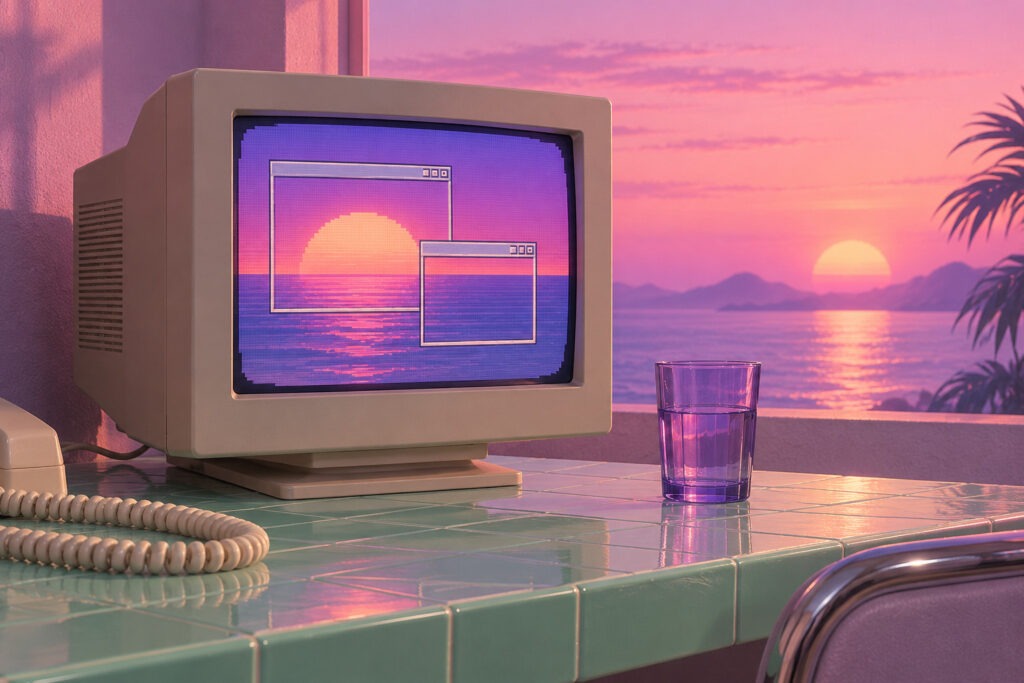
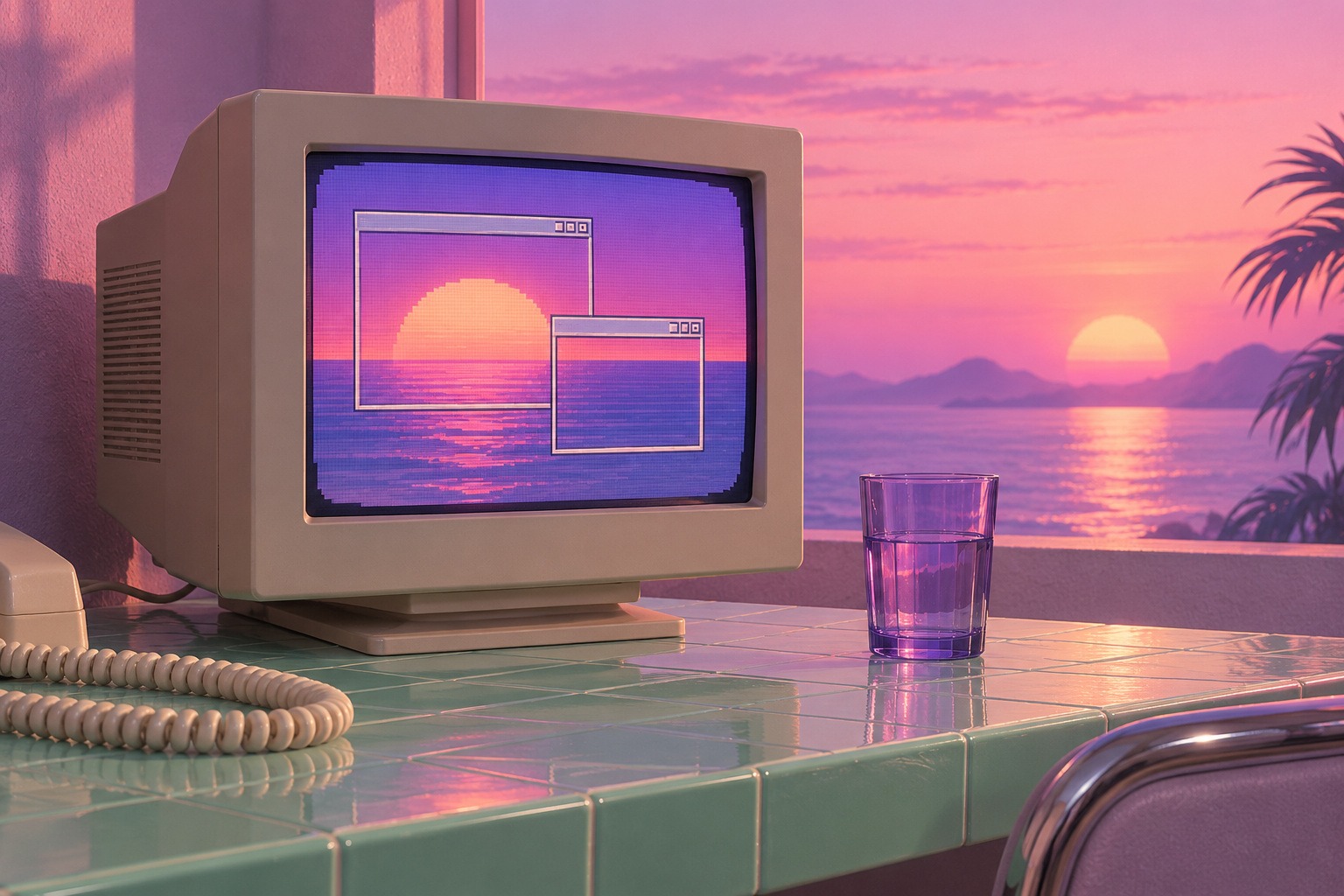
Contemporary image culture often builds tomorrow from yesterday's promises. A beige monitor frames a sunset, a translucent device floats in a chrome orbit, an imagined space-age city glows behind a portrait, and an arcade remains open after dark. These references have different histories. This lookbook brings them together through their present use as materials for invented memory, not as a single historical movement.
AOI database illustration
AOI database illustration
STUDY 02 / Y2K Design
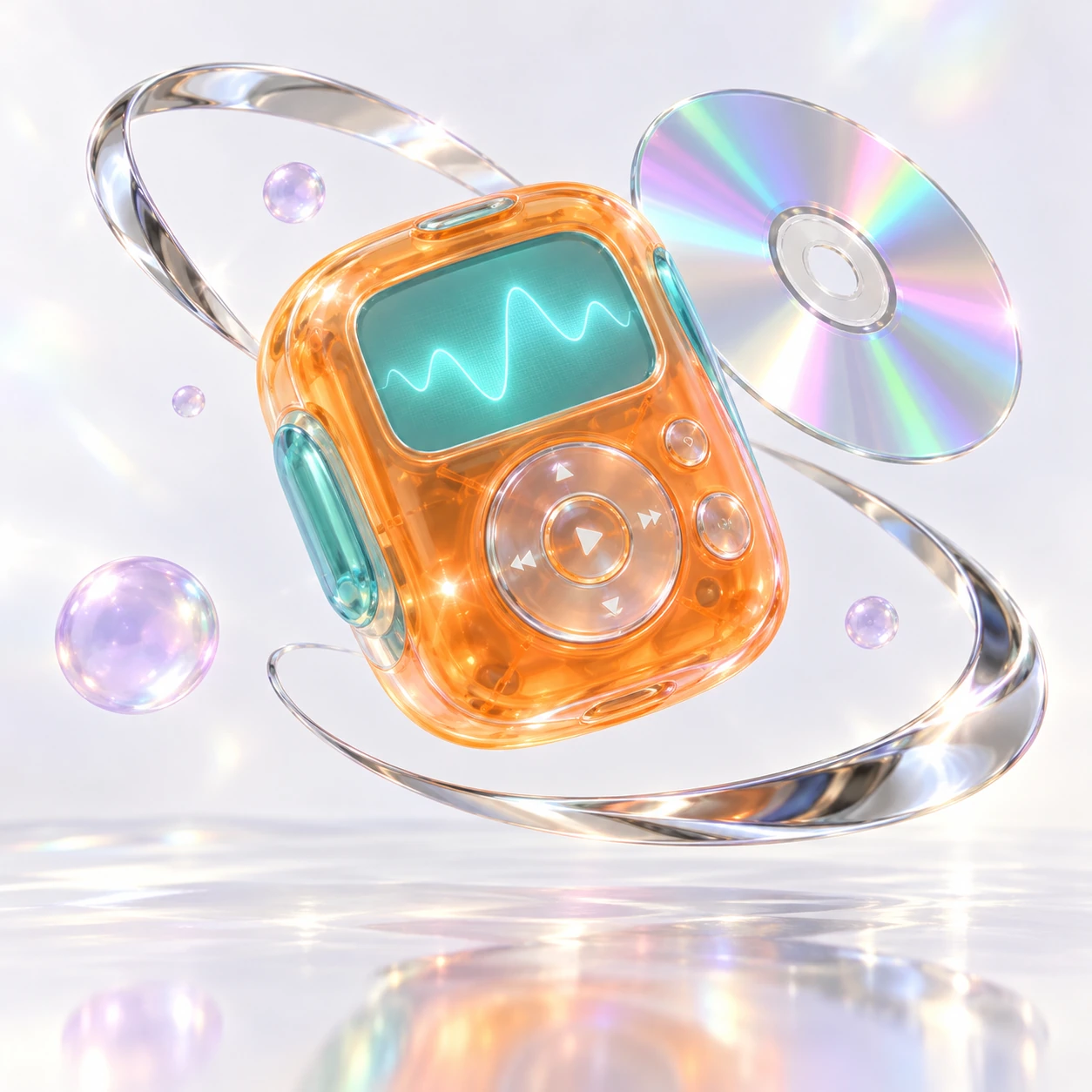
Optimism in translucent plastic
The imaginary orange-and-aqua device pairs a rounded shell with chrome and iridescence. Y2K design is useful here as a vocabulary of surfaces and digital optimism. Compared with the vaporwave monitor, this object seems eager to be touched, carried and collected. Both images invent an encounter with technology.
Design reference / contemporary interpretation
Explore Y2K Design ↗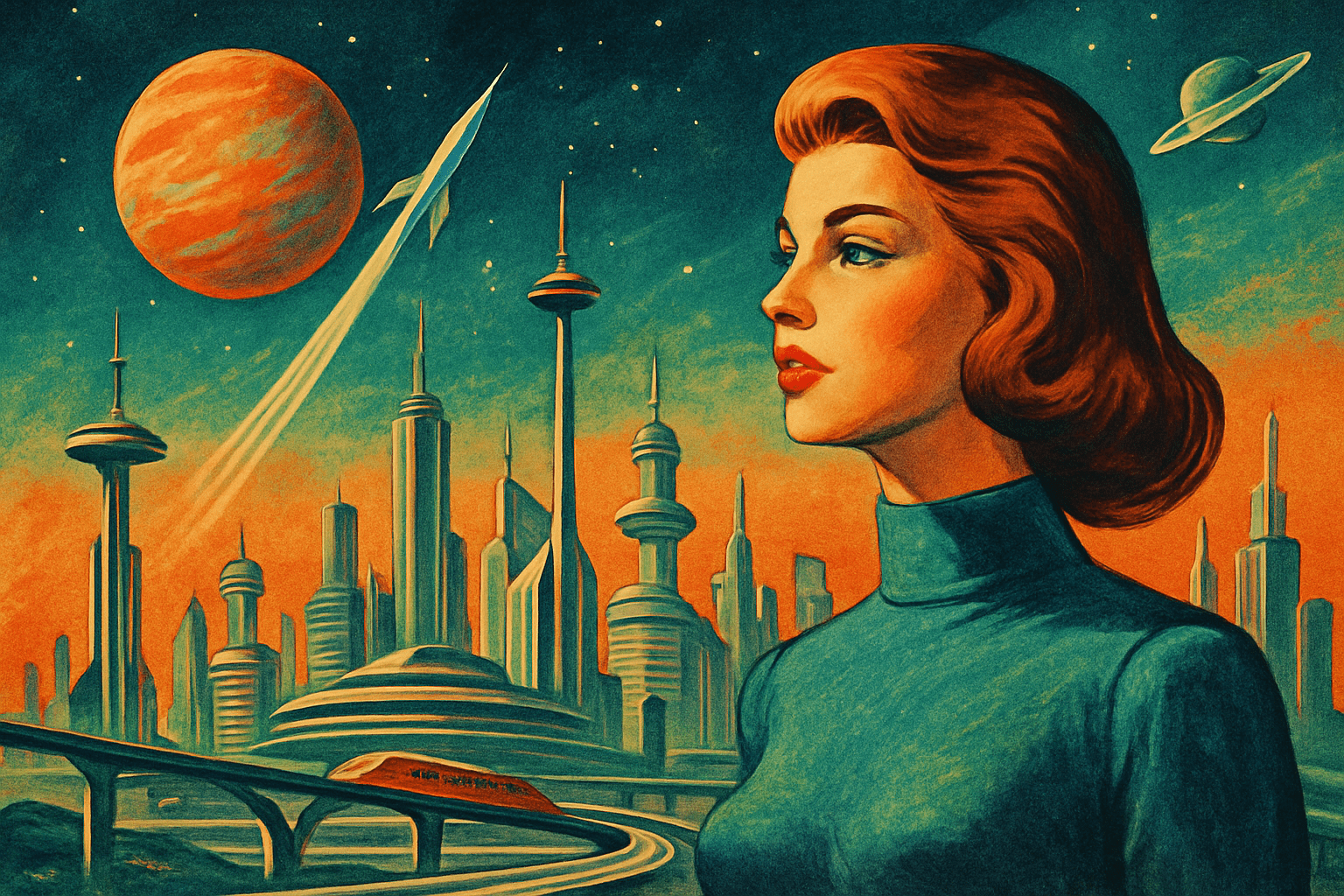
AOI database illustration
STUDY 03 / Retrofuturism
An older dream of the skyline
An orange planet and streamlined towers frame a space-age portrait. Retrofuturism reimagines ideas of the future through references to earlier visual culture. This archive illustration is included for its design language; it is not attributed to a historical artist or treated as a documentary artifact from a particular decade.
Retrofuturist archive illustration
Explore Retrofuturism ↗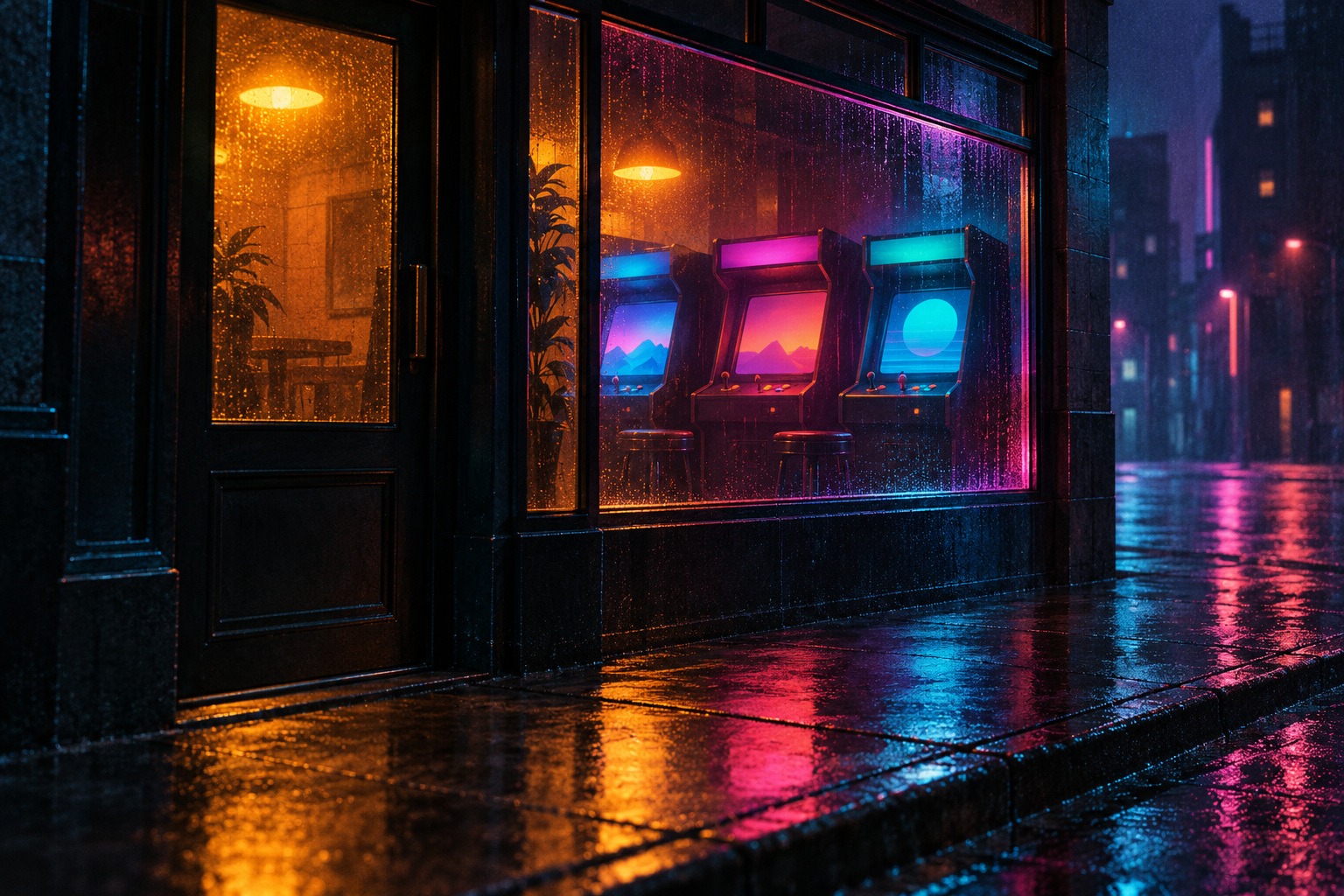
AOI database illustration
STUDY 04 / Synthwave
Memory after closing time
Warm and cool light meet in the glass of a small arcade. Synthwave provides another route through reconstructed nostalgia, with links to music and cinematic atmosphere. The scene's emptiness matters: it leaves room for the viewer to supply a story without supplying a false history for the image itself.
Music-linked visual culture
Explore Synthwave ↗LOOK AGAIN
A question to stay with
Which pictured object seems to carry the memory of an era? What would happen if you removed that object but kept the colors?
TAKE IT OFF THE SCREEN
A small experiment
Invent an advertisement for a household object from an imaginary future. Use one visual reference from the past and one unfamiliar material. Label it as fiction, then explain which promise your invented advertisement makes.
Artwork & reading. Each artwork comes from the linked AOI art-style record. The collection combines contemporary generated studies with archive illustrations. Original AOI concepts, descriptive labels and established references are identified beside the works. The captions and curatorial readings are by Signe Haimholm; these images are not presented as works by historical artists or as technical demonstrations. Published 31 October 2026. Use the style links for the underlying descriptions and sources.
A FEW THINGS WORTH ASKING
Questions,
answered.
Past promises, internet memory and contemporary images of invented futures.
What connects the styles in Tomorrows We Remember?
Vaporwave, Y2K Design, Retrofuturism and Synthwave contribute different references to an imagined future. Signe brings them together through their present use as material for nostalgia, rather than claiming they form one historical movement.
How do Vaporwave and Synthwave differ in this book?
The Vaporwave image frames a sunset through a beige monitor and layered screen imagery. The Synthwave selection uses a night-time arcade. In this sequence, they offer different settings for reconstructed memory: the desktop and the street.
Are these pictures authentic objects or scenes from the past?
The lookbook presents contemporary interpretations and archive illustrations. The monitor, device, city and arcade are used as visual references; the selected images are not offered as documentary evidence of a particular historical scene.
Why include Y2K Design in a modern lookbook?
The selected device-like image shows how a past design reference can be reworked into a contemporary visual proposal. Its translucent and chrome-like surfaces connect the familiar idea of a product with an improbable material world.
What does “retrofuturism” contribute to the sequence?
The selected archive illustration introduces an imagined space-age setting. It lets you compare different ways an image can picture tomorrow through recognizable references to yesterday.
What creative exercise belongs to this theme?
Invent an advertisement for a household object from an imaginary future. Combine one visual reference from the past with one unfamiliar material. Label it as fiction and explain the promise that the advertisement makes.
How does retrofuturist imagery combine nostalgia with an imagined future?
In this collection, familiar references such as a monitor, arcade or space-age setting make an unfamiliar world feel partly remembered. Compare what you recognize with what seems improbable. The tension between those two readings creates the theme; the image need not reconstruct a particular year or a future that anyone actually predicted.
Should I start with Y2K Design or Synthwave for a visual reference board?
Start with the selected Y2K study if your question concerns an object, its interface-like details or its shiny material. Start with the Synthwave arcade if your question concerns a night scene, lighting or atmosphere. Write down the feature you want to study before collecting more references, so the board has a purpose beyond a shared mood.
Which lookbooks develop the lighting and material ideas in this collection?
Electric Nights follows luminous color through imagined urban settings; Soft Machines compares the surfaces and curves of less familiar objects. Reading either alongside this sequence helps separate three decisions that often overlap in a moodboard: the era being evoked, the lighting of the scene and the treatment of its materials.
STUDY 01 / Vaporwave
A sunset behind glass
A beige CRT, a clear telephone cord and a purple glass sit in a pink-green setting. Vaporwave uses obsolete media and commercial imagery in unstable, often dreamlike relationships. This AOI study is a contemporary reconstruction: it should not be read as evidence that this exact room or object arrangement once existed.
Internet-linked visual culture
Explore Vaporwave ↗