
SIGNAL / ERROR / REASSEMBLY
BeautifulInterference
Keep enough of the image for the interruption to matter.
SIGNE HAIMHOLM / 03 / AOI LOOKBOOKS
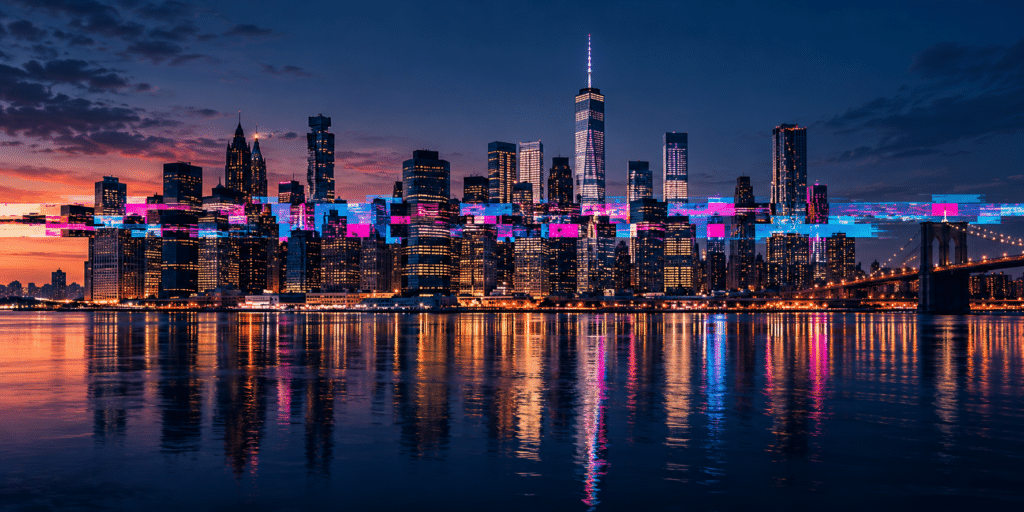
Disruption becomes expressive when there is something left to disrupt. Across a skyline, a street, a wooden animal and a dense lattice, these images balance recognition against instability. The selected works include simulations and imagined material translations. They invite us to look at the structure of an image without confusing a convincing effect with evidence of how it was produced.
AOI database illustration
AOI database illustration
STUDY 02 / Datamoshing
Color remembers another place
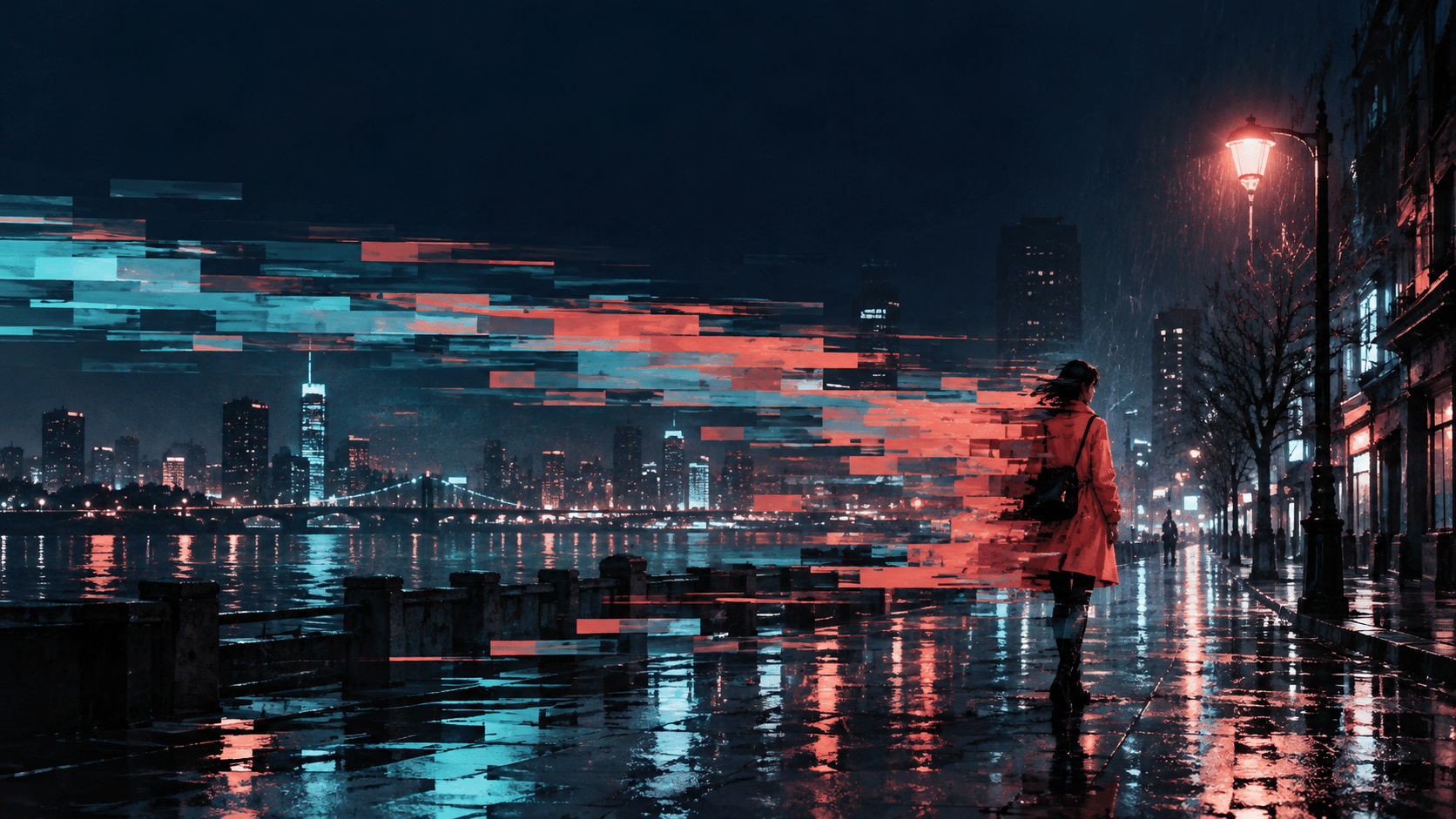
Cyan and coral blocks trail across a rainy street toward a standing figure. Datamoshing relates to dependencies in compressed video. This generated still borrows the appearance of temporal smearing; it is not a working demonstration of a codec manipulation or an extracted frame from a documented process.
Technique-inspired still simulation
Explore Datamoshing ↗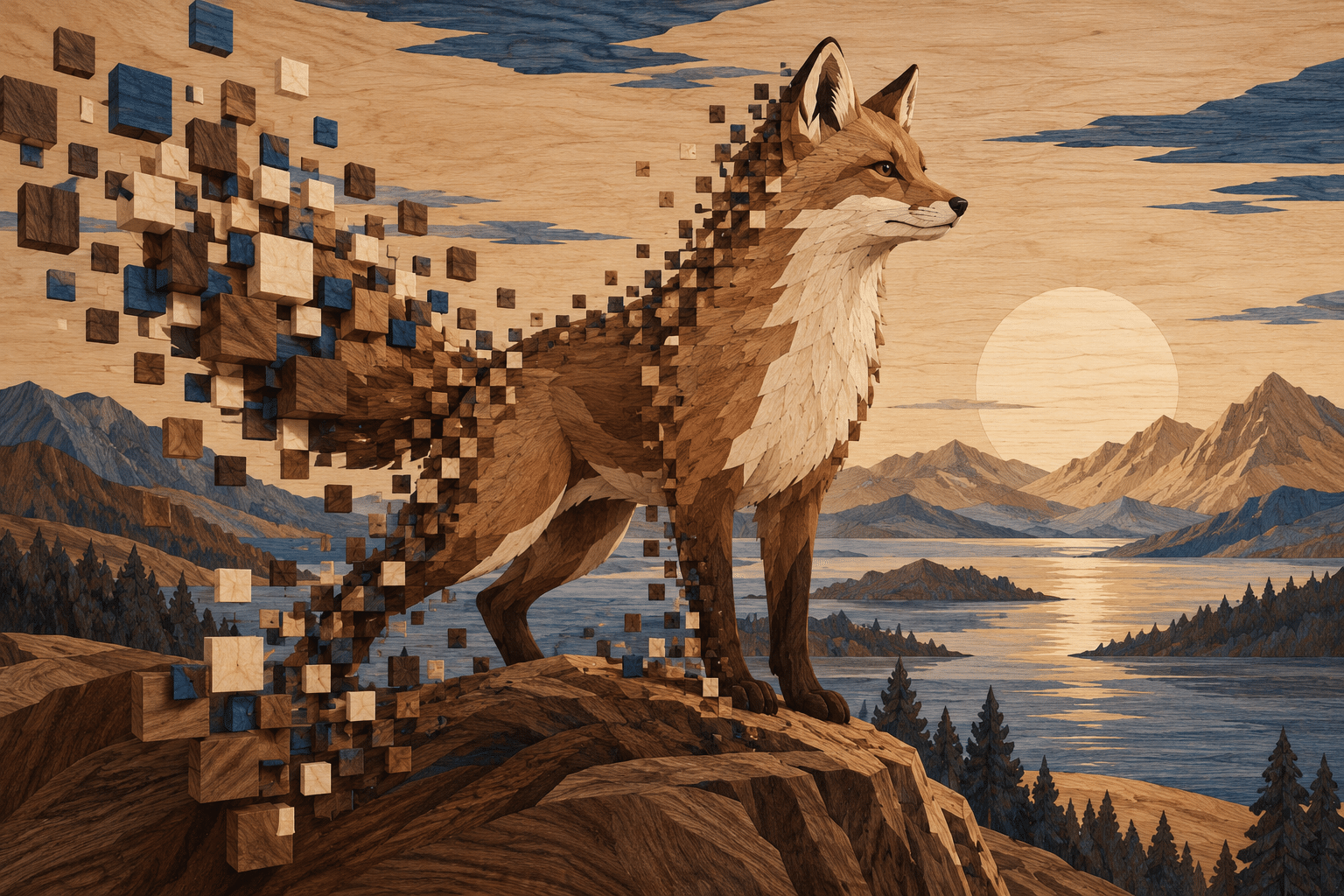
AOI database illustration
STUDY 03 / Pixel Drift Marquetry
A digital idea meets wood
The fox holds a solid central silhouette while square wooden fragments drift from its outer edge. Pixel Drift Marquetry translates displacement into walnut, maple and blue-stained ash as an imagined material language. Grain and shadow make the fragmentation feel tangible without claiming that the pictured object was fabricated.
Original AOI concept
Explore Pixel Drift Marquetry ↗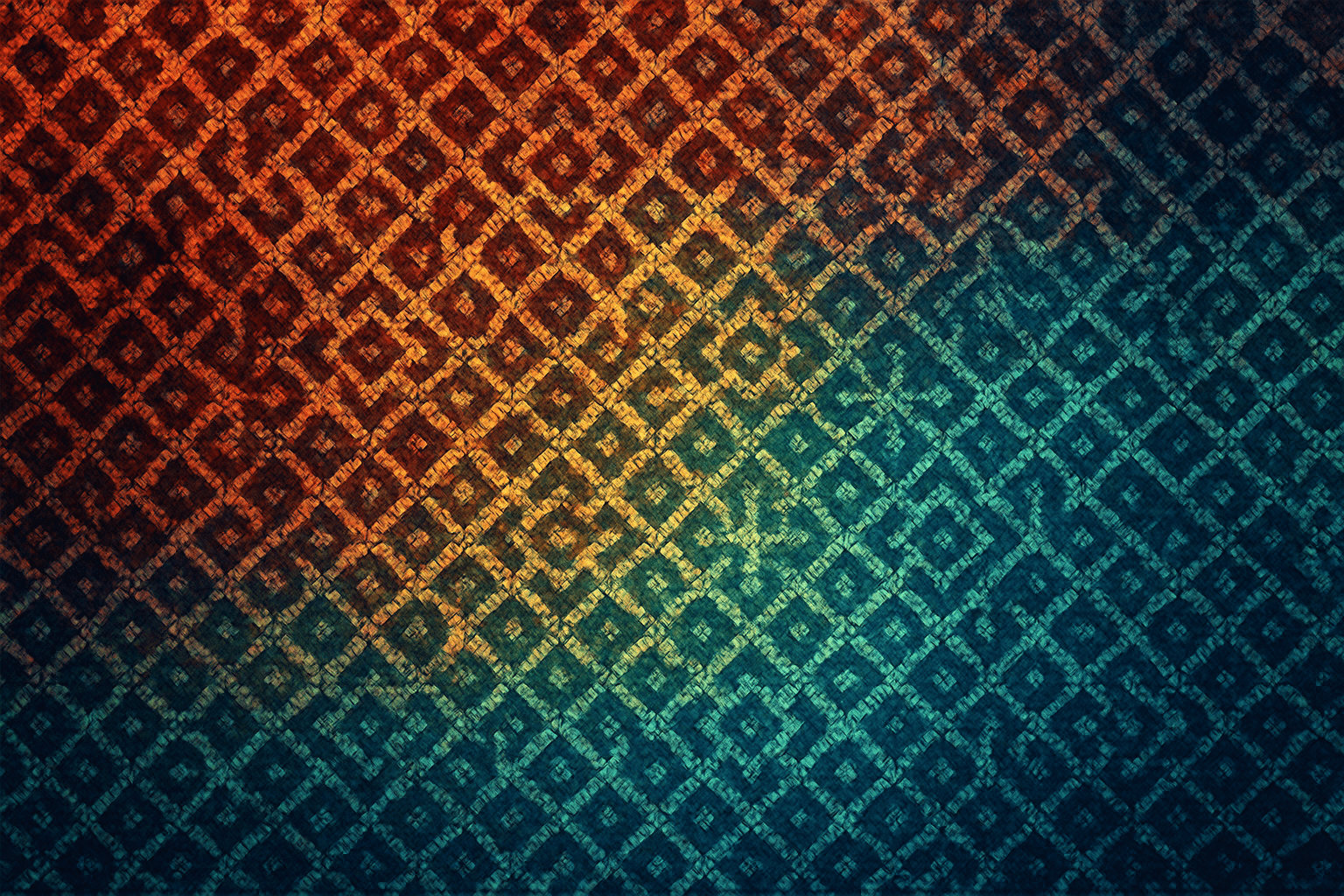
AOI database illustration
STUDY 04 / Subpixel Lattice Art
The signal becomes pattern
Repeated diamond-like cells shift from warm orange toward blue-green. Subpixel Lattice Art is used here as the archive's visual label, with no claim of an established movement or exact display-engine behavior. Step back to see the color field; move closer to watch the repeated unit take over.
AOI archive visual label
Explore Subpixel Lattice Art ↗LOOK AGAIN
A question to stay with
How much of each subject could disappear before the image stopped being readable? Point to the detail doing the most work.
TAKE IT OFF THE SCREEN
A small experiment
Make a small drawing, cut a copy into horizontal strips, and shift only three strips sideways. Preserve one important anchor. Compare this with moving every strip. Explain why one version may feel more deliberate.
Artwork & reading. Each artwork comes from the linked AOI art-style record. The collection combines contemporary generated studies with archive illustrations. Original AOI concepts, descriptive labels and established references are identified beside the works. The captions and curatorial readings are by Signe Haimholm; these images are not presented as works by historical artists or as technical demonstrations. Published 31 October 2026. Use the style links for the underlying descriptions and sources.
A FEW THINGS WORTH ASKING
Questions,
answered.
Recognizable subjects, interrupted signals and deliberately unstable images.
What does Beautiful Interference explore?
The lookbook examines images that balance recognition against disruption. A skyline, a street, a wooden animal and a dense lattice let Signe compare digital-looking interruptions with imagined material translations.
Is the datamoshing image an actual corrupted video frame?
The selected still is presented as a technique-inspired simulation. It evokes datamoshing without establishing that its image was produced by a particular video-compression process. Follow the style entry for further context.
Why is a wooden fox included in a glitch-art lookbook?
Pixel Drift Marquetry imagines a fragmented digital edge translated into a wood-like surface. The fox shifts the discussion from a broken file to composition: what remains intact, where the fragments begin and how the subject stays recognizable.
Does a glitch effect mean that something went wrong?
In this edited selection, disruption is a deliberate visual idea. The visible effect alone does not tell you whether a source file failed, an artist altered data or an image generator simulated the appearance.
What should I compare across the four images?
Choose a recognizable edge in each work. Notice where it breaks, repeats, shifts or reconnects. Then ask how much of the subject must remain stable for the interruption to carry meaning.
Is Subpixel Lattice Art a verified display technology?
Here it is an AOI archive visual label. Read the selected lattice as an image with a particular density and rhythm, not as evidence of the physical construction of a screen.
How does glitch art differ from pixel art in these lookbooks?
Beautiful Interference emphasizes breaks, shifts and competing signals within a recognizable image. Small Squares, Big Worlds emphasizes how stepped edges, a limited palette and carefully chosen details can build a readable picture. Block-like marks can appear in both; compare what those marks do to the subject rather than using their appearance alone to name a technique.
How can a glitch-inspired composition keep a clear focal point?
Leave one useful feature stable and concentrate the disruption elsewhere. The wooden fox provides a good looking exercise: identify what lets you recognize the animal, then trace the transition into fragmented edges. Try the same approach in a paper collage by shifting only part of a simple silhouette.
Which words help me describe visual distortion more precisely?
Describe the visible change: an edge repeats, a color separates, a block shifts, a line smears or a pattern becomes denser. Point to where the change starts and what remains intact. This vocabulary makes comparisons more useful than calling every effect a glitch, and it avoids guessing the software or process behind a still image.
STUDY 01 / Glitch Art: When the Image Reveals Its System
The horizon survives
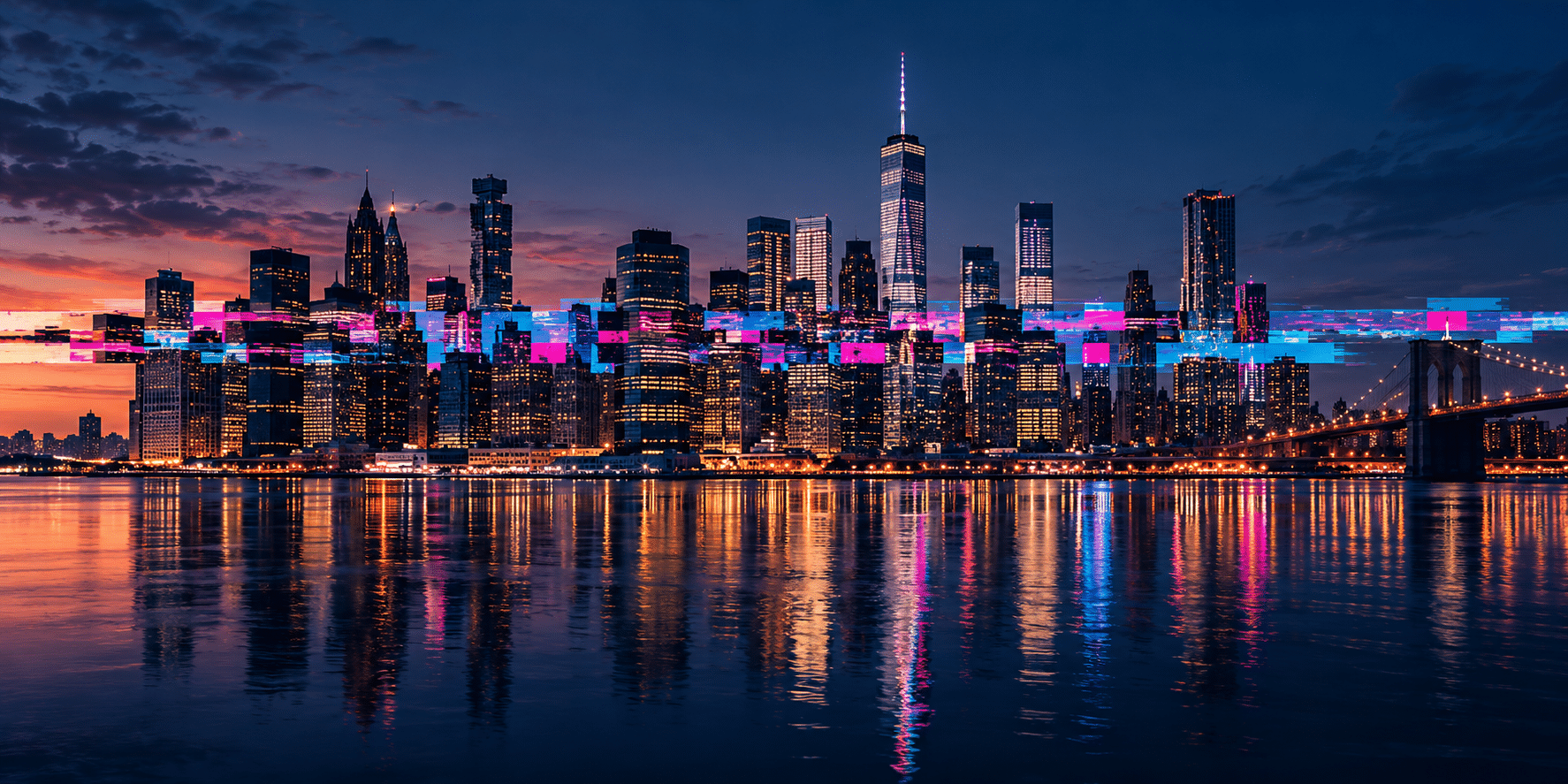
A thin band of displaced color crosses the blue-hour city, while the water and skyline remain recognizable. Glitch art draws attention to interruptions in media systems or constructs their visual language deliberately. The narrow disturbance is effective because the rest of this AOI study gives it a stable frame.
Media art approach
Explore Glitch Art: When the Image Reveals Its System ↗