
PATTERN / ITERATION / ORDER
The Shapeof a Rule
A system becomes visible through its exceptions.
SIGNE HAIMHOLM / 05 / AOI LOOKBOOKS
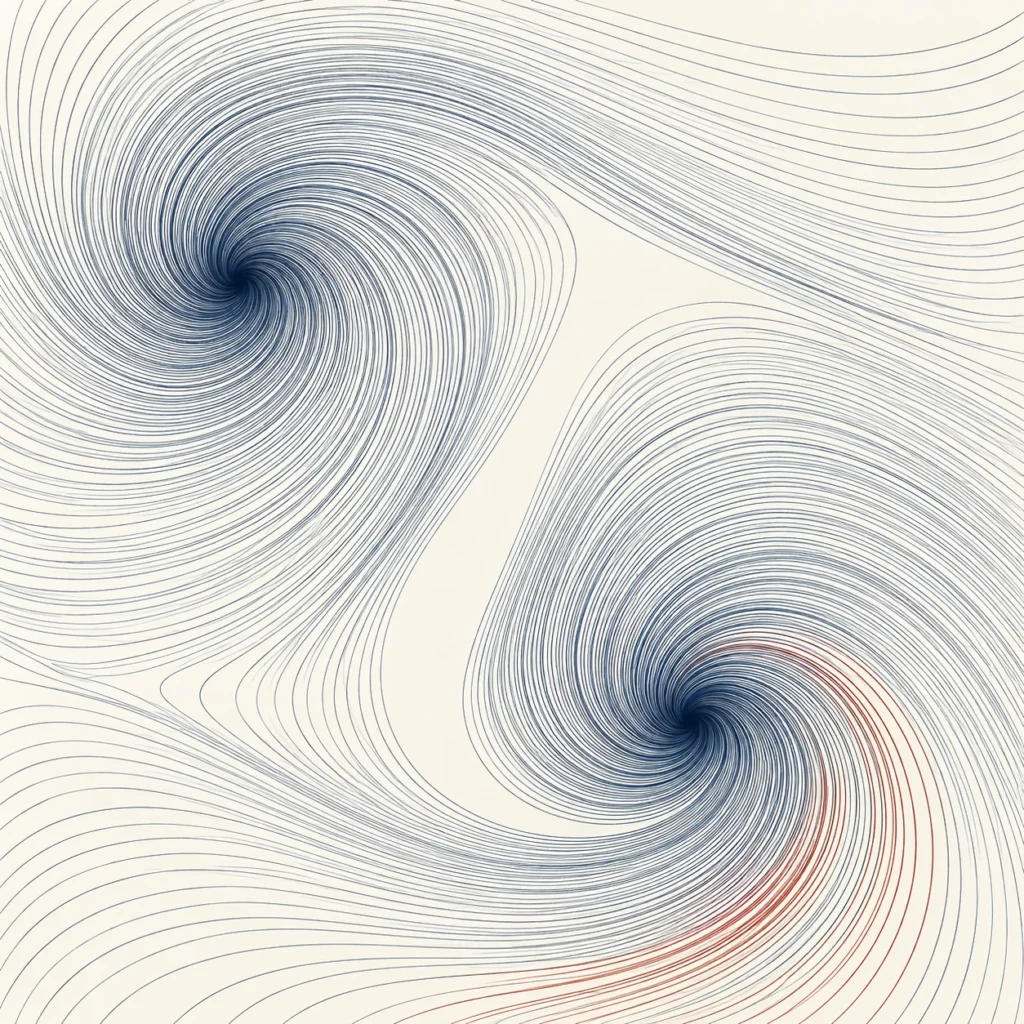
Lines bend around an opening. Spirals repeat at changing scales. A grid holds a lively arrangement of circles and triangles. A leaf becomes a circuit. These works bring rule-based visual thinking into conversation with composition. The selected still images suggest systems; they do not establish the code or fabrication methods that would be needed to produce those systems in practice.
AOI database illustration

AOI database illustration
STUDY 02 / Fractal Art: Iteration, Scale and Compositional Choice
A pattern changes scale
Warm orange spirals branch into smaller structures against dark blue. Fractal art draws on repeated patterns across scales and the choices involved in framing them. The archive illustration is read here for rhythm, density and warm-cool contrast; it does not serve as proof of a specific mathematical construction.
Mathematical visual approach
Explore Fractal Art: Iteration, Scale and Compositional Choice ↗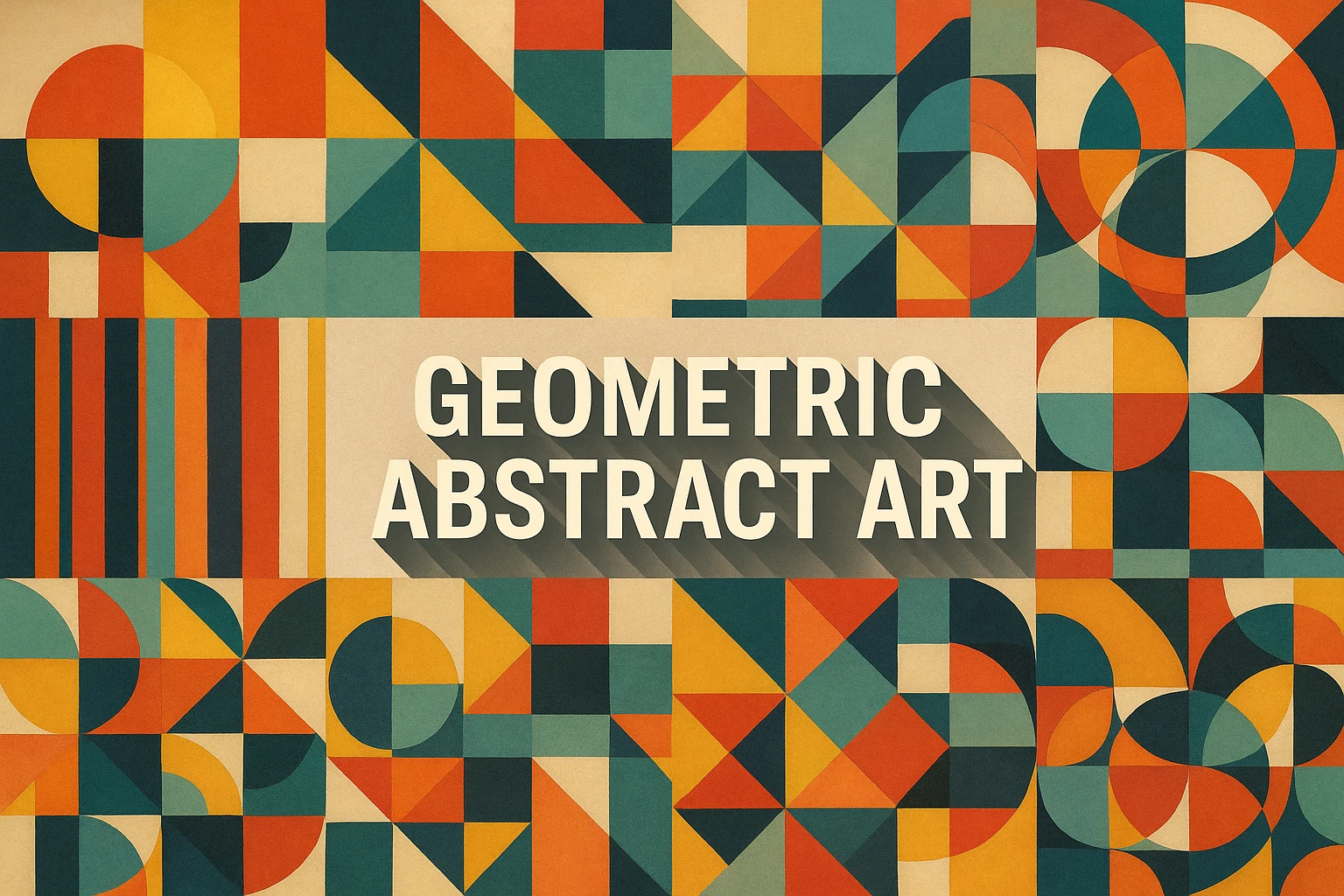
AOI database illustration
STUDY 03 / Geometric abstract art
Geometry becomes a vocabulary
Circles, diagonals and blocks of color form this titled reference image. Geometric abstraction supplies a vocabulary rather than a single rule: balance can be symmetrical or uneven, restrained or lively. Use the image to compare recurring shapes and color relationships, without relying on the archive's unreviewed historical associations.
Abstract-art reference
Explore Geometric abstract art ↗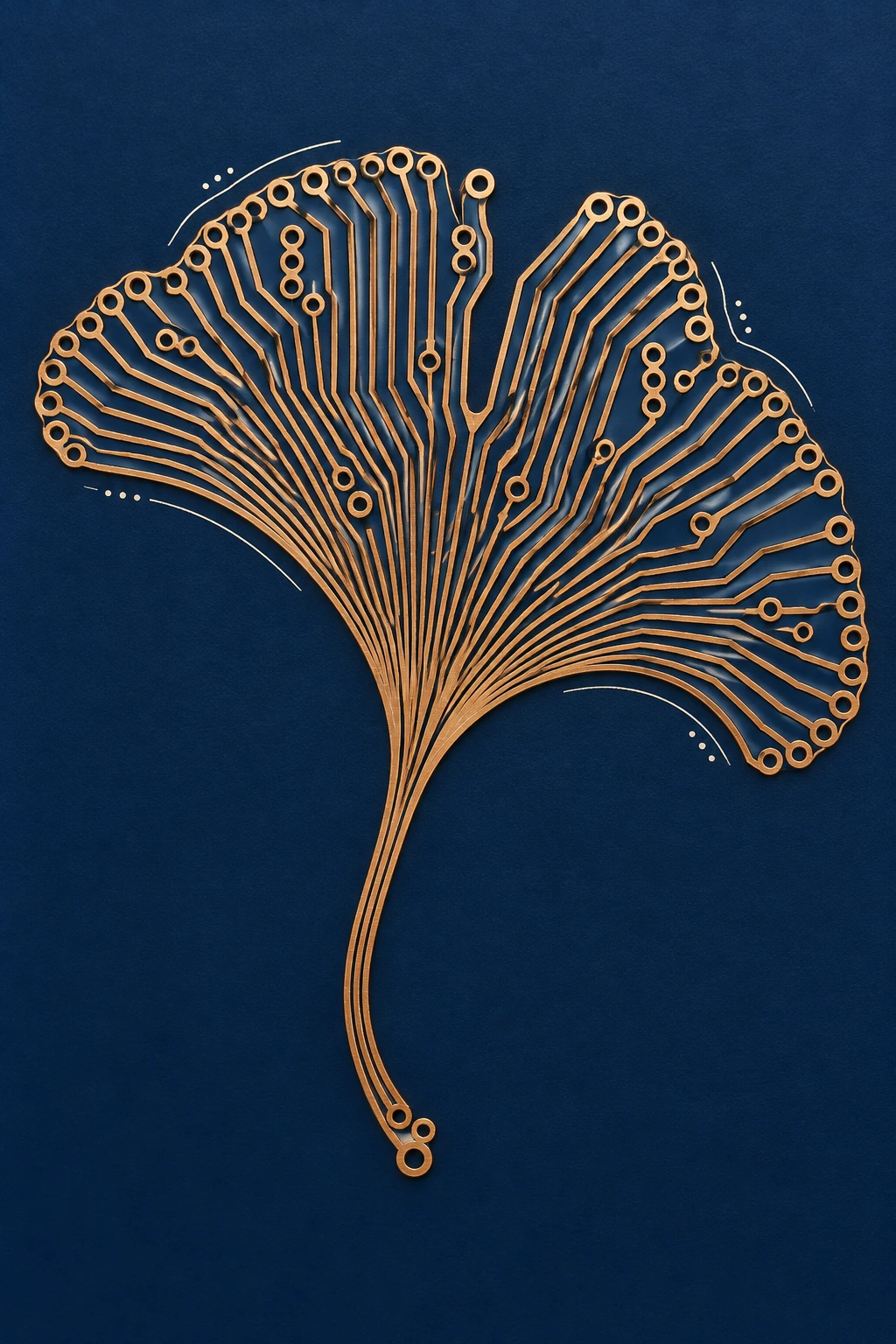
AOI database illustration
STUDY 04 / Printed Circuit Board
A leaf learns to route
Metallic tracks and round pads construct a ginkgo-like leaf on a dark field. The Printed Circuit Board approach turns routing, spacing and connections into visual material. This generated study is an imagined ornament, not a functioning circuit or a document from which electronics could safely be manufactured.
Designed-surface interpretation
Explore Printed Circuit Board ↗LOOK AGAIN
A question to stay with
Find a rule you can describe in one sentence. Then identify one place where variation makes the image more interesting.
TAKE IT OFF THE SCREEN
A small experiment
Draw ten lines that must bend around the same empty circle. Keep the circle unmarked. Try again with two circles and compare the resulting currents. The rule stays simple while the composition changes.
Artwork & reading. Each artwork comes from the linked AOI art-style record. The collection combines contemporary generated studies with archive illustrations. Original AOI concepts, descriptive labels and established references are identified beside the works. The captions and curatorial readings are by Signe Haimholm; these images are not presented as works by historical artists or as technical demonstrations. Published 31 October 2026. Use the style links for the underlying descriptions and sources.
A FEW THINGS WORTH ASKING
Questions,
answered.
Patterns, repetition and what happens when a simple instruction meets a composition.
What is the central idea of The Shape of a Rule?
The collection explores rule-based visual thinking through bending lines, repeating forms, geometric arrangements and a circuit-like leaf. The four works let Signe compare how a system can become visible through its variations and exceptions.
Does this book provide working generative-art code?
No. It is an edited visual collection with commentary and links to art-style entries. Its still images suggest systems; they do not establish the code or fabrication process used to produce them.
How is a flow field different from a geometric composition here?
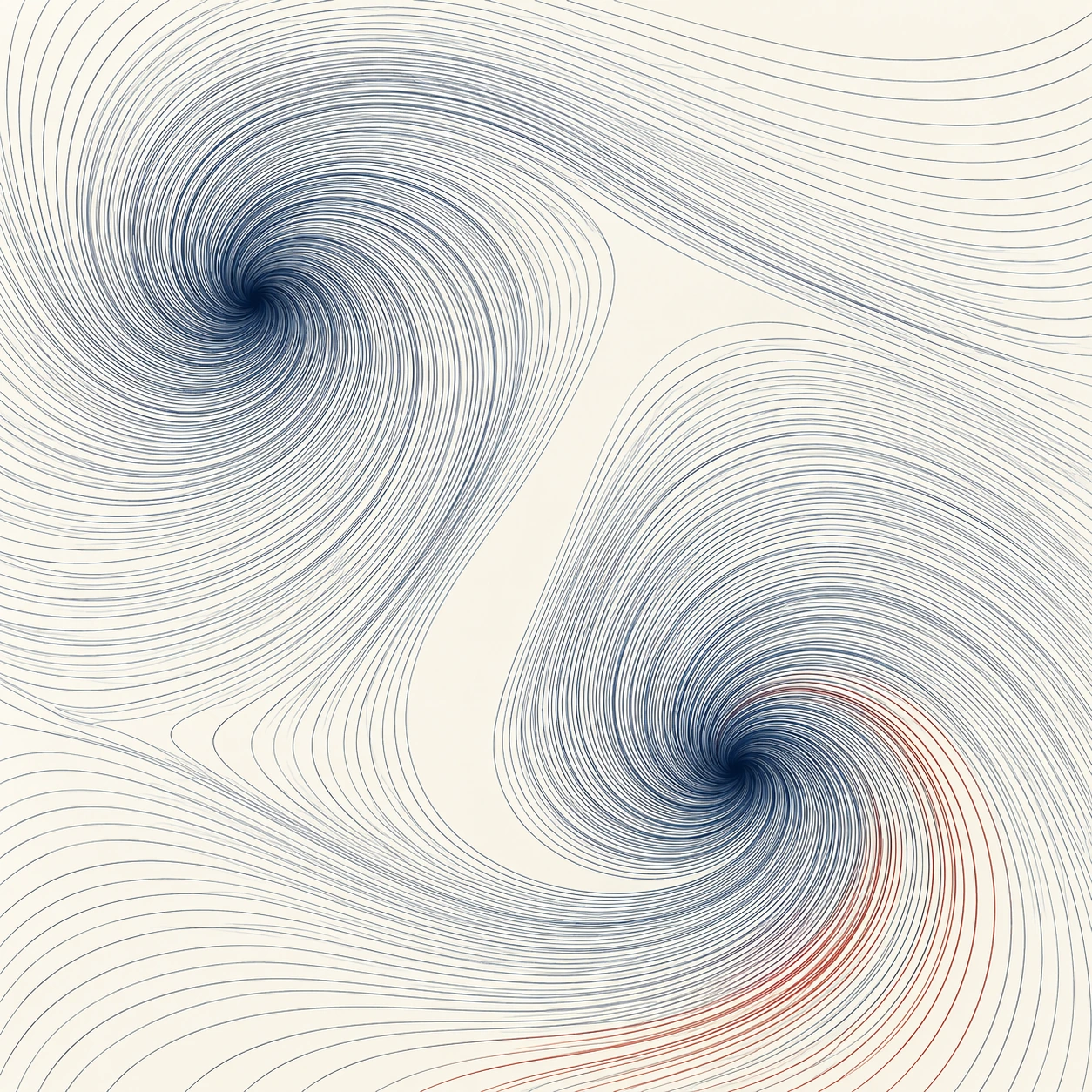
The flow-field study emphasizes the direction and density of many lines. The geometric reference makes the relationships between individual shapes more explicit. Both invite you to look for a governing arrangement, but they organize attention differently.
Does repeated detail prove that an image is a mathematical fractal?
No. Repetition or changes of scale can suggest a fractal idea, but appearance alone does not verify the mathematics of a particular image. The linked Fractal Art entry provides the broader context for the selected study.
Is the circuit-board leaf a functioning electronic design?
It is presented as a designed-surface interpretation. Its routing-like lines and leaf shape are being compared as visual structures, not offered as a circuit diagram or a working electronic component.
What is a simple exercise for exploring a visual rule?
Draw ten lines that must bend around one empty circle. Keep that circle unmarked. Repeat the exercise with two circles, and compare the currents that result from changing one part of the instruction.
What does rule-based art mean in this lookbook?
It means looking for an instruction that could organize an image: follow a direction, repeat a shape, change its scale or avoid an empty region. The selected studies invite this kind of reading. A rule you infer from their appearance is an interpretation, rather than evidence of the actual instructions used to produce them.
Why does variation matter in a repeating pattern?
A repeated feature gives you something to measure a change against. Compare the spacing, direction or size of neighboring forms and notice which deviation attracts attention. Try drawing the same mark twelve times, changing only one interval. The resulting emphasis can be stronger than adding a completely new symbol.
Where can I compare geometric systems with organic-looking networks?
Living Circuits takes routing and branching into root-like, mossy and copper-colored surfaces. Compare its paths with the circuit-like leaf here: where is the arrangement regular, and where does it seem to grow or escape? Signe’s Favorites also includes a geometry chapter for comparing more sharply separated shapes and planes.
STUDY 01 / Flow Field
Directions make a current
Fine blue lines curl around two offset centers, leaving an open channel between them. A flow field assigns local directions that marks can follow. This AOI interpretation makes that idea visible through a composition with room to breathe. The image is not presented as the output of supplied executable code.
Generative-art concept / illustrated interpretation
Explore Flow Field ↗