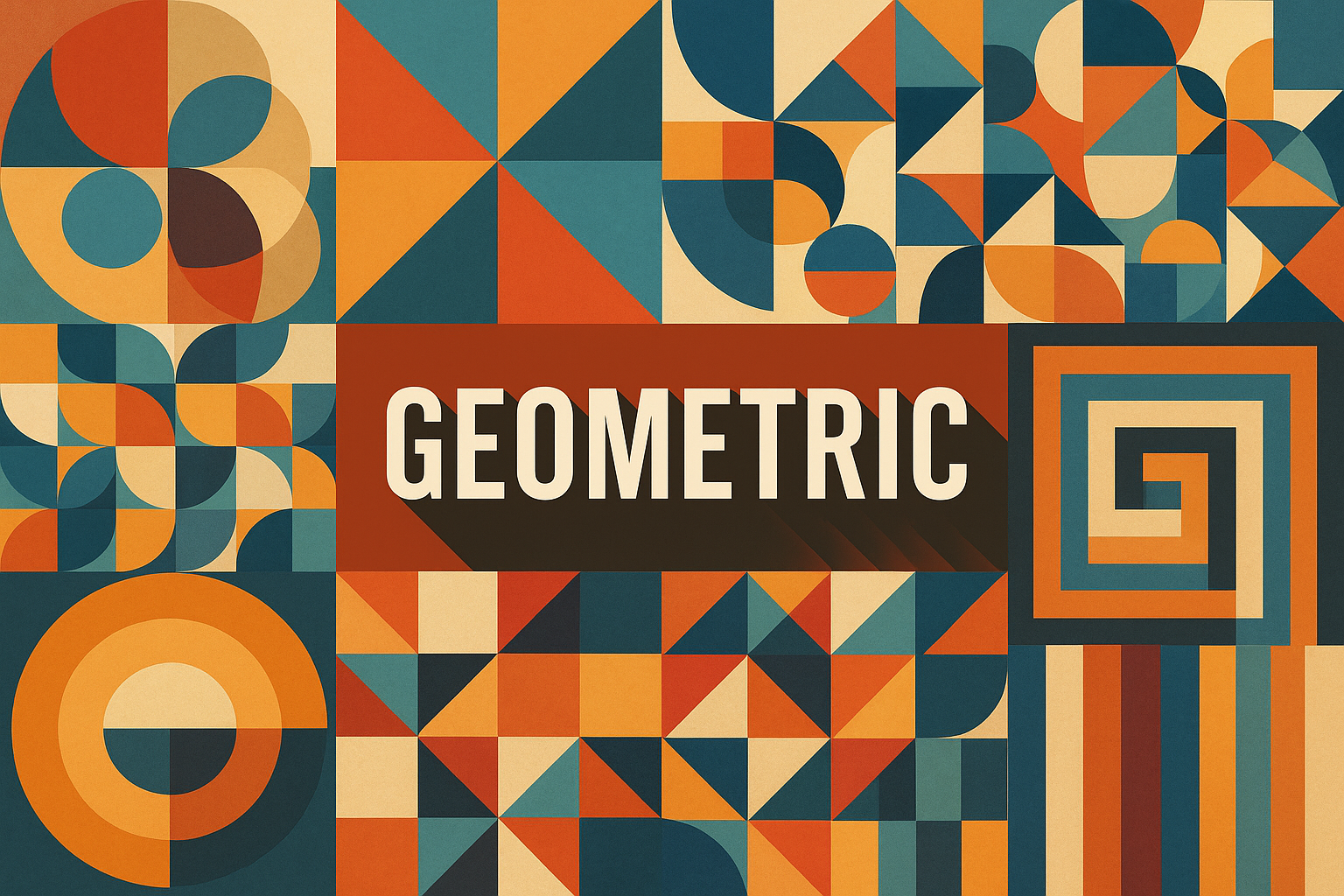
Geometric
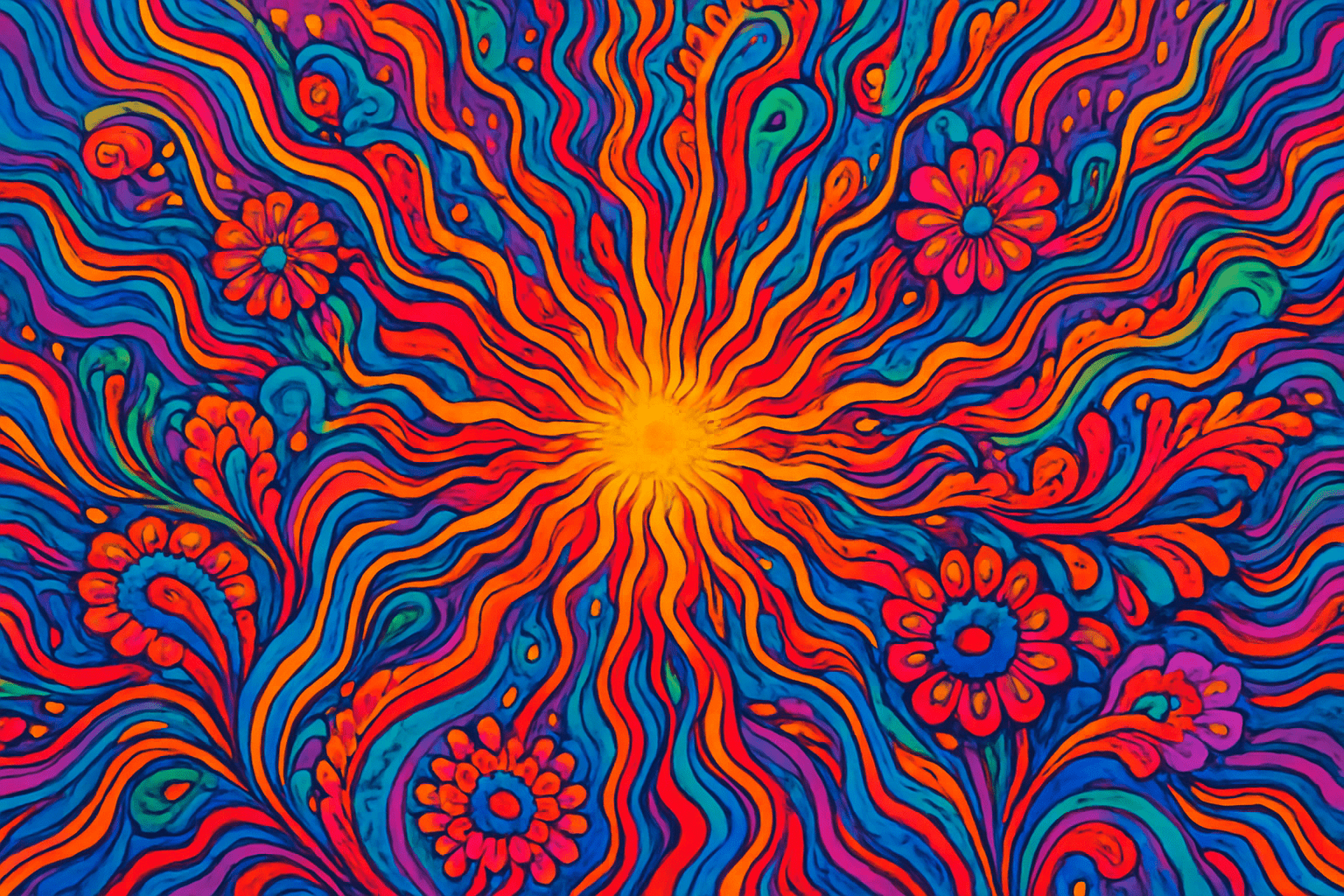
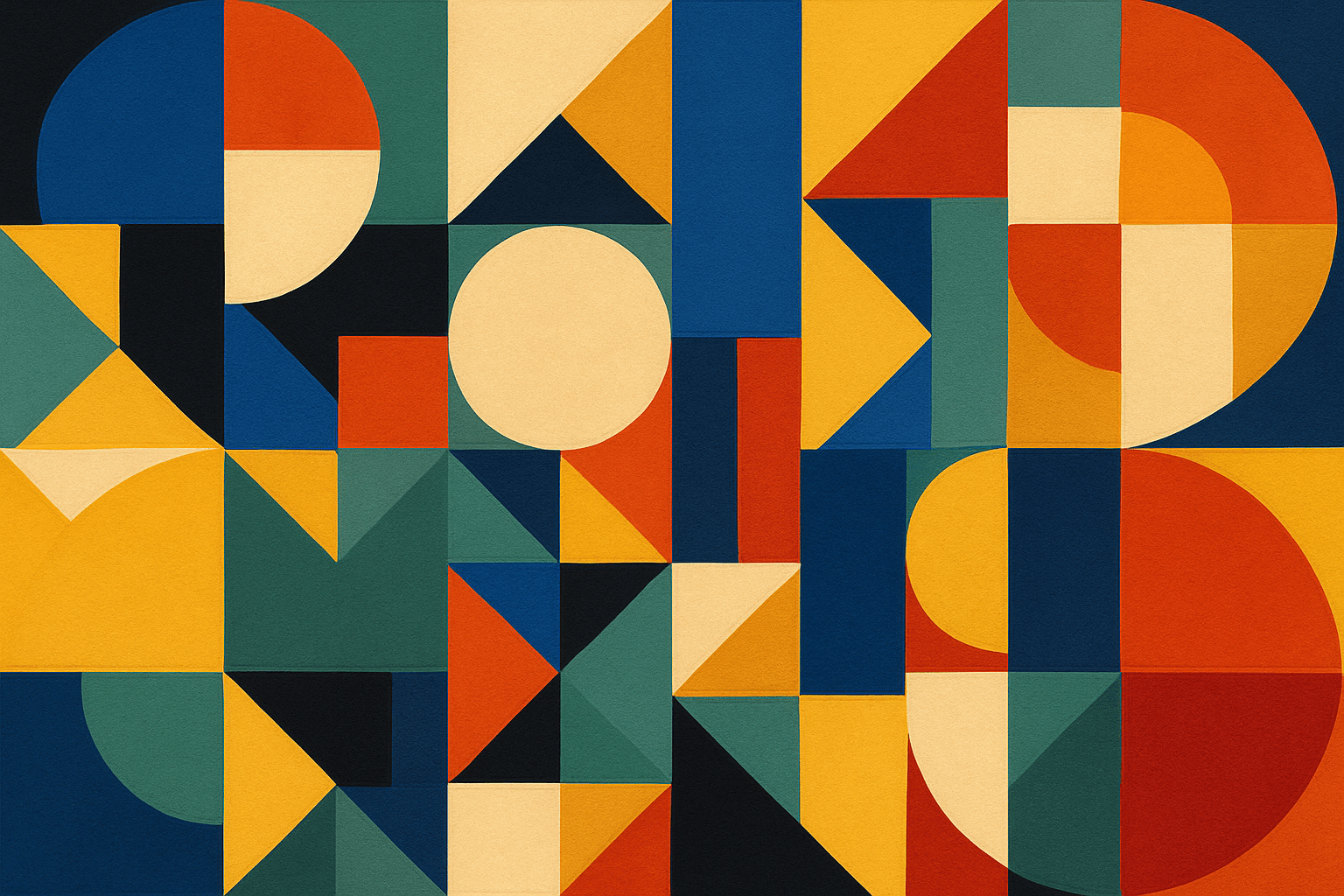
Geometric art is characterized by clean lines, shapes, and patterns. The overall look is clean, orderly, and precise.
AOI thinking about Geometric [+_~]-/
Overview and Quickfacts
Geometric art is a type of art that is characterized by simple, often repetitive shapes. This type of art is often created using geometric shapes such as squares, triangles, and circles. Geometric art is often seen as being very clean and orderly.
Can understand it also, as:
Regular, symmetrical, shaped, patterned.
Categorize it as:
Impressionism, Modernism
.: Dreaming :.
holds a HAIKU for the art style
:. Thought is power .:
Detailed Description
Geometric art is a form of abstract art that uses geometric shapes and forms to create a composition. Geometric art can be created using a variety of mediums, including painting, drawing, sculpture, and even architecture. Some of the most famous geometric artists include Piet Mondrian, Wassily Kandinsky, and Paul Klee. These artists were all pioneers of abstract art, and their work has had a lasting influence on the art world. Mondrian’s work is perhaps the most well-known example of geometric art. His paintings are characterized by their use of simple geometric shapes, bold colors, and a sense of order and harmony. Kandinsky’s work is similar to Mondrian’s in many ways, but he also incorporated organic shapes and lines into his compositions. This gave his work a more dynamic and expressive quality. Klee’s work is unique among the other two artists in that his geometric shapes are often playful and whimsical. His use of color is also very distinctive, and his work often has a dreamlike quality. All three of these artists have created timeless works of art that continue to inspire and influence artists today.
.. beep, beep, beep ..
<START OF TRANSMISSION>
1. Geometric is a branch of mathematics that deals with the study of shapes, sizes, and relative positions of figures.

2. Geometric shapes can be classified into three main categories: points, lines, and planes.

3. A point is an exact location in space and has no size or dimension. A line is a straight path that extends indefinitely in both directions and has no width or thickness. A plane is a flat surface that extends indefinitely in all directions.

4. The basic principles of geometry include points, lines, angles, surfaces, solids, and curves.

5. Points, lines, and planes are the simplest and most basic geometric shapes.

6. Angles are formed when two lines intersect, and the angle is measured by the amount of rotation needed to align the two lines.

7. Surfaces are two-dimensional shapes that have length and width but no depth.

8. Solids are three-dimensional shapes that have length, width, and depth.

9. Curves are lines that are not straight.

10. The study of geometry is used in many fields, such as architecture, engineering, and construction.

11. Geometric shapes can be described in terms of their size, shape, and location.

12. The size of a geometric shape is its dimensions, such as length, width, and height.

13. The shape of a geometric shape is its outline or form, such as square, rectangle, or circle.

14. The location of a geometric shape is its position in space, such as on a coordinate grid.

15. Geometric shapes can be transformed, or changed in size, shape, or location.

16. The most common transformations are translation, rotation, reflection, and dilation.

17. Translation is a transformation that moves a shape without changing its size or shape.

18. Rotation is a transformation that turns a shape around a fixed point.

19. Reflection is a transformation that creates a mirror image of a shape.

20. Dilation is a transformation that changes the size of a shape without changing its shape.
<EOF>
.. robbel bob
Visual Examples from our image gallery
Coming soon, we are so slow .. might never come
Artists, Paintings, and more
(be aware, can be highly speculative)
Artists (be aware, speculation possible):
1. Piet Mondrian (1872-1944) 2. Kazimir Malevich (1879-1935) 3. Lyubov Popova (1889-1924) 4. Vladimir Tatlin (1885-1953) 5. Alexander Rodchenko (1891-1956) 6. El Lissitzky (1890-1941) 7. Moholy-Nagy Laszlo (1895-1946) 8. Theo van Doesburg (1883-1931) 9. Ben Nicholson (1894-1982) 10. Piet Zwart (1885-1977) 11. Josef Albers (1888-1976) 12. Max Bill (1908-1994) 13. Richard Lohse (1902-1988) 14. Hans Arp (1886-1966) 15. Sophie Taeuber-Arp (1889-1943) 16. Jean Arp (1886-1966) 17. Marcel Duchamp (1887-1968) 18. Francis Picabia (1879-1953) 19. Kurt Schwitters (1887-1948) 20. Dada (Various artists) 21. De Stijl (Various artists) 22. Constructivism (Various artists) 23. Bauhaus (Various artists) 24. Suprematism (Various artists) 25. Neo-Plasticism (Various artists) 26. Concrete Art (Various artists) 27. Geometric Abstraction (Various artists) 28. Kinetic Art (Various artists) 29. Op Art (Various artists) 30. Minimal Art (Various artists)
Artworks (be aware, speculation possible)
1. The Starry Night ÃÂàVincent van Gogh (1889) 2. The Scream ÃÂàEdvard Munch (1893) 3. Les Demoiselles d’Avignon ÃÂàPablo Picasso (1907) 4. Black Square ÃÂàKazimir Malevich (1915) 5. Composition with Red, Yellow, and Blue ÃÂàPiet Mondrian (1921) 6. The Persistence of Memory ÃÂàSalvador DalÃÂà(1931) 7. Swans Reflecting Elephants ÃÂàSalvador DalÃÂà(1937) 8. Nude Descending a Staircase, No. 2 ÃÂàMarcel Duchamp (1912) 9. Fountain ÃÂàMarcel Duchamp (1917) 10. L’Atelier du peintre ÃÂàPablo Picasso (1954) 11. Woman in a Red Armchair ÃÂàPablo Picasso (1932) 12. Three Musicians ÃÂàPablo Picasso (1921) 13. The Treachery of Images ÃÂàRenÃÂé Magritte (1928-1929) 14. The Son of Man ÃÂàRenÃÂé Magritte (1964) 15. The Great Wave off Kanagawa ÃÂàKatsushika Hokusai (1829-1833) 16. The Persistence of Memory ÃÂàSalvador DalÃÂà(1931) 17. The Disintegration of the Persistence of Memory ÃÂàSalvador DalÃÂà(1952-1954) 18. One Thousand and One Nights ÃÂàSalvador DalÃÂà(1974) 19. The Adoration of the Magi ÃÂàSalvador DalÃÂà(1968-1969) 20. The Sacrament of the Last Supper ÃÂàSalvador DalÃÂà( 1955) 21. Geopoliticus Child Watching the Birth of the New Man ÃÂàSalvador DalÃÂà(1943) 22. The Temptation of Saint Anthony ÃÂàSalvador DalÃÂà(1946) 23. Soft Watches ÃÂàSalvador DalÃÂà(1933) 24. The Disintegration of the Persistence of Memory ÃÂàSalvador DalÃÂà(1952-1954) 25. The Swallow’s Tail ÃÂàM.C. Escher (1956) 26. Relativity ÃÂàM.C. Escher (1953) 27. Drawing Hands ÃÂàM.C. Escher (1948) 28. Waterfall ÃÂàM.C. Escher (1961) 29. Reptiles ÃÂàM.C. Escher (1943) 30. Cubic Space Division ÃÂàM.C. Escher (1957)
Epoch
The time period of the art style Geometric is from about 1000 BCE to about 300 BCE.
AI ART RESSOURCES (AKA, well Tools)
Helping tools -> predefined search links on other pages: