Photography · Materials and history
An old photograph is more than a modern image with the color removed. Its surface, support and method of production shape what can be seen and how the object survives. Reading historic monochrome photography begins with that physical evidence, alongside the person, place or event inside the frame.
A closer look
Study the range between the lightest area and the deepest shadow, then look at the object itself. A reflective plate, a soft paper surface and a later photographic print can produce very different experiences. Brown or warm tones do not automatically identify a date or process.
Different objects, different processes
The Met describes a daguerreotype as a unique image on silver-plated copper. It is not a paper print made from a reusable negative. Talbot’s paper-based experiments followed a different route, leading to a negative-positive system and the calotype patent in 1841. These distinctions matter when comparing photographs: the support and process are part of the picture’s history, not optional technical trivia.
Avoid using black and white as a single period label. It is a broad way of describing appearance, encompassing different materials, purposes and kinds of image. A family portrait, an architectural study and an artistic experiment ask different questions of the viewer. Start with the catalog record when one exists; a costume or a scratched-looking surface alone cannot securely date an object.
Look closely at an early example
Talbot’s The Open Door, dated before May 1844 in the Met’s account, directs attention toward an ordinary threshold and the objects around it. Try describing the arrangement before naming an emotion. Where does the light fall? Which shapes make the interior feel open or closed? This kind of patient looking helps replace a general idea of antique atmosphere with observations you can point to.
When comparing a reproduction with the catalog entry, note whether you are looking at an original negative, a print, or a digital image of either. A screen can conceal differences in size, reflectivity and texture. The museum’s material description restores some of that missing information.
Make a study without inventing an archive
For a contemporary exercise, arrange a few everyday objects near a window and work in monochrome. Try one version with a broad range of middle tones and another with deeper shadows. Compare what happens to the shape of a glass, the edge of a book and the surface of cloth. If you add artificial aging, identify it as an effect. A generated period-looking portrait should never acquire a fabricated sitter, date or archival attribution simply because it looks convincing.
Pocket-sized facts
A daguerreotype is a unique image on a metal plate.
Talbot patented the calotype in 1841; his methods differ from Daguerre’s.
The prompt workshop
Original creative exercises. These prompts create new illustrations, not documentary evidence.
Window-light study
A contemporary monochrome still life of a closed book, a clear drinking glass and folded linen beside a tall window, gentle middle tones, visible differences between glass, paper and fabric, quiet frontal composition. No artificial scratches, dates or archival labels.
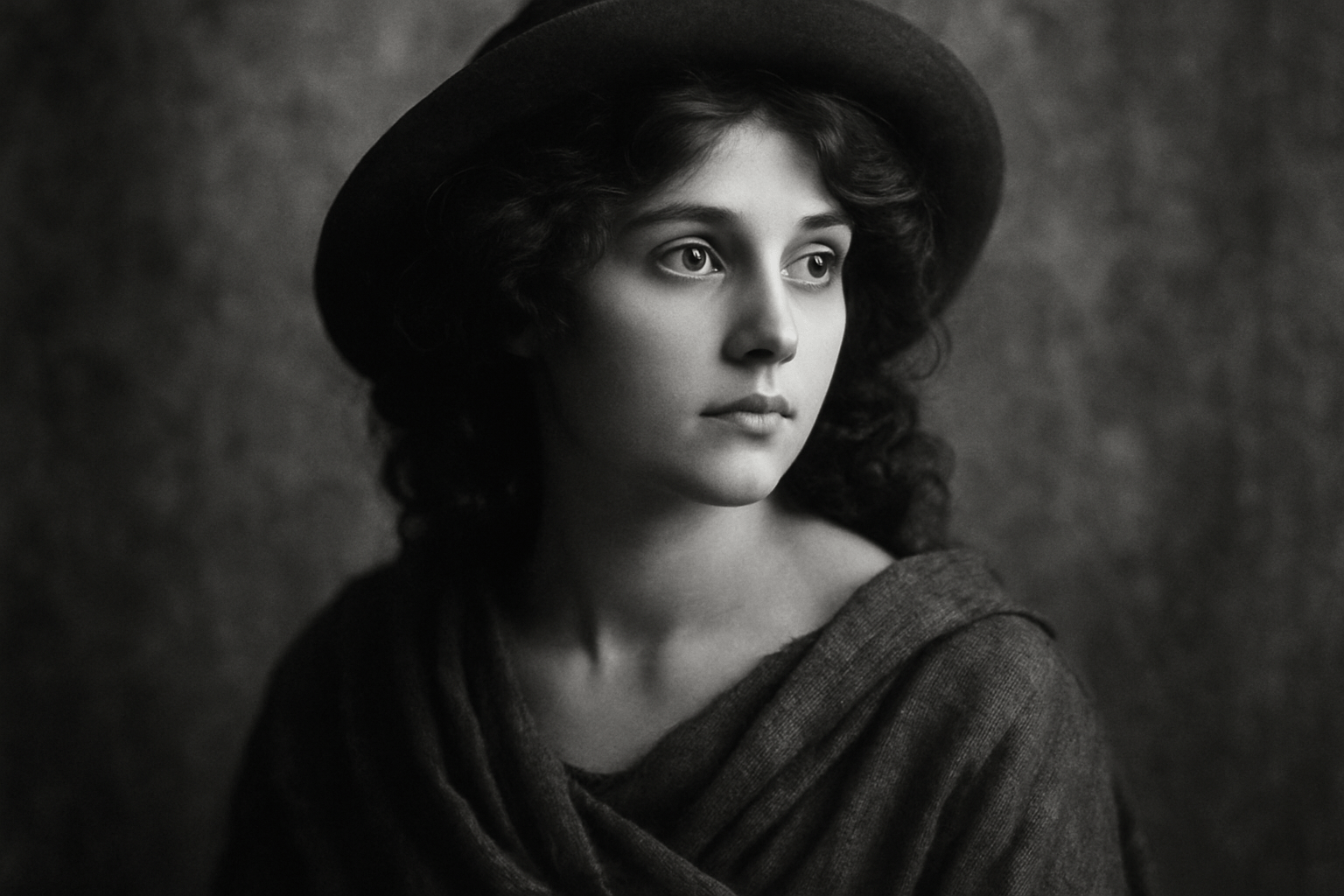
An imagined period portrait
An explicitly fictional studio portrait inspired by early photographic restraint: an adult sitter in a simple dark coat, neutral backdrop, softly directed window light, composed posture, subtle monochrome tonal transitions. Present as a modern generated interpretation, not an authentic historical photograph or a named person.
One scene, two tonal readings
Create two separate monochrome studies of the same empty doorway with a broom and a small clay pot: one with soft middle tones, one with strong shadow shapes. Keep object positions consistent. Explore tonal design without copying a specific historical composition.
A small poetic detour
Light rests on a door.
Paper remembers the shape,
Not the sound outside.
A smile from the studio
The old camera preferred quiet company. Everyone had to hold that thought.
Look closer
Explore the image gallery
Select an image to enlarge it. Browse with the arrows, and press Escape to return.
Your next inspiration
Discover another art style
Follow a visual thread to the next subject.