
Digital art · An AOI creative concept
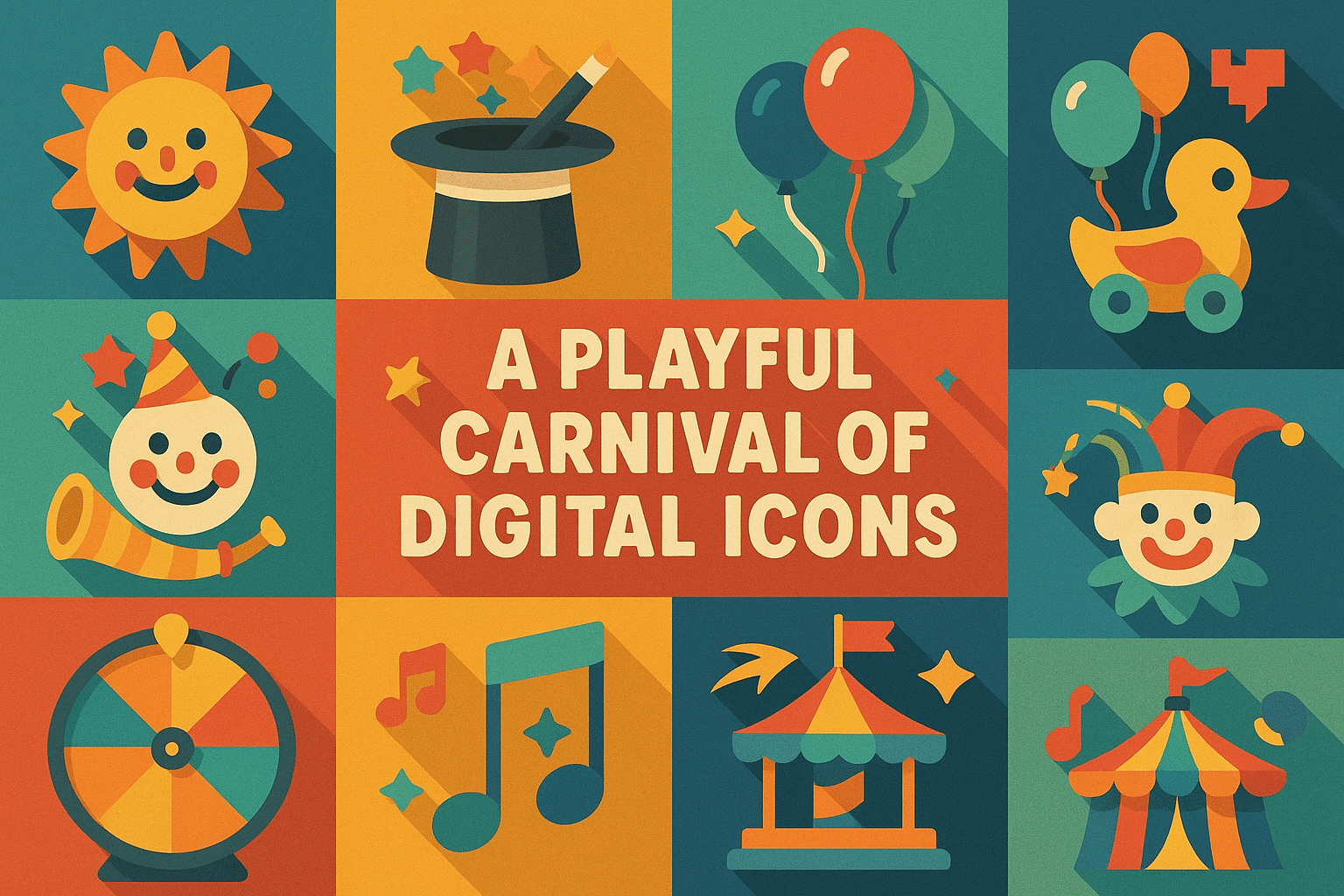
A heart becomes a balloon, a message bubble becomes a ticket booth, and a tiny face joins the parade. This AOI concept turns familiar digital symbols into a playful composition. Its creative possibilities are real; the carnival itself is an invented theme, not a documented historical art movement.

A closer look
Work with recognizable silhouettes, a limited palette and a clear hierarchy of sizes. A few repeated shapes can establish a rhythm. If every symbol demands equal attention, the scene becomes a crowded keyboard instead of a picture.
Small symbols have a design history
MoMA documents Shigetaka Kurita’s set of 176 emoji for NTT DOCOMO, released in 1999 and designed on a 12-by-12-pixel grid. The set includes weather signs, pictograms and expressive faces. Those constraints offer an interesting design lesson: a tiny image has to make selective use of its space. That history supports studying emoji as designed objects, without needing to claim that every emoji composition belongs to one recognized movement.
Emoji are not automatically a universal language. Unicode explains that presentation can differ between platforms, including whether some characters appear as colored emoji or monochrome text. A symbol placed next to different words or images can also acquire a different tone. For a visual project, test how the composition reads instead of assuming that recognition guarantees agreement.
Build a carnival with a visual center
Choose one organizing idea before collecting symbols. A circular ride can turn message bubbles into seats; a striped tent can sit among oversized hearts and stars; a parade can follow a curving ribbon through the image. Decide which object is the main attraction and reduce the contrast of supporting details. This makes a dense composition easier to explore.
The existing AOI prompt ideas suggested an emoji landscape, a festival poster and a surreal portrait. The workshop keeps that useful range while giving each idea clearer limits. In a portrait, for example, use larger symbol clusters to define the face before adding small details. In a landscape, let repeated icons create texture without erasing the horizon.
Make the symbols your own
Unicode distinguishes encoded characters from the artwork used to display them; it is not the designer of the colored images supplied by different vendors. For an original illustration, develop your own consistent family of symbols rather than implying that a collage of branded glyphs is a new design system. Vary shape, outline and color deliberately.
Try printing the image small or viewing it as a thumbnail. If the main form disappears, simplify it. Then enlarge it and check whether the smaller jokes reward a closer look. The featured image is a generated AOI illustration of this carnival idea. It is not Kurita’s original set or an artwork attributed to one of the artists named in the old page.
Pocket-sized facts
MoMA records Kurita’s DOCOMO set as 176 emoji released in 1999.
A Unicode character and a vendor’s drawing of that character are different things.
The prompt workshop
Original creative exercises. These prompts create new illustrations, not documentary evidence.
A tiny festival
An original flat-vector carnival poster made from a consistent family of hand-designed pictograms: one striped tent as the focal point, heart-shaped balloons, smiling circles and message-bubble tickets, cobalt, coral and sunflower yellow, clean outlines, generous breathing room, no logos or copied platform glyphs.
A digital landscape
Create an original landscape mosaic from simple custom icons: cloud symbols make the sky, leaf shapes form rolling hills and tiny message bubbles trace a river, clear foreground and distant horizon, a limited cyan, green and cream palette, readable at thumbnail size. No text or vendor branding.
A face made of messages
An experimental portrait silhouette built from original geometric faces, stars and speech bubbles, large clusters defining the head before smaller details, expressive but balanced asymmetry, indigo background with warm coral accents. Make it playful and thoughtful rather than a random wall of emoji.
A small poetic detour
A smile to the world,
Tiny symbols speak softly—
Hearts in silence bloom.
A smile from the studio
Why don’t emojis worry about getting lost? Because they always find their way into a text!
Look closer
Explore the image gallery
Select an image to enlarge it. Browse with the arrows, and press Escape to return.
Your next inspiration
Discover another art style
Follow a visual thread to the next subject.
Futurama
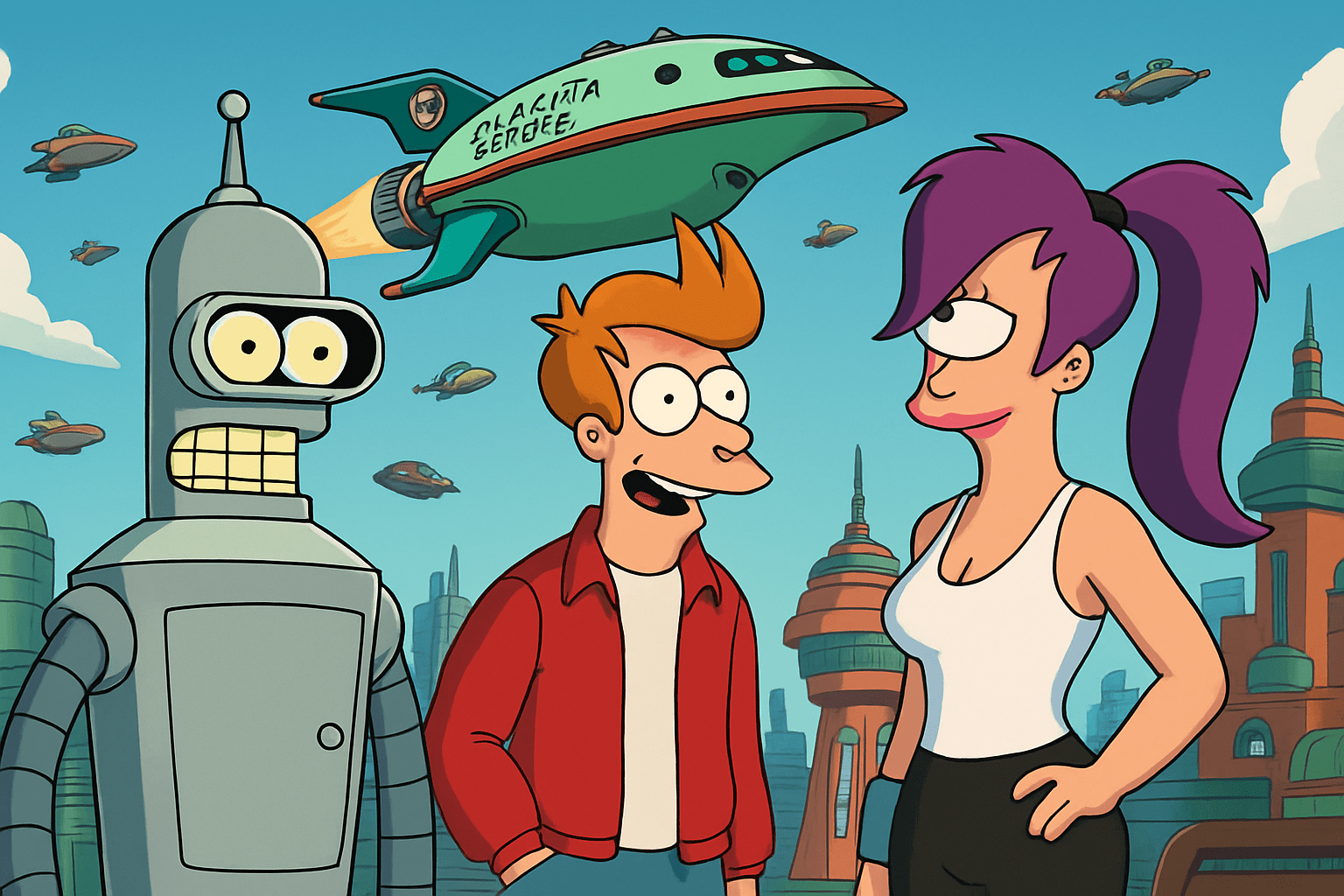
Futurama can send a conversation in several directions: an animated comedy, a spectacular exhibition at the 1939 New York World’s Fair, or a mistaken reference to Futurism.

Sources and further exploration
MoMA — The original emoji by Shigetaka Kurita