
Photographic approach
A laugh arrives before the pose. Someone pauses at a doorway while the street continues behind them. In candid photography, people carry on with an activity as the photographer chooses where to stand and when to release the shutter. The picture depends on both decisions.
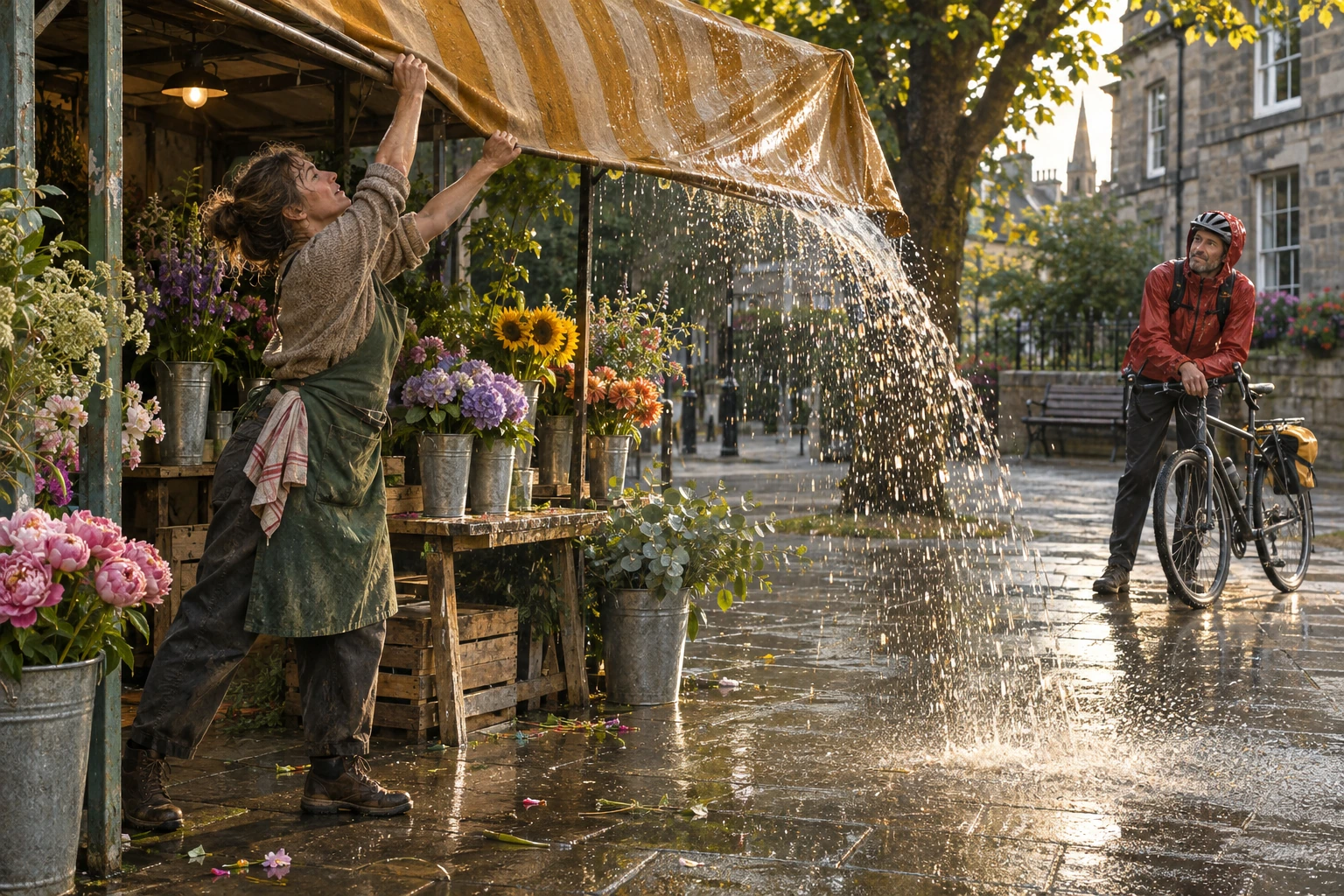
A visual introduction
A title collage and five independent AOI interpretations. The linked sources identify the documentary evidence.
Select an image for a closer look. Use the thumbnails, arrow keys or a swipe to compare examples. Zoom in to inspect details, or share the image that inspires you.
Creative toolbox · take this style further
Choose an input and a destination. Search sends your words to the chosen site; Copy & open puts them on your clipboard to paste there.
Create with AI
Turn your chosen input into an image prompt or a new creative direction.
ChatGPT
Copy your input and paste it into a ChatGPT conversation or image request.
Copy & open ChatGPT (new tab)Claude · Anthropic
Develop an image prompt or explore the style in a new Claude conversation.
Copy & open Claude · Anthropic (new tab)Midjourney
Paste your input into the Imagine bar on the Create page.
Copy & open Midjourney (new tab)Adobe Firefly
Copy your input, open Firefly, and paste it into the prompt field.
Copy & open Adobe Firefly (new tab)Leonardo.Ai
Copy your input, open Leonardo, and paste it into the generation field.
Copy & open Leonardo.Ai (new tab)Image search
Find visual references. Short, concrete keywords usually work best.
Lexica
Search AI images and prompts using your selected input.
Search with this input Lexica (new tab)Pexels
Search the photo and video library. Short keywords often work best.
Search with this input Pexels (new tab)Pixabay
Search photos, illustrations and other images.
Search with this input Pixabay (new tab)Unsplash
Search photographs using the style name or your own keywords.
Search with this input Unsplash (new tab)Wikimedia Commons
Search photographs, artworks and historical images. Check each file for its source and reuse terms.
Search with this input Wikimedia Commons (new tab)Art & research
Explore artists, collections and the ideas behind a style.
Wikipedia
Search for background reading. A style may not have its own article.
Search with this input Wikipedia (new tab)WikiArt
Copy your input into WikiArt’s search to explore artists and artworks.
Copy & open WikiArt (new tab)Europeana
Paste your keywords into the search to explore European museum, library and archive collections.
Copy & open Europeana (new tab)Inspiration
Discover portfolios and visual ideas from creative communities.
Instagram hashtags
Search a hashtag made from your input: spaces and punctuation are removed. Instagram may require sign-in.
Search with this input Instagram hashtags (new tab)ArtStation
Paste your input into artwork search for concept art, environments, characters and visual development.
Copy & open ArtStation (new tab)Behance
Paste your input into project search for illustration, design and visual storytelling.
Copy & open Behance (new tab)A closer look
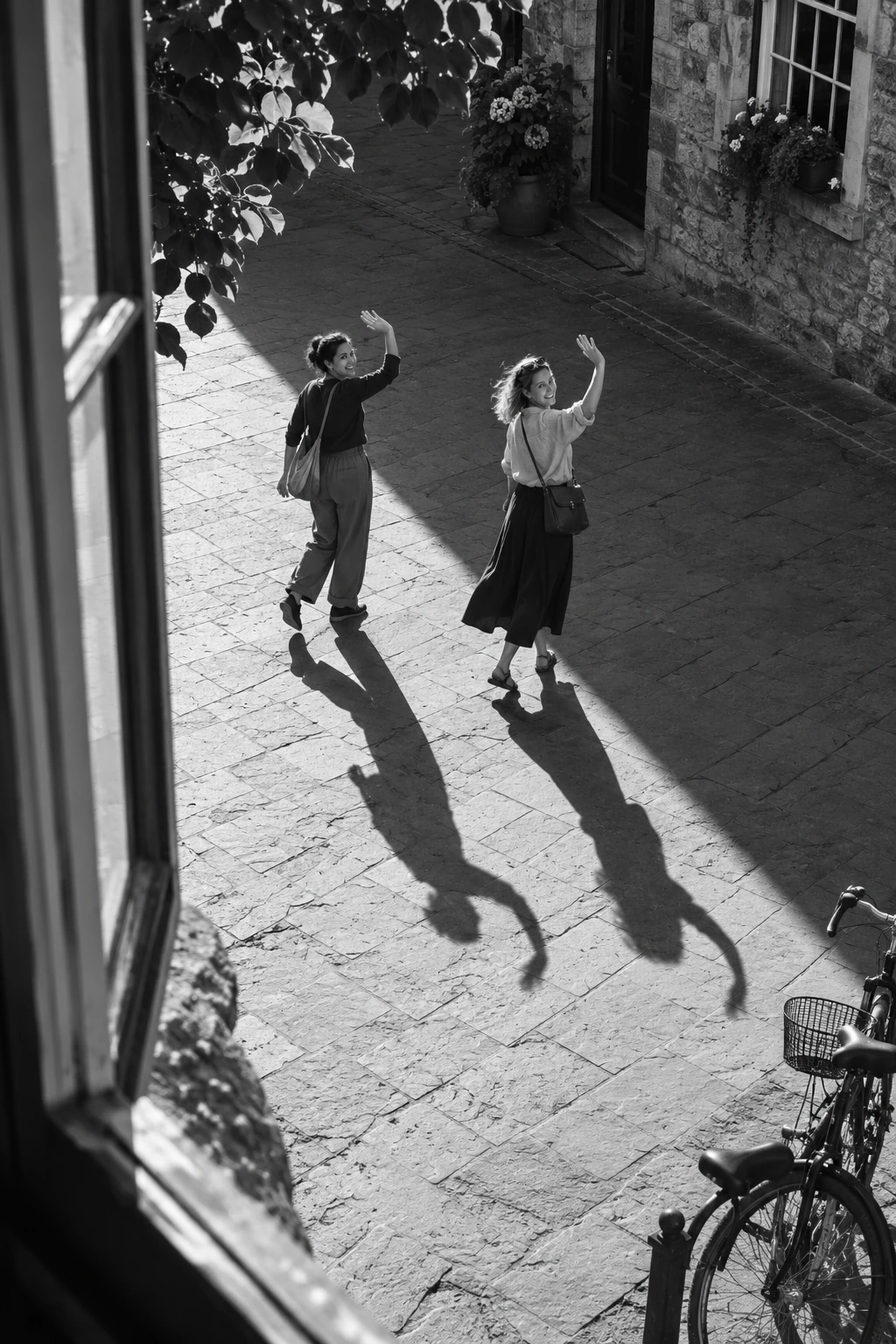
Look for an action with a little time left in it. A hand has almost reached the bowl, a heel is still above the water, two people have turned but have yet to meet each other’s eyes. The space around the gesture lets us read it.
What makes a photograph candid?
At a family supper, someone can agree to be photographed, forget about the camera and reach across the table for the salt. That reach can make a candid picture. Ask them to put their elbow back where it was and the next frame becomes a re-enactment. The two frames might look nearly identical. Their captions would need to tell different stories.
Candid describes the relationship between the photographer and the action. Street photography names a setting and tradition, while photojournalism also brings a duty to report events accurately. A wedding kitchen, a rehearsal room or a quiet conversation at home can offer as much to a candid photographer as a busy pavement.
One heel and a sheet of water
Henri Cartier-Bresson’s Behind the Gare St. Lazare, made in 1932, rewards attention to a very small gap. Look under the leaping figure’s forward heel. Water and reflection give the viewer a measure of the distance still to fall. The blurred body conveys speed, while the fence and the objects in the water hold the frame steady. Cover the reflection with a slip of paper and see how much harder it becomes to feel the impending splash.
For another use of the frame, open Cartier-Bresson’s Seville, Spain (1933). Trace the broken wall before looking at the figures. The openings organize different pockets of activity. In a room full of people, an ordinary doorway can do similar work. Choose the position from which two gestures will remain distinct, then give the scene time to change.
What a photograph can tell us about a stranger
Between 1938 and 1941, Walker Evans made portraits of New York subway passengers with a concealed camera. The National Gallery of Art’s teaching collection asks a deceptively difficult question about three women sharing one frame. Can the viewer tell whether they are traveling together? A camera can establish that people occupied adjoining seats. Their relationship may remain unknown.
Evans’s method also asks who gets to decide that an ordinary commute becomes a public image. At a gathering, explain what you are photographing and where the pictures will go. People can then return to their conversation. A request to leave a picture out deserves attention even when it happens to be the strongest frame of the afternoon. The National Press Photographers Association’s visual guidelines give a specific newsroom standard for accurate captions, respectful treatment and staging.
Choose your distance before your shutter speed
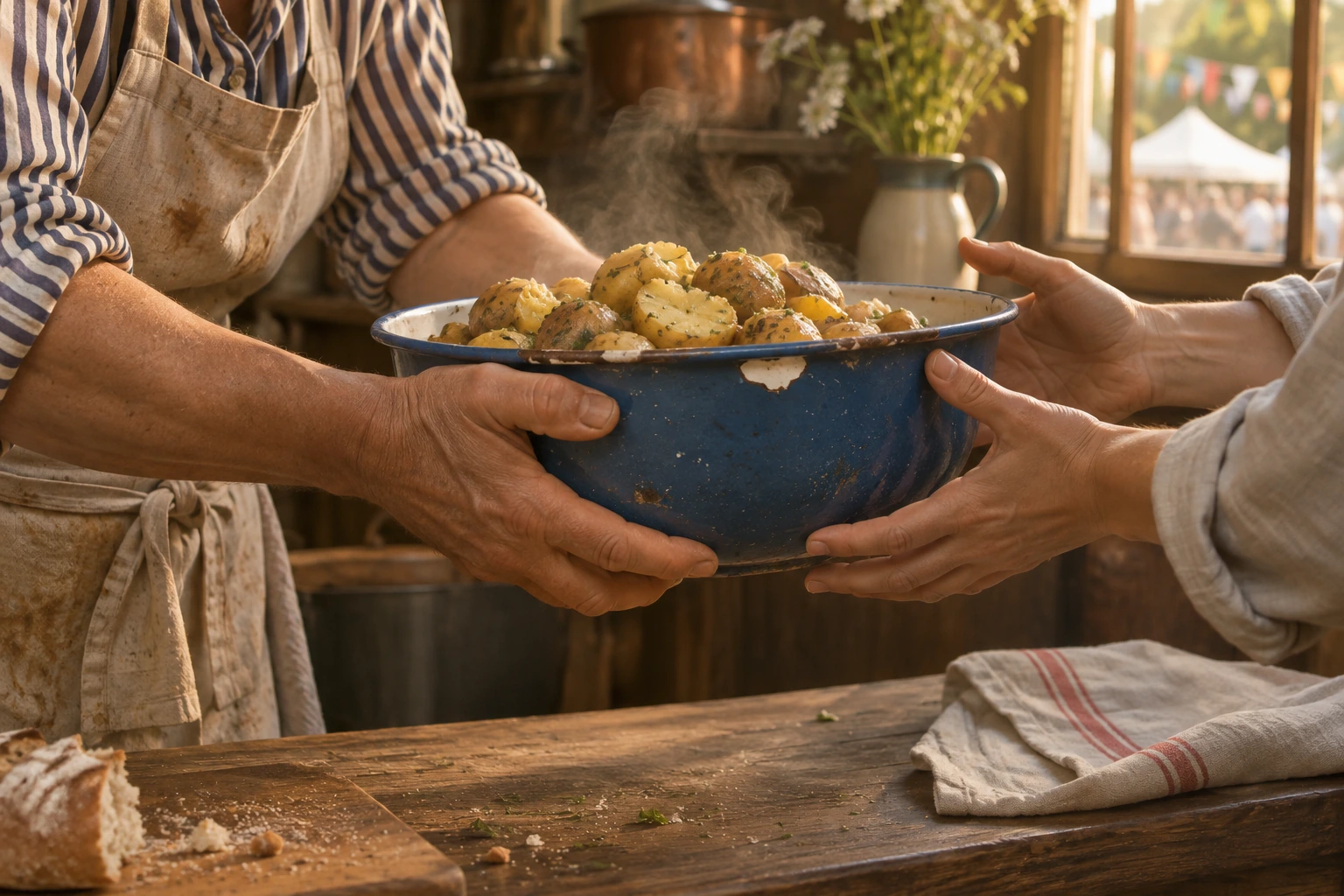
For a handoff, stand far enough back to see who is giving and who is receiving. Make three frames around the exchange. In the first, two people may simply be holding out their hands. In the middle, the weight belongs briefly to both. In the last, one person has let go. Look for the instant at which that transfer becomes clear. A crop through both wrists can erase the whole story.
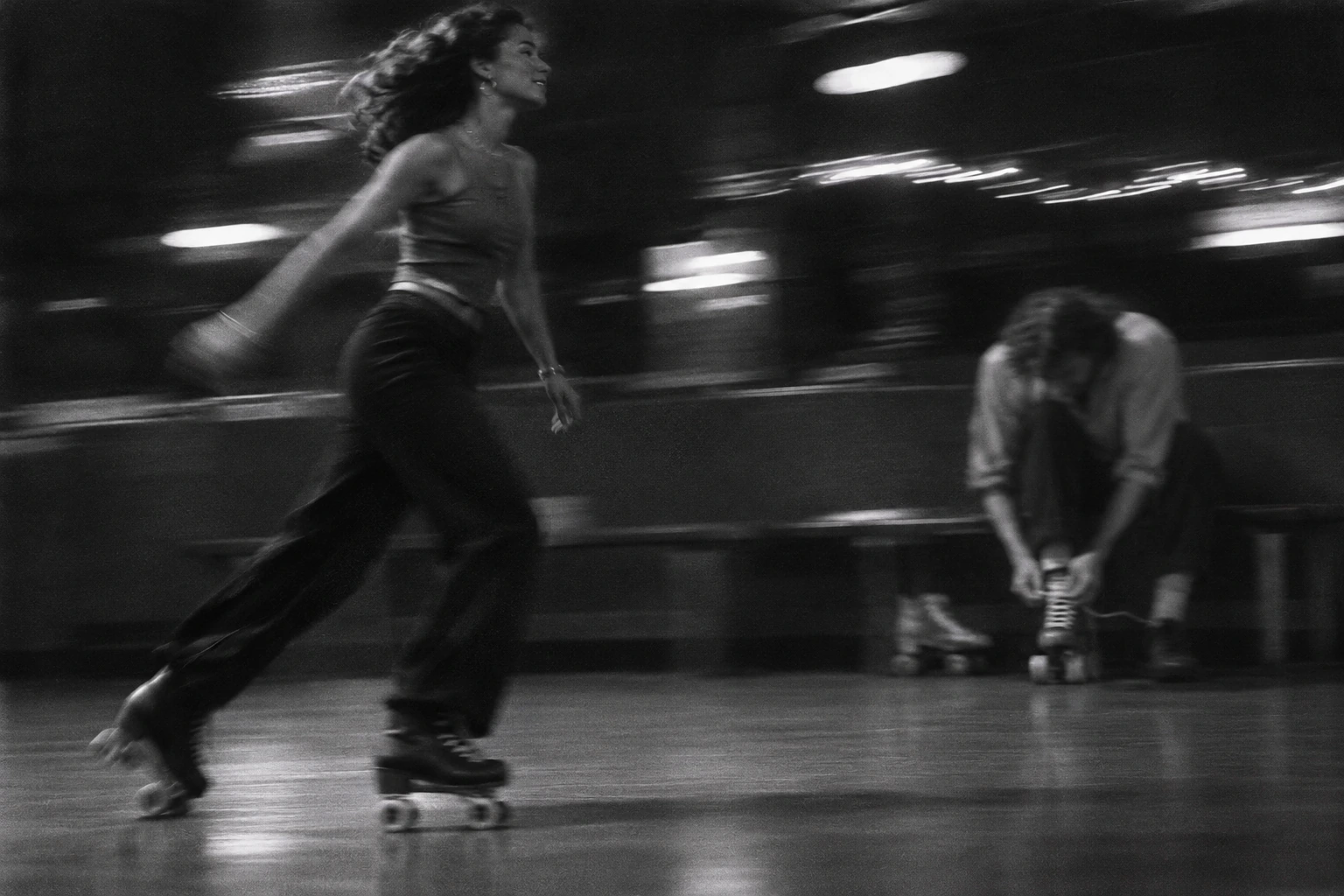
For a skater crossing your view, try a fast exposure around 1/500 second, then follow the torso through a slower exposure around 1/30. Use those values as starting points and check the result at your actual distance and light level. In the sharp frame, read the angle of a wheel. In the slower one, see whether a face or shoulder stays legible against the moving streaks. Pick the frame that explains the movement.
Read an invented scene differently
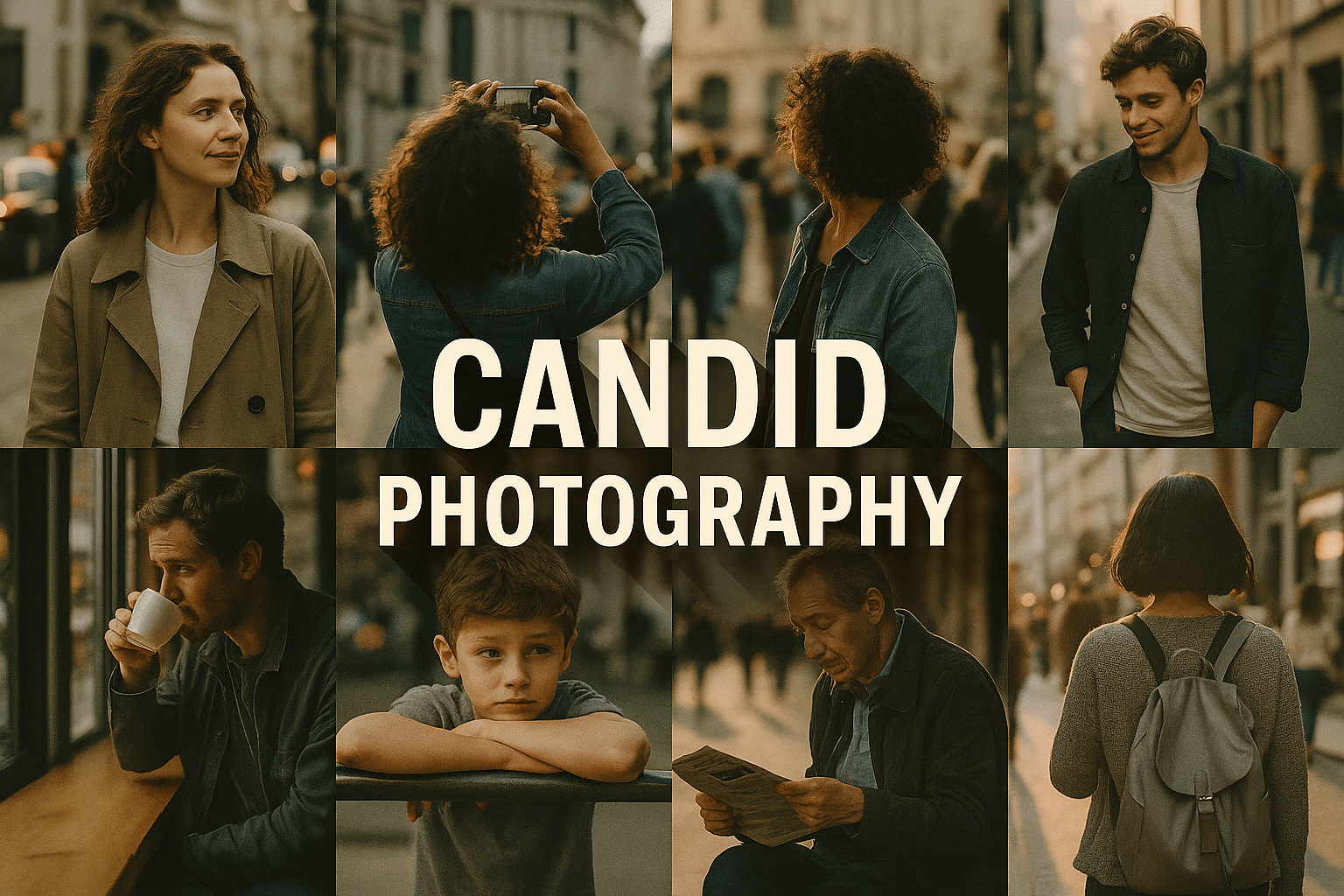
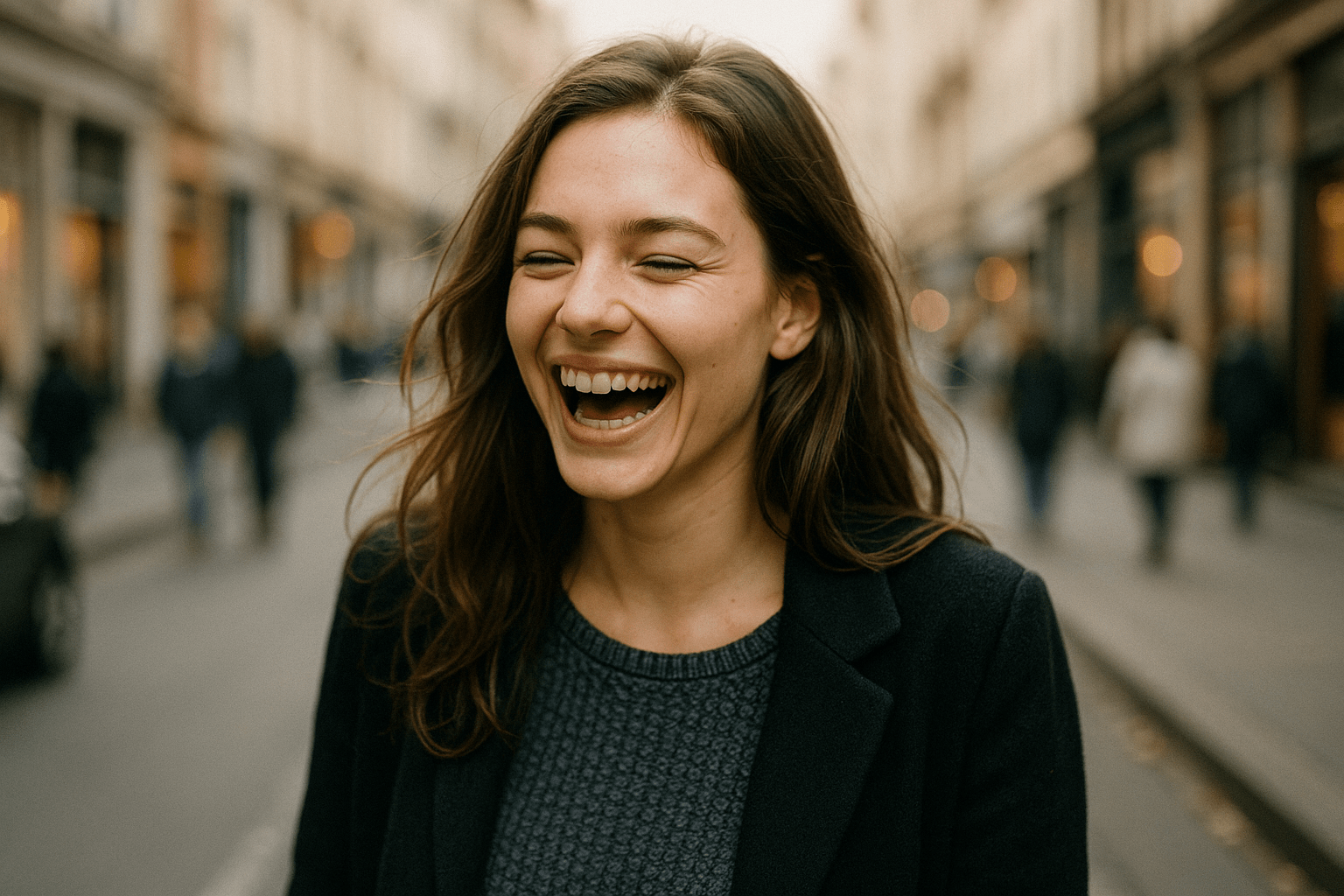
The AOI gallery uses AI-generated interpretations to isolate decisions about timing and composition. No shutter recorded the pictured events. Compare the laughing portrait with the bowl handoff. The portrait gives you an expression but leaves its cause outside the frame. The bowl gives you resistance, direction and a second person, even with both faces out of view.
Try writing a caption for either picture using only what is visible. Then underline every word that assumes a feeling, a relationship or something that happened earlier. That small edit is valuable both when describing a real photograph and when labeling a synthetic study. The documentary examples are the museum photographs linked below.
Positive review · AI-authored editorial assessment
The handoff is a persuasive example because the weight of the bowl is legible. You can follow the small negotiation between four hands without supplying a backstory.
Negative review · AI-authored editorial assessment
A smiling stranger against a soft background can be an attractive picture and a poor explanation of a moment. Leave enough of the surroundings for the viewer to ask what drew the smile.
Neutral review · AI-authored editorial assessment
A frame can establish a gesture and still leave its motive open. The subway portraits make that tension especially clear. Try describing what each passenger does before deciding what anyone feels.
A small poetic detour
Original words from the AOI studio.
Poetry
The blue bowl crosses half the table.
For one small beat its weight is shared.
Then someone reaches for the pepper,
and supper carries on.
The prompt workshop
Original creative exercises. These prompts create new illustrations, not documentary evidence.
Start with one decision
Create a fictional candid-style image of two adults passing a bowl across a kitchen counter. Leave a sliver of space between one thumb and the rim so the viewer can tell who still carries the weight.
Build a scene
Make a pair of invented roller-rink studies from bench height. In one, freeze the skate wheels. In the other, pan with the moving torso and let the lights trail. Keep the same framing so the change in motion is easy to see.
Change the framing
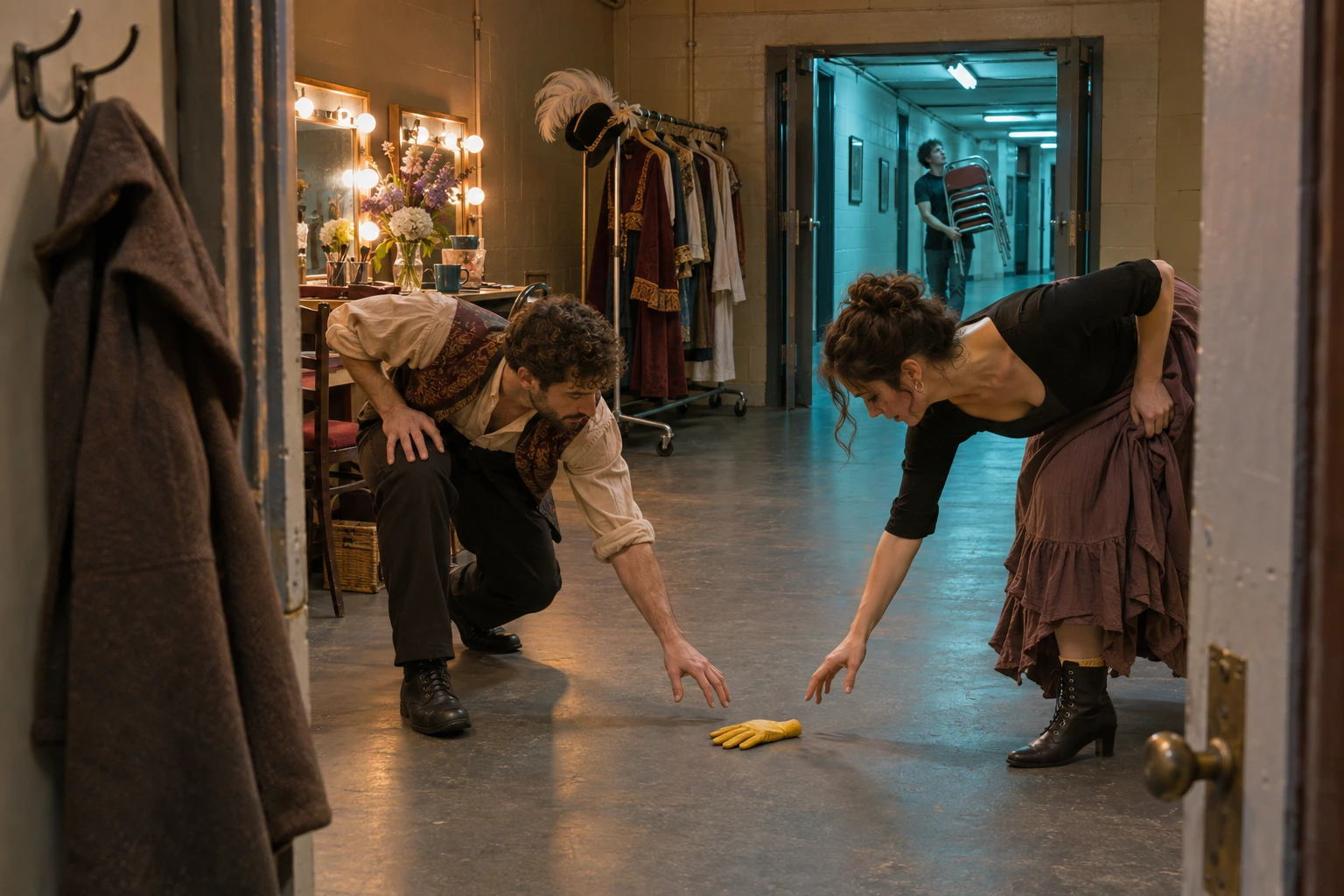
Imagine a rehearsal ending in three planes of depth. In front, a coat on a hook. In the doorway, two performers reach for one dropped prop. Beyond them, a person stacks chairs. Separate the outlines and use the hallway light to connect the actions.
Your next inspiration
Discover another art style
Follow a visual thread to the next subject.
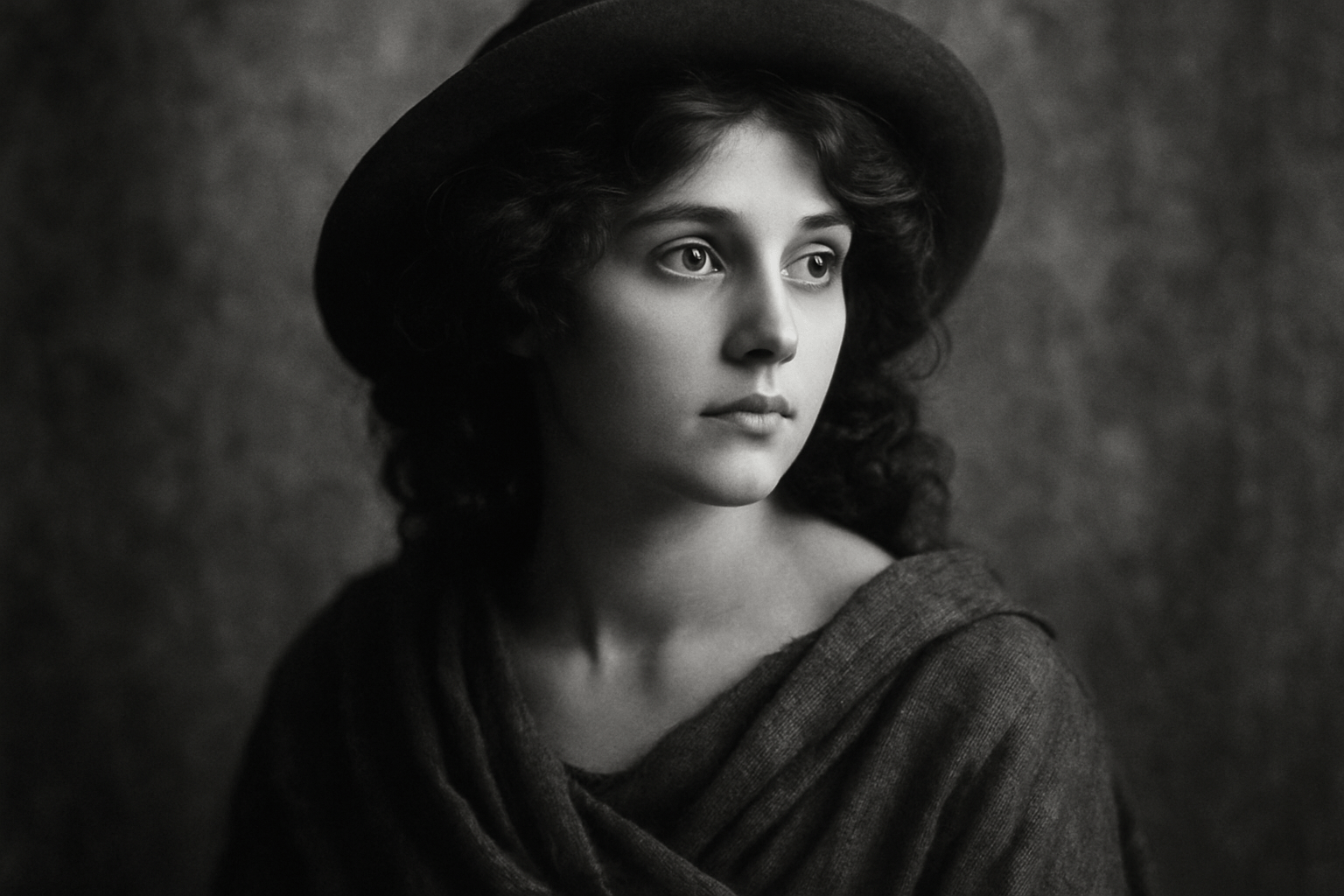
Historic Black and White Photography
An old photograph is more than a modern image with the color removed.

People & works to explore
References discussed in this article. Consult the sources below for context.
Artists and practitioners
Henri Cartier-Bresson
Walker Evans
Paintings and other works
Behind the Gare St. Lazare (1932) — Henri Cartier-Bresson
Seville, Spain (1933) — Henri Cartier-Bresson
Subway Portrait — Walker Evans
A smile from the studio
Jokes
The best frame of the group portrait happened just after somebody said, “Right, that’s the group portrait done.”