Chinese painting technique
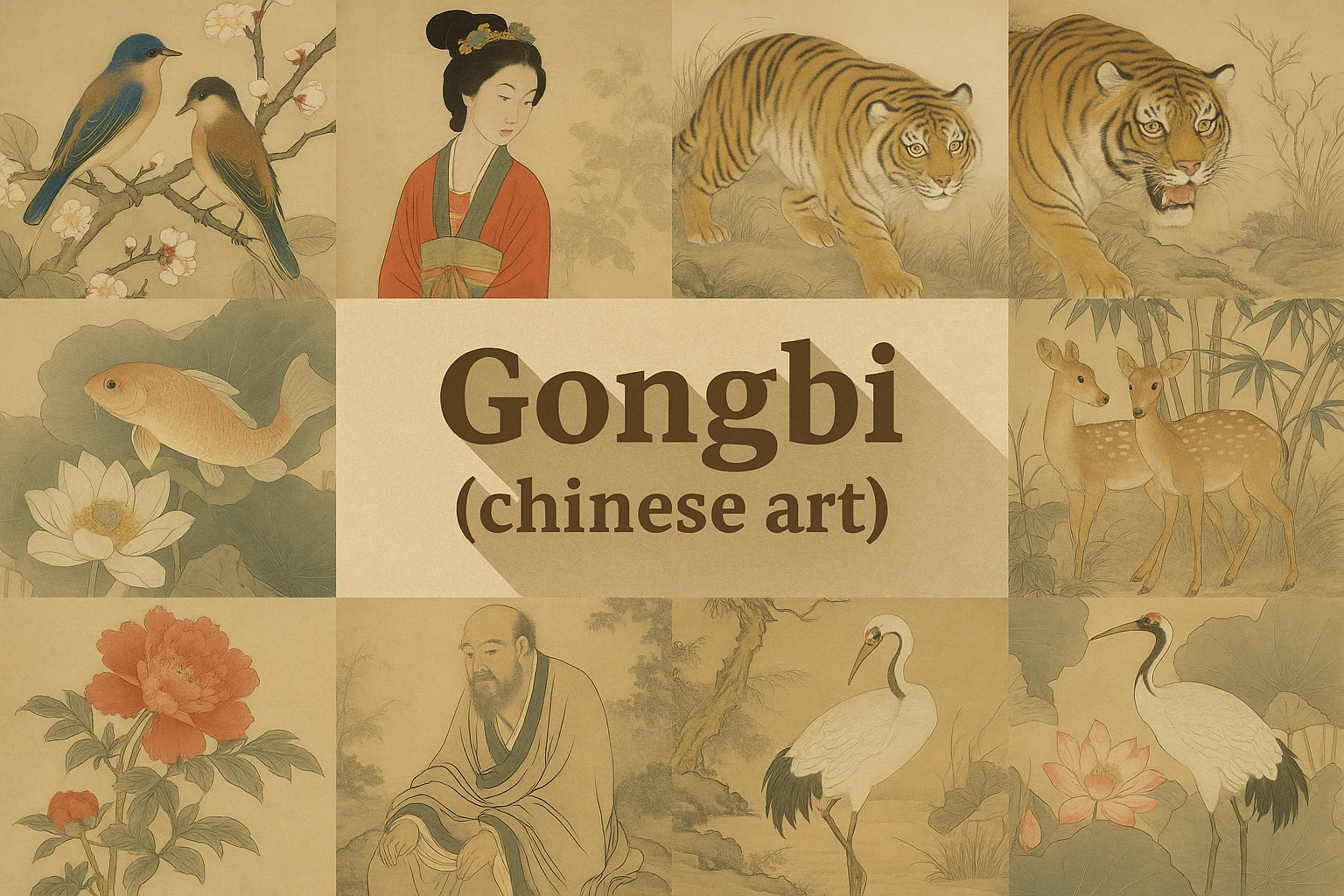
Gongbi emphasizes deliberate, meticulous brushwork. Its precision can coexist with subtle color and a lively sense of the subject.
A closer look
For an original botanical study, begin with the rhythm of stems and the spacing of leaves before detailing veins.
Understanding the subject
Gongbi is a meticulous approach within Chinese painting, not a substitute name for all Chinese art. Fine contour and carefully controlled color are useful points of attention, but works vary in subject and handling. Museum examples should be studied individually rather than reduced to a rigid formula. The distinction between precise description and broader expressive brushwork is a starting point for looking, not a ranking of artistic value.
AOI looking and making workshop
For an original botanical study, begin with the rhythm of stems and the spacing of leaves before detailing veins. Keep contours varied enough to describe turning forms, and let color build quietly within them. A pale ground can make a small change in hue or line weight meaningful. Avoid filling every empty area with ornament. In generated work, inspect where stems meet leaves and whether petals follow a coherent structure. Do not add invented calligraphy or seals that imply an artist’s signature or historical provenance.
The prompt workshop
Original creative exercises. These prompts create new illustrations, not documentary evidence.
A careful branch
Create an original meticulous botanical illustration of a camellia branch, fine controlled contours, softly layered color and a pale unmarked ground. Keep leaf attachments coherent and leave generous open space.
Bird and plant rhythm
Create an original fine-brush-inspired study of a small bird among seed-bearing grasses, delicate contours and restrained mineral-like colors. Balance precise detail with quiet background space, without seals or calligraphy.
Precision and absence
Create a contemporary botanical composition in which one carefully described iris emerges from broad untouched paper. Use fine contours and subtle color transitions, allowing the empty area to shape the composition.
Your next inspiration
Discover another art style
Follow a visual thread to the next subject.