
European art histories · Painting, architecture and relief
Explore Renaissance art through a tiled arcade, a brass jug and a terracotta relief. Compare Italian perspective with oil painting in the Low Countries.
A visual introduction
Five contemporary teaching illustrations compare the construction of space. The museum sources identify historical techniques and objects.
Select an image for a closer look. Use the thumbnails, arrow keys or a swipe to compare examples. Zoom in to inspect details, or share the image that inspires you.
A closer look
Look at three kinds of space: tiles narrowing to a door, a window bending across brass and a landscape barely raised from clay.
Measuring a room
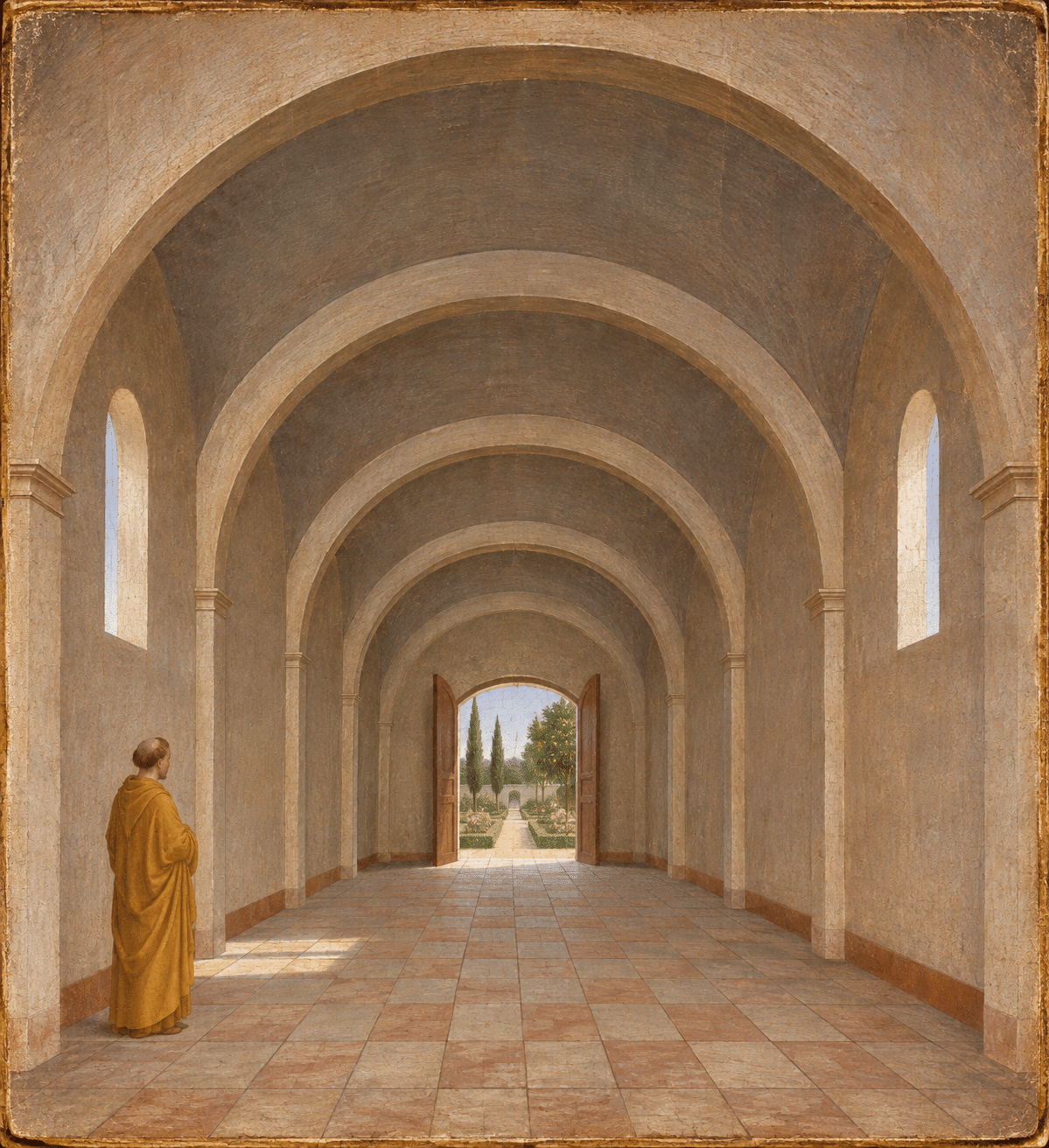
Stand in the imagined arcade and cover the open door. The floor still leads toward the garden: two receding rows of tiles narrow at a consistent rate. Uncover the door and you can locate the height of your own eyes in the picture. The ochre figure at the side gives the room a human measure. A painter working on a flat panel needs surprisingly few marks to suggest a room you could enter.
Renaissance is a broad historical term. Workshops across Europe drew on different materials, patrons and older traditions. In fifteenth-century Italy, Alberti described how a painter could construct a view from a chosen position. Knowing that method helps explain the arcade; it does not make a single-point grid a test every Renaissance work must pass.
When a window bends
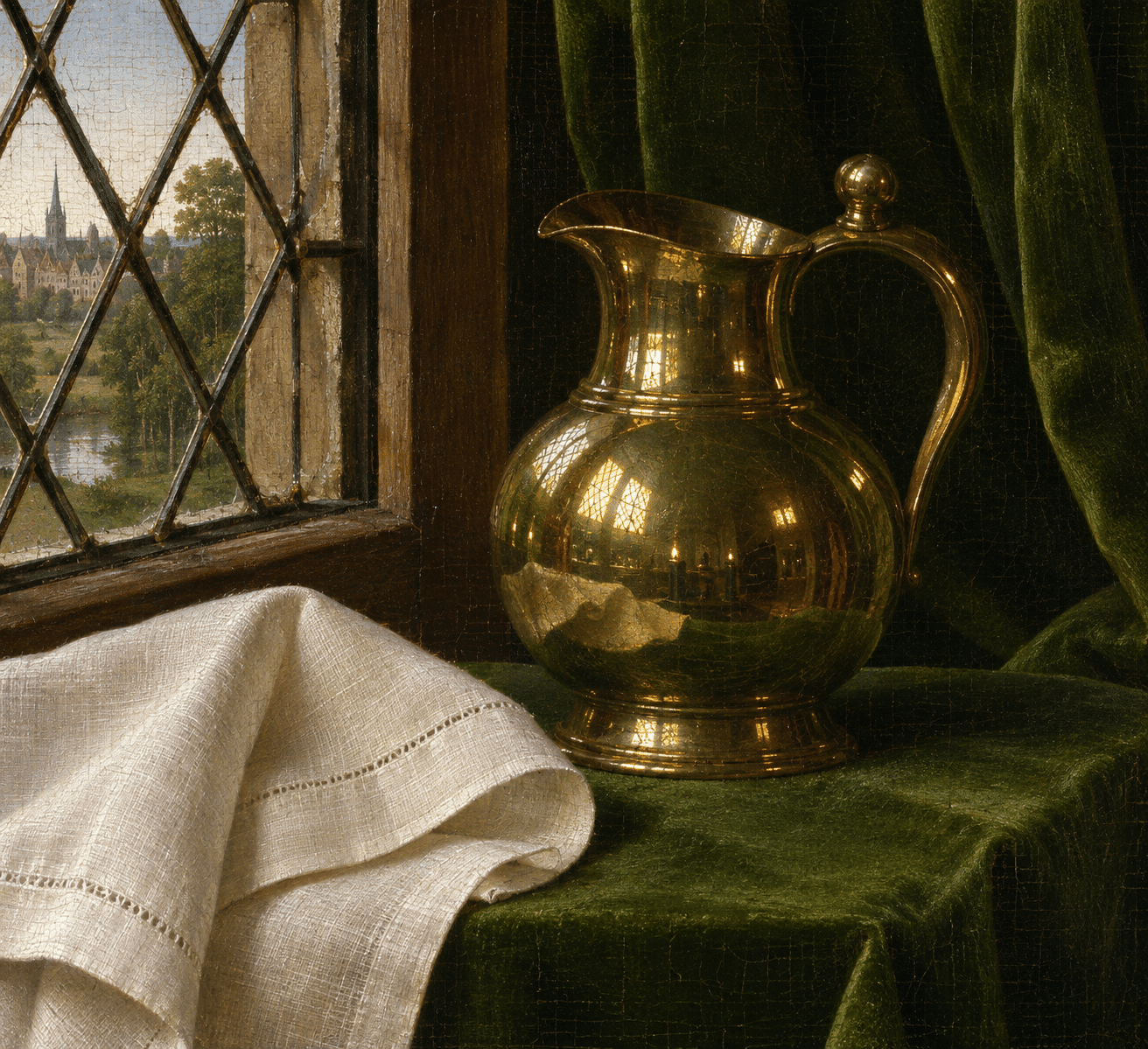
On the brass jug, a little bright grid is visible twice. At the neck its divisions are narrow; on the belly they spread and curve. The window frame itself stays straight. Compare the linen beside it, where the light breaks into broad folds without reflecting the window. A painter has described two materials using the same light source.
The Metropolitan Museum describes the importance of layered oil painting in the Low Countries and its spread south. Jan van Eyck did not invent oil paint. His work demonstrates how much could be done with translucent layers, minute reflections and carefully placed opaque lights. Our jug is a modern exercise in seeing those differences, not a work attributed to his workshop.
Distance in a few millimetres
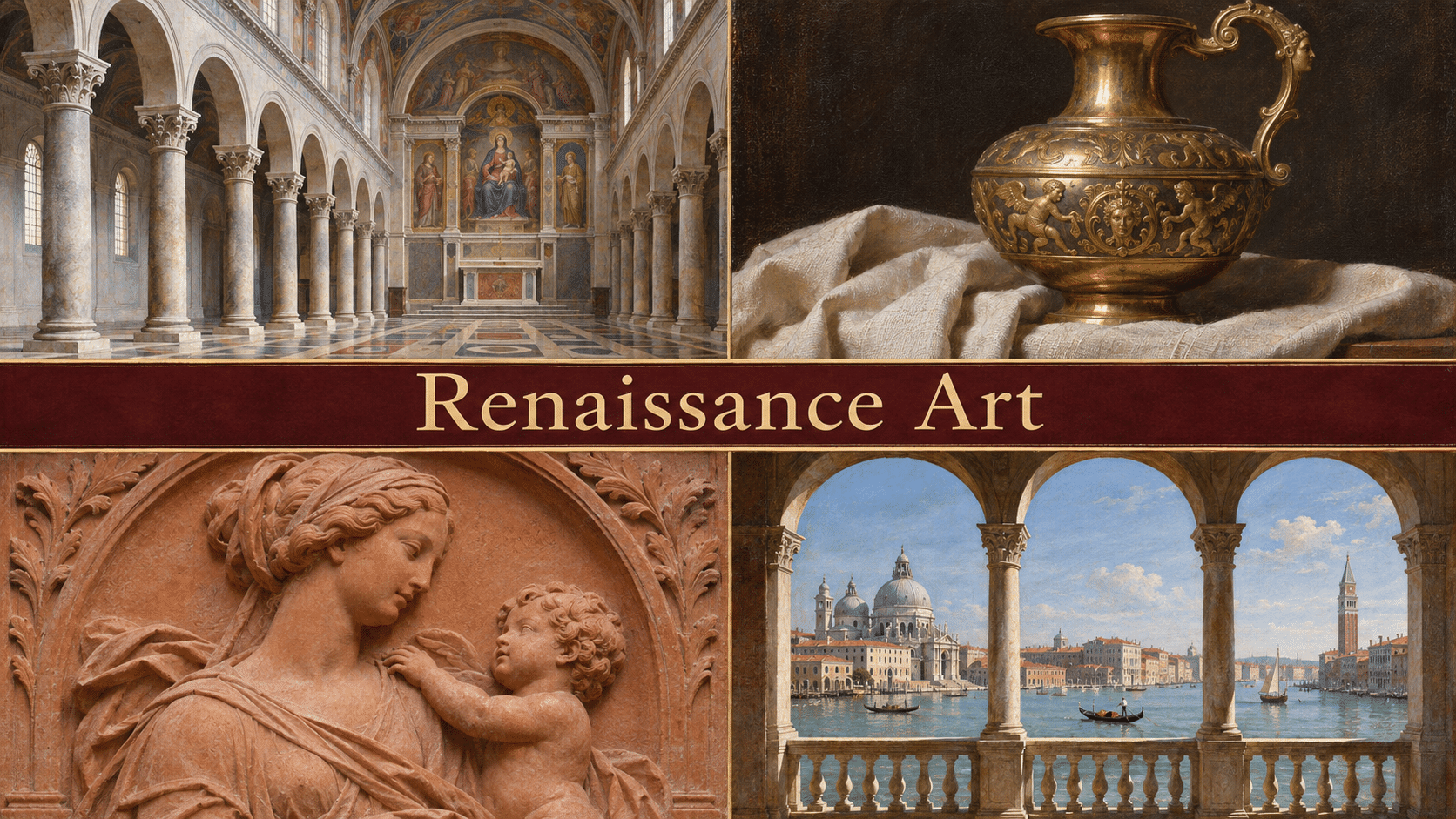
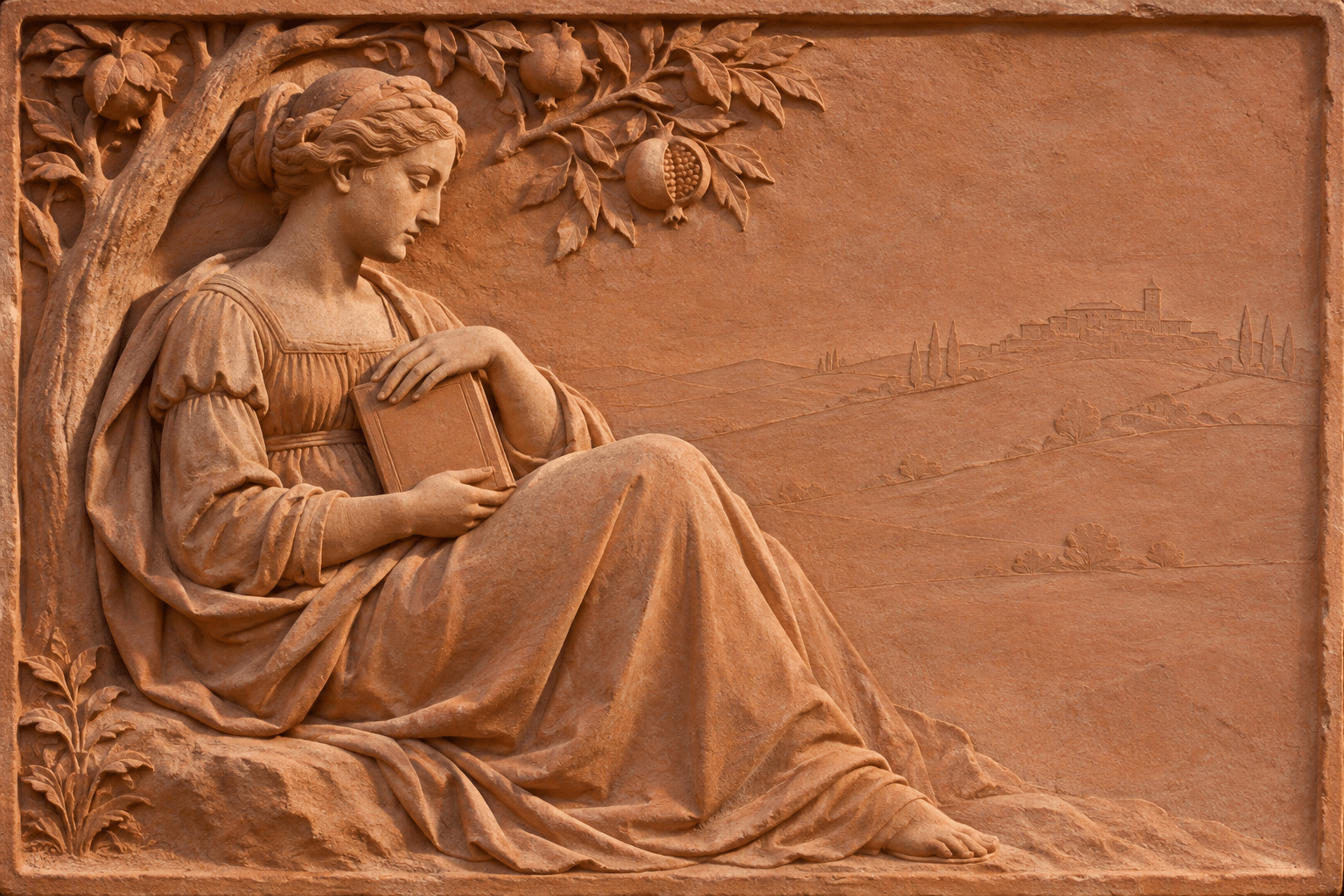
In the terracotta study a seated reader holds a book. The hand lifts clear of the cover and casts a shadow. Across the right-hand field a few nearly flat lines stand for a hill town. No colour change is needed: the imagined sculptor has changed how far each part projects. Trace a line from the knee to the distant roofs; where do shadows stop carrying the distance and outlines take over?
Use the collage as a comparison
The arcade, vessel, relief and canal invite different viewing distances. Its invented Venetian scene includes architecture from later periods; it illustrates a framing device rather than a reconstruction of Renaissance Venice. For a drawing experiment, frame a modern view through a doorway, draw the same view on a shiny spoon, then suggest it in pressed card. Each version will force a different choice about what to leave out.
A small poetic detour
Original words from the AOI studio.
Poetry
A tile narrows to a gate.
The little window bends in brass.
A fingertip lifts from the clay;
a whole hill stays behind.
The prompt workshop
Original creative exercises. These prompts create new illustrations, not documentary evidence.
Measure a passage
Draw a vaulted passage from one standing eye level. Set a gardener beside the first arch; use receding tiles to lead the eye to the garden.
A window on two surfaces
Place a brass vessel and pale folded linen beside a diamond-paned window. Paint the panes only where the metal would reflect them.
Less clay, more distance
Design a shallow clay relief of someone reading beneath a tree. Raise the fingers and book; give the far hills almost no relief.
A smile from the studio
Jokes
Choose one of the studies and describe its space without saying “deep” or “far.” Can a partner identify it from your verbs?
Sources and further exploration
National Gallery: Leon Battista Alberti
Metropolitan Museum: Painting in Oil in the Low Countries and Its Spread to Southern Europe