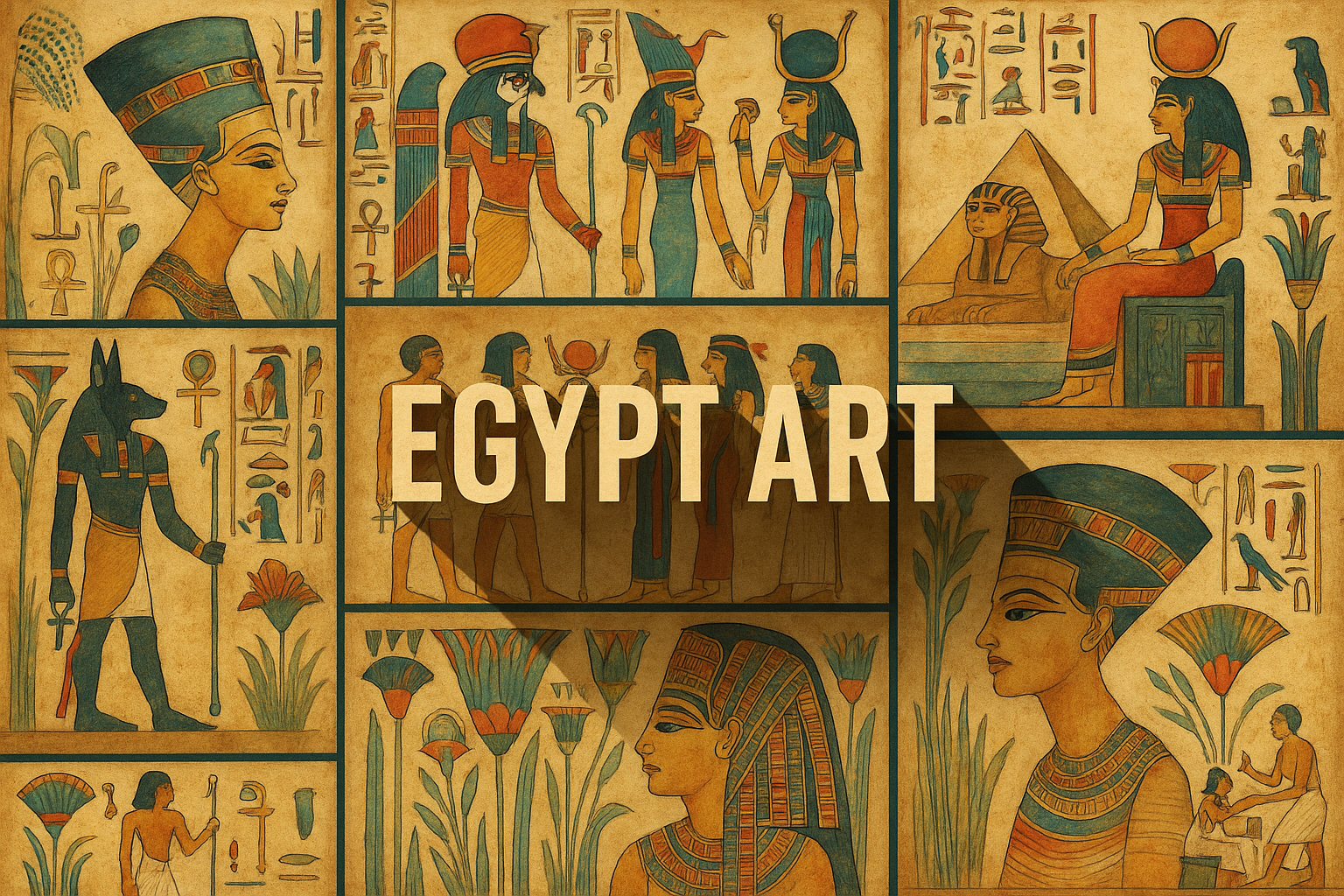
Egypt art
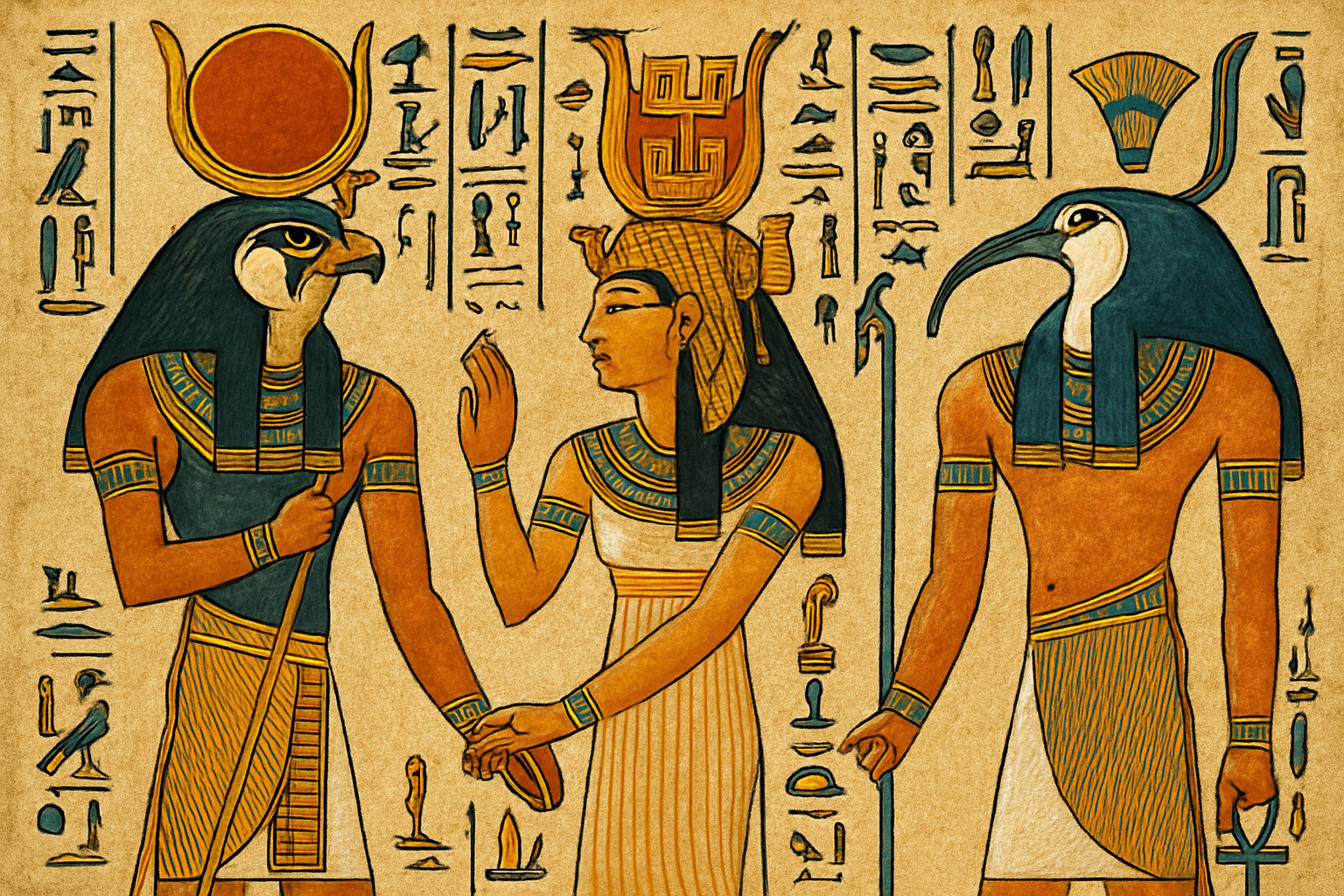
The art style of ancient Egypt is characterized by its use of simple lines and shapes. Egyptian artists often used a limited palette of colors, which resulted in a distinctive style of art.
AOI thinking about Egypt art [+_~]-/
Overview and Quickfacts
The art style of ancient Egypt is characterized by its use of simple shapes and flat areas of color. Egyptian artists used a limited palette of colors, which they applied in a highly stylized manner. Common motifs in Egyptian art include images of the sun, animals, and pharaohs. Egyptian art is known for its distinctive style, which features simple shapes and flat areas of color. Egyptian artists used a limited palette of colors, which they applied in a highly stylized manner. Common motifs in Egyptian art include images of the sun, animals, and pharaohs.
Can understand it also, as:
Egyptian art
Categorize it as:
Impressionism, Modernism
.: Dreaming :.
holds a HAIKU for the art style
:. Thought is power .:
Detailed Description
Egyptian art is perhaps best known for its iconic pyramids and Sphinx, but thereÃÂÃÂs so much more to this ancient artistic tradition. From painted tomb walls to delicate sculptures, Egyptian artists created a wide range of art forms that have captivated audiences for centuries. HereÃÂÃÂs a closer look at the history and legacy of Egyptian art: The earliest examples of Egyptian art date back to around 4000 BCE, when the first signs of human settlement appeared in the Nile Valley. These early artworks were mostly small figurines and statues made from stone and clay. By the Old Kingdom period (2686-2181 BCE), Egyptian art had reached a high level of technical and artistic skill. This is best seen in the massive pyramids and temples built during this time. The art of the Middle Kingdom period (2055-1650 BCE) is marked by a return to smaller scale works, including statues, reliefs, and paintings. The New Kingdom period (1550-1070 BCE) saw a renewed interest in grandiose architecture, as well as the development of new art forms such as painted papyrus scrolls. During the Late Period (664-332 BCE), Egyptian art was heavily influenced by the art of other cultures, including the Greeks and Romans. Egyptian art continued to be popular in the centuries after the Roman conquest, with many Egyptian-style works being produced in Europe and the Middle East. Today, the legacy of Egyptian art can be seen in the many museums and collections that showcase these ancient masterpieces.
.. beep, beep, beep ..
<START OF TRANSMISSION>
1. Egyptian art is some of the oldest in the world, dating back to at least 4000 BCE.

2. It is characterized by its use of simple, geometric forms and its reliance on a limited palette of colors, typically including black, white, red, and blue.

3. Egyptian artists often used relief carving and painting to decorate their works, as well as employing a variety of other techniques such as inlaying, gilding, and enameling.

4. Common motifs in Egyptian art include gods and goddesses, animals, nature scenes, and scenes of daily life.

5. Egyptian art is often highly stylized, with figures often shown in profile or in frontal views, and with little attempt at realism.

6. One of the most distinctive features of Egyptian art is its use of hieroglyphs, which are both pictorial and written symbols that were used to convey information.

7. Egyptian artists also made use of a variety of materials, including stone, wood, metal, glass, faience, and papyrus.

8. Egyptian art was highly influential in the development of later art movements, such as Coptic art and Islamic art.

9. It has also been noted for its influence on modern art, with many artists citing it as an inspiration for their own work.

10. Some of the most famous examples of Egyptian art include the Great Sphinx of Giza, the tomb of Tutankhamun, and the Temple of Karnak.

11. The British Museum in London houses one of the largest collections of Egyptian art in the world.

12. The Egyptian Museum in Cairo is another major repository of Egyptian art, with over 120,000 pieces on display.

13. The Louvre in Paris also has a significant collection of Egyptian art, which includes the famous bust of Nefertiti.

14. The Metropolitan Museum of Art in New York City also has a significant collection of Egyptian art, which includes the Temple of Dendur.

15. The Brooklyn Museum in Brooklyn, New York, also has a large collection of Egyptian art, which includes the Temple of Dendur.

16. The Museum of Fine Arts in Boston, Massachusetts, also has a significant collection of Egyptian art.

17. The San Francisco Museum of Modern Art in San Francisco, California, also has a large collection of Egyptian art.

18. The Los Angeles County Museum of Art in Los Angeles, California, also has a significant collection of Egyptian art.

19. The Detroit Institute of Arts in Detroit, Michigan, also has a large collection of Egyptian art.

20. The Seattle Art Museum in Seattle, Washington, also has a large collection of Egyptian art.
<EOF>
.. robbel bob
Visual Examples from our image gallery
Coming soon, we are so slow .. might never come
Artists, Paintings, and more
(be aware, can be highly speculative)
Artists (be aware, speculation possible):
1. Thutmose III (1458ÃÂÃÂ1425 BC) 2. Hatshepsut (1479ÃÂÃÂ1458 BC) 3. Akhenaten (1353ÃÂÃÂ1336 BC) 4. Nefertiti (1370ÃÂÃÂ1330 BC) 5. Tutankhamun (1341ÃÂÃÂ1323 BC) 6. Seti I (1318ÃÂÃÂ1304 BC) 7. Ramesses II (1279ÃÂÃÂ1213 BC) 8. Merneptah (1213ÃÂÃÂ1203 BC) 9. Seti II (1203ÃÂÃÂ1197 BC) 10. Ramesses III (1186ÃÂÃÂ1155 BC) 11. Ramesses IV (1155ÃÂÃÂ1149 BC) 12. Ramesses VI (1143ÃÂÃÂ1136 BC) 13. Ramesses IX (1136ÃÂÃÂ1133 BC) 14. Ramesses XI (1133ÃÂÃÂ1126 BC) 15. Smenkhkare (1388ÃÂÃÂ1336 BC) 16. Amenhotep III (1386ÃÂÃÂ1353 BC) 17. Akhenaten’s Family (1370ÃÂÃÂ1330 BC) 18. Kiya (1370ÃÂÃÂ1330 BC) 19. Meketaten (1370ÃÂÃÂ1330 BC) 20. Neferneferuaten (1370ÃÂÃÂ1330 BC) 21. Seti I (1318ÃÂÃÂ1304 BC) 22. Amenemhat III (1217ÃÂÃÂ1198 BC) 23. Sennedjem (1217ÃÂÃÂ1198 BC) 24. Senusret III (1186ÃÂÃÂ1155 BC) 25. Amenemhat IV (1153ÃÂÃÂ1147 BC) 26. Sobekneferu (1153ÃÂÃÂ1147 BC) 27. Khufu (2589ÃÂÃÂ2566 BC) 28. Khafre (2558ÃÂÃÂ2532 BC) 29. Menkaure (2532ÃÂÃÂ2503 BC) 30. Djedefre (2528ÃÂÃÂ2520 BC)
Artworks (be aware, speculation possible)
1. The Great Sphinx of Giza ÃÂÃÂ Unknown (c. 2558ÃÂÃÂ2532 BC) 2. Akhenaten, Nefertiti, and Three Daughters ÃÂÃÂ Unknown (c. 1353ÃÂÃÂ1336 BC) 3. The Tomb of Nebamun ÃÂÃÂ Unknown (c. 1350 BC) 4. The Temple of Dendur ÃÂÃÂ Unknown (c. 15 BC ÃÂÃÂ 10 AD) 5. The Seated Scribe ÃÂÃÂ Unknown (c. 2620ÃÂÃÂ2575 BC) 6. The Great Pyramid of Giza ÃÂÃÂ Unknown (c. 2560 BC) 7. Khafre Enthroned ÃÂÃÂ Unknown (c. 2558ÃÂÃÂ2532 BC) 8. The Golden Calf ÃÂÃÂ Akhenaten and Nefertiti (c. 1353ÃÂÃÂ1336 BC) 9. The Amarna Family ÃÂÃÂ Unknown (c. 1353ÃÂÃÂ1336 BC) 10. Nefertari ÃÂÃÂ Unknown (c. 1255 BC) 11. The Abu Simbel Temples ÃÂÃÂ Unknown (c. 1264 BC) 12. The Tomb of Khaemwaset ÃÂÃÂ Unknown (c. 1290 BC) 13. The Tomb of Amenhotep III ÃÂÃÂ Unknown (c. 1390ÃÂÃÂ1352 BC) 14. The Colossi of Memnon ÃÂÃÂ Unknown (c. 1350 BC) 15. The Temple of Karnak ÃÂÃÂ Unknown (c. 1550ÃÂÃÂ1070 BC) 16. The Luxor Temple ÃÂÃÂ Unknown (c. 1400ÃÂÃÂ1300 BC) 17. The Valley of the Kings ÃÂÃÂ Unknown (c. 1539ÃÂÃÂ1075 BC) 18. The Great Harris Papyrus ÃÂÃÂ Unknown (c. 1150 BC) 19. The Tomb of Tutankhamun ÃÂÃÂ Unknown (c. 1332ÃÂÃÂ1323 BC) 20. The Tomb of Nefertari ÃÂÃÂ Unknown (c. 1255 BC) 21. The Temple of Edfu ÃÂÃÂ Unknown (c. 237 BC ÃÂÃÂ 57 BC) 22. The Tomb of Horemheb ÃÂÃÂ Unknown (c. 1323ÃÂÃÂ1295 BC) 23. The Tomb of Ramses VI ÃÂÃÂ Unknown (c. 1145ÃÂÃÂ1137 BC) 24. The Tomb of Seti I ÃÂÃÂ Unknown (c. 1290ÃÂÃÂ1279 BC) 25. The Tomb of Ramses III ÃÂÃÂ Unknown (c. 1186ÃÂÃÂ1155 BC) 26. The Tomb of Merneptah ÃÂÃÂ Unknown (c. 1213ÃÂÃÂ1203 BC) 27. The Tomb of Thutmose III ÃÂÃÂ Unknown (c. 1479ÃÂÃÂ1425 BC) 28. The Tomb of Hatshepsut ÃÂÃÂ Unknown (c. 1458ÃÂÃÂ1425 BC) 29. The Tomb of Amenhotep II ÃÂÃÂ Unknown (c. 1427ÃÂÃÂ1401 BC) 30. The Great Temple of Amun at Karnak ÃÂÃÂ Unknown (c. 1250 BC)
Epoch
The art style of Ancient Egypt is generally dated from the 32nd century BC to the 4th century AD.
AI ART RESSOURCES (AKA, well Tools)
Helping tools -> predefined search links on other pages: