
Template test · the same Candid Photography article in G3B2.
Photography · Observation and timing
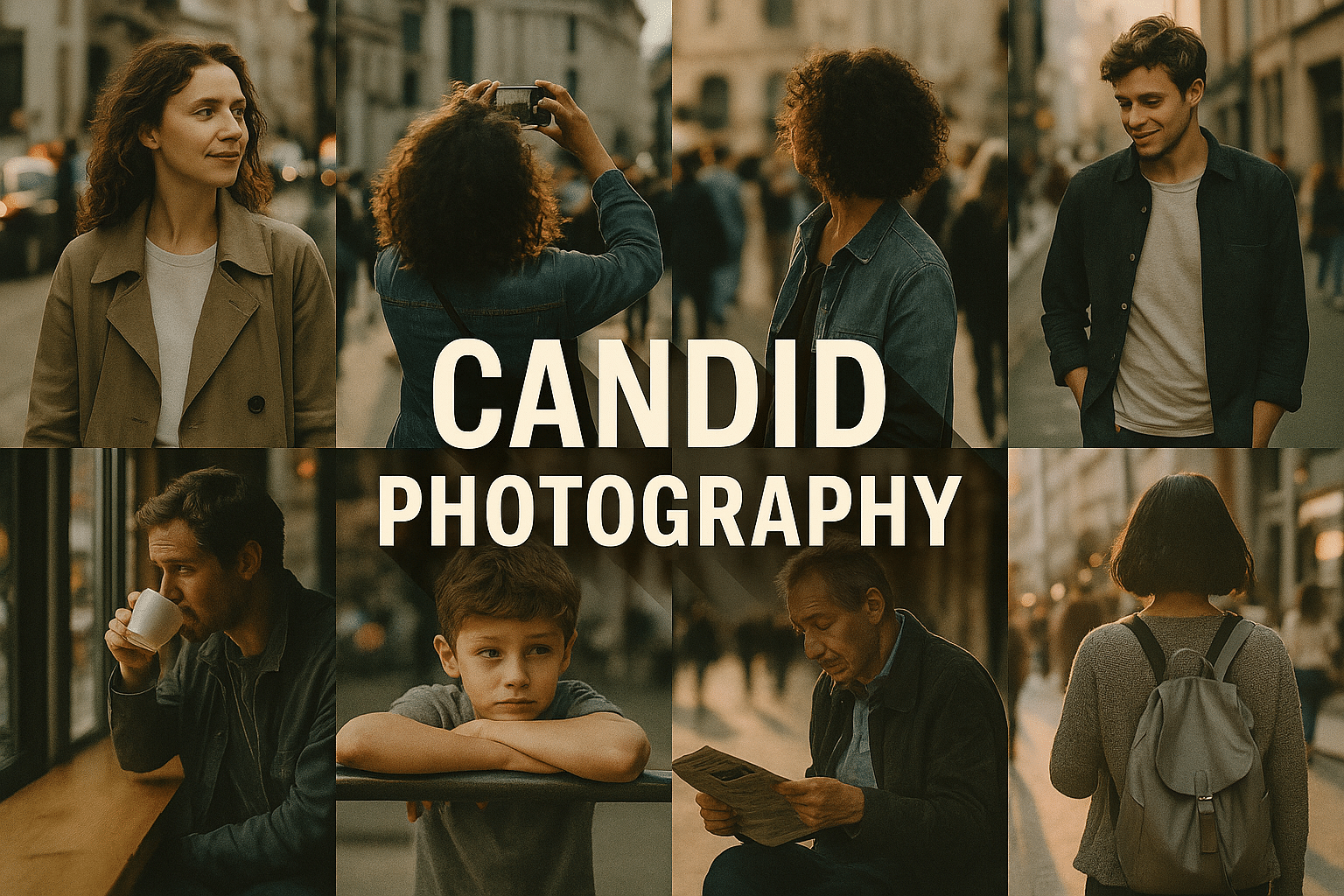
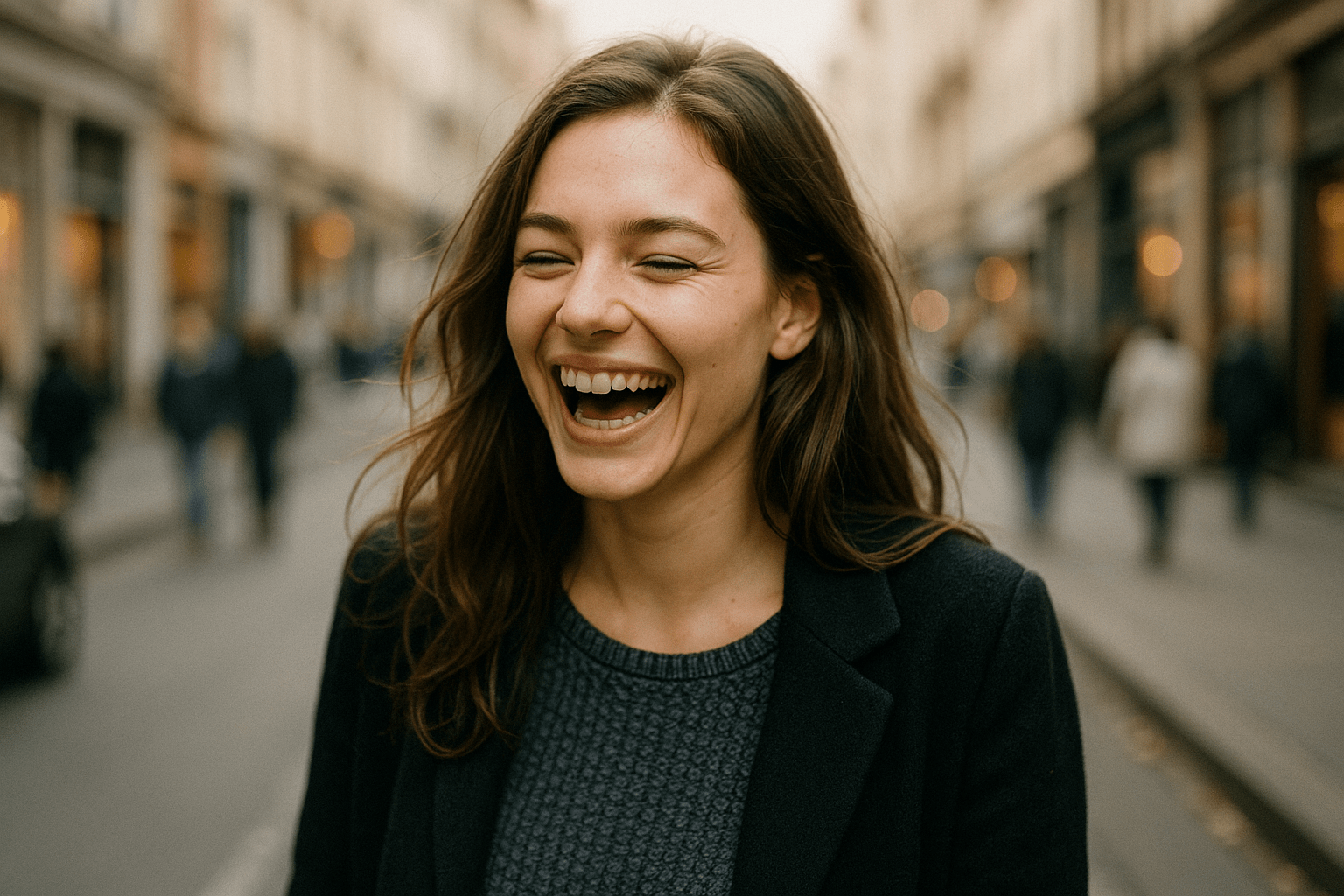
A laugh arrives before the pose. Someone pauses at a doorway while the street continues behind them. Candid photography pays attention to these unarranged moments, but an unposed subject does not make a considered photograph by itself. Timing, background and the relationship between people still do the work.
A visual introduction
Open any image to look closer, then browse the examples.
Creative toolbox · take this style further
Choose an input, adjust it, then open a tool. Search links pass your text to the destination. Copy & open copies it for you to paste into the generator; you start generation there.
ChatGPT
Copy your input and paste it into a ChatGPT conversation or image request.
Copy & open ChatGPT (new tab)Claude · Anthropic
Develop an image prompt or explore the style in a new Claude conversation.
Copy & open Claude · Anthropic (new tab)Midjourney
Paste your input into the Imagine bar on the Create page.
Copy & open Midjourney (new tab)Adobe Firefly
Copy your input, open Firefly, and paste it into the prompt field.
Copy & open Adobe Firefly (new tab)Leonardo.Ai
Copy your input, open Leonardo, and paste it into the generation field.
Copy & open Leonardo.Ai (new tab)Lexica
Search AI images and prompts using your selected input.
Search with this input Lexica (new tab)Pexels
Search the photo and video library. Short keywords often work best.
Search with this input Pexels (new tab)Pixabay
Search photos, illustrations and other images.
Search with this input Pixabay (new tab)Unsplash
Search photographs using the style name or your own keywords.
Search with this input Unsplash (new tab)Wikipedia
Search for background reading. A style may not have its own article.
Search with this input Wikipedia (new tab)WikiArt
Copy your input into WikiArt’s search to explore artists and artworks.
Copy & open WikiArt (new tab)Instagram hashtags
Search a hashtag made from your input: spaces and punctuation are removed. Instagram may require sign-in.
Search with this input Instagram hashtags (new tab)A closer look
Look for gestures that feel connected to an activity rather than to the camera: hands exchanging an object, a glance across a table, a body turning into available light. A useful frame gives those small actions enough space to be understood.
Unposed is a relationship, not a filter
Candid photography describes how a moment is approached rather than a fixed color palette or camera setting. Adobe distinguishes it from actively directing a portrait: the subject is not performing a prescribed pose for the picture. People may know a photographer is present and still return to their own conversation or task. Quiet observation can therefore be more productive than trying to make the camera a secret.
Start by identifying an activity worth following. At a shared meal, the story might sit in the interval between serving and eating; in a workshop, it might be a hand waiting for a tool. Choose a background that makes the gesture legible. An expression caught against a cluttered sign can be less informative than an ordinary movement framed by a clear doorway.
Timing and structure
Henri Cartier-Bresson’s Seville, Spain, dated 1933 in MoMA’s collection, offers a way to think about people and their surroundings together. Use the museum record as a starting point for looking at how figures occupy a damaged architectural setting. Ask where your eye enters the photograph and how the frame connects separate actions. The lesson is not to copy a famous arrangement, but to notice that a fleeting event can still have a strong structure.
For a simple exercise, follow one small event and make a short sequence: before a gesture, during it, and just after. Compare the results later. The most exaggerated expression may not be the most revealing frame. Look for the point at which the subject, background and neighboring people form a readable relationship.
Photograph people with care
An apparently spontaneous picture is still your selection of someone else’s moment. Explain your project when appropriate, respect objections, and avoid treating embarrassment or vulnerability as a shortcut to interest. These are editorial principles for the exercise, not a substitute for the rules of a particular venue. The featured image here is generated: it demonstrates a candid-looking composition, not proof that a real person was photographed unawares.
Pocket-sized facts
Candid describes the approach to the moment; it does not require monochrome, blur or a hidden camera.
MoMA dates Cartier-Bresson’s Seville, Spain to 1933.
A small poetic detour
Original words from the AOI studio.
Poetry
A laugh leaves the frame.
The doorway keeps its quiet;
Footsteps carry on.
The prompt workshop
Original creative exercises. These prompts create new illustrations, not documentary evidence.
A passing laugh
An original photographic-style illustration of two adult friends laughing while folding a paper map outside a quiet café, natural gestures, soft open-shade light, an uncluttered doorway behind them, eye-level framing, believable hands and expressions. Suggest an observed moment rather than a formal portrait.
Small story, layered frame
Create a fictional neighborhood market scene at human eye level: one adult passes a bag of oranges across a stall while another waits with a bicycle, a clear foreground gesture and a softly detailed background, muted greens and warm orange accents, coherent daylight, candid-looking interaction. Keep faces natural and avoid signs or readable text.
The moment between
A contemporary visual study in three separate frames showing an adult musician before, during and after adjusting a music stand, consistent viewpoint and window light, attention to small hand movements and changing posture. An invented sequence, not a record of a real event.
Your next inspiration
Discover another art style
Follow a visual thread to the next subject.
Historic Black and White Photography
An old photograph is more than a modern image with the color removed.
People & works to explore
References discussed in this article. Consult the sources below for context.
Artists and practitioners
Henri Cartier-Bresson — discussed through the MoMA collection record below.
Paintings and other works
Seville, Spain (1933) — Henri Cartier-Bresson; MoMA collection.
A smile from the studio
Jokes
The photographer asked for a natural expression. The camera immediately looked nervous.