
Abstract art · Forms, color and visual relationships
Learn to read abstract art through shape, color, edge, rhythm and space. Compare geometric, gestural and color-field approaches, with new examples and practical AI prompts.
A visual introduction
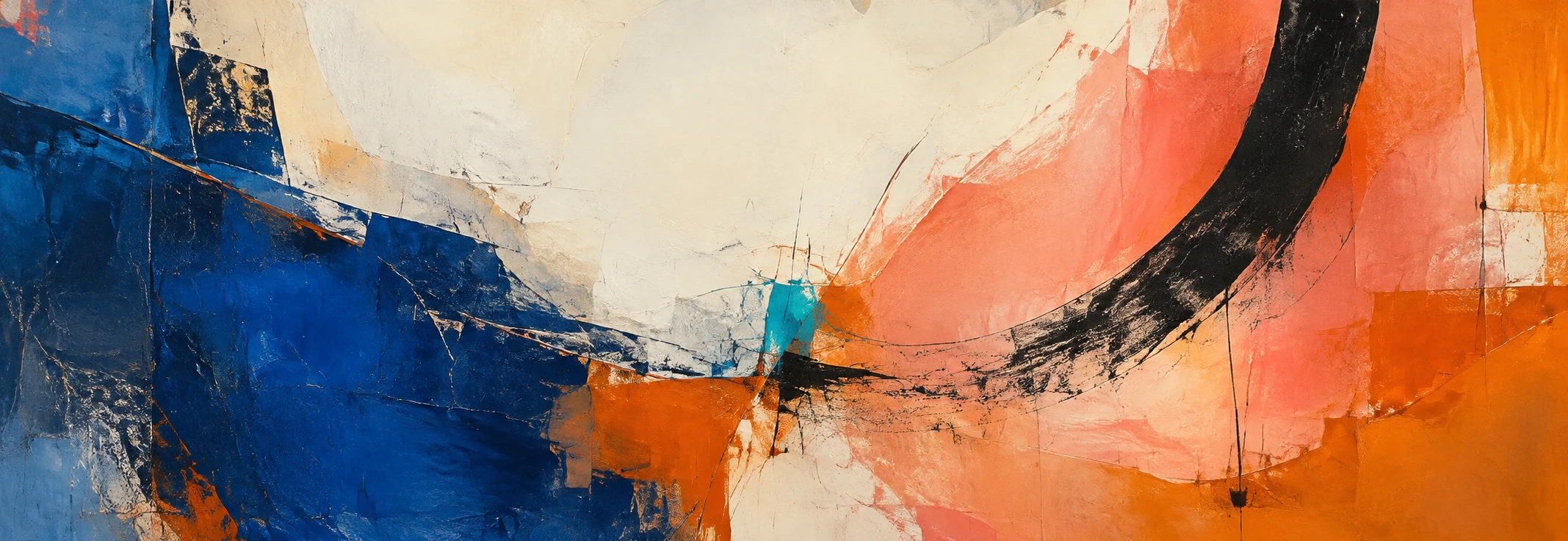
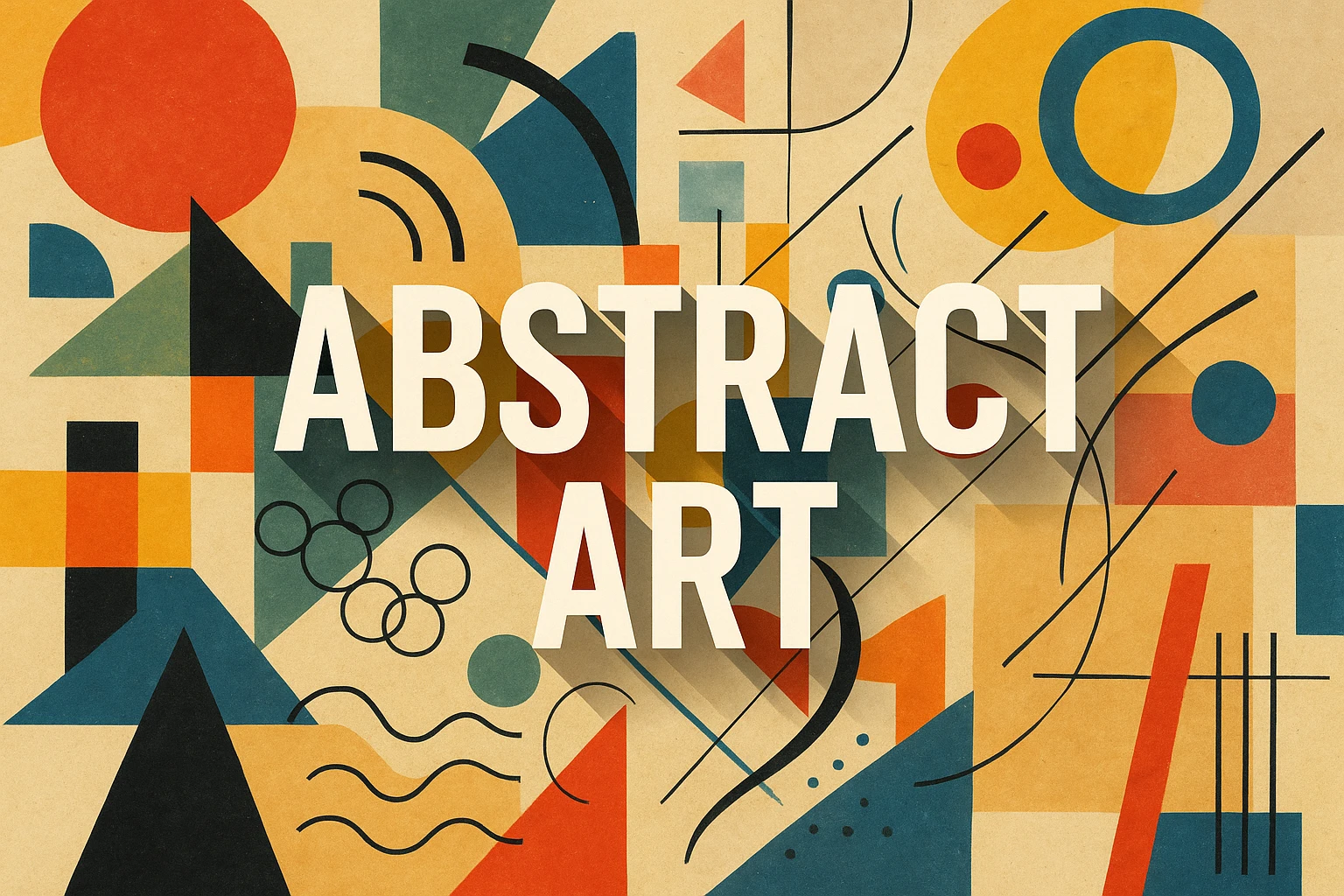
A panoramic header, named collage and three standalone examples. All are AI-generated interpretations; the text explains what to look for and distinguishes them from documented works.
Select an image for a closer look. Use the thumbnails, arrow keys or a swipe to compare examples. Zoom in to inspect details, or share the image that inspires you.
Creative toolbox · take this style further
Choose an input and a destination. Search sends your words to the chosen site; Copy & open puts them on your clipboard to paste there.
Create with AI
Turn your chosen input into an image prompt or a new creative direction.
ChatGPT
Copy your input and paste it into a ChatGPT conversation or image request.
Copy & open ChatGPT (new tab)Claude · Anthropic
Develop an image prompt or explore the style in a new Claude conversation.
Copy & open Claude · Anthropic (new tab)Midjourney
Paste your input into the Imagine bar on the Create page.
Copy & open Midjourney (new tab)Adobe Firefly
Copy your input, open Firefly, and paste it into the prompt field.
Copy & open Adobe Firefly (new tab)Leonardo.Ai
Copy your input, open Leonardo, and paste it into the generation field.
Copy & open Leonardo.Ai (new tab)Image search
Find visual references. Short, concrete keywords usually work best.
Lexica
Search AI images and prompts using your selected input.
Search with this input Lexica (new tab)Pexels
Search the photo and video library. Short keywords often work best.
Search with this input Pexels (new tab)Pixabay
Search photos, illustrations and other images.
Search with this input Pixabay (new tab)Unsplash
Search photographs using the style name or your own keywords.
Search with this input Unsplash (new tab)Wikimedia Commons
Search photographs, artworks and historical images. Check each file for its source and reuse terms.
Search with this input Wikimedia Commons (new tab)Art & research
Explore artists, collections and the ideas behind a style.
Wikipedia
Search for background reading. A style may not have its own article.
Search with this input Wikipedia (new tab)WikiArt
Copy your input into WikiArt’s search to explore artists and artworks.
Copy & open WikiArt (new tab)Europeana
Paste your keywords into the search to explore European museum, library and archive collections.
Copy & open Europeana (new tab)Inspiration
Discover portfolios and visual ideas from creative communities.
Instagram hashtags
Search a hashtag made from your input: spaces and punctuation are removed. Instagram may require sign-in.
Search with this input Instagram hashtags (new tab)ArtStation
Paste your input into artwork search for concept art, environments, characters and visual development.
Copy & open ArtStation (new tab)Behance
Paste your input into project search for illustration, design and visual storytelling.
Copy & open Behance (new tab)A closer look
Abstraction can simplify something seen or build a composition without a recognizable subject. Look at what the shapes do to one another: their weight, distance, direction, texture and capacity to hold your attention.
What abstract art asks us to look at
An abstract image does not need a hidden face, a secret landscape or a correct one-sentence translation to justify looking. Its subject may be the encounter among a broad blue shape, a narrow orange bar and a field of pale space. A small change in their distance can alter the whole picture. That is a concrete visual event, even when the work does not describe a concrete object.
Abstraction is a broad category rather than one movement or one appearance. Some artists transform observed things until their structure matters more than their resemblance. Others work without a recognizable external subject. Geometric construction, gestural painting, color fields and organic forms can all operate within abstraction, but they produce different kinds of attention. This page is an entry point; the related catalog guides let you follow a particular approach.
Abstraction and nonobjective art
Think of abstraction as a range of decisions about what to retain, change or omit. A city view can become a rhythm of rectangles while still suggesting buildings. A composition of rectangles can also begin entirely from proportion, interval and color. The term nonobjective is often useful for the latter direction, where no depicted external subject is required. The boundaries are discussed differently by different writers and artists; treat the words as tools for description.
That distinction changes a prompt. Abstract a harbor while preserving its rhythm asks for a transformation of a subject. Create a nonrepresentational arrangement of three unequal planes asks for a composition. If a model adds a sunset and mountains to the second request, it may have made an appealing image while changing the problem. Define the degree of recognizability you want before deciding whether an output succeeds.
History is more useful as a set of routes
Early twentieth-century modernist abstraction developed through several artists, groups and exchanges. MoMA’s account of Vasily Kandinsky connects his experiments with his published argument for abstraction in Concerning the Spiritual in Art. His career offers one route into the subject, not a license to collapse a large history into one inventor and one first painting.
MoMA’s account of Piet Mondrian shows how an artist associated with abstract geometry arrived there through earlier training and encounters with Cubism. These transitions are worth studying because they reveal choices rather than a sudden disappearance of skill. A stripped-down image can be the result of sustained investigation. Conversely, complexity does not automatically indicate deeper thought. Both a grid and a storm of marks need their own internal reasons.
Three families to compare
Geometric abstraction makes intervals and boundaries especially legible. Ask whether a shape feels centered, pressed against an edge or balanced by a distant smaller form. A perfect circle may appear unstable because of where it is cropped. A narrow bar can outweigh a broad pale area if its color and contrast make it more insistent. Precision is useful, but it should serve a relationship rather than merely display neatness.
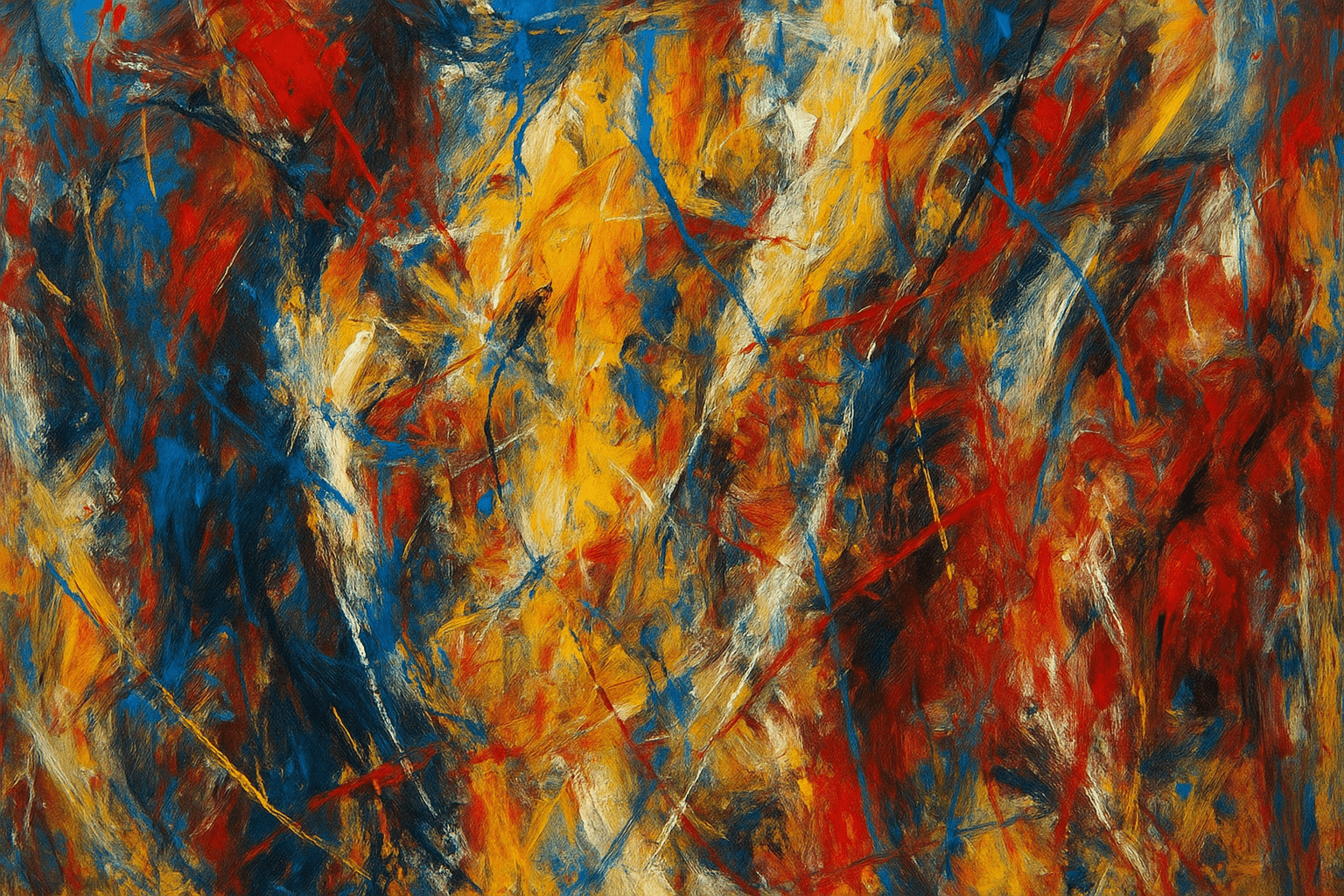
Gestural abstraction directs attention toward marks that suggest speed, pressure, layering and revision. A sweeping stroke may be interrupted by scraped paint or countered by an untouched area. The most energetic part of a picture often needs a quieter part to make that energy intelligible. If every square inch is equally loud, movement can become visual static.
Color-field approaches give broad areas of color and their edges time to work on the viewer. A boundary can be crisp, blurred, stained or made uncertain by layers beneath it. Color is relational: an orange band feels different against gray, violet or white. Avoid treating this family as nothing more than a gradient. A strong field has scale, surface, placement and carefully judged transitions.
Two documented works that open different questions
Mondrian’s Broadway Boogie Woogie (1942–43), in MoMA, offers a way to discuss rhythm without pretending the painting is a literal street map. The museum’s audio connects its title to New York and boogie-woogie music. Look at how small interruptions make a measured structure active. A grid need not be the opposite of movement.
Helen Frankenthaler’s Mountains and Sea (1952) provides another route. The National Gallery of Art relates it to her visit to Cape Breton, Nova Scotia; its account discusses diluted paint and a remembered landscape. A work can draw on a place without functioning as an illustration of that place. Compare how a stain can imply openness while a drawn line retains an independent direction. The two materials need not repeat the same information.
How to look without hunting for a hidden object
Give the picture half a minute before naming anything. Locate the largest area, the strongest contrast and the point where your eye repeatedly returns. Then trace a route through the work. Does a diagonal send you out of the frame? Does a quieter edge bring you back? A composition may hold interest because these movements remain unresolved.
Change viewing distance. At thumbnail size, look for an intelligible distribution of weight. At full size, inspect how the edges and textures support that distribution. A detail may be beautiful yet weaken the larger arrangement. Rotate a study or crop a small part as a private exercise: if every version feels identical, the composition may be relying on an attractive surface rather than particular decisions.
Reading the new gallery
The panoramic header uses a dark arc to connect blue, coral and orange across open pale space. It introduces visual relationships before the article gives them names. The retained named collage remains a quick catalog identifier, while the three new standalone studies allow a slower comparison of different approaches.
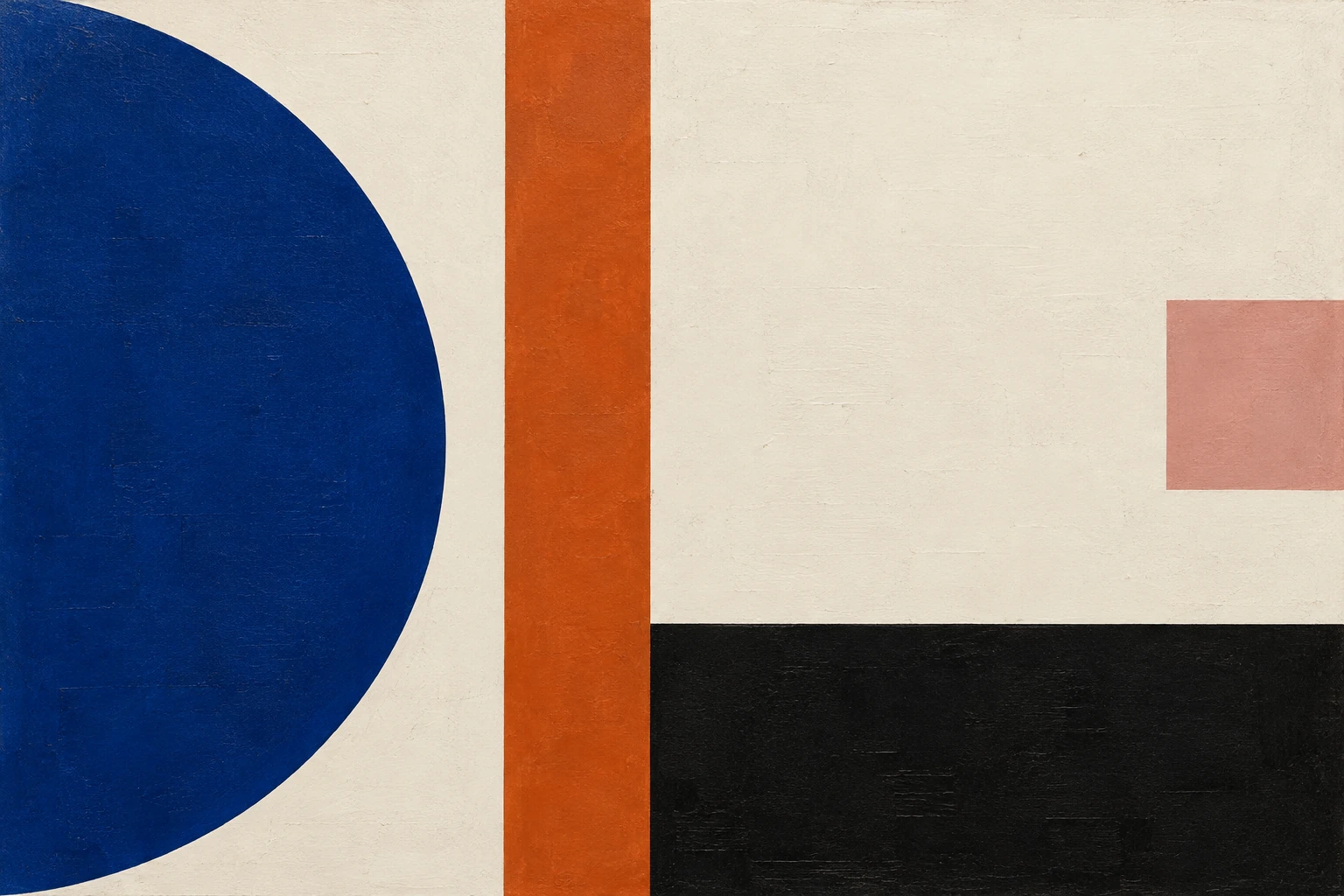
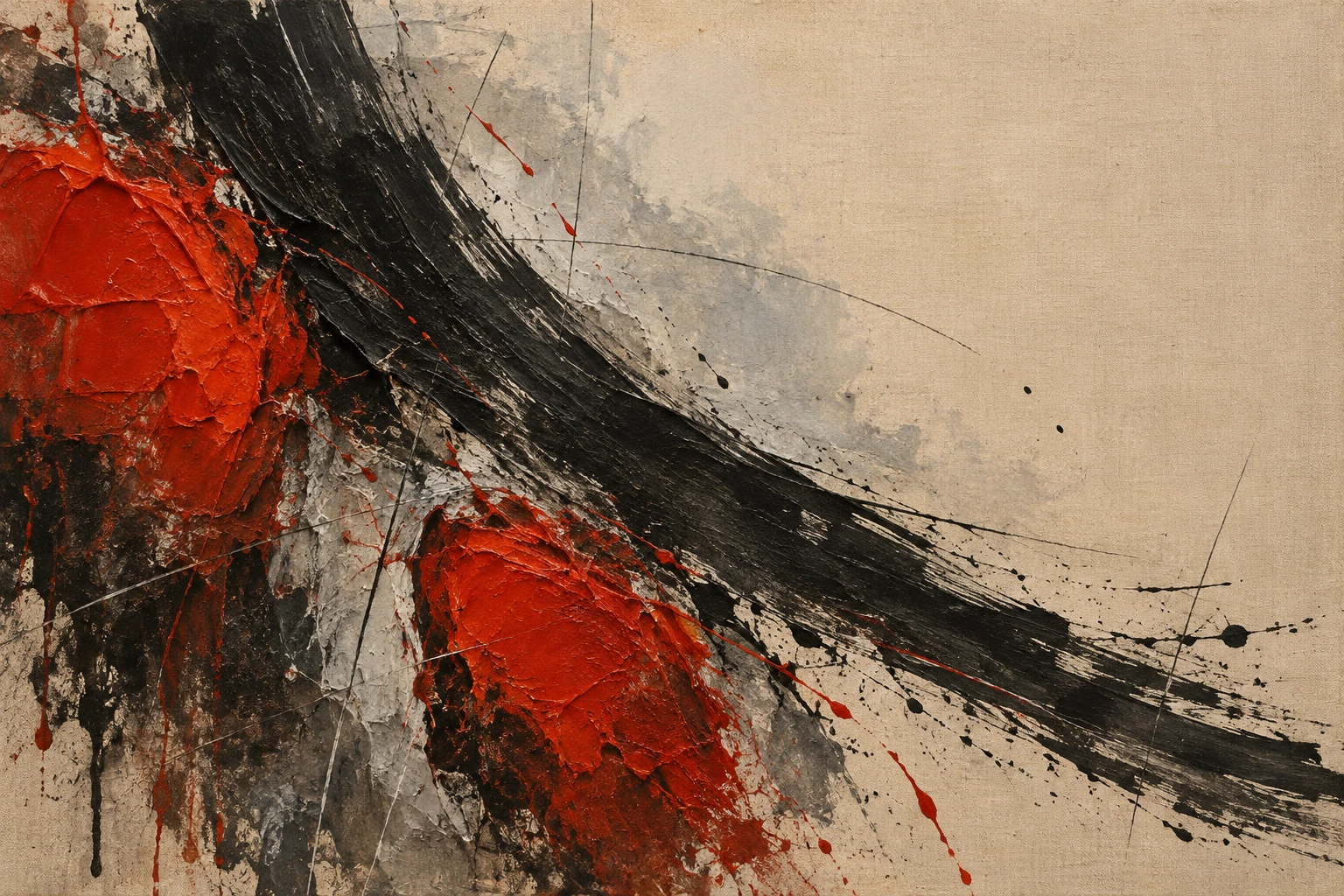
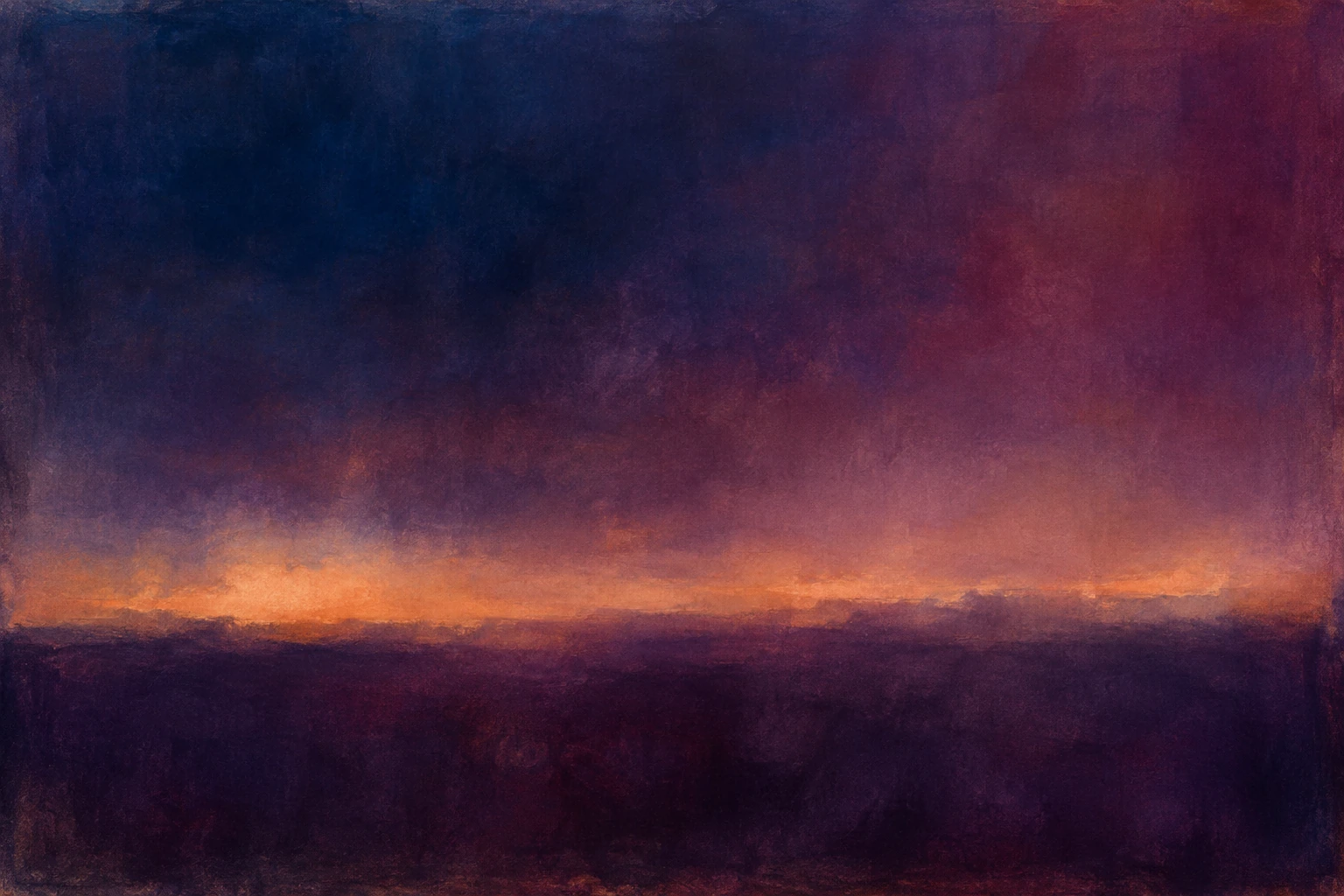
Intervals places a cropped blue circle beside an orange bar, a pink area and a black base. Held Force gives a sweeping black stroke something to push against: thick red paint and a large unworked-looking field. After the Last Note makes an apricot band glow within indigo and plum. That last image may remind you of a horizon, illustrating how readily a viewer supplies a landscape even when no specific place is depicted. These observations describe new AI illustrations, not physical paintings or historical reproductions.
Usability in AI art generation
Abstract art is too broad to be a complete prompt. Choose the kind of abstraction, number and scale of dominant elements, edge behavior, palette and distribution of empty space. Describe material effects concretely: a dry brush dragged over raw canvas, a transparent stain, a hard matte edge. Then state whether recognizable objects are welcome. Prefer a small set of decisions to a pile of quality adjectives.
Watch for decorative defaults: indiscriminate splashes, simulated gold leaf, evenly distributed detail and a focal object that appears without invitation. AI can simulate the appearance of a physical process without having performed it. A generated impasto texture is not thick paint; a simulated stain is not evidence that pigment entered canvas. Label the medium honestly and judge whether those appearances strengthen the composition.
For a useful controlled experiment, keep the shapes fixed and change only their scale or spacing. Compare the outputs at the same size. If exact geometry, repeatability or print separations matter, use vector or painting tools to finish the composition. A generative model can suggest relationships; it is not a substitute for deliberate control of every final edge.
What makes a result worth keeping?
A worthwhile abstract study makes its decisions matter. Remove an element mentally: does the balance change, or was it merely filling space? Ask whether the surface rewards a second look and whether the title adds a possibility instead of compensating for an empty composition. There is no universal numerical score, but these questions produce more useful criticism than either anybody could do that or it must be profound.
Penny’s note: the orange bar became interesting only when I stopped asking it to represent something. [Object recognition paused. Looking resumed.] Abstraction can make room for an unusually direct pleasure: noticing that a shape, placed just there, changes everything around it.
A small poetic detour
Original words from the AOI studio.
Poetry
A blue edge advances.
The orange does not retreat.
Space changes its mind.
The prompt workshop
Original creative exercises. These prompts create new illustrations, not documentary evidence.
Study 1
Create one exceptional 3:2 geometric abstract painting with absolutely no representational subject. Five large unequal shapes: deep ultramarine circle partially cropped at left, a slender burnt-orange vertical bar near center, chalk ivory open ground, low black horizontal rectangle, small muted pink square far right. Precise hard edges with real matte paint surface and subtle irregularities, thrilling asymmetrical balance, carefully judged intervals, elegant visual tension, restrained formal intelligence, not a copy of an existing painting, no gradients or 3D bevels or lettering.
Original AOI exercise. Compare the generated result with the visual criteria above; the prompt is an intention, not proof of execution.
Study 2
Create one extraordinary original 3:2 gestural abstract painting. Broad single charcoal-black sweeping diagonal brushstroke, two dense vermilion impasto masses and luminous thin pale gray wash on raw warm canvas; scratched lines and a few purposeful splashes reveal time and force. Keep upper right half calm and open to counterbalance the dense lower left. Richly tactile scraped paint and drybrush with clear hierarchy, emotional energy under deliberate control, no identifiable subjects, no rainbow, no decorative all-over digital noise, no signature or text. Masterful physical painting.
Original AOI exercise. Compare the generated result with the visual criteria above; the prompt is an intention, not proof of execution.
Study 3
Create one breathtaking 3:2 contemplative abstract color-field painting, completely nonrepresentational. Immense hazy deep indigo field transitions softly into warm plum, a low thin luminous apricot band hovers unevenly above a dark violet base. Complex many-layered transparent pigment and soft breathed edges, subtle asymmetry, profound sense of depth without actual horizon objects, slow luminous restrained color. Tactile fine linen and saturated glazes, original composition, no stars or mountains, no frame, no room, no text, no glossy digital effects.
Original AOI exercise. Compare the generated result with the visual criteria above; the prompt is an intention, not proof of execution.
Your next inspiration
Discover another art style
Follow a visual thread to the next subject.
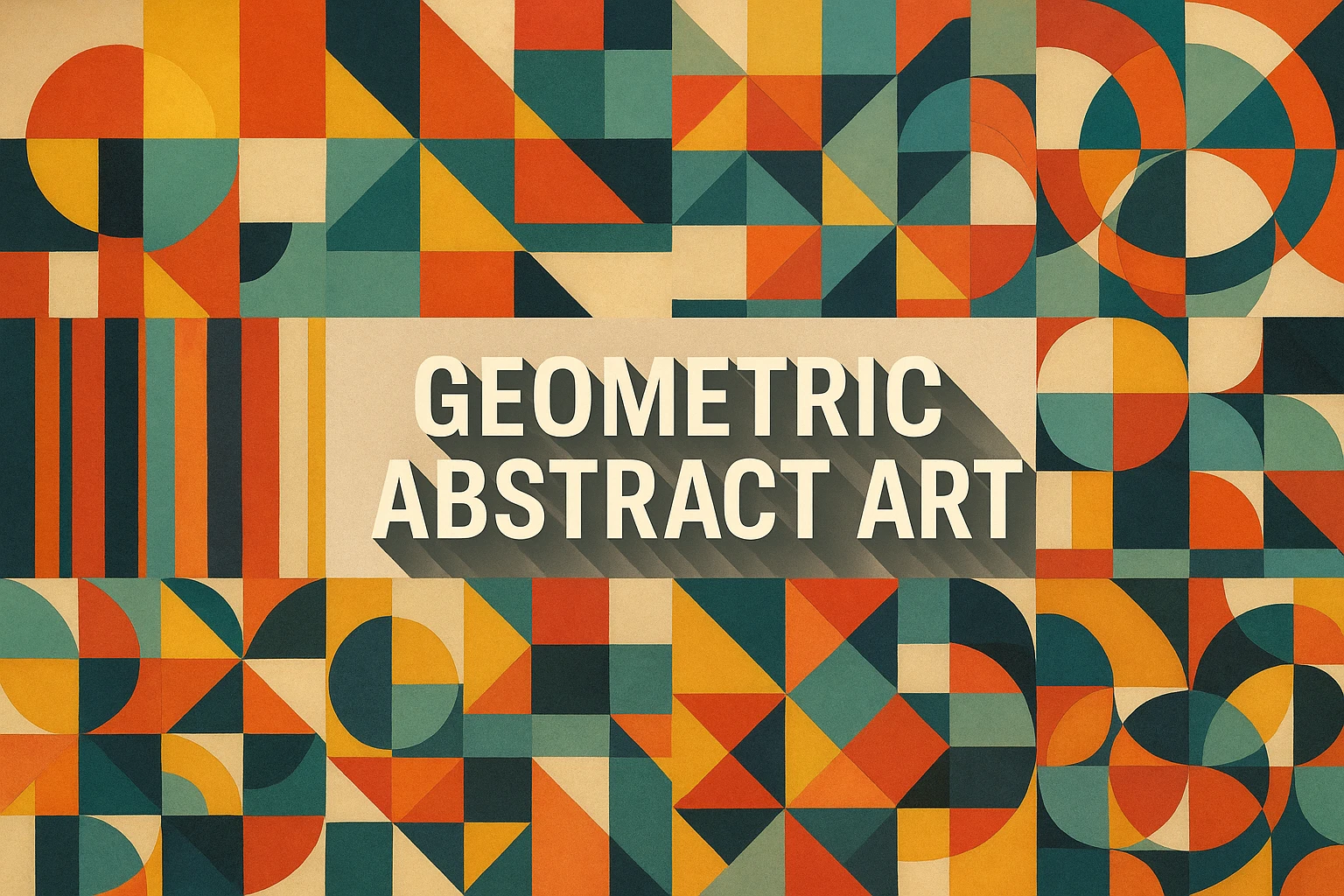
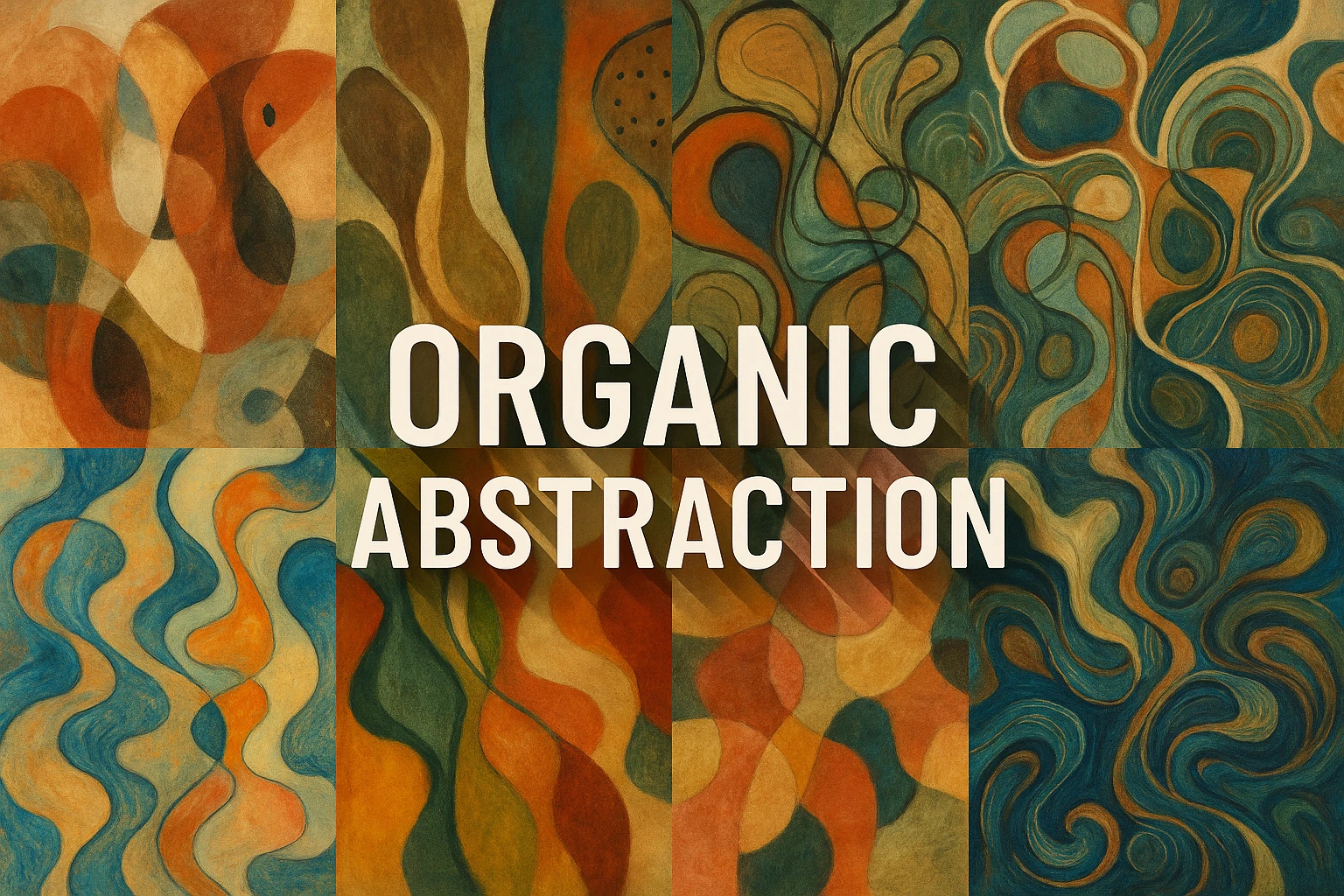
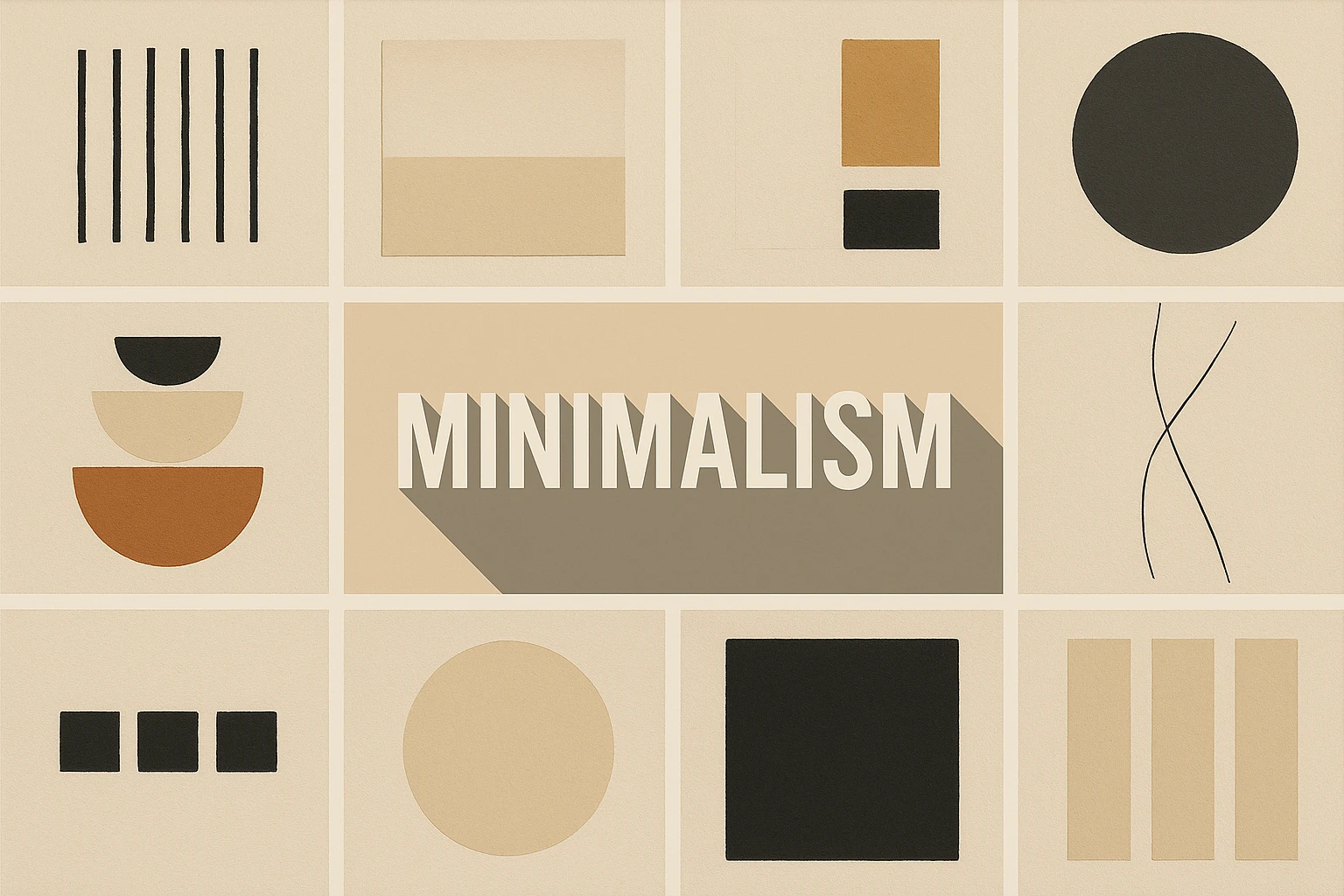
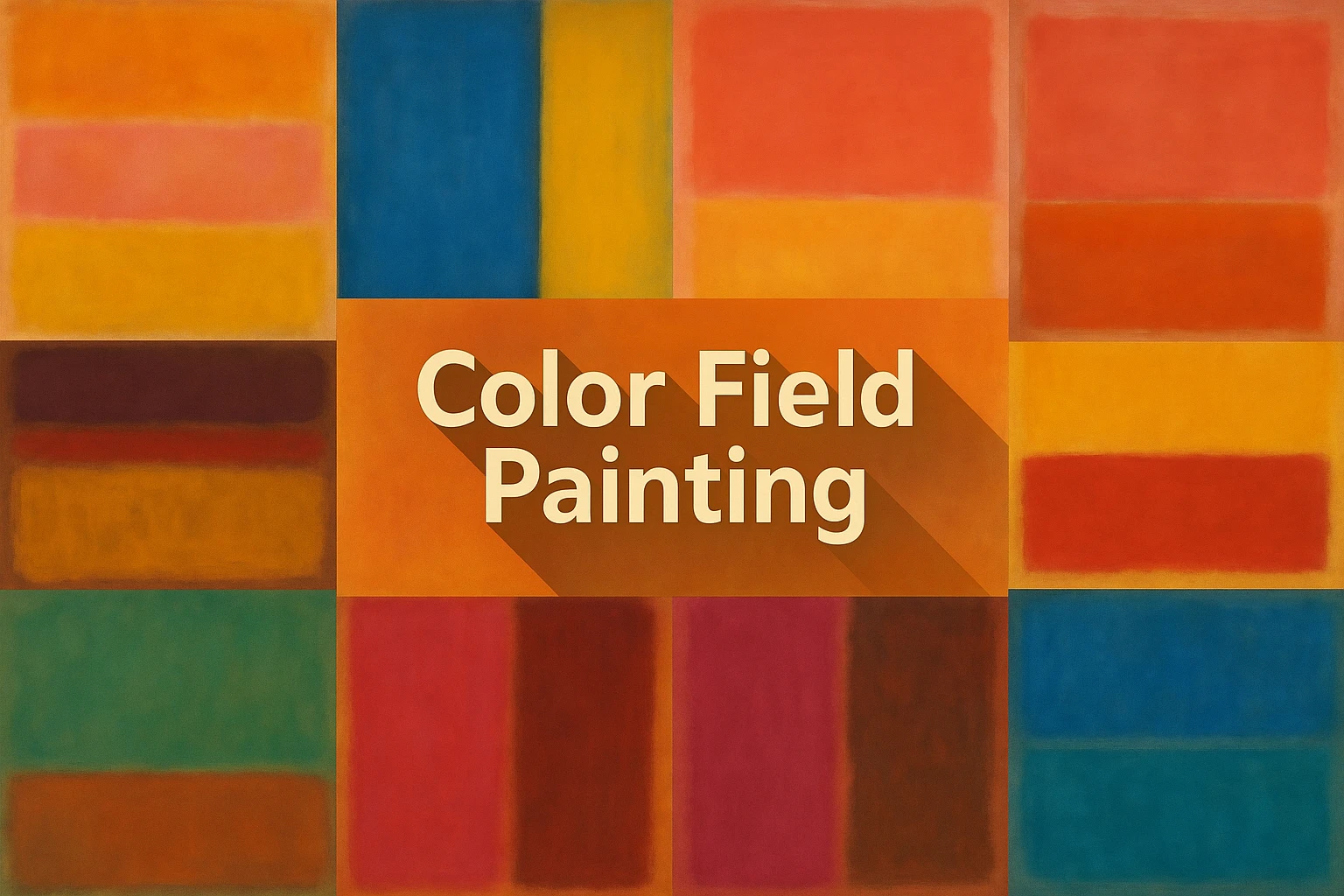
Organic Abstraction: Biomorphic Form, Space and Rhythm
Compare the visual approach and its historical context.
People & works to explore
References discussed in this article. Consult the sources below for context.
Artists and practitioners
Vasily Kandinsky — one major route into modernist abstraction.
Piet Mondrian — geometric relationships and rhythm.
Helen Frankenthaler — staining and abstraction informed by landscape.
Paintings and other works
Piet Mondrian, Broadway Boogie Woogie (1942–43), MoMA.
Helen Frankenthaler, Mountains and Sea (1952), National Gallery of Art.