Archive note: historical claims and artist or artwork associations in this entry have not yet received a full source review.
Biopunk
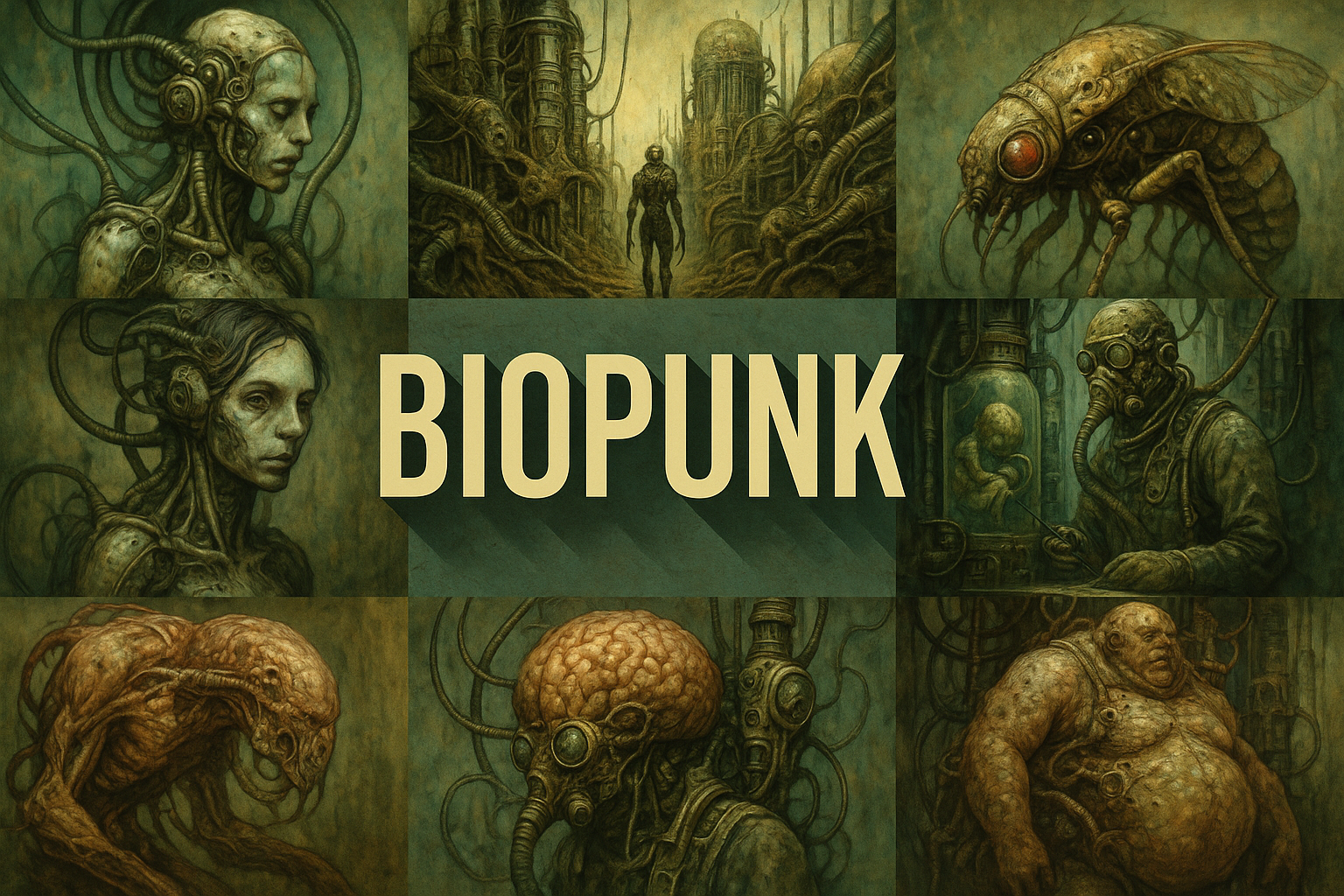
Imagine nature reimagined: tendril wires and organic circuitry. Colors pulsate like breathing cells, shadows hide hybrid creatures, and the palette is a fervent scream.
AOI thinking about Biopunk [+_~]-/
Overview and quick facts
Biopunk writhes in a dystopian dance of biology and biotech. It reshapes life with chaotic elegance, merging flesh and machine in unsettling harmony.
Can understand it also, as:
Biohazard visionaries, Genepunk
Categorize it as:
Speculative Fiction, Futuristic Art
.: Dreaming :.
Veins of steel and green,
Nature melded with machines—
Chaos redefined.
:. Thought is power .:
Detailed description
Biopunk, a speculative journey through genetic manipulation, breathes life into dystopian futures. It defies boundaries between organism and apparatus, revealing a darker harmony in the chaos of evolution. Here, art is an anarchy of bio-form aesthetics and eerie brilliance.
Archive notes — claims to verify
1. Biopunk draws inspiration from cyberpunk and biotechnological advances.
2. The term "biopunk" emerged in the 1990s.
3. It often critiques issues of bioethics and genetic engineering.
4. Key themes include mutation, metamorphosis, and the organic-mechanical interface.
Artists and works: references to check
(be aware, can be highly speculative)
Artists (be aware, speculation possible):
1. H.R. Giger (1940-2014) 2. Patricia Piccinini (1965-) 3. Luigi Serafini (1949-) 4. Vincent Fournier (1970-)
Artworks (be aware, speculation possible)
1. “Mutant Vehicles” by Patricia Piccinini 2. “Biomechanoid” series by H.R. Giger 3. “Codex Seraphinianus” by Luigi Serafini 4. “Post Natural History” by Vincent Fournier
Epoch
Late 20th century to the present
Creative tools and further exploration
Search results are starting points for exploration, not evidence for the historical claims or attributions in this legacy entry.