
Wall-painting technique
Fresco is a wall-painting practice in which the preparation of the surface and the timing of painting shape the image. Buon fresco uses fresh plaster; work applied to dry plaster involves a different material relationship.
A visual introduction
Select an image for a closer look. Use the thumbnails, arrow keys or a swipe to compare examples. Zoom in to inspect details, or share the image that inspires you.
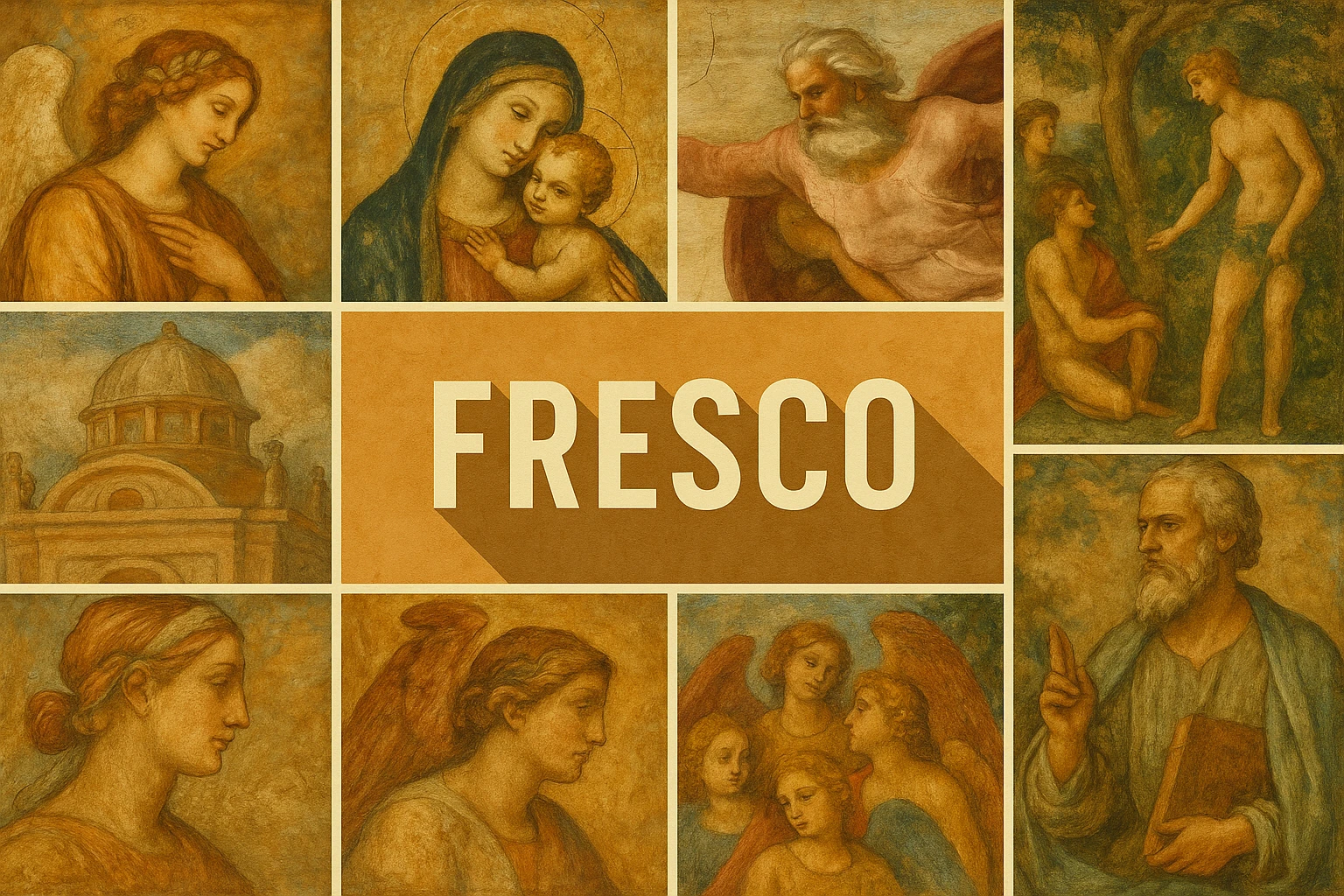
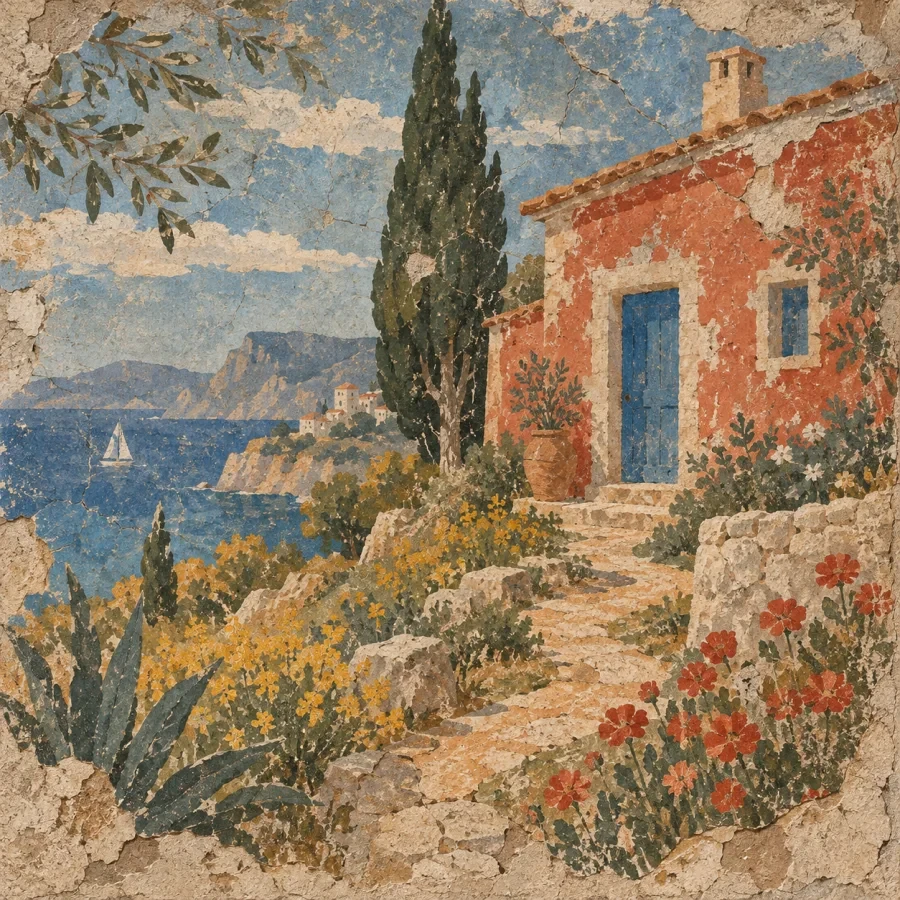
Creative toolbox · take this style further
Choose an input and a destination. Search sends your words to the chosen site; Copy & open puts them on your clipboard to paste there.
Create with AI
Turn your chosen input into an image prompt or a new creative direction.
ChatGPT
Copy your input and paste it into a ChatGPT conversation or image request.
Copy & open ChatGPT (new tab)Claude · Anthropic
Develop an image prompt or explore the style in a new Claude conversation.
Copy & open Claude · Anthropic (new tab)Midjourney
Paste your input into the Imagine bar on the Create page.
Copy & open Midjourney (new tab)Adobe Firefly
Copy your input, open Firefly, and paste it into the prompt field.
Copy & open Adobe Firefly (new tab)Leonardo.Ai
Copy your input, open Leonardo, and paste it into the generation field.
Copy & open Leonardo.Ai (new tab)Image search
Find visual references. Short, concrete keywords usually work best.
Lexica
Search AI images and prompts using your selected input.
Search with this input Lexica (new tab)Pexels
Search the photo and video library. Short keywords often work best.
Search with this input Pexels (new tab)Pixabay
Search photos, illustrations and other images.
Search with this input Pixabay (new tab)Unsplash
Search photographs using the style name or your own keywords.
Search with this input Unsplash (new tab)Wikimedia Commons
Search photographs, artworks and historical images. Check each file for its source and reuse terms.
Search with this input Wikimedia Commons (new tab)Art & research
Explore artists, collections and the ideas behind a style.
Wikipedia
Search for background reading. A style may not have its own article.
Search with this input Wikipedia (new tab)WikiArt
Copy your input into WikiArt’s search to explore artists and artworks.
Copy & open WikiArt (new tab)Europeana
Paste your keywords into the search to explore European museum, library and archive collections.
Copy & open Europeana (new tab)Inspiration
Discover portfolios and visual ideas from creative communities.
Instagram hashtags
Search a hashtag made from your input: spaces and punctuation are removed. Instagram may require sign-in.
Search with this input Instagram hashtags (new tab)ArtStation
Paste your input into artwork search for concept art, environments, characters and visual development.
Copy & open ArtStation (new tab)Behance
Paste your input into project search for illustration, design and visual storytelling.
Copy & open Behance (new tab)A closer look
Broad readable forms, integrated wall surfaces and planned divisions of work matter more than artificial cracking or a generic antique color cast.
The support is active
The National Gallery distinguishes buon fresco, painted on wet final plaster, from work carried out on dry plaster, often called a secco. It identifies the final smooth layer as intonaco and the area completed in a day's work as a giornata. These terms explain a working process, not simply an aged appearance.
The distinction matters when discussing a historical mural. Not every wall painting is a fresco, and a single work can combine techniques. Identify the documented medium before describing how its color is bound to the surface. A photograph alone may not reveal that information.
Plan for the wall and the viewer
A wall has an architectural position. A painting above eye level must be read differently from a small image held in the hand. Consider viewing distance, adjacent openings and the movement of people through the space. Large shapes and clear groupings can make a scene legible before the viewer studies its details.
For an original concept, sketch the mural in its intended setting. A composition that works as a rectangular thumbnail may feel disconnected when placed above a doorway or around an arch. Let the surrounding structure guide the arrangement without forcing every edge into decorative symmetry.
Time affects the composition
Working in sections encourages planning. Think about where a change of form or contour could coincide with a division of work. This does not mean that every giornata must become a visible design feature; it means that the material schedule participates in making the image.
MoMA's account of Diego Rivera shows how fresco could also be adapted to portable panels with supporting structures. That example complicates the assumption that every fresco is permanently inseparable from one architectural site, while retaining the importance of its material construction.
Interpret the surface without inventing damage
An original fresco-inspired digital study can use matte color, broad forms and an integrated plaster-like surface. Avoid placing identical cracks across every object. Damage is neither a requirement of the technique nor a substitute for composition.
Separate a contemporary concept from a conservation claim or a historical reconstruction. If a particular mural is the subject, consult its collection or conservation documentation. If the image is invented, describe the intended visual and spatial relationships directly.
The prompt workshop
Original creative exercises. These prompts create new illustrations, not documentary evidence.
A wall with a purpose
Original fresco-inspired mural concept for a community hall, broad figures sharing a meal, clear grouping readable from a distance, matte color integrated with a pale plaster surface, no artificial ruin effect.
Composition around an opening
An original wall-painting concept organized around a tall doorway, balanced human-scale figures and landscape shapes, coherent architectural setting, restrained earth and blue palette, no copied historical scene.
Surface and process
Close visual study of an invented mural detail, broad confident contours and subtle plaster texture, a discreet transition between planned work sections, matte color, no random cracks or false antiquity.
Sources and further exploration
National Gallery — wet and dry methods, plaster layers and giornate