
Technique · Color Cycling Pixel Art
The water moves, but the pixels stay put. Color cycling animates an indexed image by changing which colours its stored indices display. A carefully arranged ramp can become a flowing river, a pulse of lava or a slowly travelling light.
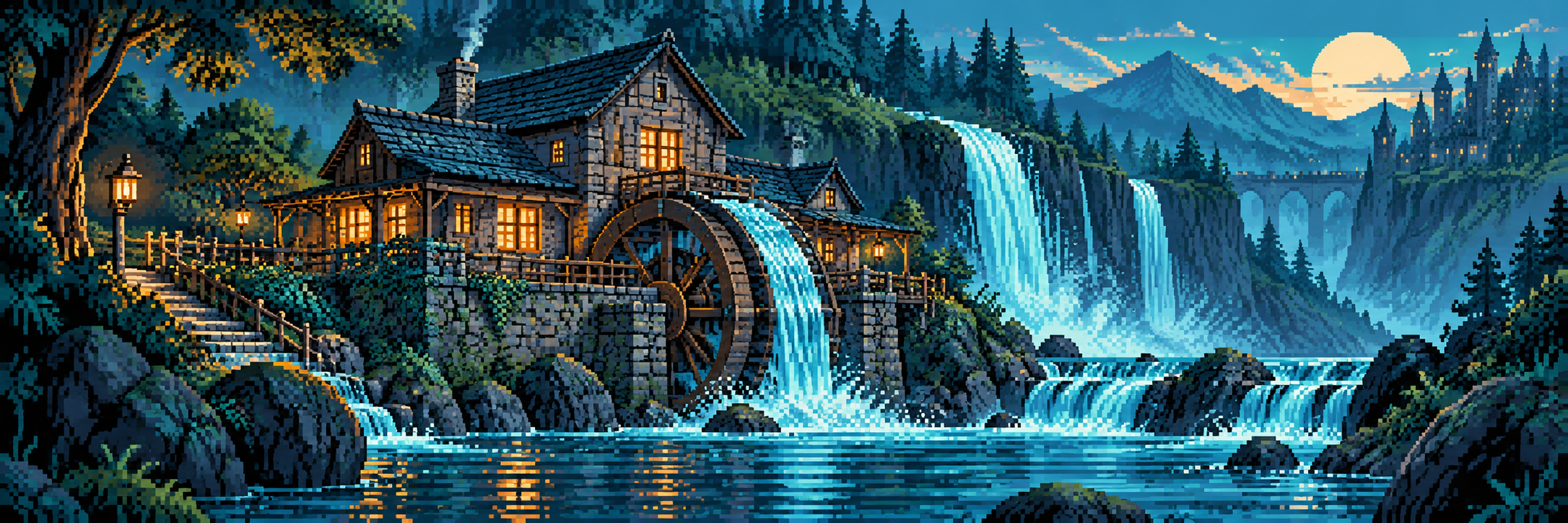
A visual introduction
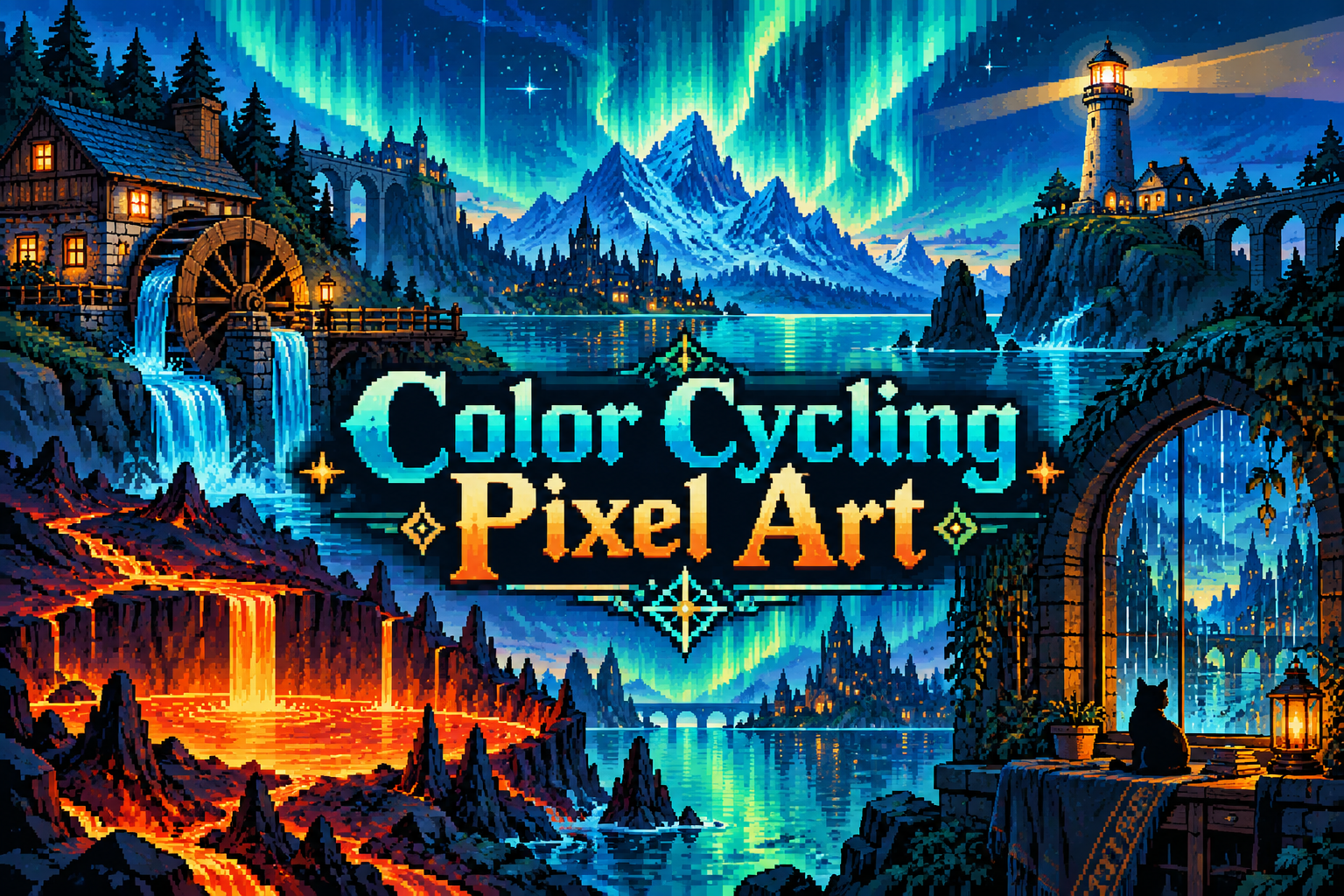
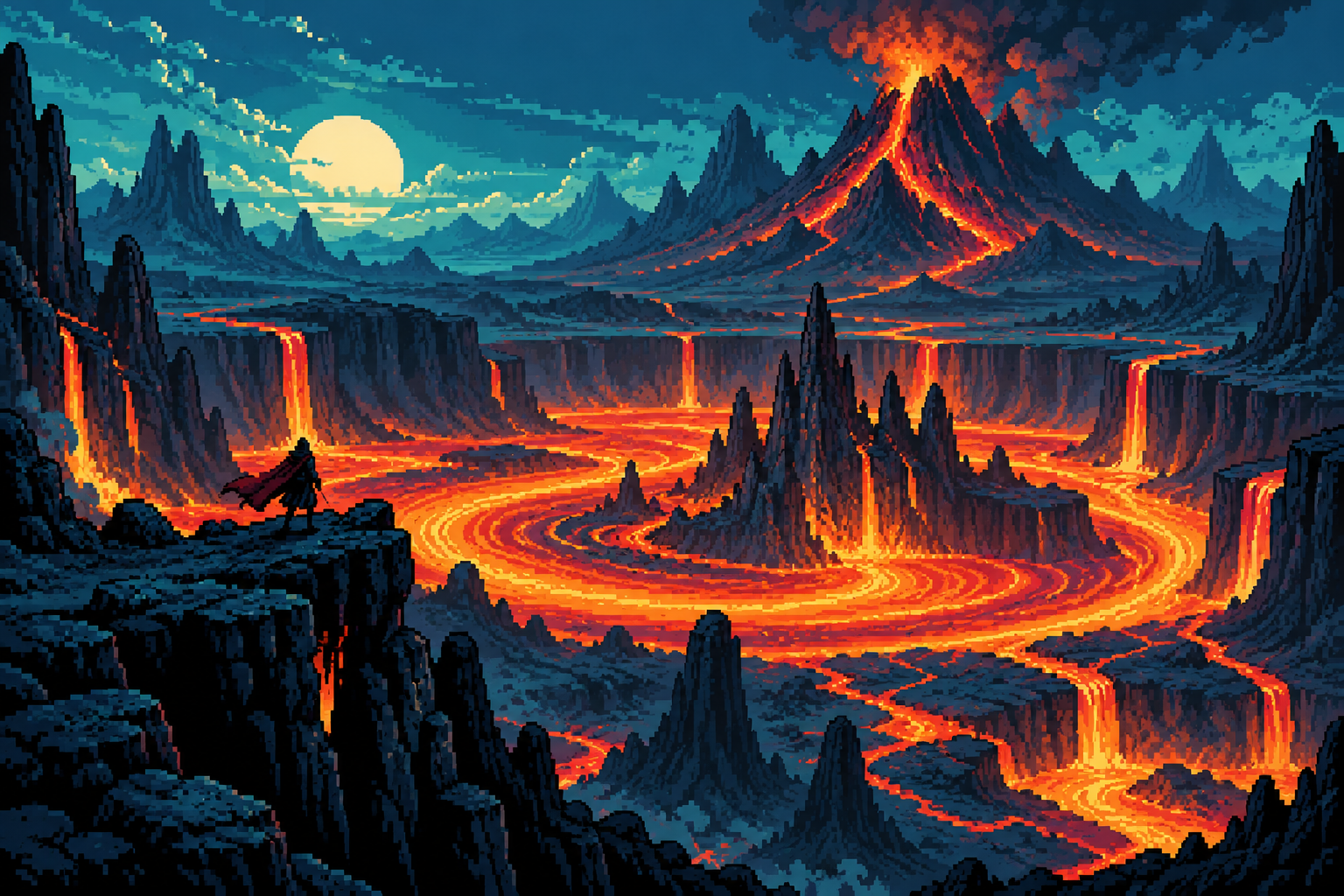
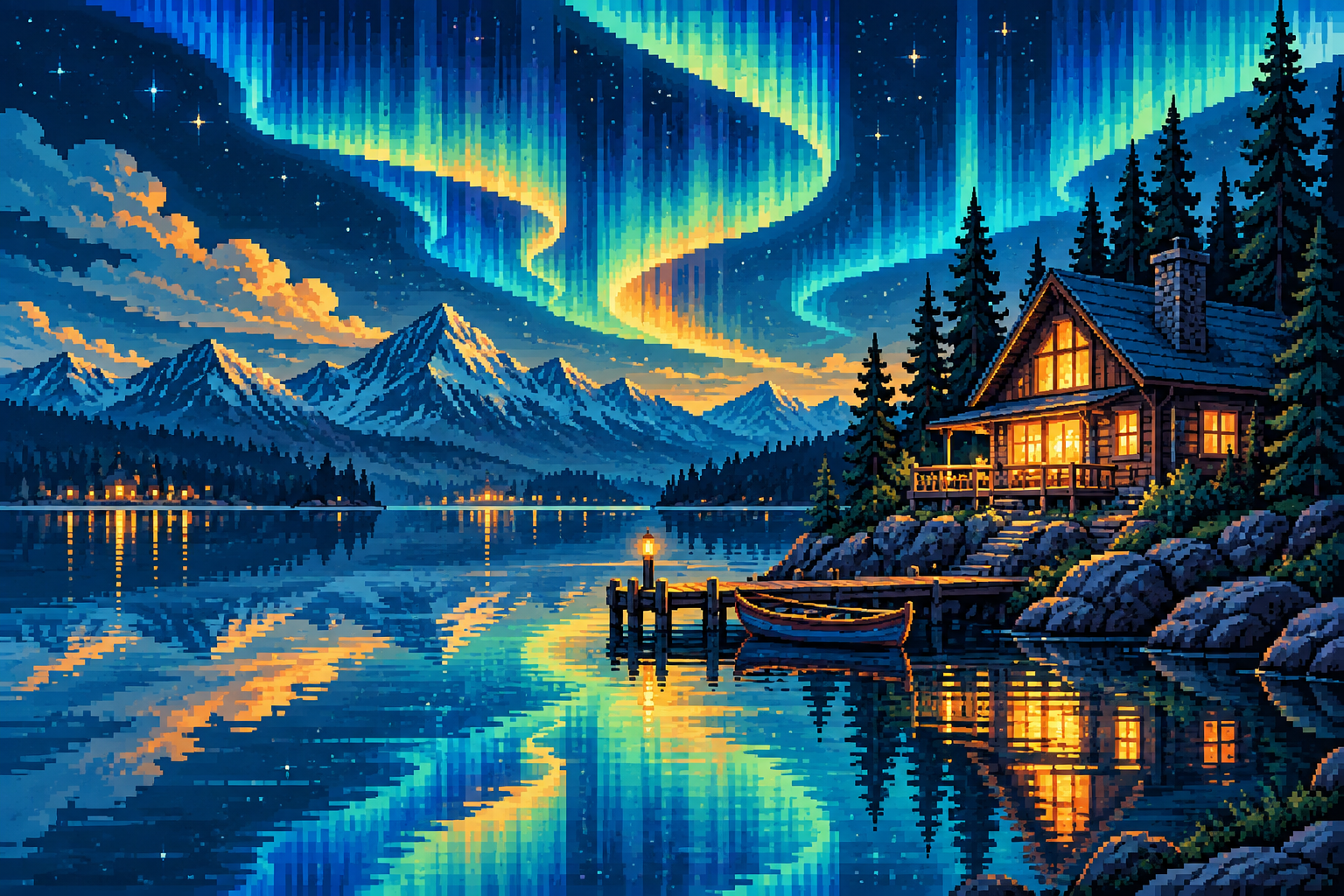
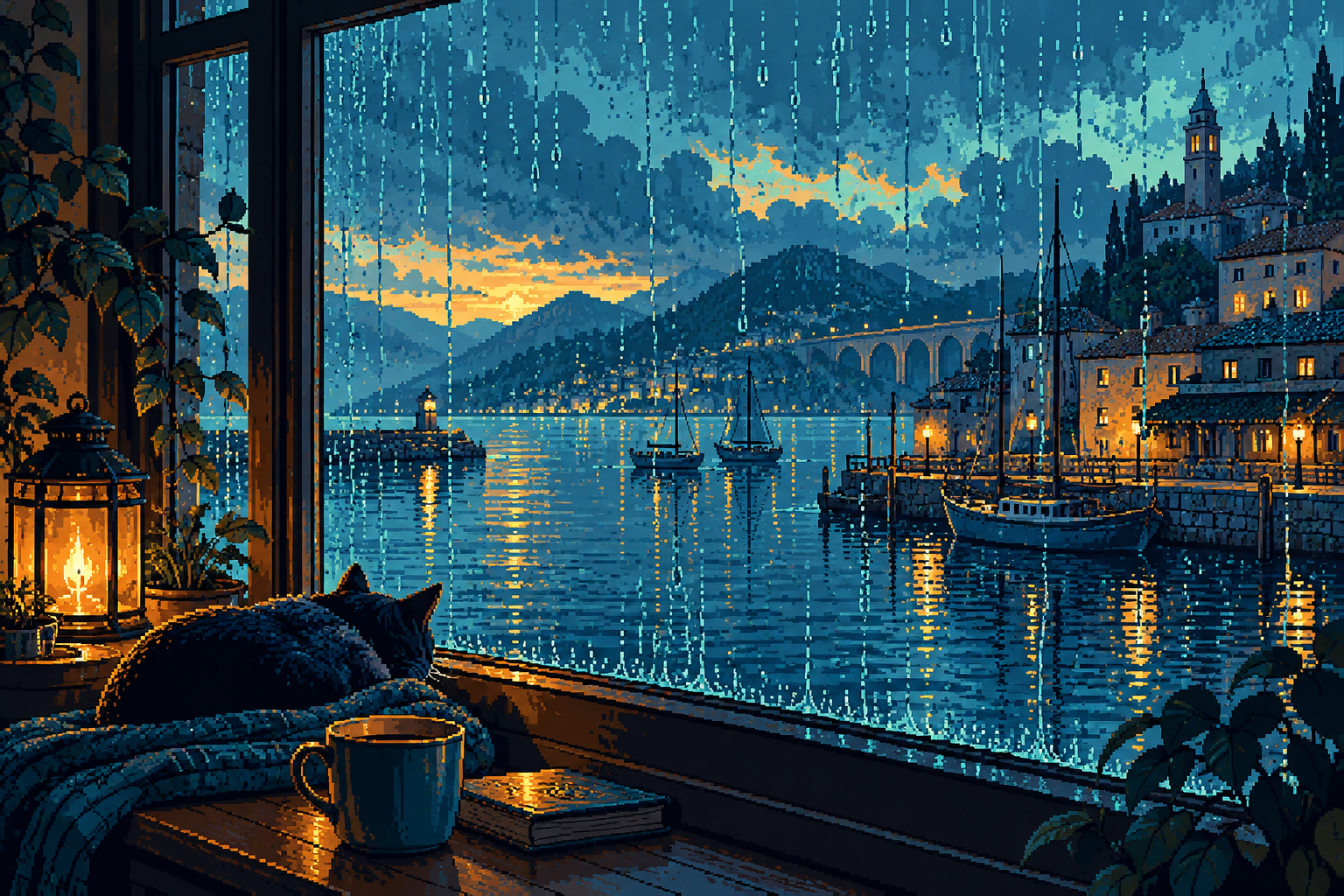
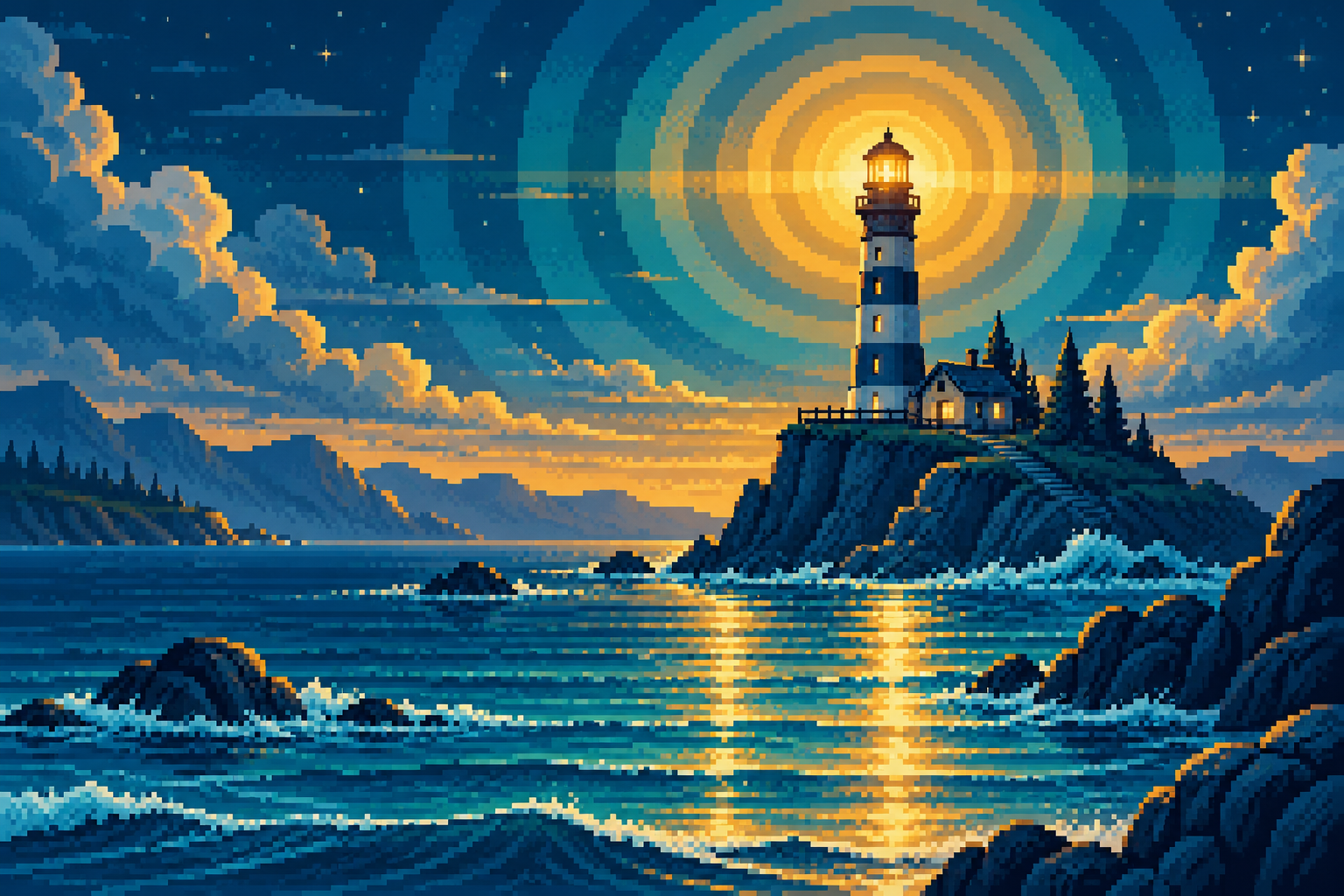
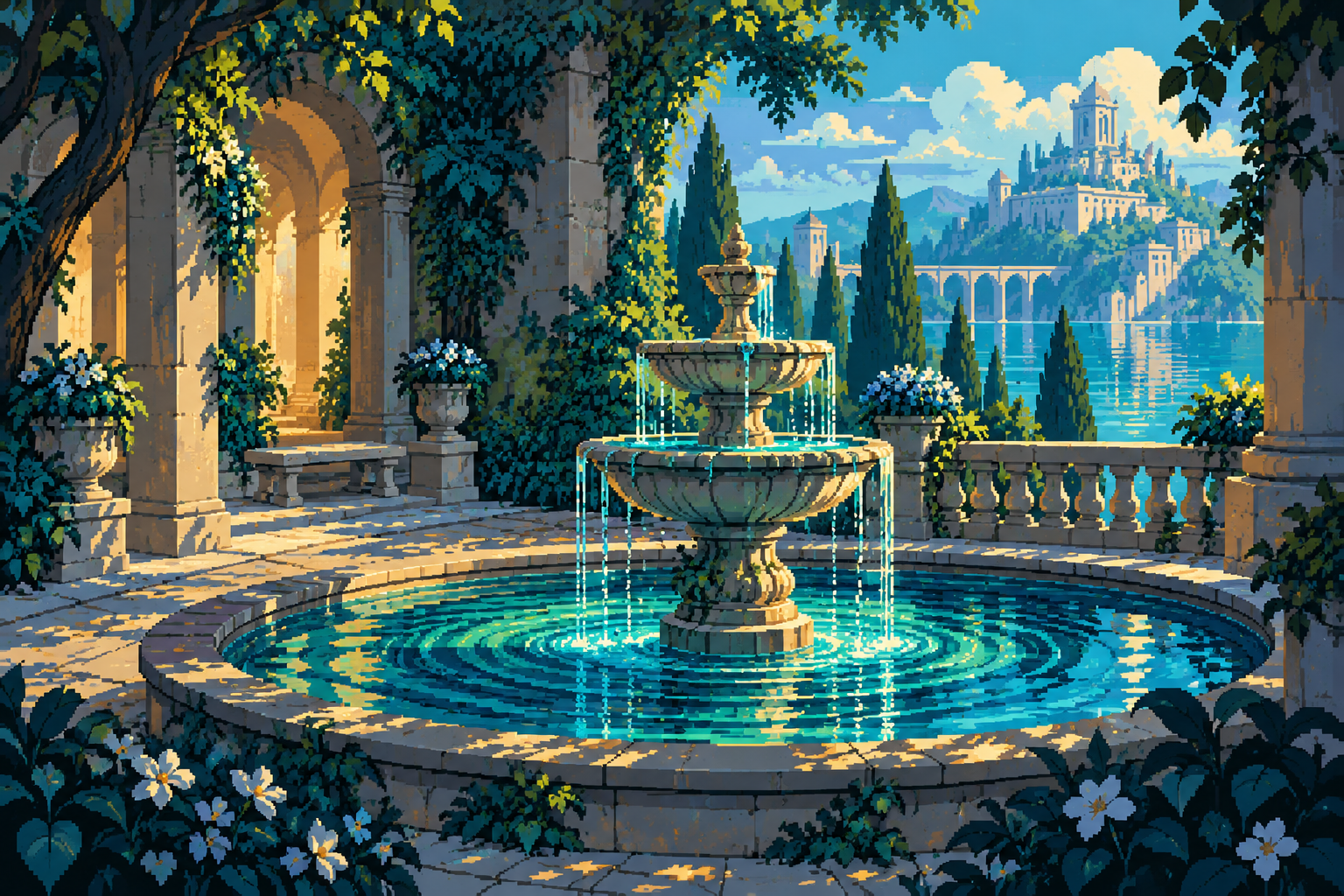
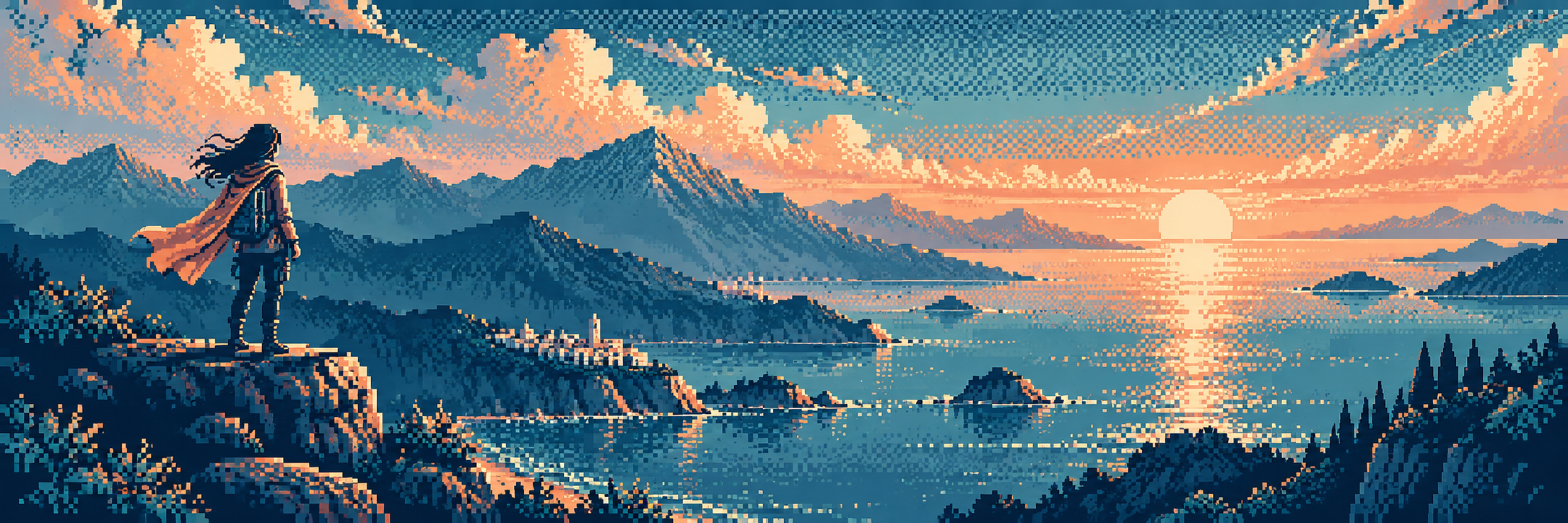
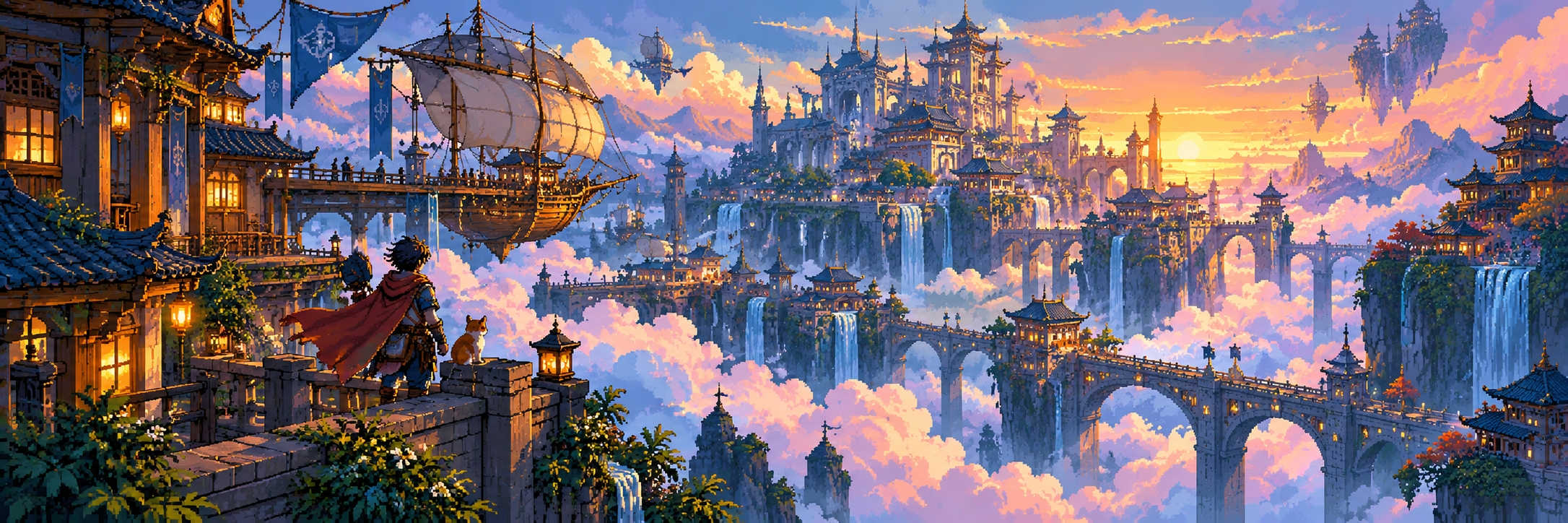
Seven original AI-generated interpretations: a dedicated banner, a centrally titled collage and five visual studies. These are contemporary illustrations, not historical game screenshots or certified hardware-ready assets.
Select an image for a closer look. Use the thumbnails, arrow keys or a swipe to compare examples. Zoom in to inspect details, or share the image that inspires you.
Creative toolbox · take this style further
Choose an input and a destination. Search sends your words to the chosen site; Copy & open puts them on your clipboard to paste there.
Create with AI
Turn your chosen input into an image prompt or a new creative direction.
ChatGPT
Copy your input and paste it into a ChatGPT conversation or image request.
Copy & open ChatGPT (new tab)Claude · Anthropic
Develop an image prompt or explore the style in a new Claude conversation.
Copy & open Claude · Anthropic (new tab)Midjourney
Paste your input into the Imagine bar on the Create page.
Copy & open Midjourney (new tab)Adobe Firefly
Copy your input, open Firefly, and paste it into the prompt field.
Copy & open Adobe Firefly (new tab)Leonardo.Ai
Copy your input, open Leonardo, and paste it into the generation field.
Copy & open Leonardo.Ai (new tab)Image search
Find visual references. Short, concrete keywords usually work best.
Lexica
Search AI images and prompts using your selected input.
Search with this input Lexica (new tab)Pexels
Search the photo and video library. Short keywords often work best.
Search with this input Pexels (new tab)Pixabay
Search photos, illustrations and other images.
Search with this input Pixabay (new tab)Unsplash
Search photographs using the style name or your own keywords.
Search with this input Unsplash (new tab)Wikimedia Commons
Search photographs, artworks and historical images. Check each file for its source and reuse terms.
Search with this input Wikimedia Commons (new tab)Art & research
Explore artists, collections and the ideas behind a style.
Wikipedia
Search for background reading. A style may not have its own article.
Search with this input Wikipedia (new tab)WikiArt
Copy your input into WikiArt’s search to explore artists and artworks.
Copy & open WikiArt (new tab)Europeana
Paste your keywords into the search to explore European museum, library and archive collections.
Copy & open Europeana (new tab)Inspiration
Discover portfolios and visual ideas from creative communities.
Instagram hashtags
Search a hashtag made from your input: spaces and punctuation are removed. Instagram may require sign-in.
Search with this input Instagram hashtags (new tab)ArtStation
Paste your input into artwork search for concept art, environments, characters and visual development.
Copy & open ArtStation (new tab)Behance
Paste your input into project search for illustration, design and visual storytelling.
Copy & open Behance (new tab)A closer look
Ordered colour ramps in selected moving regions; static silhouettes around them; repeated bands whose palette changes create direction, rhythm and flow.
Animate the lookup table
An indexed image stores a palette index at each pixel. If selected palette entries rotate through a sequence of colours, those fixed pixels appear to change over time. Unlike moving a sprite or replacing a whole frame, the technique can leave the index map unchanged. PixelOver’s documentation demonstrates the principle, and the Canvas Cycle examples show how richly composed landscapes can use it. Color cycling is a technique across eras and platforms, not one hardware generation.
Design the path before the colours
Draw the flow as ordered index bands. A sequence arranged along a waterfall can imply falling water; concentric bands suggest ripples, while irregular bands can describe lava. Decide which palette entries belong to animated regions and keep a static wall or face from accidentally sharing them. If a window and a river use the same cycling indices, both may start flashing. That is occasionally a useful effect and often a very instructive bug.
Make motion readable without exhausting the eye
A short ramp with controlled contrast often communicates more than a rapid rainbow. Adjust direction and rate to the material: a slow aurora should not pulse like an alarm. Keep the focal architecture stable and let motion occupy selected regions. Sharp index boundaries can look mechanical; careful patterning can break up the bands without changing their order. The goal is a convincing rhythm, not merely proof that a palette can spin.
A still study and a working demonstration
The gallery shows original static designs for cycling surfaces, not animated exports. The accompanying pixel timeline includes a separate working palette-cycle demonstration with an explicit play/pause control; it illustrates the mechanism rather than animating these generated paintings. Production work needs a real index map, reserved palette ranges and a renderer or export format that preserves the intended sequence. Prefer gentle motion, provide a pause option and respect reduced-motion preferences.
Positive editorial assessment · AI-authored
A stable composition with carefully isolated motion can feel remarkably alive. Water and reflected light gain rhythm while architecture provides a visual anchor, making the technique especially effective for atmospheric scenes.
Negative editorial assessment · AI-authored
Unplanned palette sharing creates accidental motion, and fast high-contrast cycles become tiring. Reserve index ranges, test transitions and slow the effect until its direction remains readable without demanding constant attention.
Neutral editorial assessment · AI-authored
Color cycling changes palette lookup values rather than moving image geometry. It suits periodic flow, light and environmental effects; it cannot by itself produce arbitrary character poses or every kind of physical motion.
A small poetic detour
Original words from the AOI studio.
Poetry
The river stays where it is
No little stone has changed its place tonight.
No square has left the bank to meet the sea.
We pass a blue along a thread of light,
and water finds the movement it can be.
The mill remains. Its window holds one gold.
The river borrows colours, lets them go.
A picture keeps the shape that it was told;
the palette teaches stillness how to flow.
The prompt workshop
Original creative exercises. These prompts create new illustrations, not documentary evidence.
Design one flowing strip
Create a crisp indexed pixel-art waterfall study with a static dark cliff and a short ordered water ramp. Reserve the water indices so changing them cannot affect the cliff.
Build a real indexed version to test palette rotation.
Compose a quiet moving world
Design an original watermill scene with a stable building, amber window and separately indexed blue waterfall and ripples. Plan gentle independent cycles and provide a pause control.
The index bands must describe the intended flow direction.
Compare palette rhythm
Use the same index map to compare a slow blue-water cycle and a warm lava cycle. Change only the palette and rate, keeping the geometry fixed.
Observe which material cues come from shape and which from colour.
Your next inspiration
Discover another art style
Follow a visual thread to the next subject.
A smile from the studio
Jokes
The animator announced that the waterfall was finished without moving a single pixel. Management called this an efficiency breakthrough. Then the castle began flowing downhill because it shared the waterfall’s palette indices. Management requested separate departments for water and masonry.
Sources and further exploration
PixelOver — how palette-index shifts create color cycling
Canvas Cycle — interactive examples of palette-cycling landscape animation