
Established
Bodypainting places temporary visual art on the moving human surface. Brushwork, sponge texture, airbrush gradients, stencils, camouflage, optical illusion and fluorescent effects can make the body a picture, a pattern or part of a performance. This guide surveys contemporary applications rather than claiming one universal tradition.
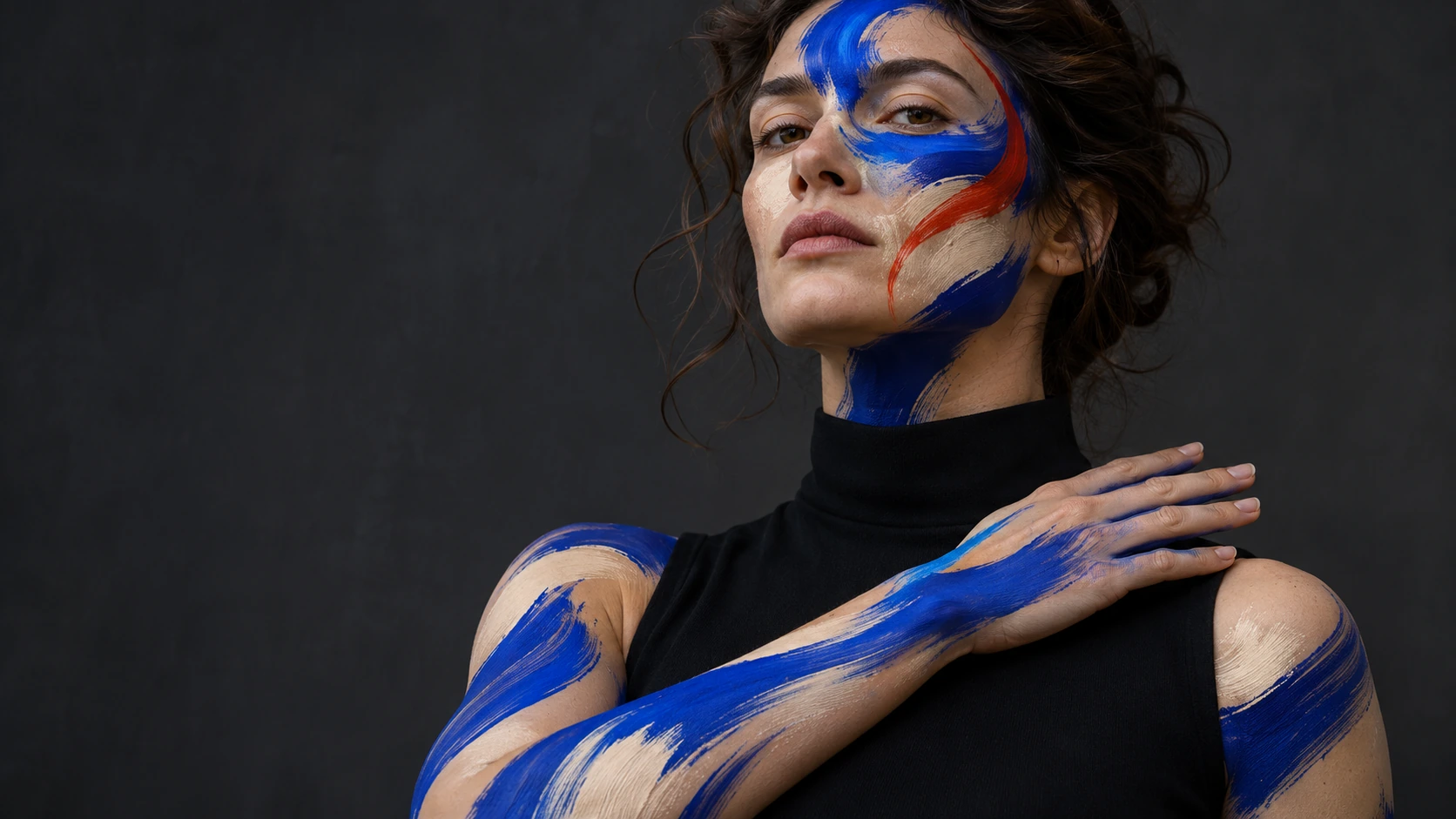
A visual introduction
Five original AI-generated studies explore this subject through a banner, a titled collage and three standalone examples.
Select an image for a closer look. Use the thumbnails, arrow keys or a swipe to compare examples. Zoom in to inspect details, or share the image that inspires you.
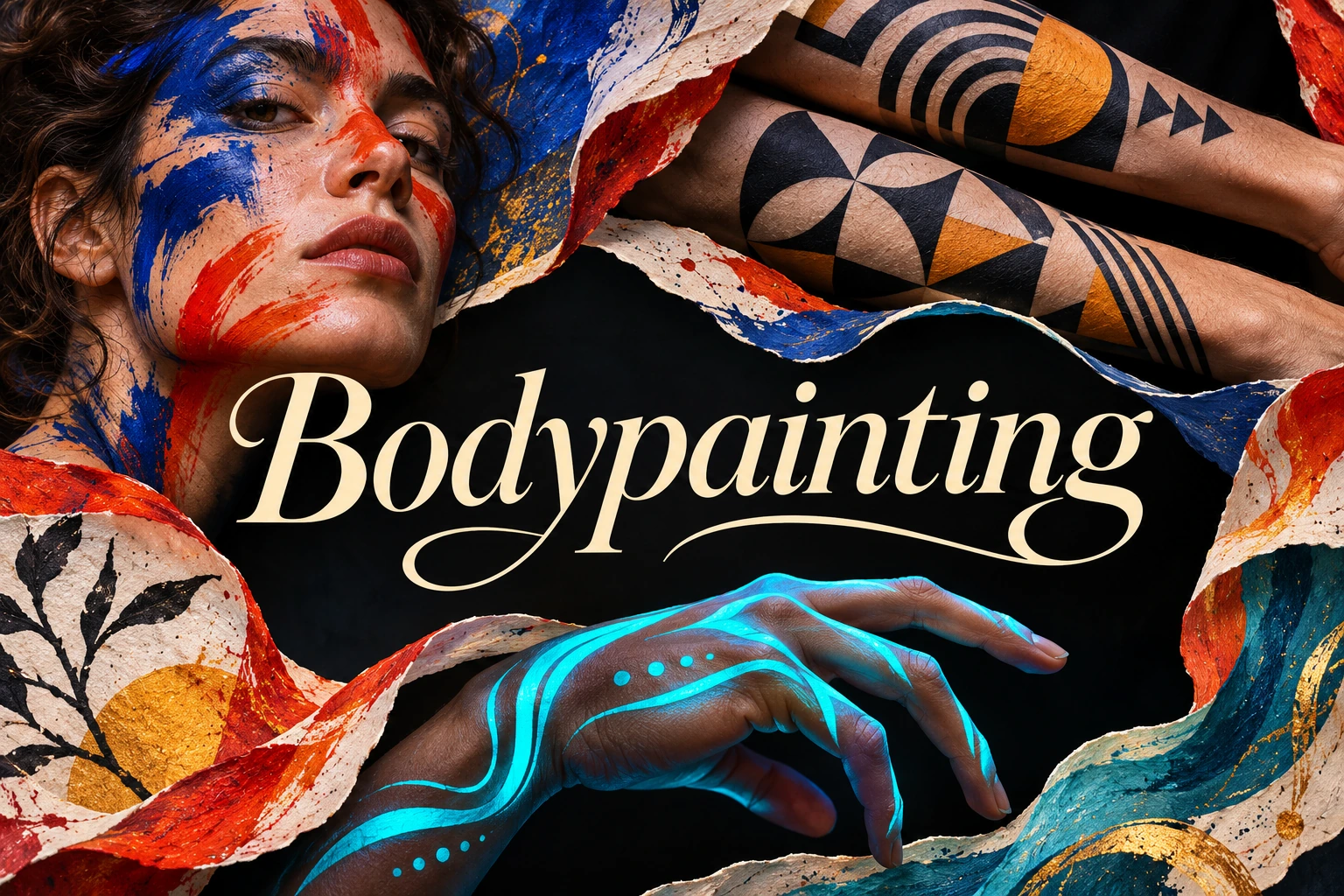
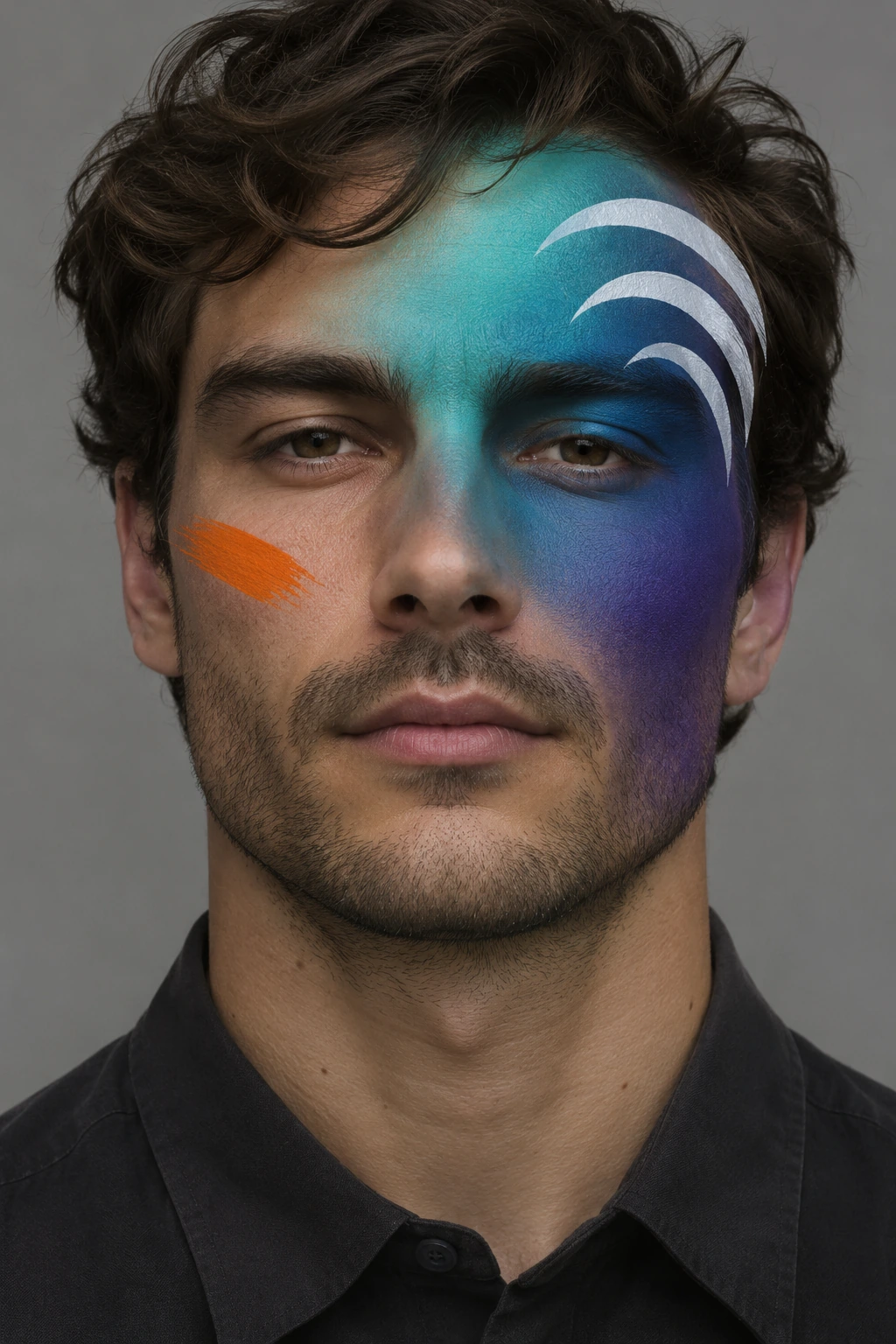
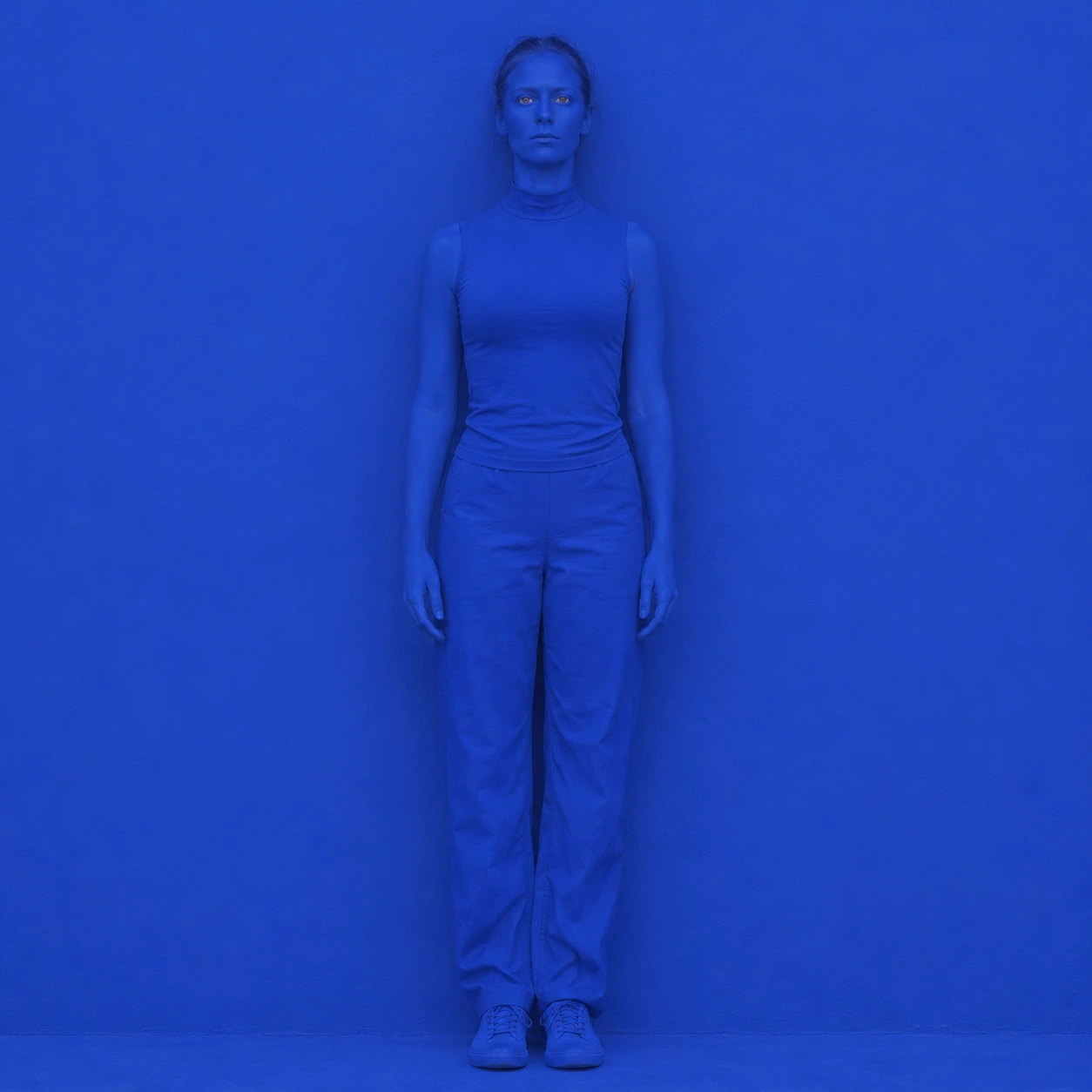
Creative toolbox · take this style further
Choose an input and a destination. Search sends your words to the chosen site; Copy & open puts them on your clipboard to paste there.
Create with AI
Turn your chosen input into an image prompt or a new creative direction.
ChatGPT
Copy your input and paste it into a ChatGPT conversation or image request.
Copy & open ChatGPT (new tab)Claude · Anthropic
Develop an image prompt or explore the style in a new Claude conversation.
Copy & open Claude · Anthropic (new tab)Midjourney
Paste your input into the Imagine bar on the Create page.
Copy & open Midjourney (new tab)Adobe Firefly
Copy your input, open Firefly, and paste it into the prompt field.
Copy & open Adobe Firefly (new tab)Leonardo.Ai
Copy your input, open Leonardo, and paste it into the generation field.
Copy & open Leonardo.Ai (new tab)Image search
Find visual references. Short, concrete keywords usually work best.
Lexica
Search AI images and prompts using your selected input.
Search with this input Lexica (new tab)Pexels
Search the photo and video library. Short keywords often work best.
Search with this input Pexels (new tab)Pixabay
Search photos, illustrations and other images.
Search with this input Pixabay (new tab)Unsplash
Search photographs using the style name or your own keywords.
Search with this input Unsplash (new tab)Wikimedia Commons
Search photographs, artworks and historical images. Check each file for its source and reuse terms.
Search with this input Wikimedia Commons (new tab)Art & research
Explore artists, collections and the ideas behind a style.
Wikipedia
Search for background reading. A style may not have its own article.
Search with this input Wikipedia (new tab)WikiArt
Copy your input into WikiArt’s search to explore artists and artworks.
Copy & open WikiArt (new tab)Europeana
Paste your keywords into the search to explore European museum, library and archive collections.
Copy & open Europeana (new tab)Inspiration
Discover portfolios and visual ideas from creative communities.
Instagram hashtags
Search a hashtag made from your input: spaces and punctuation are removed. Instagram may require sign-in.
Search with this input Instagram hashtags (new tab)ArtStation
Paste your input into artwork search for concept art, environments, characters and visual development.
Copy & open ArtStation (new tab)Behance
Paste your input into project search for illustration, design and visual storytelling.
Copy & open Behance (new tab)A closer look
Color follows, interrupts or disguises the body's volumes. A painted line bends across a shoulder; a flat graphic changes when an arm moves. Skin texture, pigment edges, posture, light and background work together. The most convincing designs account for this living geometry instead of treating a person as a flat poster.
A surface that participates
A painted body is never simply a sheet of paper with a different shape. The participant breathes, turns and changes the image. A mark crossing an elbow can stretch; a circle that looks round from one viewpoint may become elliptical from another. Bodypainting can use those changes as part of its expression or carefully arrange a pose to hold a particular illusion.
The gallery presents original AI-generated illustrations of contemporary bodypainting ideas. It is not documentary evidence of a physical painting session, and its designs are not attributed to a cultural community or a historical ceremony. Painted faces and exposed arms are shown alongside opaque garments so the examples concentrate on visual construction.
A broad contemporary field
The World Bodypainting Festival's archive distinguishes categories including brush and sponge, airbrush, facepainting, camouflage, special effects and UV effects. These provide a useful map of practices, although a single work may combine several methods. A competition category describes a working focus, not a universal boundary around the art.
This article concentrates on those contemporary visual approaches. Body adornment also belongs to many specific cultural contexts, each with its own meanings and permissions. A general survey cannot turn those diverse traditions into a single anonymous pattern library. Use original motifs for an invented project, and research a named tradition separately when it is genuinely the subject.
Brush, sponge, airbrush and stencil
For a visual study, brush marks can establish directional movement and deliberate variation in the edge. Sponge-like texture can break a flat area into mottled passages. Airbrush-like transitions can connect volumes through smooth tonal change, while a stencil can repeat a crisp motif across a curved surface.
These qualities are not interchangeable. Ask whether the concept depends on a handmade stroke, a seamless gradient or a repeated shape. Then decide where to change that behavior. A sharp black line against a soft blue field may do more than covering every area with the same level of detail. An AI image can suggest the appearance of a technique without proving that the physical technique was used.
Face, figure and fashion
A facepainting composition works around eyes, nose, mouth and expression. Place its focal point deliberately rather than filling every available area. A larger body design must also account for the relationships among head, shoulders, limbs and clothing. Marks can continue across a garment, or the garment can provide a quiet break in the pattern.
For a fashion or performance image, plan the pose and viewing distance together. A fine painted texture may reward a close portrait but disappear on stage. A broad stripe or a large asymmetrical shape can remain legible at a distance. Movement can reveal a second reading, making a pattern open, fold or apparently reconnect.
Camouflage and optical illusion
Camouflage aligns painted marks with a selected background and viewpoint. The aim can be a delayed discovery of the person rather than complete invisibility. A slight mismatch at the silhouette may be useful: the eye first reads the landscape or wall, then notices the participant within it.
Artist Johannes Stötter's own account describes work that blends painted models with natural settings or interior décor, and identifies his 2013 frog composition using five models. That example shows how pose and collaboration can be integral to an image. The gallery here develops different original concepts; it does not recreate his works or claim his authorship.
Fluorescence, effects and the lighting decision
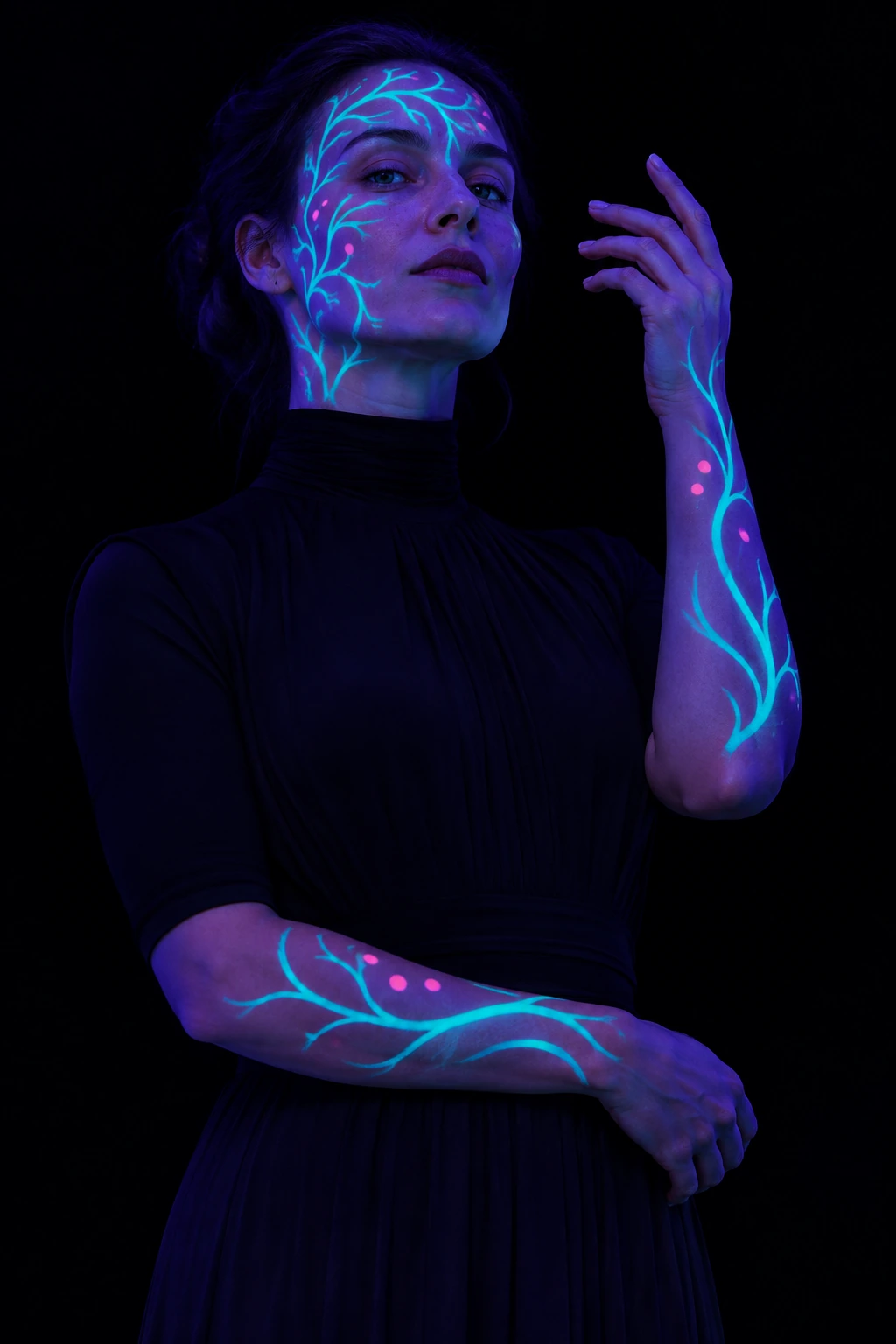
UV-effect bodypainting uses visible fluorescent color as part of a lighting-dependent image. In an illustration, distinguish the illuminated pigment from a luminous background: selective color on a face or forearm can remain readable against a dark field. A glowing outline alone should not erase the form underneath it.
Special-effects approaches can also combine painted illusion with additional sculptural elements. Keep the boundary clear between paint suggesting relief and an actual attached object. For any physical production, material suitability, participant consent and comfort belong to the planning process; a generated image is a visual concept, not a tested product or application guide.
A practical way to develop an original design
Begin with one relationship: a stripe crossing a joint, a painted landscape meeting its background, or a soft gradient interrupted by a crisp motif. Choose a pose, a camera position and a limited palette. Leave some areas quieter so that the eye can understand the design before investigating its details.
Review a generated result for coherent anatomy, continuous contours, believable paint edges and accidental extra fingers. Describe what is actually visible in the caption. Temporary surface painting is distinct from tattooing, and a simulated painted garment should not be described as real clothing. The best study makes both its visual idea and its medium clear.
A small poetic detour
Original words from the AOI studio.
Poetry
A painted line rounds out an arm,
A shoulder gives the blue a shore.
One turning hand remakes the form
The still photograph held before.
The canvas breathes, the colors bend;
A gesture lets the picture end.
The prompt workshop
Original creative exercises. These prompts create new illustrations, not documentary evidence.
A line follows the body
Create an original contemporary bodypainting portrait of an adult with opaque clothing, visible face and forearms painted with broad cobalt brushstrokes and one vermilion curve. Let marks follow the body's volumes, preserve natural skin texture, calm studio light, coherent anatomy, no text or borrowed ceremonial motifs.
The person inside the pattern
Create an artistic camouflage bodypainting photograph of an adult wearing opaque matching garments before an original abstract striped wall. Painted face and arms continue the background pattern from one camera viewpoint, with a subtle silhouette revealing the person. Precise alignment, quiet light, no copied artist composition, no text.
A fluorescent gesture
Create an original UV-effect bodypainting performance portrait of an adult in opaque black clothing. Cyan and warm pink fluorescent motifs on face and forearms describe one clear gesture against darkness. Selective visible fluorescence, credible anatomy and skin contours, no neon background clutter, no text.
Your next inspiration
Discover another art style
Follow a visual thread to the next subject.
A smile from the studio
Jokes
The camouflage model was so convincingly painted into the studio wall that the photographer spent twenty minutes looking for the subject. The model finally raised a hand. The photographer sighed: 'Perfect, but now the architecture is waving.'