
Spray-painting tool, technique and illustration aesthetic
Airbrush painting uses finely sprayed color to build controlled gradients, soft transitions and sharp masked boundaries across illustration and surface design.
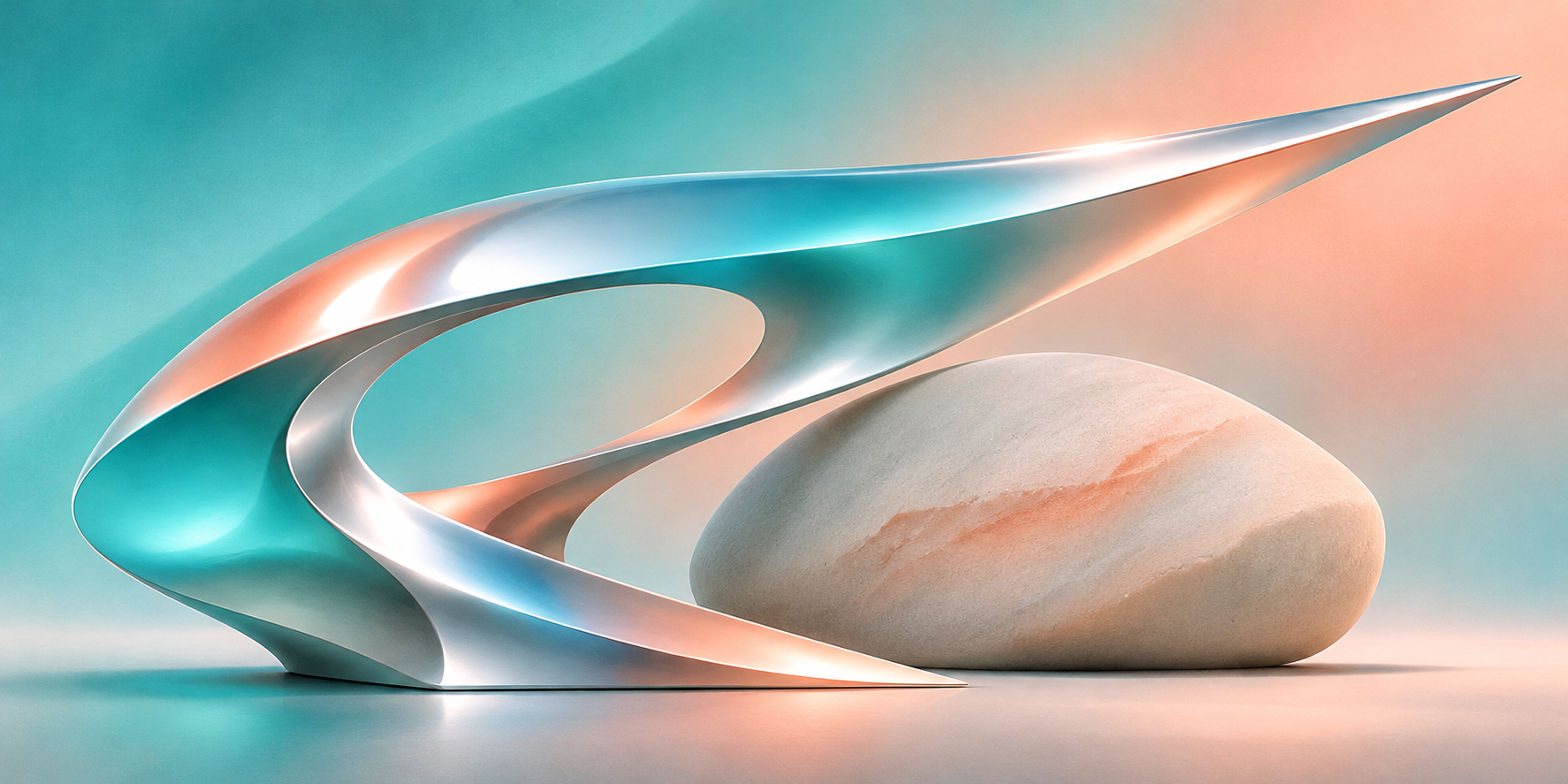
A visual introduction
Select an image for a closer look. Use the thumbnails, arrow keys or a swipe to compare examples. Zoom in to inspect details, or share the image that inspires you.
Creative toolbox · take this style further
Choose an input and a destination. Search sends your words to the chosen site; Copy & open puts them on your clipboard to paste there.
Create with AI
Turn your chosen input into an image prompt or a new creative direction.
ChatGPT
Copy your input and paste it into a ChatGPT conversation or image request.
Copy & open ChatGPT (new tab)Claude · Anthropic
Develop an image prompt or explore the style in a new Claude conversation.
Copy & open Claude · Anthropic (new tab)Midjourney
Paste your input into the Imagine bar on the Create page.
Copy & open Midjourney (new tab)Adobe Firefly
Copy your input, open Firefly, and paste it into the prompt field.
Copy & open Adobe Firefly (new tab)Leonardo.Ai
Copy your input, open Leonardo, and paste it into the generation field.
Copy & open Leonardo.Ai (new tab)Image search
Find visual references. Short, concrete keywords usually work best.
Lexica
Search AI images and prompts using your selected input.
Search with this input Lexica (new tab)Pexels
Search the photo and video library. Short keywords often work best.
Search with this input Pexels (new tab)Pixabay
Search photos, illustrations and other images.
Search with this input Pixabay (new tab)Unsplash
Search photographs using the style name or your own keywords.
Search with this input Unsplash (new tab)Wikimedia Commons
Search photographs, artworks and historical images. Check each file for its source and reuse terms.
Search with this input Wikimedia Commons (new tab)Art & research
Explore artists, collections and the ideas behind a style.
Wikipedia
Search for background reading. A style may not have its own article.
Search with this input Wikipedia (new tab)WikiArt
Copy your input into WikiArt’s search to explore artists and artworks.
Copy & open WikiArt (new tab)Europeana
Paste your keywords into the search to explore European museum, library and archive collections.
Copy & open Europeana (new tab)Inspiration
Discover portfolios and visual ideas from creative communities.
Instagram hashtags
Search a hashtag made from your input: spaces and punctuation are removed. Instagram may require sign-in.
Search with this input Instagram hashtags (new tab)ArtStation
Paste your input into artwork search for concept art, environments, characters and visual development.
Copy & open ArtStation (new tab)Behance
Paste your input into project search for illustration, design and visual storytelling.
Copy & open Behance (new tab)A closer look
Smooth tonal transitions, restrained spray grain, crisply masked contours beside soft freehand passages, controlled highlights and carefully separated material surfaces.
A tool with more than one look
An airbrush uses compressed air to break a liquid into fine droplets and deposit it on a surface. Iwata's technical introduction explains this atomization and the distinction between single-action and dual-action controls. The technique can produce quiet washes, precise edges and dense color; it does not prescribe one subject or historical movement.
Airbrush Illustration is retained here as a related name for one application of the broader technique. Digital airbrush tools simulate some of its mark behavior, but a digital painting is not evidence of physically sprayed pigment. Likewise, soft-focus photography and a blurred image are not automatically airbrush art.
The useful contrast is often at the edge
A convincing airbrush composition usually has an edge hierarchy. A masked silhouette may be sharply defined while the form inside turns through a smooth gradient. A freehand passage can soften into its surroundings without dissolving the entire subject. Choose which boundaries need precision before adding polish.
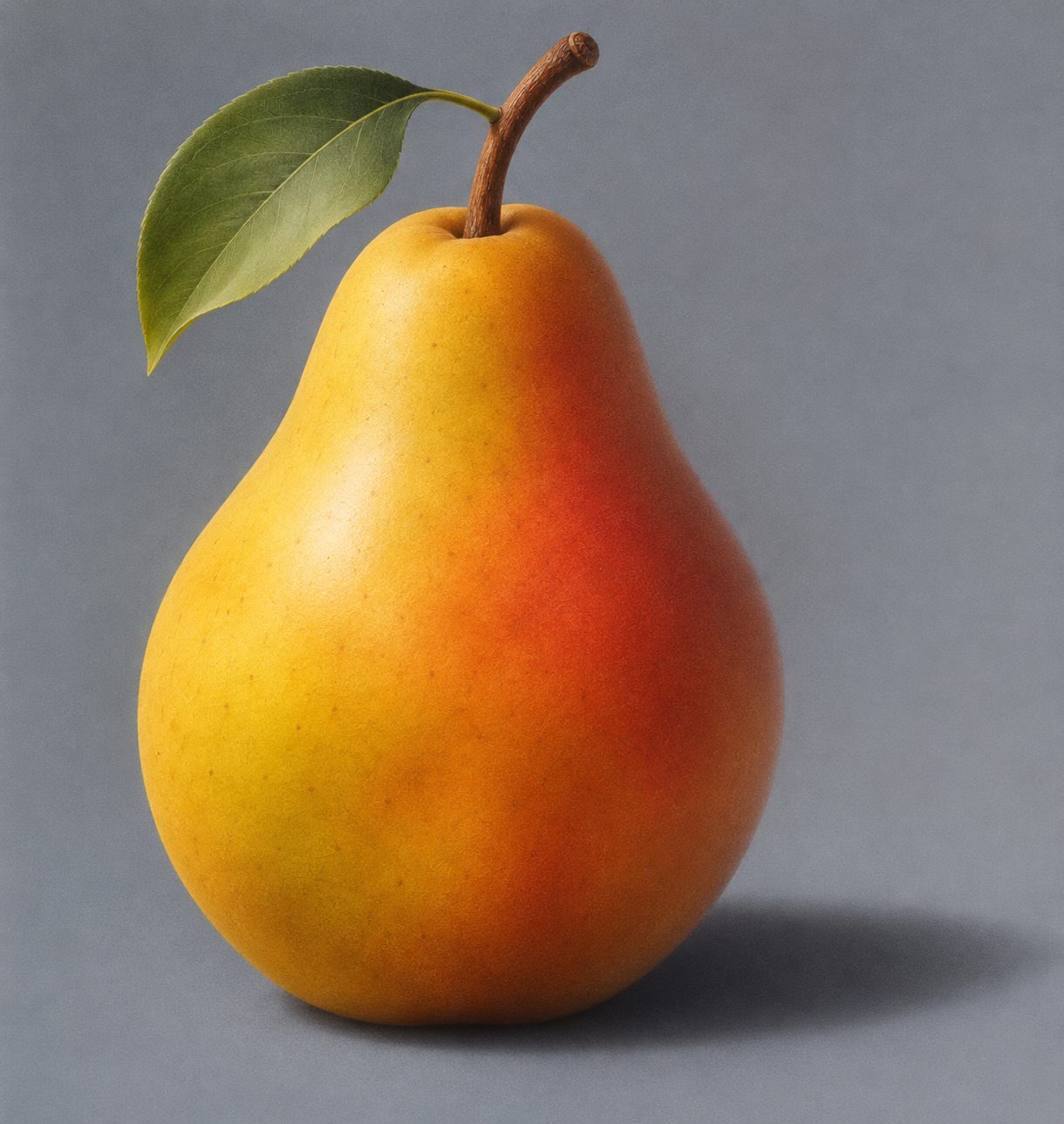
For a rounded object, connect the light, middle tone and shadow through a coherent form. The gradient should explain the surface, not simply make it shiny. A cast shadow, a reflected light and a bright highlight have different jobs; placing them indiscriminately turns everything into plastic.
Control finish without erasing character
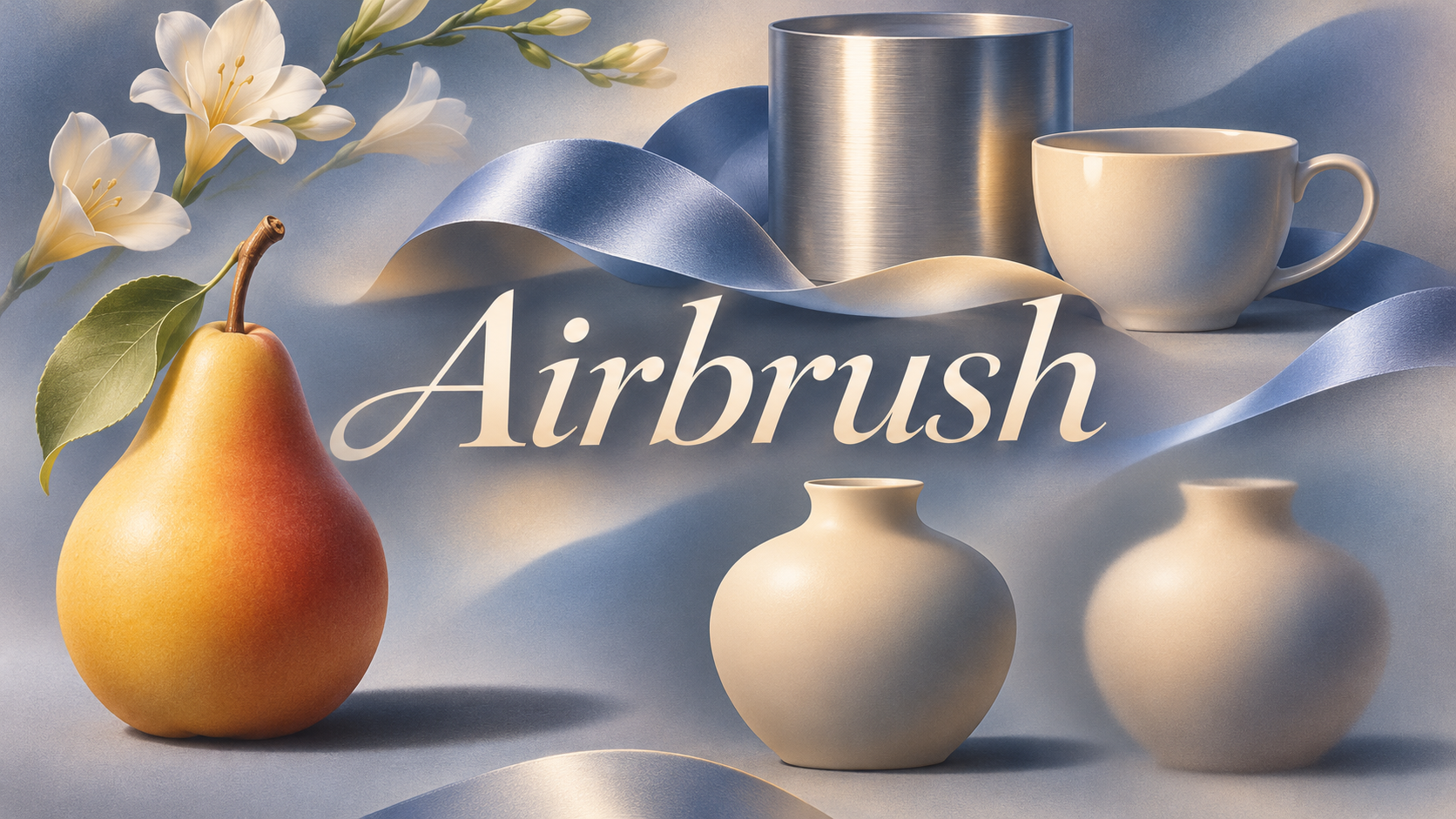
Smooth color can serve a matte pear, a satin fabric fold or a reflective metal sphere. Vary the width and contrast of transitions to distinguish these materials. Keep enough local structure to avoid the impression that every object has been manufactured from the same flawless substance.
A limited palette helps expose whether the drawing works. Try one warm object against a cool field before introducing rainbow light effects. Subtle spray texture can keep large passages alive, but it should follow the material treatment rather than appear as a uniform noise layer over the whole image.
Applications and prompting decisions
The technique's visual grammar is useful for product illustration, speculative posters, atmospheric landscapes and precise object studies. An original portrait can preserve pores, folds and individual features while using carefully controlled tonal passages; airbrush need not mean indiscriminate cosmetic smoothing.
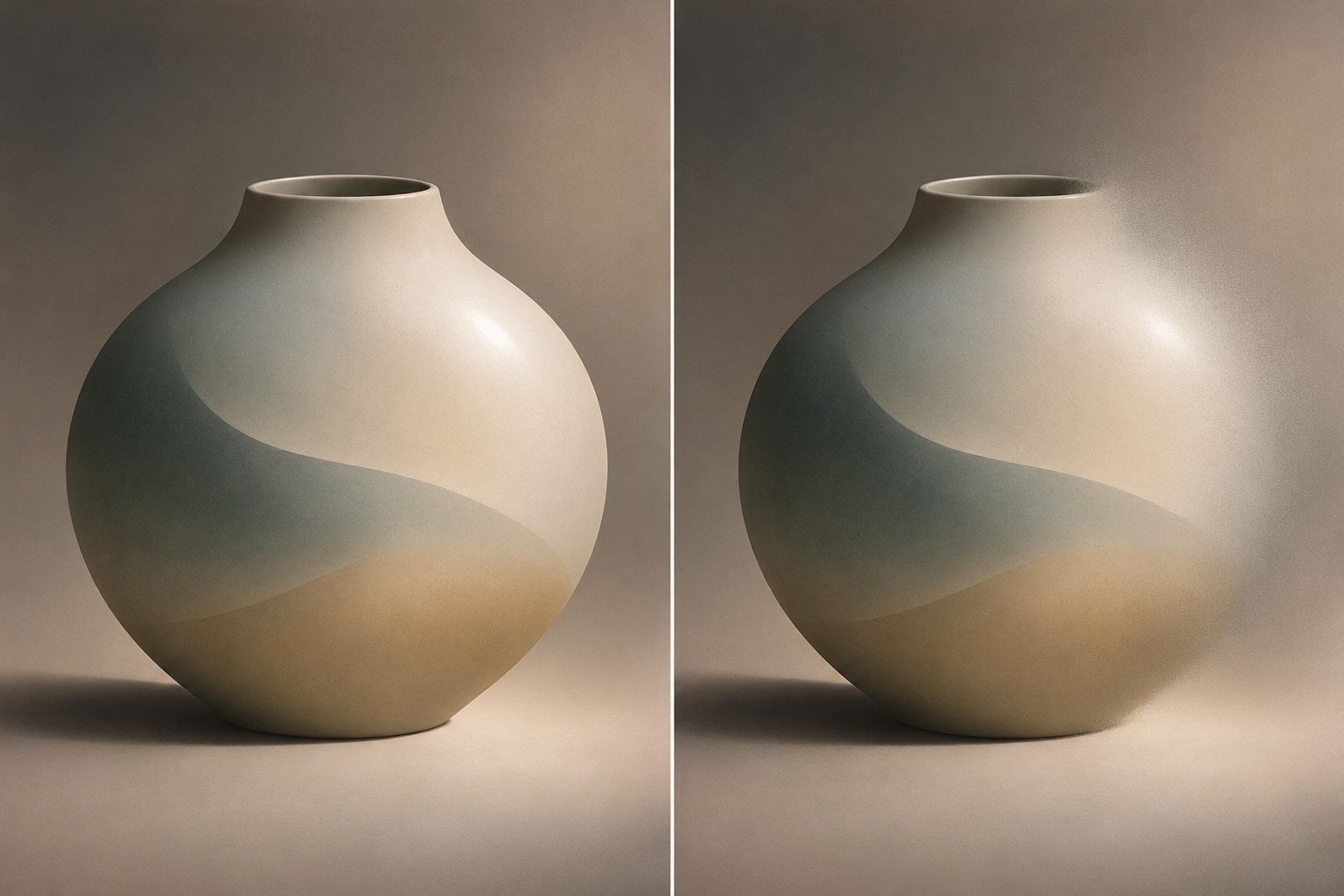
For AI imagery, specify hard masked edges, selected soft transitions, a light direction and the intended surface finish. Avoid relying on 'airbrushed' as a synonym for glossy. A useful comparison depicts the same object once with a crisp boundary and once with a softer boundary, while keeping lighting and proportions consistent.
Positive editorial perspective
AOI editorial perspective (AI-authored). Airbrush can make tonal control feel effortless. A well-designed contrast between masked edges and soft transitions gives objects clarity while allowing atmosphere to remain delicate.
Negative editorial perspective
AOI editorial perspective (AI-authored). Excessive smoothing can erase material differences and personal character. Restore meaningful texture, vary edge sharpness and make each highlight follow a coherent surface rather than a generic glossy formula.
Neutral editorial perspective
AOI editorial perspective (AI-authored). Airbrush is a flexible technique and tool category. Its appearance ranges from soft washes to precise illustration; digital simulations can explore the same visual decisions without sharing the physical process.
A small poetic detour
Original words from the AOI studio.
Poetry
A little cloud obeys the hand,
Then settles where the shadows stand.
No bristle draws the turning pear;
Its rounded weight arrives through air.
A paper edge keeps one line clear;
The distant blue is soft and near.
The highlight waits, a grain of white,
Until the curve has earned its light.
I leave a crease, a mark, a seam—
Not every surface needs a dream.
The mist grows quiet on the page;
A gentle gradient comes of age.
The prompt workshop
Original creative exercises. These prompts create new illustrations, not documentary evidence.
Model a simple object
Original airbrush illustration of a matte pear on a cool gray ground, controlled warm gradients describing volume, crisp near edge and slightly softer far edge, one coherent cast shadow, subtle spray grain, no text.
Separate matte modeling from glossy highlight effects.
Contrast three materials
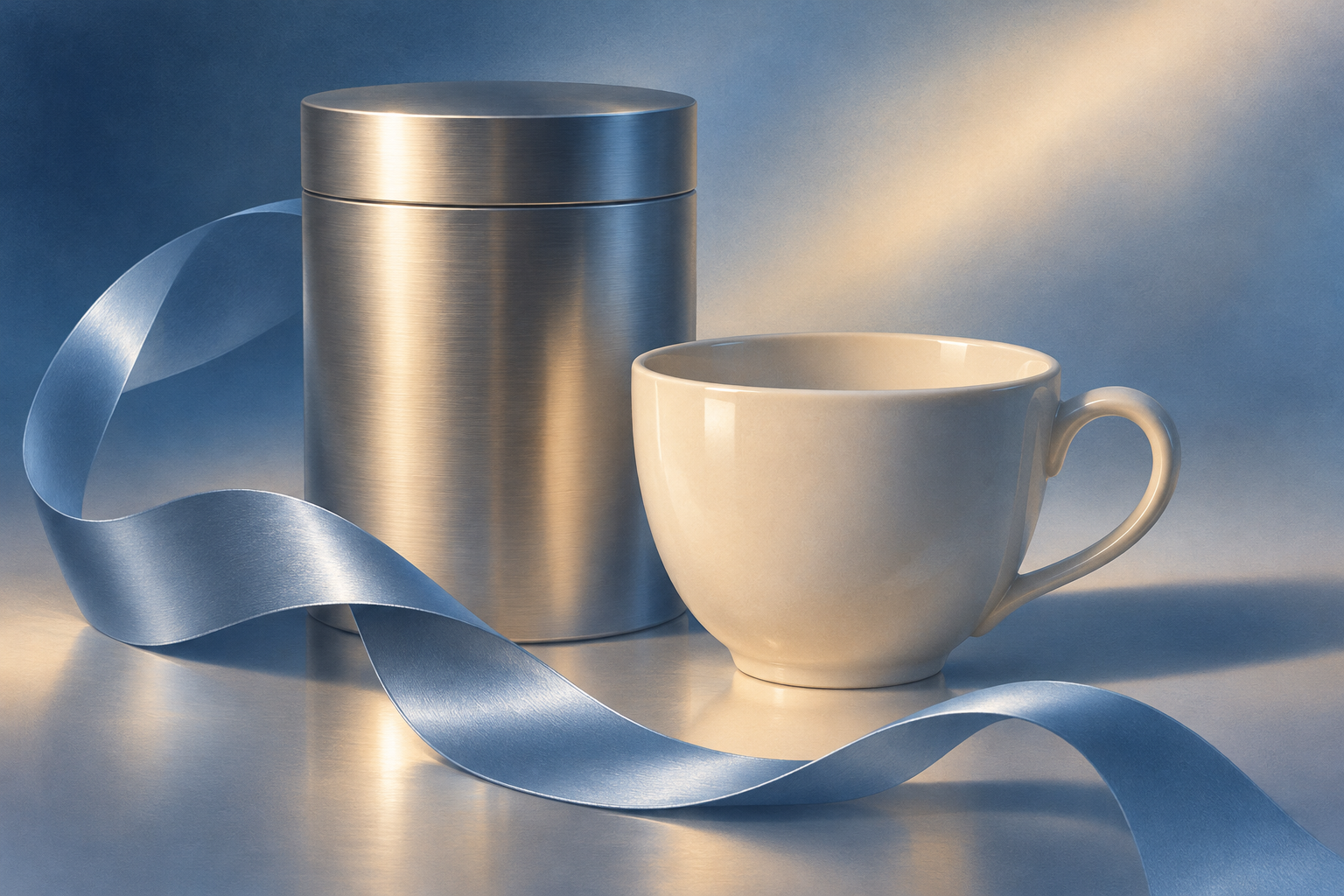
Original airbrush still life with a satin ribbon, brushed metal cylinder and ceramic cup, precise masked silhouettes and different transition widths for each material, restrained blue and warm ivory palette, believable studio light.
Each surface should respond differently to the same lighting.
Compare hard and soft boundaries
An original diptych of the same imagined rounded vessel under identical lighting, left with a sharply masked contour, right with selected softly sprayed edges, continuous smooth volume and restrained palette, no labels.
Change the edge treatment while keeping the object and light stable.
A smile from the studio
Jokes
The chrome sphere asked for a softer portrait. The airbrush artist obliged until the sphere looked like a peach. 'Lovely,' said the sphere, 'but now everyone keeps checking whether I'm ripe.' They restored one sharp reflection and called it professional boundaries.
Sources and further exploration
Iwata — primary technical introduction to atomization, airbrush parts and control types