
Mask-based image-making technique
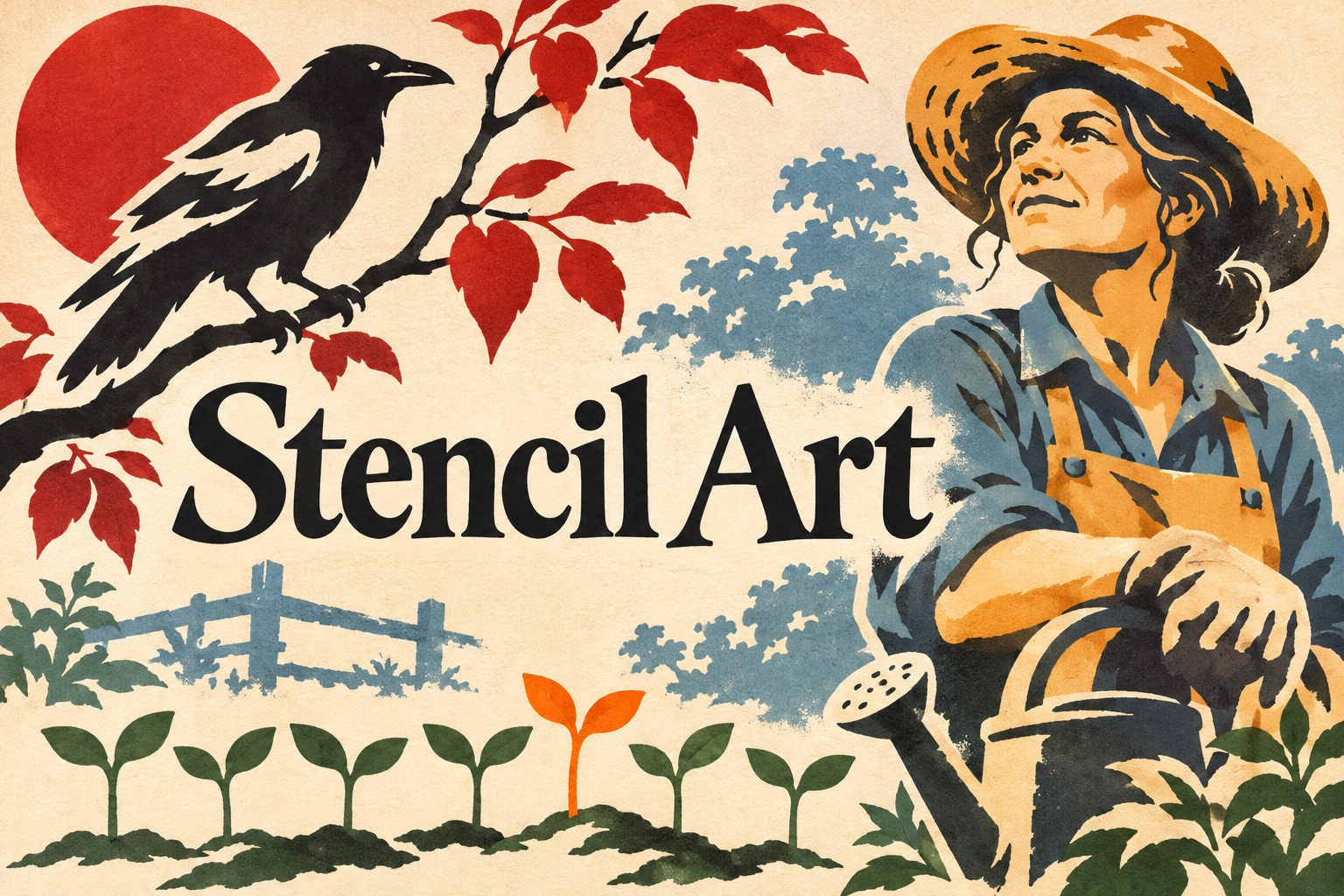
Stencil art makes images through openings in a template, using negative space, repeated shapes and layered color to create a direct visual statement.

A visual introduction
Select an image for a closer look. Use the thumbnails, arrow keys or a swipe to compare examples. Zoom in to inspect details, or share the image that inspires you.
Creative toolbox · take this style further
Choose an input and a destination. Search sends your words to the chosen site; Copy & open puts them on your clipboard to paste there.
Create with AI
Turn your chosen input into an image prompt or a new creative direction.
ChatGPT
Copy your input and paste it into a ChatGPT conversation or image request.
Copy & open ChatGPT (new tab)Claude · Anthropic
Develop an image prompt or explore the style in a new Claude conversation.
Copy & open Claude · Anthropic (new tab)Midjourney
Paste your input into the Imagine bar on the Create page.
Copy & open Midjourney (new tab)Adobe Firefly
Copy your input, open Firefly, and paste it into the prompt field.
Copy & open Adobe Firefly (new tab)Leonardo.Ai
Copy your input, open Leonardo, and paste it into the generation field.
Copy & open Leonardo.Ai (new tab)Image search
Find visual references. Short, concrete keywords usually work best.
Lexica
Search AI images and prompts using your selected input.
Search with this input Lexica (new tab)Pexels
Search the photo and video library. Short keywords often work best.
Search with this input Pexels (new tab)Pixabay
Search photos, illustrations and other images.
Search with this input Pixabay (new tab)Unsplash
Search photographs using the style name or your own keywords.
Search with this input Unsplash (new tab)Wikimedia Commons
Search photographs, artworks and historical images. Check each file for its source and reuse terms.
Search with this input Wikimedia Commons (new tab)Art & research
Explore artists, collections and the ideas behind a style.
Wikipedia
Search for background reading. A style may not have its own article.
Search with this input Wikipedia (new tab)WikiArt
Copy your input into WikiArt’s search to explore artists and artworks.
Copy & open WikiArt (new tab)Europeana
Paste your keywords into the search to explore European museum, library and archive collections.
Copy & open Europeana (new tab)Inspiration
Discover portfolios and visual ideas from creative communities.
Instagram hashtags
Search a hashtag made from your input: spaces and punctuation are removed. Instagram may require sign-in.
Search with this input Instagram hashtags (new tab)ArtStation
Paste your input into artwork search for concept art, environments, characters and visual development.
Copy & open ArtStation (new tab)Behance
Paste your input into project search for illustration, design and visual storytelling.
Copy & open Behance (new tab)A closer look
Cut silhouettes, intentional bridges, flat color masses, controlled overlap and registration, crisp or softly sprayed edges determined by how the mask meets the surface.
The opening makes the image
The National Portrait Gallery defines a stencil as a template whose removed areas allow repeated impressions of an image, symbol or letter. The image depends as much on what the template blocks as on what it leaves open. This makes negative space a working part of the design.
Stencil art is broader than street art or sprayed portraits. Fundació Joan Miró describes his pochoir illustrations as manually applied color through cut stencils, with different shapes and colors handled separately. Screenprinting is related through its use of a blocked and open mesh, but its apparatus differs from a loose cut sheet.
Design the parts that must stay connected
A single loose stencil needs a way to retain interior islands. A small bridge can hold the center of a letter or the light area inside an eye. Those interruptions can become an expressive visual rhythm rather than defects to disguise. Separate masks or a supporting screen change what is structurally possible.
Reduce the subject to a few important value masses before introducing detail. A face needs a readable relationship between the brow, nose, cheek and jaw, not an outline around every feature. For a botanical subject, the intervals between stems may carry more character than extra leaf veins.
Hard edges, spray edges and layered color
A stencil does not require every edge to look the same. Close contact can create a crisp boundary; a lifted or irregular mask can allow a softer edge. Use that contrast intentionally: one hard silhouette can anchor a cloud of spray, while a restrained halo can separate a form from its ground.
Multiple layers need a clear registration plan. Keep colors distinct enough to explain their roles, and decide whether overlap creates a new shape or merely fills a missing area. Slight misalignment can be expressive when selective; random displacement across every layer usually weakens the image.
Repetition with a purpose
Stencil logic suits posters, patterned surfaces, editorial portraits and original wall-art concepts. Repetition can make a rhythm, expose a difference or establish a symbol. It does not have to make every image identical: changing one color or removing one element can alter the emphasis.
For an AI interpretation, describe viable cut shapes, purposeful bridges and a limited layer structure. A photograph with crushed contrast is not automatically a convincing stencil. Avoid meaningless text and gratuitous distressed concrete when the subject would be clearer on paper or a plain wall.
Positive editorial perspective
AOI editorial perspective (AI-authored). Stencil art can compress a subject into a memorable structure. Negative space, repeated shapes and a few decisive color layers make the image communicate quickly while leaving room for subtle variations.
Negative editorial perspective
AOI editorial perspective (AI-authored). Over-reduction can erase identity or turn every subject into the same generic silhouette. Preserve the features that carry meaning, and avoid decorative overspray that obscures the intended cut structure.
Neutral editorial perspective
AOI editorial perspective (AI-authored). Stencil is a transferable image-making method used across several contexts. Its appearance depends on the mask, pigment, surface and layering strategy; street-art imagery is one application rather than the complete definition.
A small poetic detour
Original words from the AOI studio.
Poetry
I cut away the bird's small flight;
The missing paper holds it right.
A bridge of white, a guarded seam,
Keeps one dark eye inside the dream.
The color passes through the air;
The covered places stay as they were.
I lift the sheet. The blank has made
A shape from what it would not shade.
Again the bird, again the wing—
Yet one red mark changes everything.
A modest hole, a chosen space:
The absent part has found its place.
The prompt workshop
Original creative exercises. These prompts create new illustrations, not documentary evidence.
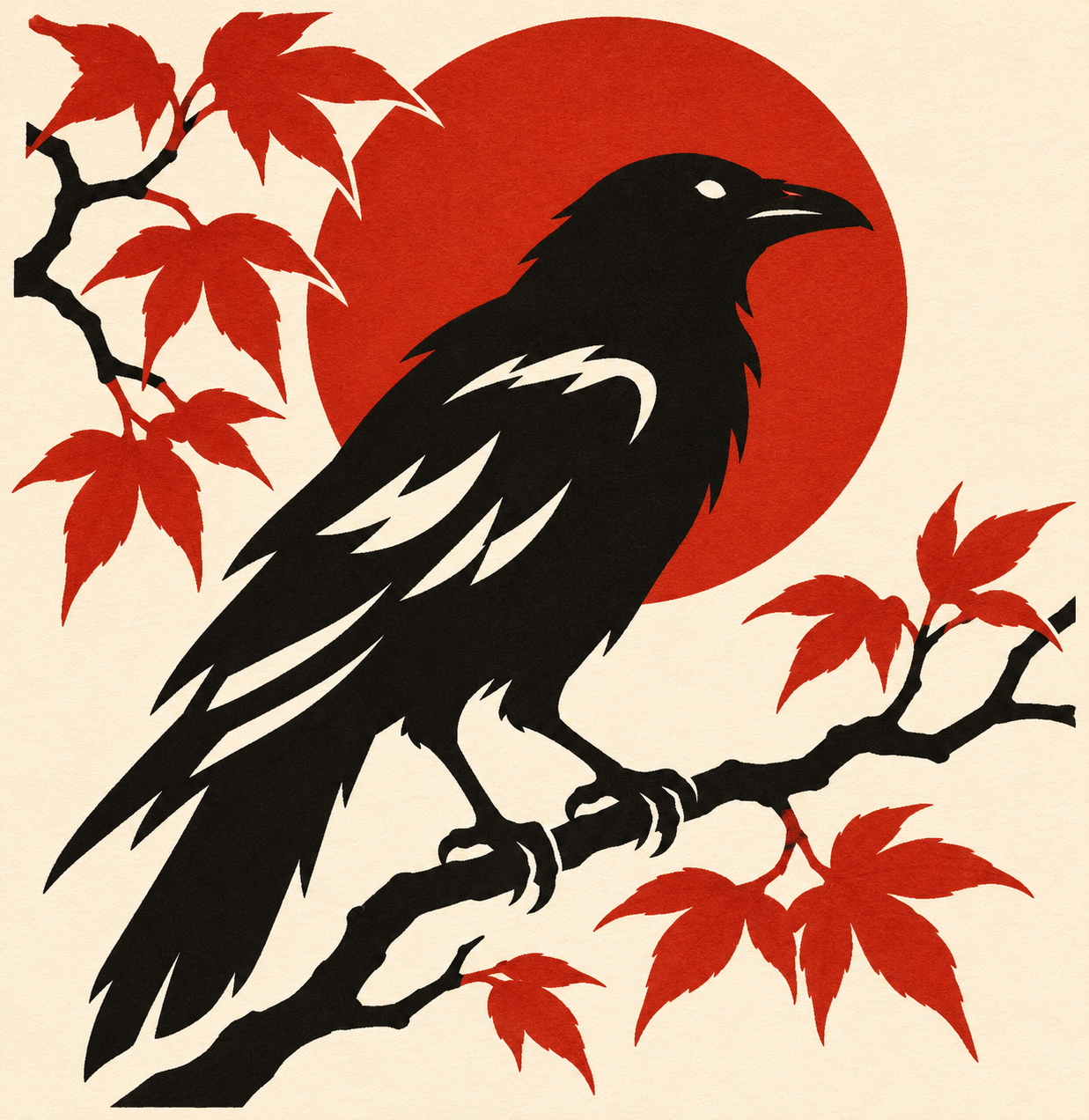
Design a two-layer bird
Original two-color stencil illustration of a crow on a branch, structurally plausible cut shapes and bridges, strong negative space, black and warm red on ivory paper, crisp main silhouette, no text or signature.
Check that small islands could remain supported by the chosen stencil system.
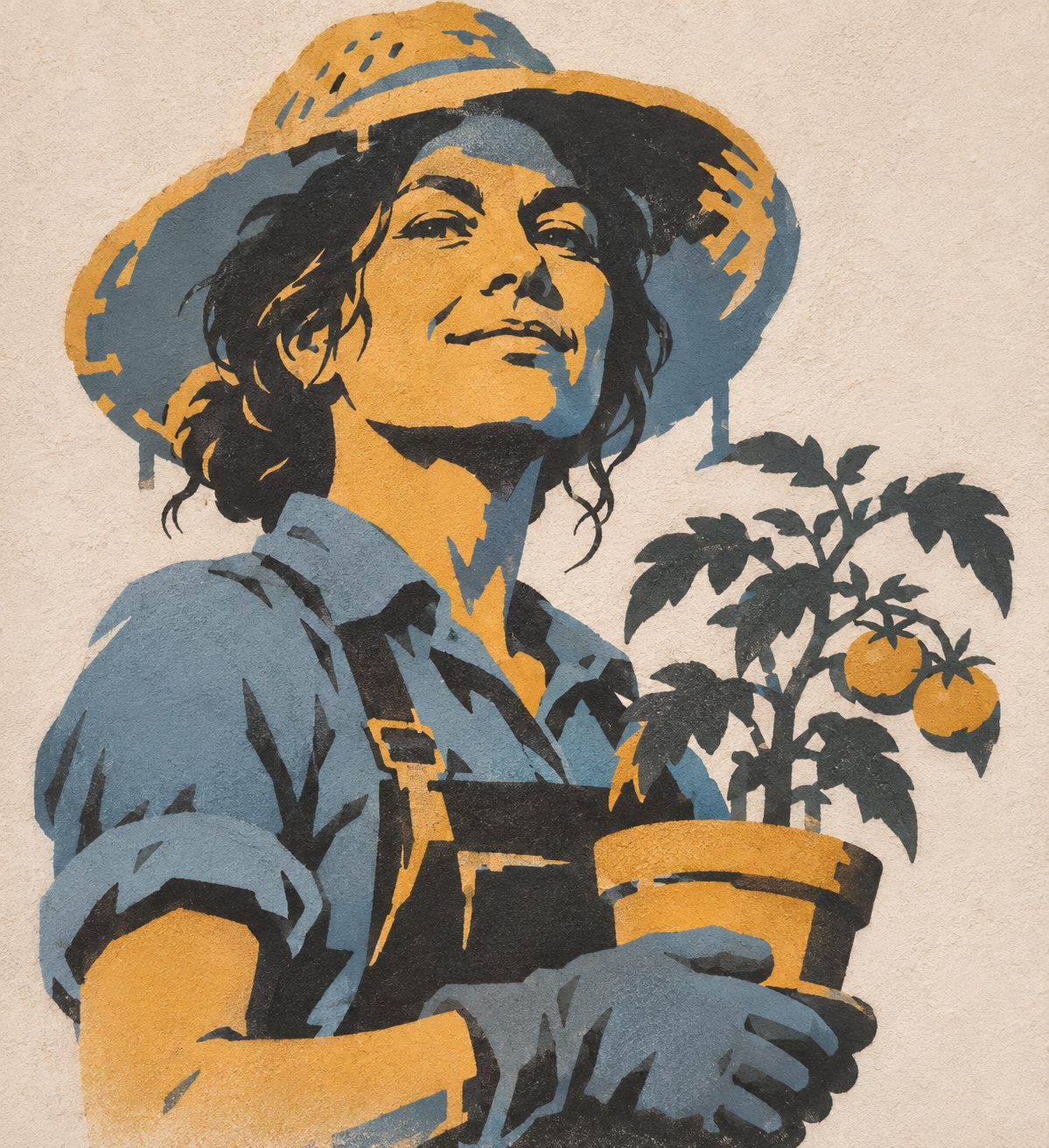
Build a layered portrait
Original three-layer stencil portrait of an adult gardener, coherent light and shadow masses, purposeful bridges, muted blue, ochre and charcoal, readable face at thumbnail size, restrained spray texture on a plain wall.
Do not substitute random threshold noise for designed value shapes.
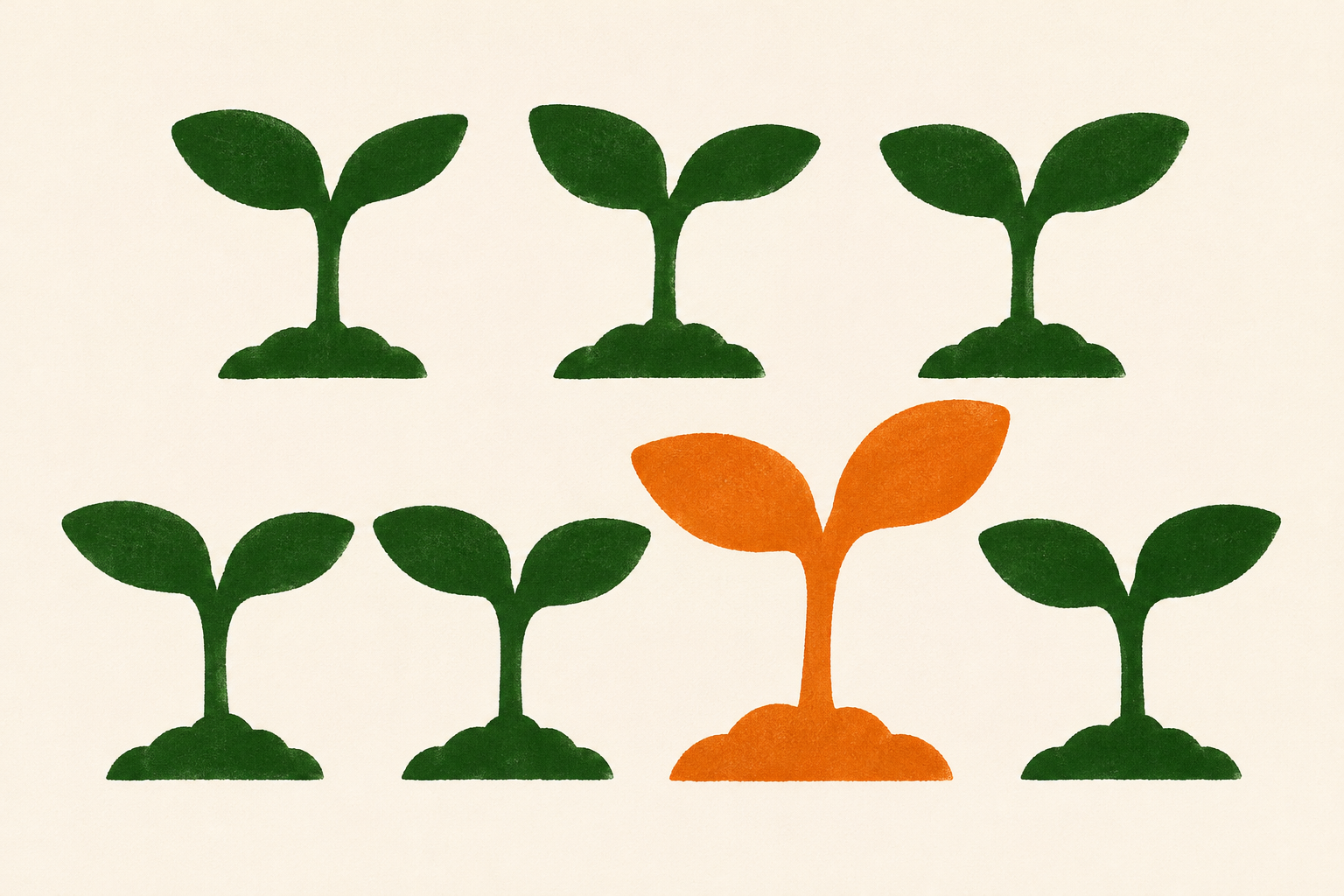
Make repetition reveal a change
An original stencil pattern of seven simple seedling silhouettes, six in dark green and one in warm orange, consistent spacing interrupted once, flat printed color and clean negative space, no lettering.
Let the single change carry the visual idea.
A smile from the studio
Jokes
The stencil complained that the artist only appreciated its holes. The artist promised to include more of its personality. Unfortunately, the personality was an unsupported island and fell onto the floor. They added a bridge and called it emotional support.