
ART STYLE READING LIST · 10 / 10
6 Art Techniques for Images That Remember Their Materials
Woodcut, engraving, etching, scrimshaw, embroidery and crystoleum offer six different relationships between a mark and its support.
Written with AI in Penny’s fictional editorial voice. Catalog illustrations are AI-generated interpretations; practical suggestions are proposed exercises, not documented model tests.
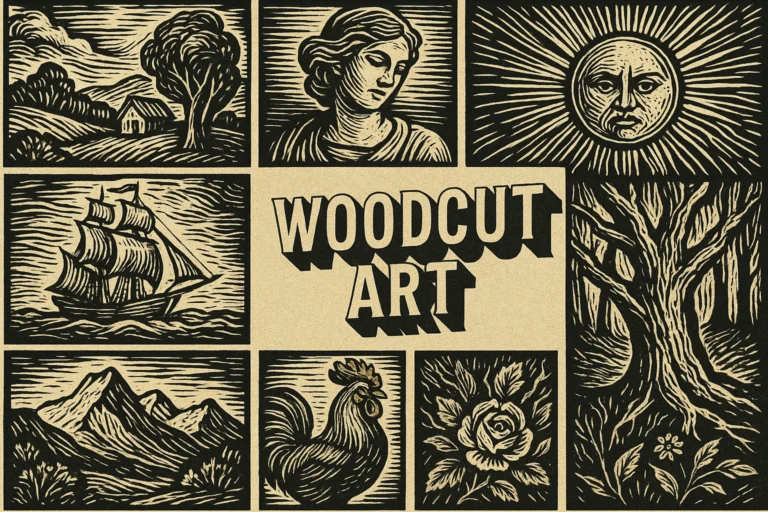
A digital picture can imply that somebody cut, pressed, stitched or polished something. Sometimes the implication is persuasive. Sometimes it is a clean illustration wearing a distress texture like a rented coat. The difference often lies in whether the marks behave as though a material constrained them.
These six catalog entries help you ask better questions about that relationship. This is a looking guide and a set of visual exercises, not a workshop manual. An AI imitation can explore appearance, but it does not perform the physical process or inherit the object’s provenance. The material history remains worth learning even when your own work stays entirely on a screen.
Jump to a style in this list
1. Woodcut: understand what the cut removes
In a woodcut, the remaining raised surface receives ink for printing. The cut-away parts generally create the unprinted areas. MoMA’s definition makes that relationship clear; it is easy to forget when we use “woodcut” to mean any rugged black-and-white picture.
Look for a coherent relationship between solid masses and cleared channels. For an invented orchard scene, decide which shapes remain dark and which gaps release the light. Adding scratches everywhere can obscure the carving logic instead of making it more convincing.
2. Engraving: let disciplined lines turn the form
In metal-plate engraving, lines are incised into the plate and carry ink in an intaglio print. Their direction, spacing and accumulation can build a remarkably controlled tonal structure. It is a different relationship to the surface from relief printing.
Imagine a pear described through curved hatching. The lines should tell you something about its volume, not merely cover it. A simulated engraved image gains credibility when the mark system remains consistent across the object, even if the subject itself is fantastical.
3. Etching: distinguish a drawn line from a cut one
Etching uses acid to bite exposed areas of a prepared plate; it is not simply another word for engraving. MoMA’s intaglio overview distinguishes these methods while showing how artists can combine processes. The practical history is more varied than a tidy style label suggests.
For a digital study, pay attention to the rhythm and distribution of the lines rather than claiming a particular chemical recipe from appearance. The catalog entry is a visual starting point. Actual printmaking requires appropriate instruction and studio practice, not instructions inferred from an AI picture.
4. Scrimshaw: let the support limit the composition
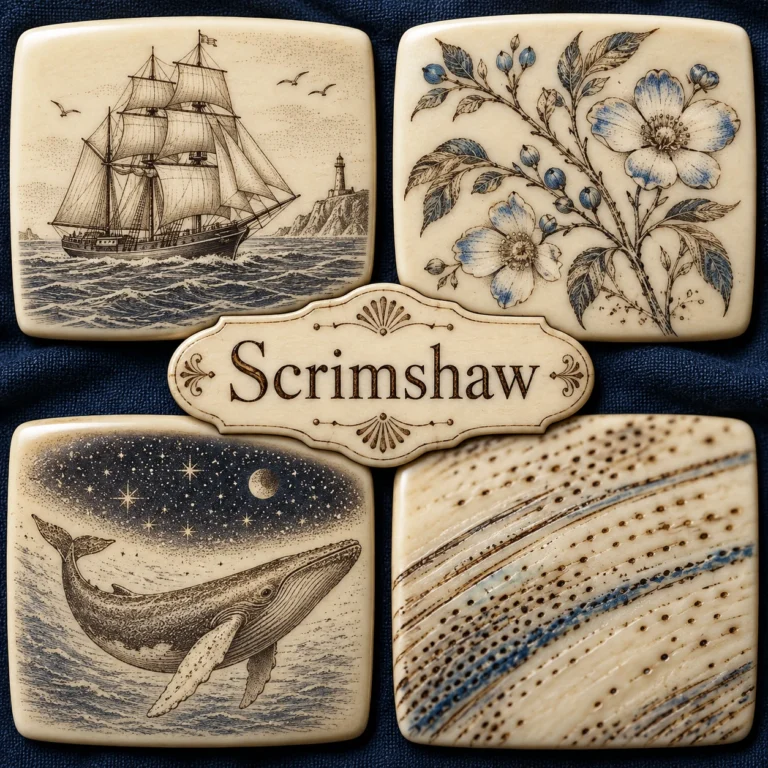
The rounded or bounded object matters. A small polished surface invites a different scale of mark and a different relationship to a viewer’s hand than a wall-sized print. Fine rigging, tiny inscriptions or stippled shadows can make the image feel intimate.
AOI’s recent examples use imagined synthetic-resin supports and are labelled as such. Follow that clarity in your own concept work. A generated plaque can evoke incision without being an antique, and attractive surface detail should never stand in for an object’s documented material history.
5. Dong Embroidery: let thread direction remain visible
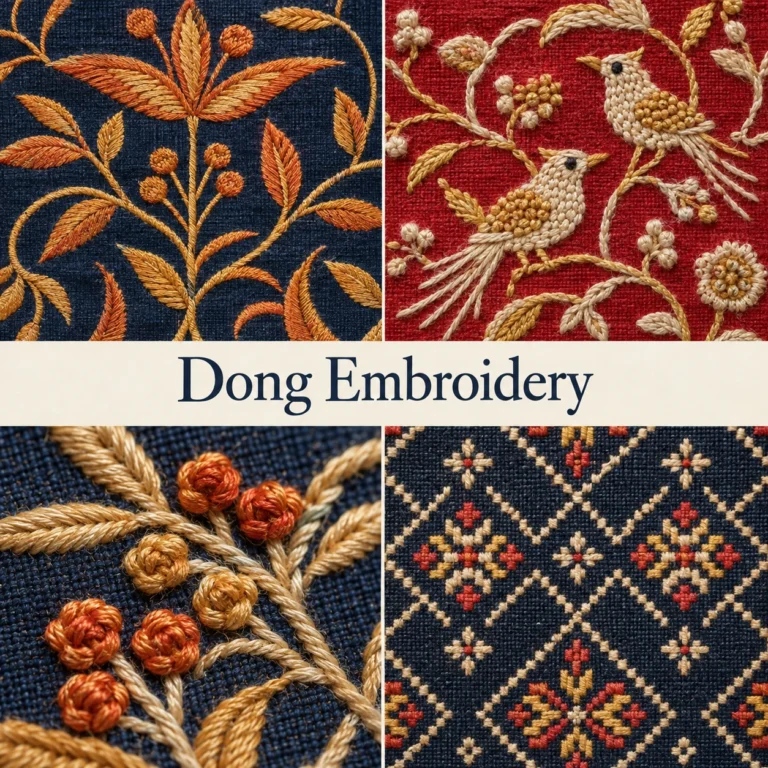
A textile image becomes more specific when stitches have direction, density and a relationship to the cloth beneath them. The Lanmama vest record identifies multiple stitch types in one documented object; that is a useful counterweight to the idea of a single universal embroidery texture.
For a contemporary study, examine how a compact motif differs from the surrounding open fabric. Do not turn an AI-generated stitch-like surface into a claim about authentic technique or symbolic meaning. Return to the named collection and the catalog guide for context.
6. Crystoleum: make the image and glass occupy the same object
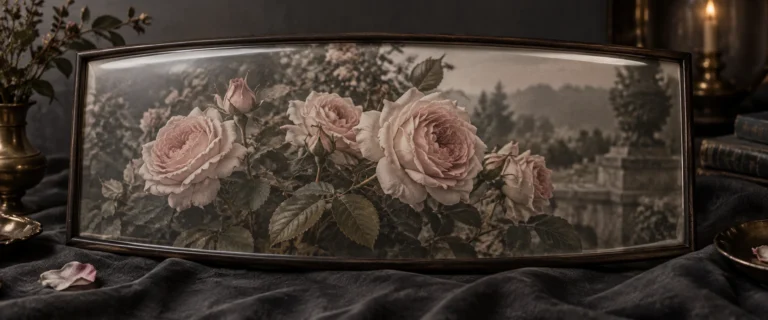
The photograph, transferred image layer, applied colour and glass form a different material proposition from a flat print. Te Papa’s process definition explains the layering; a visual study should make the object’s edge and surface believable enough to support that idea.
Try showing it on a plain table with one restrained reflection. If the reflection fights the image or the frame has no plausible depth, additional ageing will not help. The convincing part is the relationship between layers, not a universal coating of brown nostalgia.
Let the material constrain the marks
A useful review question is: could these marks have arisen from the process I am invoking? For generated images the answer may only be “they suggest it”, and that is an honest description. Look for coherent surfaces before impressive detail.
I find this more satisfying than making everything look handmade by adding damage. Labour is not the same thing as wear. A careful object may be pristine; an incoherent image can be extremely scratched. Give the material a role in the picture, not merely a costume.
Two useful next reads
- 5 Ways to Give a Line Some Personality
- 4 Routes Into Pattern: Textiles, Tiles and the Travelling Line
Browse all Art Styles articles and explorers, compare entries in the Style Atlas, or open the full art style database.
Sources and visual notes
Prepared 11 October 2026. The selection and compositional advice are Penny’s editorial interpretation. The linked catalog guides provide longer context; older entries may carry source-review notices.
- MoMA: Woodcut
- MoMA: Intaglio, engraving and etching
- Lanmama / University of Hong Kong: The Dong Vest
- Te Papa: Crystoleum
Existing Art of AI images are reused with their catalog captions and links. They are visual interpretations, not archival documents, authentic cultural objects, verified construction drawings or exact pixel-format demonstrations. No shared image metadata was changed.