
Intaglio printmaking technique
Etching is an intaglio printmaking process in which a chemical mordant creates recessed marks in a metal plate. Ink held in those recesses transfers to paper under pressure, turning a drawn design into a printed impression.
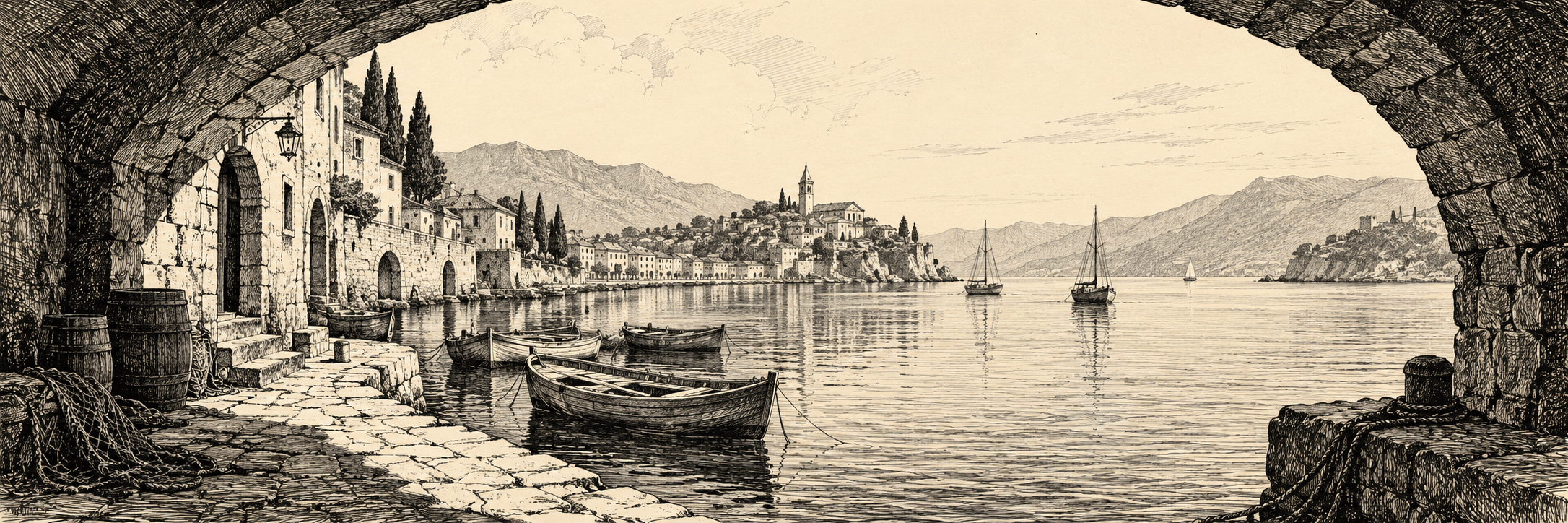
A visual introduction
Select an image for a closer look. Use the thumbnails, arrow keys or a swipe to compare examples. Zoom in to inspect details, or share the image that inspires you.
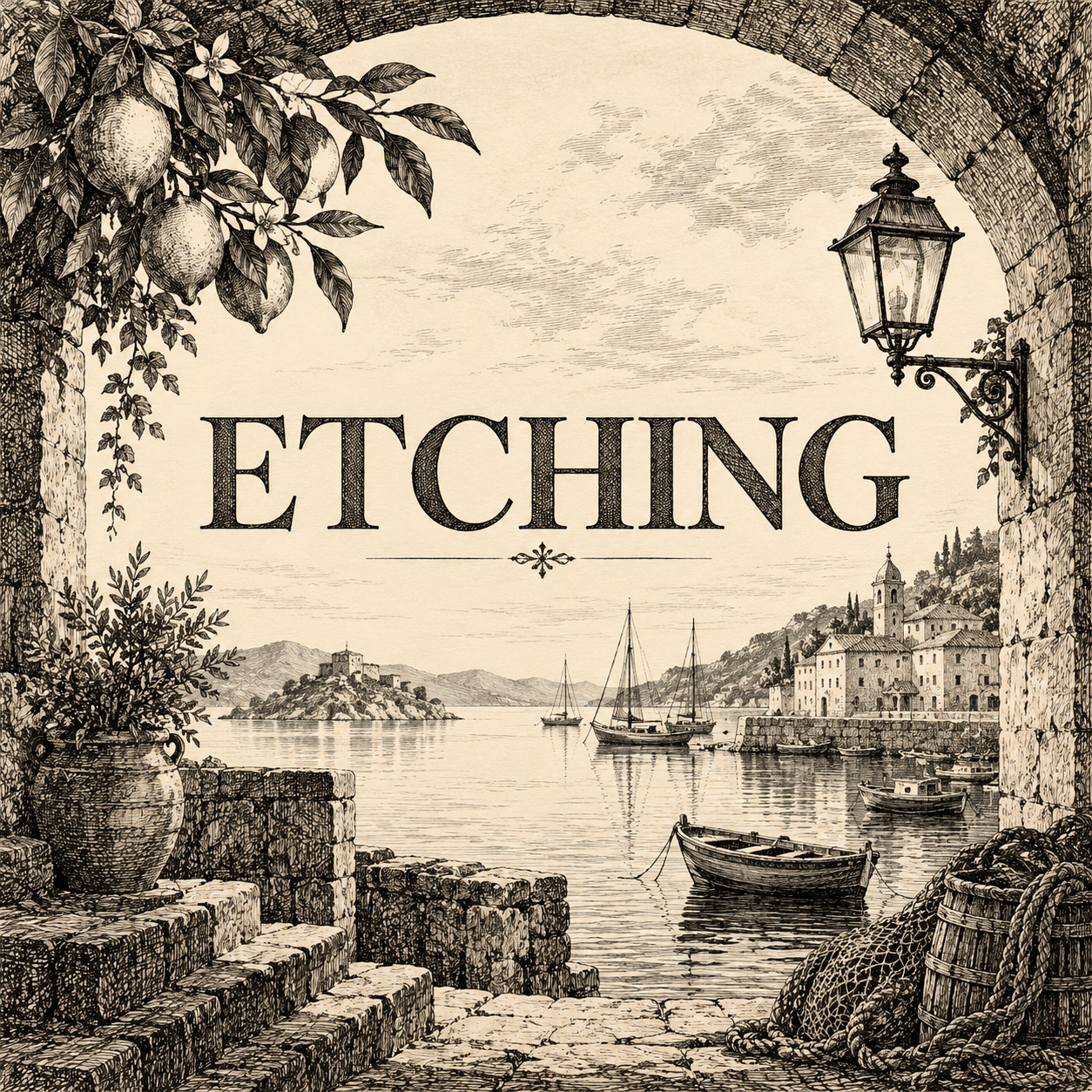

Creative toolbox · take this style further
Choose an input and a destination. Search sends your words to the chosen site; Copy & open puts them on your clipboard to paste there.
Create with AI
Turn your chosen input into an image prompt or a new creative direction.
ChatGPT
Copy your input and paste it into a ChatGPT conversation or image request.
Copy & open ChatGPT (new tab)Claude · Anthropic
Develop an image prompt or explore the style in a new Claude conversation.
Copy & open Claude · Anthropic (new tab)Midjourney
Paste your input into the Imagine bar on the Create page.
Copy & open Midjourney (new tab)Adobe Firefly
Copy your input, open Firefly, and paste it into the prompt field.
Copy & open Adobe Firefly (new tab)Leonardo.Ai
Copy your input, open Leonardo, and paste it into the generation field.
Copy & open Leonardo.Ai (new tab)Image search
Find visual references. Short, concrete keywords usually work best.
Lexica
Search AI images and prompts using your selected input.
Search with this input Lexica (new tab)Pexels
Search the photo and video library. Short keywords often work best.
Search with this input Pexels (new tab)Pixabay
Search photos, illustrations and other images.
Search with this input Pixabay (new tab)Unsplash
Search photographs using the style name or your own keywords.
Search with this input Unsplash (new tab)Wikimedia Commons
Search photographs, artworks and historical images. Check each file for its source and reuse terms.
Search with this input Wikimedia Commons (new tab)Art & research
Explore artists, collections and the ideas behind a style.
Wikipedia
Search for background reading. A style may not have its own article.
Search with this input Wikipedia (new tab)WikiArt
Copy your input into WikiArt’s search to explore artists and artworks.
Copy & open WikiArt (new tab)Europeana
Paste your keywords into the search to explore European museum, library and archive collections.
Copy & open Europeana (new tab)Inspiration
Discover portfolios and visual ideas from creative communities.
Instagram hashtags
Search a hashtag made from your input: spaces and punctuation are removed. Instagram may require sign-in.
Search with this input Instagram hashtags (new tab)ArtStation
Paste your input into artwork search for concept art, environments, characters and visual development.
Copy & open ArtStation (new tab)Behance
Paste your input into project search for illustration, design and visual storytelling.
Copy & open Behance (new tab)A closer look
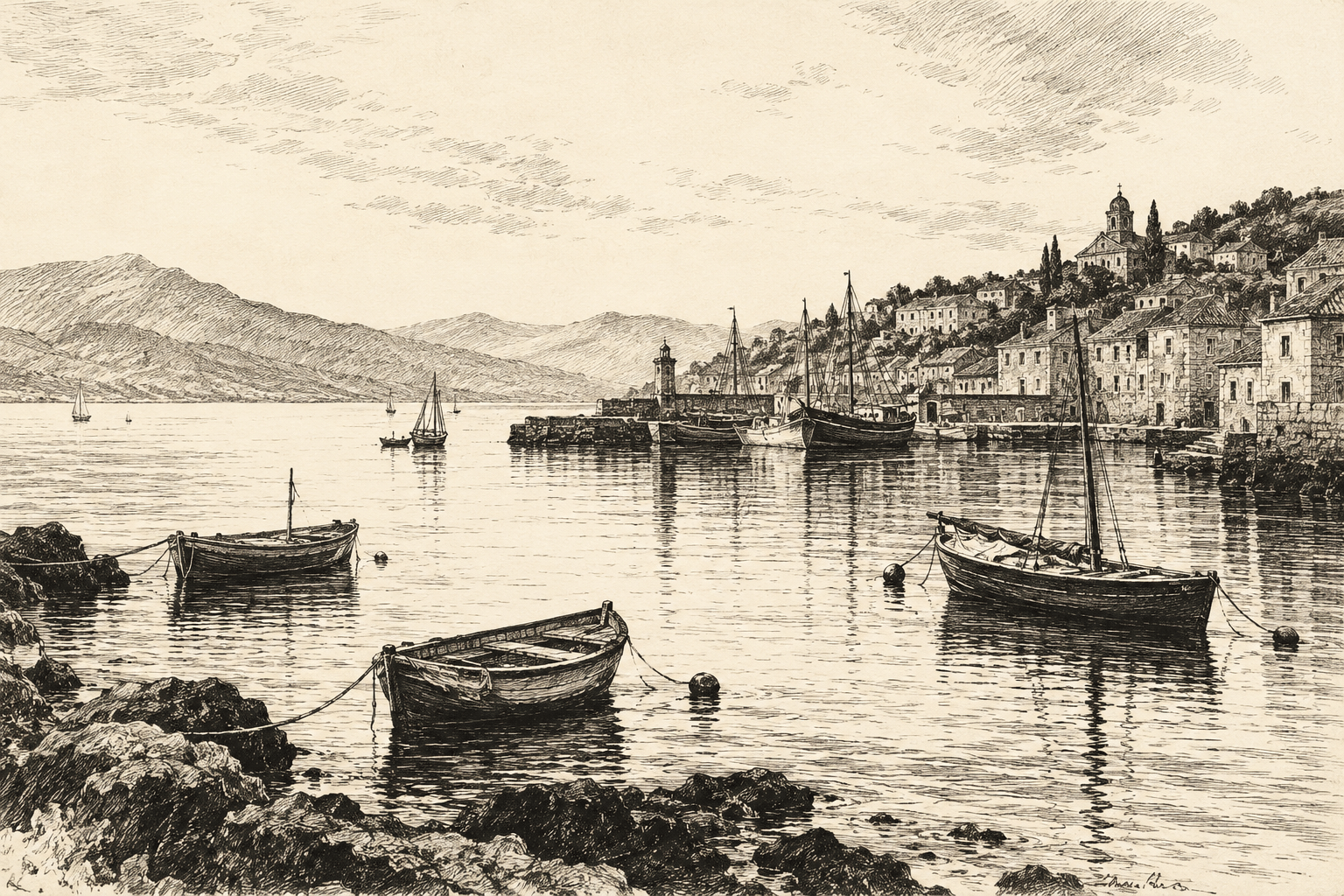
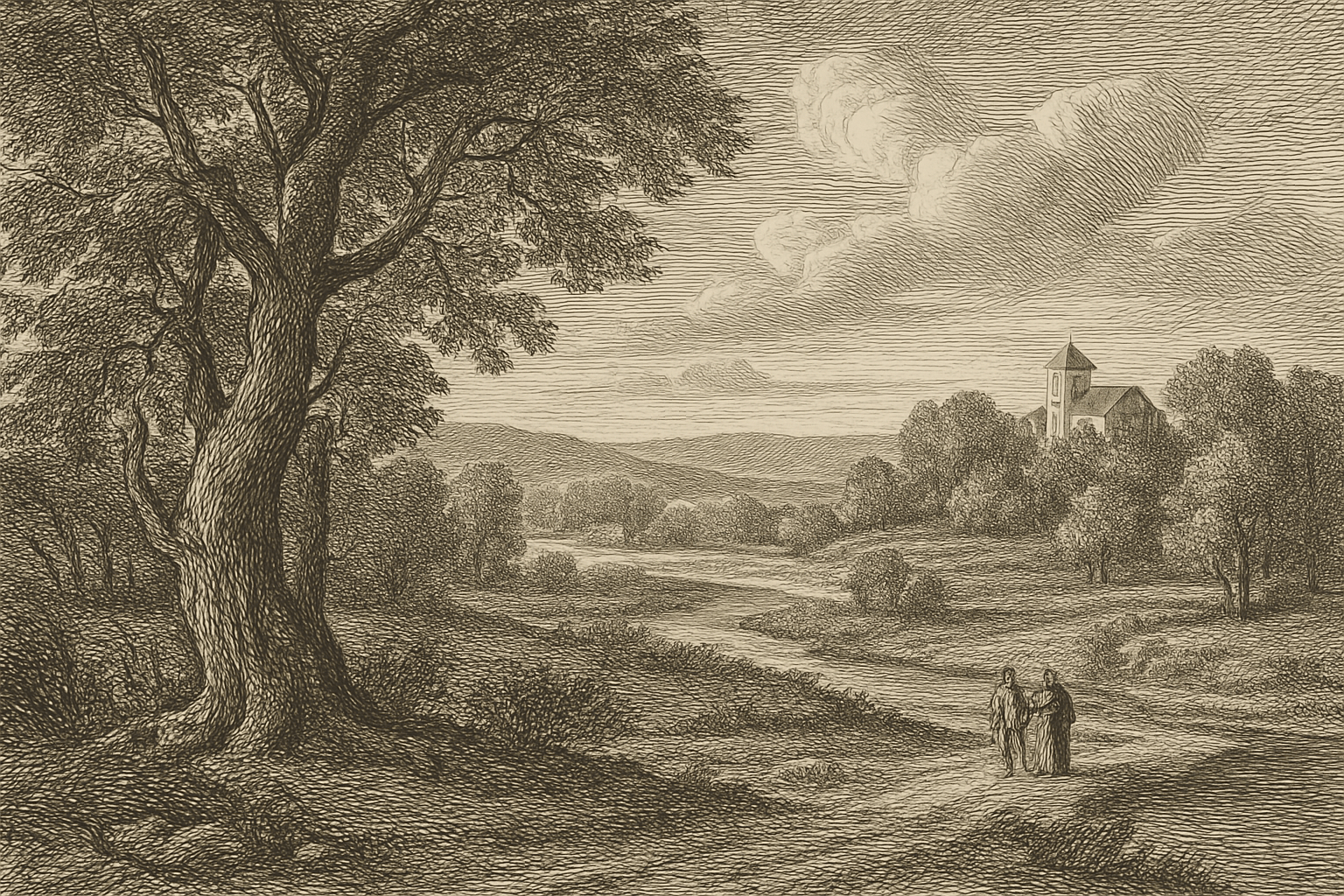
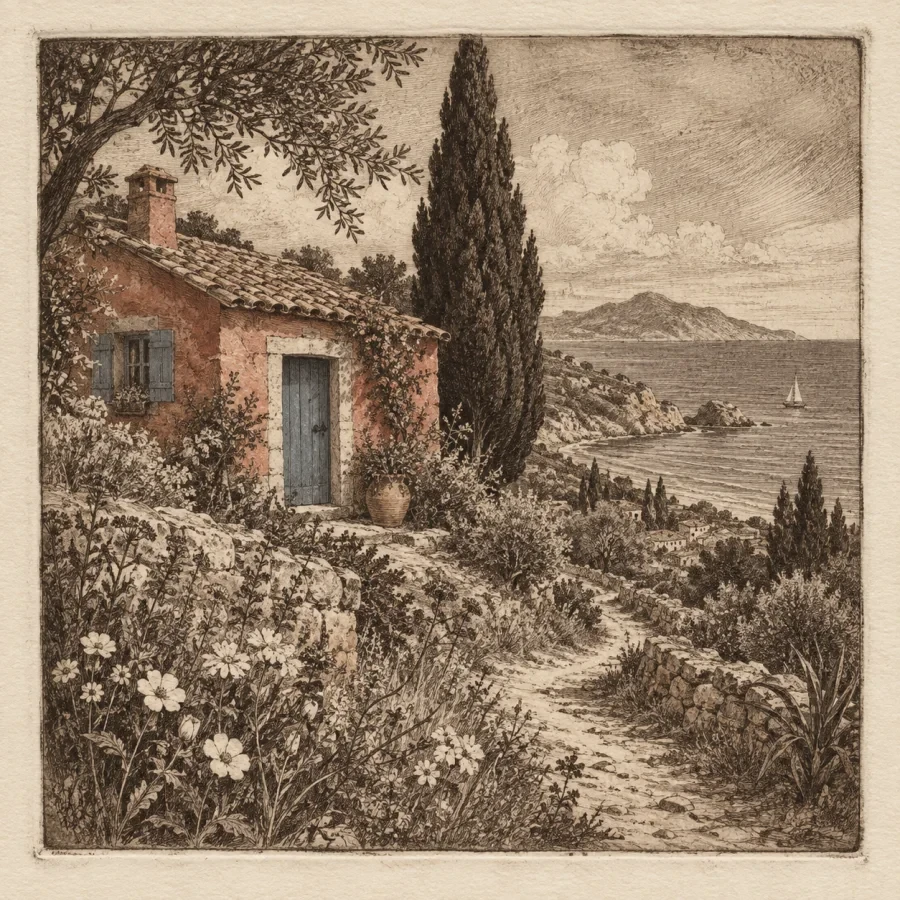
Fine, freely drawn lines, layered hatching, open paper and carefully controlled dark passages can give an etching both intimacy and spatial depth.
What makes an etching an etching
The Metropolitan Museum’s technique guide explains the essential sequence: a resistant ground protects the metal, drawing exposes selected areas, and chemical action makes ink-holding recesses. After inking and wiping, the plate is printed. The resulting image reverses the plate design, and pressure can leave a plate mark around it.
This material process distinguishes an etching from a pen drawing that happens to look similar. A digital image with fine black lines can be etching-inspired, but it is not thereby an impression from an etched plate. Naming the process accurately helps readers understand both the artwork and its reproduction.
Compare neighbouring print techniques
The V&A distinguishes etching from drypoint, where a tool directly scratches the plate and raises a burr that can retain ink. Engraving cuts the plate with a burin. These methods can be combined in one print, so a collection label may name more than one technique.
The distinction is useful when looking at line character, but appearance alone does not always prove the process. Consult the object record for a historical print. A soft line, a crisp edge or a dark area can have several causes, including how the plate was inked and wiped.
Compose with paper and line
Begin by identifying where the paper can remain open. A bright wall or a patch of sky may need very little ink. Dense line groups can then establish a doorway, foreground object or shadow. If every passage has the same density, the print may become intricate without having a clear visual hierarchy.
Vary the length and direction of hatching to support form. Short broken marks might describe rough masonry, while longer strokes can carry water or cloth. Do not let texture replace the larger arrangement. The strongest small print still has a readable composition at a glance.
Think about translation and reversal
An image planned for a plate must survive translation into an impression. Consider how left and right will exchange, especially when the subject contains writing or recognizable directional features. A composition that works as a sketch may need adjustment when viewed in reverse.
A useful preliminary exercise is to mirror a drawing digitally and compare the two versions. This does not teach the full physical process, but it reveals habits in balance and reading direction. For practical plate work, learn through a properly equipped printmaking workshop and its material-specific procedures; an image prompt is not a chemical recipe.
Read the new studies as interpretations
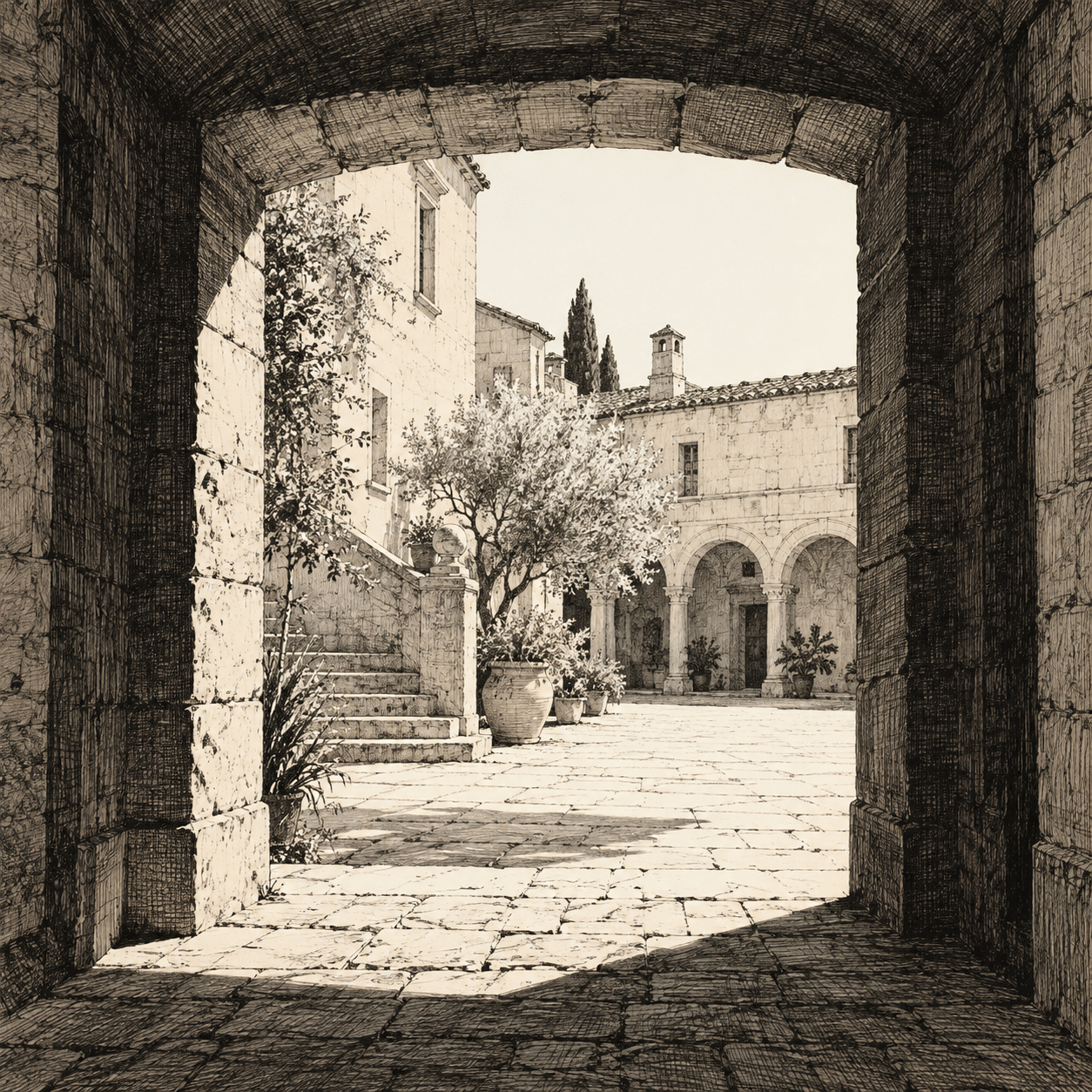
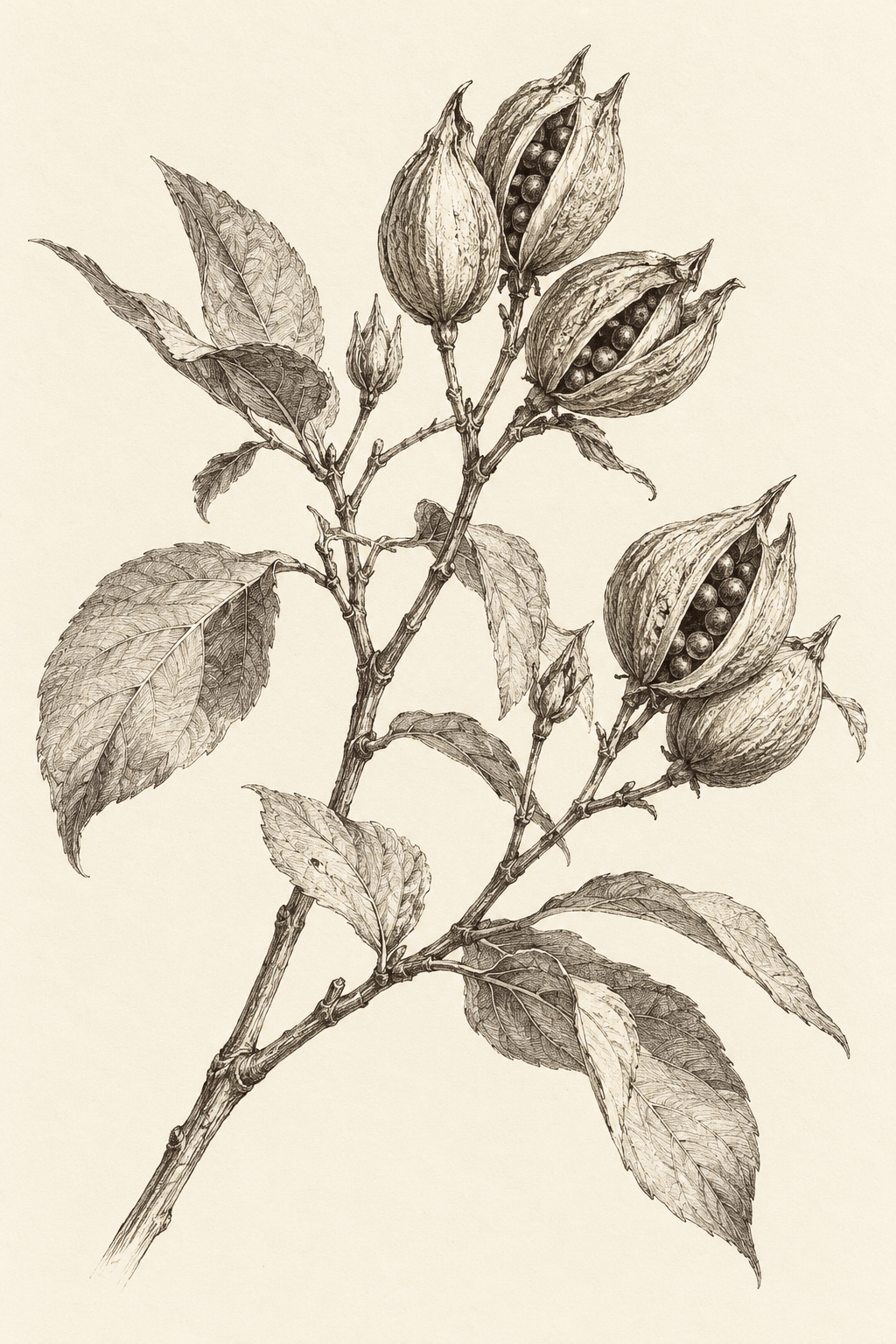
The architectural study explores light beneath an arch; the botanical study tests economical line; the harbour study uses overlapping marks to organize distance and reflection. They are AI-generated interpretations of etched appearances. No physical plate, edition, artist signature or historical provenance is claimed.
When evaluating them, ask whether the dark passages are structurally necessary, whether the paper remains active and whether the marks describe different surfaces convincingly. A generic distressed-paper texture is not enough. The image should remain strong even when the decorative ageing effect is removed, because the line and composition carry its interest.
A small poetic detour
Original words from the AOI studio.
Poetry
The Printed Line
The doorway turns from left to right;
the paper takes the held-back ink.
A little dark becomes a room,
a blank becomes the light we think
is falling through an open door—
the line gives less, the eye sees more.
The prompt workshop
Original creative exercises. These prompts create new illustrations, not documentary evidence.
An arch and its light
Create an original etching-inspired architectural image of a stone arch opening onto a bright courtyard, fine free lines, purposeful hatching and active blank paper. No copied historical print or signature.
Botanical economy
Create an etching-inspired study of a branching plant with seedpods, varied fine line and restrained crosshatching on warm white paper. Preserve generous unprinted-looking margins.
A quiet harbour
Create an etching-inspired harbour with small boats, a distant quay and reflections, distinct line groups, open sky and darker foreground accents. No invented edition numbers.
A smile from the studio
Jokes
The harbour looked different after printing. The boats insisted they had always faced that way.