
Regional overview · art connected with Switzerland
Swiss art is a field of artists, places, institutions and exchanges, rather than one uniform visual style. Landscape painting, figurative sculpture, geometric abstraction, Dada and graphic design offer very different routes into it. This overview separates those routes and suggests how to study their visual decisions without reducing a country to mountains, flags or a tidy grid.
A visual introduction
Select an image for a closer look. Use the thumbnails, arrow keys or a swipe to compare examples. Zoom in to inspect details, or share the image that inspires you.


Creative toolbox · take this style further
Choose an input and a destination. Search sends your words to the chosen site; Copy & open puts them on your clipboard to paste there.
Create with AI
Turn your chosen input into an image prompt or a new creative direction.
ChatGPT
Copy your input and paste it into a ChatGPT conversation or image request.
Copy & open ChatGPT (new tab)Claude · Anthropic
Develop an image prompt or explore the style in a new Claude conversation.
Copy & open Claude · Anthropic (new tab)Midjourney
Paste your input into the Imagine bar on the Create page.
Copy & open Midjourney (new tab)Adobe Firefly
Copy your input, open Firefly, and paste it into the prompt field.
Copy & open Adobe Firefly (new tab)Leonardo.Ai
Copy your input, open Leonardo, and paste it into the generation field.
Copy & open Leonardo.Ai (new tab)Image search
Find visual references. Short, concrete keywords usually work best.
Lexica
Search AI images and prompts using your selected input.
Search with this input Lexica (new tab)Pexels
Search the photo and video library. Short keywords often work best.
Search with this input Pexels (new tab)Pixabay
Search photos, illustrations and other images.
Search with this input Pixabay (new tab)Unsplash
Search photographs using the style name or your own keywords.
Search with this input Unsplash (new tab)Wikimedia Commons
Search photographs, artworks and historical images. Check each file for its source and reuse terms.
Search with this input Wikimedia Commons (new tab)Art & research
Explore artists, collections and the ideas behind a style.
Wikipedia
Search for background reading. A style may not have its own article.
Search with this input Wikipedia (new tab)WikiArt
Copy your input into WikiArt’s search to explore artists and artworks.
Copy & open WikiArt (new tab)Europeana
Paste your keywords into the search to explore European museum, library and archive collections.
Copy & open Europeana (new tab)Inspiration
Discover portfolios and visual ideas from creative communities.
Instagram hashtags
Search a hashtag made from your input: spaces and punctuation are removed. Instagram may require sign-in.
Search with this input Instagram hashtags (new tab)ArtStation
Paste your input into artwork search for concept art, environments, characters and visual development.
Copy & open ArtStation (new tab)Behance
Paste your input into project search for illustration, design and visual storytelling.
Copy & open Behance (new tab)A closer look
Look for a chosen artistic problem: the rhythm of a mountain contour, a figure in open space, the balance of abstract forms, or the disruption of an everyday object. The new gallery offers independent AI-generated studies of these possibilities, not reproductions of museum works or a claim to represent every Swiss tradition.
A geographical connection is not a single style
The Kunsthaus Zürich’s Swiss collection ranges across portraits, landscapes, allegories, everyday scenes, sculpture, photography and media art, as well as abstract work by the Zurich Concretists. [1] That breadth is a better starting point than a national formula of precision, restraint or muted colour. A shared location does not require shared artistic aims.
Be specific about the connection you mean. An artist can be born in one country, train in another and develop a career through several cities. A collection in Switzerland also contains international art. Neither an artist’s birthplace nor the location of a museum is sufficient on its own to explain an image.
Landscape as an artistic construction
Kunsthaus Zürich presents Ferdinand Hodler and Giovanni Segantini as important figures in the development of early modern painting in Switzerland, with landscape central to its account. [1] The useful question is how a landscape becomes a painting: which contours are repeated, which intervals are quiet, and how colour reorganizes the observed view.
For a practical study, begin with a lake and two or three mountain bands. Let the shoreline establish one rhythm and the clouds another. Reduce incidental detail until the relationships become legible. Then decide whether to retain that restraint or introduce more varied marks. These are compositional choices, not national personality traits.
An Alpine subject is one possibility, not an obligation. Urban rooms, cultivated fields, industrial structures and ordinary objects also deserve attention. A picturesque view can be effective, but it becomes limiting when it is treated as the only image a place is allowed to produce.
Distinguish the Giacomettis
The Bündner Kunstmuseum’s account distinguishes Giovanni Giacometti and his sons Alberto and Diego from their distant relation Augusto. It discusses Giovanni’s colour and light, Alberto’s sculpture, painting and drawing, Diego’s furniture and Augusto’s early abstractions. [2] These are separate practices; the surname should not become a shortcut that merges their work.
A useful looking exercise compares what each medium asks of space. A painted colour area can suggest depth through adjacency. A sculpture occupies real space and changes as you move. A piece of furniture adds the question of use. Record the maker, medium and specific object before borrowing a visual lesson.
Zurich Dada complicates the orderly stereotype
Cabaret Voltaire identifies its opening on 5 February 1916 as the beginning of the Zurich venue associated with Dada. Its history describes a gathering of artistic contributions and performances, followed by other Dada events and exhibitions. [3] This experimental setting belongs in an overview alongside landscape and carefully organized abstraction.
For an independent study, use a collision with a purpose: a torn image fragment, an interrupted rhythm, an object whose expected role has shifted. Randomness alone rarely sustains attention. Ask what convention the disruption makes visible. A playful assemblage and a strictly ordered composition can both be connected with this wider history without becoming the same approach.
Graphic design is an important neighbouring field
The Museum für Gestaltung Zürich presents graphic design, typography, posters, textiles, products and applied arts together in its Swiss Design Collection. Its publication on a century of Swiss graphic design describes different generations, media and relationships with international developments. [4][5] This makes design a rich field of study, not a substitute definition for all Swiss art.
If a prompt needs an ordered graphic composition, describe its structure directly: an asymmetric arrangement, clear alignment, generous intervals and a limited palette. If it needs an expressive painting or an irregular sculptural surface, ask for those properties instead. The word Swiss cannot make these decisions for you.
Paul Klee and the limits of a national label
Switzerland’s federal cultural information site explains that Paul Klee spent more than half his life in Bern while remaining a German citizen throughout his life. [6] His close connection with Switzerland matters, but it should not be simplified into an inaccurate citizenship claim.
This is a useful model for the whole overview: distinguish biography, legal nationality, working environment and artistic association. The distinctions need not make a label unusable. They make it more informative, especially when an artist’s life crosses borders.
Read the new gallery as five different questions
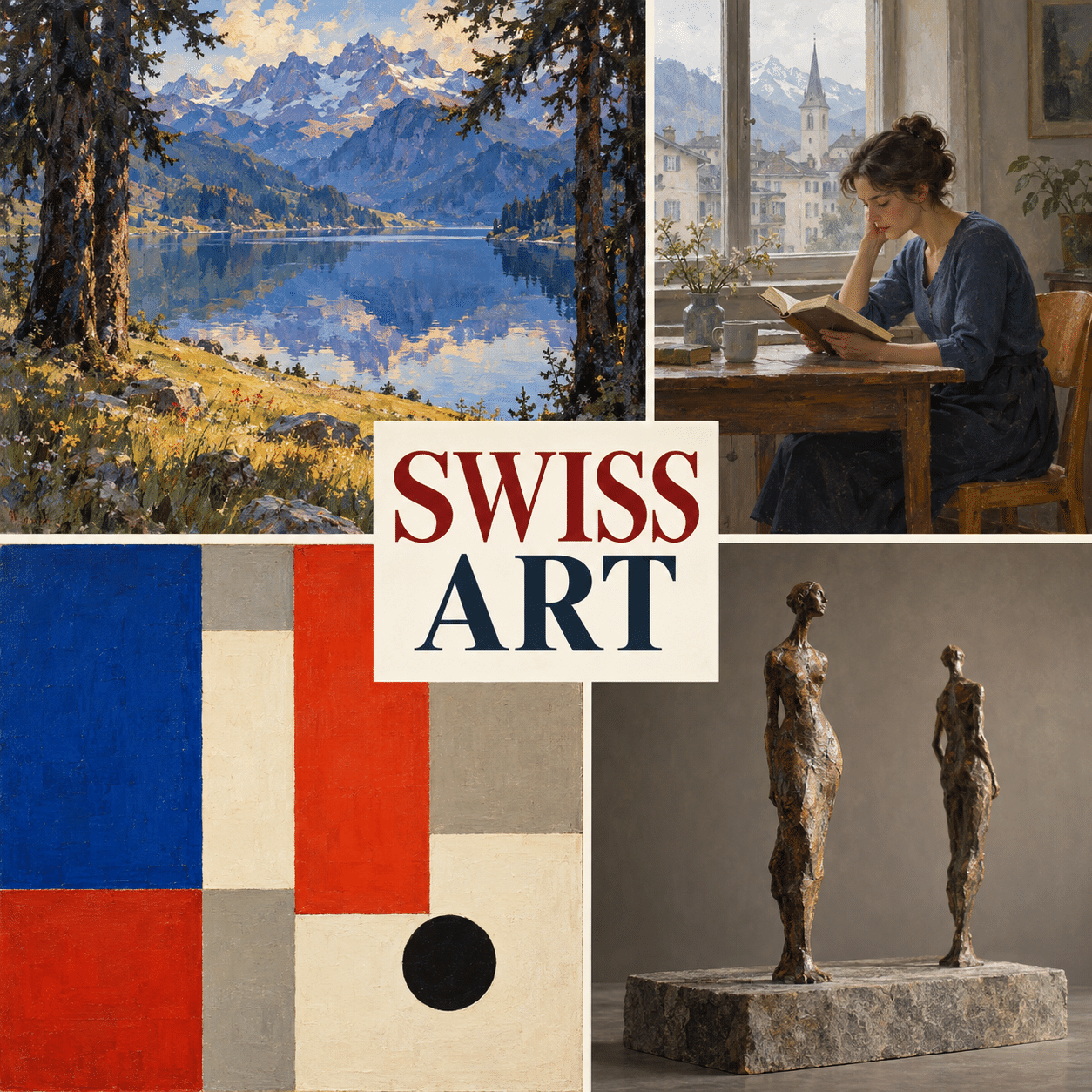
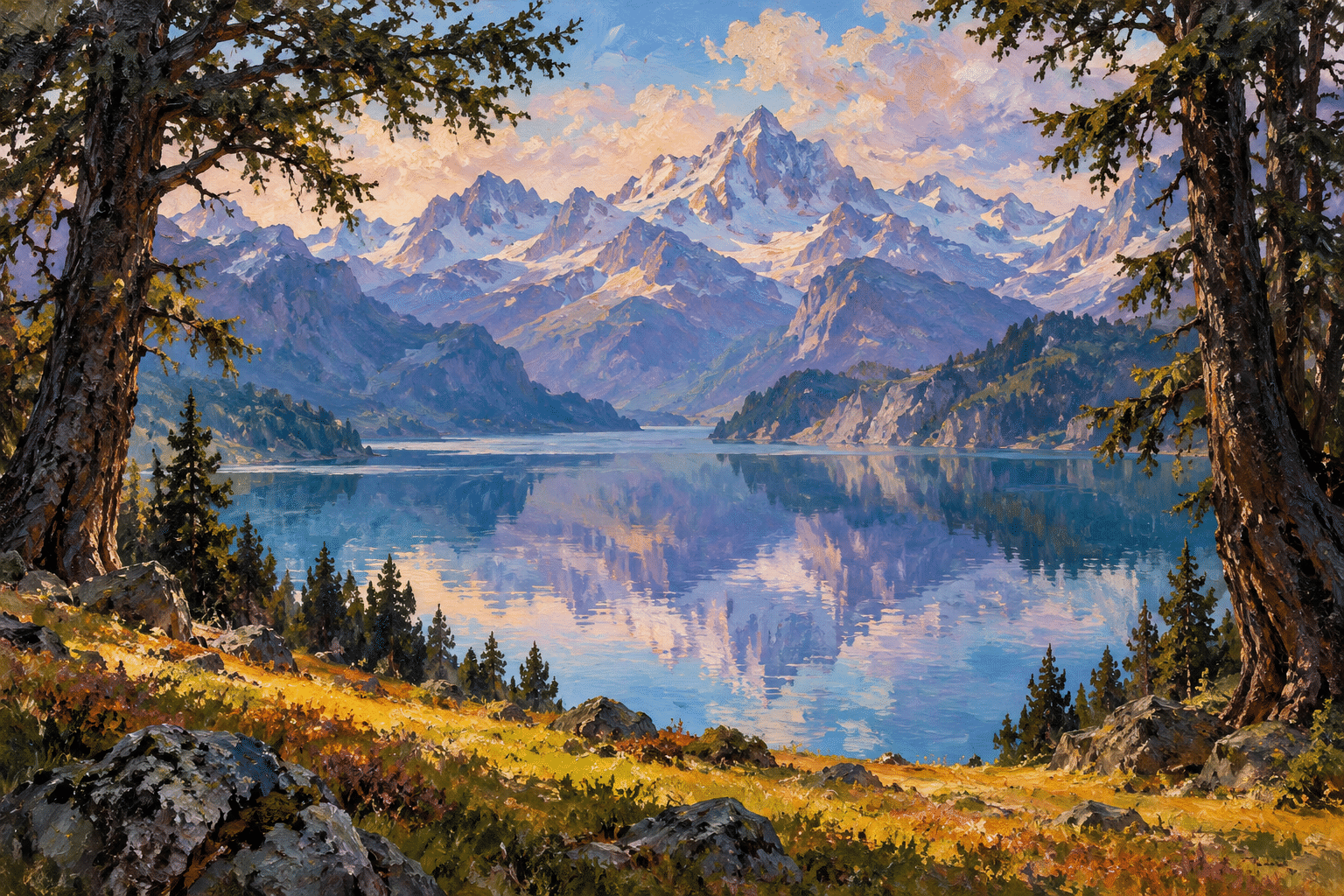
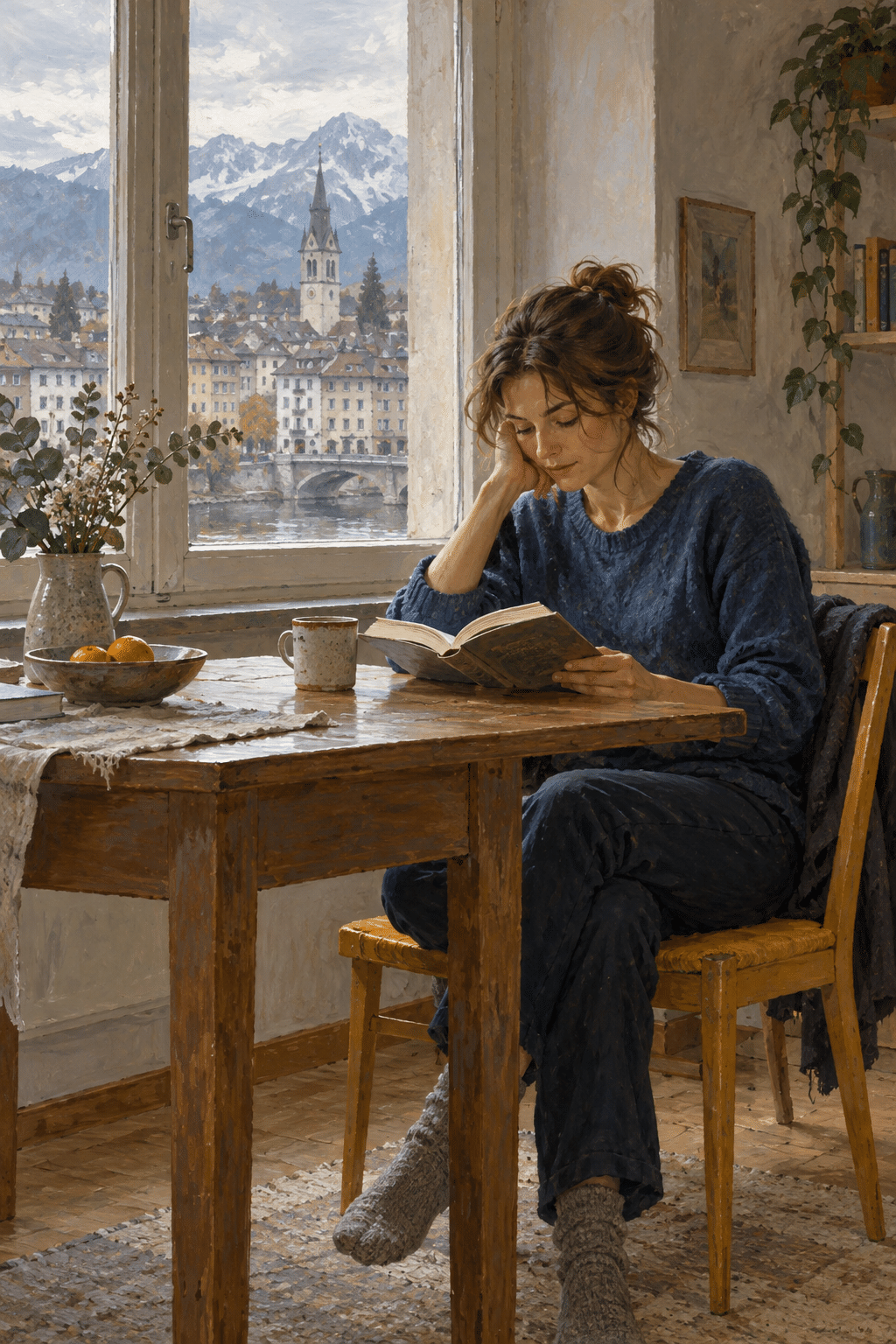
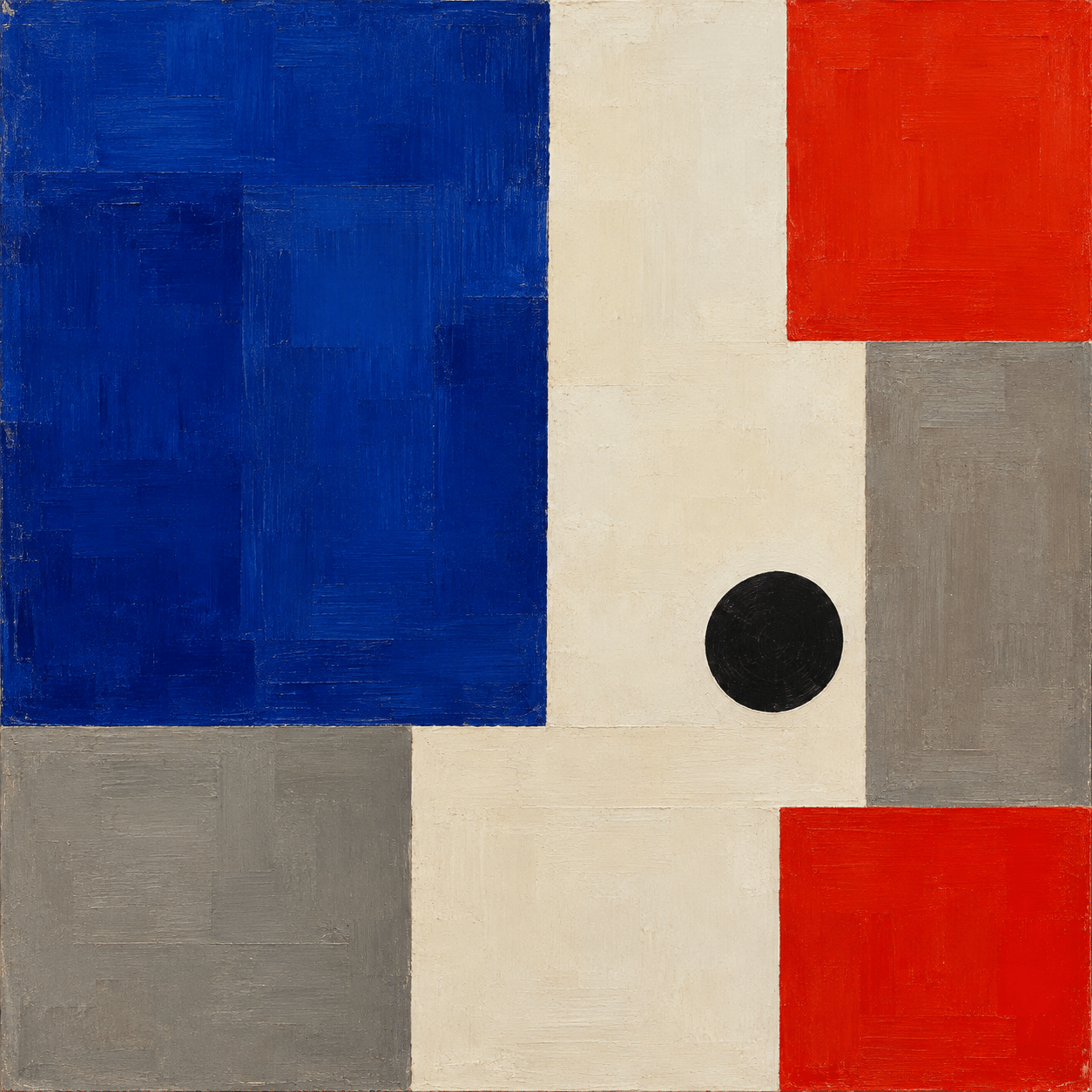
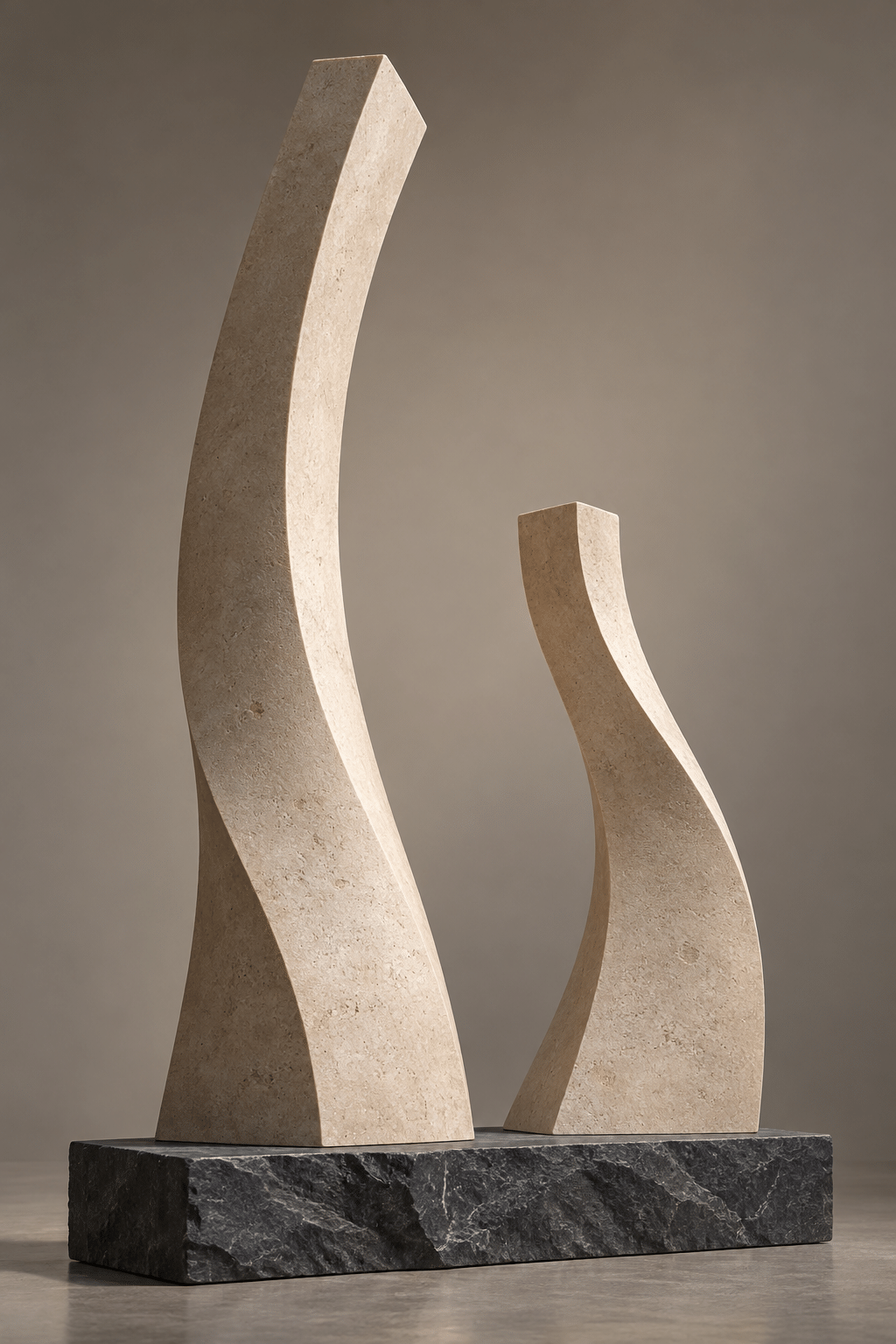
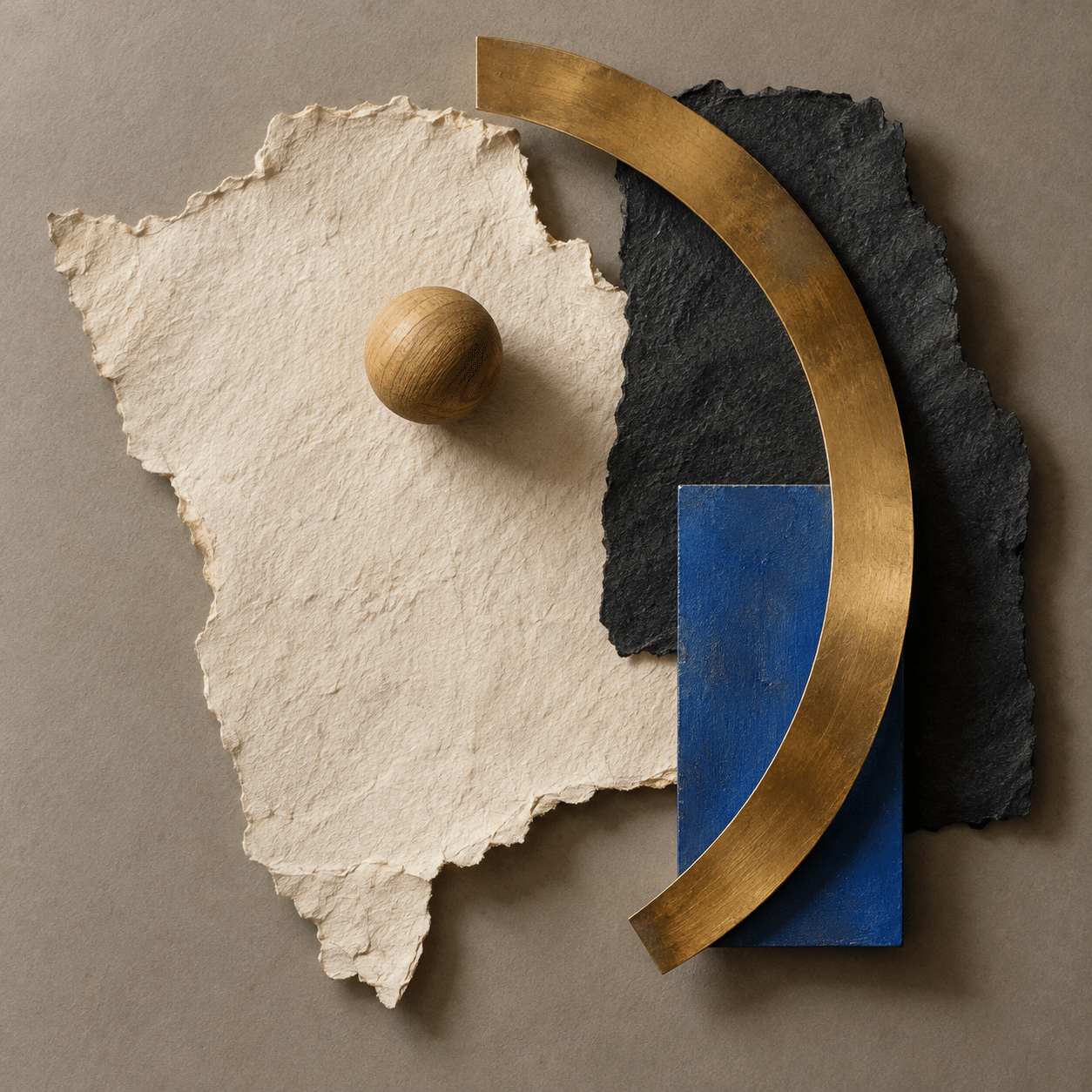
The landscape study explores reflection and repeated contours. The interior study uses an ordinary reading scene and window light. The abstract study balances geometric areas without depicting a place. A nonfigurative sculptural study considers two curved stone columns and the space between them. The final assemblage study combines paper and found-object forms through deliberate discontinuity.
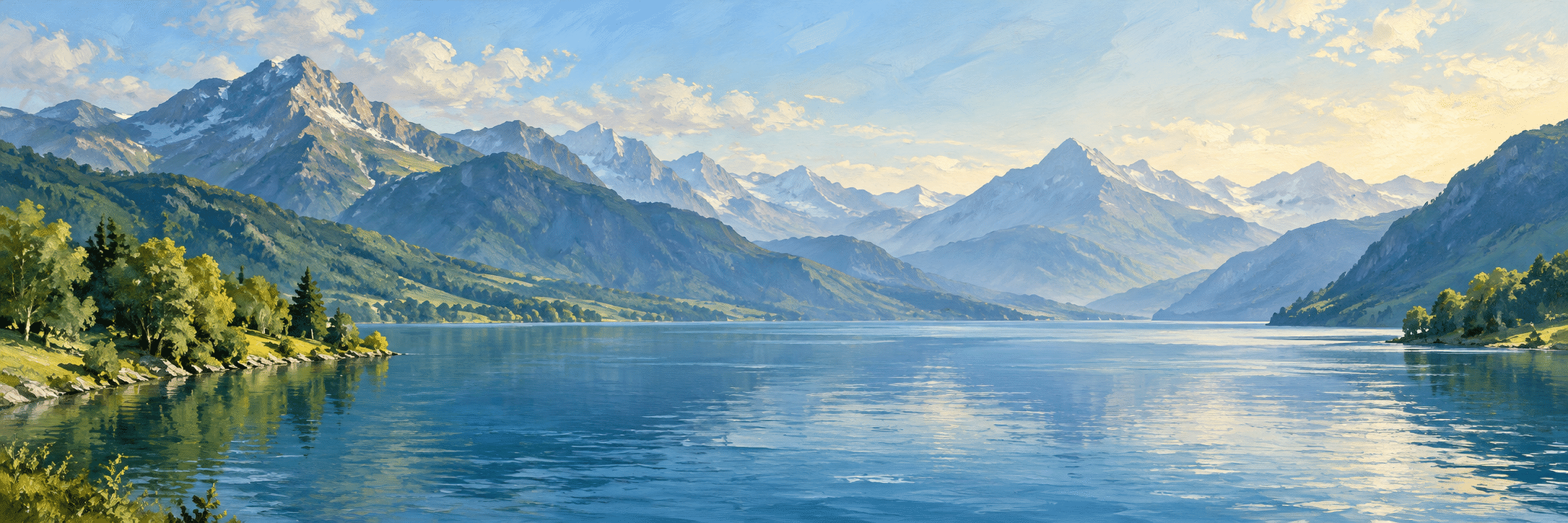
The banner presents a broad lake landscape, while the centrally titled collage signals the wider range of approaches. These are newly generated interpretations, not historical documents, works attributed to the artists discussed here, or a complete survey of Swiss art. Their differences are part of the point.
Build a specific study instead of a national cliché
Choose one medium, one spatial problem and one limited set of visual decisions. Compare the result with a documented collection object for structure rather than merely matching its colours. Describe what the comparison teaches: a stronger silhouette, a quieter interval or a more convincing relation between a figure and its setting.
For a broader project, make several studies with different aims and label them separately. Do not add a red cross or a mountain to certify authenticity. The strongest connection comes from informed choices and clear attribution, while invented scenes remain openly invented.
Positive editorial assessment — AI-authored
This field rewards comparison. The move from landscape rhythm to abstraction, sculpture or experimental assemblage reveals different ways of organizing attention. A well-chosen overview can make those differences accessible while encouraging readers to follow individual artists and collections in greater depth.
Critical editorial assessment — AI-authored
A national overview can flatten disagreement and privilege a few familiar names. The remedy is to state its limits, separate design from other practices, and resist treating neatness or mountain scenery as cultural essence. Generated examples need especially clear labels because visual plausibility does not establish provenance.
Neutral editorial assessment — AI-authored
Swiss art is used here as a regional and transnational context, not a movement with a fixed palette or founding manifesto. This introduction selects several routes for further study. Its museum and institutional references support the historical claims; its new images are independent exercises in composition.
A small poetic detour
Original words from the AOI studio.
Poetry
A ridge repeats across the lake,
a colour leaves the mountain line;
two standing shapes let silence take
the room between their rough design.
A paper fragment shifts the frame,
a circle interrupts the view;
no single border holds the same
idea in all the things we do.
The prompt workshop
Original creative exercises. These prompts create new illustrations, not documentary evidence.
Landscape through rhythm
Create an original oil-painting study of a lake with repeated mountain contours and a quiet horizontal reflection. Simplify the view into blue, green and pale gold bands, with deliberate brushwork and no flags, lettering or signatures. This is an invented composition, not a reproduction of a historical work.
A different spatial problem
Create an original nonfigurative sculpture study of two asymmetric curved limestone columns at unequal distances on a broad low slate plinth. Purely geometric stone forms, carefully observed silhouettes, ample surrounding space and soft directional light. No people, labels or signatures.
Order meets interruption
Create an original paper-and-found-object assemblage with a small wooden sphere, torn unprinted paper, a curved metal strip and one painted blue rectangle. Balance an ordered interval against a deliberate disruption. Clear materials, restrained colour, no text or imitation of an existing artwork.
People & works to explore
References discussed in this article. Consult the sources below for context.
Artists and practitioners
Ferdinand Hodler
Giovanni Segantini
Giovanni Giacometti
Alberto Giacometti
Diego Giacometti
Augusto Giacometti
Paul Klee — Swiss-born German artist with a close connection to Bern
A smile from the studio
Jokes
The landscape, the sculpture and the collage agreed to share a room. Agreeing on what counted as a straight line took rather longer.
Sources and further exploration
[1] Kunsthaus Zürich — the range of its Swiss art collection
[2] Bündner Kunstmuseum — distinguishing the Giacometti family practices
[3] Cabaret Voltaire — the Zurich venue and Dada history
[4] Museum für Gestaltung Zürich — Swiss Design Collection
[5] Museum für Gestaltung Zürich — 100 Years of Swiss Graphic Design
[6] Swiss Federal Department of Foreign Affairs — Paul Klee and Bern