
Design history · workshops, experiments and modern life
Explore Bauhaus history, workshop thinking and changing design questions through material studies, useful comparisons and clearly labelled visual interpretations.
A visual introduction
Select an image for a closer look. Use the thumbnails, arrow keys or a swipe to compare examples. Zoom in to inspect details, or share the image that inspires you.
Creative toolbox · take this style further
Choose an input and a destination. Search sends your words to the chosen site; Copy & open puts them on your clipboard to paste there.
Create with AI
Turn your chosen input into an image prompt or a new creative direction.
ChatGPT
Copy your input and paste it into a ChatGPT conversation or image request.
Copy & open ChatGPT (new tab)Claude · Anthropic
Develop an image prompt or explore the style in a new Claude conversation.
Copy & open Claude · Anthropic (new tab)Midjourney
Paste your input into the Imagine bar on the Create page.
Copy & open Midjourney (new tab)Adobe Firefly
Copy your input, open Firefly, and paste it into the prompt field.
Copy & open Adobe Firefly (new tab)Leonardo.Ai
Copy your input, open Leonardo, and paste it into the generation field.
Copy & open Leonardo.Ai (new tab)Image search
Find visual references. Short, concrete keywords usually work best.
Lexica
Search AI images and prompts using your selected input.
Search with this input Lexica (new tab)Pexels
Search the photo and video library. Short keywords often work best.
Search with this input Pexels (new tab)Pixabay
Search photos, illustrations and other images.
Search with this input Pixabay (new tab)Unsplash
Search photographs using the style name or your own keywords.
Search with this input Unsplash (new tab)Wikimedia Commons
Search photographs, artworks and historical images. Check each file for its source and reuse terms.
Search with this input Wikimedia Commons (new tab)Art & research
Explore artists, collections and the ideas behind a style.
Wikipedia
Search for background reading. A style may not have its own article.
Search with this input Wikipedia (new tab)WikiArt
Copy your input into WikiArt’s search to explore artists and artworks.
Copy & open WikiArt (new tab)Europeana
Paste your keywords into the search to explore European museum, library and archive collections.
Copy & open Europeana (new tab)Inspiration
Discover portfolios and visual ideas from creative communities.
Instagram hashtags
Search a hashtag made from your input: spaces and punctuation are removed. Instagram may require sign-in.
Search with this input Instagram hashtags (new tab)ArtStation
Paste your input into artwork search for concept art, environments, characters and visual development.
Copy & open ArtStation (new tab)Behance
Paste your input into project search for illustration, design and visual storytelling.
Copy & open Behance (new tab)A closer look
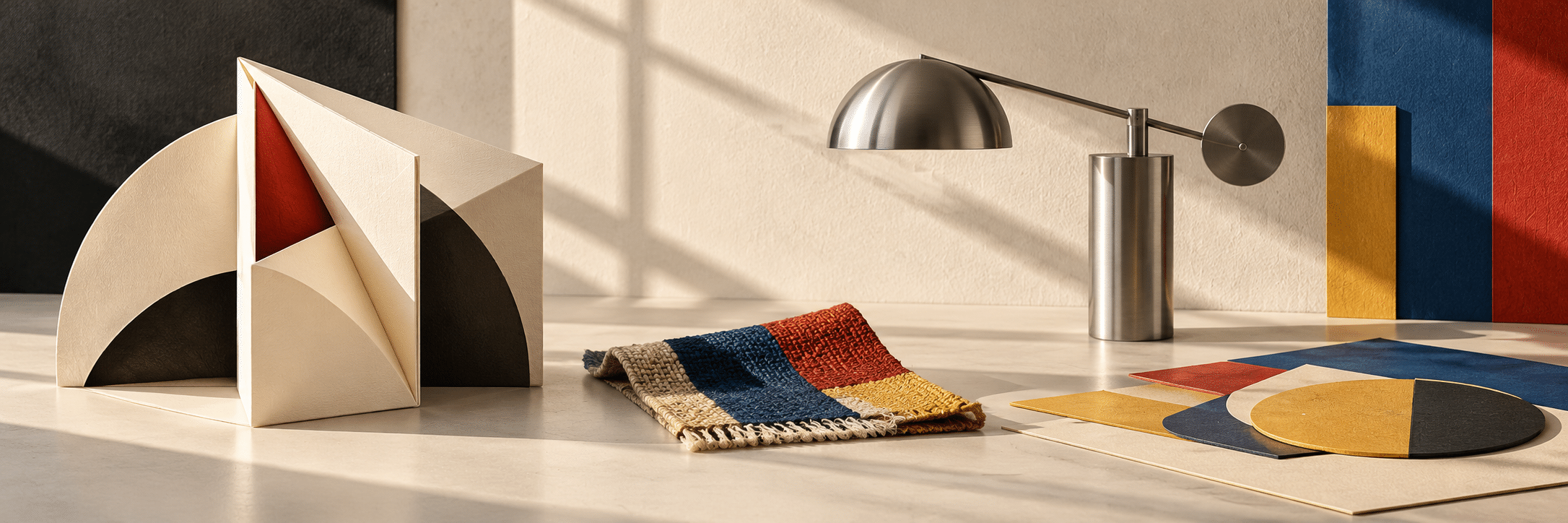
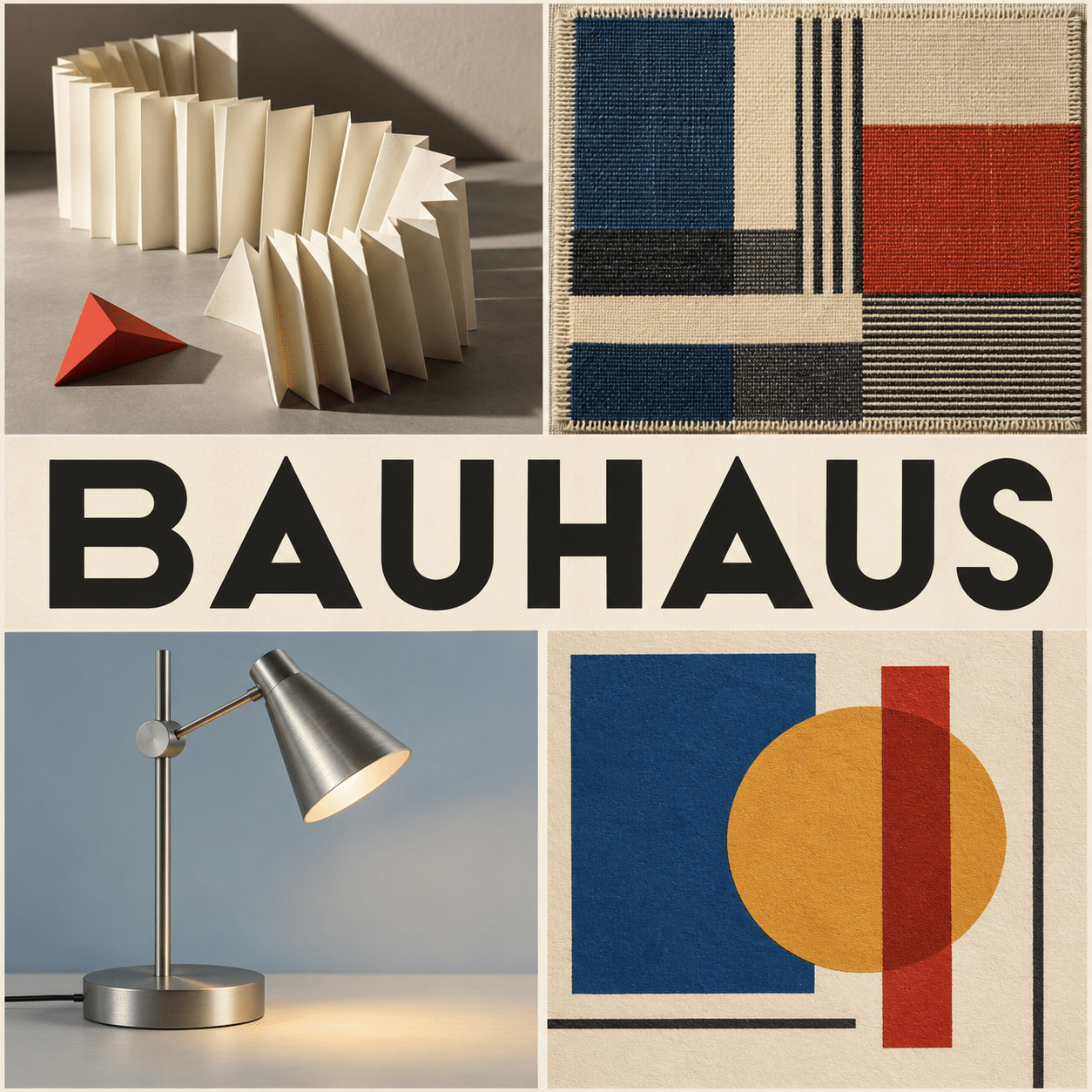
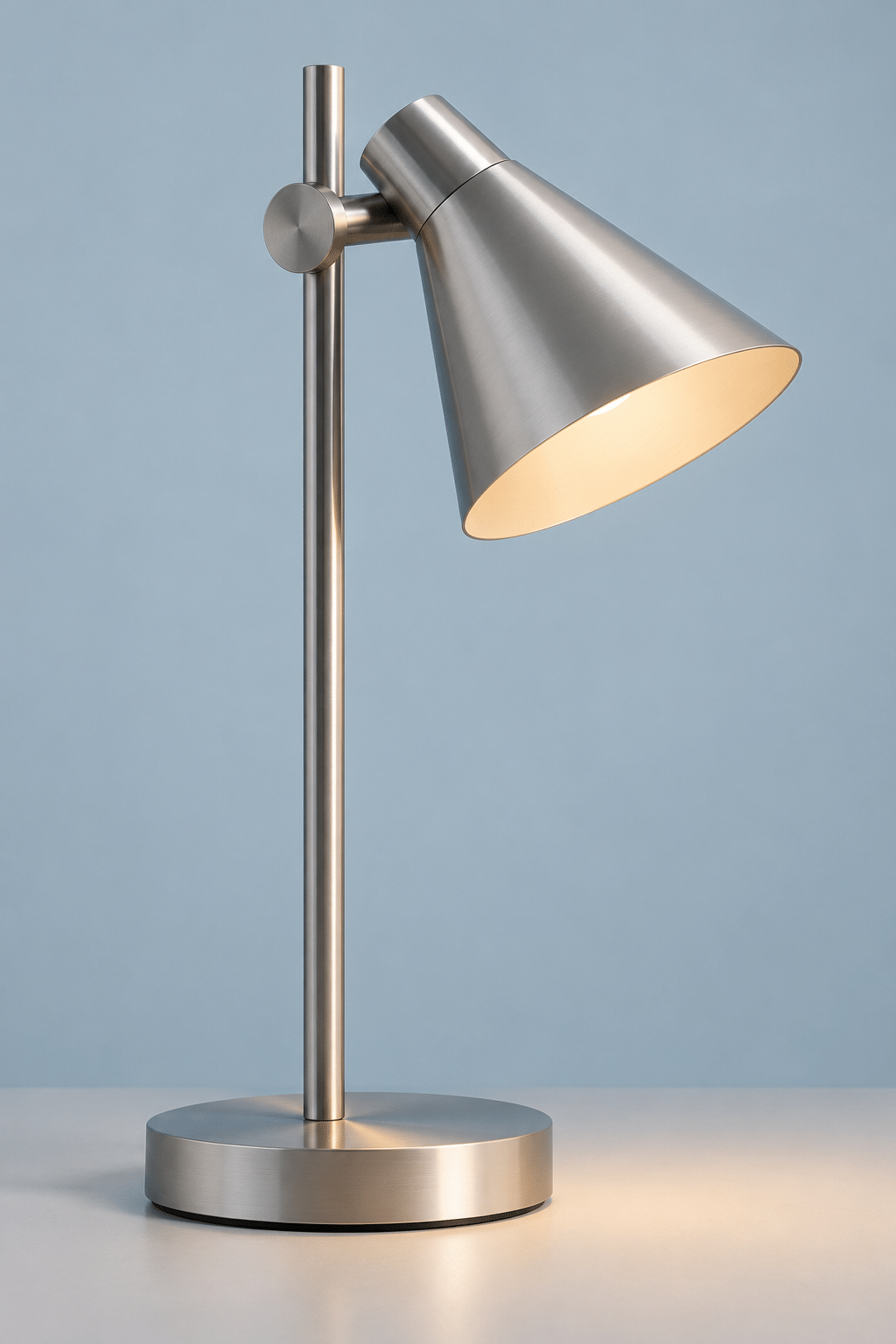
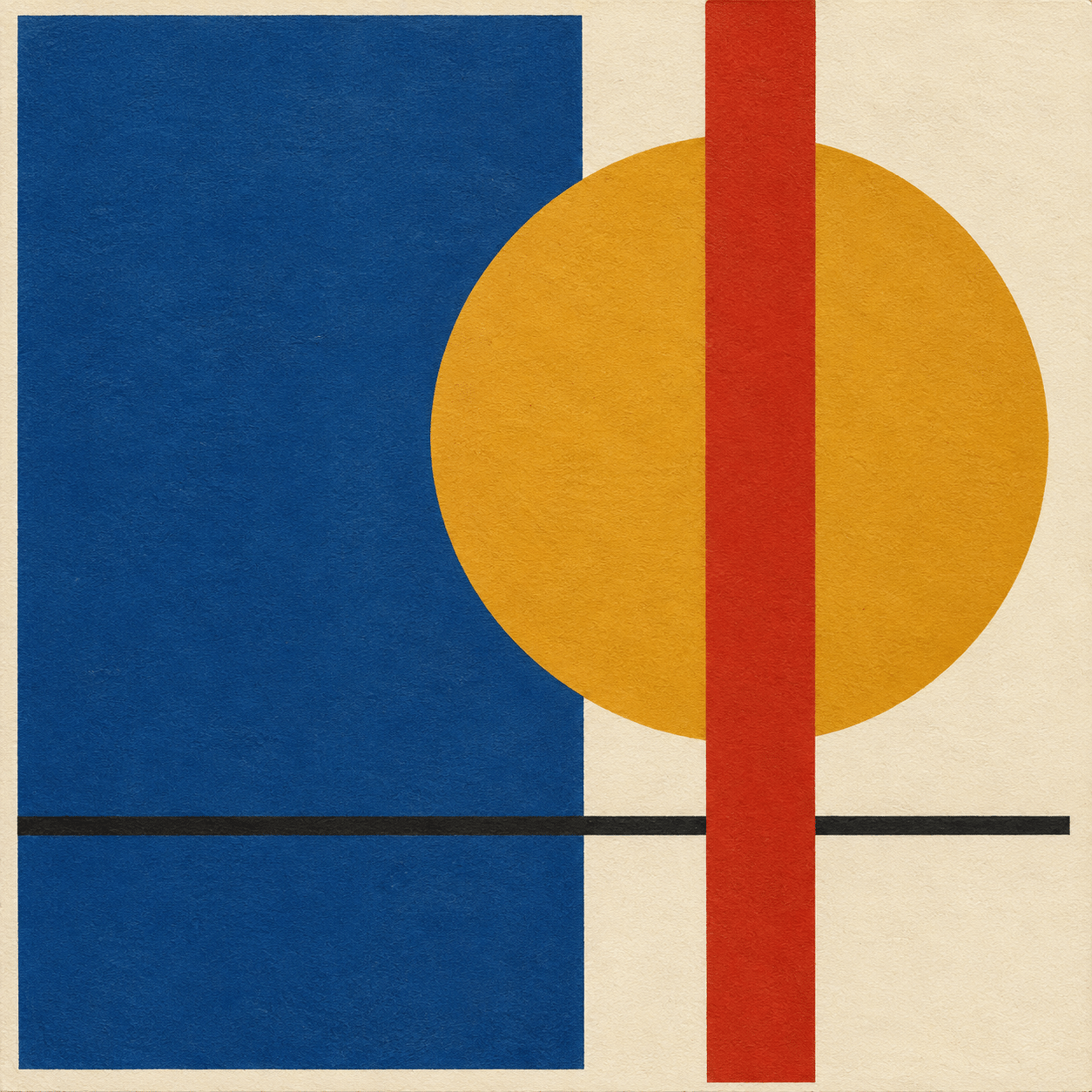
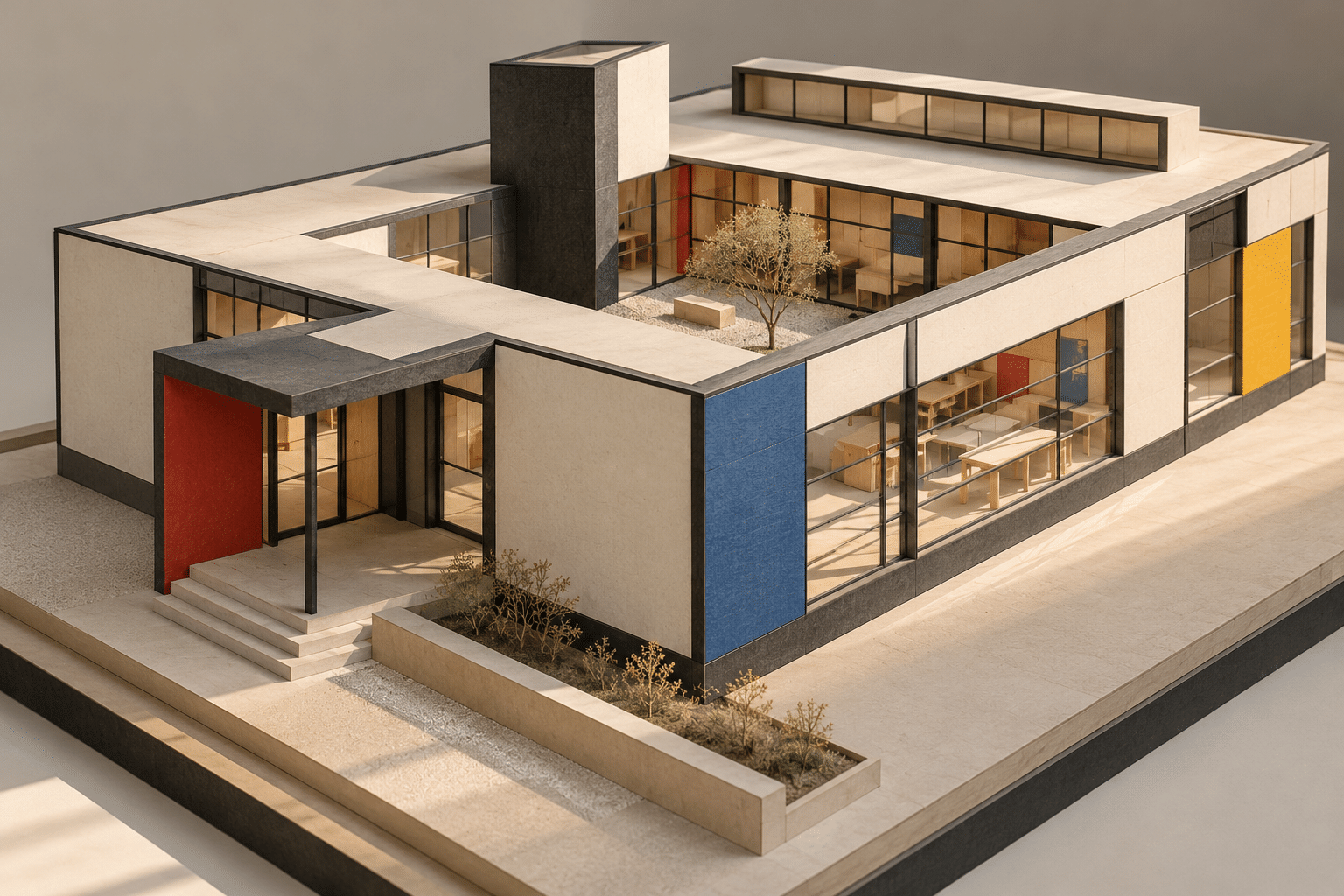
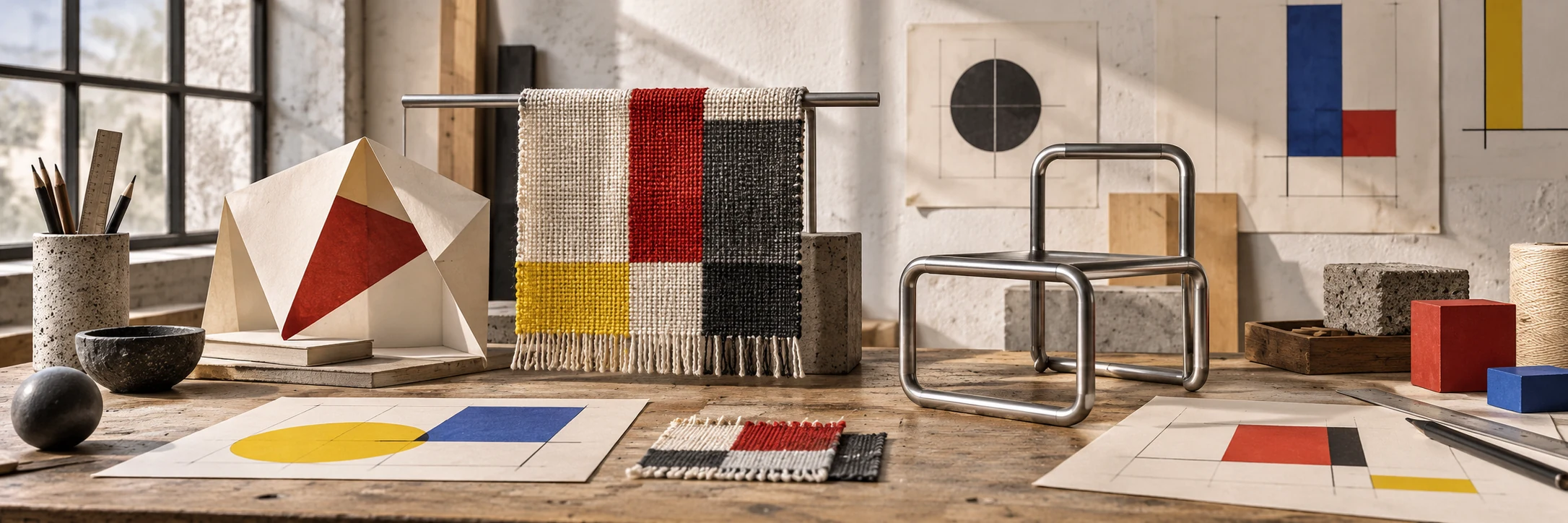
The new illustrations explore folded paper, woven rhythm, metal construction, colour relationships and space. Each is an original contemporary interpretation, not an authenticated Bauhaus object or archival photograph. The dedicated banner and collage bring these different investigations together.
Fourteen years, several settings and changing priorities
Founded in Weimar in 1919, the Bauhaus later moved to Dessau and then Berlin before closing in 1933. The Bauhaus Dessau Foundation’s chronology distinguishes these phases rather than treating the institution as one unchanging programme. It also records the international reach of its students and later influence. [1]
Walter Gropius founded the school, but the history cannot be reduced to one person’s taste. Teaching, workshops and priorities changed. The useful question is which part of that history informs a particular object or exercise, not whether it resembles a modern graphic stereotype.
A contemporary room of white walls and black furniture is therefore not automatically Bauhaus. Nor does placing a red circle beside a yellow triangle reconstruct the school’s methods. Such forms become interesting when they participate in a specific investigation of perception, use or production.
Treat the material as a teacher
Paper can fold, buckle and cast a shadow. Thread can create a surface through repeated crossings. Metal can form a thin framework that behaves differently from a solid wooden mass. Begin by finding out what the chosen material makes possible before deciding the final appearance.
Our workbench illustration places these experiments beside one another. The point is not that their forms should match. It is that a learner can compare how different processes generate different kinds of structure. A folded sheet and a textile sample can both investigate rhythm without arriving at the same object.
This gives a practical alternative to style copying. Instead of asking for a Bauhaus chair, ask how a chair might use fewer parts, make its joints clearer or accommodate a particular activity. Those questions can produce a worthwhile study without copying a famous product.
Geometry serves a relationship
Simple shapes make comparison easier. Varying the size, interval or colour of a few forms can reveal how balance changes. The exercise loses much of its value if every shape is chosen merely because it looks recognisably modernist.
Typography, textiles, objects and architecture also present different problems. A graphic arrangement does not automatically translate into comfortable furniture or usable space. The designer needs to reconsider scale, material and the user’s action at each transfer.
Likewise, the phrase form follows function should not be treated as a complete explanation of every Bauhaus work or casually attributed as a quotation from Gropius. Useful design history examines the actual object and teaching context instead of letting a slogan do the work.
A contemporary exercise with evidence of learning
Choose an ordinary task: directing a visitor, supporting a book or organising a small work surface. Make three studies using different materials or structures. State what each version tests, then compare its clarity and usefulness. Keep the unsuccessful versions as evidence of what you learned.
An image generator can propose visual alternatives, but it cannot establish comfort, stability or manufacturing efficiency from a convincing rendering. Build or draw the critical relationships separately. If you show an AI workshop scene, label it as imagined rather than giving it a fabricated archival date.
Finish by explaining the decision you changed after testing. That account is more valuable than a page of red, yellow and blue decorations. The enduring invitation is to let making alter your understanding of the problem, and to allow the next version to be better for a reason.
Reading the new visual studies
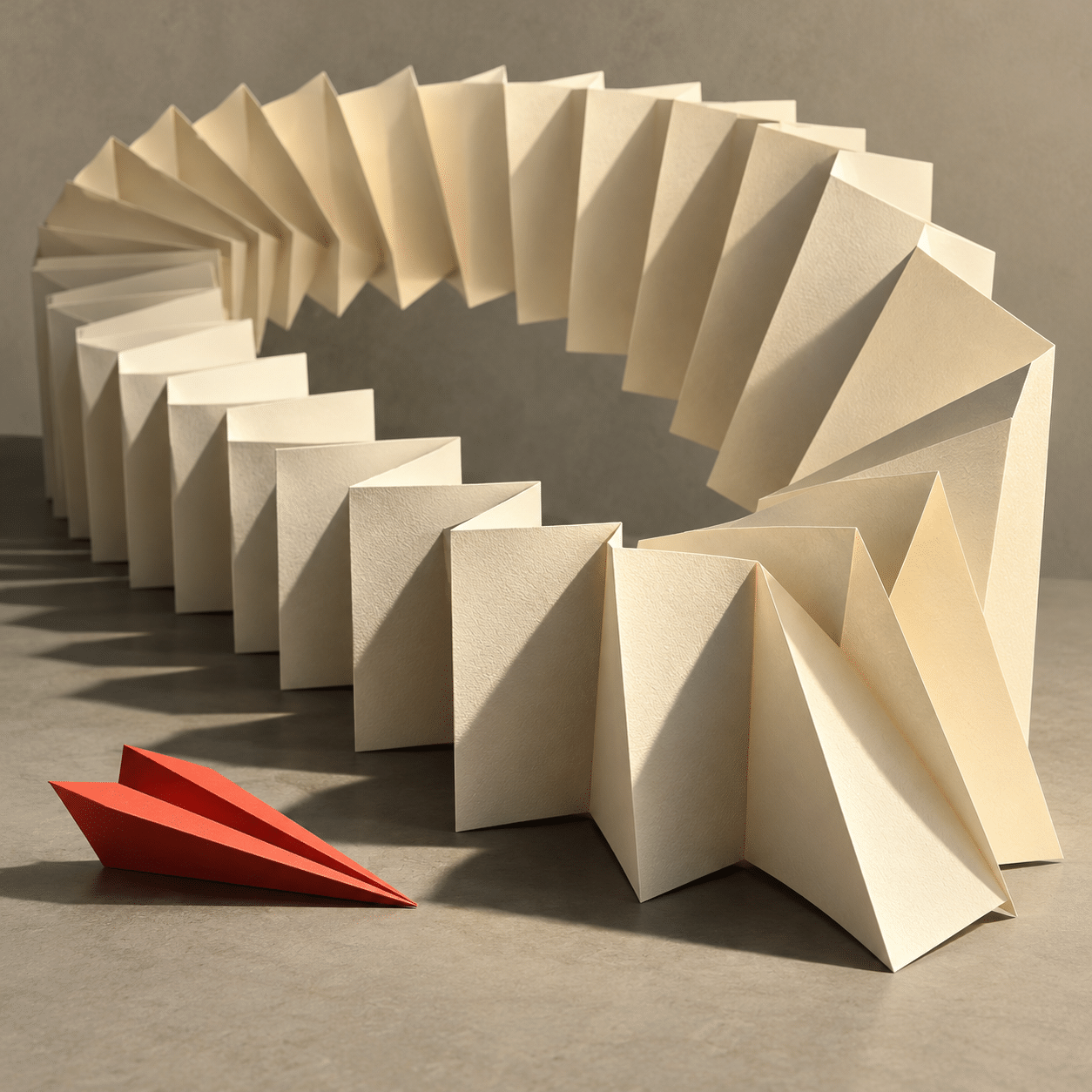
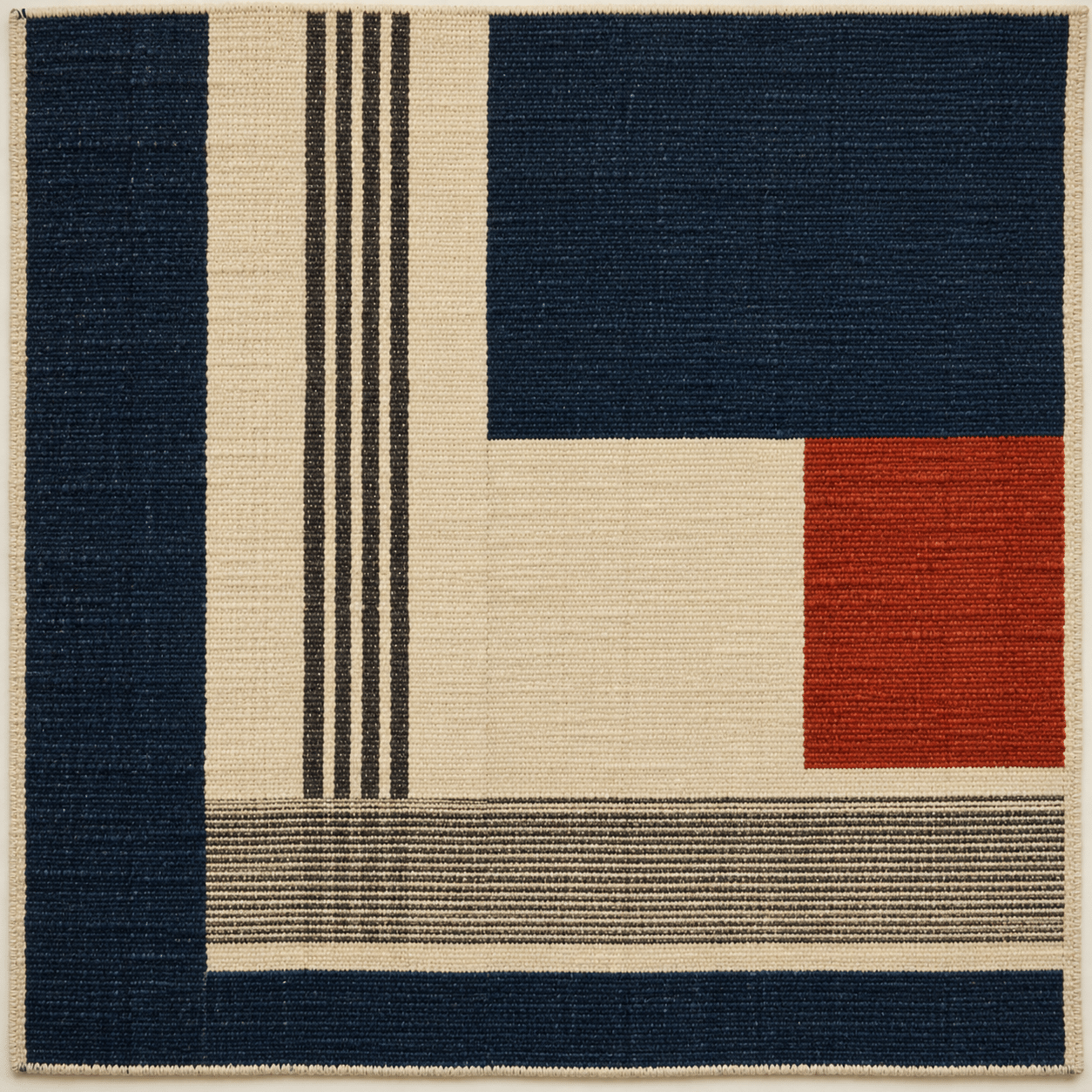
The folded-paper study tests repetition through light and shadow. The textile study gives a geometric rhythm a visibly woven structure. A metal lamp concept asks how a few parts can describe support, reflection and illumination. The colour study examines balance on a flat surface, while the architectural model considers openings and movement at a different scale. These are invented exercises; the rendered lamp and building model have not been physically tested.
The gallery retains the earlier workbench illustration. Compare it with the new individual studies: a shared setting suggests connections, while a standalone image gives a particular material or spatial question room to develop.
Changing leadership, changing questions
The Dessau Foundation’s chronology records Gropius’s directorship until 1928, Hannes Meyer’s from 1928 to 1930 and Ludwig Mies van der Rohe’s from 1930. It also describes the move toward industrial prototypes during the Dessau period. These changes are reasons to identify an object’s date and context before using it to represent the whole school. [1]
A teaching experiment, a manufactured object and an architectural proposal answer different questions. Do not infer that every Bauhaus participant shared one position on production, aesthetics or social use. The school’s short lifespan contained substantial differences; a broad introductory label should open those distinctions rather than conceal them.
Compare a design through an actual task
Consider a small desk organizer. Draw one version that maximizes an elegant silhouette, another that makes its contents immediately visible and a third that minimizes separate parts. Keep the intended contents constant. Compare the reach to each compartment, the empty spaces and the way the object meets the desk.
A useful comparison may reveal a conflict rather than a winner. A continuous outer shell can hide what is stored; an open frame can display everything but offer less containment. Make the tradeoff explicit and revise one decision. This is a contemporary design exercise prompted by workshop thinking, not a claim to reproduce a documented Bauhaus assignment.
Positive editorial assessment — AI-authored
The strongest connection between these studies is their attention to relationships: a fold changes a shadow, a crossing thread changes a surface, and an opening changes the reading of a wall. This makes the visual set useful beyond a familiar primary-colour shorthand.
Critical editorial assessment — AI-authored
Rendered prototypes can look resolved before their practical problems have been tested. A beautiful lamp may still be unstable or produce glare. Treat the illustrations as questions for further making; do not infer usability or historical authenticity from their polished presentation.
Neutral editorial assessment — AI-authored
The new gallery is a contemporary educational interpretation of workshop-oriented design questions. It complements the historical article with varied materials and scales, without claiming that the invented objects reproduce a Bauhaus assignment or belong to a named teacher.
A small poetic detour
Original words from the AOI studio.
Poetry
The paper folds; the answer changes.
Keep the first attempt beside the next.
A thread returns across its neighbours;
a shadow gives the plane its depth.
The joint must carry what we ask it.
The opening must admit the day.
Let making interrupt the drawing,
and teach the hand another way.
The prompt workshop
Original creative exercises. These prompts create new illustrations, not documentary evidence.
Begin with an experiment
Original design-school workbench study with folded paper, a woven sample and simple metal prototype, restrained primary-colour accents, material differences clearly visible, no historic-object claim.
Original AOI exercise; a generated image is not historical or documentary evidence.
Connect studies without copying products
Imagined Bauhaus-informed student workspace, paper construction and textile rhythm beside measured colour studies, natural daylight and cream paper, original prototypes rather than replicas, no text or archival disguise.
Original AOI exercise; a generated image is not historical or documentary evidence.
Ask a design question
Develop three original concepts for supporting an open book using folded sheet, joined wood and a thin metal framework. Compare use and structure; test stability physically before claiming a functional result.
Original AOI exercise; a generated image is not historical or documentary evidence.
People & works to explore
References discussed in this article. Consult the sources below for context.
Artists and practitioners
Walter Gropius — founder; the school’s history includes many teachers and students
Paintings and other works
Bauhaus workshop and teaching history across Weimar, Dessau and Berlin
A smile from the studio
Jokes
The prototype looked perfect in the rendering. Then somebody put a book on it, and the next lesson began.