
Visual aesthetic
A chrome dolphin can tell you what a record sounds like before the needle drops. Seapunk brings the ocean onto the dance floor through artificial water, early computer graphics and the visual wit of an internet music scene.
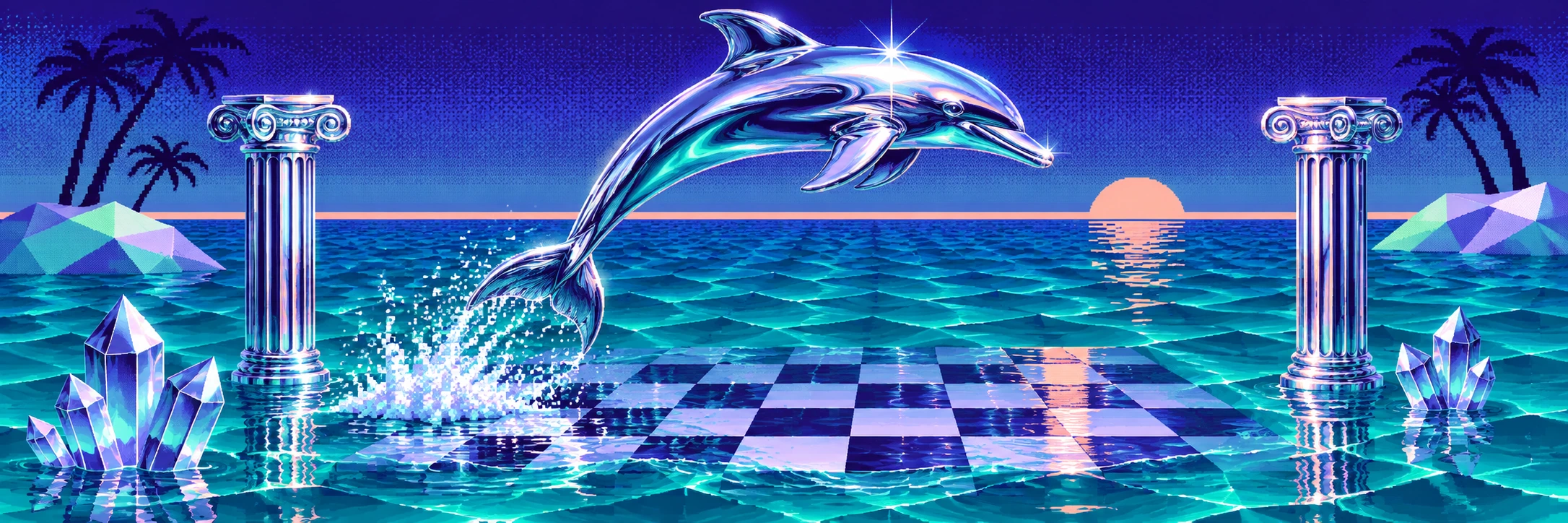
A visual introduction
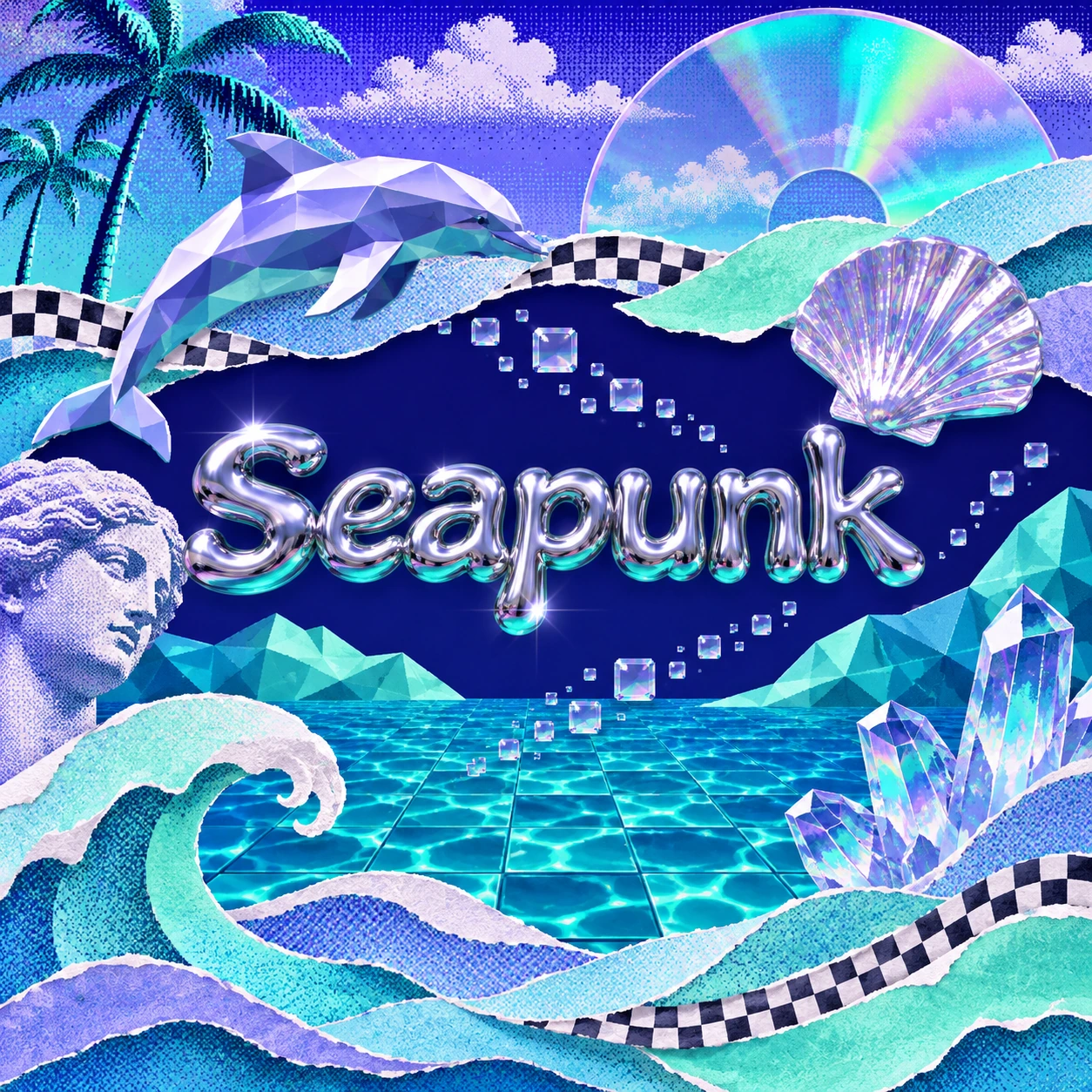
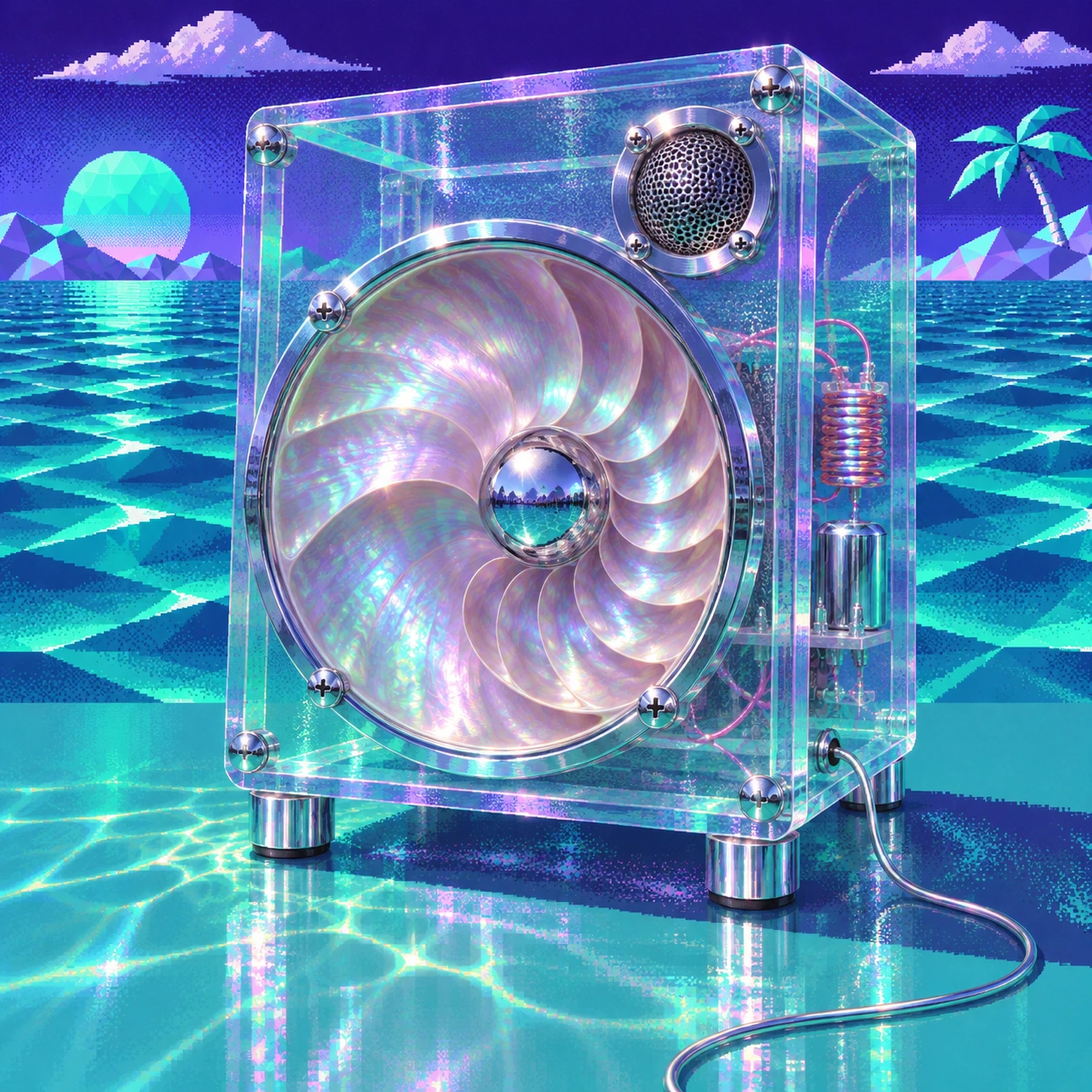
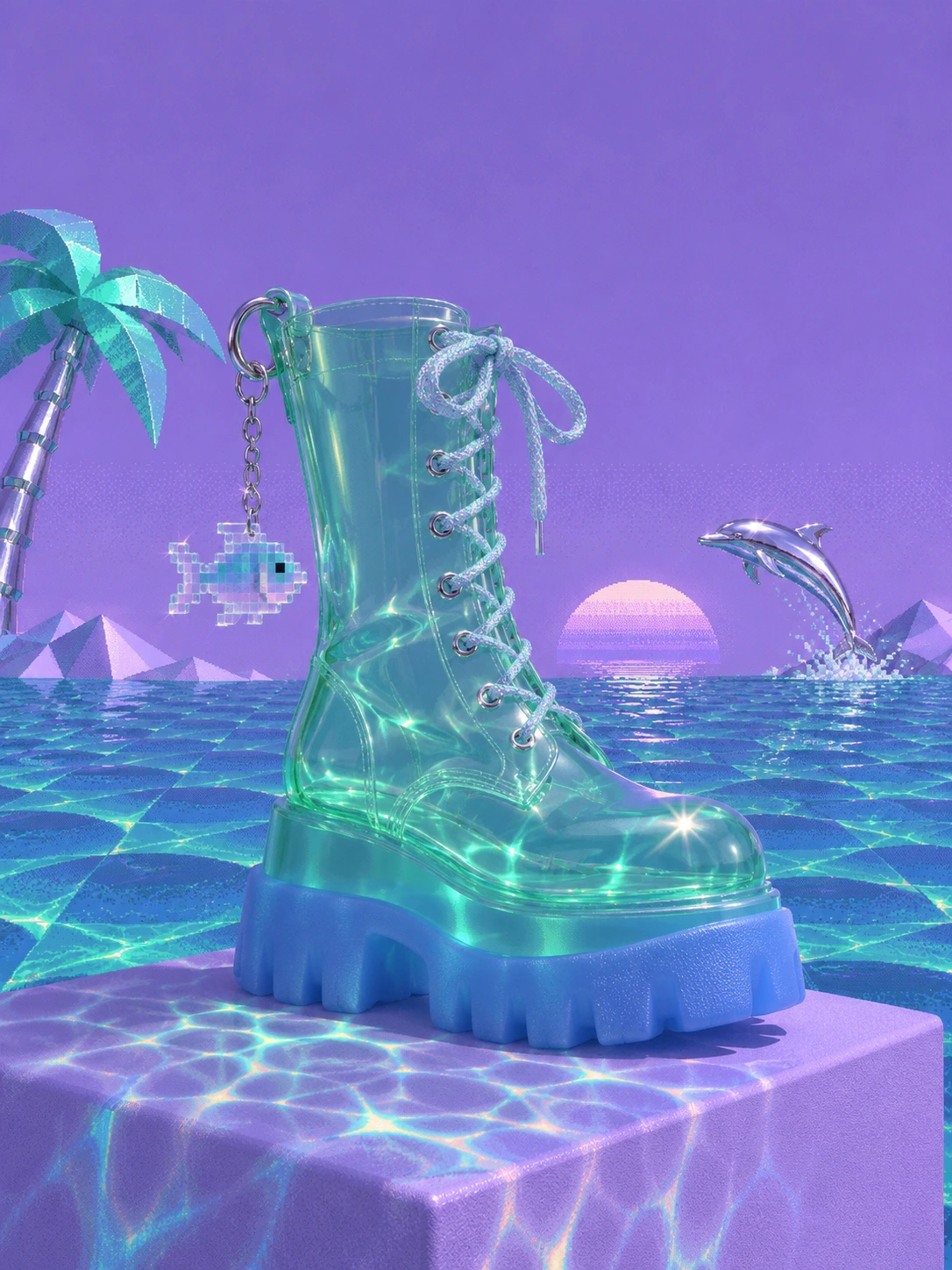
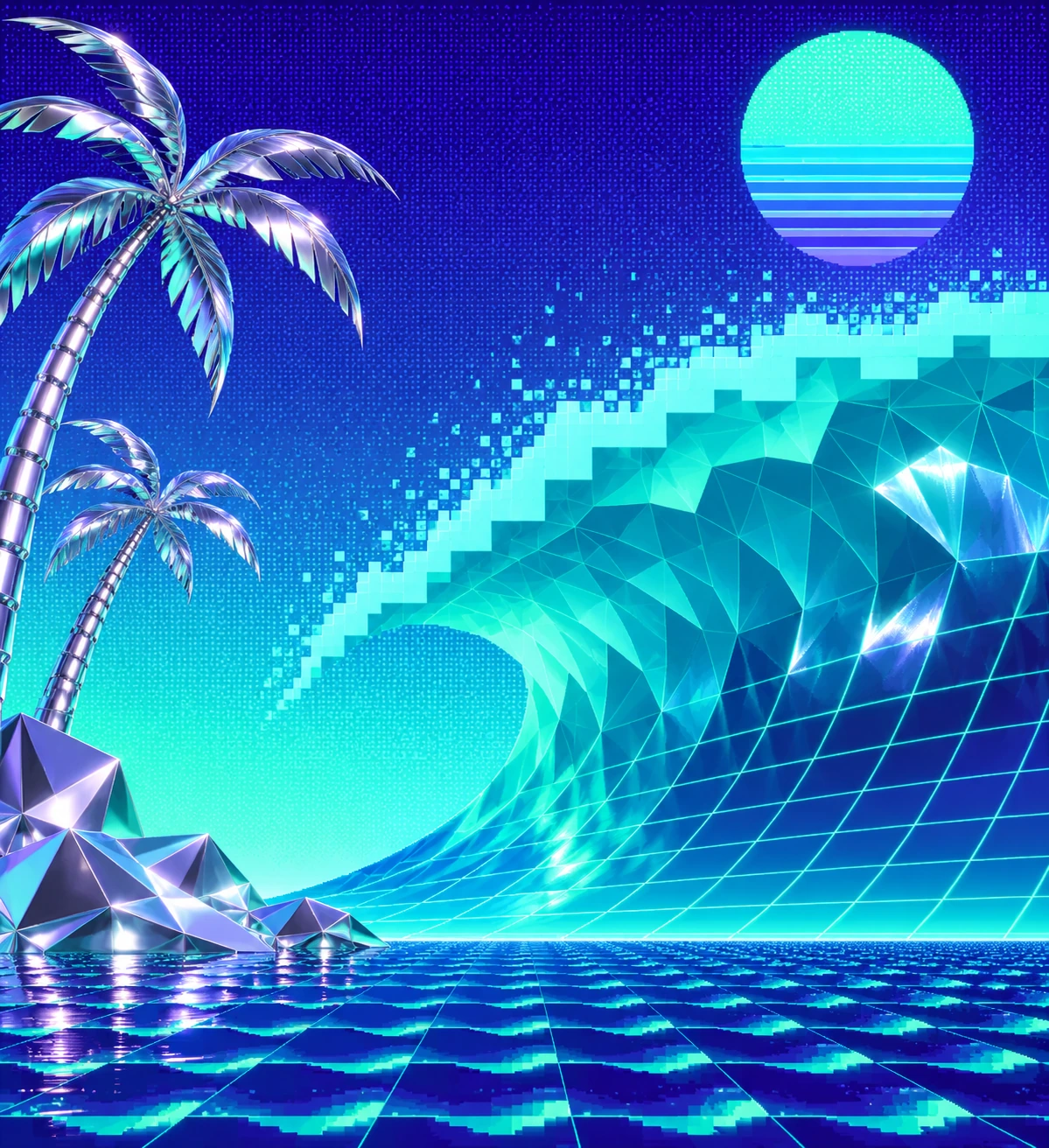
Seven original AI-generated studies take the Seapunk ocean from a dance floor to a record sleeve, fashion, sound equipment and abstract wave graphics.
Select an image for a closer look. Use the thumbnails, arrow keys or a swipe to compare examples. Zoom in to inspect details, or share the image that inspires you.


Creative toolbox · take this style further
Choose an input and a destination. Search sends your words to the chosen site; Copy & open puts them on your clipboard to paste there.
Create with AI
Turn your chosen input into an image prompt or a new creative direction.
ChatGPT
Copy your input and paste it into a ChatGPT conversation or image request.
Copy & open ChatGPT (new tab)Claude · Anthropic
Develop an image prompt or explore the style in a new Claude conversation.
Copy & open Claude · Anthropic (new tab)Midjourney
Paste your input into the Imagine bar on the Create page.
Copy & open Midjourney (new tab)Adobe Firefly
Copy your input, open Firefly, and paste it into the prompt field.
Copy & open Adobe Firefly (new tab)Leonardo.Ai
Copy your input, open Leonardo, and paste it into the generation field.
Copy & open Leonardo.Ai (new tab)Image search
Find visual references. Short, concrete keywords usually work best.
Lexica
Search AI images and prompts using your selected input.
Search with this input Lexica (new tab)Pexels
Search the photo and video library. Short keywords often work best.
Search with this input Pexels (new tab)Pixabay
Search photos, illustrations and other images.
Search with this input Pixabay (new tab)Unsplash
Search photographs using the style name or your own keywords.
Search with this input Unsplash (new tab)Wikimedia Commons
Search photographs, artworks and historical images. Check each file for its source and reuse terms.
Search with this input Wikimedia Commons (new tab)Art & research
Explore artists, collections and the ideas behind a style.
Wikipedia
Search for background reading. A style may not have its own article.
Search with this input Wikipedia (new tab)WikiArt
Copy your input into WikiArt’s search to explore artists and artworks.
Copy & open WikiArt (new tab)Europeana
Paste your keywords into the search to explore European museum, library and archive collections.
Copy & open Europeana (new tab)Inspiration
Discover portfolios and visual ideas from creative communities.
Instagram hashtags
Search a hashtag made from your input: spaces and punctuation are removed. Instagram may require sign-in.
Search with this input Instagram hashtags (new tab)ArtStation
Paste your input into artwork search for concept art, environments, characters and visual development.
Copy & open ArtStation (new tab)Behance
Paste your input into project search for illustration, design and visual storytelling.
Copy & open Behance (new tab)A closer look
Look for a marine silhouette, a visibly constructed digital space and a rhythm that ties the two together. A tiled reflection can keep time under a perfectly smooth shell. Sea green makes a useful base, while a small peach or violet accent separates the horizon from the water.
The ocean that came out of a laptop
In a March 2012 interview, Ultrademon and Zombelle described a circle of friends already exchanging ideas when the name surfaced on Twitter. They spoke from inside a scene that extended through DJ sets, clothes and record sleeves. Zombelle singled out Kevin Heckart for the visual design of Coral Records. The label’s own release archive lets you put a name, an image and a piece of music back together.
That small scale matters. A graphic sent around a circle of friends could work as a joke and an invitation on the same night. Years later a dolphin on a turquoise field still reads quickly, although the friendship and event behind such an image are harder to see. A new illustration can recover some of that social energy by giving its virtual ocean an activity. Someone might dance in it, dress for it or listen through it.
Build an artificial sea
Set a low horizon and choose a repeatable unit for the water. On the near side, make each tile large enough to inspect. Reduce the spacing towards the horizon until several tiles appear as a single glint. This gives even an impossible ocean a convincing depth cue. A flat horizon also helps the viewer recognize the interruption when a chrome fin crosses it.
Material contrasts do much of the work. Render a shell with a continuous pearl highlight, then let its shadow fall across water that changes tone in little steps. The eye can tell which part was modeled and which part was tiled. The discrepancy gives the image its handmade computer-world charm.
A visual beat that survives a thumbnail
Choose one shape that carries the downbeat. A dolphin gives you a rising arc, a disc gives you a circle and a boot gives you a vertical accent. Repeat one smaller shape at irregular intervals around it. Three clusters of bubbles can suggest movement more clearly than an even sprinkling across the frame.
Test the sleeve or flyer at the size of a music-library thumbnail. If the sea and sky collapse together, darken the horizon band before adding stronger color. In a moving version, a slow tile cycle and a single timed interruption can do more for a groove than constant flashing.
How to move the idea between media
For a fashion photograph, let a projected wave meet a real seam or a jacket collar. On a club flyer, keep the date and door time on a quiet plane. For an object study, give a marine form a plausible use. A shell-shaped loudspeaker asks a particularly good question about what might come out when somebody plugs it in.
Vaporwave and Seapunk can share an interest in dated digital surfaces. A useful distinction when composing is what organizes the space. In these Seapunk studies the water supplies the rhythm, and a suggestion of nightlife gives the marine imagery a place to go. The result works with as little as one wave and one floor tile.
Positive editorial review (AI-authored)
The checkerboard and the dolphin ask the eye to read two kinds of space at once. One recedes by arithmetic, the other by the sweep of its back. Where the tail interrupts the repeat, an otherwise static illustration acquires a beat.
Negative editorial review (AI-authored)
Turquoise, a dolphin and a chrome finish are easy to purchase as a package of effects. If the objects never touch, a sleeve starts to resemble a folder of clip art. Give one object a shadow that crosses the tiled sea and let another displace it.
Neutral editorial review (AI-authored)
The visual language suits sleeves, small posters and stage projections because a marine silhouette can be read at several distances. It offers little space for dense event information until a quiet surface has been reserved for type.
A small poetic detour
Original words from the AOI studio.
Poetry
The tide comes in one square at a time.
A shell on the speaker cups the bass.
Somebody left the floor lights on
beneath a hundred miles of blue.
At dawn the dolphin clears the deck.
Its shadow lands a beat behind.
The prompt workshop
Original creative exercises. These prompts create new illustrations, not documentary evidence.
A shell on the sound system
Design a Seapunk sleeve around one pearl shell on a low speaker cabinet. Put the cabinet ankle-deep in tiled aqua water. Set a straight indigo horizon behind it and let three small chrome bubbles mark the beat.
Dress for the virtual coast
Photograph an adult DJ in a translucent sea-green coat against a projected low-poly ocean. Let one wave line cross the sleeve and resume behind the shoulder. Use warm side light on the face and keep the background grid visible.
Score a breaking wave
Plan a three-frame Seapunk loop. Start with checker tiles, raise their near edge into a crest, then scatter the crest into square foam. Keep the same horizon and a tiny peach sun in every frame.
Your next inspiration
Discover another art style
Follow a visual thread to the next subject.

A smile from the studio
Jokes
The club advertised an ocean view. From the booth I could see precisely sixteen squares of it. The DJ leaned over and said, “Stay for the second set. That’s when we scroll.”