
Contemporary art movement
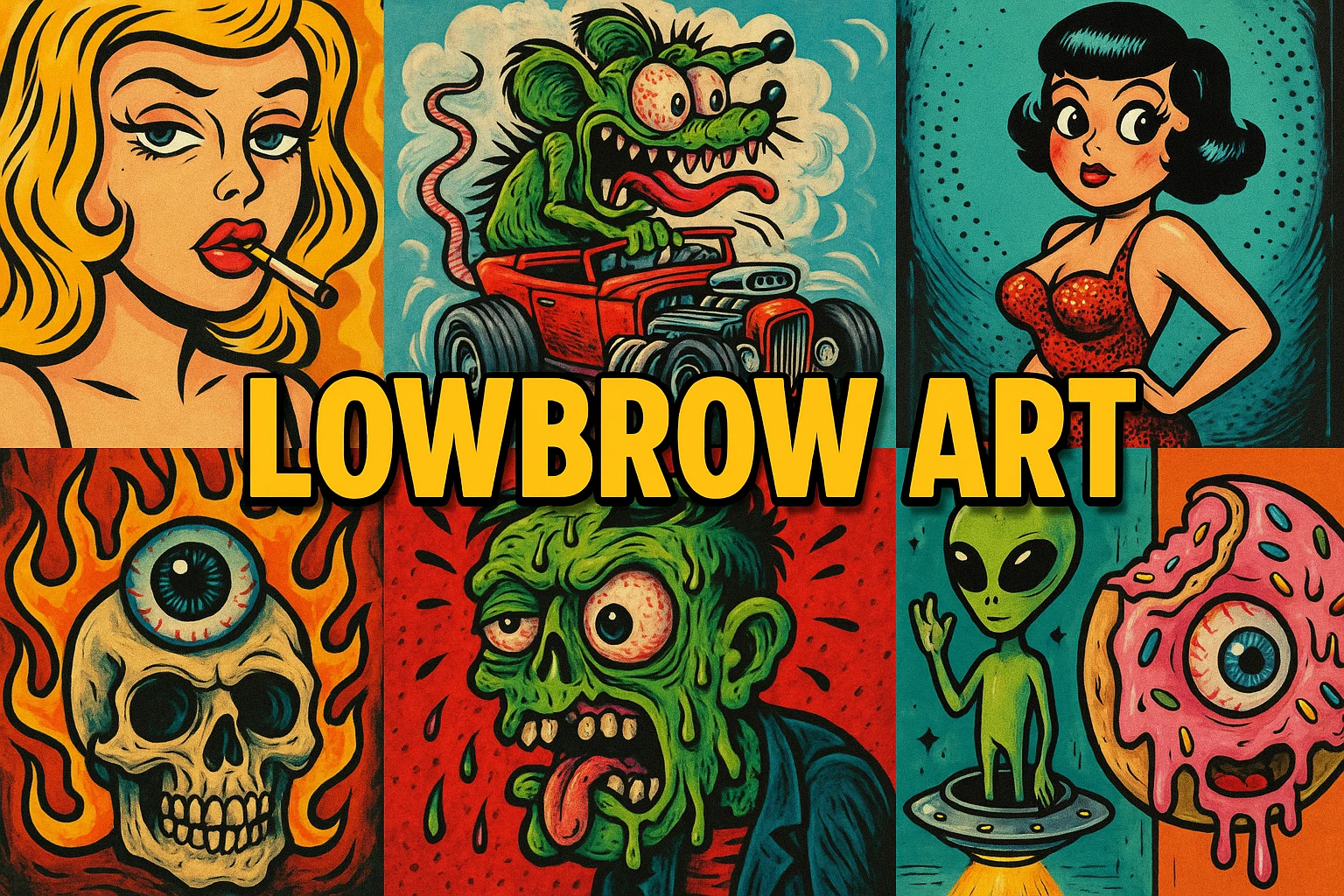
Lowbrow art brings the visual languages of comics, custom cars, popular entertainment and subculture into ambitious image making. Its humor and strange narratives can be accessible at first glance while remaining unsettling on closer inspection.
A visual introduction
Select an image for a closer look. Use the thumbnails, arrow keys or a swipe to compare examples. Zoom in to inspect details, or share the image that inspires you.
Creative toolbox · take this style further
Choose an input and a destination. Search sends your words to the chosen site; Copy & open puts them on your clipboard to paste there.
Create with AI
Turn your chosen input into an image prompt or a new creative direction.
ChatGPT
Copy your input and paste it into a ChatGPT conversation or image request.
Copy & open ChatGPT (new tab)Claude · Anthropic
Develop an image prompt or explore the style in a new Claude conversation.
Copy & open Claude · Anthropic (new tab)Midjourney
Paste your input into the Imagine bar on the Create page.
Copy & open Midjourney (new tab)Adobe Firefly
Copy your input, open Firefly, and paste it into the prompt field.
Copy & open Adobe Firefly (new tab)Leonardo.Ai
Copy your input, open Leonardo, and paste it into the generation field.
Copy & open Leonardo.Ai (new tab)Image search
Find visual references. Short, concrete keywords usually work best.
Lexica
Search AI images and prompts using your selected input.
Search with this input Lexica (new tab)Pexels
Search the photo and video library. Short keywords often work best.
Search with this input Pexels (new tab)Pixabay
Search photos, illustrations and other images.
Search with this input Pixabay (new tab)Unsplash
Search photographs using the style name or your own keywords.
Search with this input Unsplash (new tab)Wikimedia Commons
Search photographs, artworks and historical images. Check each file for its source and reuse terms.
Search with this input Wikimedia Commons (new tab)Art & research
Explore artists, collections and the ideas behind a style.
Wikipedia
Search for background reading. A style may not have its own article.
Search with this input Wikipedia (new tab)WikiArt
Copy your input into WikiArt’s search to explore artists and artworks.
Copy & open WikiArt (new tab)Europeana
Paste your keywords into the search to explore European museum, library and archive collections.
Copy & open Europeana (new tab)Inspiration
Discover portfolios and visual ideas from creative communities.
Instagram hashtags
Search a hashtag made from your input: spaces and punctuation are removed. Instagram may require sign-in.
Search with this input Instagram hashtags (new tab)ArtStation
Paste your input into artwork search for concept art, environments, characters and visual development.
Copy & open ArtStation (new tab)Behance
Paste your input into project search for illustration, design and visual storytelling.
Copy & open Behance (new tab)A closer look
Emphatic silhouettes; cartoon exaggeration mixed with carefully rendered volume; saturated accents; familiar popular objects in improbable relationships; tactile surfaces and narrative details that complicate an initially playful scene.
The name is an argument about cultural value
Lowbrow is associated particularly with the California art and subculture context around Robert Williams. His official biography connects the term with the 1979 book The Lowbrow Art of Robt. Williams and describes the importance of comics, hot-rod illustration and other imagery excluded from conventional fine-art categories. This is a participant’s account of the scene, not a claim that one person invented every popular visual language it draws upon.
The name does not mean that the work is carelessly made or that its audience lacks intelligence. It challenges the ranking of certain subjects and sources as culturally inferior. An elaborately painted cartoon creature can require considerable compositional and technical discipline. The tension between supposedly disreputable imagery and ambitious painting is part of the subject.
A scene wider than one house style
The Whitney Museum describes Williams’s aesthetic through Californian vernacular culture and includes his painting Astrophysically Modified Real Estate, 2009, in its 2010 Biennial material. That institutional context complicates any simple story of Lowbrow as permanently outside museums. Recognition does not erase its earlier arguments about taste and exclusion.
Lowbrow and Pop Surrealism overlap in usage, but neither label defines one compulsory appearance. A polished dreamlike painting, a raucous cartoon narrative and an image shaped by custom-car graphics can emphasize different parts of the field. MoMA’s historical account of Juxtapoz describes the magazine’s expansion from Southern California roots toward a wider international community. Avoid treating every strange cute character as evidence of membership in a single movement.
Build a readable scene with an unruly premise
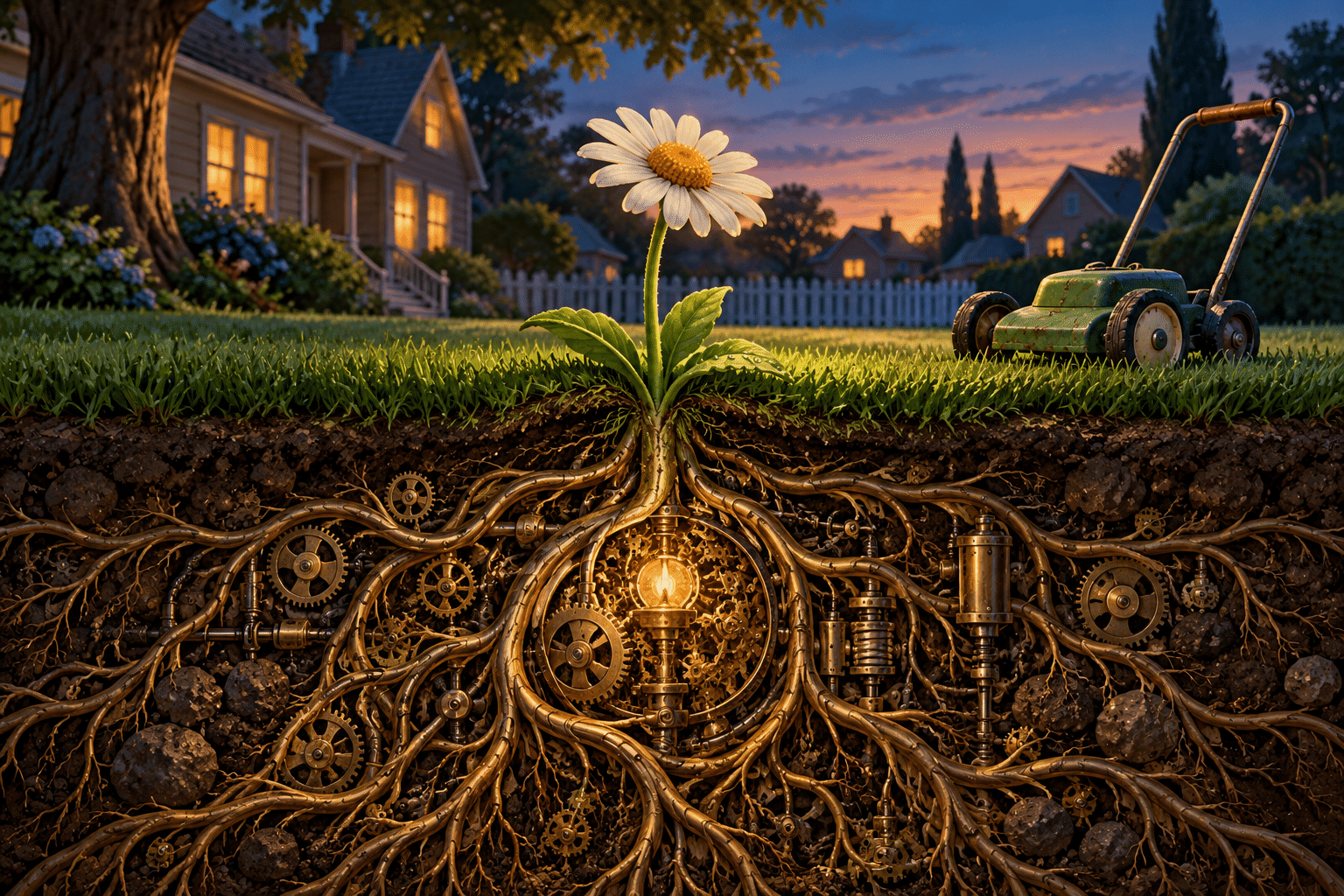
Begin with a situation the viewer can recognize: a diner counter, suburban garden, toy shelf or repair garage. Introduce one contradiction that changes its meaning. A smiling vending machine might be unable to stop dispensing tiny moons; a carefully maintained lawn might conceal a mechanical root system. The contradiction should connect to the scene rather than merely decorate it.
Use silhouette and staging to make the first reading immediate. Then let secondary details question that reading. A cheerful mascot can cast an anxious shadow, or a pristine product can leave an untidy trail. This two-stage encounter gives the image more staying power than a heap of unrelated monsters and candy colors.
Surface, palette and expressive distortion
Bold outlines can help a character read, but they are not mandatory around every form. Combine large simple shapes with selected areas of meticulous rendering. A glossy enamel surface beside worn fabric, fur or rust can create a productive collision between desirable finish and uncomfortable subject.
Choose a palette with a hierarchy. Acid green or cherry red gains force against quieter cream, brown or midnight blue. If every object is equally saturated and sharply detailed, the narrative has no clear entrance. Exaggeration should also be intentional: enlarge the feature that carries appetite, vanity, fear or comic confidence, while keeping the pose and interaction understandable.
Humor needs something to do
Absurdity can expose habits of consumption, nostalgia, self-display or the desire for control. It can also simply enjoy a bizarre visual invention. Decide whether the work invites affection, distrust or both. A visual joke becomes richer when the viewer can recognize why a particular object or character belongs in it.
Shock alone is not a reliable substitute for an idea. Likewise, cute surfaces do not automatically conceal a profound critique. Give the central figure a task, obstacle or contradictory desire, and make the surrounding details participate. A seemingly silly image can remain open to several readings without becoming meaningless.
Working with references and generated imagery
Study how a source organizes shape, narrative and attention rather than copying its characters or an existing painting. For an original prompt, specify a setting, an invented protagonist, a visual contradiction, a palette and two contrasting materials. Describe the action before adding words such as bizarre, surreal or rebellious.
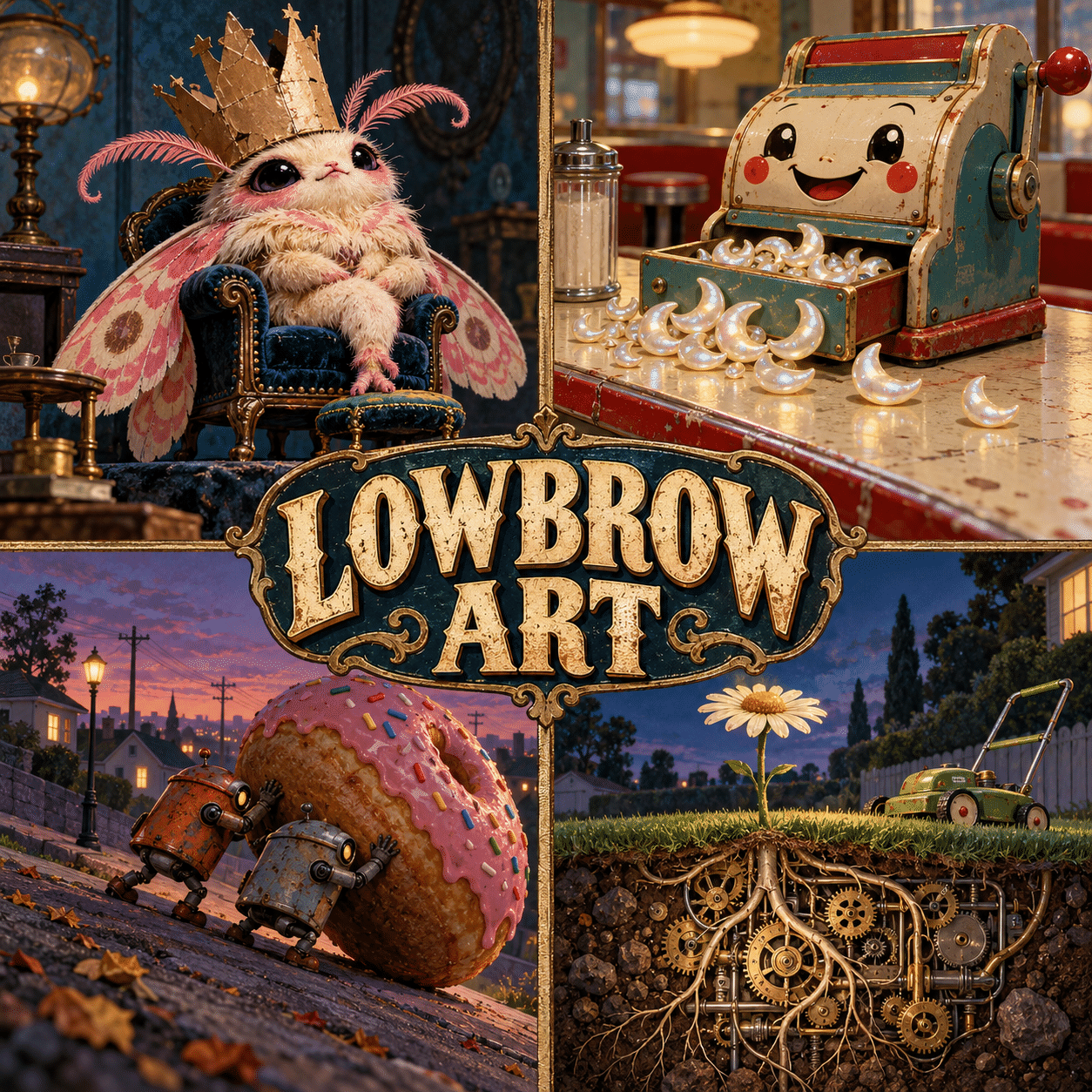
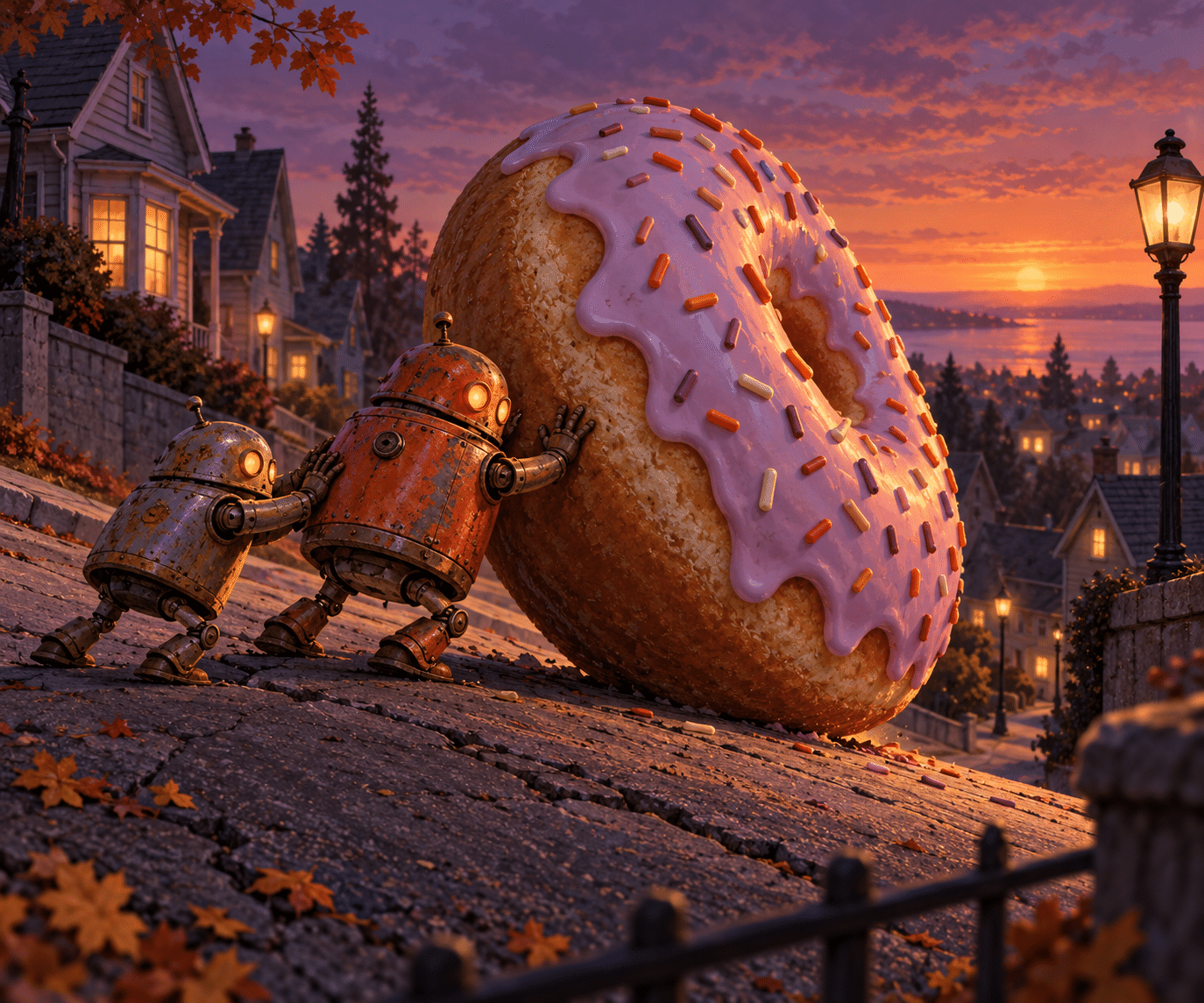
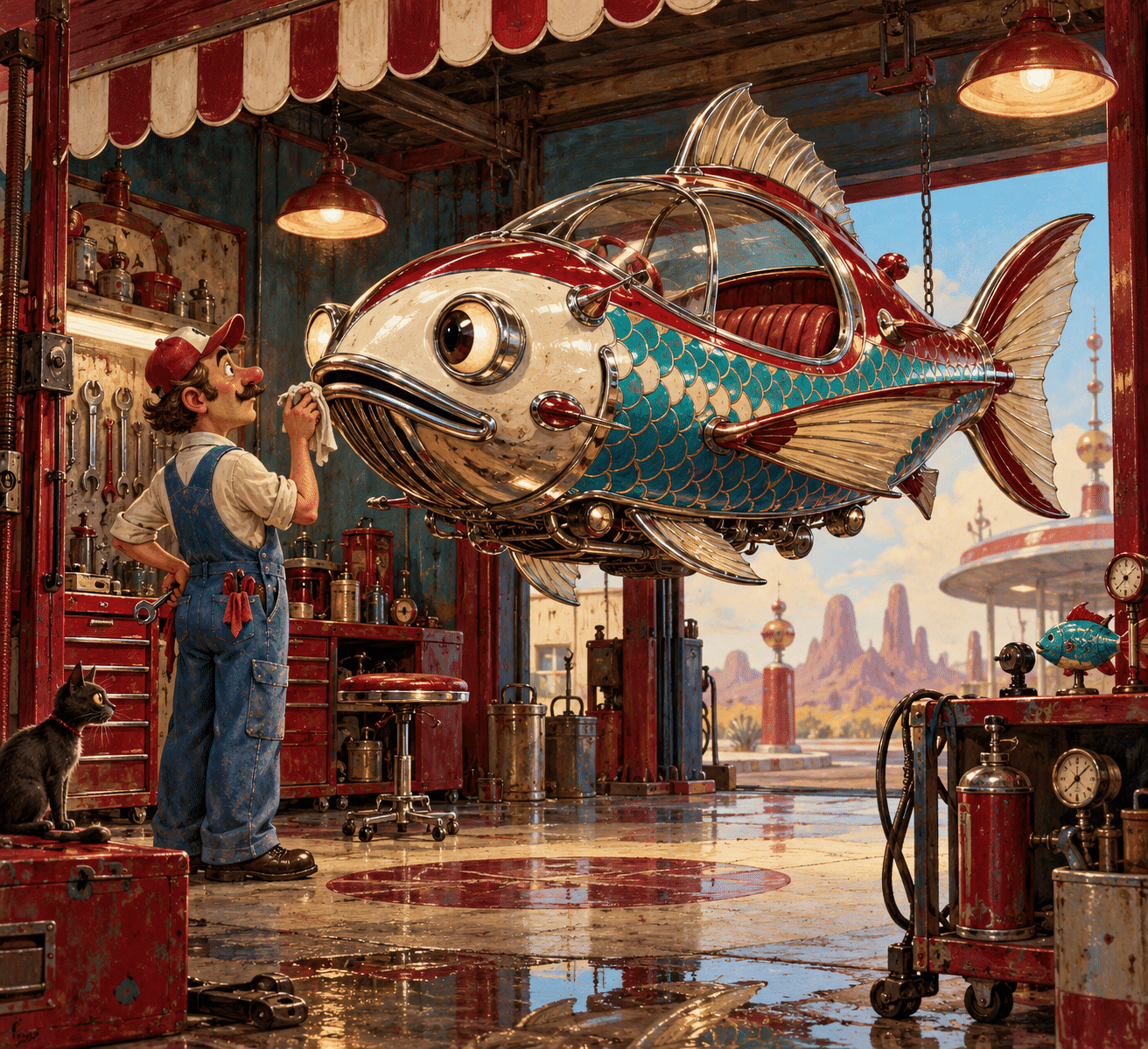
The new gallery contains AI-generated interpretations of broad Lowbrow visual principles. They are not works by Robert Williams or documentary examples from a historical exhibition. Their subjects vary between character portrait, landscape, still life and narrative scene. Judge each on its own composition and idea, not on whether it contains enough familiar subcultural props.
Positive editorial assessment — AI-authored
Lowbrow can make sophisticated picture making approachable without flattening its ideas. A compelling character and an absurd situation invite immediate attention; carefully staged contradictions reward another look. Its strongest images allow humor and unease to occupy the same surface.
Critical editorial assessment — AI-authored
The field’s visual vocabulary can harden into formula: nostalgic toys, oversized eyes and immaculate paint may repeat a mood without developing a thought. Replace the stock combination with a specific narrative problem. Simplify supporting details so craftsmanship serves the image instead of becoming its only argument.
Neutral editorial assessment — AI-authored
Lowbrow is a useful historical and cultural frame for a varied field of popular-image-based art. It connects subcultural references with gallery practices, but its boundaries remain flexible. The label alone does not determine a work’s politics, quality, medium or degree of strangeness.
Pocket-sized facts
Robert Williams’s 1979 book is an important reference for the Lowbrow label.
Popular and subcultural imagery can coexist with highly developed painterly craft.
The Whitney’s 2010 Biennial included Robert Williams.
A small poetic detour
Original words from the AOI studio.
Poetry
The toy puts on its finest crown;
the garden starts a small revolt.
A polished grin goes upside down,
a moon rolls out beside a bolt.
The picture opens like a joke
and leaves a question in its chair:
who taught these little painted things
which dreams were fit to enter there?
The prompt workshop
Original creative exercises. These prompts create new illustrations, not documentary evidence.
A small absurd situation
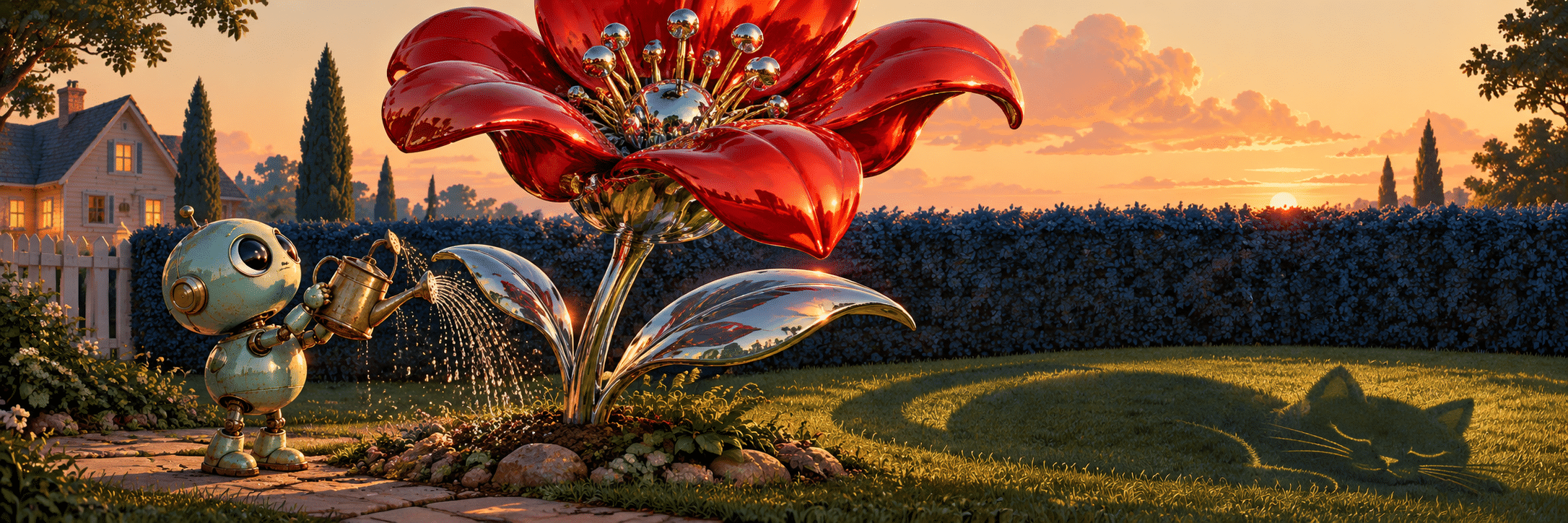
Create an original Lowbrow-inspired painting of an invented round robot carefully watering one enormous mechanical flower in a modest suburban garden. Clear cartoon silhouette, polished enamel against worn soil, cream and midnight blue with one cherry-red accent, a coherent visual joke and generous space around the action. No existing characters, logos or text.
Desire on the counter
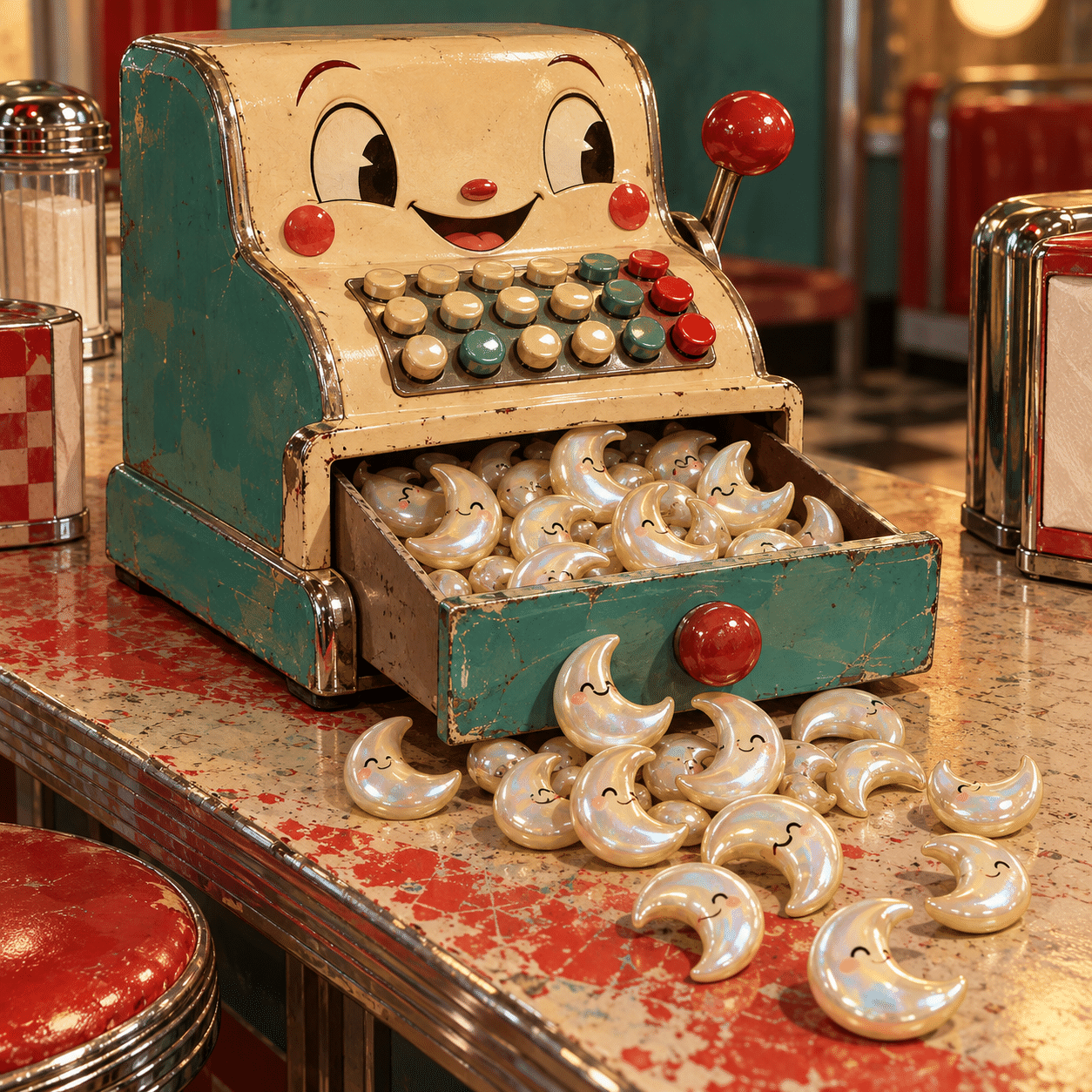
Create an original Lowbrow-inspired still life of a smiling vintage-style toy cash register overflowing with tiny pearlescent moons on a diner counter. One dominant silhouette, meticulous glossy surfaces against scratched laminate, muted teal and warm ivory with red highlights, playful unease and believable cast shadows. No readable prices or brand names.
An ambitious little monarch
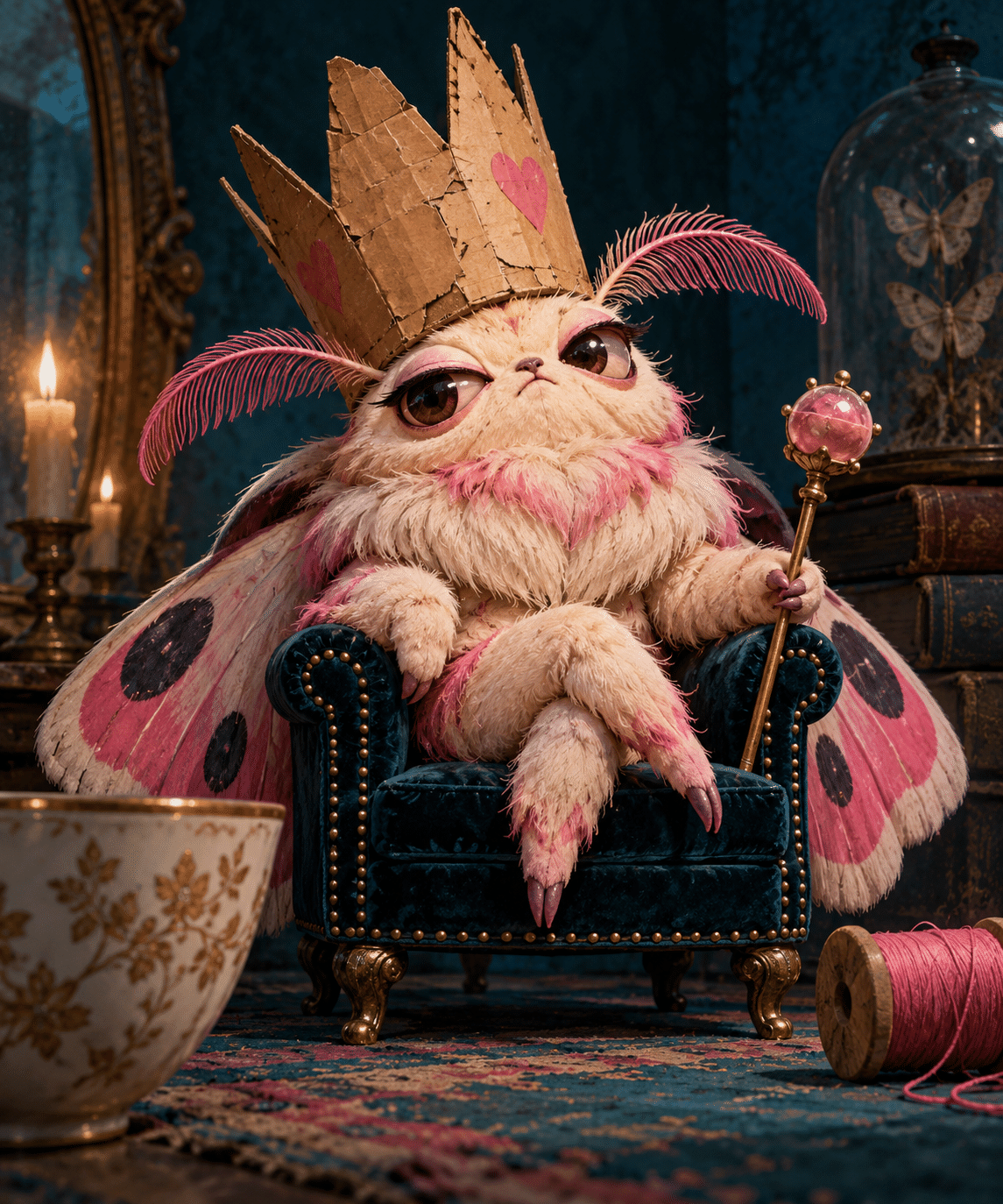
Create an original Lowbrow-inspired portrait of an invented moth-like creature wearing an oversized cardboard crown and seated on a tiny velvet chair. Proud expression, tactile fur and painted cardboard, controlled candy pink against deep petrol blue, one comic mismatch of scale, strong composition and no borrowed character design or signature.
Your next inspiration
Discover another art style
Follow a visual thread to the next subject.
Cartoon Drawing: Character, Exaggeration and Visual Timing
Explore cartoon shape and expressive exaggeration.
Figuration Libre: Figures, Popular Culture and Unruly Painting
Explore a distinct movement that also engages popular visual culture.
A smile from the studio
Jokes
The cardboard king demanded a grander throne. The artist offered better lighting and a smaller room.