
Cultural overview
Finnish art is a field of different artists, histories and media, not a single national style. Landscape painting, psychological portraiture, symbolism, design and contemporary practice offer useful starting points, provided each is studied in its own context rather than reduced to a formula of forests and simple shapes.
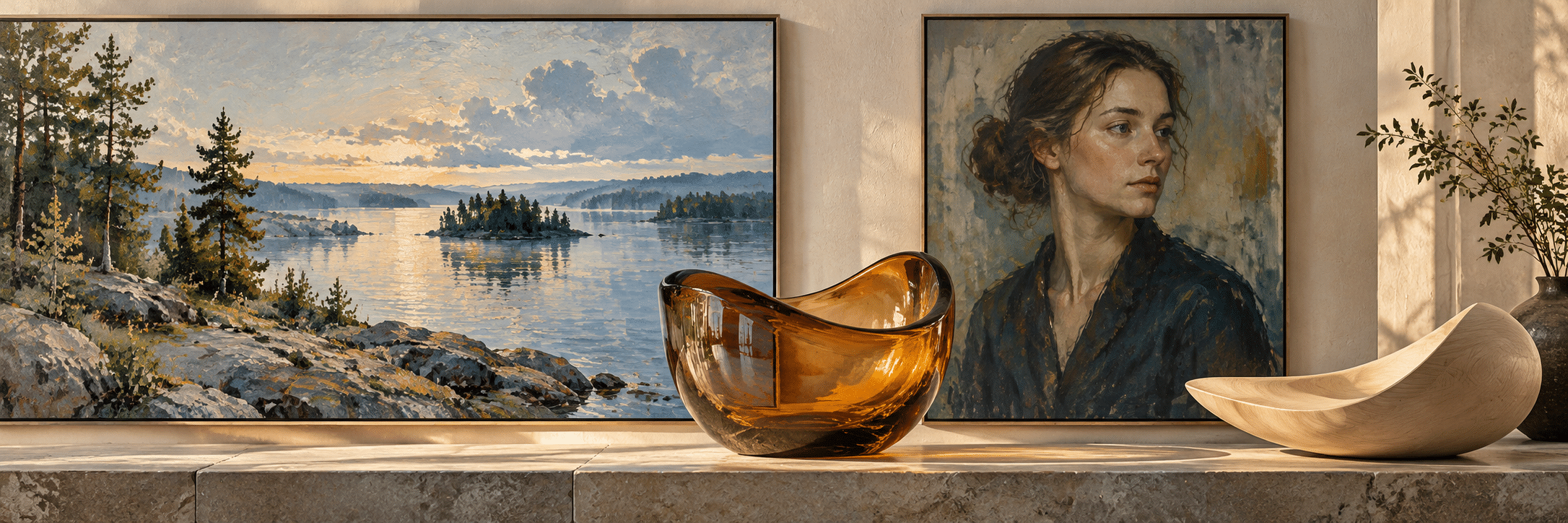
A visual introduction
Select an image for a closer look. Use the thumbnails, arrow keys or a swipe to compare examples. Zoom in to inspect details, or share the image that inspires you.


Creative toolbox · take this style further
Choose an input and a destination. Search sends your words to the chosen site; Copy & open puts them on your clipboard to paste there.
Create with AI
Turn your chosen input into an image prompt or a new creative direction.
ChatGPT
Copy your input and paste it into a ChatGPT conversation or image request.
Copy & open ChatGPT (new tab)Claude · Anthropic
Develop an image prompt or explore the style in a new Claude conversation.
Copy & open Claude · Anthropic (new tab)Midjourney
Paste your input into the Imagine bar on the Create page.
Copy & open Midjourney (new tab)Adobe Firefly
Copy your input, open Firefly, and paste it into the prompt field.
Copy & open Adobe Firefly (new tab)Leonardo.Ai
Copy your input, open Leonardo, and paste it into the generation field.
Copy & open Leonardo.Ai (new tab)Image search
Find visual references. Short, concrete keywords usually work best.
Lexica
Search AI images and prompts using your selected input.
Search with this input Lexica (new tab)Pexels
Search the photo and video library. Short keywords often work best.
Search with this input Pexels (new tab)Pixabay
Search photos, illustrations and other images.
Search with this input Pixabay (new tab)Unsplash
Search photographs using the style name or your own keywords.
Search with this input Unsplash (new tab)Wikimedia Commons
Search photographs, artworks and historical images. Check each file for its source and reuse terms.
Search with this input Wikimedia Commons (new tab)Art & research
Explore artists, collections and the ideas behind a style.
Wikipedia
Search for background reading. A style may not have its own article.
Search with this input Wikipedia (new tab)WikiArt
Copy your input into WikiArt’s search to explore artists and artworks.
Copy & open WikiArt (new tab)Europeana
Paste your keywords into the search to explore European museum, library and archive collections.
Copy & open Europeana (new tab)Inspiration
Discover portfolios and visual ideas from creative communities.
Instagram hashtags
Search a hashtag made from your input: spaces and punctuation are removed. Instagram may require sign-in.
Search with this input Instagram hashtags (new tab)ArtStation
Paste your input into artwork search for concept art, environments, characters and visual development.
Copy & open ArtStation (new tab)Behance
Paste your input into project search for illustration, design and visual storytelling.
Copy & open Behance (new tab)A closer look
Compare how different works organize attention: a landscape through distance and light, a portrait through a few decisive features, a designed object through material and use, and an installation through the viewer’s movement. No one palette or motif defines the whole field.
Begin with works and questions, not national traits
A geographical overview helps readers find connections, but it should not assign one temperament to an entire population. The phrase Finnish art can refer to work made in Finland, to artists associated with the country, or to objects discussed within its cultural history. These categories overlap without becoming identical.
The Ateneum’s Stories of Finnish Art exhibition placed Finnish and international works side by side. Its examples include Eero Järnefelt’s Under the Yoke (Burning the Brushwood), dated 1893, and Hugo Simberg’s The Wounded Angel, dated 1903. Such comparisons make a better starting point than an unsupported claim that all Finnish art is bright, geometric or nature-loving.
Landscape can contain labour, memory and imagination
A landscape is not simply a collection of attractive natural features. Look at the size of people relative to their surroundings, the direction of the light and the route the eye takes through the picture. A field can become a place of work; a shoreline can become a threshold; a forest can withhold as much as it reveals.
In an original study, choose one relationship to develop. A low horizon gives the sky room to change the mood. A close foreground tree can interrupt distant space. A path may connect figures to a settlement, while its absence may isolate them. These are compositional choices, not proofs of a national character.
Modern lives and the expressive portrait
Ateneum’s The Modern Woman exhibition brought together Helene Schjerfbeck, Sigrid Schauman, Ellen Thesleff and Elga Sesemann. Its framing considers artistic careers within changing social, political and cultural conditions. This gives the overview a necessary counterweight to a history told only through celebrated male painters and designers.
Ateneum’s Schjerfbeck material spans portraits, still lifes and landscapes, alongside her self-portraits. For a drawing exercise, examine what happens when descriptive detail is reduced while proportion, edge and tonal balance remain deliberate. An economical face can be intensely expressive; an unfinished-looking surface is not automatically an unconsidered one.
Design belongs here, but it is not the whole story
The Alvar Aalto Foundation dates the Paimio chair to 1932 and explains its connection with the sanatorium of the same name. Its account describes bent timber components and a plywood seat. This is a specific object with a material and functional history, not evidence that every Finnish artwork prefers curved wood.
Translate the lesson into a new design question rather than copying the chair’s outline. How might a thin material carry a load, meet another component or receive light? A convincing rendering can suggest an answer, but it cannot establish comfort or structural performance. Keep invented objects distinct from documented designs.
A living field with more than one centre
Kiasma’s stated mission is to present, collect and research contemporary art; its collection focuses primarily on Finland and nearby regions. Following such a collection helps an overview remain open to changing practices instead of stopping at a familiar group of historical masterpieces.
Neither a national border nor a museum collection should flatten distinct cultural identities. A particular community, Indigenous practice or artist deserves its own name and context. Do not turn unresearched clothing, ornament or ritual into generic Finnish decoration. For the generated studies here, contemporary settings and invented objects are identified as such.
Build a useful visual comparison
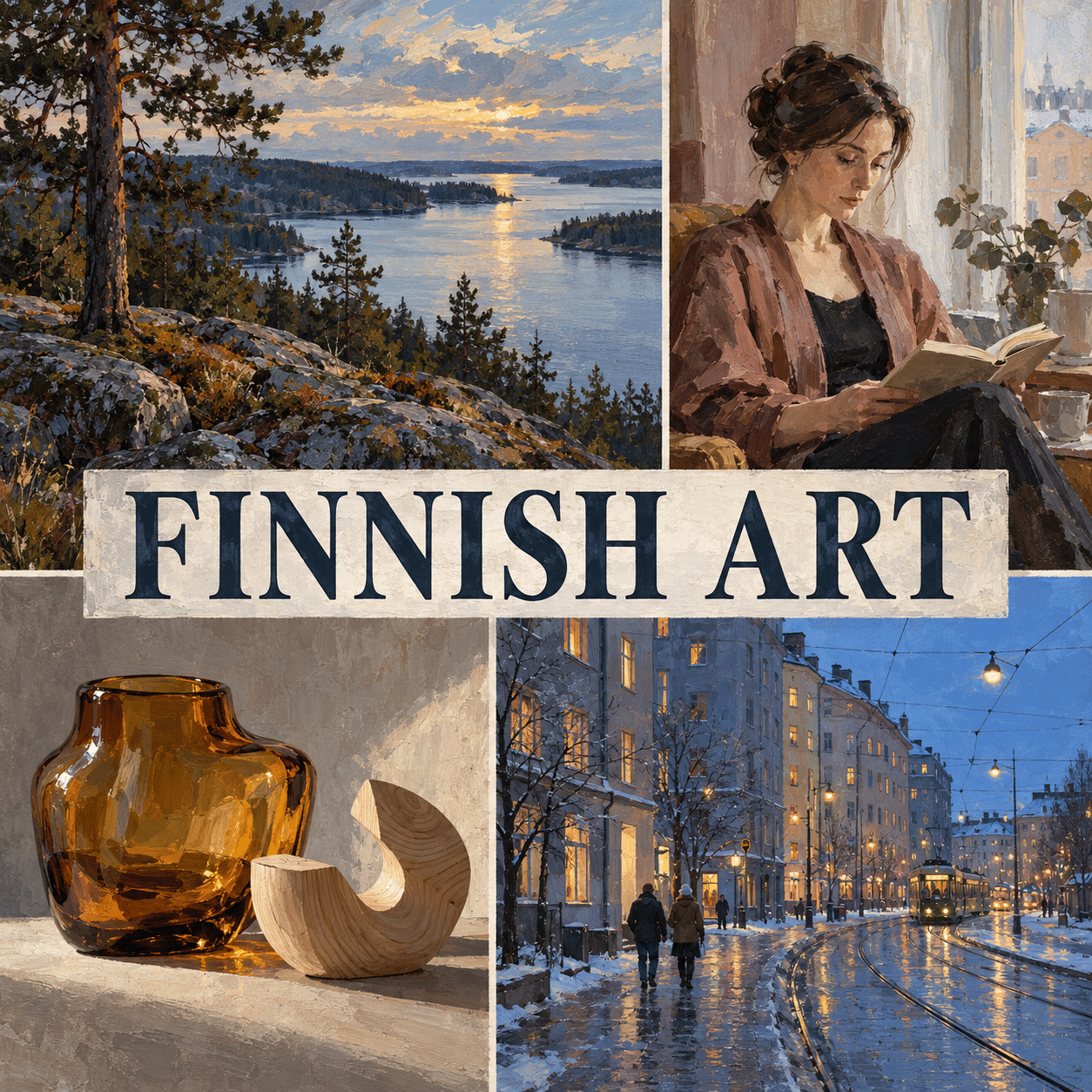
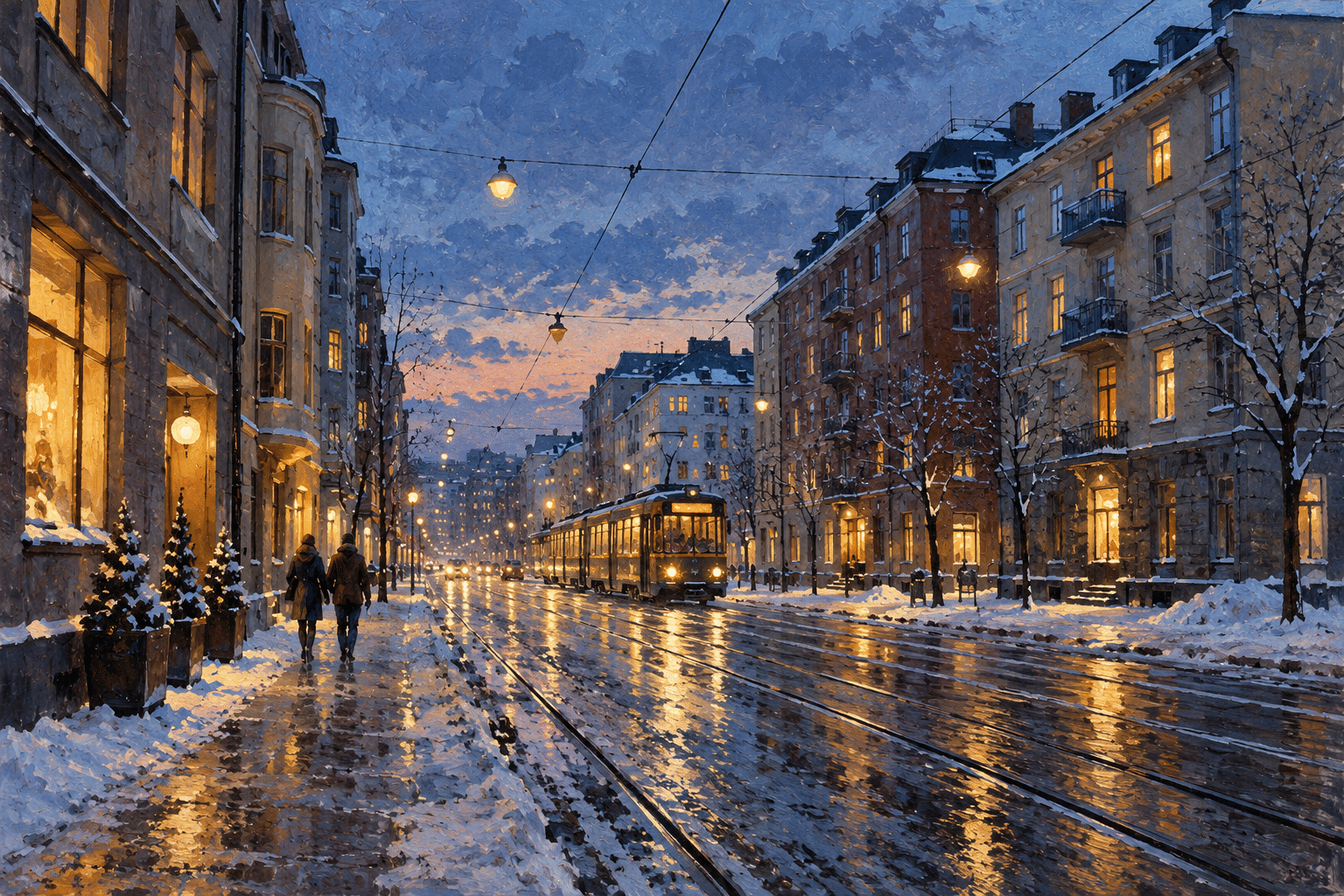
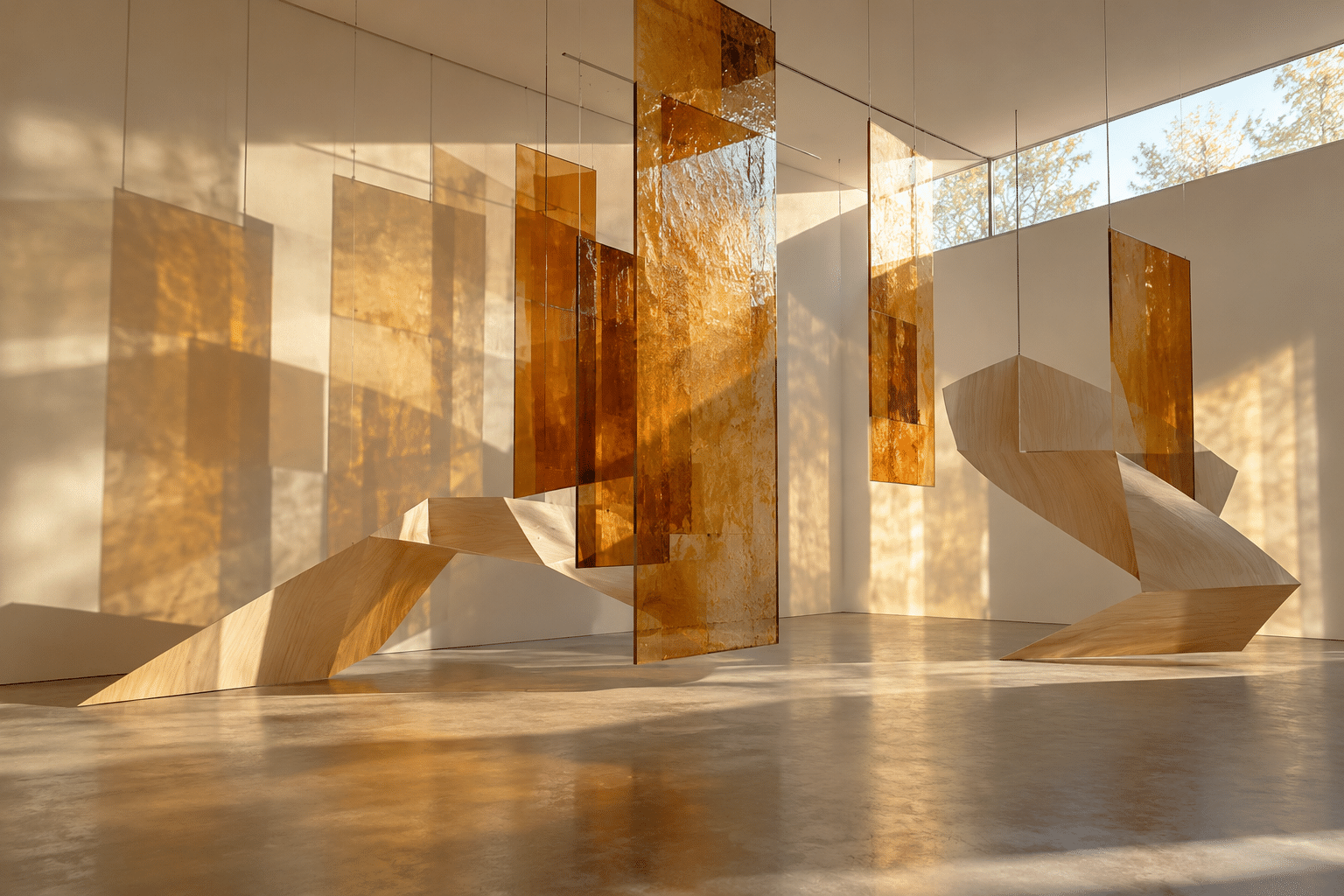
The gallery offers five independent exercises: a lake landscape, a simplified adult portrait, a material-and-light still life, a painted urban scene and an imagined installation. Their differences are intentional. Together they resist the idea that this broad subject can be represented by one repeated forest motif.
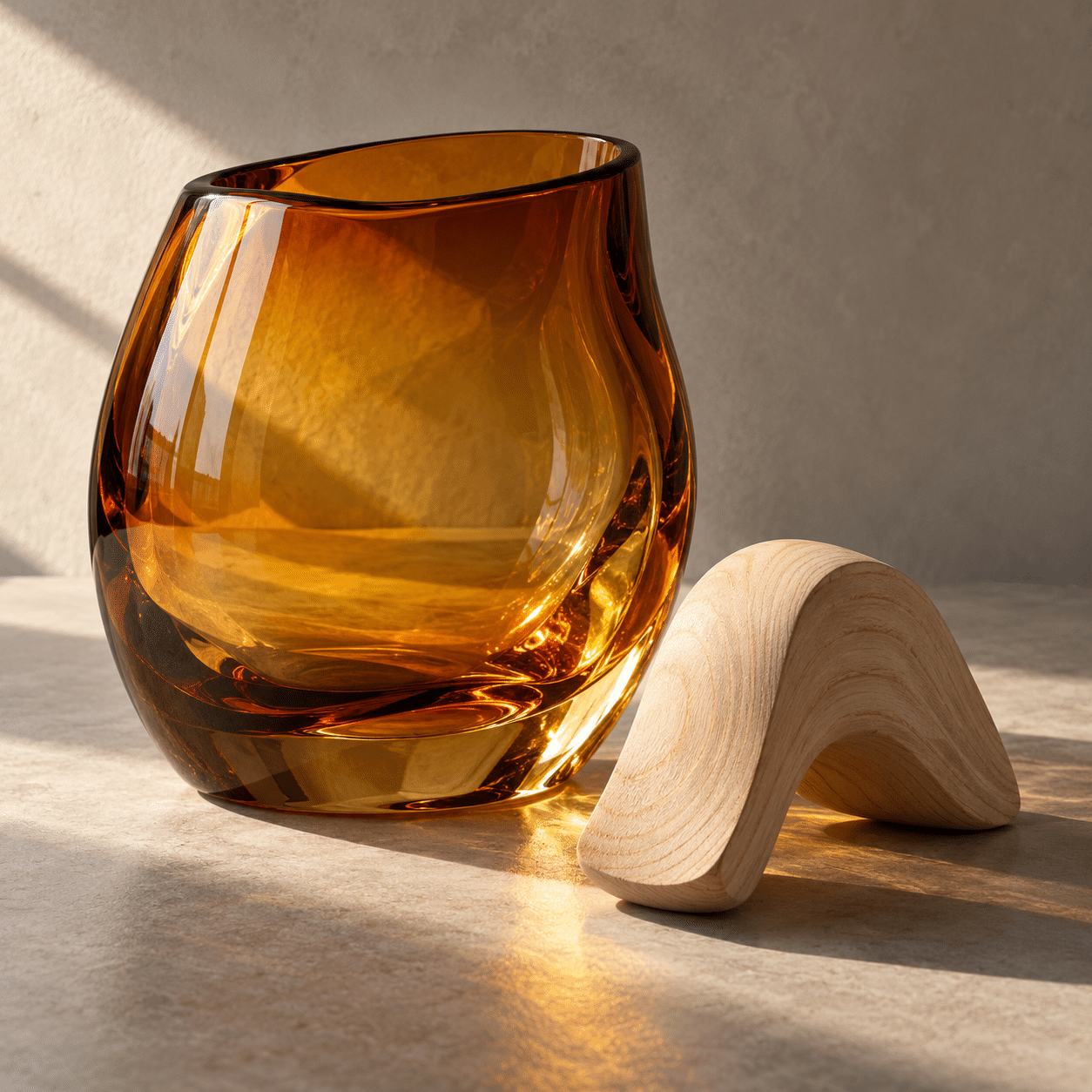
Use a limited palette for a particular purpose, not as a compulsory national palette. Cool blue and muted earth can organize a winter scene; an amber glass object may need a different contrast. In a portrait, preserve the direction of the gaze and the relation of head to shoulders before refining the surface. In a city image, let a few large value masses establish the space.
Positive editorial assessment — AI-authored
A broad overview becomes useful when it connects specific works to specific visual questions. The movement from landscape and portrait to design and installation gives readers several ways to begin looking without insisting on a single national formula.
Critical editorial assessment — AI-authored
The greatest weakness of a national-style label is its tendency to replace people and history with scenery. Snow, birch trees and pale wood can become a decorative shortcut. Counter this by naming the artist or collection when making a historical claim and by showing urban, personal and experimental work as well.
Neutral editorial assessment — AI-authored
This introduction selects a few documented reference points and pairs them with original educational exercises. It is neither a complete history nor a definition of Finnish identity. The generated images illustrate compositional possibilities and are not artworks by the named artists.
A small poetic detour
Original words from the AOI studio.
Poetry
A lake is more than distant blue;
a face is more than what is shown.
The hand revises what it knew,
the room gives light another tone.
Beyond the frame, a city moves;
within the grain, a curve begins.
No single image holds a country—
let other voices enter in.
The prompt workshop
Original creative exercises. These prompts create new illustrations, not documentary evidence.
A landscape with a clear decision
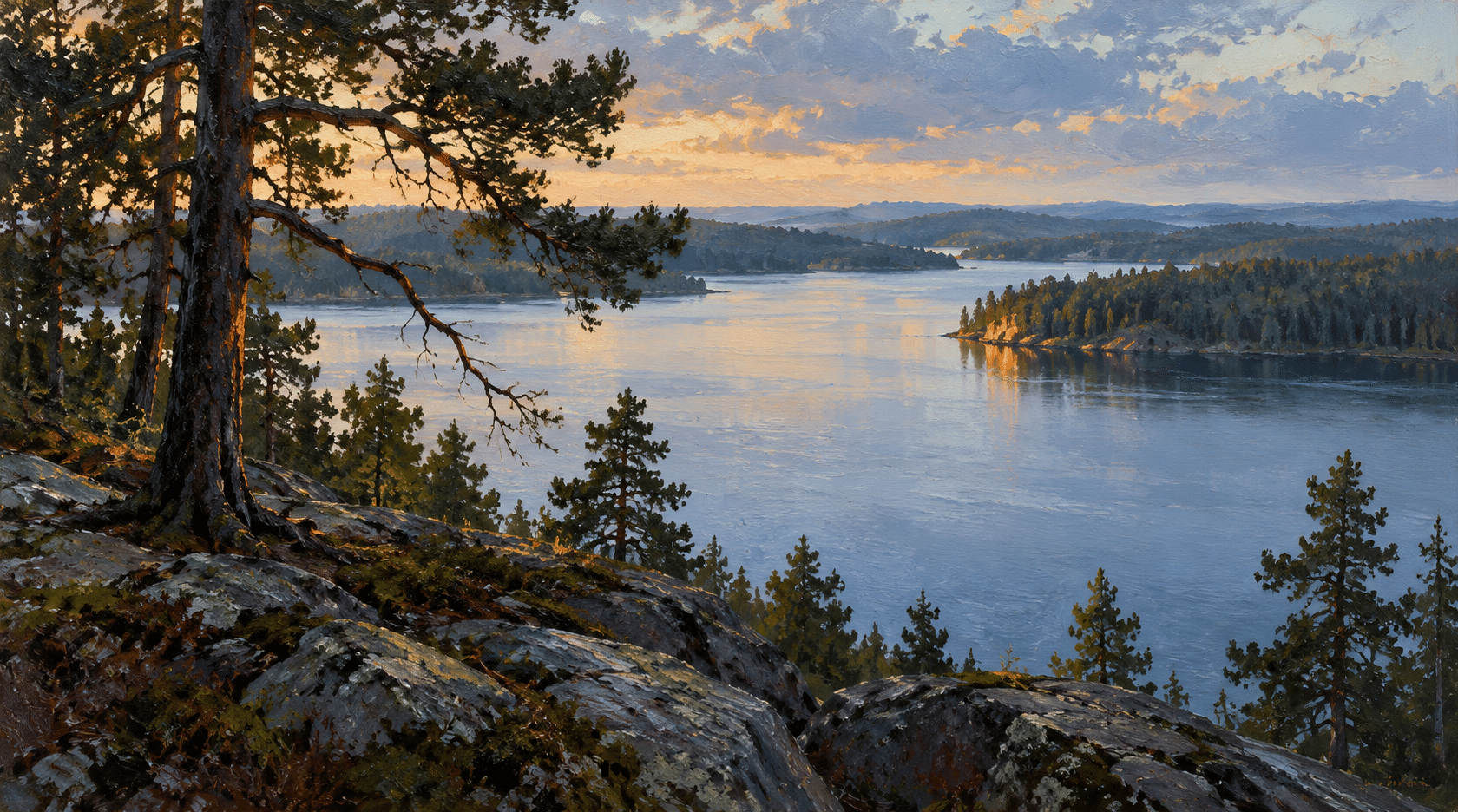
Paint an original northern lake scene at late afternoon: a dark near bank, a narrow band of pale water and distant trees. Use visible oil brushwork and one warm accent. Make the horizon placement determine the mood; do not copy a known painting.
Economy in an adult portrait
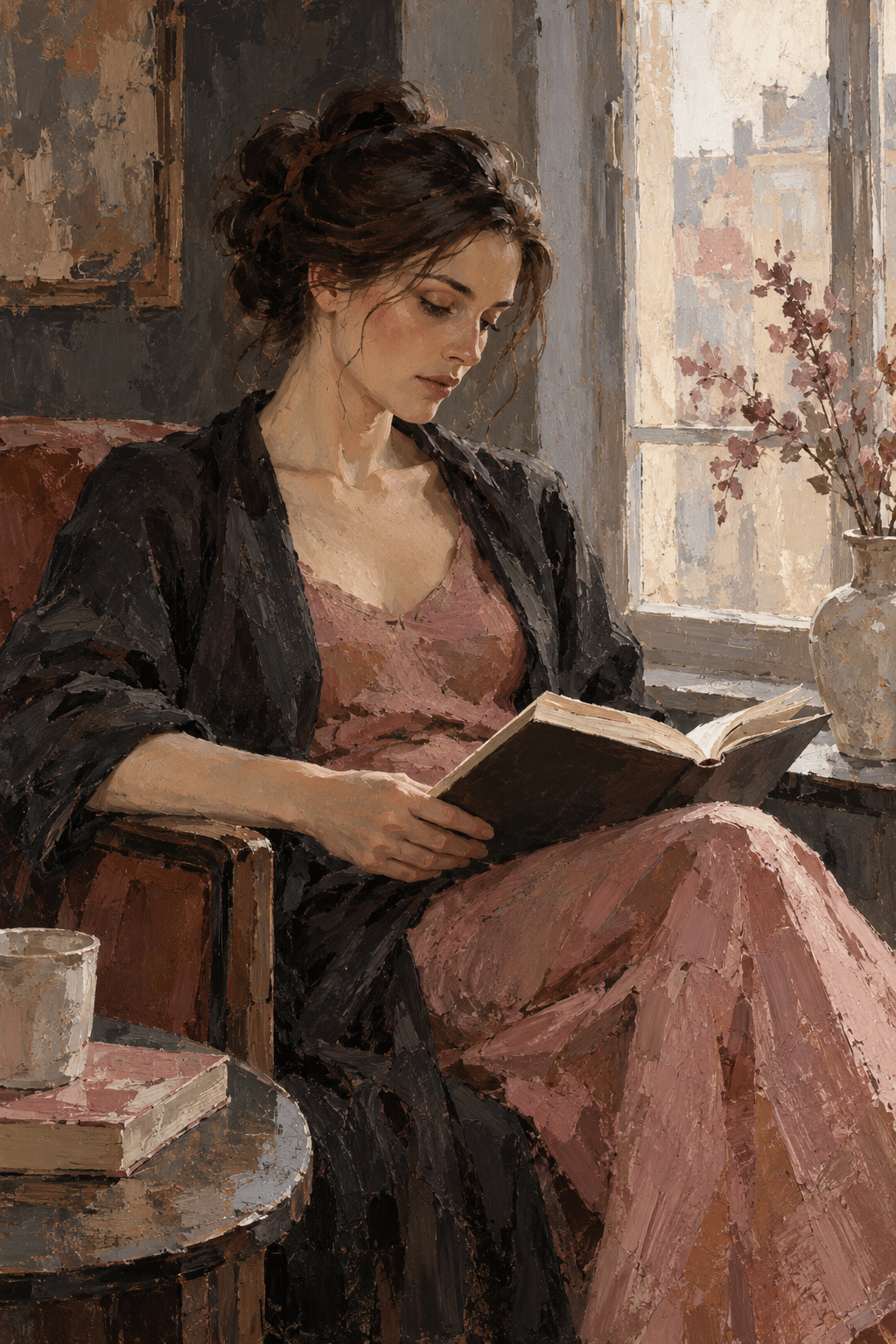
Create an original painted portrait of an adult reader in three-quarter view. Reduce the palette to umber, muted rose, ivory and charcoal; use a few deliberate edges to hold the gaze and the shoulder line. Avoid decorative national symbols or resemblance to a named artist’s sitter.
Material and light as a question
Imagine a contemporary gallery installation of translucent amber glass planes and folded pale wood forms. Show how one band of daylight changes their shadows and overlaps. Label the result a speculative artwork, not a documented museum installation or tested product.
A smile from the studio
Jokes
The landscape painter went looking for perfect silence. The brush had several comments.
Sources and further exploration
Ateneum: Stories of Finnish Art — documented works and international comparisons
Ateneum: The Modern Woman — four artists and their professional contexts
Ateneum: Seeing Silence — the range of Schjerfbeck’s practice
Alvar Aalto Foundation: Paimio chair — dated object and materials