
A guide to staged scenes, miniature worlds and their artful variants
A strip of silver paint becomes a river just where a real twig overhangs it. A diorama asks a viewer to stand somewhere particular and let separate things form one scene. That scene might fill a museum bay, fit inside a drawer, or survive chiefly as a photograph. This guide follows those changes of scale and offers four routes into AOI’s specialist galleries.
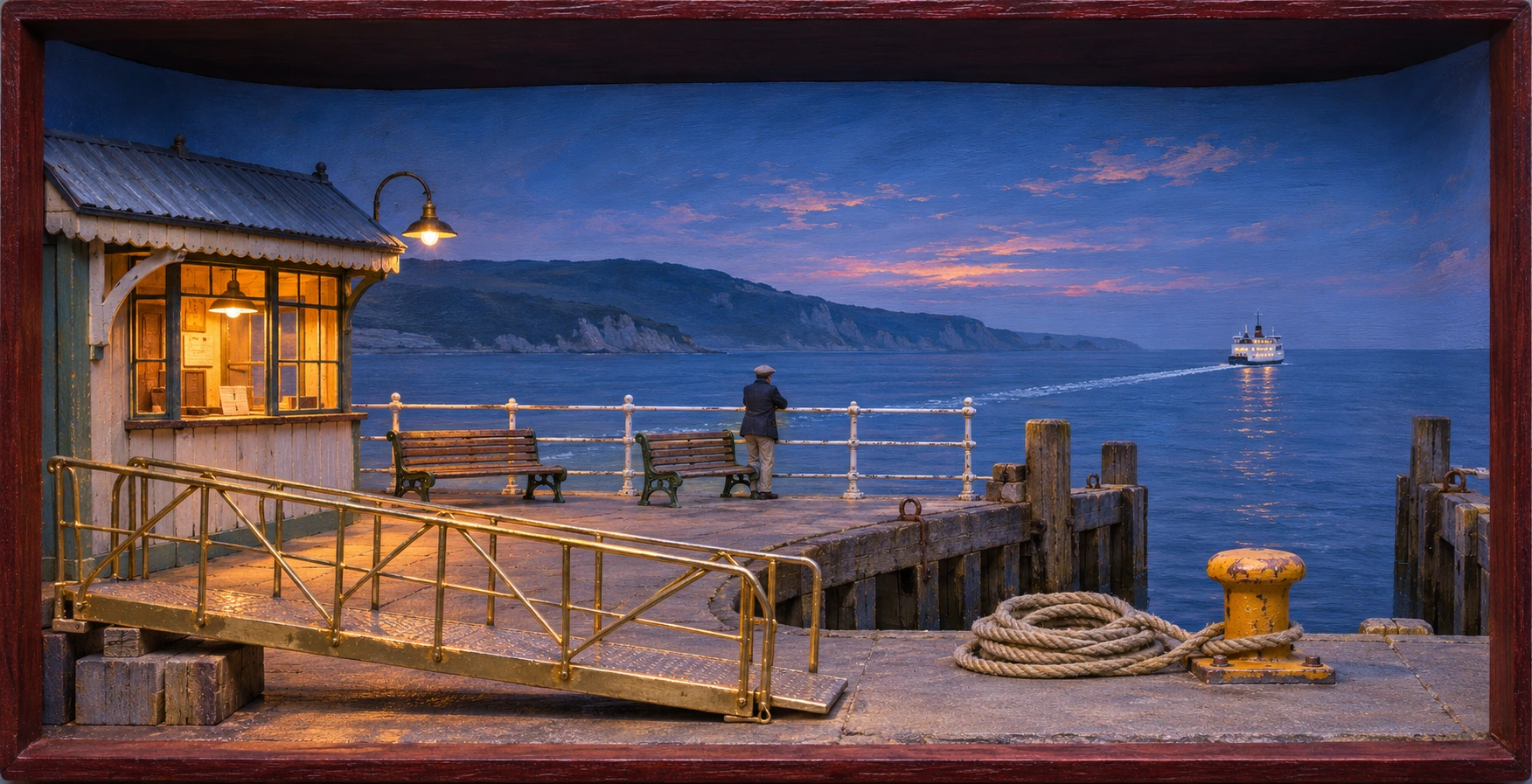
A visual introduction
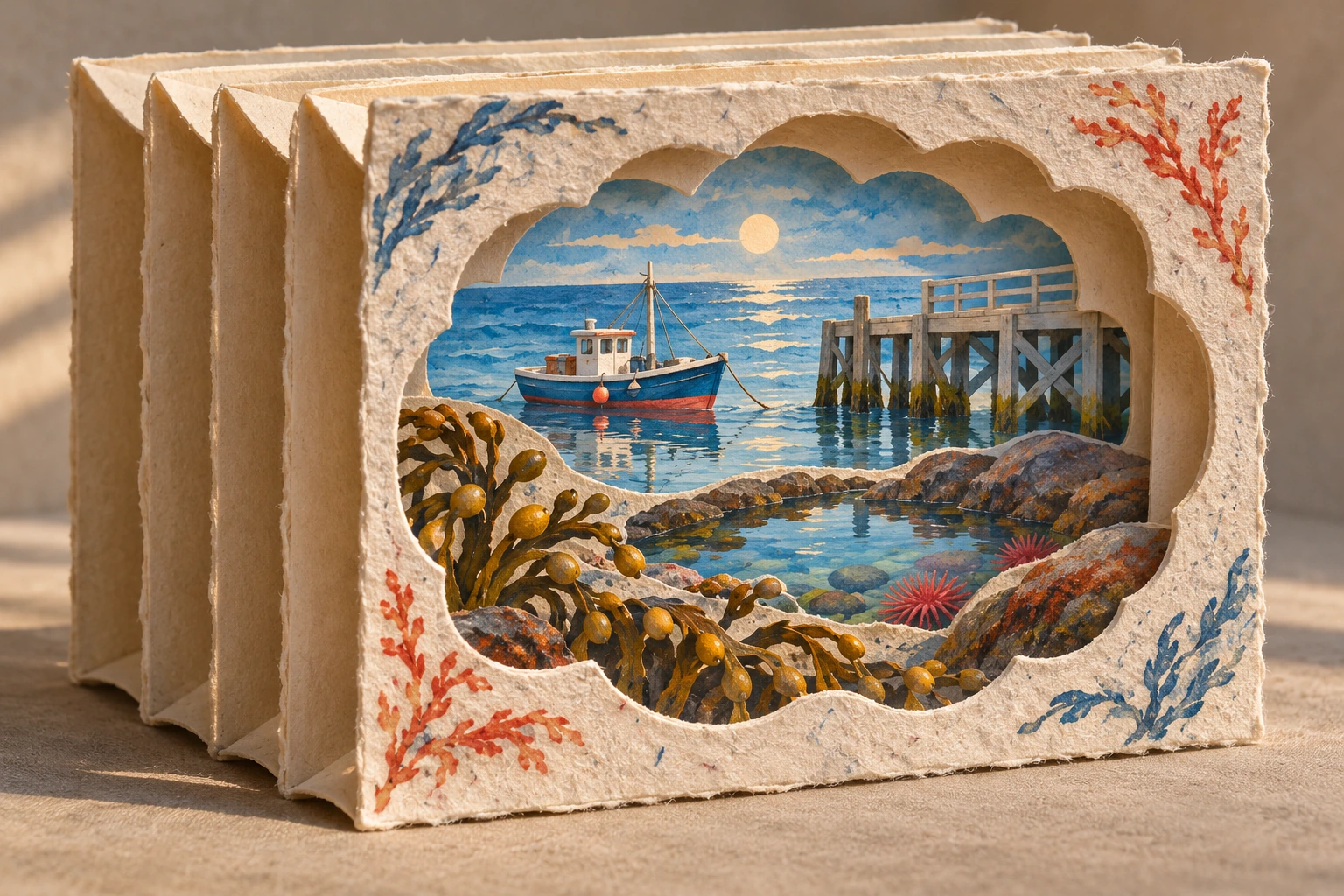
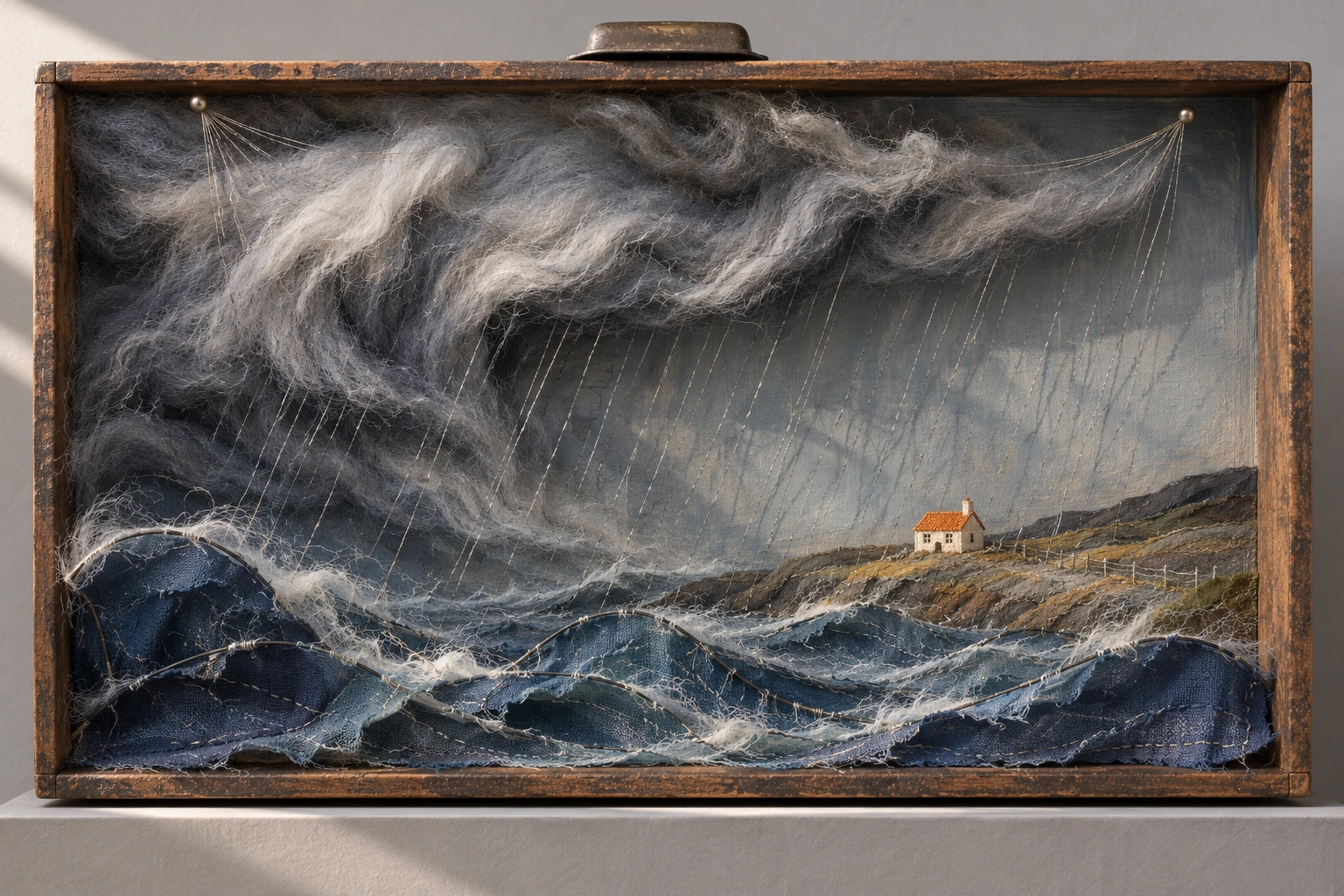
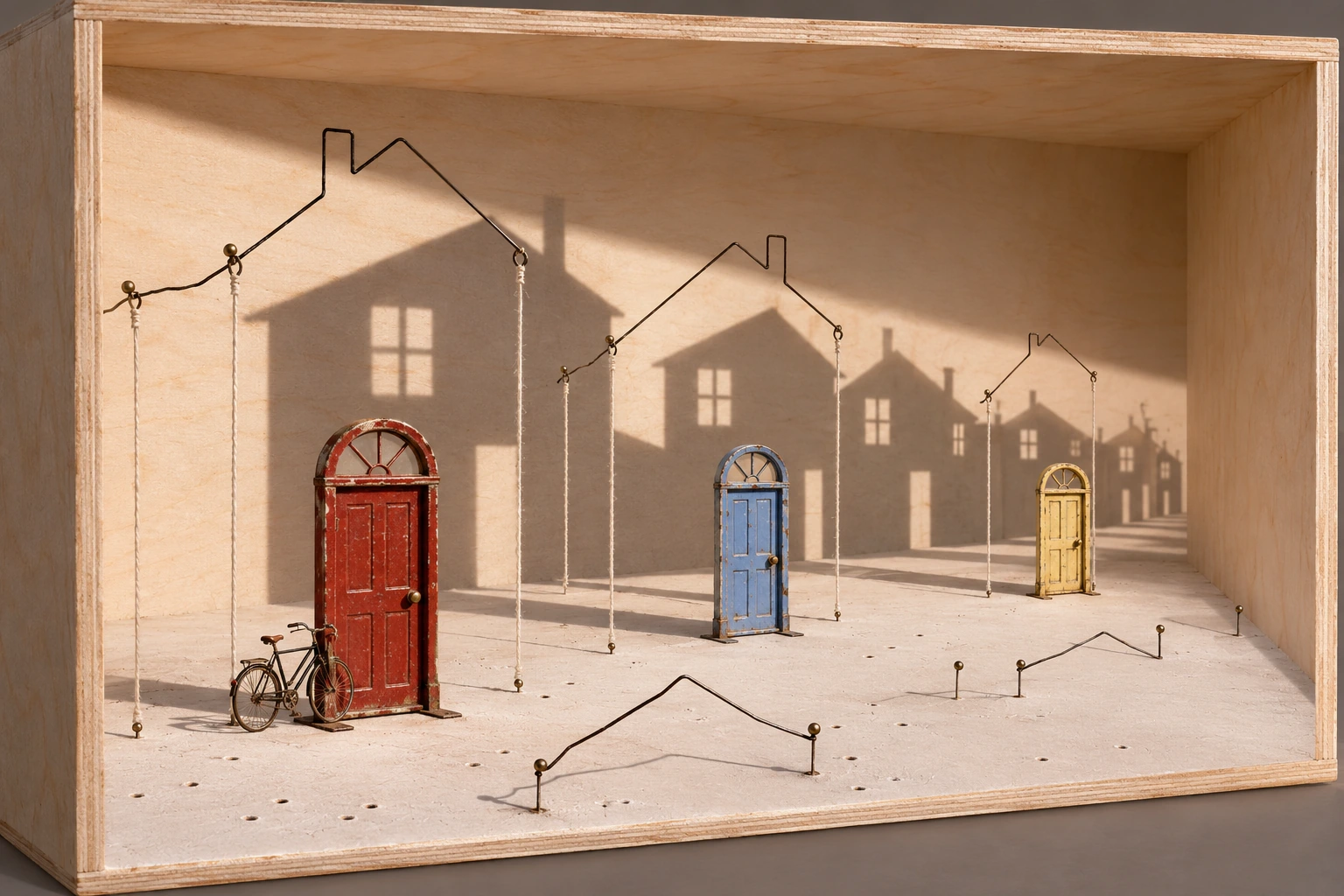
Five original AI-generated studies imagine different ways to construct a view. The case, folds, pins and wires belong to the pictures. Documentary reference works are identified in the text and further reading.
Select an image for a closer look. Use the thumbnails, arrow keys or a swipe to compare examples. Zoom in to inspect details, or share the image that inspires you.
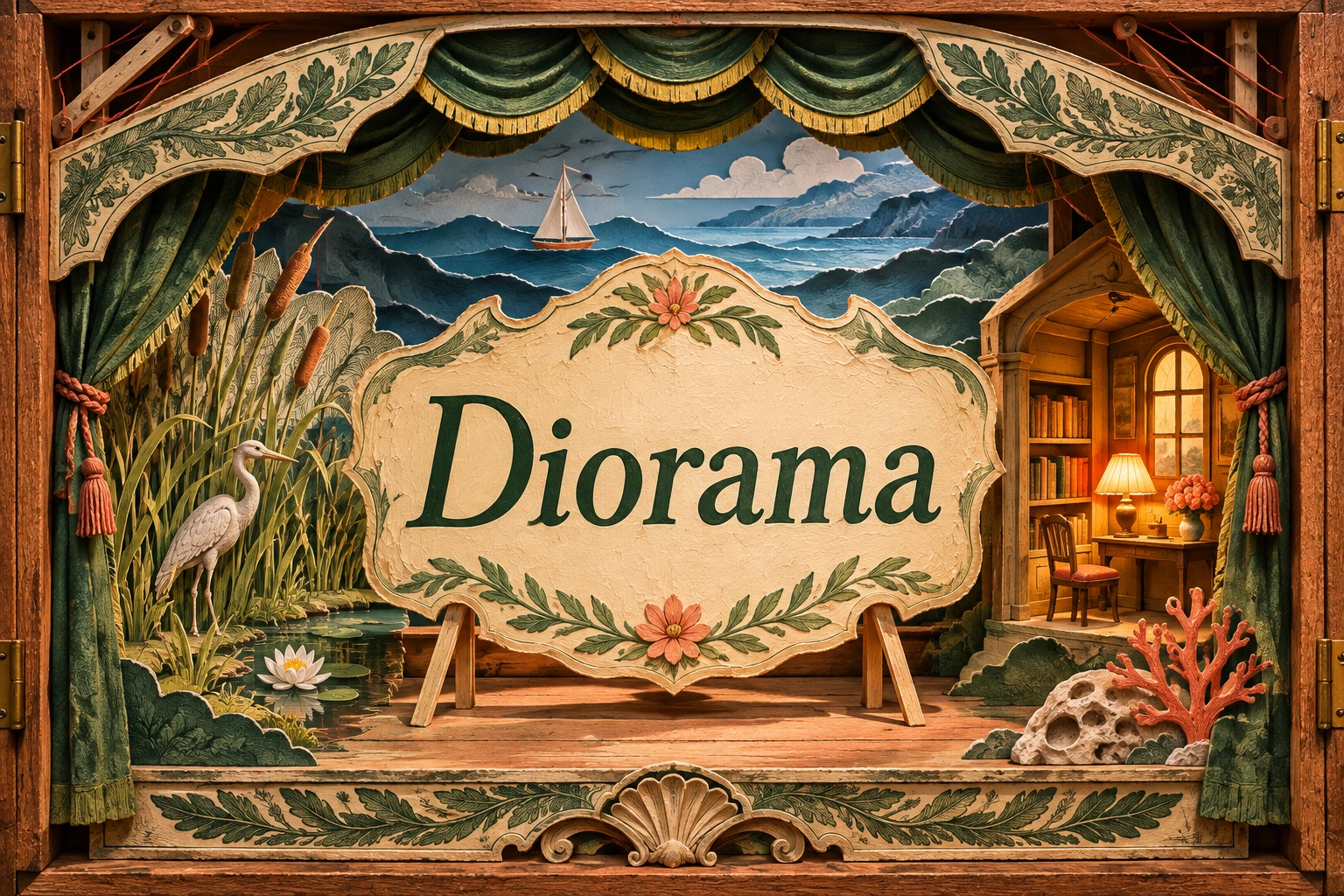
Creative toolbox · take this style further
Choose an input and a destination. Search sends your words to the chosen site; Copy & open puts them on your clipboard to paste there.
Create with AI
Turn your chosen input into an image prompt or a new creative direction.
ChatGPT
Copy your input and paste it into a ChatGPT conversation or image request.
Copy & open ChatGPT (new tab)Claude · Anthropic
Develop an image prompt or explore the style in a new Claude conversation.
Copy & open Claude · Anthropic (new tab)Midjourney
Paste your input into the Imagine bar on the Create page.
Copy & open Midjourney (new tab)Adobe Firefly
Copy your input, open Firefly, and paste it into the prompt field.
Copy & open Adobe Firefly (new tab)Leonardo.Ai
Copy your input, open Leonardo, and paste it into the generation field.
Copy & open Leonardo.Ai (new tab)Image search
Find visual references. Short, concrete keywords usually work best.
Lexica
Search AI images and prompts using your selected input.
Search with this input Lexica (new tab)Pexels
Search the photo and video library. Short keywords often work best.
Search with this input Pexels (new tab)Pixabay
Search photos, illustrations and other images.
Search with this input Pixabay (new tab)Unsplash
Search photographs using the style name or your own keywords.
Search with this input Unsplash (new tab)Wikimedia Commons
Search photographs, artworks and historical images. Check each file for its source and reuse terms.
Search with this input Wikimedia Commons (new tab)Art & research
Explore artists, collections and the ideas behind a style.
Wikipedia
Search for background reading. A style may not have its own article.
Search with this input Wikipedia (new tab)WikiArt
Copy your input into WikiArt’s search to explore artists and artworks.
Copy & open WikiArt (new tab)Europeana
Paste your keywords into the search to explore European museum, library and archive collections.
Copy & open Europeana (new tab)Inspiration
Discover portfolios and visual ideas from creative communities.
Instagram hashtags
Search a hashtag made from your input: spaces and punctuation are removed. Instagram may require sign-in.
Search with this input Instagram hashtags (new tab)ArtStation
Paste your input into artwork search for concept art, environments, characters and visual development.
Copy & open ArtStation (new tab)Behance
Paste your input into project search for illustration, design and visual storytelling.
Copy & open Behance (new tab)A closer look
Look for the place the eye enters, the object that establishes scale and the join between two depths. A built foreground can meet a painted distance so smoothly that a few inches of plaster seem to open onto miles of country.
Four ways into the specialist galleries
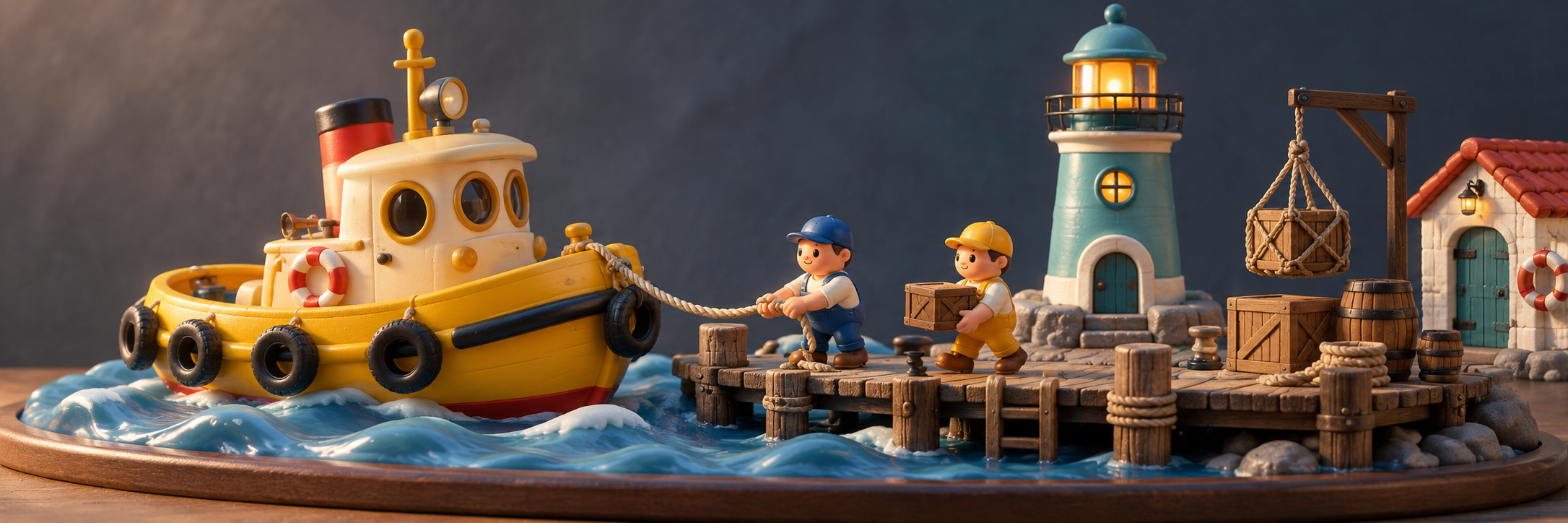
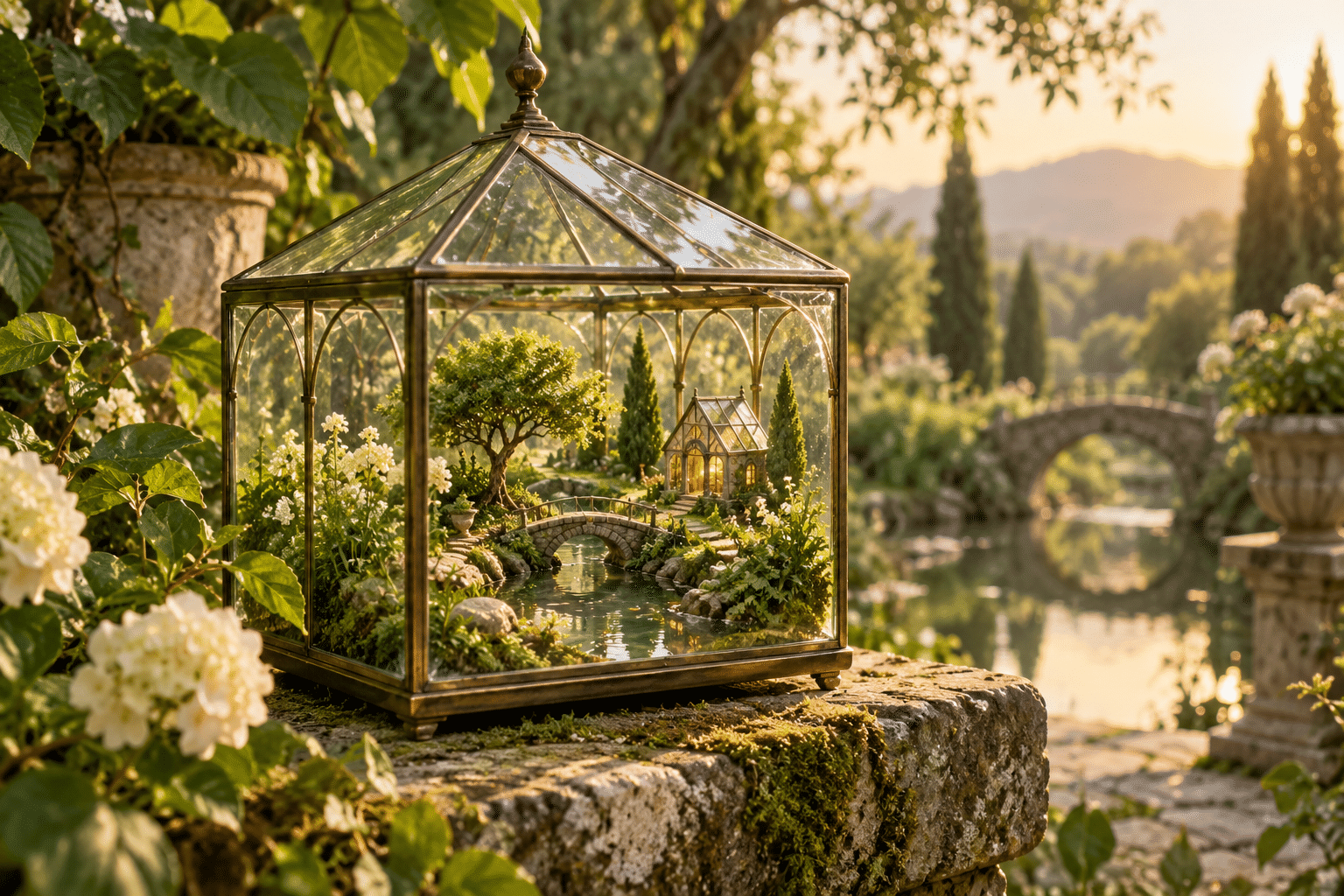
Choose Papercut Diorama if you want flat sheets to produce distance. Choose Amber Memory Diorama if the container is part of the story and a place is remembered through a translucent surface. Latex Toy Diorama is about what rounded seams and satin reflections do to scale. World Model Dioramas follows a different puzzle, where forms inside a miniature environment repeat forms in the larger world around it. The illustrated links under Discover another art style open each guide.
Before the little room, a theatre of light
In 1822 Louis Daguerre and Charles-Marie Bouton opened the Diorama in Paris. The Science Museum Group describes pictorial views whose appearance changed under different lighting. Imagine the shift in attention when the same painted shape reads first as a solid wall and later as a wall admitting light. The history of the word begins with a spectator and a change of appearance. The box of miniatures is one of its later associations.
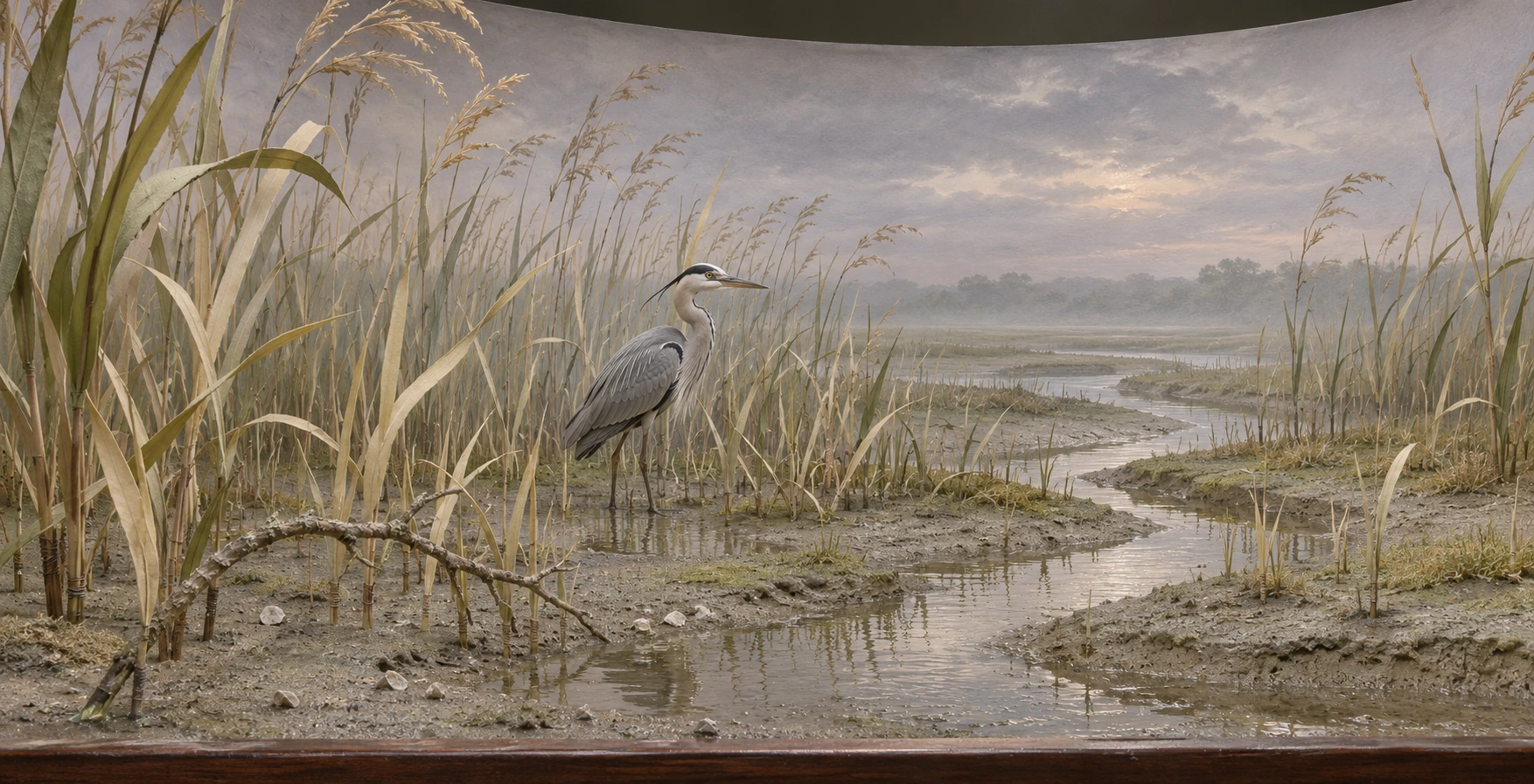
A habitat display gives that spectator a different job. At the American Museum of Natural History, exhibit artist Steve Quinn explains how a painted, curved background meets dimensional terrain. A real-looking reed near the glass and a painted reed at the back can appear to stand on the same bank. That join is a place to look for the maker’s decisions about light, perspective and where a visitor stands. A convincing habitat display is a constructed representation.
A room, a peep and a photograph
Narcissa Niblack Thorne’s miniature rooms, documented by Phoenix Art Museum, work at one inch to one foot. A chair, door handle and rug must all agree at that scale. The practical lesson is wonderfully severe. One oversize hinge can make a room seem furnished for people and fitted for giants.
The Victoria and Albert Museum’s paper peepshows use apertures and spaced cut prints held apart by folding bellows. Front-on, the openings compose one scene. From the side, its depth comes apart into intervals. A constructed scene may also be made for a lens. Lori Nix and Kathleen Gerber’s The City includes Library (2007). The artists’ gallery is a place to study the finished photograph and consider which parts of a set the chosen camera position lets us see.
Build the view from one seat
Pick an eye height before filling the set. Lay a near object across the edge of a middle-distance object and carry one line past both. In a harbour it might be the wake leaving an empty berth. Put the horizon at the eye height you chose. Test the join in silhouette, then light the tabletop objects and their painted distance from a consistent direction. A handrail, teaspoon or familiar bird gives scale more economically than a crowd of figures.
When you work for a camera, try one frame just far enough back to show the case and a second just inside its rim. The first can reveal the materials and the second can convince you of the place. A backdrop seam that disappears from one seat may jump out from the next. For a walk-around display, give the other viewpoints something to discover.
Let the materials interfere
A drawer of weather asks what wool can do as cloud and what thread can do as rain. Leave a pinhead in sight and the storm acquires an author. A sparse street built from wire has another option. Direct one hard lamp at it and the far wall can carry houses the modeller barely built. The negative spaces are doing paid work for once.
To try either idea, give the viewer one ordinary object in the middle distance. A small house fixes the scale of the wool. A bicycle lends a wire doorway a human size. Start by placing that object and turning the light. Add scenery only when it changes what the viewer can see.
A small poetic detour
Original words from the AOI studio.
Poetry
The ferryman is a curl of wire.
The far shore dries against the wall.
Between them, on a thumb of painted water,
a boat has just gone out of sight.
A loose fibre catches the light.
It is the whole distance home.
The prompt workshop
Original creative exercises. These prompts create new illustrations, not documentary evidence.
A first room box
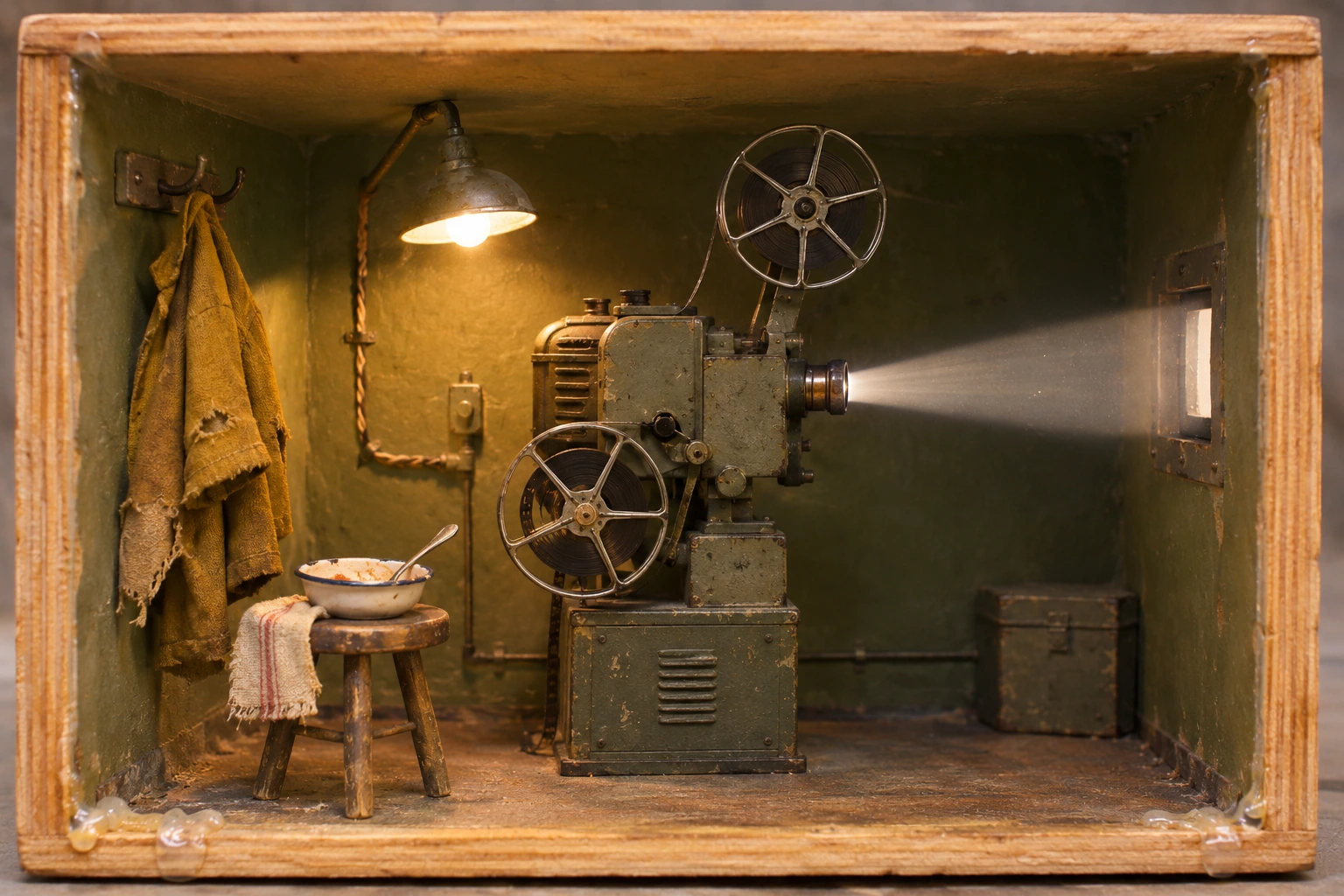
Stage an open-front projection booth at eye height. Build a stool, an enamel bowl and a small projector in one consistent scale. Send a narrow beam through the far wall. Leave a finger’s width of box rim visible.
Hide a join in plain sight
Design a habitat diorama of an estuary after rain. Carry a silver channel from plaster mud into a curved painted landscape. Place a model heron near the join and put the same cool morning light on the bird, reeds and distant water.
Give a street to its shadows
Build three tiny enamel doorways and a handful of wire roof contours in a shallow box. Direct one hard lamp from the left. Arrange the shadows into a street with more houses than there are solid structures. A bicycle sets the scale.
Your next inspiration
Discover another art style
Follow a visual thread to the next subject.
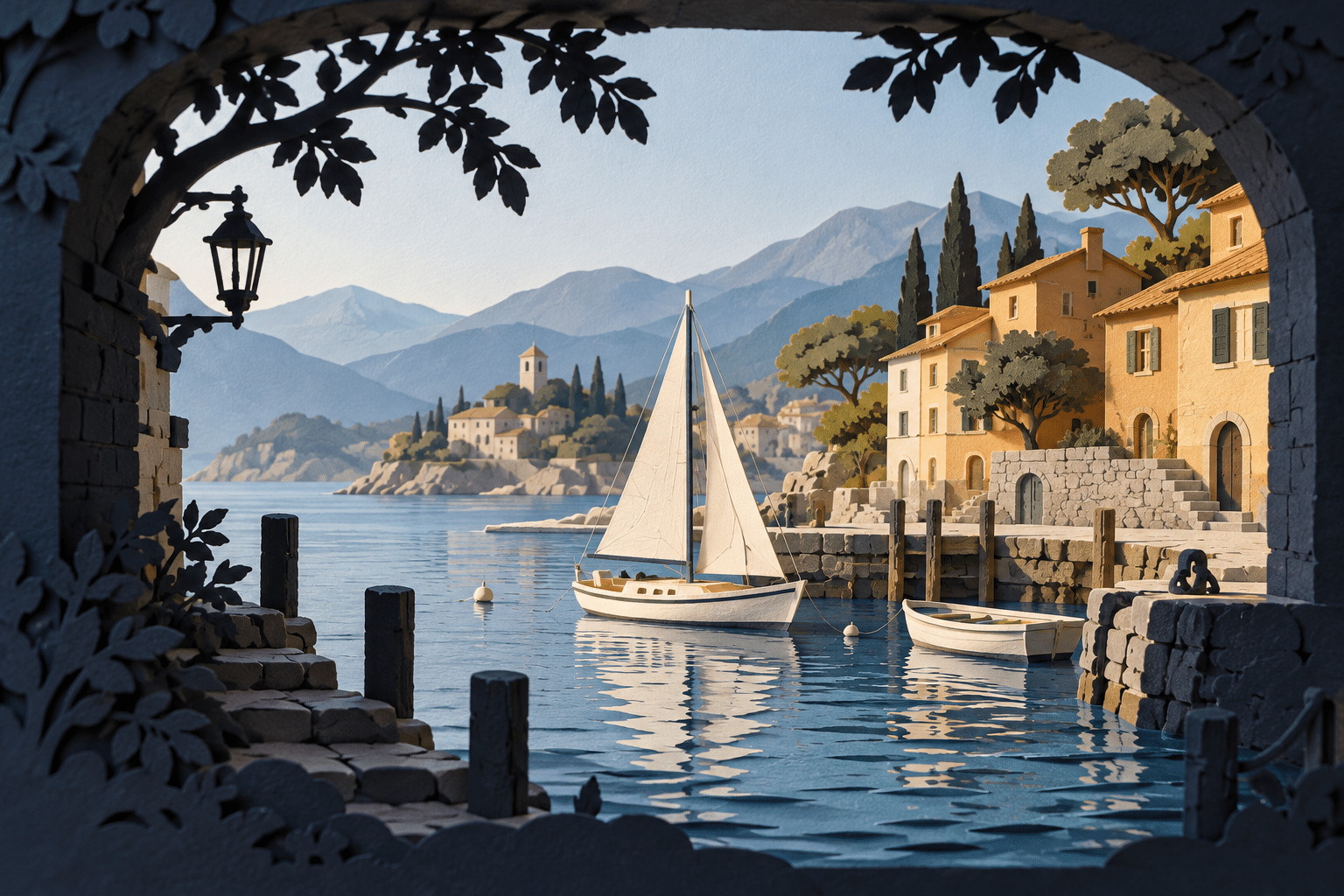
Papercut Diorama: Building a Small World in Layers
Follow gaps, overlap and cast shadows through a small world built in sheets of paper.

Amber Memory Diorama
Explore a remembered place suspended in amber, where the container changes how distance reads.
World Model Dioramas
Compare a tiny enclosed environment with the larger landscape that repeats its forms.
Surprising Partial Cutaway View
Keep a familiar exterior around a single opening and discover a scene inside.
People & works to explore
References discussed in this article. Consult the sources below for context.
Artists and practitioners
Louis Daguerre and Charles-Marie Bouton
Narcissa Niblack Thorne
Lori Nix and Kathleen Gerber
Paintings and other works
The Paris Diorama, opened in 1822 by Daguerre and Bouton
The Thorne Miniature Rooms, conceived and designed by Narcissa Niblack Thorne
Library (2007), from The City by Lori Nix and Kathleen Gerber
A smile from the studio
Jokes
The miniature carpenter charged full price for the last stair. People are always willing to pay for a convincing exit.