
Original AOI concept · miniature material study
Latex Toy Diorama imagines tiny staged worlds with rounded molded-looking toys, subtle seams and controlled highlights. Material contrast and small everyday actions give the miniature scene its charm.
An A⊕I –[-.+] creαt¡ve c⊕ncept, n⊕t αn estαbl¡she∂ h¡st⊕r¡cαl m⊕vement.
A visual introduction
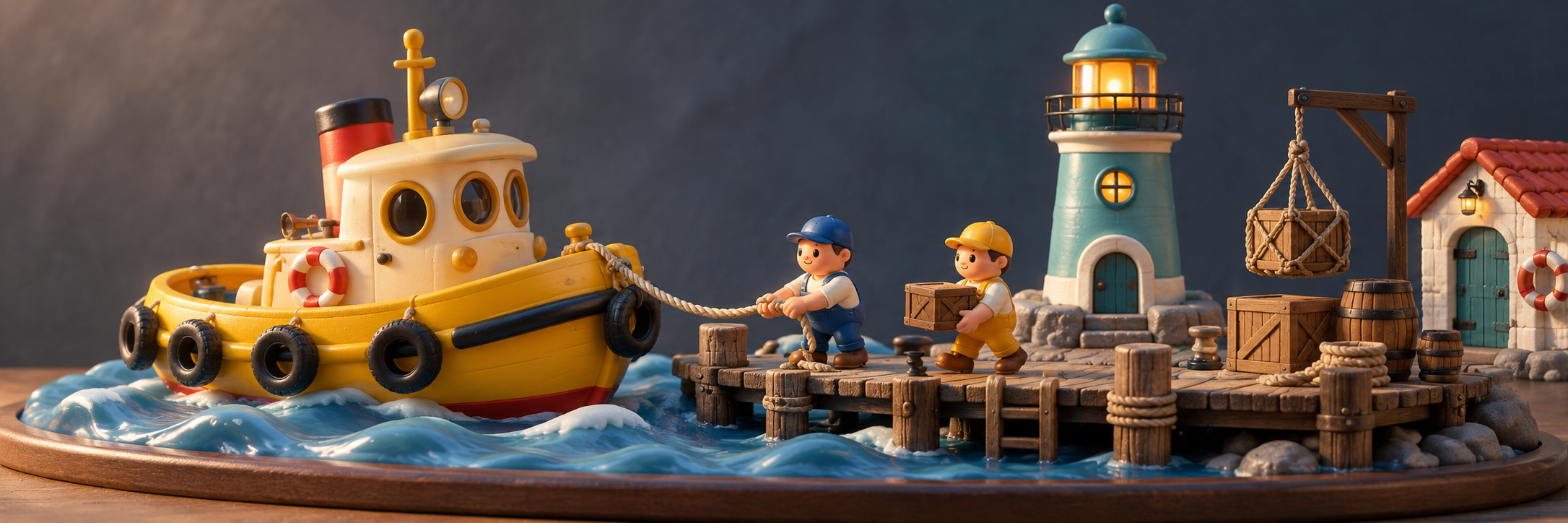
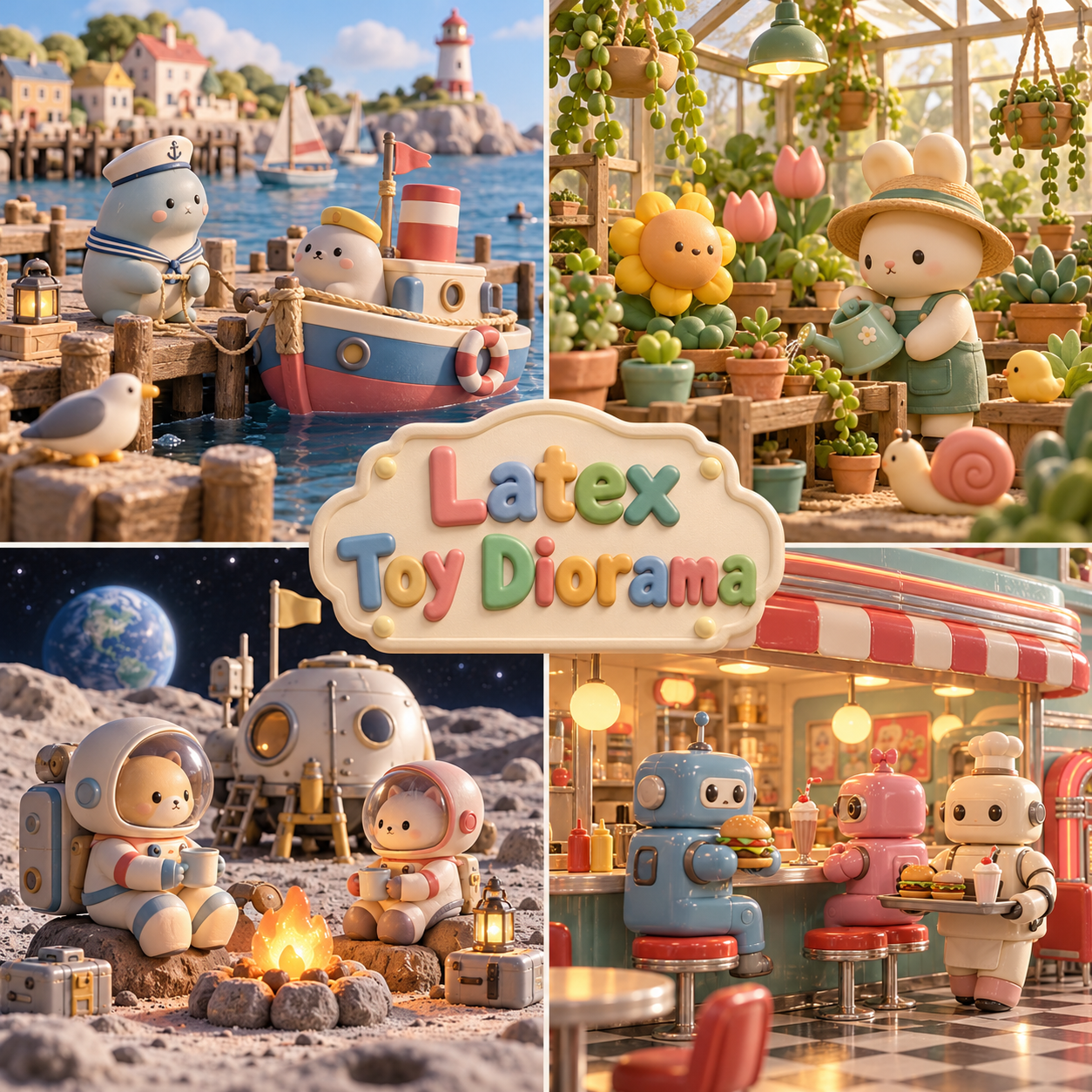
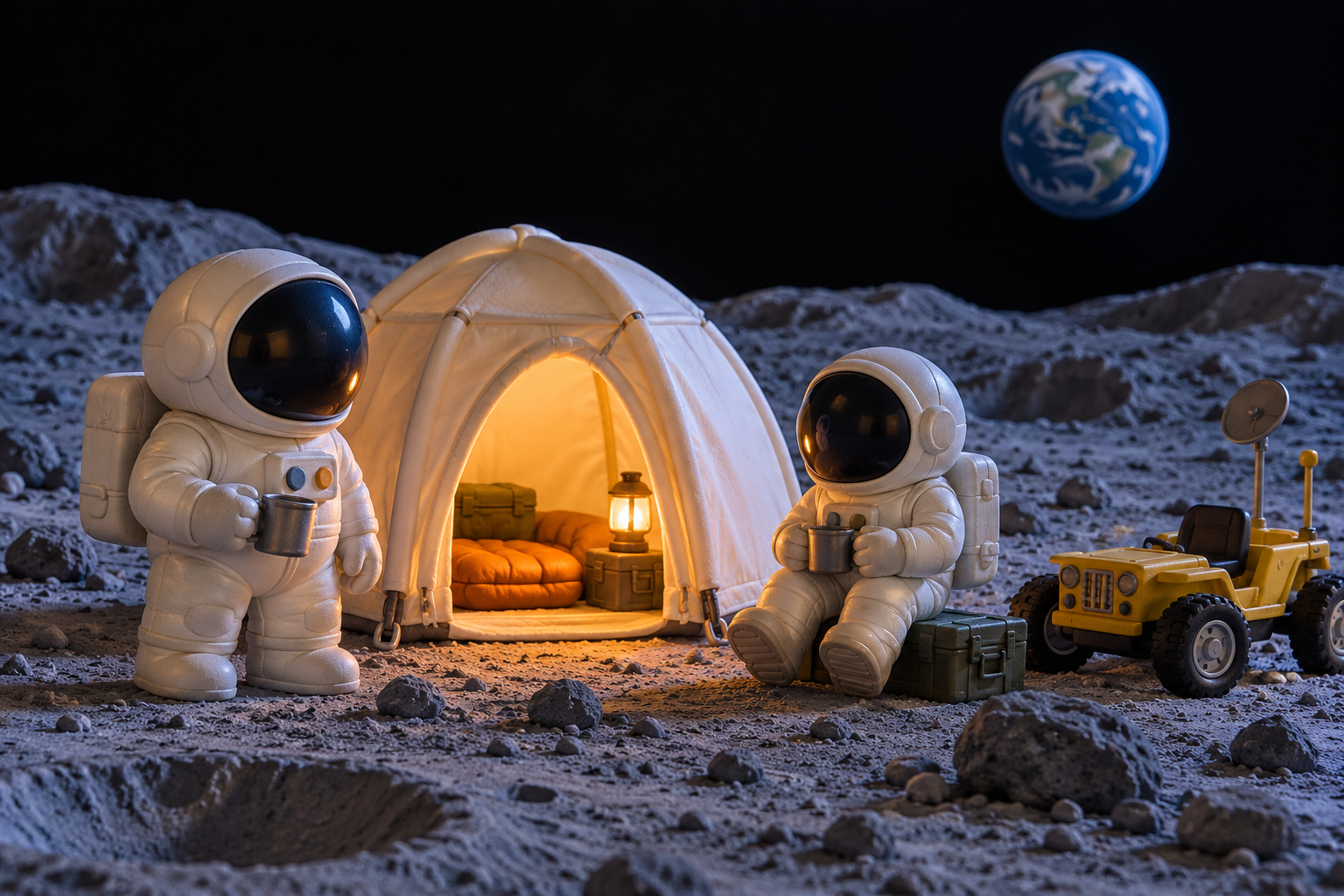
Five original AI-generated AOI interpretations: a harbor banner, a centrally titled collage and greenhouse, lunar-camp and diner studies. Material appearance is imagined, not a verified physical composition.
Select an image for a closer look. Use the thumbnails, arrow keys or a swipe to compare examples. Zoom in to inspect details, or share the image that inspires you.
Creative toolbox · take this style further
Choose an input and a destination. Search sends your words to the chosen site; Copy & open puts them on your clipboard to paste there.
Create with AI
Turn your chosen input into an image prompt or a new creative direction.
ChatGPT
Copy your input and paste it into a ChatGPT conversation or image request.
Copy & open ChatGPT (new tab)Claude · Anthropic
Develop an image prompt or explore the style in a new Claude conversation.
Copy & open Claude · Anthropic (new tab)Midjourney
Paste your input into the Imagine bar on the Create page.
Copy & open Midjourney (new tab)Adobe Firefly
Copy your input, open Firefly, and paste it into the prompt field.
Copy & open Adobe Firefly (new tab)Leonardo.Ai
Copy your input, open Leonardo, and paste it into the generation field.
Copy & open Leonardo.Ai (new tab)Image search
Find visual references. Short, concrete keywords usually work best.
Lexica
Search AI images and prompts using your selected input.
Search with this input Lexica (new tab)Pexels
Search the photo and video library. Short keywords often work best.
Search with this input Pexels (new tab)Pixabay
Search photos, illustrations and other images.
Search with this input Pixabay (new tab)Unsplash
Search photographs using the style name or your own keywords.
Search with this input Unsplash (new tab)Wikimedia Commons
Search photographs, artworks and historical images. Check each file for its source and reuse terms.
Search with this input Wikimedia Commons (new tab)Art & research
Explore artists, collections and the ideas behind a style.
Wikipedia
Search for background reading. A style may not have its own article.
Search with this input Wikipedia (new tab)WikiArt
Copy your input into WikiArt’s search to explore artists and artworks.
Copy & open WikiArt (new tab)Europeana
Paste your keywords into the search to explore European museum, library and archive collections.
Copy & open Europeana (new tab)Inspiration
Discover portfolios and visual ideas from creative communities.
Instagram hashtags
Search a hashtag made from your input: spaces and punctuation are removed. Instagram may require sign-in.
Search with this input Instagram hashtags (new tab)ArtStation
Paste your input into artwork search for concept art, environments, characters and visual development.
Copy & open ArtStation (new tab)Behance
Paste your input into project search for illustration, design and visual storytelling.
Copy & open Behance (new tab)A closer look
Soft contours and satin-to-gloss highlights meet matte miniature props, visible set edges and carefully staged light. The image remains clearly a toy world, with a deliberate focal action.
A small world with a soft surface
Latex Toy Diorama is an original AOI interpretation of a material-led visual idea: a miniature scene populated by rounded, molded-looking toys. The composition should feel staged on a table or inside a small set. Its attraction lies in the meeting of a soft-looking character and a world precise enough to hold that character's little task.
Here, latex-like describes an intended appearance. The generated pictures do not establish a physical material composition. A molded seam, broad highlight or yielding contour is a visual cue; it cannot tell a viewer whether a real object is latex, vinyl, silicone, ceramic or another material.
Make the material readable through contrast
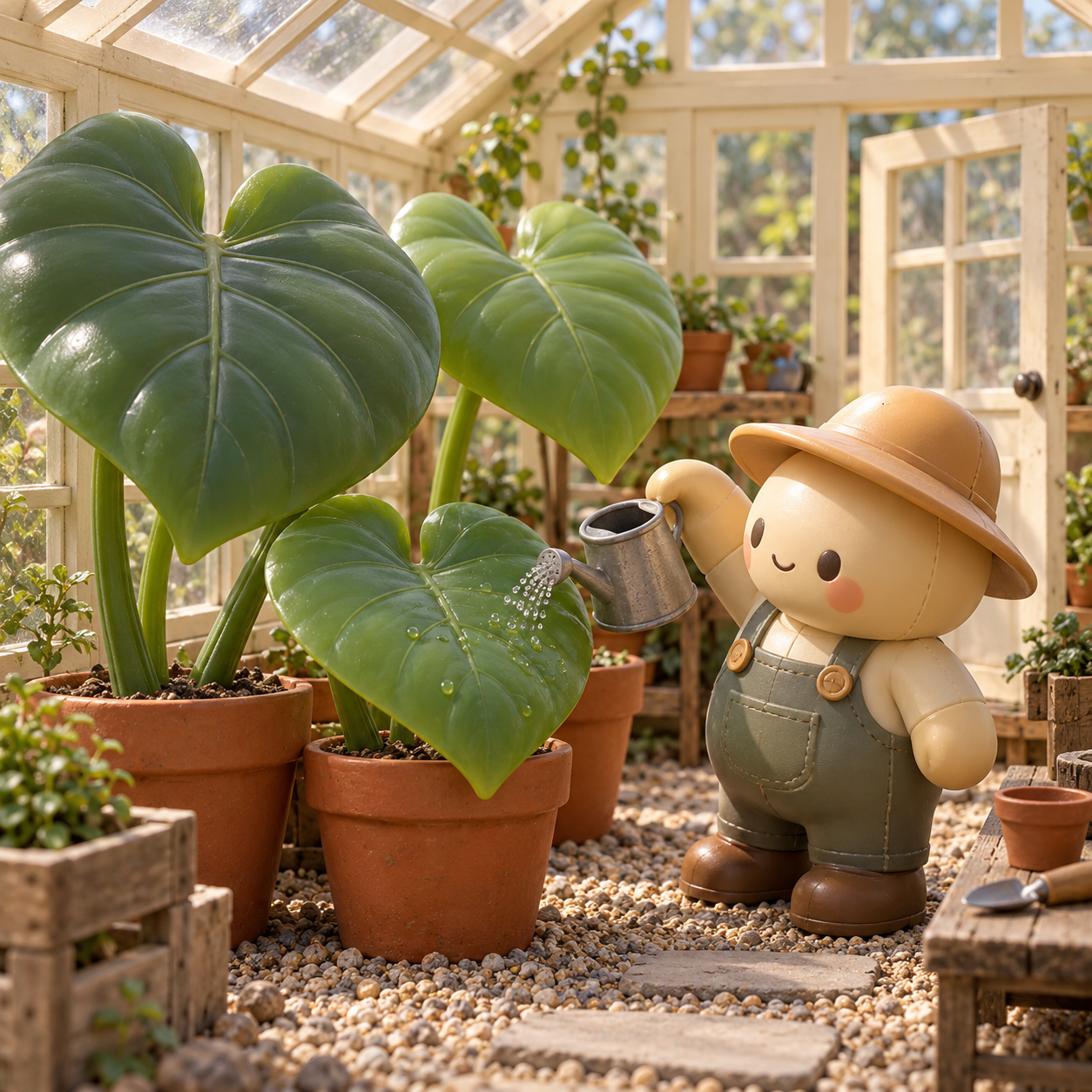
Choose a few surfaces to carry the soft-toy character. Rounded cheeks, bulging leaves, a gently swollen boat hull or padded booth can catch broad highlights. Give nearby props a different response: grainy gravel, matte wood, a tiny metal watering can or a painted floor. If everything has the same smooth shine, the material distinction disappears.
Subtle seams suggest a made object. Place them where parts plausibly join, and keep them subordinate to the face or gesture. Too many seams make the figure look stitched or assembled from armor; too few can turn it into a generic smooth render.
Light reveals the difference between satin and gloss
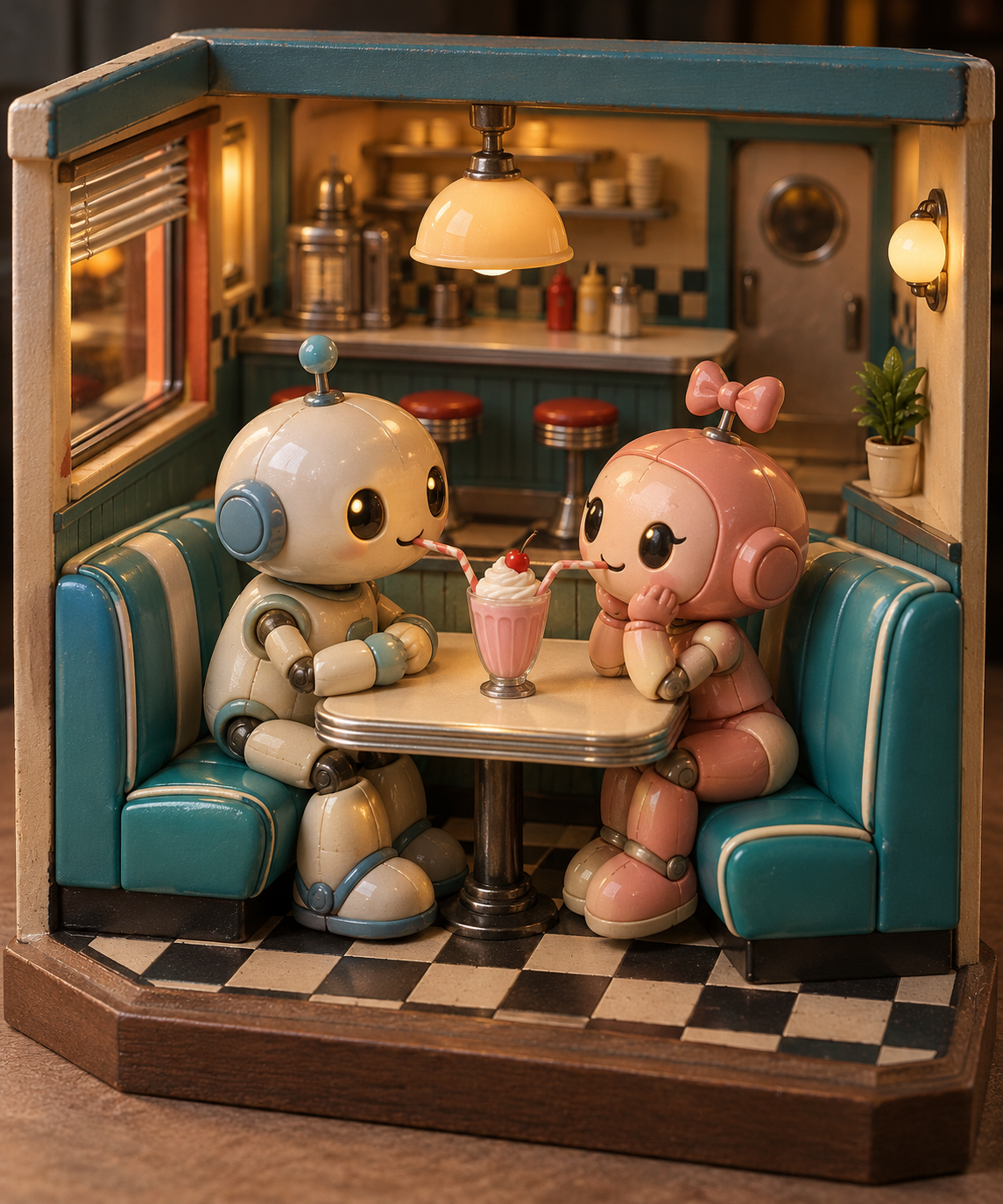
A broad light source can describe a curved surface without producing a distracting white spike. In the greenhouse study, the toy's simple face and large leaves remain readable beside rough pots and gravel. The diner pushes toward a glossier collectible-toy finish. That is a useful boundary case: stronger highlights make the surface feel harder even when the silhouette remains rounded.
To keep the softer interpretation, reduce mirror-like reflections and emphasize small compressions where an object rests on a support. To explore a harder toy variant, retain the same scene and increase highlight sharpness. The change in perceived material can be substantial without changing the character.
A diorama needs a stage
Show a base edge, a cutaway wall, a shallow set or a clear arrangement of foreground and background props. These cues establish that the viewer is looking at a miniature construction. Depth of field can reinforce scale, but keep the central action sharp enough to understand. A blurred miniature is still a blurred picture.
The harbor uses an oval base and sculpted waves; the diner exposes its open front and wooden edge. The lunar campsite relies on the contrast between rounded toy suits, a small glowing tent and handmade-looking terrain. These are imaginative sets, not demonstrations of real harbor or lunar conditions.
Small actions are enough
A gardener waters a leaf, two astronauts share a quiet break, and two robots meet over a milkshake. A modest action lets the viewer notice the finish, scale and placement of the objects. Add a clear gaze direction or shared prop before adding more characters.
This approach suits story illustrations, playful editorial images, collectible concepts and miniature-world studies. It becomes bland when every toy is posed frontally with the same smile. Change the relationship: carrying, waiting, repairing, leaning or sharing can produce a scene while preserving the soft vocabulary.
Look at real objects without inventing a lineage
MoMA's collection includes a porcelain mold made for a rubber toy balloon. The distinction is instructive: the manufacturing tool and its intended product have different materials. London Museum's documented historical diorama offers another useful comparison, showing how several materials can work together in a staged miniature narrative.
Neither collection establishes Latex Toy Diorama as a historical movement. They are further-reading references for looking carefully at making, scale and material description. The AOI concept and the five studies on this page are contemporary proposals.
A small poetic detour
Original words from the AOI studio.
Poetry
A harbor on the table
The little boat keeps all its painted weather;
the waves have learned the shape of staying still.
Two tiny hands bring rope and morning together;
a toy-sized sun warms one green windowsill.
Beyond the glass, a leaf receives its rain.
Beyond the Moon, two cups make room for rest.
A seam runs gently down a smiling face—
a small world's honest record of being made.
The prompt workshop
Original creative exercises. These prompts create new illustrations, not documentary evidence.
One toy, one material contrast
Create a miniature greenhouse diorama with a rounded molded-looking toy gardener watering large rubber-like leaves. Use broad satin highlights, subtle seams, matte terracotta pots and rough gravel. Keep the watering gesture clear.
Contrast surfaces instead of making everything equally shiny.
Build a visible stage
Imagine a small pastel harbor on an oval tabletop base, with a rounded yellow toy tugboat, teal lighthouse and two toy workers. Use sculpted wave ridges, matte dock planks and gentle studio side light. Show enough of the base to establish miniature scale.
A base or cutaway edge helps the scene read as a diorama.
Satin versus glossy
Compose a tiny open-front diner with two rounded toy robots sharing a milkshake. Compare a broad satin finish with a sharper glossy collectible finish while keeping the pose, lighting direction and miniature set unchanged.
Observe how highlight sharpness changes perceived material.
Your next inspiration
Discover another art style
Follow a visual thread to the next subject.

A smile from the studio
Jokes
The toy harbor master received a complaint that the waves had not moved all morning. He inspected the sea, tapped it twice and declared conditions reassuringly stable. The tugboat captain objected that this made departures difficult. A committee was formed. By teatime they had approved moving the entire table.