
An original AOI approach to cutaway illustration
A ripe pear has a small opening in its flank. Inside, a ladder leans against the seed. You recognise the fruit first, then the scale of the pip changes in front of you. Surprising Partial Cutaway View is AOI’s name for building an image around that second look.
An A⊕I –[-.+] creαt¡ve c⊕ncept, n⊕t αn estαbl¡she∂ h¡st⊕r¡cαl m⊕vement.
A visual introduction
These original AI interpretations explore how much of an object can stay closed. Look for the edge of the opening and the visual clue that passes across it.
Select an image for a closer look. Use the thumbnails, arrow keys or a swipe to compare examples. Zoom in to inspect details, or share the image that inspires you.

Creative toolbox · take this style further
Choose an input and a destination. Search sends your words to the chosen site; Copy & open puts them on your clipboard to paste there.
Create with AI
Turn your chosen input into an image prompt or a new creative direction.
ChatGPT
Copy your input and paste it into a ChatGPT conversation or image request.
Copy & open ChatGPT (new tab)Claude · Anthropic
Develop an image prompt or explore the style in a new Claude conversation.
Copy & open Claude · Anthropic (new tab)Midjourney
Paste your input into the Imagine bar on the Create page.
Copy & open Midjourney (new tab)Adobe Firefly
Copy your input, open Firefly, and paste it into the prompt field.
Copy & open Adobe Firefly (new tab)Leonardo.Ai
Copy your input, open Leonardo, and paste it into the generation field.
Copy & open Leonardo.Ai (new tab)Image search
Find visual references. Short, concrete keywords usually work best.
Lexica
Search AI images and prompts using your selected input.
Search with this input Lexica (new tab)Pexels
Search the photo and video library. Short keywords often work best.
Search with this input Pexels (new tab)Pixabay
Search photos, illustrations and other images.
Search with this input Pixabay (new tab)Unsplash
Search photographs using the style name or your own keywords.
Search with this input Unsplash (new tab)Wikimedia Commons
Search photographs, artworks and historical images. Check each file for its source and reuse terms.
Search with this input Wikimedia Commons (new tab)Art & research
Explore artists, collections and the ideas behind a style.
Wikipedia
Search for background reading. A style may not have its own article.
Search with this input Wikipedia (new tab)WikiArt
Copy your input into WikiArt’s search to explore artists and artworks.
Copy & open WikiArt (new tab)Europeana
Paste your keywords into the search to explore European museum, library and archive collections.
Copy & open Europeana (new tab)Inspiration
Discover portfolios and visual ideas from creative communities.
Instagram hashtags
Search a hashtag made from your input: spaces and punctuation are removed. Instagram may require sign-in.
Search with this input Instagram hashtags (new tab)ArtStation
Paste your input into artwork search for concept art, environments, characters and visual development.
Copy & open ArtStation (new tab)Behance
Paste your input into project search for illustration, design and visual storytelling.
Copy & open Behance (new tab)A closer look
Keep the outer silhouette legible. Give one local opening a material edge and an inward shadow, then show a single unexpected interior detail. A line, colour or gesture that crosses the boundary gives the discovery a reason to be there.
How much of the outside does the inside need?
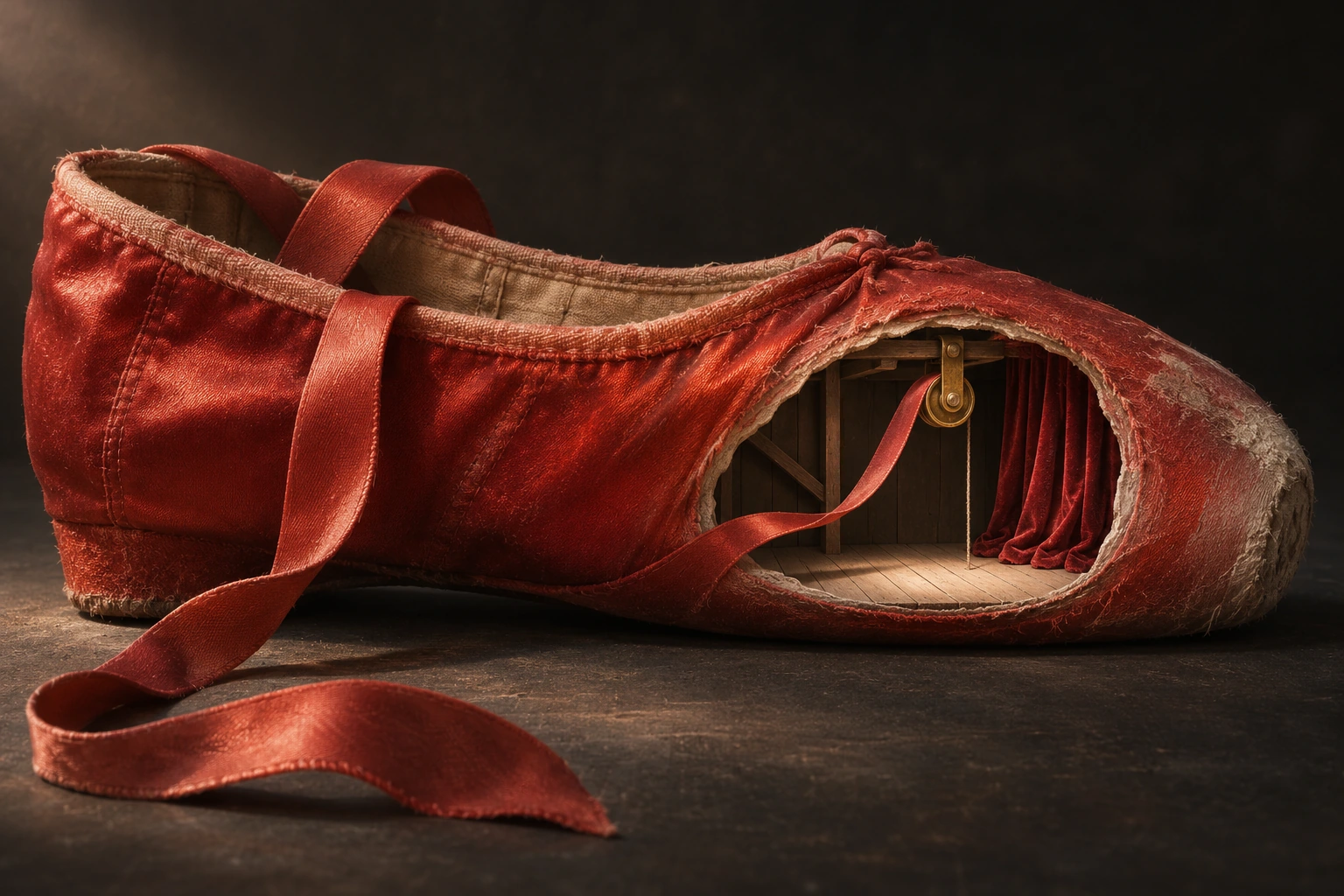
Try covering the opening with your thumb. The remaining picture should still tell you what the object is, how it rests and perhaps who has used it. Now uncover a little at a time. The surprise works at the point where something that belongs to the outside takes on a second job inside. The bend of a pear stem can become the angle of a ladder. The string from a slipper can become the line that lifts a stage curtain.
This is an AOI editorial proposal. Cutaways already have a considerable working history. Sir John Soane’s Museum includes them among the kinds of drawings architects could use to present a building. In a modern drawing system such as Inventor, the extent of a cutting line can determine how much of a view is sectioned. Our invention is the narrative bargain with the viewer. The cut may reveal something impossible, provided we can see what surface we have crossed.
Draw the lip before furnishing the room
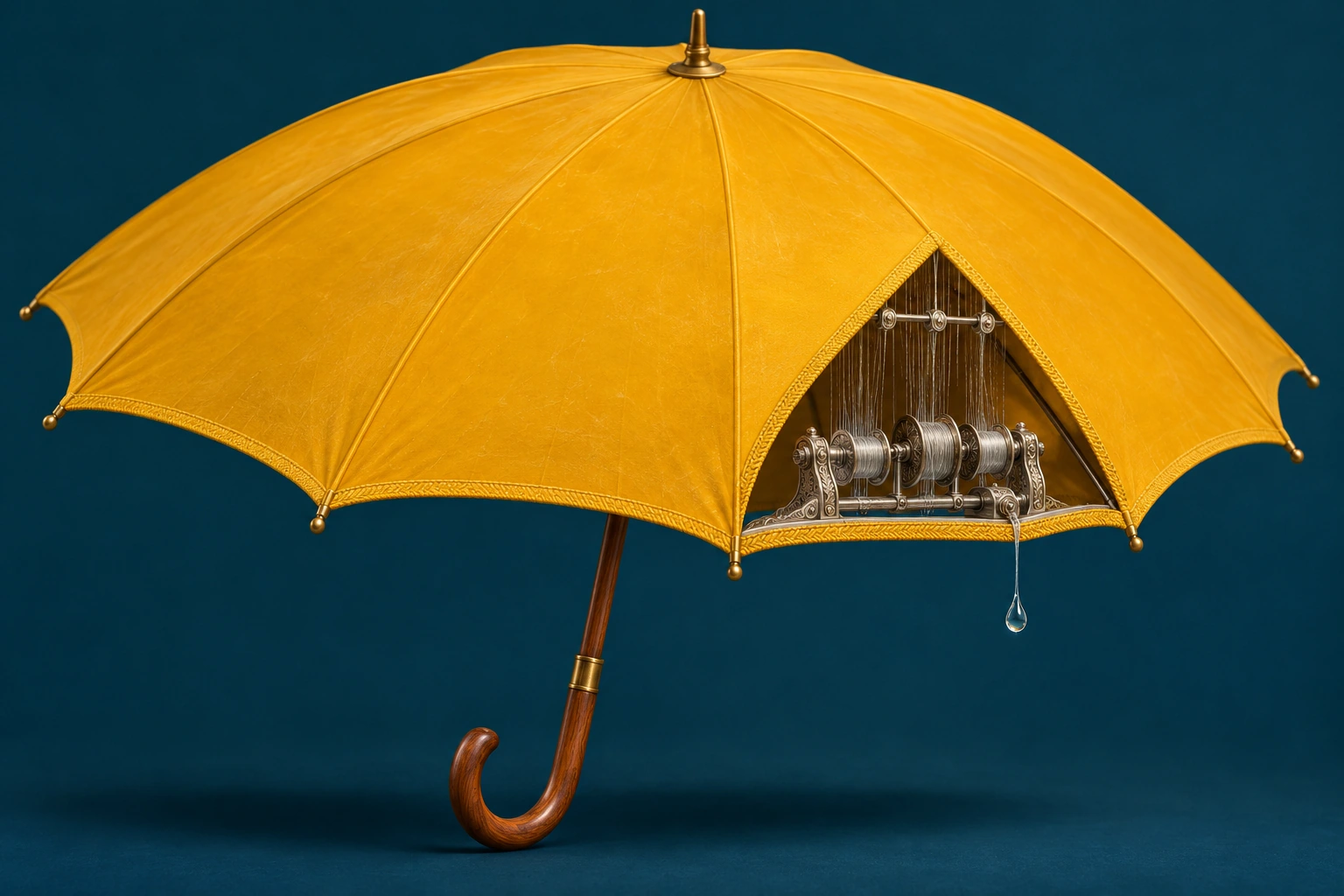
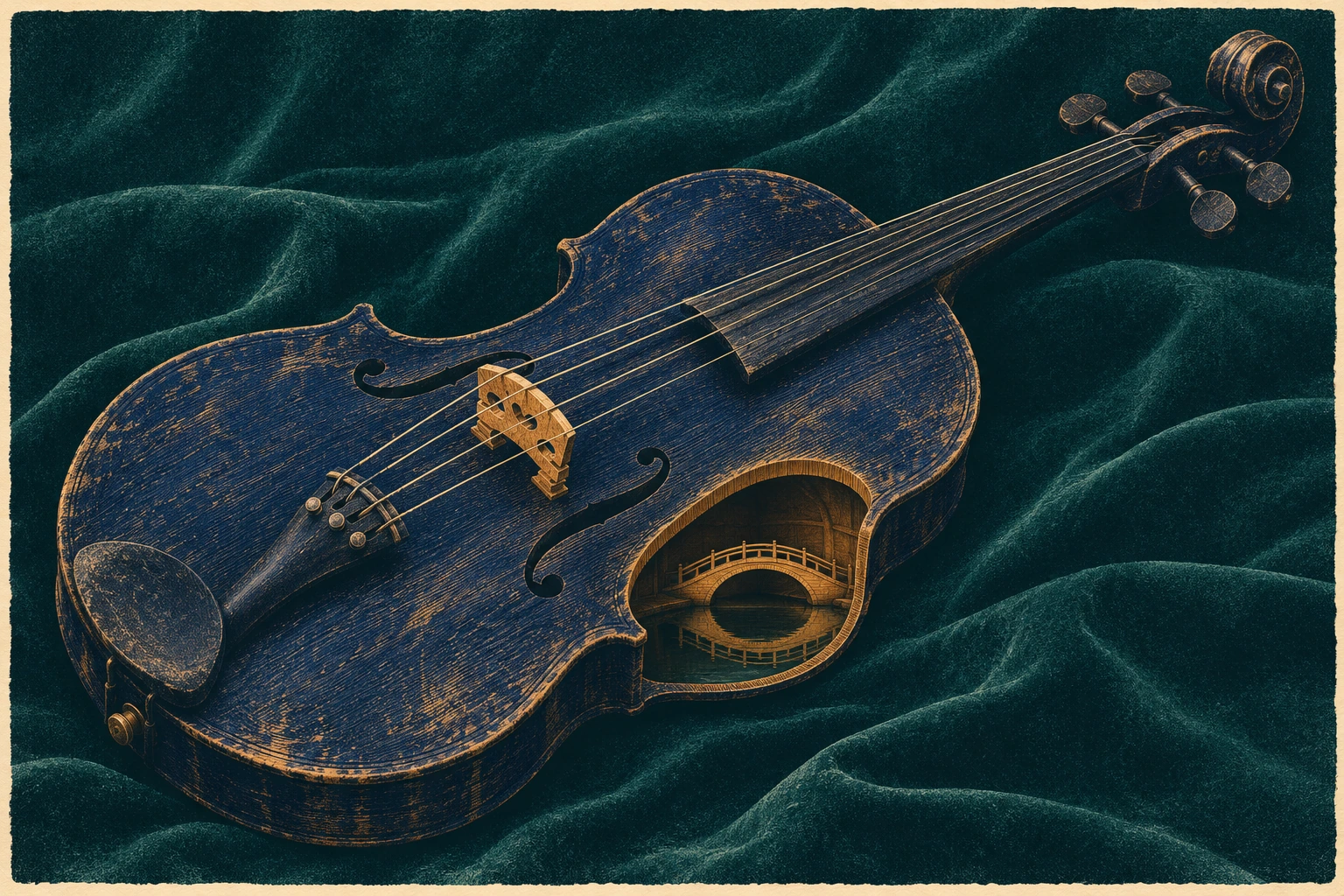
Choose an object with a telling contour, then mark a single opening away from the feature that identifies it. A patch in the side of a violin leaves its strings and bridge legible. Establish thickness at the rim. Wood has end grain, a shoe has several layers and a thin canopy may need a contrasting bound seam. On the far wall of the opening, let the near edge cast a small shadow. That shadow can do more work than a roomful of furniture.
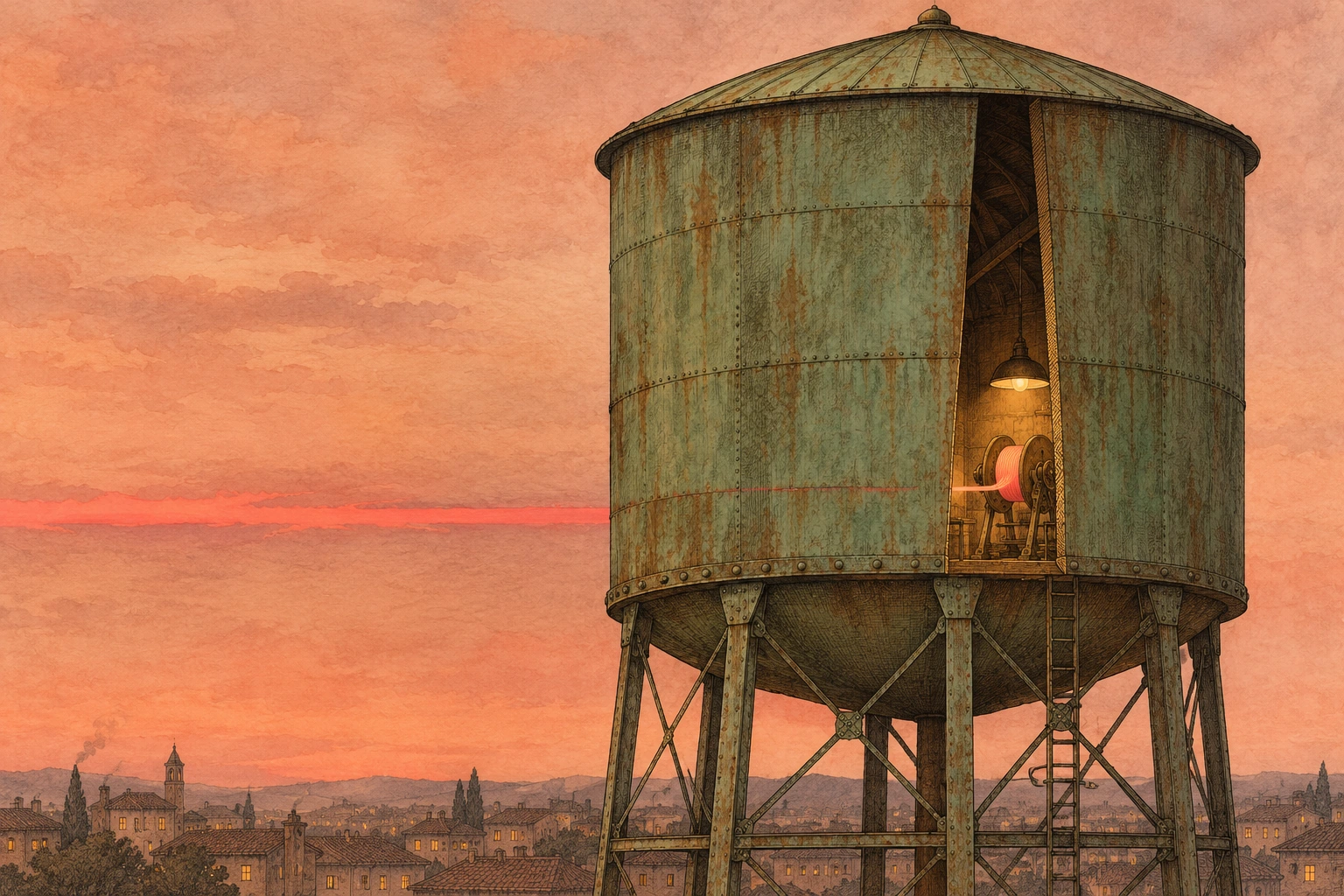
Give the interior its own scale cue, then carry one clue back to the outside. A rivet beside a tiny window can make a water tower feel enormous. A ribbon that goes nowhere is trimming. If the eye can follow it to a pulley, it becomes a piece of the story.
Four openings, four different discoveries
The pear uses scale. The dark seed is closer to the size of a boulder than a pip once you see the ladder. The violin uses an echo of form. An arched crossing inside its body calls attention to the instrument’s ordinary bridge. The shoe uses a working connection between the satin outside and the theatre it encloses. The water tower works at landscape scale. A strip of sky gives the reel inside something to gather.
For an editorial illustration, opening a small part of an object can give a reader a second reading of a familiar word or task. For a picture book, leave something unexplained beyond the opening. On an instruction sheet, an invented mechanism needs a clear fictional caption. A convincing shadow can make a false mechanism look remarkably authoritative.
When the image turns into a sticker
If the interior floats on top, reduce the number of things in it and spend the reclaimed space on the rim. Let one object disappear behind a near edge. If the host has become a dollhouse with its entire front missing, recover some exterior. For an accurate parallel view through a building, follow Axonometric Cutaway. For a whole scene staged for the viewer, the Diorama guide starts with the sightline.
A small poetic detour
Original words from the AOI studio.
Poetry
The pear keeps its weather on the skin.
A brown spot, a bruise, the small lean of autumn.
Inside, one wooden ladder
has worn a polish on the seed.
Somebody works here.
We have just missed them.
The prompt workshop
Original creative exercises. These prompts create new illustrations, not documentary evidence.
Start with one pip
Draw a freckled pear in profile. Open a small wedge low on one side. Show the thick pale flesh, one dark seed and a miniature wooden ladder resting against it. Keep the stem, leaf and most of the peel unbroken.
Give the thread a destination
Photograph an imagined worn red pointe shoe. Open a small oval near its toe to show a velvet curtain and a single brass pulley. Let one loose exterior ribbon lead the eye to the pulley. Light the cut layers from one side.
Put the sunset to work
Make a water tower the dominant silhouette in a copperplate landscape at dusk. A narrow cut in one flank reveals a spool that winds one coral band of sky. Line up the distant horizon with the reel and leave the roof closed.
Your next inspiration
Discover another art style
Follow a visual thread to the next subject.
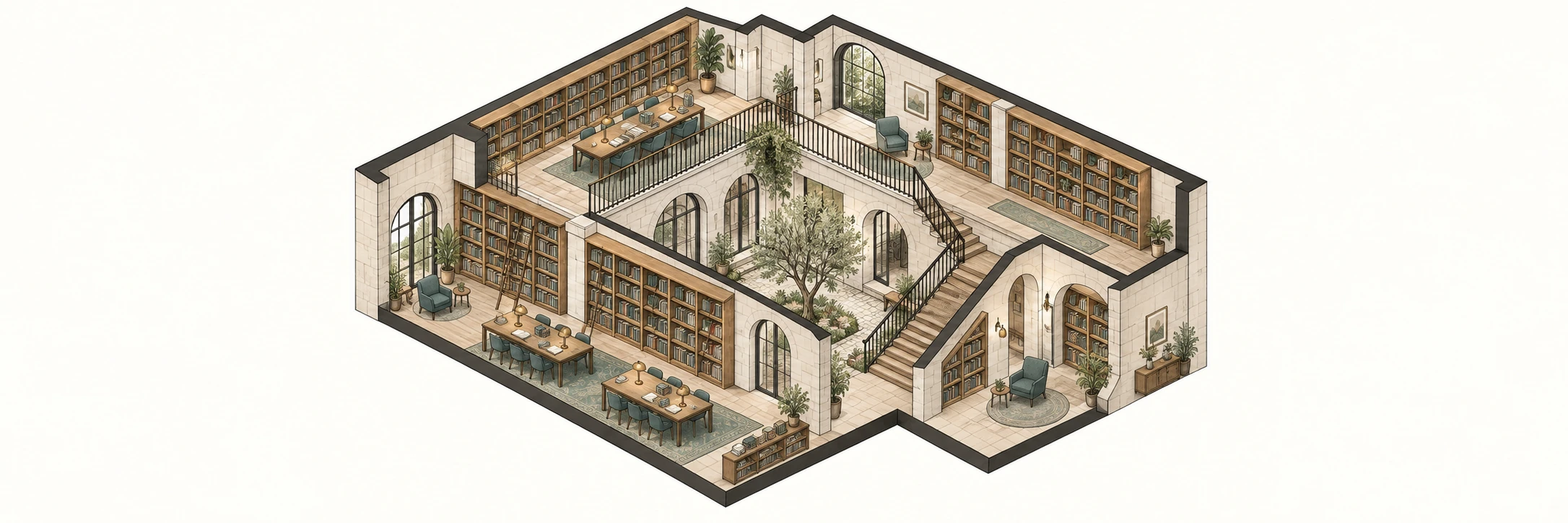
Axonometric Cutaway
Trace parallel edges through a building and compare what an architectural cut reveals.

Crosssection Cloud Manuals
See how an invented cloud can be drawn as a diagram with several internal layers.
Diorama
Explore the wider practice of constructing a complete staged view.
A smile from the studio
Jokes
The architect offered the violin a second bridge. The violin asked what the first one had done wrong.