
Established
Decalcomania is a transfer process in which wet pigment is pressed between surfaces and revealed as they separate. In its Surrealist use, branching marks and unpredictable textures become prompts for imagined landscapes, organisms and figures. This entry focuses on that artistic process and its visual possibilities, rather than decorative transfer decals.
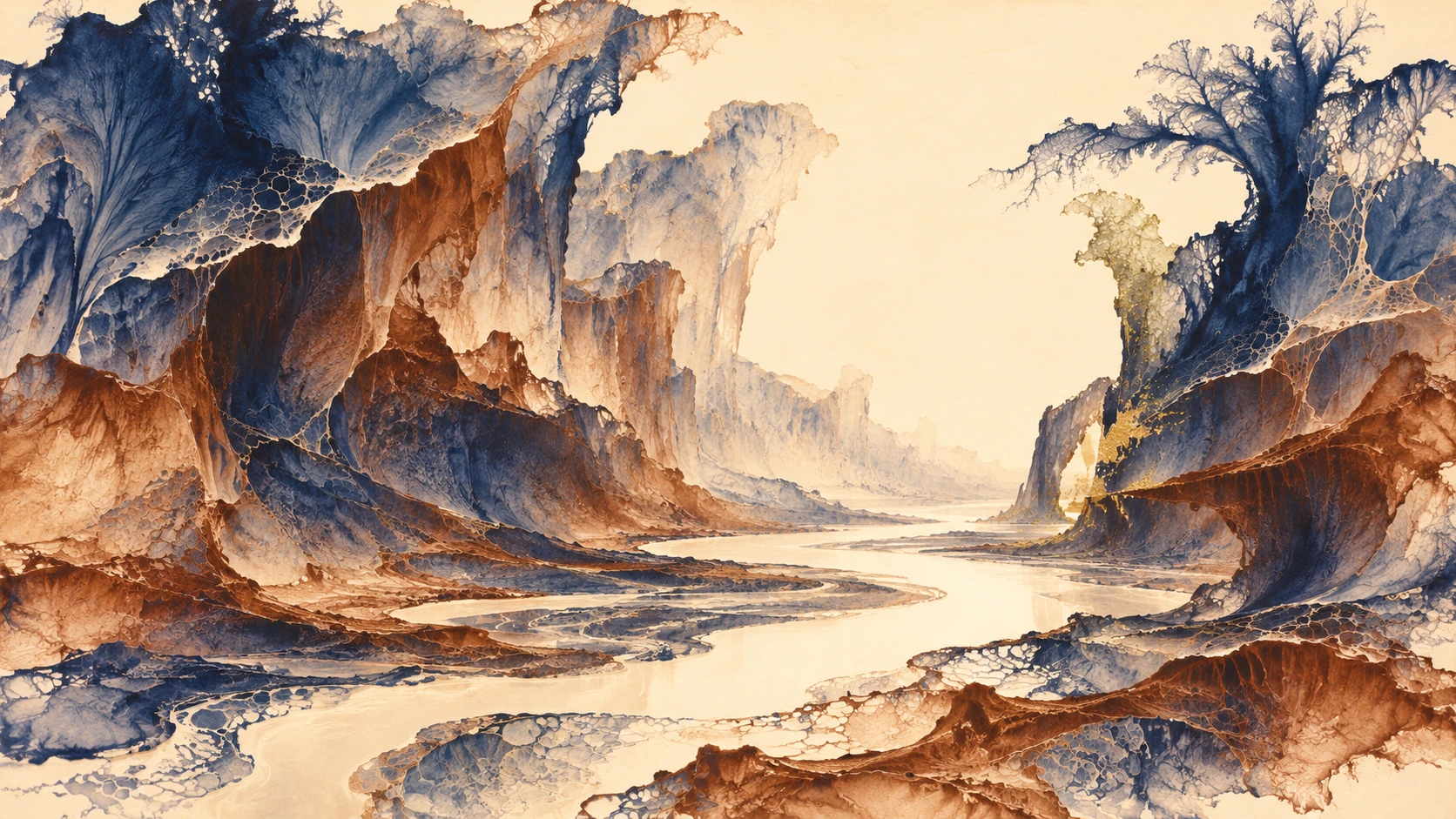
A visual introduction
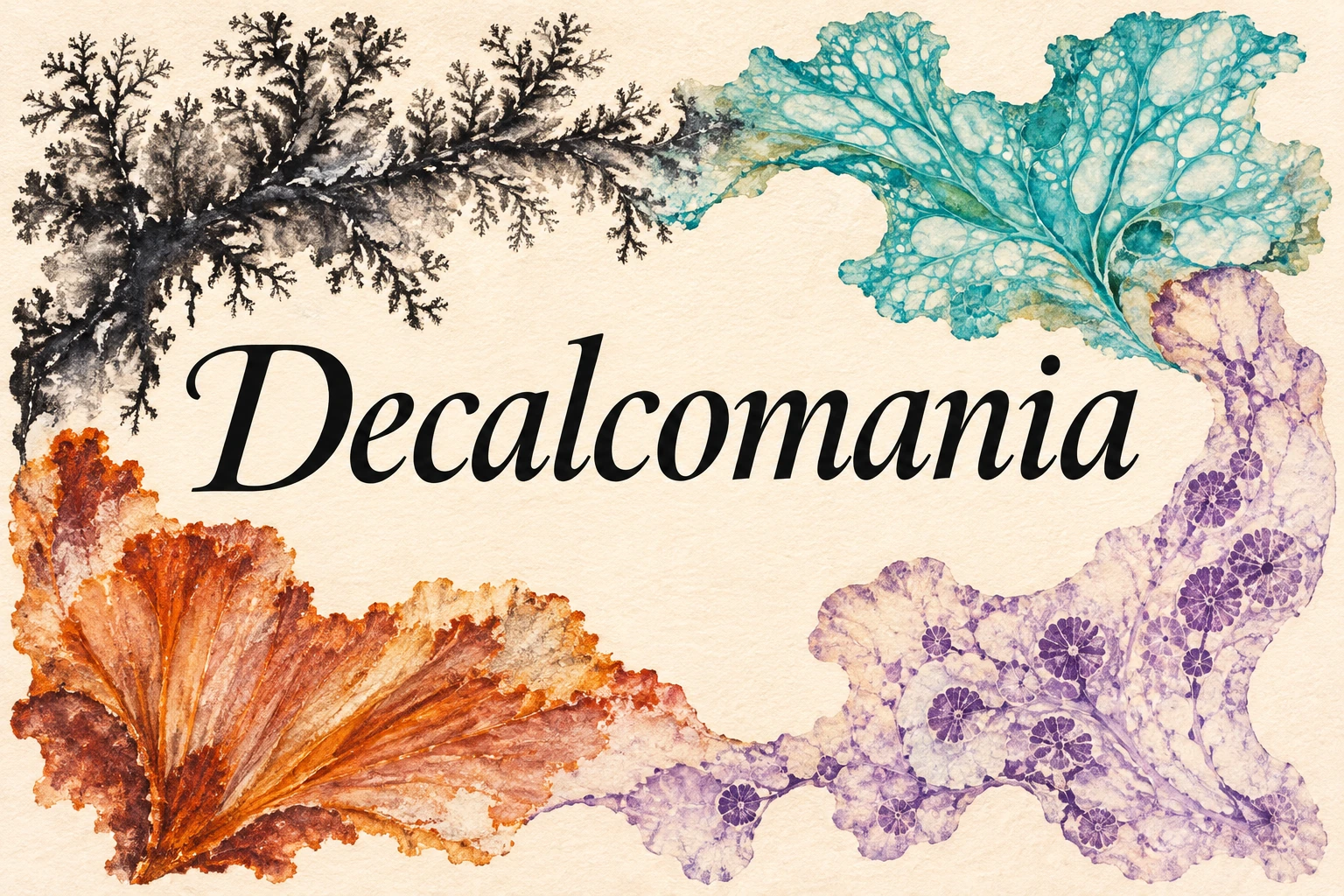
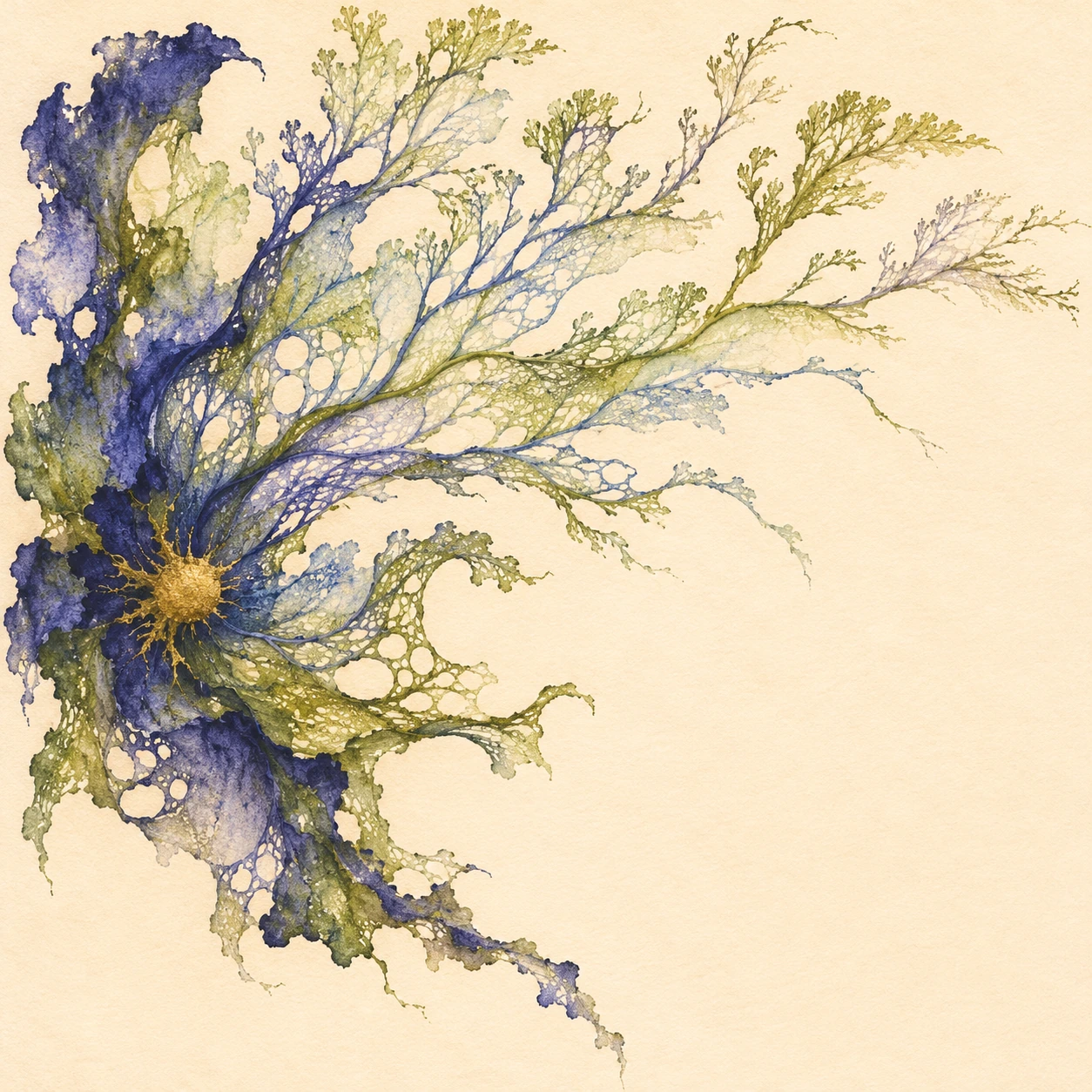
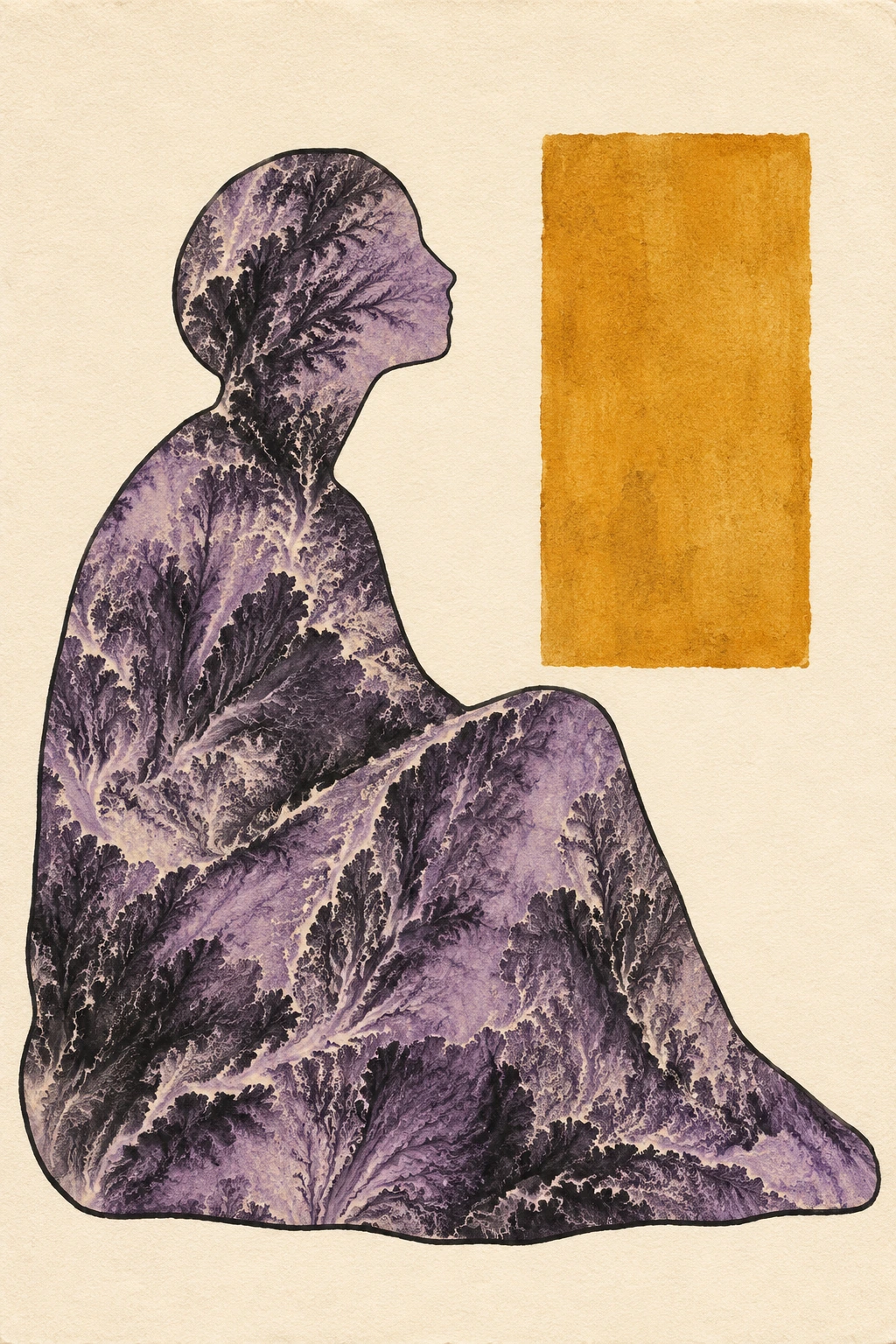
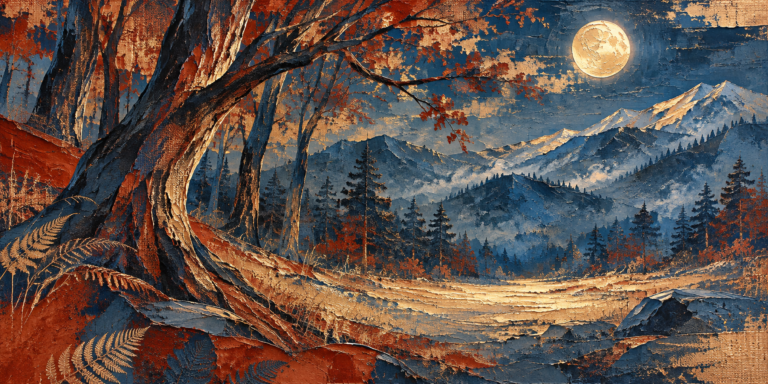
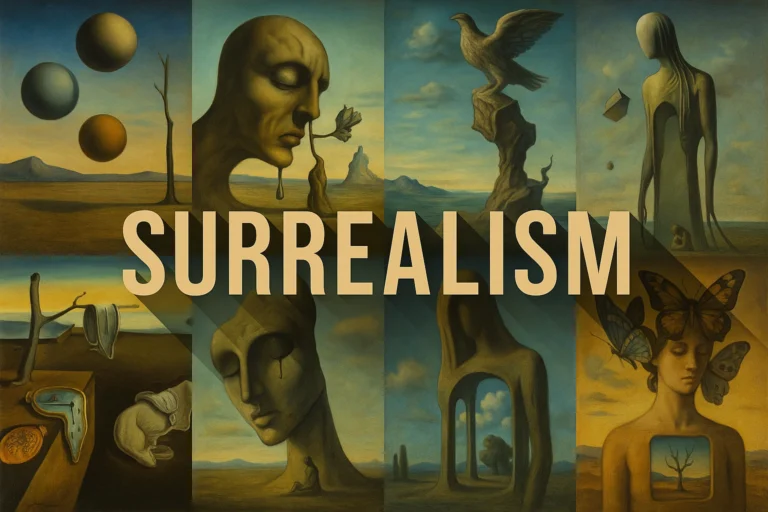
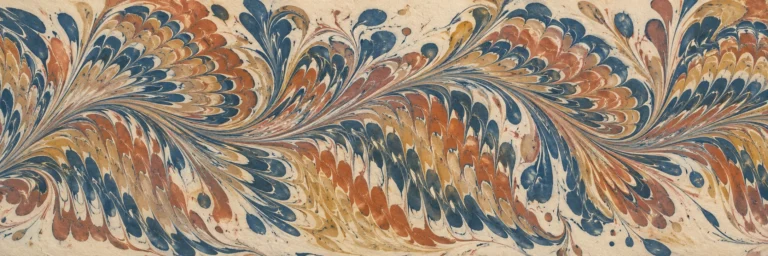
Five original AI-generated studies explore this subject through a banner, a titled collage and three standalone examples.
Select an image for a closer look. Use the thumbnails, arrow keys or a swipe to compare examples. Zoom in to inspect details, or share the image that inspires you.

Creative toolbox · take this style further
Choose an input and a destination. Search sends your words to the chosen site; Copy & open puts them on your clipboard to paste there.
Create with AI
Turn your chosen input into an image prompt or a new creative direction.
ChatGPT
Copy your input and paste it into a ChatGPT conversation or image request.
Copy & open ChatGPT (new tab)Claude · Anthropic
Develop an image prompt or explore the style in a new Claude conversation.
Copy & open Claude · Anthropic (new tab)Midjourney
Paste your input into the Imagine bar on the Create page.
Copy & open Midjourney (new tab)Adobe Firefly
Copy your input, open Firefly, and paste it into the prompt field.
Copy & open Adobe Firefly (new tab)Leonardo.Ai
Copy your input, open Leonardo, and paste it into the generation field.
Copy & open Leonardo.Ai (new tab)Image search
Find visual references. Short, concrete keywords usually work best.
Lexica
Search AI images and prompts using your selected input.
Search with this input Lexica (new tab)Pexels
Search the photo and video library. Short keywords often work best.
Search with this input Pexels (new tab)Pixabay
Search photos, illustrations and other images.
Search with this input Pixabay (new tab)Unsplash
Search photographs using the style name or your own keywords.
Search with this input Unsplash (new tab)Wikimedia Commons
Search photographs, artworks and historical images. Check each file for its source and reuse terms.
Search with this input Wikimedia Commons (new tab)Art & research
Explore artists, collections and the ideas behind a style.
Wikipedia
Search for background reading. A style may not have its own article.
Search with this input Wikipedia (new tab)WikiArt
Copy your input into WikiArt’s search to explore artists and artworks.
Copy & open WikiArt (new tab)Europeana
Paste your keywords into the search to explore European museum, library and archive collections.
Copy & open Europeana (new tab)Inspiration
Discover portfolios and visual ideas from creative communities.
Instagram hashtags
Search a hashtag made from your input: spaces and punctuation are removed. Instagram may require sign-in.
Search with this input Instagram hashtags (new tab)ArtStation
Paste your input into artwork search for concept art, environments, characters and visual development.
Copy & open ArtStation (new tab)Behance
Paste your input into project search for illustration, design and visual storytelling.
Copy & open Behance (new tab)A closer look
Veins, branching ridges, mottled islands and torn-looking pigment edges suggest coral, foliage, mineral growth or unfamiliar terrain. Dense areas meet delicate channels and open paper. The image can remain abstract or acquire a few deliberate additions that turn an accidental configuration into a recognizable subject.
A mark discovered through separation
Museo Picasso Málaga describes Óscar Domínguez's Surrealist decalcomania as a process without a printing press: paint is applied to one surface and pressed against another to produce unpredictable forms. The physical action creates a field of possibilities that the artist can inspect, select and develop.
The useful distinction is between making a texture and deciding what to do with it. Chance may supply the branching pattern, but placement, color, scale and later additions still shape the finished work. An accidental mark does not remove the need for composition.
Domínguez and the Surrealist context
TEA Tenerife's collection record for Mujer sentada o Decalcomanía con figura (1944) identifies a work combining linocut, decalcomania and black lithographic ink on paper. Its discussion connects Domínguez's experiments to Surrealist automatism and describes later work with Marcel Jean using stencils to combine chance with intention.
These sources concern a particular artistic development. They should not be stretched into a claim that Domínguez invented every form of image transfer. The broad word has other decorative and technical uses; the focus here is the Surrealist practice of discovering suggestive forms in transferred pigment.
Read the texture before naming the subject
Look first for a dominant direction, a dense mass and a useful opening. A branching area may suggest a forest, but forcing every branch to become a tree can flatten the ambiguity that made the image interesting. Let some marks remain unresolved so that the viewer can move between material and imagined world.
A practical exercise is to rotate a texture and compare what each orientation offers. Choose the view with the strongest relationship between mass and empty space. Then add only enough structure to guide the reading: a horizon, a small silhouette or a controlled edge may do more than extensive repainting.
Build a hierarchy of density
Decalcomania-like imagery can become uniformly busy. Reserve a quieter area so that the most intricate texture has somewhere to register. A dark branching ridge against pale open paper reads differently from the same ridge inside an equally dense field.
Color can reinforce that hierarchy. Limit the palette to a few related tones with one distinct accent, or use black and warm white to make the channels and pigment islands carry the work. The technique's identity depends more on the branching transfer behavior than on a mandatory set of colors.
Landscape, organism and figure
At landscape scale, the same fine texture can become cliffs, distant vegetation or a strange seabed. Establish scale through one restrained cue rather than a crowd of descriptive objects. A narrow light passage through a dark mass can suggest distance without conventional perspective lines.
For an organism or figure study, use a clear boundary to hold the uncertain interior. A stencilled silhouette containing branching marks creates a tension between deliberate outline and unpredictable detail. The result should retain that relationship rather than becoming ordinary smooth shading inside a decorative shape.
A generated appearance is a different process
The gallery images are original AI interpretations of decalcomania-like visual behavior. No paint was physically pressed between sheets to make these particular files. They can help explore composition and subject variation, but they do not demonstrate the material results of a tested transfer procedure.
When prompting, describe branching pigment, uneven density, open paper and selective interpretation. Avoid asking only for a surreal landscape: that can produce polished fantasy painting with none of the characteristic surface logic. Inspect the finished image for whether its forms seem to emerge from the texture or merely sit on top of it.
Keep the accident visible
The strongest study does not need to explain every mark. Leave some edges ragged, some channels incomplete and some spaces available for the imagination. That uncertainty is part of the expressive value, not necessarily a defect to be cleaned away.
Decalcomania offers a useful direction for abstract art, imagined landscapes, editorial imagery and mixed-media studies. It is less suited to tasks demanding exact repeated geometry or literal documentary detail. Treat it as a conversation between an unpredictable surface and a selective eye, with each contributing something the other could not supply alone.
A small poetic detour
Original words from the AOI studio.
Poetry
Two surfaces agree to part;
A little forest keeps the seam.
The ink has drawn a branching heart
Without deciding what to dream.
I turn the page; the cliffs turn too.
One quiet mark lets daylight through.
The prompt workshop
Original creative exercises. These prompts create new illustrations, not documentary evidence.
A landscape in the transfer
Create an original decalcomania-inspired landscape: branching black and umber pigment textures suggest cliffs around one pale winding river. Uneven density, delicate channels and open warm-white paper, minimal deliberate additions, no text. AI interpretation of transfer-like marks, not a photograph of a physical print.
An organism almost recognized
Create an abstract organism suggested by decalcomania-like branching pigment in indigo, moss green and muted gold. One clear dark mass opens into delicate vein-like channels, with generous pale negative space. Keep the form ambiguous, no literal anatomy diagram, no text or signature.
Chance within a silhouette
Create a new mixed-media-inspired image with one simple seated-figure silhouette filled by irregular branching black pigment and soft rust-colored islands. Clean outer boundary contrasts with uncertain internal texture, warm paper, minimal composition, no text, not a reproduction of a historical artwork.
Your next inspiration
Discover another art style
Follow a visual thread to the next subject.
A smile from the studio
Jokes
The artist pressed two sheets together and discovered a magnificent lost continent. The critic called it a profound meditation on geological time. The artist agreed, then carefully avoided mentioning that the continent had begun as an attempt to use up the last puddle of paint.