
Paint-scraping technique associated with Surrealism
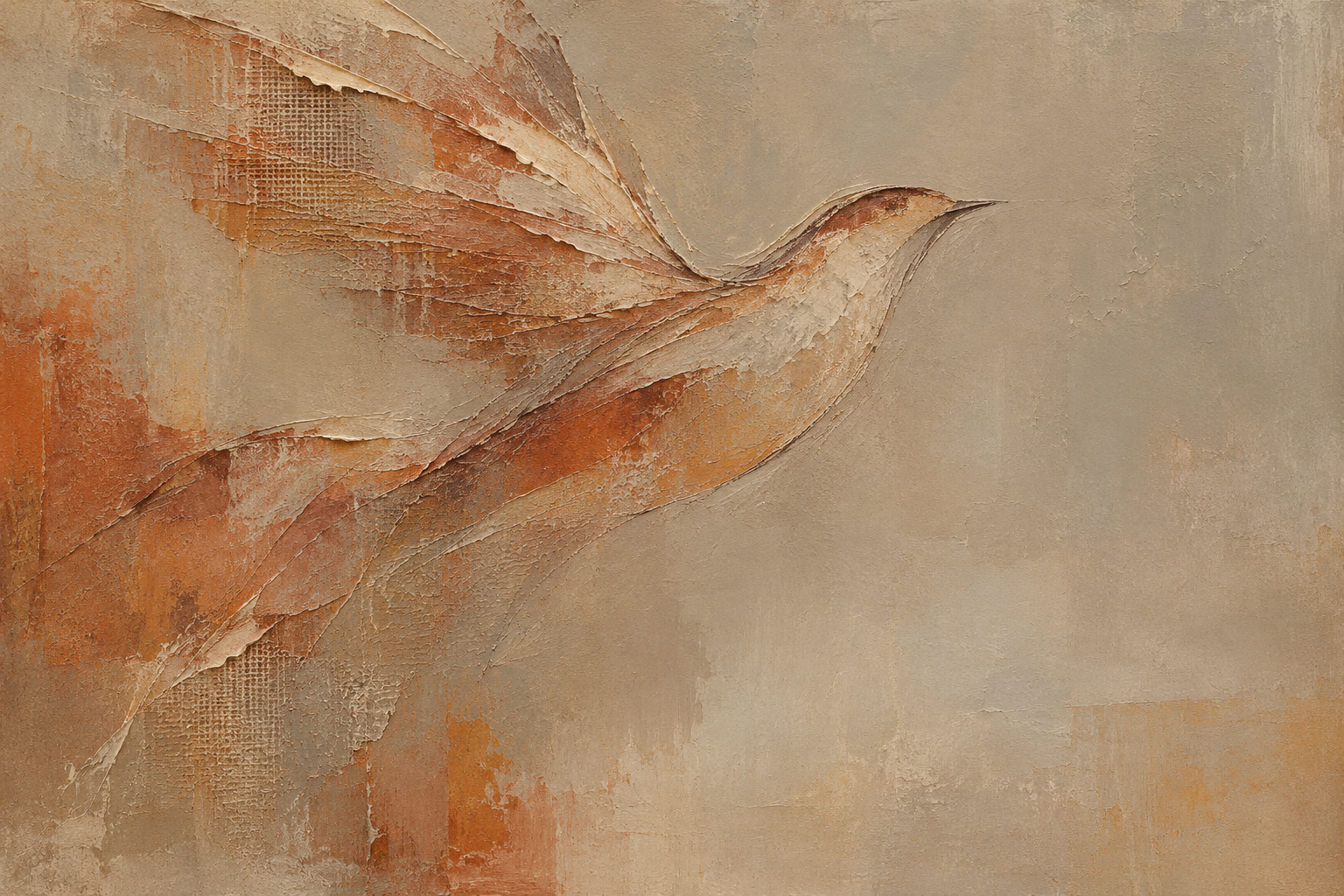
Grattage develops images from scraped paint and underlying textures, allowing material accidents to become deliberate forms.
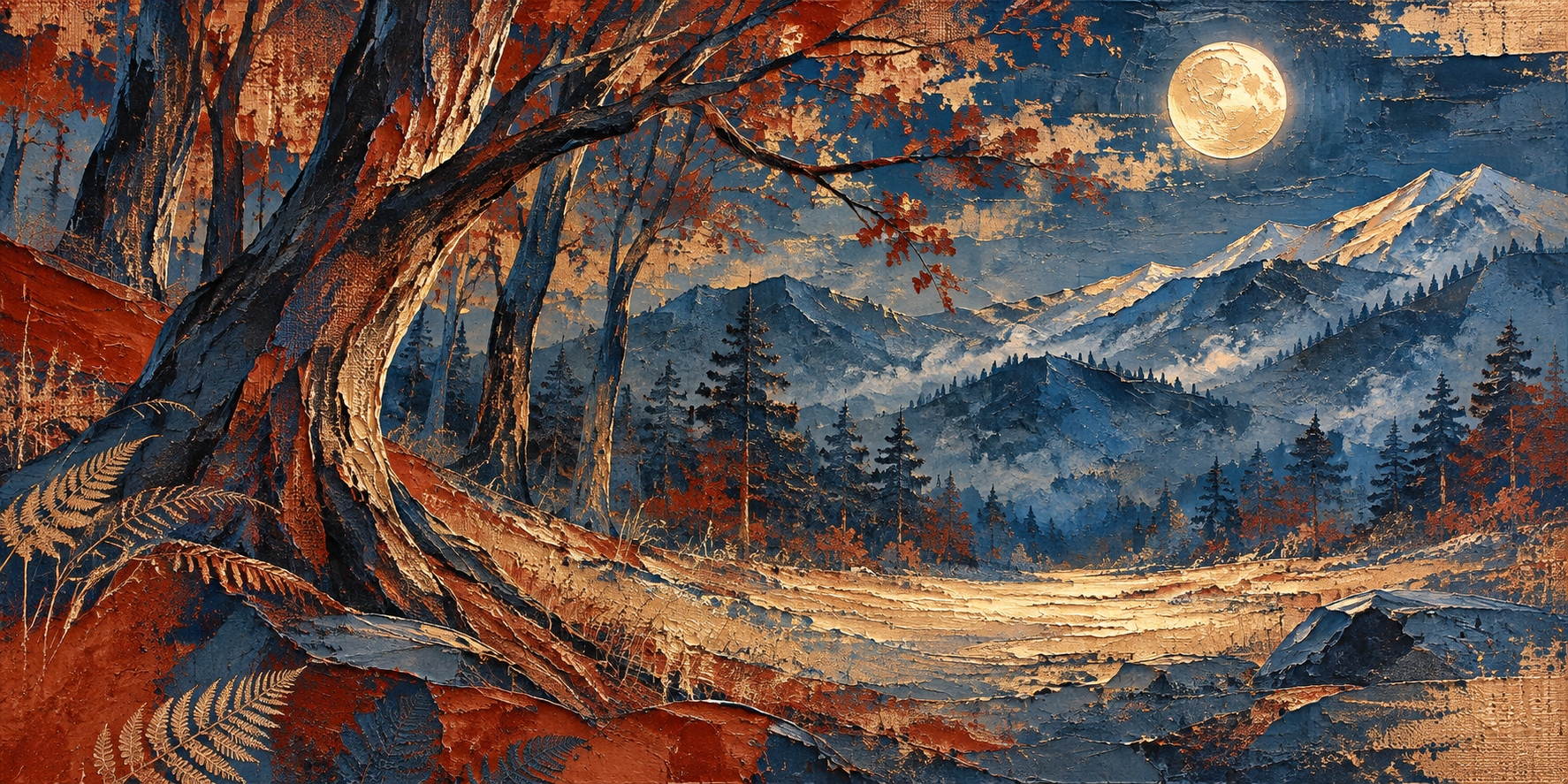
A visual introduction
Select an image for a closer look. Use the thumbnails, arrow keys or a swipe to compare examples. Zoom in to inspect details, or share the image that inspires you.
Creative toolbox · take this style further
Choose an input and a destination. Search sends your words to the chosen site; Copy & open puts them on your clipboard to paste there.
Create with AI
Turn your chosen input into an image prompt or a new creative direction.
ChatGPT
Copy your input and paste it into a ChatGPT conversation or image request.
Copy & open ChatGPT (new tab)Claude · Anthropic
Develop an image prompt or explore the style in a new Claude conversation.
Copy & open Claude · Anthropic (new tab)Midjourney
Paste your input into the Imagine bar on the Create page.
Copy & open Midjourney (new tab)Adobe Firefly
Copy your input, open Firefly, and paste it into the prompt field.
Copy & open Adobe Firefly (new tab)Leonardo.Ai
Copy your input, open Leonardo, and paste it into the generation field.
Copy & open Leonardo.Ai (new tab)Image search
Find visual references. Short, concrete keywords usually work best.
Lexica
Search AI images and prompts using your selected input.
Search with this input Lexica (new tab)Pexels
Search the photo and video library. Short keywords often work best.
Search with this input Pexels (new tab)Pixabay
Search photos, illustrations and other images.
Search with this input Pixabay (new tab)Unsplash
Search photographs using the style name or your own keywords.
Search with this input Unsplash (new tab)Wikimedia Commons
Search photographs, artworks and historical images. Check each file for its source and reuse terms.
Search with this input Wikimedia Commons (new tab)Art & research
Explore artists, collections and the ideas behind a style.
Wikipedia
Search for background reading. A style may not have its own article.
Search with this input Wikipedia (new tab)WikiArt
Copy your input into WikiArt’s search to explore artists and artworks.
Copy & open WikiArt (new tab)Europeana
Paste your keywords into the search to explore European museum, library and archive collections.
Copy & open Europeana (new tab)Inspiration
Discover portfolios and visual ideas from creative communities.
Instagram hashtags
Search a hashtag made from your input: spaces and punctuation are removed. Instagram may require sign-in.
Search with this input Instagram hashtags (new tab)ArtStation
Paste your input into artwork search for concept art, environments, characters and visual development.
Copy & open ArtStation (new tab)Behance
Paste your input into project search for illustration, design and visual storytelling.
Copy & open Behance (new tab)A closer look
Broken ridges, scraped color layers, pressure-sensitive impressions, rough woven or organic patterns, selective contours that turn accidental marks into a coherent image.
A texture becomes an image
Grattage is a painting technique strongly associated with Max Ernst. The Max Ernst Museum Brühl explains the method as applying layers of color to canvas, placing it over coarse material or other objects, and scraping the painted surface so that the underlying structure produces a pattern.
The distinction matters. Frottage records texture through rubbing on paper; grattage works through scraping a painted surface. Neither term simply means adding a distressed filter. A convincing interpretation suggests contact, resistance and a surface whose marks respond to an underlying structure.
From accident to composition
Begin with a dominant family of marks: vertical ribs, branching grooves or irregular cellular shapes. Let a few of them suggest trunks, cliffs or an unfamiliar creature. The painter's decision is what to clarify and what to leave unresolved. A small contour or color change can turn an accidental patch into a focal form.
Use smooth passages as counterweights. If every square centimeter contains dense scraping, the eye has nowhere to rest and the material becomes an evenly distributed effect. A pale sky above a dark textured mass, or one quiet oval among angular ridges, makes the abrasion more legible.
Layer, pressure and color
Imagine the paint as layered matter rather than a photograph with scratches placed on top. A scrape may expose a contrasting undercolor, interrupt a ridge or leave residue at its edge. Those variations give the mark a direction and make it feel produced by an action.
A narrow palette can keep the texture from turning into visual noise. Test charcoal over ochre with a small blue interval, or dark green broken by pale mineral-like passages. These are compositional proposals, not a mandatory historical palette. The useful question is whether revealed color contributes to the form.
A digital interpretation with material logic
Grattage can inform imaginary forests, geological landscapes, abstract fields and creatures discovered in a rough surface. For AI imagery, describe the pressure relationships and the balance of rough and calm areas. Ask for an original interpretation, not a copy of a specific Ernst painting.
A generated image cannot certify that paint was physically scraped. Its success lies in the coherence of its marks and composition. Avoid uniform digital grunge, decorative scratches across unrelated objects and immaculate photographic details that ignore the surrounding material. The surprise should arise from the texture itself.
Positive editorial perspective
AOI editorial perspective (AI-authored). Grattage can make discovery visible. The strongest images retain the resistance of the surface while using a few decisive interventions to reveal forms that feel found rather than mechanically drawn.
Negative editorial perspective
AOI editorial perspective (AI-authored). Uniform distress soon becomes a texture preset. Reduce the number of mark families, preserve quiet passages and let revealed color serve the composition instead of covering every object with scratches.
Neutral editorial perspective
AOI editorial perspective (AI-authored). Grattage is a material technique that can inform digital interpretations. Its effects depend on layering, contact and selective development; a rough-looking image alone does not demonstrate the physical process.
A small poetic detour
Original words from the AOI studio.
Poetry
Beneath the green, an ochre sleeps;
The scraper wakes it where it sweeps.
A woven ridge becomes a tree,
A little accident set free.
I did not plan this broken shore,
This dark behind an unseen door.
I choose one edge and let it stand;
The rest belongs to paint and hand.
What leaves the surface leaves a trace:
A rough permission, room and space.
The forest rises, grain by grain,
From what the color could not retain.
The prompt workshop
Original creative exercises. These prompts create new illustrations, not documentary evidence.
Find a forest in the texture
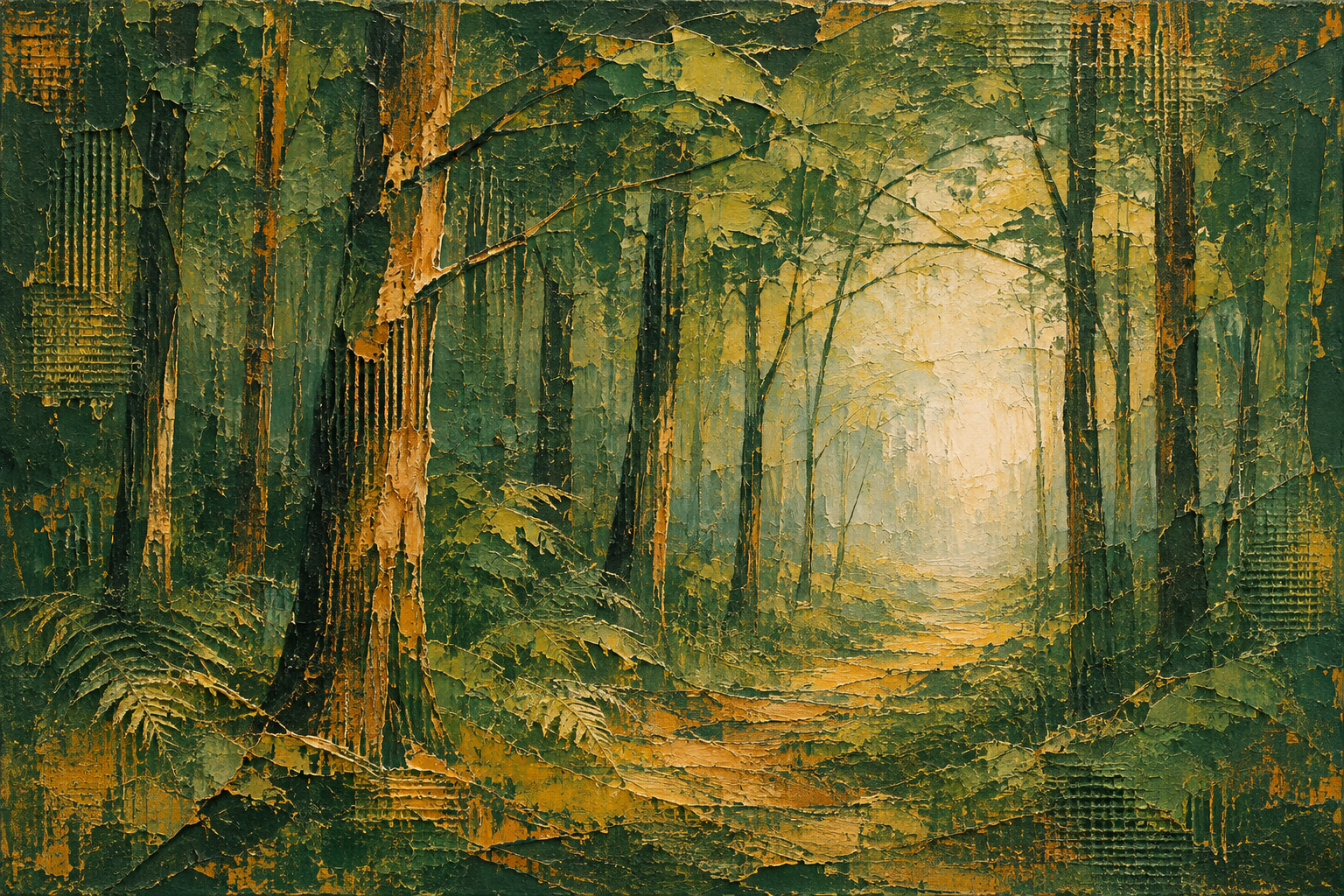
Original grattage-inspired painted forest, scraped dark green layers over ochre, vertical ribbed impressions suggesting trunks, one calm pale opening, visible material resistance, no text or signature.
Let the marks discover the subject; avoid photographic trees with scratches overlaid.
Make a mineral landscape
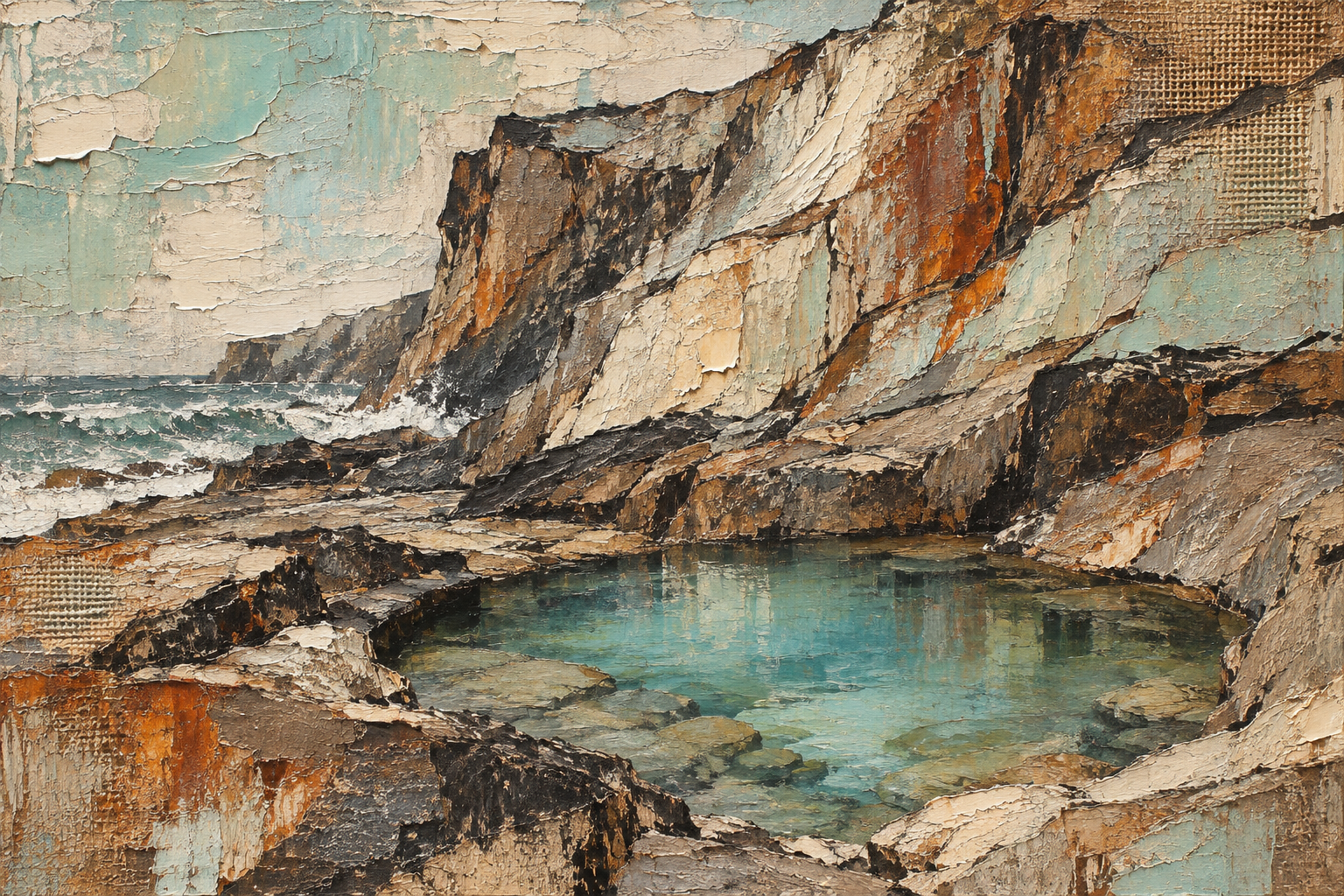
An invented cliff and tidal pool emerging from scraped paint, coarse woven impressions, broken charcoal ridges and revealed pale turquoise undercolor, one smooth quiet pool, original material-led composition.
Keep the direction of scraping related to the imagined structure.
Discover an ambiguous creature
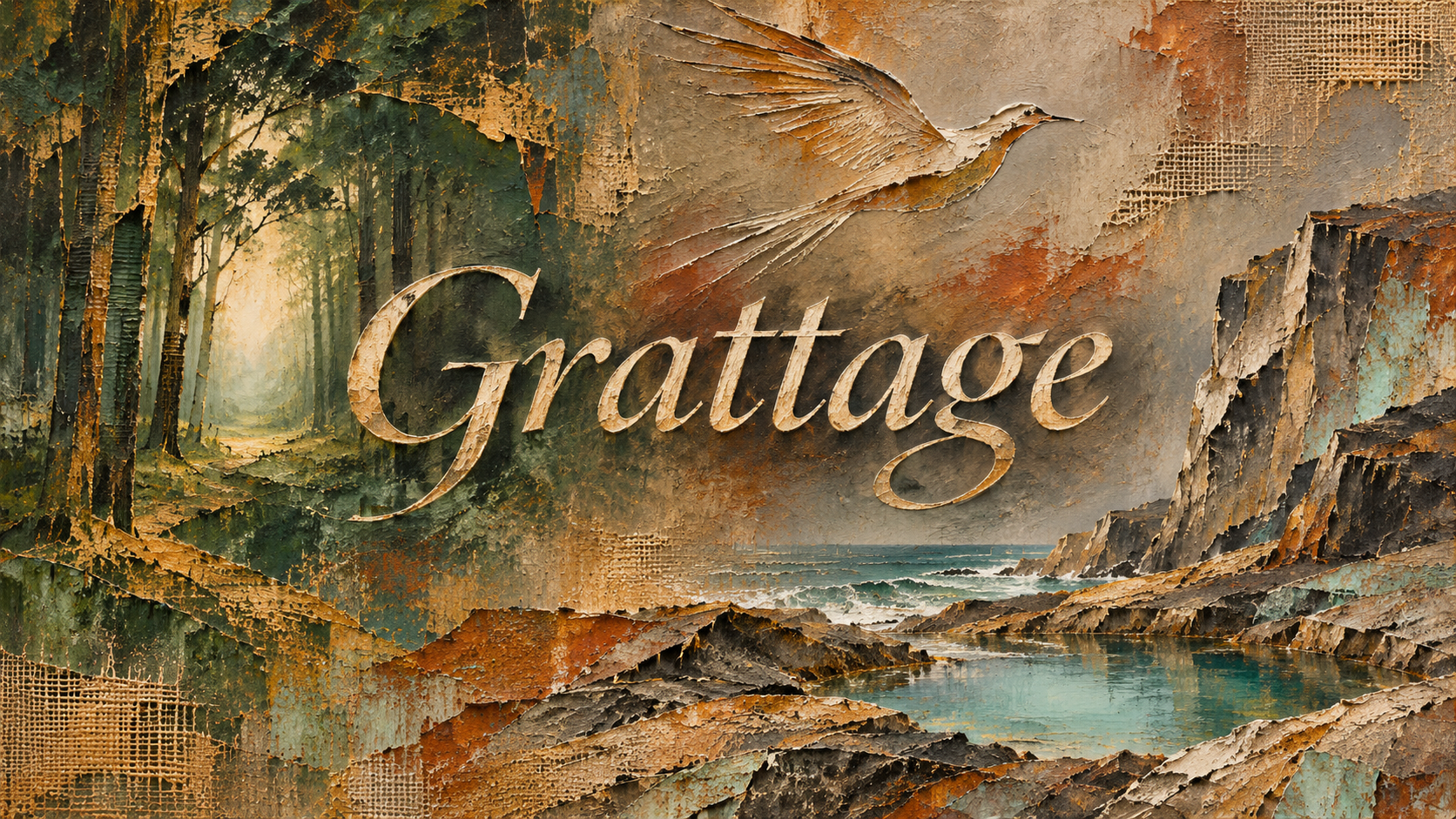
Original abstract grattage study where a few scraped ridges suggest a bird without fully describing it, warm gray and rust layers, selective contour accents and large calm areas, no copied artwork.
Preserve uncertainty; do not outline every accidental shape.
A smile from the studio
Jokes
The painter asked the canvas what it wanted to become. The canvas suggested a forest. The table underneath insisted it was a table. After several minutes of scraping, they compromised on a forest with unusually good joinery.
Sources and further exploration
Max Ernst Museum Brühl des LVR — explains grattage, frottage and related experimental techniques