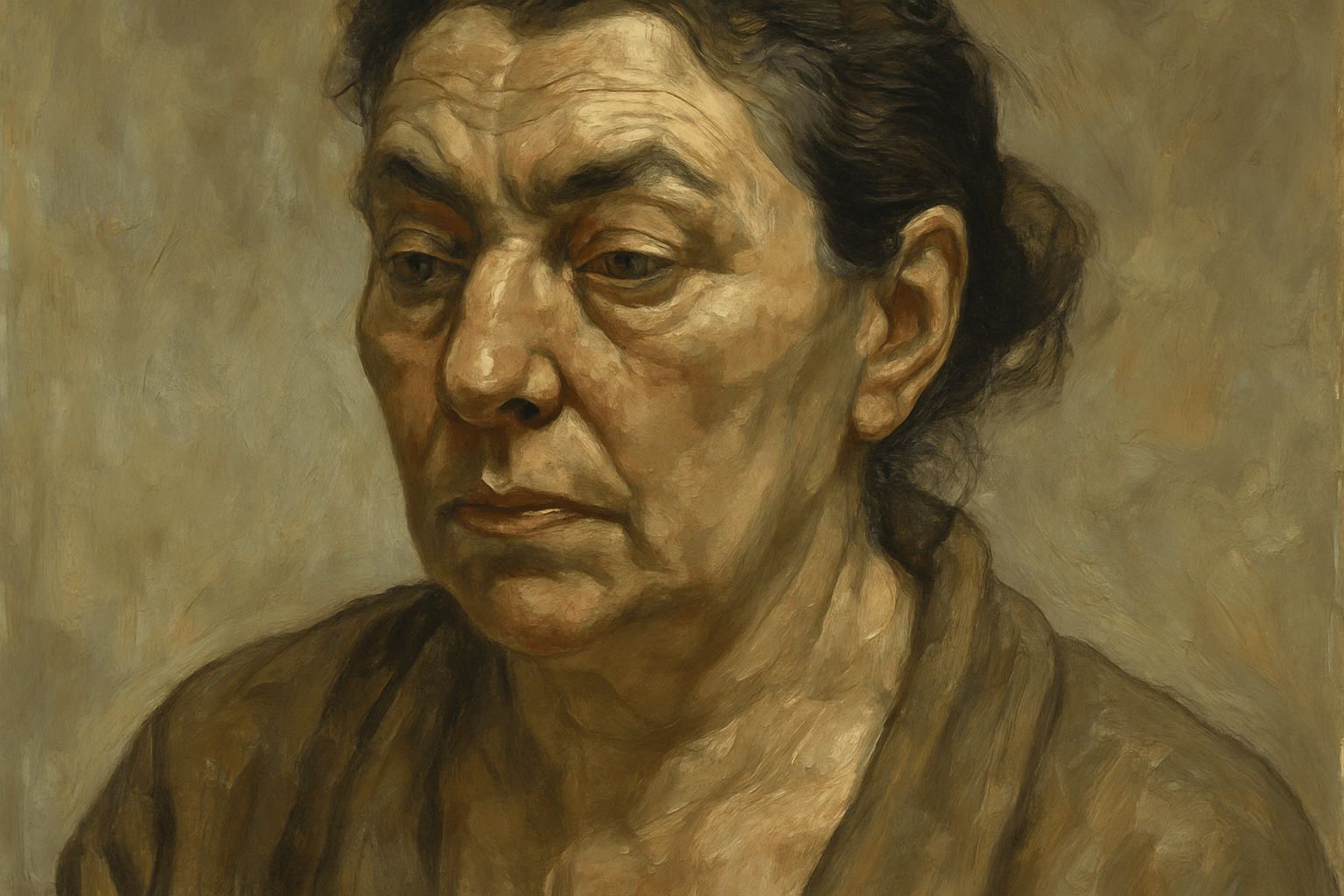
Artist study
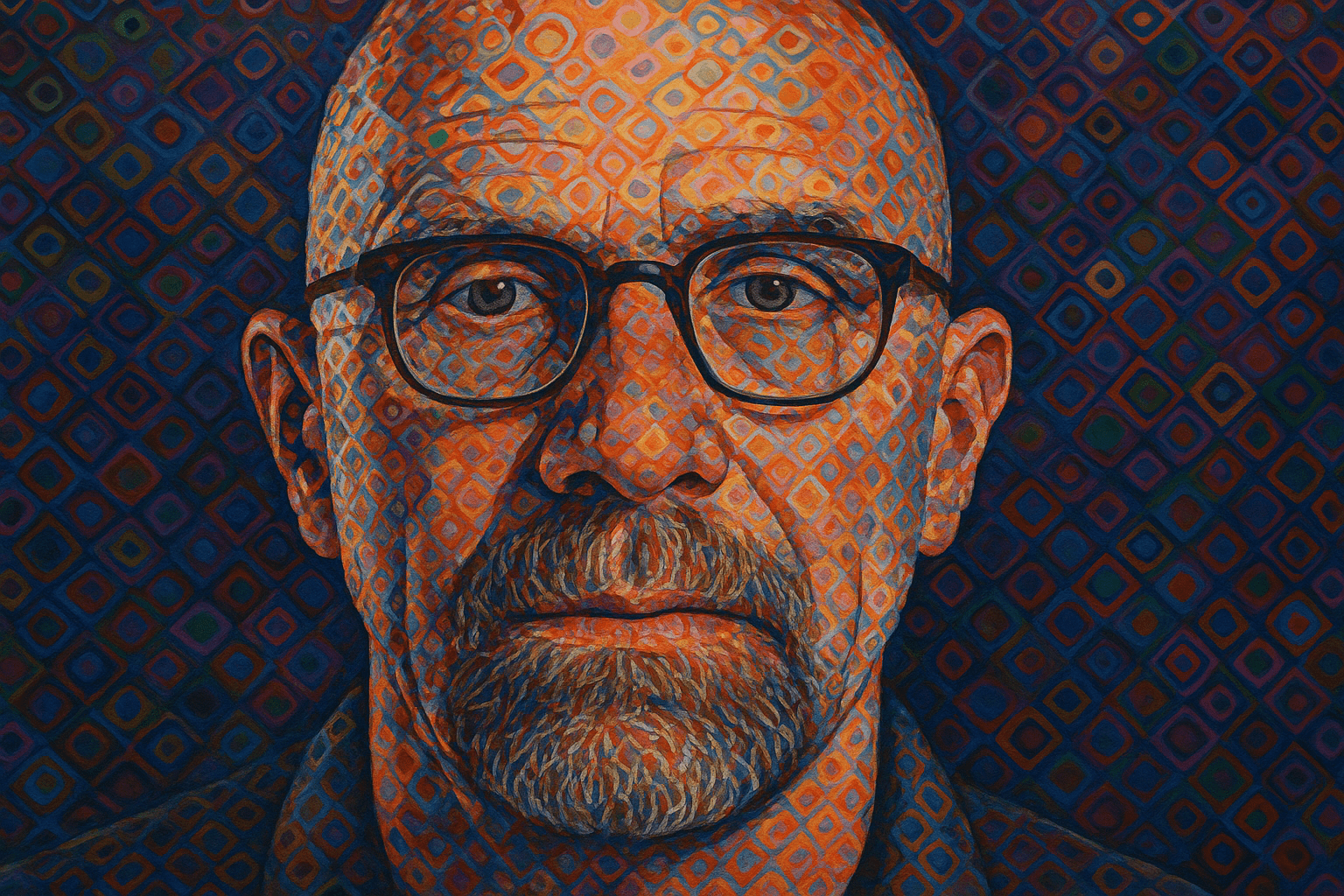
Chuck Close’s portraits invite looking both at a face and at the small units from which the image is constructed.
A closer look
For an original exercise, use a fictional sitter and divide a simple portrait into a modest grid.
Understanding the subject
Chuck Close used systematic approaches to portrait-making across different techniques. The National Gallery of Art’s Jasper shows a face organized through a diagonal grid of colored units; Fanny/Fingerpainting uses fingertip-applied pigment within a related process of building an image from parts. Here Jasper is the title of a portrait, unrelated to the Jasper AI platform. These examples show different ways a local mark can participate in a larger recognizable structure.
AOI looking and making workshop
For an original exercise, use a fictional sitter and divide a simple portrait into a modest grid. Give each cell a small internal pattern while preserving the larger value relationships that make the face readable. Step back frequently: a lively cell can still damage the whole if it is too light or dark. Compare close and distant views to see when marks become likeness. A digital study can explore this change in perception without pretending to be an actual work by Close or a faithful reconstruction of his process.
The prompt workshop
Original creative exercises. These prompts create new illustrations, not documentary evidence.
A face from units
Create an original portrait of a fictional sitter constructed from a clear grid of small colored ovals, readable facial values at a distance and lively variation up close. Do not reproduce a known portrait.
Two viewing distances
Create an original grid-based portrait study with a full fictional face beside a close crop of its abstract cells, consistent palette and clear value organization. Use no labels or artist signatures.
A different subject
Create an original image of a houseplant assembled from square units containing varied curved marks. Preserve the overall silhouette and tonal structure while allowing each unit its own small pattern.
Your next inspiration
Discover another art style
Follow a visual thread to the next subject.