
Established
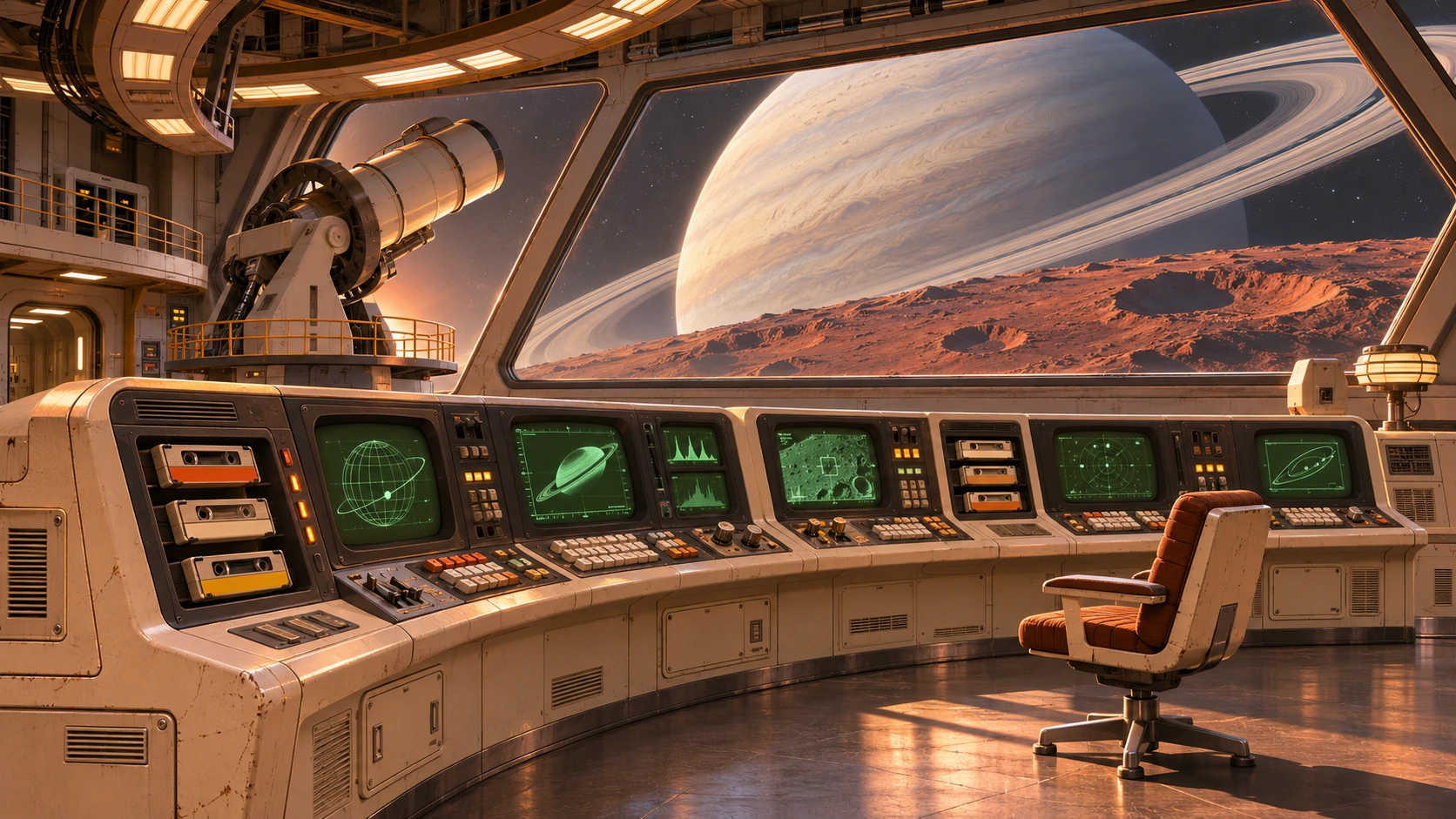
Cassette Futurism imagines tomorrow through the tangible hardware language of the 1970s and 1980s: angular cases, magnetic media, cathode-ray screens, physical controls and visibly assembled machines. It is a retrospective science-fiction aesthetic, not the early twentieth-century Futurist movement.
A visual introduction
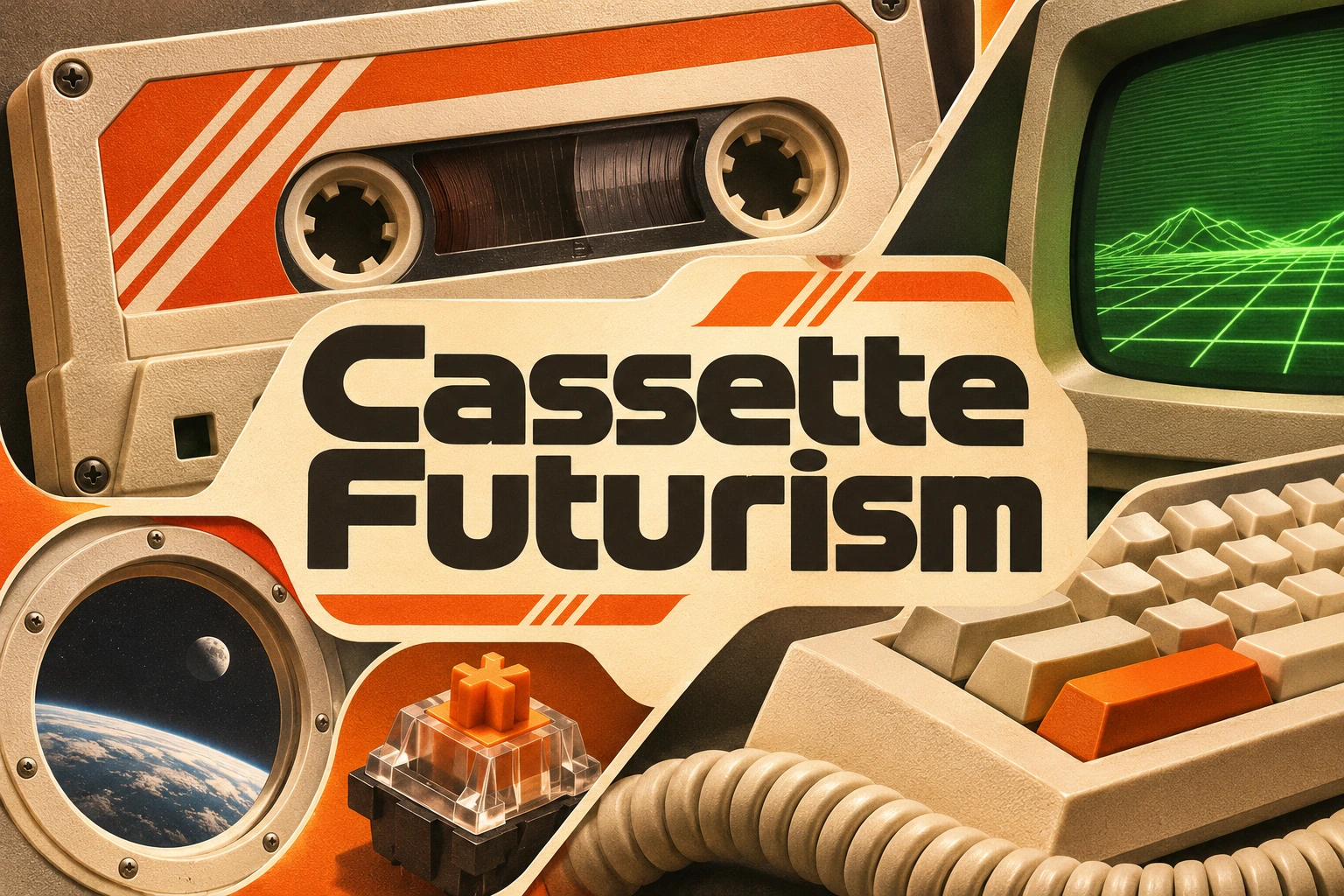
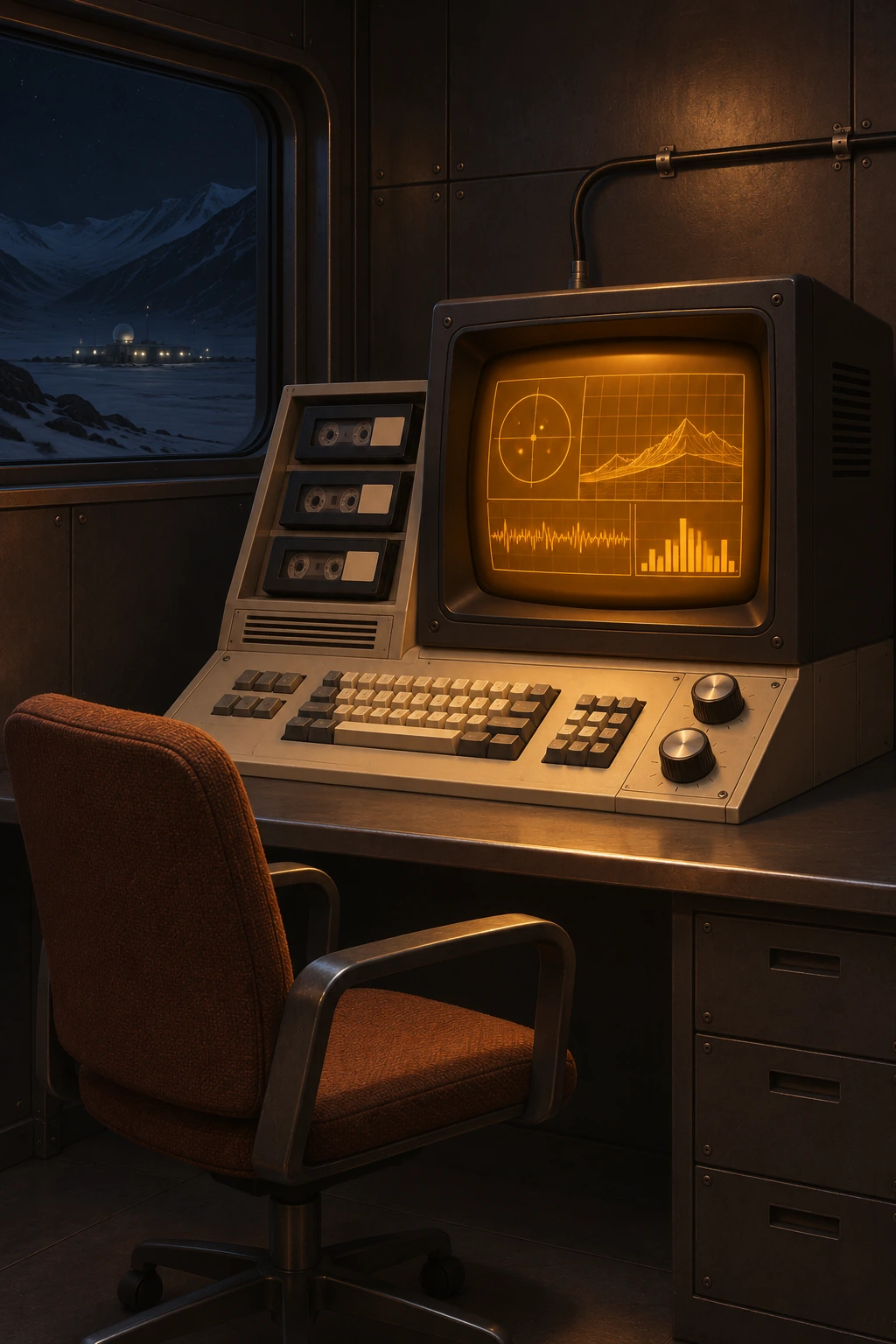
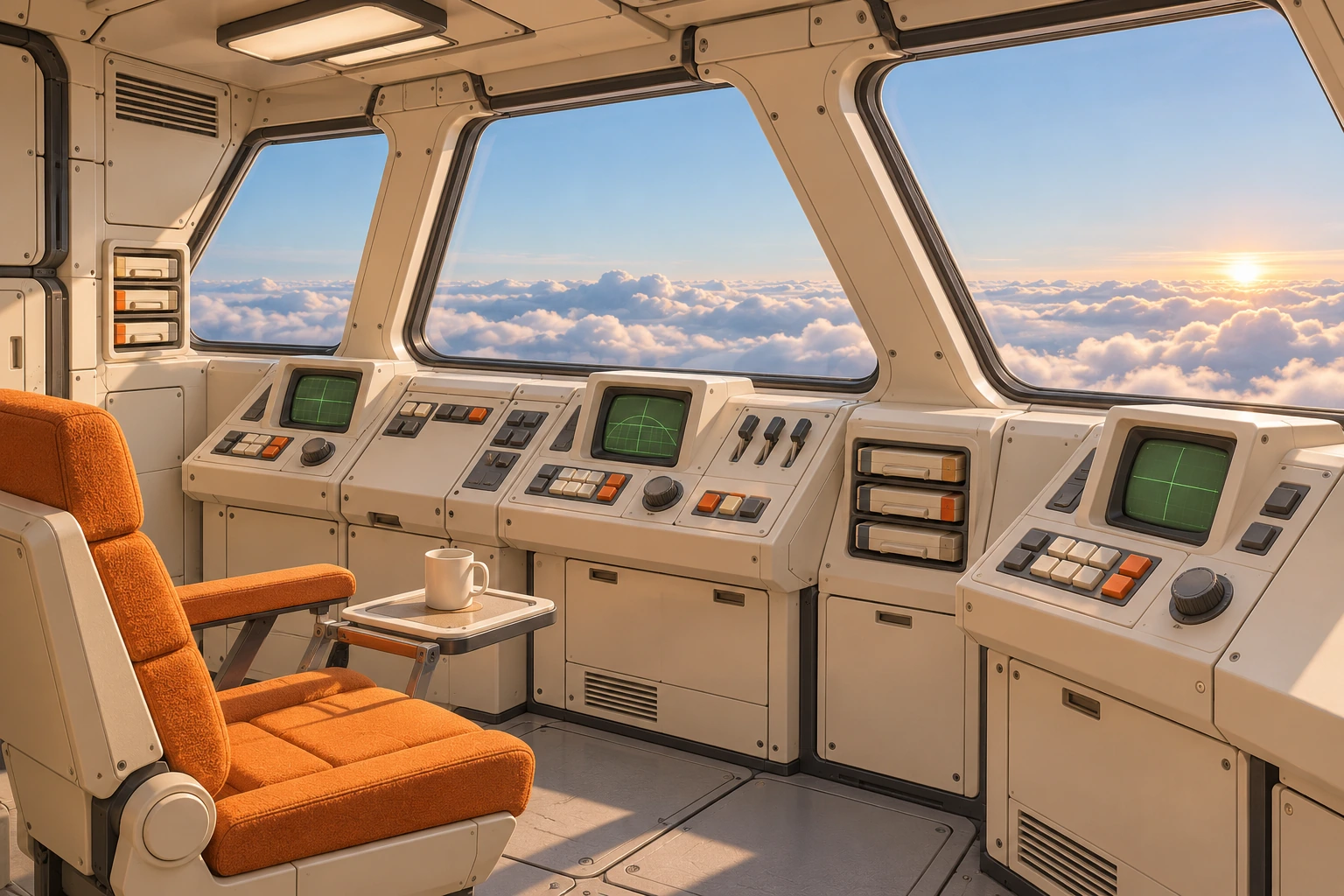
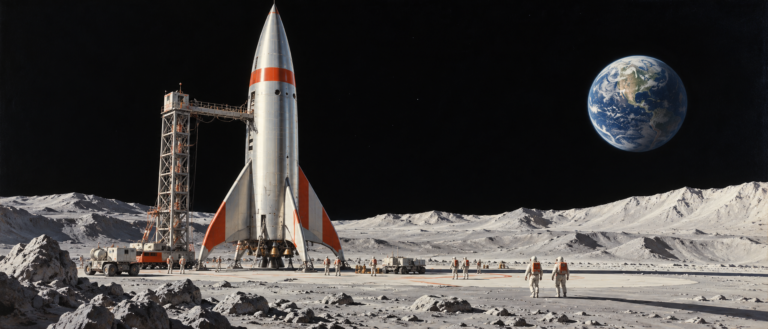
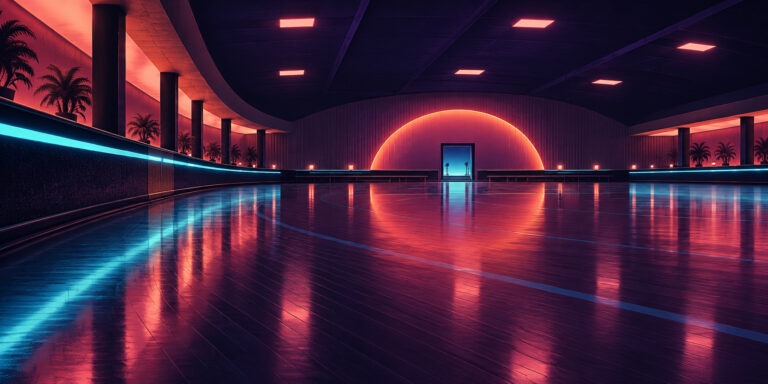
Five original AI-generated studies explore this subject through a banner, a titled collage and three standalone examples.
Select an image for a closer look. Use the thumbnails, arrow keys or a swipe to compare examples. Zoom in to inspect details, or share the image that inspires you.

Creative toolbox · take this style further
Choose an input and a destination. Search sends your words to the chosen site; Copy & open puts them on your clipboard to paste there.
Create with AI
Turn your chosen input into an image prompt or a new creative direction.
ChatGPT
Copy your input and paste it into a ChatGPT conversation or image request.
Copy & open ChatGPT (new tab)Claude · Anthropic
Develop an image prompt or explore the style in a new Claude conversation.
Copy & open Claude · Anthropic (new tab)Midjourney
Paste your input into the Imagine bar on the Create page.
Copy & open Midjourney (new tab)Adobe Firefly
Copy your input, open Firefly, and paste it into the prompt field.
Copy & open Adobe Firefly (new tab)Leonardo.Ai
Copy your input, open Leonardo, and paste it into the generation field.
Copy & open Leonardo.Ai (new tab)Image search
Find visual references. Short, concrete keywords usually work best.
Lexica
Search AI images and prompts using your selected input.
Search with this input Lexica (new tab)Pexels
Search the photo and video library. Short keywords often work best.
Search with this input Pexels (new tab)Pixabay
Search photos, illustrations and other images.
Search with this input Pixabay (new tab)Unsplash
Search photographs using the style name or your own keywords.
Search with this input Unsplash (new tab)Wikimedia Commons
Search photographs, artworks and historical images. Check each file for its source and reuse terms.
Search with this input Wikimedia Commons (new tab)Art & research
Explore artists, collections and the ideas behind a style.
Wikipedia
Search for background reading. A style may not have its own article.
Search with this input Wikipedia (new tab)WikiArt
Copy your input into WikiArt’s search to explore artists and artworks.
Copy & open WikiArt (new tab)Europeana
Paste your keywords into the search to explore European museum, library and archive collections.
Copy & open Europeana (new tab)Inspiration
Discover portfolios and visual ideas from creative communities.
Instagram hashtags
Search a hashtag made from your input: spaces and punctuation are removed. Instagram may require sign-in.
Search with this input Instagram hashtags (new tab)ArtStation
Paste your input into artwork search for concept art, environments, characters and visual development.
Copy & open ArtStation (new tab)Behance
Paste your input into project search for illustration, design and visual storytelling.
Copy & open Behance (new tab)A closer look
Heavy bezels frame small luminous displays. Sloped panels, keys, toggles, vents, seams, handles and removable cartridges make the imagined machine readable as an object. Off-white plastic, charcoal housings, brushed metal and restrained signal colors create contrast between durable hardware and the information glowing inside it.
A future with something to press
The Consumer Aesthetics Research Institute describes Cassette Futurism through bulky, angular science-fiction and hardware imagery, placing its reference period from the mid-1970s to the late 1980s. The label looks backward at a technological future once imagined through visible equipment. It does not require every image to contain a cassette.
Its appeal lies in the promise that a machine has weight, components and understandable controls. Information may be abstract, but somebody must still load the medium, turn a dial or open a service panel. That relationship gives a fictional world texture before a character says anything.
Historical objects are references, not proof of a movement
Sony's design history identifies the 1979 TPS-L2 as the first Walkman and describes how its compact body and lightweight headphones supported listening on the move. Its account of the 1983 WM-F5 adds impact-resistant materials, waterproof control buttons and a distinctive yellow sports identity. These are useful examples of how function, handling and color shaped an actual object.
Cassette Futurism extrapolates such physical design cues into invented computers, vehicles, stations and portable instruments. A real portable player is a historical object; a spacecraft using that vocabulary is a speculative design. The gallery presents new AI-generated interpretations, not archival product photographs or reconstructions of a particular film set.
Build a hierarchy of controls
Start with the main task of a fictional machine. A navigation console needs a dominant view, a small number of primary controls and supporting indicators. A field recorder needs a grip, a media compartment and controls that a hand could reach. These choices make the design more convincing than covering every surface with random switches.
Group related elements, leave space around frequently used controls and give a removable component a visible way to leave its housing. A latch, hinge or recessed handle can tell a small story. An image cannot demonstrate that a device works, but it can show whether its proposed arrangement is intelligible.
Light comes from the equipment
A small green or amber screen can become the focal point of a dark workstation. Its light should remain local enough for the room's material structure to survive. If every edge emits an equally bright cyan glow, the difference between a screen, a casing and an ordinary seam disappears.
Use selective luminous graphics, glass reflections and a restrained instrument palette. Daylight scenes are equally possible: a cream terminal in a sunlit cabin can communicate the aesthetic through silhouette and controls alone. Neon rain is an optional setting, not a defining requirement.
Material age is a narrative decision
Choose how old the imagined hardware is. A newly commissioned station might have crisp painted metal, clean keys and evenly fitted panels. A repair depot might show polished corners, replaced screws and a slightly mismatched access cover. Wear works best where a person would touch or service the object.
Avoid applying the same scratch pattern everywhere. A worn grip and an untouched recessed label area tell different stories. Heavy grime is not compulsory, and a pristine speculative product can still belong to this visual language if its material and interface decisions remain tangible.
Distinguish neighboring futures
Retro technology can appear in many genres. Cyberpunk adds its own social and narrative concerns; a cassette-shaped prop alone does not supply them. Synthwave often emphasizes graphic sunsets, grids and luminous nostalgia. Cassette Futurism can overlap with either, but its strongest organizing feature is the material vocabulary of the equipment.
Likewise, do not import the fractured motion and simultaneous viewpoints of historical Futurist painting just because the names share a word. Here the useful question is what tomorrow's objects would look and feel like if physical media, visible controls and substantial housings remained central.
Three scales for an original study
At the smallest scale, design a portable instrument with a clear grip and media bay. At the room scale, arrange a workstation around a seated operator's reach and sightline. At the architectural scale, repeat a few believable modules so that a station feels assembled from a coherent technical culture.
Use the prompt to name the task, materials, control hierarchy and lighting. Inspect generated images for duplicated keys, impossible cables, inaccessible compartments and unreadable pseudo-labels. A well-chosen blank panel is often better than decorative technical noise. The aim is a future that feels handled, maintained and inhabited.
A small poetic detour
Original words from the AOI studio.
Poetry
A little screen in amber burns,
The spool remembers every turn.
A switch clicks home beneath a thumb;
The distant engine starts to hum.
Tomorrow waits behind the glass,
With screws to hold it while we pass.
The prompt workshop
Original creative exercises. These prompts create new illustrations, not documentary evidence.
A field instrument for tomorrow
Design an original Cassette Futurism field scanner with a cream angular housing, recessed green CRT, a visible removable data cartridge, three large keys and a practical carry handle. Clear component relationships, restrained orange accent, daylight product photography, no brand or text, not a real historical device.
The night-shift console
Create a Cassette Futurism research-station interior with one dominant amber CRT, grouped mechanical controls, magnetic-media storage and a coherent operator chair. Charcoal metal and warm ivory plastic, subtle wear at contact points, soft local screen light, a planet visible through the window, no lettering or logos.
A bright future in daylight
Create a pristine Cassette Futurism observation cabin above a cloud sea. Modular cream consoles, small green screens, sloped control panels, cartridge bays and dark rubber seals. Calm morning light reveals material construction without neon haze, precise believable perspective, no readable text or copied franchise designs.
Your next inspiration
Discover another art style
Follow a visual thread to the next subject.

A smile from the studio
Jokes
The starship's navigation computer announced that it could cross the galaxy in twelve minutes. Loading the route would take forty-five. The captain found a pencil, rewound the cassette and asked whether hyperspace had a customer-support number.