
Speculative genre and visual culture
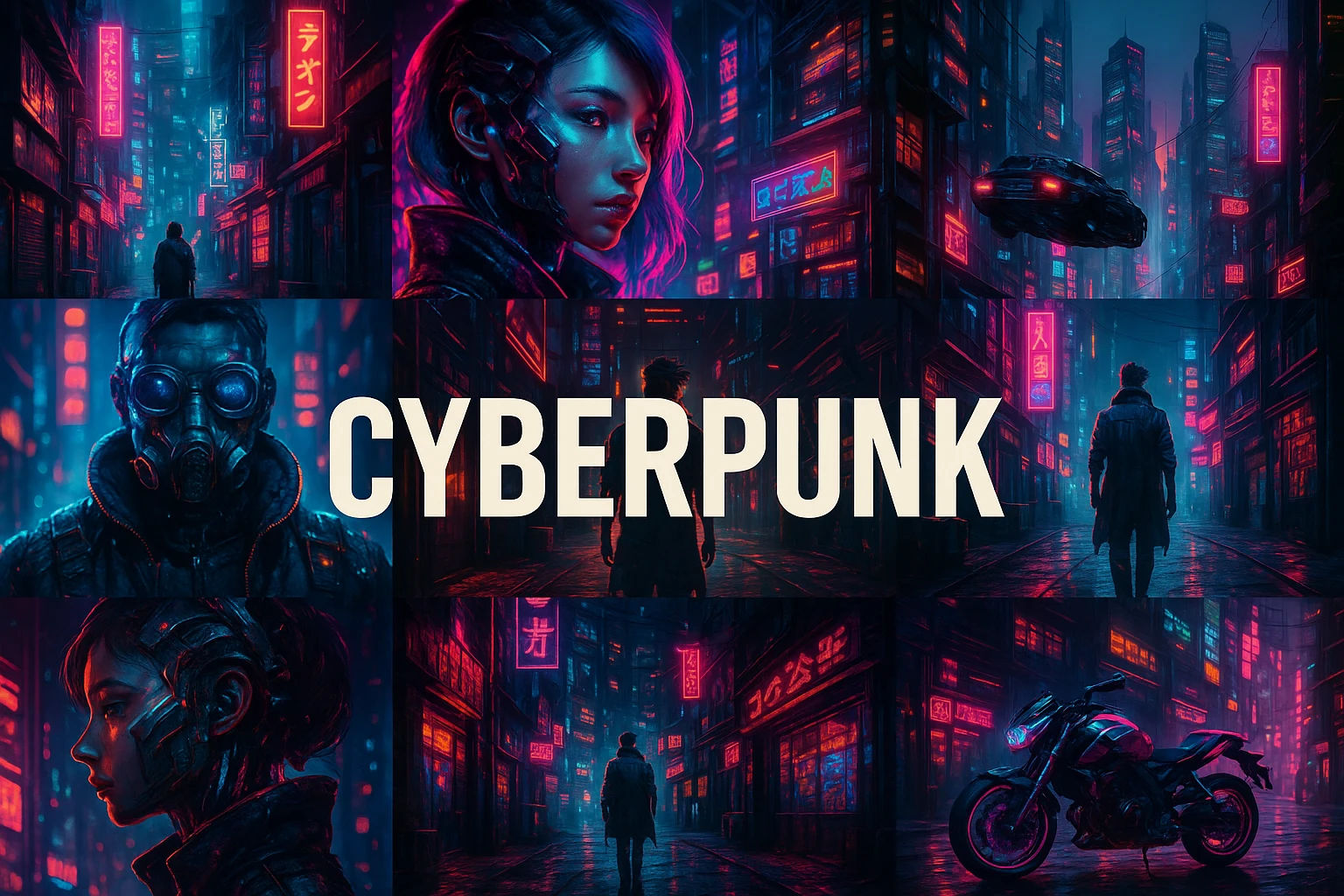
Cyberpunk explores relationships among advanced technology, unequal power and lived experience. In visual art, its force comes from how a world works and who controls it, not from neon signs alone.
A visual introduction
Select an image for a closer look. Use the thumbnails, arrow keys or a swipe to compare examples. Zoom in to inspect details, or share the image that inspires you.
Creative toolbox · take this style further
Choose an input and a destination. Search sends your words to the chosen site; Copy & open puts them on your clipboard to paste there.
Create with AI
Turn your chosen input into an image prompt or a new creative direction.
ChatGPT
Copy your input and paste it into a ChatGPT conversation or image request.
Copy & open ChatGPT (new tab)Claude · Anthropic
Develop an image prompt or explore the style in a new Claude conversation.
Copy & open Claude · Anthropic (new tab)Midjourney
Paste your input into the Imagine bar on the Create page.
Copy & open Midjourney (new tab)Adobe Firefly
Copy your input, open Firefly, and paste it into the prompt field.
Copy & open Adobe Firefly (new tab)Leonardo.Ai
Copy your input, open Leonardo, and paste it into the generation field.
Copy & open Leonardo.Ai (new tab)Image search
Find visual references. Short, concrete keywords usually work best.
Lexica
Search AI images and prompts using your selected input.
Search with this input Lexica (new tab)Pexels
Search the photo and video library. Short keywords often work best.
Search with this input Pexels (new tab)Pixabay
Search photos, illustrations and other images.
Search with this input Pixabay (new tab)Unsplash
Search photographs using the style name or your own keywords.
Search with this input Unsplash (new tab)Wikimedia Commons
Search photographs, artworks and historical images. Check each file for its source and reuse terms.
Search with this input Wikimedia Commons (new tab)Art & research
Explore artists, collections and the ideas behind a style.
Wikipedia
Search for background reading. A style may not have its own article.
Search with this input Wikipedia (new tab)WikiArt
Copy your input into WikiArt’s search to explore artists and artworks.
Copy & open WikiArt (new tab)Europeana
Paste your keywords into the search to explore European museum, library and archive collections.
Copy & open Europeana (new tab)Inspiration
Discover portfolios and visual ideas from creative communities.
Instagram hashtags
Search a hashtag made from your input: spaces and punctuation are removed. Instagram may require sign-in.
Search with this input Instagram hashtags (new tab)ArtStation
Paste your input into artwork search for concept art, environments, characters and visual development.
Copy & open ArtStation (new tab)Behance
Paste your input into project search for illustration, design and visual storytelling.
Copy & open Behance (new tab)A closer look
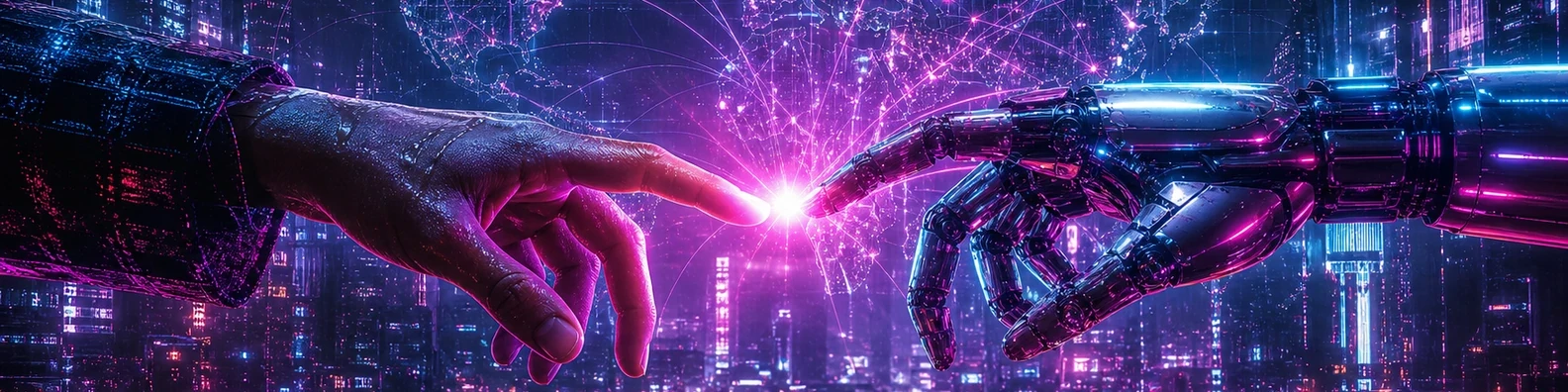
Layered infrastructure, contrasting scales and the meeting of bodies with systems can organize the image; lighting should reveal the social and spatial relationships.
Begin with a conflict, not a color scheme
The BFI's discussion of cyberpunk cinema connects the genre with altered bodies, powerful corporations, artificial realities and technological dissidence. These concerns help explain why a scene can be cyberpunk without rain, magenta light or a dense skyline.
Choose a specific tension for an original image. Who has access to a technology? Who repairs it? Who is watched, excluded or dependent on it? A visible relationship between people and systems gives the design a subject beyond futuristic decoration.
Build a world in layers
Old structures and new interventions can occupy the same space. A repair, an improvised connection or a repurposed room suggests that people have adapted to the environment. Keep those additions connected to plausible activities rather than scattering cables without purpose.
Use scale to distinguish institutional power from individual experience. A large advertisement or sealed infrastructure can dominate a smaller human action. Leave enough readable space for that action to remain important instead of disappearing beneath detail.
Light should explain the environment
Different sources can reveal different territories: a harsh service light, a warm interior or a distant commercial glow. Maintain their effects on nearby surfaces. Uniform colored haze can erase the distinctions that make the setting believable.
Test a daylight version as well as a night scene. If the image loses its cyberpunk character when the neon disappears, develop the social and technological relationships more clearly. The genre's ideas should survive a palette change.
Avoid an interchangeable future city
Choose a coherent location, material history and everyday task. Do not use random Asian lettering or an undifferentiated cultural collage as shorthand for the future. Specificity gives a setting depth without relying on exotic decoration.
The prompts here propose original speculative scenes. They are not illustrations of actual surveillance events or existing films. Evaluate the result by whether its technology has a readable role, its people have agency and its composition directs attention to the central conflict.
The prompt workshop
Original creative exercises. These prompts create new illustrations, not documentary evidence.
Repair and power
Original cyberpunk scene of a street-level technician repairing a public terminal beneath sealed corporate infrastructure, readable human action and coherent mixed lighting.
Daylight cyberpunk
Original speculative city scene in overcast daylight, unequal access to automated transport made visible through architecture and movement, no obligatory neon.
A private refuge
Original small dwelling adapted around intrusive digital infrastructure, clear material history and a warm human focal point against colder systems.
Sources and further exploration
BFI — cyberpunk’s technological and social concerns on screen