
Established
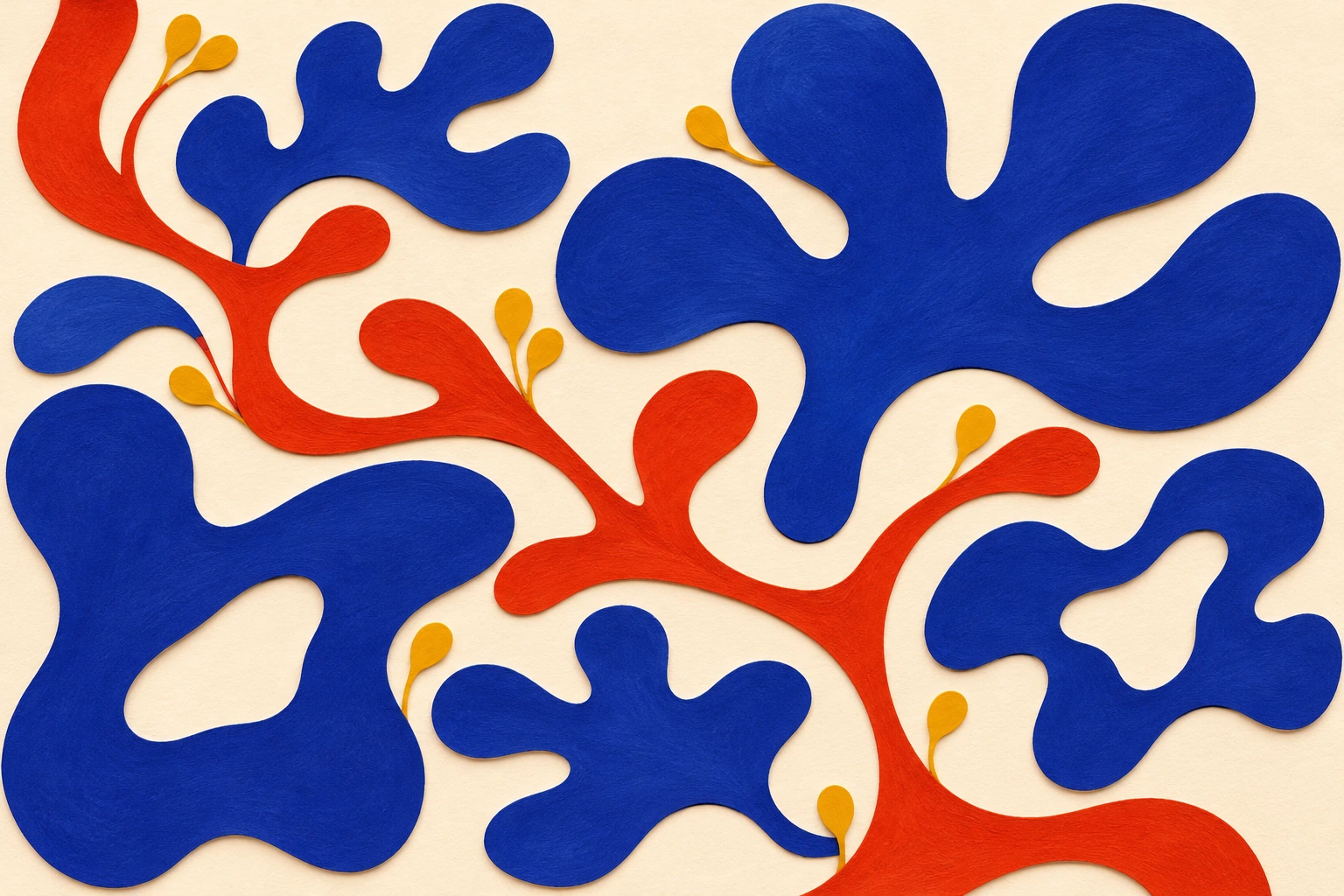
Biomorphic Abstraction makes an image feel alive without identifying a particular creature, plant or body. Swelling contours, branching lines, cavities and membrane-like surfaces suggest growth and transformation. It is a broad approach across painting, sculpture and design, with substantial overlap with organic abstraction.
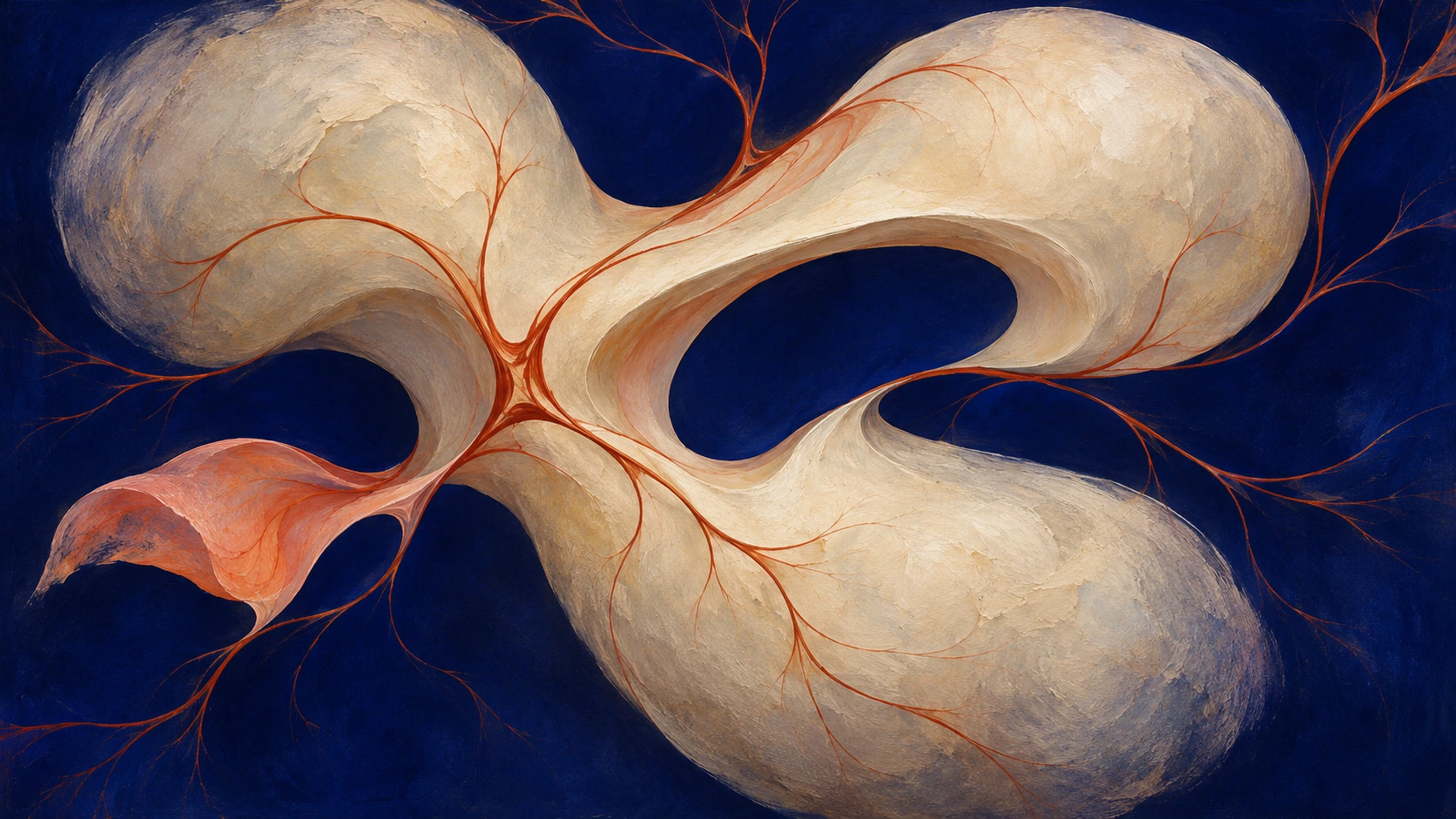
A visual introduction
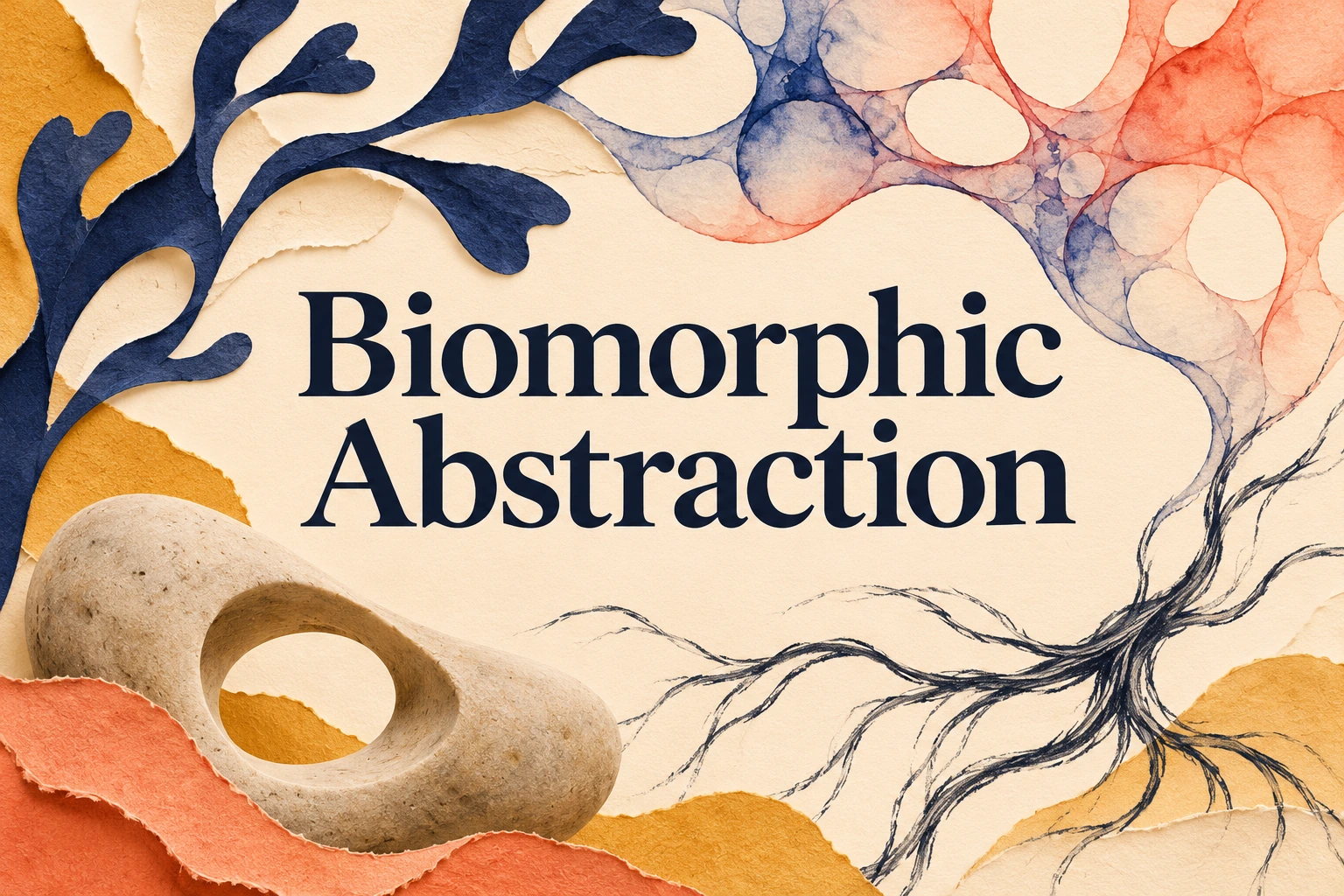
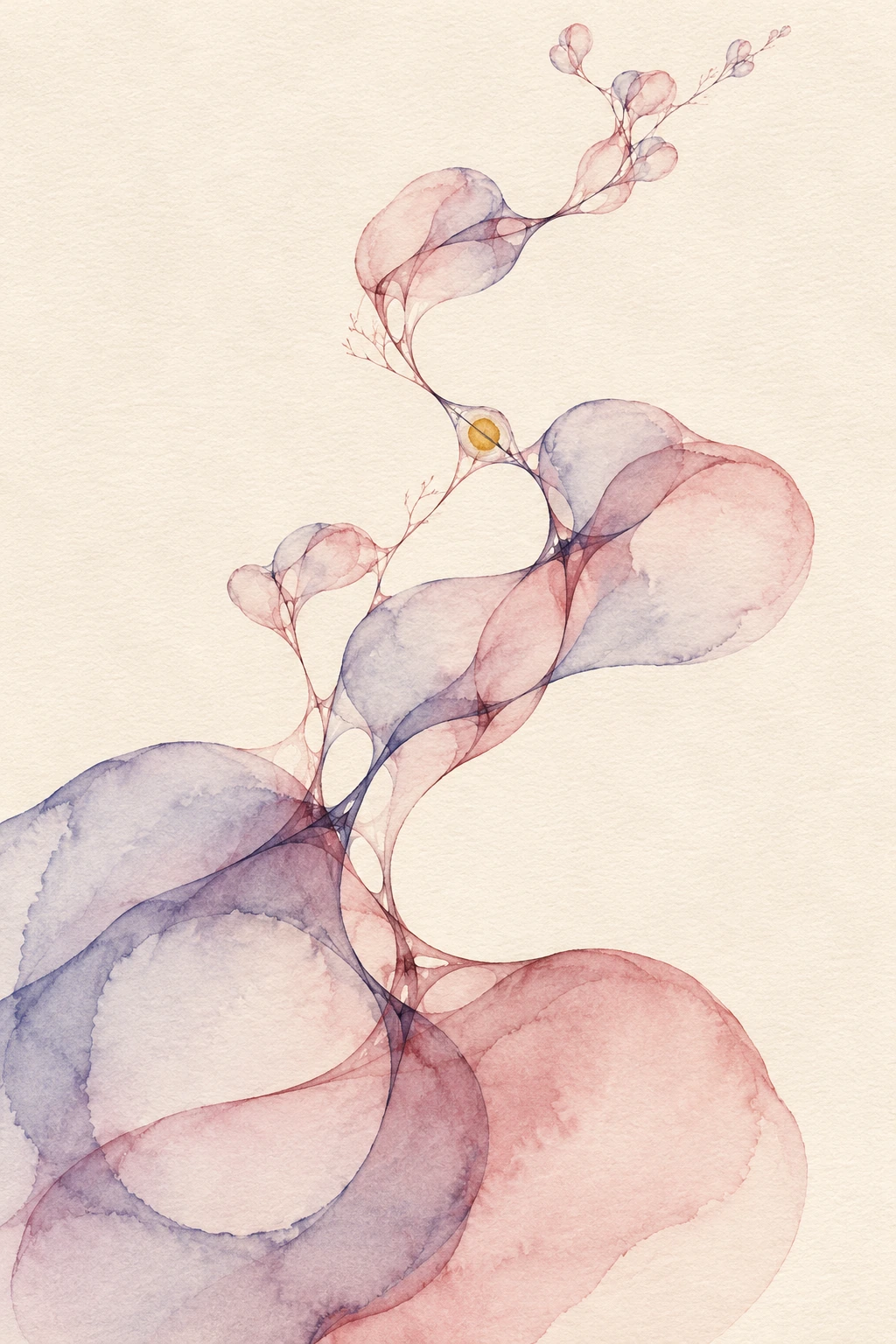
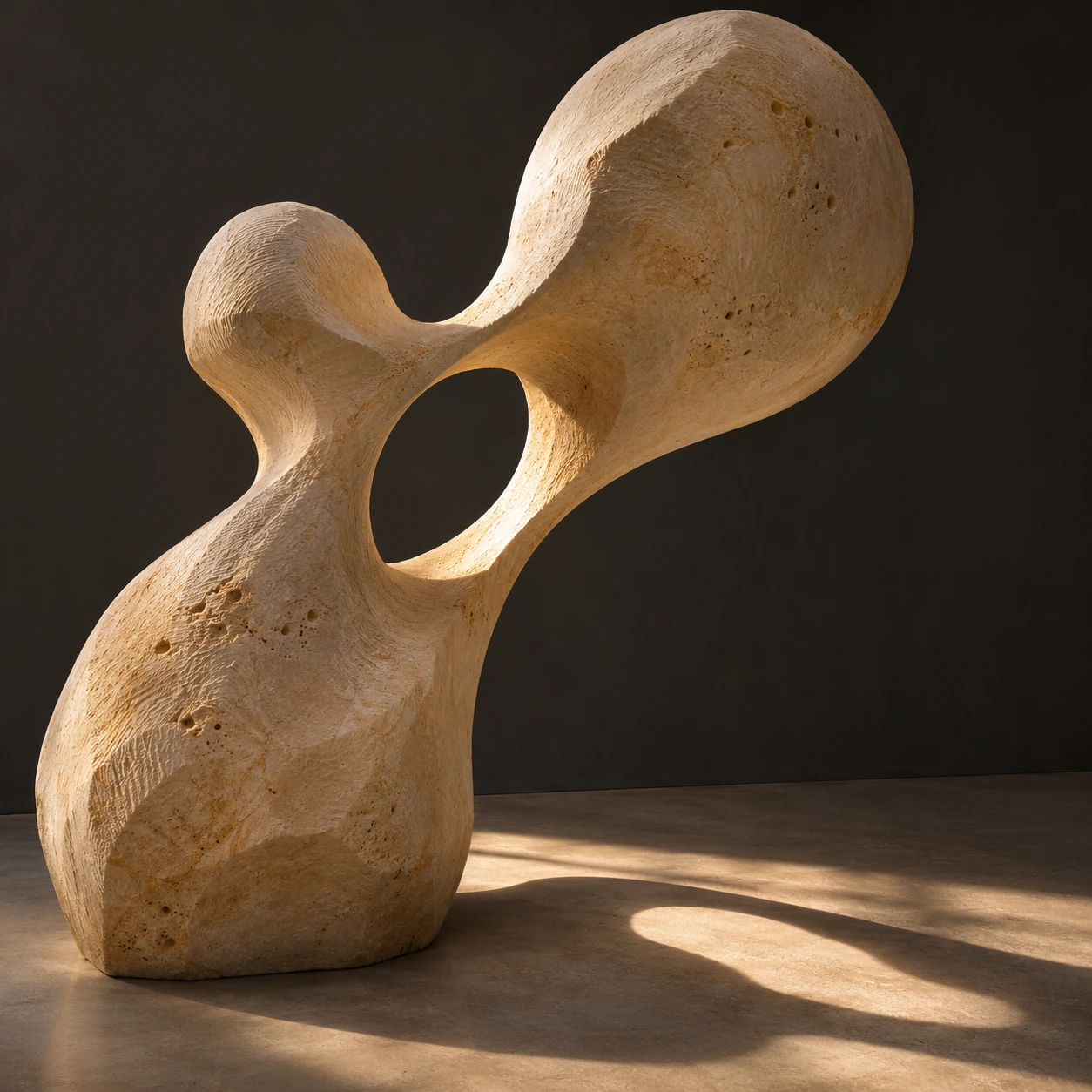
Five original AI-generated studies explore this subject through a banner, a titled collage and three standalone examples.
Select an image for a closer look. Use the thumbnails, arrow keys or a swipe to compare examples. Zoom in to inspect details, or share the image that inspires you.
Creative toolbox · take this style further
Choose an input and a destination. Search sends your words to the chosen site; Copy & open puts them on your clipboard to paste there.
Create with AI
Turn your chosen input into an image prompt or a new creative direction.
ChatGPT
Copy your input and paste it into a ChatGPT conversation or image request.
Copy & open ChatGPT (new tab)Claude · Anthropic
Develop an image prompt or explore the style in a new Claude conversation.
Copy & open Claude · Anthropic (new tab)Midjourney
Paste your input into the Imagine bar on the Create page.
Copy & open Midjourney (new tab)Adobe Firefly
Copy your input, open Firefly, and paste it into the prompt field.
Copy & open Adobe Firefly (new tab)Leonardo.Ai
Copy your input, open Leonardo, and paste it into the generation field.
Copy & open Leonardo.Ai (new tab)Image search
Find visual references. Short, concrete keywords usually work best.
Lexica
Search AI images and prompts using your selected input.
Search with this input Lexica (new tab)Pexels
Search the photo and video library. Short keywords often work best.
Search with this input Pexels (new tab)Pixabay
Search photos, illustrations and other images.
Search with this input Pixabay (new tab)Unsplash
Search photographs using the style name or your own keywords.
Search with this input Unsplash (new tab)Wikimedia Commons
Search photographs, artworks and historical images. Check each file for its source and reuse terms.
Search with this input Wikimedia Commons (new tab)Art & research
Explore artists, collections and the ideas behind a style.
Wikipedia
Search for background reading. A style may not have its own article.
Search with this input Wikipedia (new tab)WikiArt
Copy your input into WikiArt’s search to explore artists and artworks.
Copy & open WikiArt (new tab)Europeana
Paste your keywords into the search to explore European museum, library and archive collections.
Copy & open Europeana (new tab)Inspiration
Discover portfolios and visual ideas from creative communities.
Instagram hashtags
Search a hashtag made from your input: spaces and punctuation are removed. Instagram may require sign-in.
Search with this input Instagram hashtags (new tab)ArtStation
Paste your input into artwork search for concept art, environments, characters and visual development.
Copy & open ArtStation (new tab)Behance
Paste your input into project search for illustration, design and visual storytelling.
Copy & open Behance (new tab)A closer look
Look for an asymmetric contour that seems to grow, divide or bend under pressure. Lobes answer cavities, small buds interrupt larger masses, and the surrounding empty space participates in the form. A biomorphic image can be flat and sharply edged, softly painted or solidly sculptural; rounded blobs alone do not give it life.
Living resemblance without a specimen label
The Getty Art & Architecture Thesaurus identifies biomorphic abstraction as abstract imagery that evokes living forms. The useful distinction is suggestion: a shape might recall a seed, a joint and a dividing cell without settling into a literal illustration of any one of them. Recognition remains open.
This is an established descriptive approach, not a single group with one manifesto, palette or founding date. Its relationship with Organic Abstraction is close, and the terms are often used interchangeably. This focused guide concentrates on the visual impression of living growth; the related Organic Abstraction article offers another route through the overlapping territory.
A few historical anchors
Jean Arp's Beyond a Vase (1965), in the Metropolitan Museum of Art, offers a compact sculptural example. The museum connects its asymmetrical, curving form with Arp's observation of growth and his practice of developing shapes in plaster before translating them into stone or bronze. The work's identity seems deliberately unsettled, as if another contour might emerge next.
MoMA's biomorphic group includes Barbara Hepworth's Hollow Form (Penwith), 1955–56, made in partly painted Lagos wood, and Alvar Aalto's mold-blown glass Vase (model 3031), 1936. These examples show why the vocabulary extends beyond painting. The National Gallery of Art also uses Matisse's Beasts of the Sea to teach the interplay between biomorphic cut-outs and geometric fields. These are references for study; the generated gallery below contains new interpretations, not images of those works.
Make growth a compositional rule
Begin with one operation: budding, branching, swelling, folding or dividing. Apply it to a dominant shape, then let a smaller form answer it with a variation. A broad lobe can taper into a narrow neck; a single opening can echo a neighboring mass. The connection makes the shapes feel related without requiring symmetry.
Vary the rate of change along a contour. An even succession of identical curves reads as a decorative border. A long quiet edge interrupted by one abrupt constriction creates tension. Let some parts appear to press outward while others pull inward, and keep enough empty space for those forces to be visible.
The space inside matters
An aperture is more than a missing piece. It can make a heavy object appear receptive, reveal another layer of a painting or connect the background with the interior of a form. Test the silhouette and the opening separately: each should have a deliberate shape.
In a flat composition, overlapping membranes can suggest permeability without conventional perspective. In sculpture, a hollow changes the relation between mass, light and the viewer's position. In a digital painting, avoid adding highlights everywhere; a few carefully placed transitions can imply volume while preserving the abstract structure.
Hard edges can feel alive
Biomorphic does not mean blurry. Cut paper gives a living contour a crisp boundary, while watercolor can suggest a thin or porous membrane. Stone emphasizes weight and swelling volume; charcoal can make a branching rhythm feel nervous or tentative. Choose a material behavior that supports the intended kind of life.
Color is equally flexible. A black-and-white composition can communicate growth through scale, contour and interval alone. A restrained indigo-and-coral palette might separate two interacting families of shapes. More colors help only if their relationships clarify the form; a rainbow does not substitute for composition.
Build a study you can evaluate
Start with three large shapes and one small interruption. Choose a dominant contour and one type of inner mark. Make a second version by changing only the negative space, then compare which image feels more active. This exercise makes the source of the movement visible instead of relying on an expressive title.
For AI image generation, describe the behavior of the forms, the surface and the spatial relationships. 'A swelling asymmetrical body with one opening and a smaller branching counterpart' gives more direction than 'organic abstract art.' Ask for a new composition, and check that the result has not become a literal specimen, a uniform pattern or a collection of unrelated shiny blobs.
Applications and useful limits
The approach can support wall art, sculptural objects, textile motifs and exploratory furniture forms. A repeated textile design needs rhythm across its edges; a single painting needs a focal hierarchy. A furniture concept still needs separate decisions about support, comfort and manufacture. Looking alive is an aesthetic quality, not evidence that an object functions like an organism.
Ambiguity is the attraction, but vagueness is the common failure. If every shape has the same softness, size and importance, the eye has little to discover. Restore a contrast: one taut contour against a swollen one, a small dark cavity within a pale mass, or a sparse branching line against an otherwise quiet field.
A small poetic detour
Original words from the AOI studio.
Poetry
A curve leans out beyond its name,
A hollow holds a little sky.
No leaf, no limb, and yet the same
Old urge to branch and multiply.
The stone stays still; the shadows start
Another growing in the art.
The prompt workshop
Original creative exercises. These prompts create new illustrations, not documentary evidence.
One shape begins to grow
Create an original Biomorphic Abstraction painting: one large asymmetric ivory form swells into two unequal lobes, a small coral bud answers it across an indigo field, and one dark opening shapes the negative space. Matte paint, deliberate contours, no recognizable species, no text.
A family of membranes
Create a translucent watercolor and ink composition of branching cellular forms on warm paper. Vary scale, overlap and contour tension; keep one small ochre nucleus as the focal point and leave generous empty space. Suggest growth without making a scientific diagram, no labels or text.
Life with a hard edge
Create a black-and-white cut-paper Biomorphic Abstraction. Three bold lobed shapes and one fine branching shape interlock around irregular apertures. Crisp edges, asymmetric rhythm, strong negative space, no literal plants or anatomy, no text. Make the smallest gap the compositional turning point.
Your next inspiration
Discover another art style
Follow a visual thread to the next subject.
A smile from the studio
Jokes
The curator asked whether the sculpture represented a seed, a kidney or a reclining figure. The artist said it was open to interpretation. By closing time it had acquired three titles, two psychological profiles and a recommendation to receive more indirect sunlight.
Sources and further exploration
Getty AAT | Biomorphic abstraction: the term and its living-form definition
The Met | Jean Arp, Beyond a Vase (1965): growth and sculptural metamorphosis
MoMA | Barbara Hepworth, Hollow Form (Penwith), 1955–56
MoMA | Alvar Aalto, Vase (model 3031), 1936
National Gallery of Art | Shape: biomorphic and geometric forms in cut paper