
AOI creative concept · Maps and invented diagrams
Show a process through changes in shape and spacing without using arrows, numbers or words.
An AOI creative concept, not an established historical movement.
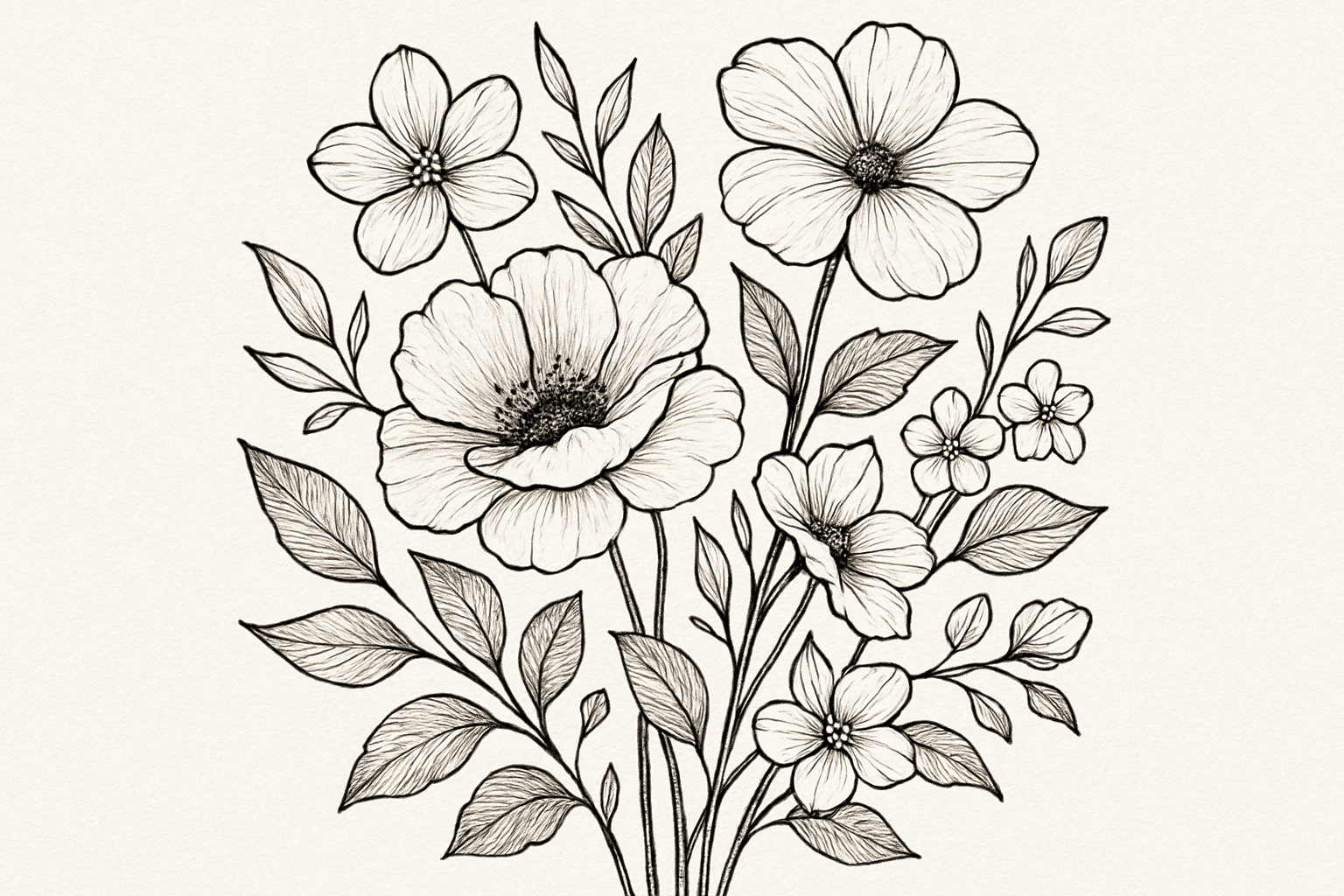
A closer look
Sage, warm white and charcoal; simple botanical-like diagrams. The focal scene: five invented buds opening progressively without arrows or labels.
An invented diagram
Show a process through changes in shape and spacing without using arrows, numbers or words. A sequence of plant-like forms should visibly transform from compact to open, with the intervals between stages supporting the direction of reading.
Organize the route
Arrange five invented buds across a horizontal field. Start with a dense closed form, gradually separate its parts and end with a broad sparse structure. Increase the gaps between stages toward the open end. Keep the palette constant so the transformation depends on structure rather than a simple color gradient.
Check the internal logic
If the stages could be reordered without consequence, the process is too vague. Make one structural feature change consistently across all five. Avoid implying a real botanical life cycle; these forms are designed to explain a visual transformation.
Technique notes
Curve the sequence around an empty center, leaving a conspicuous gap between the most closed and most open stages rather than completing a loop.
When prompting an image model, spell out the rule and visible relationships. The invented style name alone is not a reliable instruction. Compare outputs against the critique above and revise the specific failed relationship.
The prompt workshop
Original creative exercises. These prompts create new illustrations, not documentary evidence.
Start with the defining rule
Create an original illustration of five invented buds opening progressively without arrows or labels. Show a process through changes in shape and spacing without using arrows, numbers or words. A sequence of plant-like forms should visibly transform from compact to open, with the intervals between stages supporting the direction of reading. Use sage, warm white and charcoal; simple botanical-like diagrams. Keep the composition readable, with a clear focal area and quiet surrounding space. No lettering, signatures or watermark.
Build the fuller composition
Create an original Arrowless Process Gardens composition. Arrange five invented buds across a horizontal field. Start with a dense closed form, gradually separate its parts and end with a broad sparse structure. Increase the gaps between stages toward the open end. Keep the palette constant so the transformation depends on structure rather than a simple color gradient. Use sage, warm white and charcoal; simple botanical-like diagrams. Preserve the defining constraint: Show a process through changes in shape and spacing without using arrows, numbers or words. Avoid decorative clutter, readable text and watermarks.
Try a deliberate variation
Create an experimental illustration based on this rule: Show a process through changes in shape and spacing without using arrows, numbers or words. A sequence of plant-like forms should visibly transform from compact to open, with the intervals between stages supporting the direction of reading. Variation: Curve the sequence around an empty center, leaving a conspicuous gap between the most closed and most open stages rather than completing a loop. Use sage, warm white and charcoal; simple botanical-like diagrams. Make the changed relationship unmistakable while keeping supporting details restrained. No captions, signatures or watermark.
Look closer
Explore the image gallery
Select an image to enlarge it. Browse with the arrows, and press Escape to return.


Your next inspiration
Discover another art style
Follow a visual thread to the next subject.
