
Established
Warhammer is a family of fictional worlds and a distinctive visual reference built through miniatures, illustration, games and storytelling. Monumental silhouettes, dense ornament, faction identity and dramatic scale make its imagery recognizable. This guide separates the far-future world of Warhammer 40,000 from Age of Sigmar and The Old World, then explores their visual principles through original AI-generated interpretations.
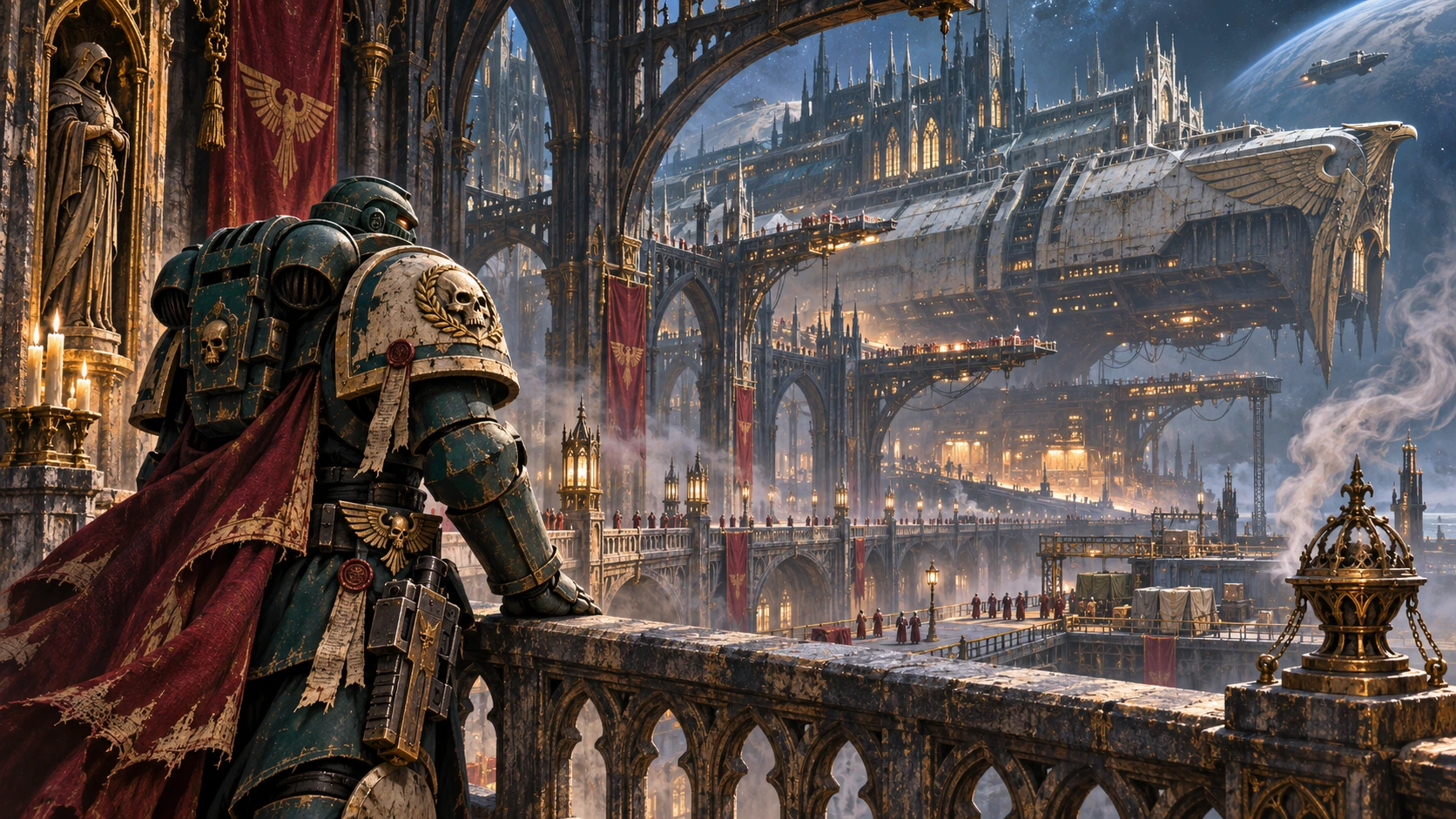
A visual introduction
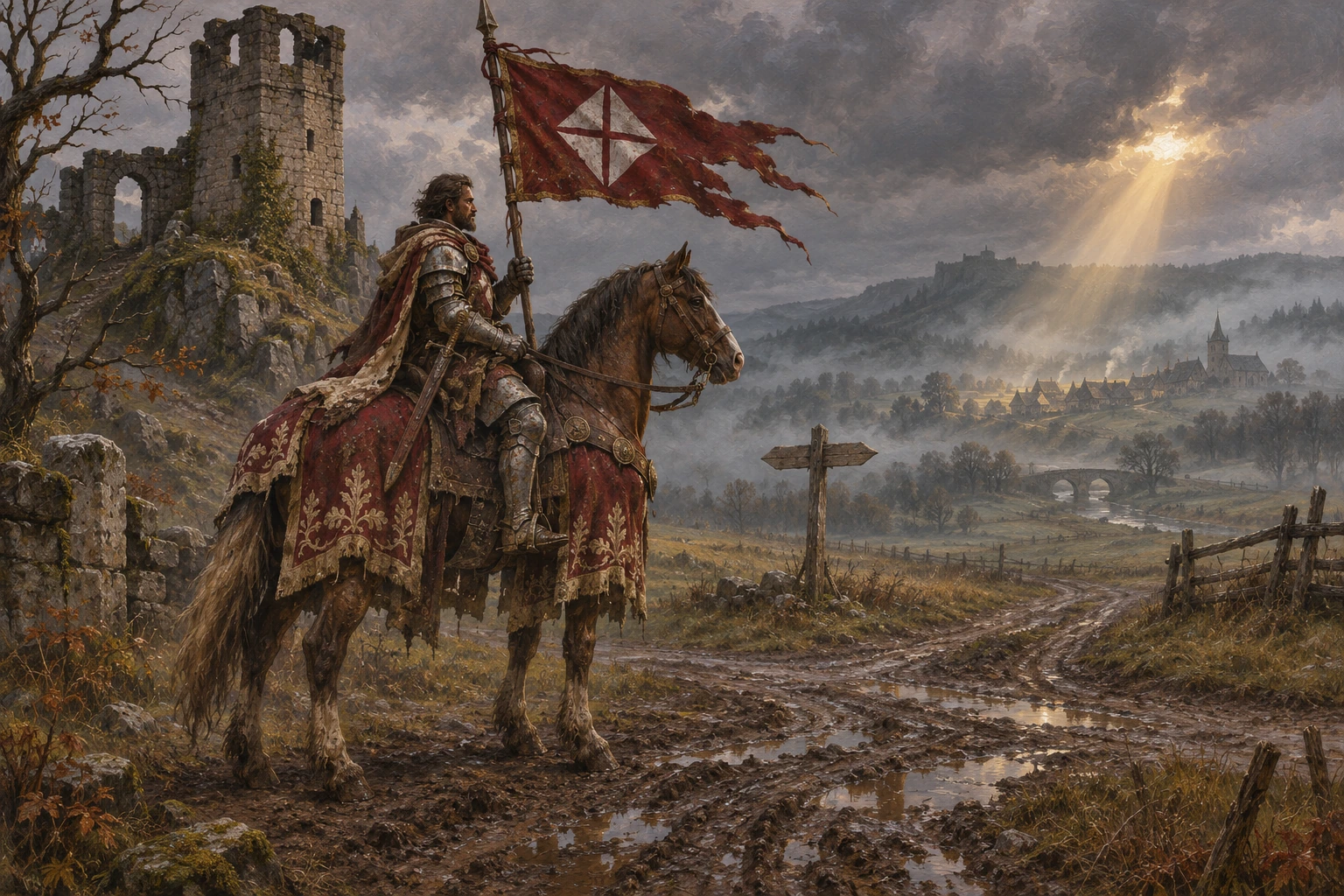
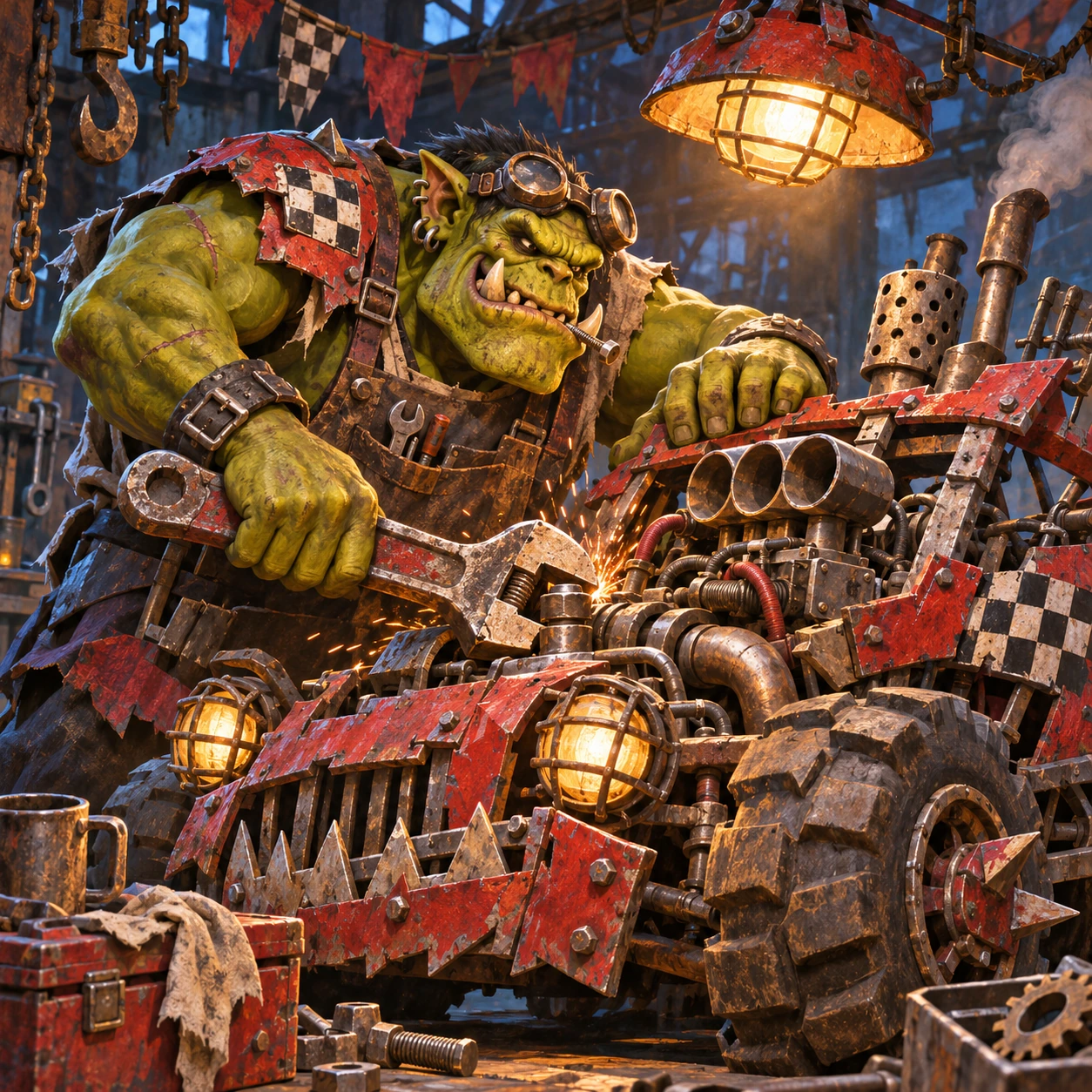
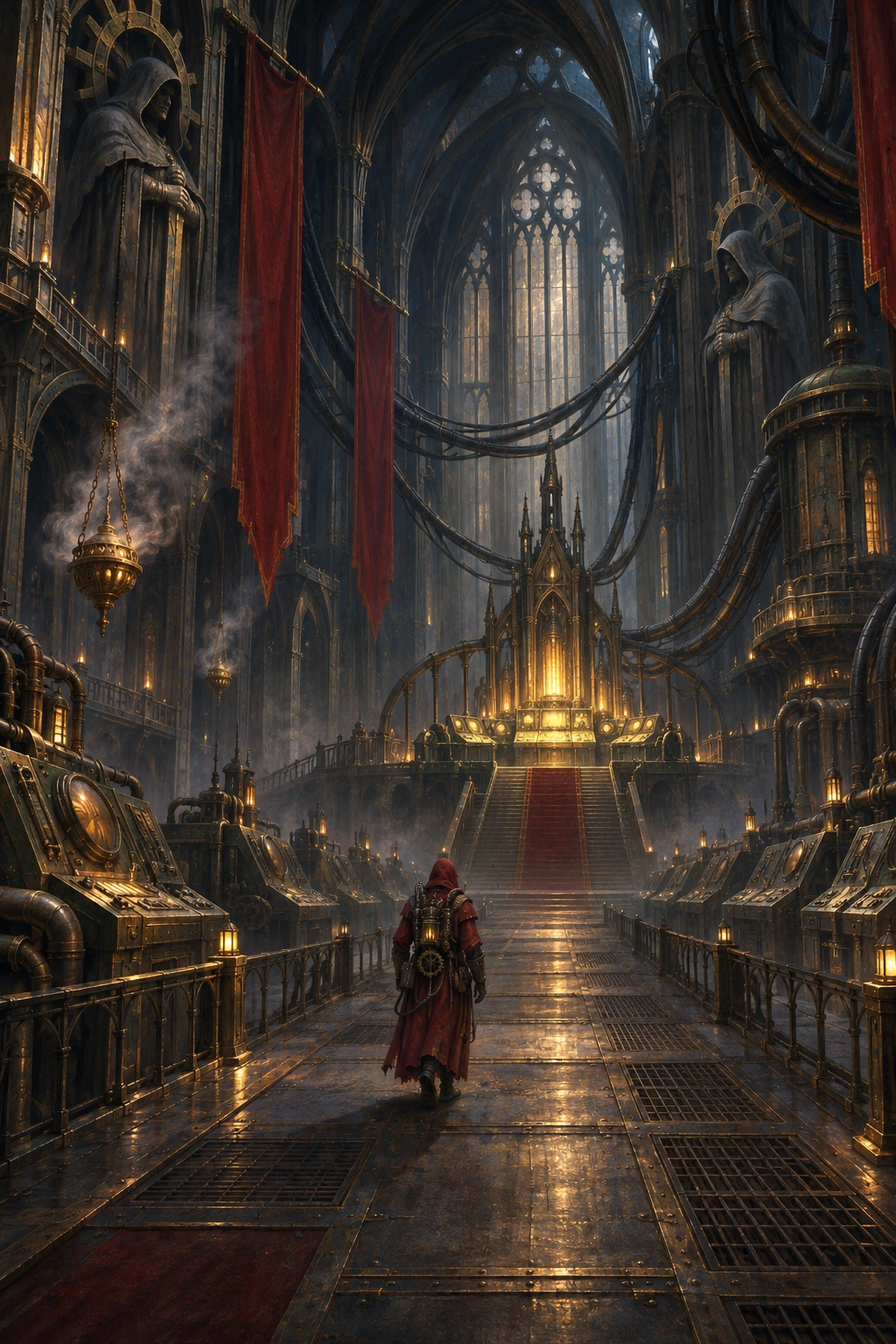
Seven original AI-generated studies explore this subject through a banner, a titled collage and five standalone examples.
Select an image for a closer look. Use the thumbnails, arrow keys or a swipe to compare examples. Zoom in to inspect details, or share the image that inspires you.
Creative toolbox · take this style further
Choose an input and a destination. Search sends your words to the chosen site; Copy & open puts them on your clipboard to paste there.
Create with AI
Turn your chosen input into an image prompt or a new creative direction.
ChatGPT
Copy your input and paste it into a ChatGPT conversation or image request.
Copy & open ChatGPT (new tab)Claude · Anthropic
Develop an image prompt or explore the style in a new Claude conversation.
Copy & open Claude · Anthropic (new tab)Midjourney
Paste your input into the Imagine bar on the Create page.
Copy & open Midjourney (new tab)Adobe Firefly
Copy your input, open Firefly, and paste it into the prompt field.
Copy & open Adobe Firefly (new tab)Leonardo.Ai
Copy your input, open Leonardo, and paste it into the generation field.
Copy & open Leonardo.Ai (new tab)Image search
Find visual references. Short, concrete keywords usually work best.
Lexica
Search AI images and prompts using your selected input.
Search with this input Lexica (new tab)Pexels
Search the photo and video library. Short keywords often work best.
Search with this input Pexels (new tab)Pixabay
Search photos, illustrations and other images.
Search with this input Pixabay (new tab)Unsplash
Search photographs using the style name or your own keywords.
Search with this input Unsplash (new tab)Wikimedia Commons
Search photographs, artworks and historical images. Check each file for its source and reuse terms.
Search with this input Wikimedia Commons (new tab)Art & research
Explore artists, collections and the ideas behind a style.
Wikipedia
Search for background reading. A style may not have its own article.
Search with this input Wikipedia (new tab)WikiArt
Copy your input into WikiArt’s search to explore artists and artworks.
Copy & open WikiArt (new tab)Europeana
Paste your keywords into the search to explore European museum, library and archive collections.
Copy & open Europeana (new tab)Inspiration
Discover portfolios and visual ideas from creative communities.
Instagram hashtags
Search a hashtag made from your input: spaces and punctuation are removed. Instagram may require sign-in.
Search with this input Instagram hashtags (new tab)ArtStation
Paste your input into artwork search for concept art, environments, characters and visual development.
Copy & open ArtStation (new tab)Behance
Paste your input into project search for illustration, design and visual storytelling.
Copy & open Behance (new tab)A closer look
Armor reads as architecture; banners, blades, machines and monuments repeat a faction’s shapes. Tiny figures confront enormous structures, while emphatic lighting separates ornate focal subjects from crowded surroundings. Material wear and painted-miniature detail can make even fantastic designs feel tangible.
One name, several settings
Warhammer should not be treated as one historical art movement or a single interchangeable setting. Games Workshop’s introduction to Warhammer 40,000 describes a far-future galaxy of competing forces, including the Imperium, aliens and Chaos. Its identity connects fiction with the making, painting and playing of miniature armies.
Age of Sigmar belongs to a fantasy cosmology of the Mortal Realms; the official introduction describes eight realms shaped by different forms of magic. The Old World is another distinct fantasy setting. These worlds share a taste for dramatic conflict and emphatic design, but a spaceborne industrial cathedral, a magical realm-city and a heraldic knight carry different narrative expectations.
Start with a silhouette that declares allegiance
Before adding symbols, make the subject legible in outline. A heavily armored figure can feel immovable through a broad chest and low center of gravity. A wiry creature with angular equipment suggests another kind of threat. A tall banner, a curved blade or an oversized shoulder can become the identifying shape.
Choose a small family of forms and repeat it across armor, weapons, architecture and supporting objects. That repetition makes a faction appear designed rather than assembled from unrelated fantasy accessories. In an original interpretation, invented heraldry can provide coherence without pretending to reproduce a specific official unit accurately.
Ornament should have a hierarchy
Warhammer imagery often rewards close inspection: reliefs, rivets, cloth, insignia, devotional objects and mechanical fittings turn surfaces into stories. Yet a convincing composition still needs a primary read. Put the strongest contrast and most important details near the face, gesture or central emblem; let secondary areas support that focus.
Dense detail becomes noise when every edge shines equally. Group ornament into larger masses, leave some planes comparatively plain and use shadows to separate layers. A tiny figure may need exaggerated shapes to read at miniature scale, while a large illustration can reveal finer relationships. These are related design problems, not identical rendering settings.
Scale is part of the drama
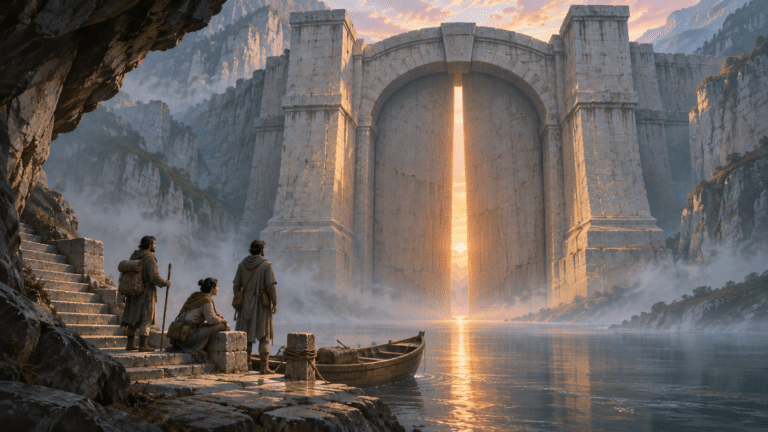
An armored person beside a colossal doorway immediately tells a different story from the same person on an empty background. Establish scale with steps, windows, railings, tools or smaller figures. Repeat those cues consistently so a building feels vast rather than merely enlarged.
In a futuristic scene, massed infrastructure and visible systems can support the sense of an old, heavily inhabited world. In a fantasy scene, terrain, banners and architecture can carry the world’s particular mood. Keep one clear route for the eye through the scene; spectacle is stronger when the viewer can understand where they are looking.
Material, light and wear
Contrast materials deliberately: matte cloth against polished edges, rough stone against painted armor, oily mechanisms against pale dust. Wear should follow use. Contact edges, foot traffic and exhaust areas tell more convincing stories than the same scratch pattern pasted across every surface.
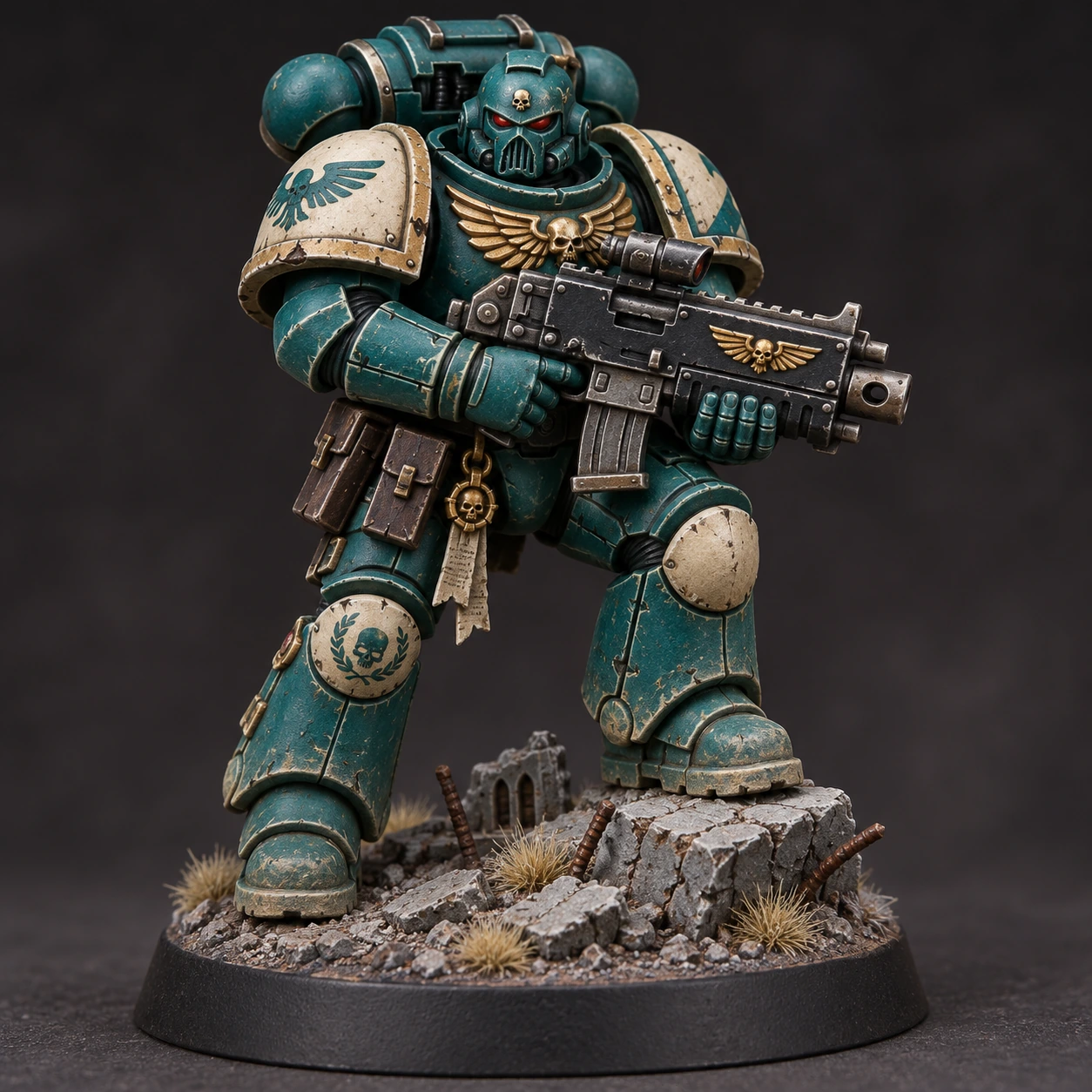
Lighting can be theatrical without flattening the object. A restrained rim light clarifies a silhouette, a warm source gives a face or emblem priority, and cooler surroundings provide depth. For a miniature-like image, small bases, paint texture and a studio setting can signal scale. A generated picture of such an object is still an illustration, not documentation of a physically painted model.
Different worlds, different visual decisions
For Warhammer 40,000, explore the relationship between armored bodies, machinery and overwhelming built space. For Age of Sigmar, let a clearly chosen realm atmosphere shape the light, landscape and magical elements. For The Old World, a more grounded heraldic composition can emphasize banners, mounts, armor and terrain.
The gallery uses original scenes to demonstrate these differences. It does not reproduce an official artwork or claim to document an existing miniature release. A specific named character, regiment or product requires its own reference check; a broad stylistic study should not acquire invented lore just because its image looks convincing.
An AOI interpretation of the craft vocabulary
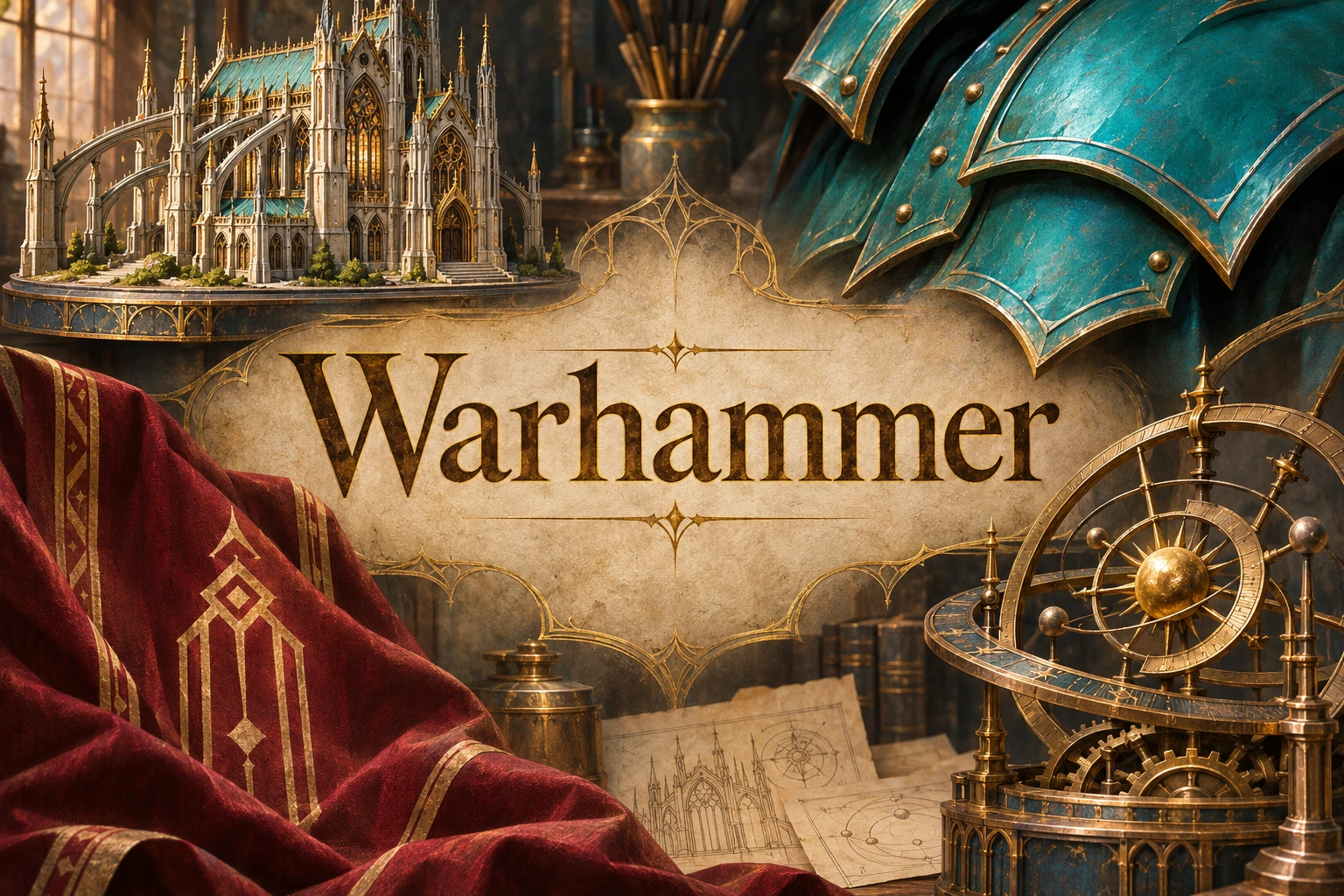
The central collage takes a deliberately non-combat approach. A miniature Gothic building, a painted armor surface, embroidered cloth and a brass astronomical mechanism form a study of architecture, heraldry and material contrast. These invented motifs explore the visual vocabulary without presenting an official faction, product or canonical object.
The collage is an original AOI redesign. Its quieter workshop atmosphere complements the gallery’s larger fictional scenes and miniature-style figure study, showing how the same interest in ornament, scale and tactile surfaces can support different compositions.
A practical image brief
Name the setting, choose the subject and decide whether the result should resemble an illustration, a cinematic scene or a miniature photograph. Add a dominant silhouette, a limited material palette and one scale relationship. Then specify a clear action or visual question, rather than asking for more detail everywhere.
For a cover or banner, protect the focal silhouette from extreme cropping. For a character study, make the face or helmet direction and hand-held equipment readable. For a diorama, let the base explain the situation. Review the result for coherent joints, grip, weapon alignment and architecture, as well as atmosphere. A dramatic image works best when its local details support its larger story.
Positive editorial review (AI-authored)
Warhammer’s visual strength is its ability to make identity readable at several distances. Silhouette and color establish an immediate impression; heraldry, material and ornament reward a closer look. Its miniature tradition also encourages scenes in which figures, bases and surroundings tell a compact story. The best interpretations combine that clarity with an overwhelming sense of scale.
Negative editorial review (AI-authored)
The approach can collapse into indiscriminate armor, skulls and glowing effects. Excessive surface detail may hide the pose, while borrowed symbols can accidentally mix incompatible settings or factions. Stronger work starts with a readable silhouette and a deliberate setting, then chooses a few details that carry meaning. Spectacle cannot repair confusing anatomy or an object that does not connect to the hand holding it.
Neutral editorial review (AI-authored)
Warhammer is an established fictional and commercial visual reference encompassing multiple settings and media. It is useful for studying faction design, miniature presentation, narrative ornament and exaggerated scale. The AOI gallery consists of new AI-generated interpretations. These images are not official Games Workshop artwork, product photographs or authenticated examples of named releases.
A small poetic detour
Original words from the AOI studio.
Poetry
A banner leans into the rain,
A tower answers it again.
Small painted boots cross broken ground;
The world grows vast in scraps around.
One edge of light, one raised command—
An empire balanced in a hand.
The prompt workshop
Original creative exercises. These prompts create new illustrations, not documentary evidence.
A clear armored silhouette
Create an original Warhammer 40,000-inspired armored warrior with invented heraldry. Give the figure a strong readable silhouette, restrained teal and bone colors, a clear three-quarter pose and worn material details concentrated at contact edges. Monumental industrial architecture provides scale. No lettering or official product presentation.
A realm shapes its champion
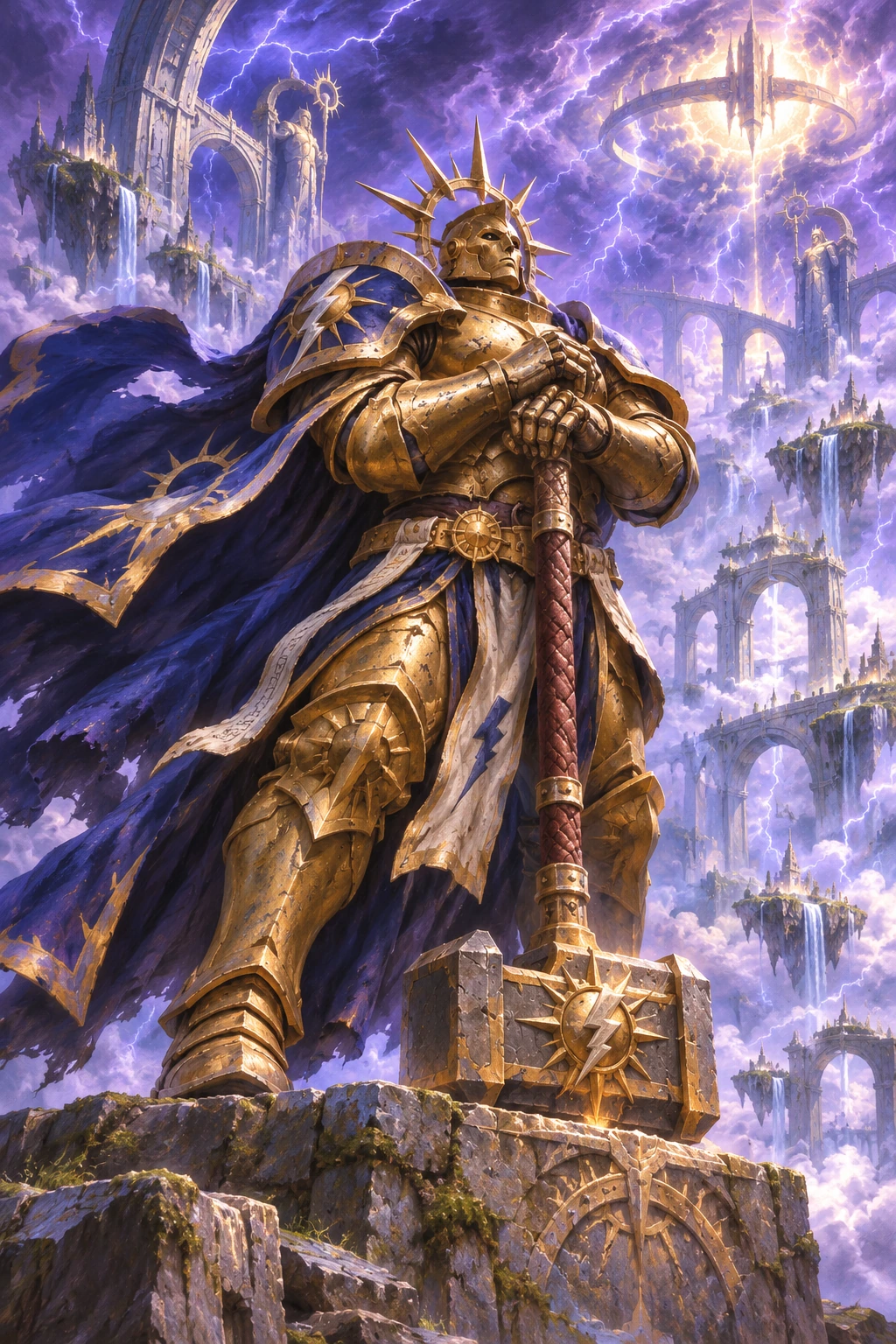
Create an original Age of Sigmar-inspired fantasy champion in a realm of dramatic cloud and lightning. Let the environment shape the lighting and ornament. Keep the pose readable, the armor coherent and the landscape spacious enough to establish scale. Painterly fantasy illustration, no text.
A miniature tells a whole story
Create an AI illustration resembling a carefully painted fantasy miniature diorama: a heraldic knight pauses beside a ruined bridge, with a modest banner and weathered stone base. Make the mount, equipment and ground contacts coherent. Use studio lighting and a clear focal point. This is an invented visual study, no labels or product branding.
Your next inspiration
Discover another art style
Follow a visual thread to the next subject.
A smile from the studio
Jokes
The quartermaster ordered a modest shoulder plate. The workshop returned a fortified district with three chapels, a loading bay and excellent defensive sightlines. It passed inspection. The wearer now needs planning permission to turn left.