
Intensified painting approach
Compare a rain-lit shelter, a red kettle and a wind-bent tree to see how an expressive oil painting gains intensity from a few carefully placed marks.
A visual introduction
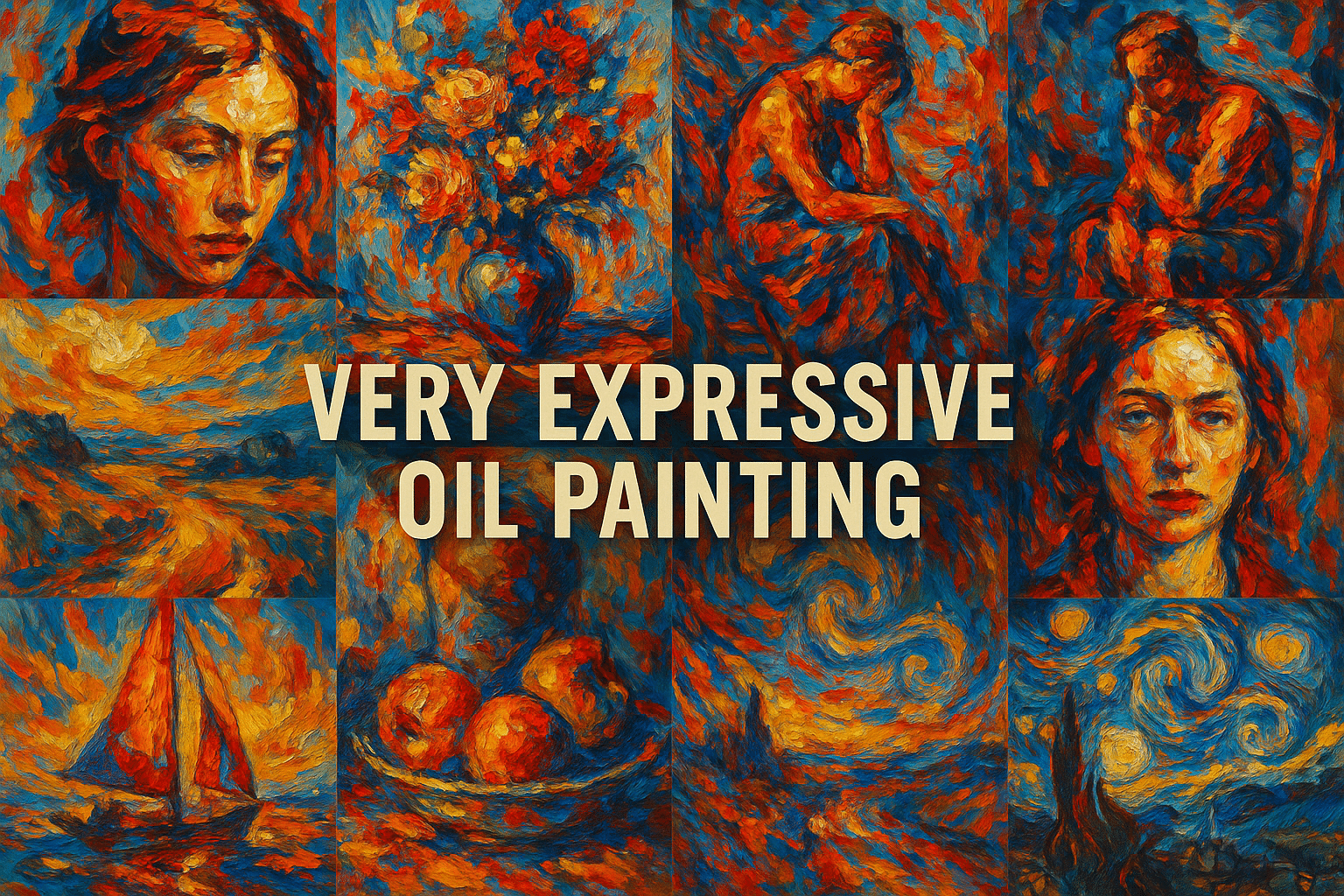
Compare the banner and archive collage with the three separate studies. Captions identify AOI interpretations.
Select an image for a closer look. Use the thumbnails, arrow keys or a swipe to compare examples. Zoom in to inspect details, or share the image that inspires you.

A closer look
Choose one dominant tension: a leaning figure, wind bending a tree or a crowded cluster of objects.
Understanding the subject
This label describes an intended degree of expression rather than a separate movement or a set of founders. Thick paint, abrupt edges and heightened color can contribute, but expression also depends on the subject and the relationships between forms. A violently marked surface is not necessarily more emotionally complex than a restrained one. The useful question is what each intensified choice does within the particular composition.
AOI looking and making workshop
Choose one dominant tension: a leaning figure, wind bending a tree or a crowded cluster of objects. Build the main value structure before exaggerating strokes. Vary pressure, direction and density so active areas have quieter surroundings. Keep a few decisive edges while allowing others to break apart. In a digital study, avoid applying the same thick texture across faces, sky and background. A convincing expressive surface changes with the role of each area, and the strongest mark often works because the rest of the image gives it space.
A roof against the weather
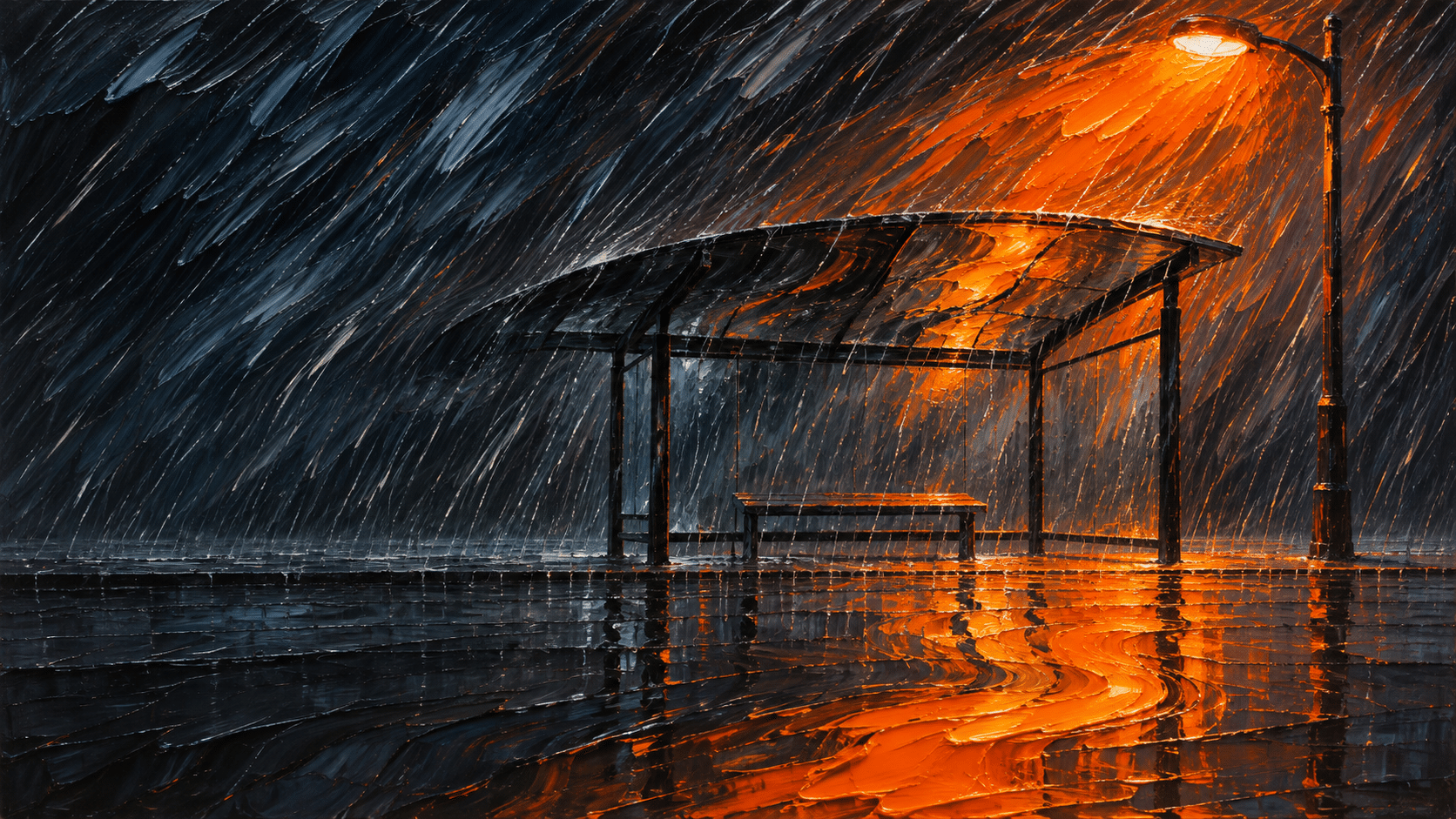
At the bus stop, diagonal rain cuts across the nearly horizontal roof. The two directions make each other visible. Imagine rotating the roof until it follows the rain: the shelter would lose some of its stubbornness. The brightest area of pavement repeats the lamp’s orange but breaks it into short strokes. The line across the bench stays surprisingly calm. It is the place where you can imagine waiting for a bus.
In the companion article on expressive oil painting, brush direction helps describe cloth or grain. Here the question is how far one decision can be pushed before it stops working. Turn the whole shelter orange and the reflection loses its surprise. Make every stroke diagonal and the roof no longer offers protection. Try a thumbnail in two values before reaching for a brighter colour.
How little paint does a pour need?
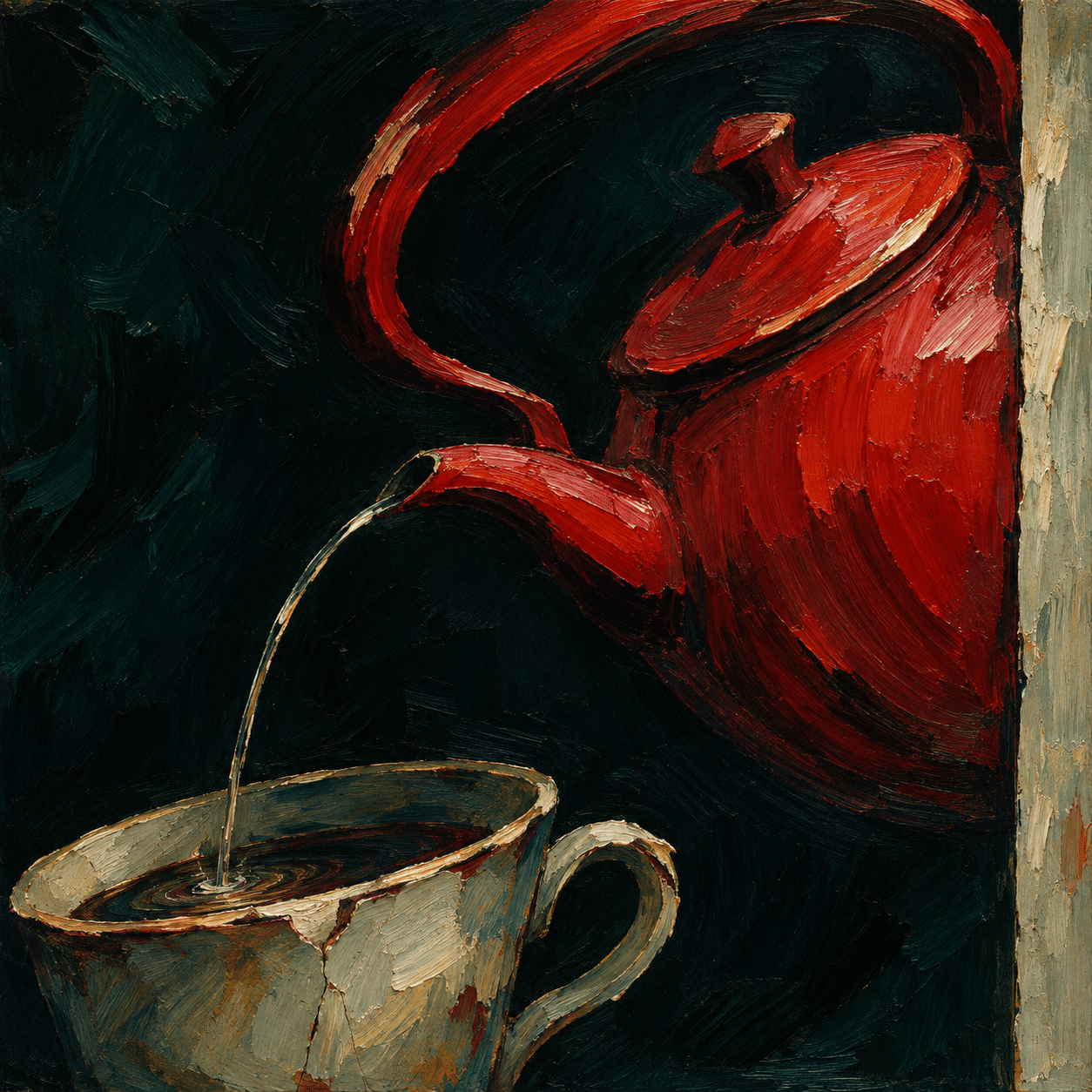
The red kettle nearly escapes the picture on the right. Its handle takes up more space than the cup; the connection between them is a narrow stream. Cover the stream with one finger. Two coloured shapes remain, but the action between them stops. Here the thinnest mark carries the most weight. Thick impasto can catch light on an actual painted surface, as the National Gallery’s glossary explains. A digital picture can suggest that relief, but it will not cast a different shadow when the viewer moves a lamp.
A landscape with two tempos
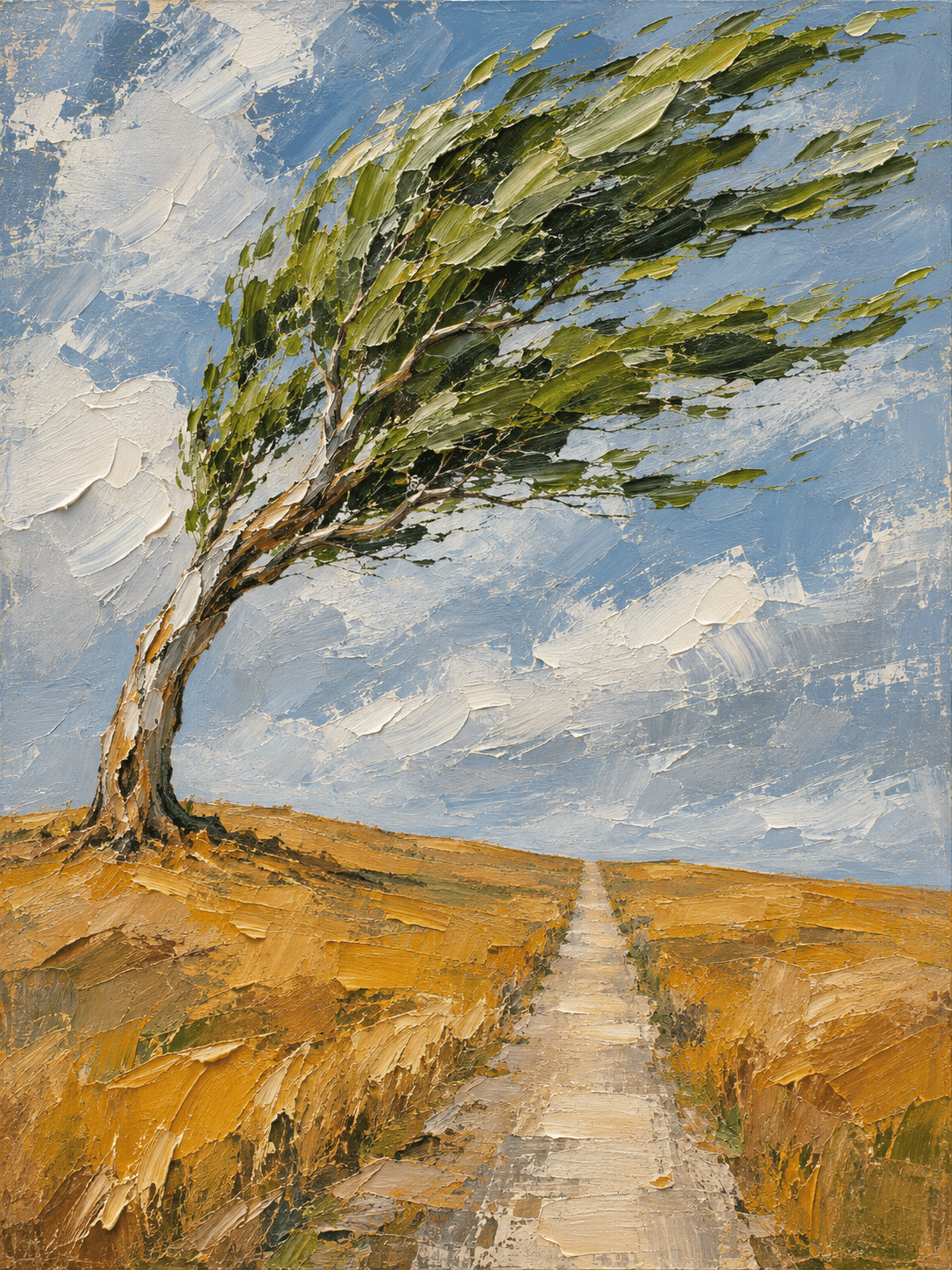
At the base of the tree, the path leads almost straight to the horizon. Above it the leaves move to the right in long torn shapes. Both are exaggerated, but they do different work. The path asks how long it would take to cross the field; the crown catches one instant of wind. Compare this with the kettle, where the action crosses the gap from spout to cup. Which picture needs its largest mark, and which needs its smallest?
Draw either subject at the size of a postage stamp. Allow yourself one sweep that breaks an outline, one thin line that restores it and one part of the paper that stays untouched. Enlarge the result. Add texture only where it changes what a reader can see. The point is to discover which mark can survive being enlarged without turning into decoration.
A small poetic detour
Original words from the AOI studio.
Poetry
The bus is late.
A lamp lays orange on the road.
Rain draws through it, line by line;
the empty bench keeps still.
The prompt workshop
Original creative exercises. These prompts create new illustrations, not documentary evidence.
A tree under pressure
Create an original intensely expressive oil-painting interpretation of a tree bending in wind, forceful diagonal strokes, a stable dark ground and a few sharp light accents. Keep the main silhouette readable.
A charged interior
Create an original expressive painting of an empty red chair in a blue room, scraped surfaces, thick selective highlights and compressed space. Let brush direction support the emotional tension.
Energy and stillness
Create an original abstract oil-painting-style composition with a dense turbulent center and broad thinly painted margins. Use varied mark scale and one restrained color family rather than uniform texture.
Your next inspiration
Discover another art style
Follow a visual thread to the next subject.

A smile from the studio
Jokes
Trade two sketches. Each person gets one small paper patch to cover the loudest mark. Which picture whispers more clearly afterward?
Sources and further exploration
Impasto | Glossary | National Gallery, London
Titian | Diana and Callisto | NG6616 | National Gallery, London