
Japanese pictorial tradition
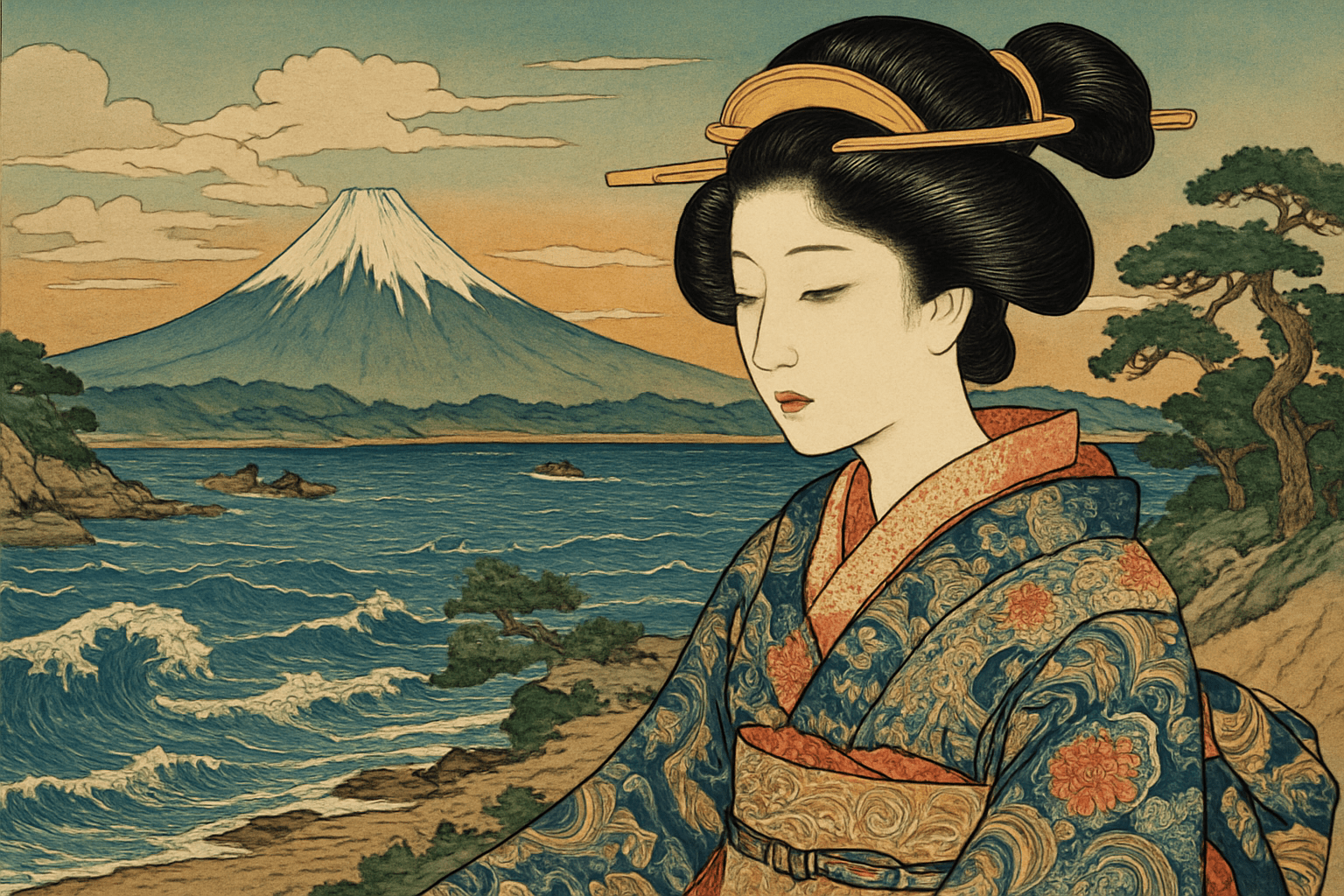
Ukiyo-e includes varied subjects and formats. Its prints offer rich lessons in line, color areas, cropping and the organization of everyday or imagined scenes.
A closer look
For an original print-inspired composition, choose a clear foreground shape and a route for the eye beyond it.
Understanding the subject
Ukiyo-e encompasses paintings and prints associated with a particular history of Japanese visual culture. Familiar woodblock prints often involved collaboration among designer, carver, printer and publisher, rather than one person doing every task. Subjects and purposes varied. A digital image with flat color is not automatically an ukiyo-e work, and the tradition should not be reduced to a few famous motifs or a generic national style.
AOI looking and making workshop
For an original print-inspired composition, choose a clear foreground shape and a route for the eye beyond it. Use contour selectively, with broad color areas that remain distinct without heavy shading. Cropping can make an ordinary object feel immediate, while a quieter distant area establishes pace. Inspect repeated patterns so they follow the surfaces they decorate. Leave writing and seals out unless they are accurately designed for a stated purpose. A contemporary setting helps make the distinction between formal study and historical reproduction clear.
The prompt workshop
Original creative exercises. These prompts create new illustrations, not documentary evidence.
Rain at a station
Create an original contemporary woodblock-print-inspired scene of commuters under umbrellas at a small station, bold foreground cropping, clear contours and broad blue-gray color areas. Include no seals or invented writing.
A river bend
Create an original print-inspired landscape with a large foreground pine branch, a winding river and a quiet distant village. Use limited layered color and deliberate spacing rather than photographic shading.
Modern object, print logic
Create an original image of a bicycle leaning beside a rain barrel, flat color planes, selective contour and patterned reflections. Make the contemporary subject clear and avoid copying a known print.
Your next inspiration
Discover another art style
Follow a visual thread to the next subject.

Sources and further exploration
Woodblock Prints in the Ukiyo-e Style – The Metropolitan Museum of Art
Okumura Masanobu – Two Figures – Japan – Edo period (1615–1868) – The Metropolitan Museum of Art
Creative studies to try
Explore these collected prompts as creative interpretations. They are starting points for image-making, not reproductions of historical artworks or evidence about a tradition.
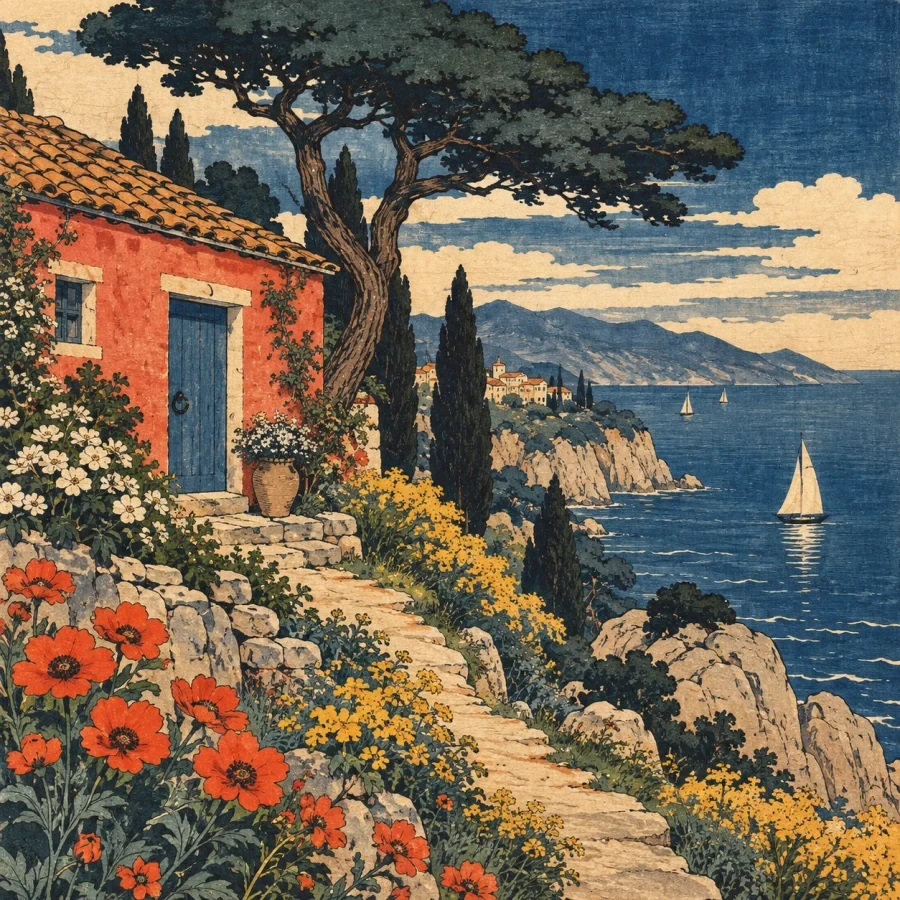
Visual cues: Flowing lines, flat color
Study 1 — Ukiyo-e
Apply the following visual style to my subject or project, preserving its core content and purpose. Use an ukiyo-e woodblock print aesthetic with confident dark contour lines, flattened perspective, asymmetrical composition, and broad areas of muted indigo, ochre, and vermilion. Add subtle woodgrain, paper fibers, and gentle color gradations characteristic of layered printing. Adapt the composition and palette to suit my subject. Do not add text unless my project calls for it.
Prompt source: Emergent Mind Style Atlas. Select the text to copy, then adapt the subject and composition.