
Historical objects and visual culture
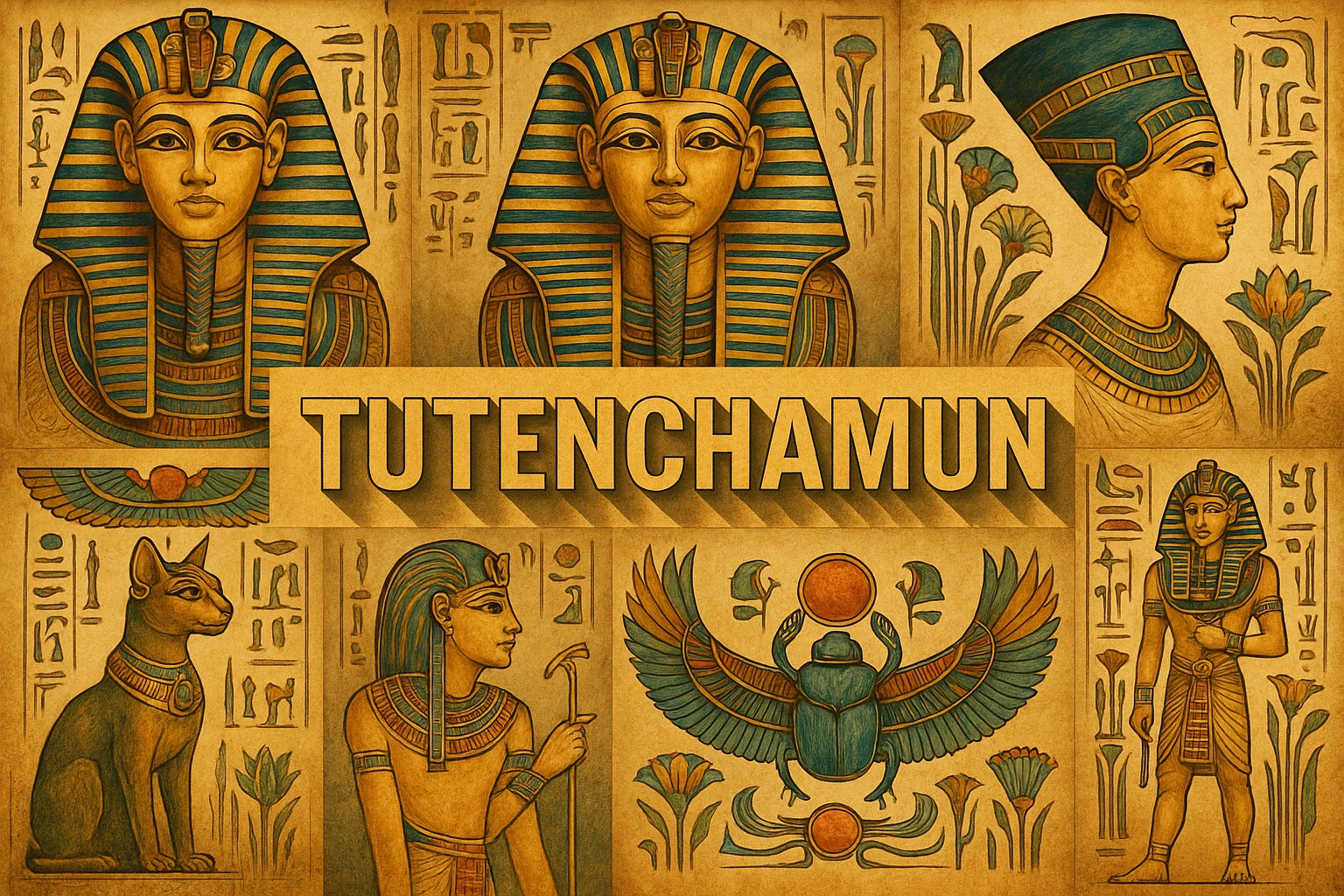
Tutankhamun is a historical ruler associated with a remarkable group of surviving burial objects, not a separate art movement.
A closer look
When looking at a documented object, separate overall shape, repeated ornament and small details before attempting a study.
Understanding the subject
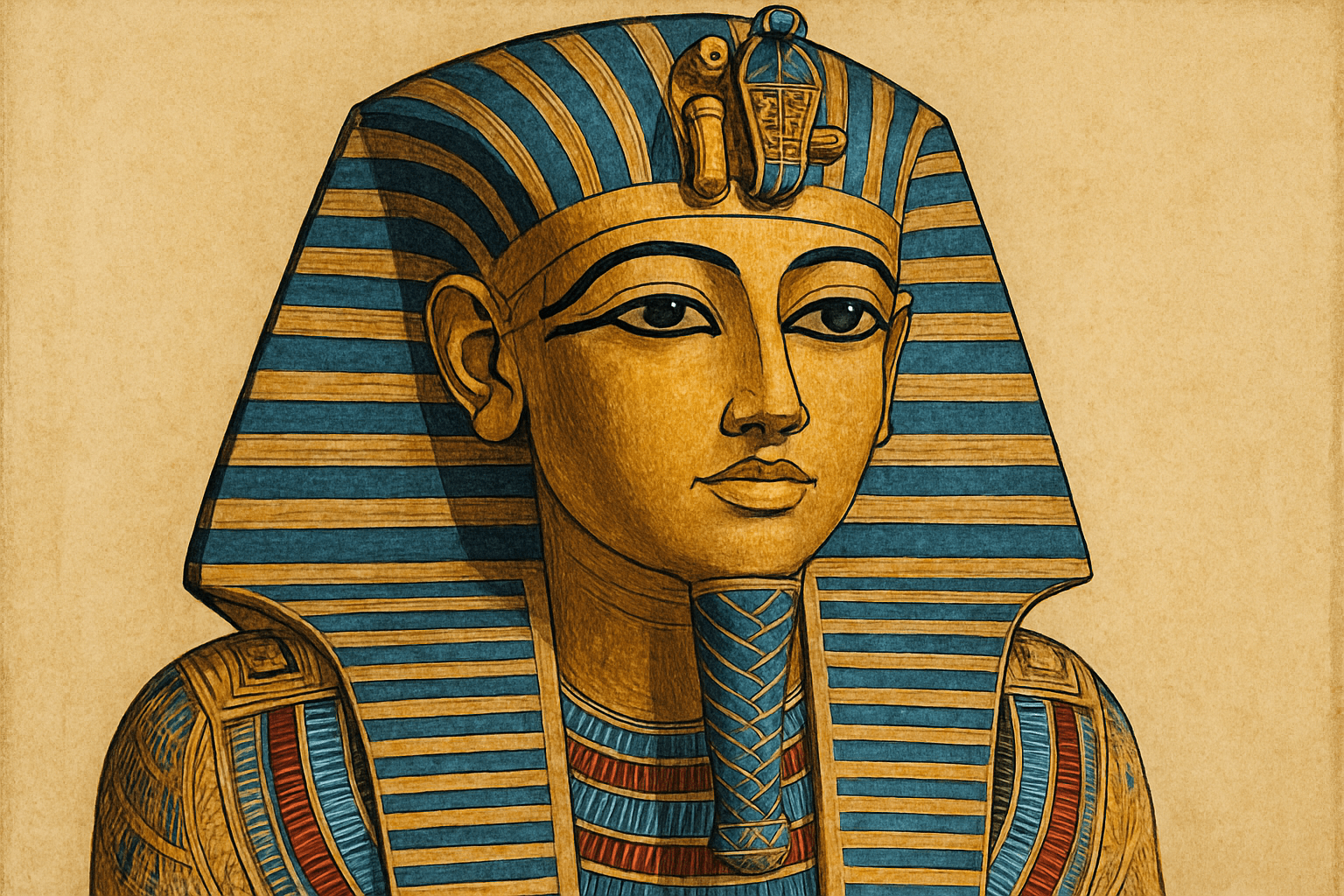
Objects from Tutankhamun’s burial, including the well-known mask, belong to specific ancient Egyptian funerary contexts. Their materials, forms and imagery should be considered as parts of those contexts rather than as a generic luxury aesthetic. A picture inspired by gold and blue surfaces is not automatically a depiction of the mask, and an invented object should never be presented as a newly found treasure or an accurate reconstruction.
AOI looking and making workshop
When looking at a documented object, separate overall shape, repeated ornament and small details before attempting a study. Use controlled reflections to describe a metallic surface without turning it into a featureless glow. If historical accuracy matters, work from a clearly identified museum reference and check details individually. For a freer AOI exercise, use an invented secular object and state that it is contemporary. The prompts here explore material contrast and ceremonial presentation without inventing archaeological evidence or assigning unsupported meanings to symbols.
The prompt workshop
Original creative exercises. These prompts create new illustrations, not documentary evidence.
Gold and blue study
Create an original contemporary ceremonial vessel with gold-like surfaces and deep blue inlays, carefully controlled reflections and a quiet dark background. Use invented geometric decoration, not a claimed ancient artifact.
Museum lighting exercise
Create an illustration of an invented gilded object displayed on a neutral plinth, soft side lighting revealing shallow ornament and material contrast. Include no museum labels, excavation claims or copied royal insignia.
Material abstraction
Create an abstract composition of curved gold-colored planes and small blue insets, using symmetry and subtle wear as visual devices. Keep it clearly contemporary rather than simulating a historical discovery.
Your next inspiration
Discover another art style
Follow a visual thread to the next subject.

Sources and further exploration
Grand Egyptian Museum – The Golden Burial Mask of Tutankhamun