
Historical Andean arts and material culture
Inca art encompasses textiles, ceramics, metalwork and architecture associated with the Inca world. Its forms make more sense when studied through materials, use, place and documented objects than through a generic “ancient” aesthetic.
A visual introduction
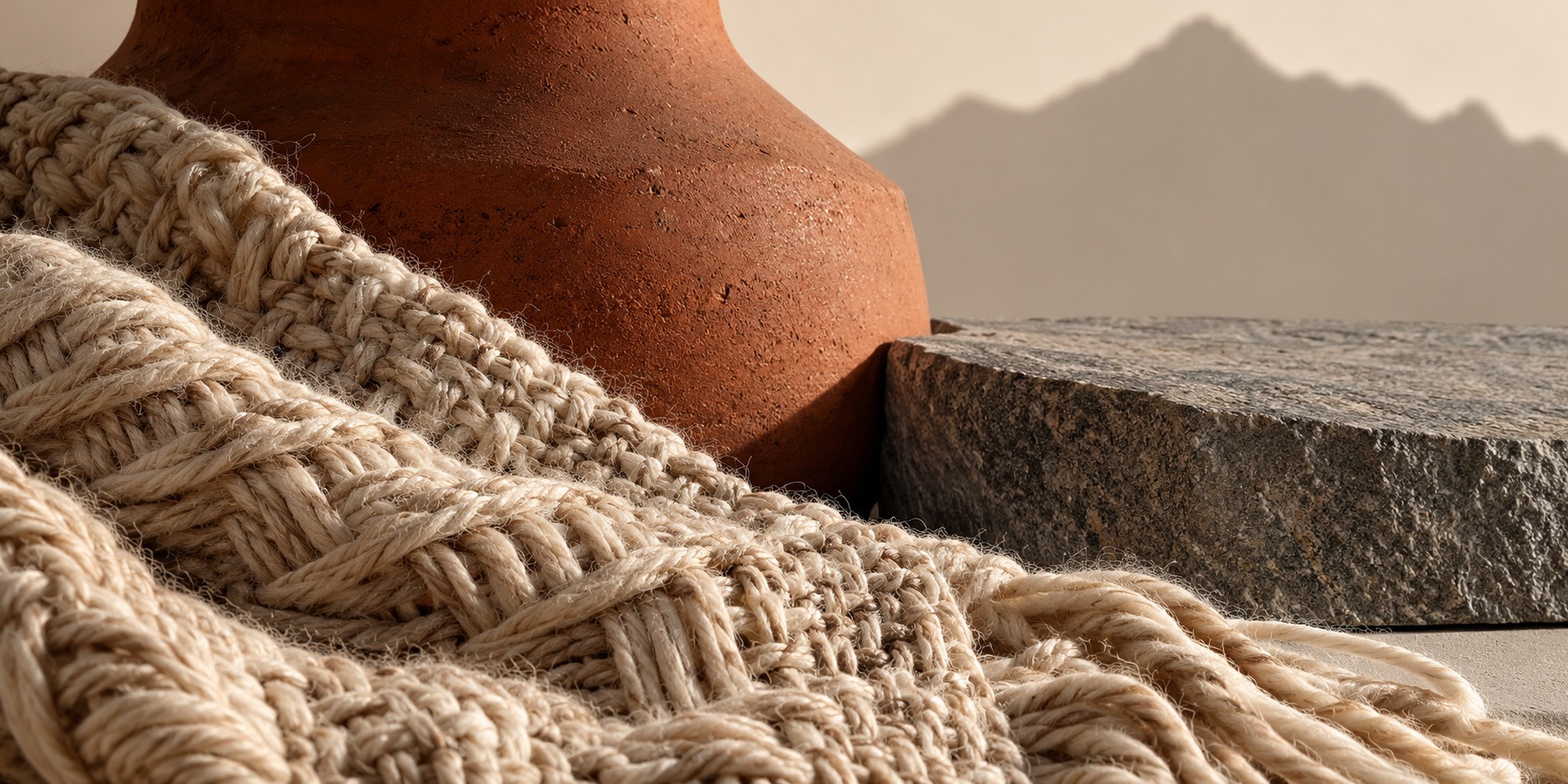
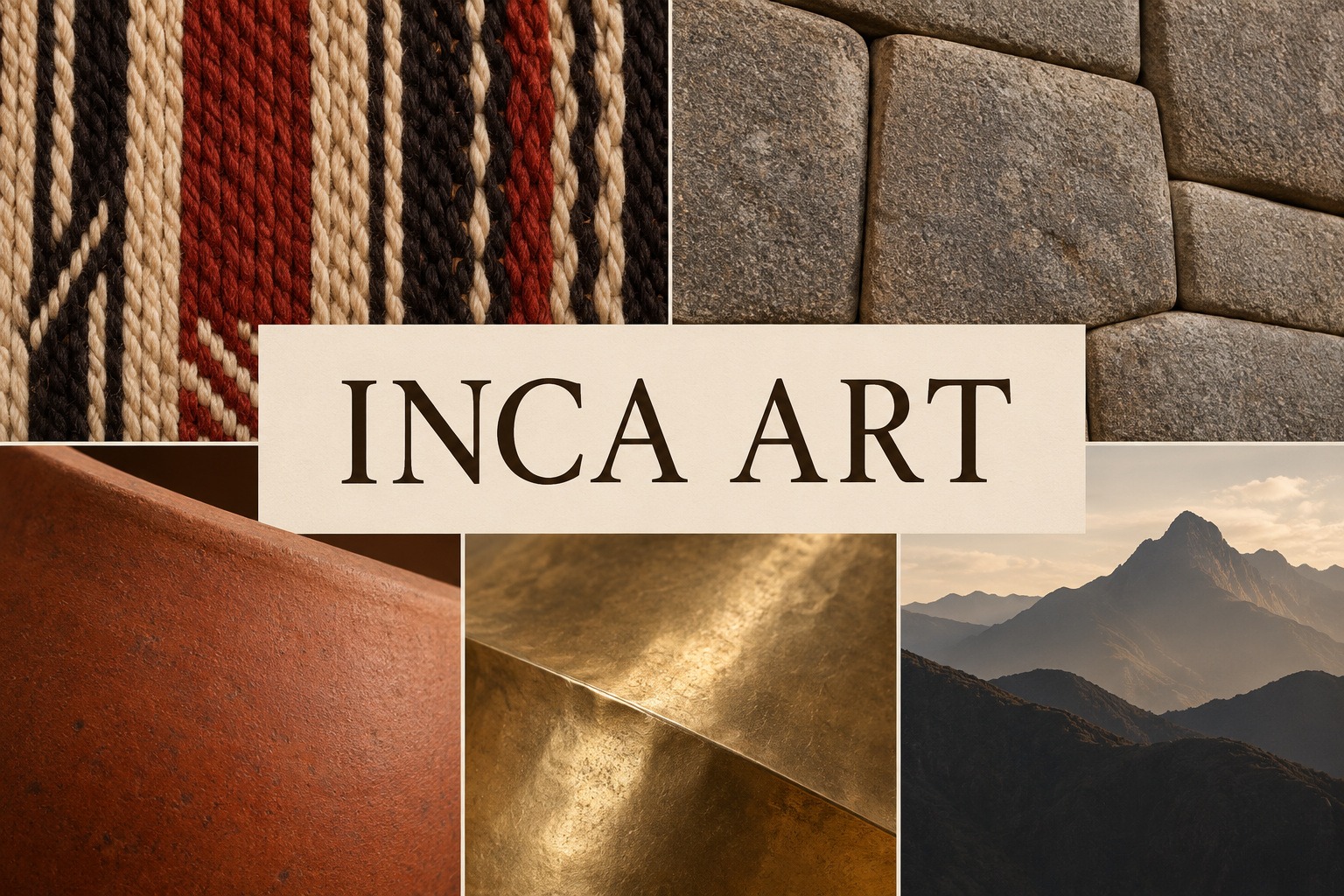
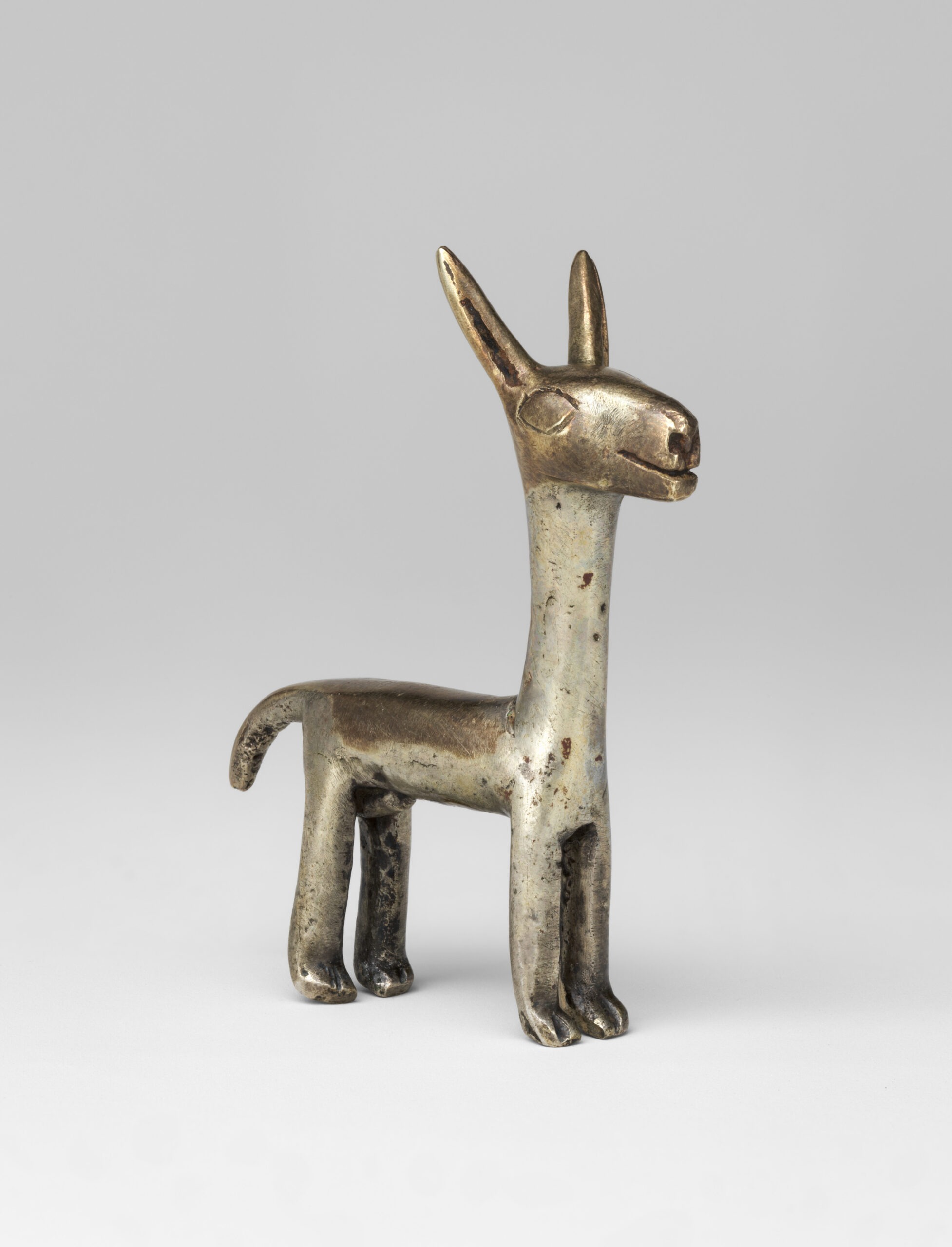
Three credited museum photographs document a tunic, urpu and miniature camelid. The banner and central-title collage are contemporary AI material studies, clearly distinguished from historical objects.
Select an image for a closer look. Use the thumbnails, arrow keys or a swipe to compare examples. Zoom in to inspect details, or share the image that inspires you.
Creative toolbox · take this style further
Choose an input and a destination. Search sends your words to the chosen site; Copy & open puts them on your clipboard to paste there.
Create with AI
Turn your chosen input into an image prompt or a new creative direction.
ChatGPT
Copy your input and paste it into a ChatGPT conversation or image request.
Copy & open ChatGPT (new tab)Claude · Anthropic
Develop an image prompt or explore the style in a new Claude conversation.
Copy & open Claude · Anthropic (new tab)Midjourney
Paste your input into the Imagine bar on the Create page.
Copy & open Midjourney (new tab)Adobe Firefly
Copy your input, open Firefly, and paste it into the prompt field.
Copy & open Adobe Firefly (new tab)Leonardo.Ai
Copy your input, open Leonardo, and paste it into the generation field.
Copy & open Leonardo.Ai (new tab)Image search
Find visual references. Short, concrete keywords usually work best.
Lexica
Search AI images and prompts using your selected input.
Search with this input Lexica (new tab)Pexels
Search the photo and video library. Short keywords often work best.
Search with this input Pexels (new tab)Pixabay
Search photos, illustrations and other images.
Search with this input Pixabay (new tab)Unsplash
Search photographs using the style name or your own keywords.
Search with this input Unsplash (new tab)Wikimedia Commons
Search photographs, artworks and historical images. Check each file for its source and reuse terms.
Search with this input Wikimedia Commons (new tab)Art & research
Explore artists, collections and the ideas behind a style.
Wikipedia
Search for background reading. A style may not have its own article.
Search with this input Wikipedia (new tab)WikiArt
Copy your input into WikiArt’s search to explore artists and artworks.
Copy & open WikiArt (new tab)Europeana
Paste your keywords into the search to explore European museum, library and archive collections.
Copy & open Europeana (new tab)Inspiration
Discover portfolios and visual ideas from creative communities.
Instagram hashtags
Search a hashtag made from your input: spaces and punctuation are removed. Instagram may require sign-in.
Search with this input Instagram hashtags (new tab)ArtStation
Paste your input into artwork search for concept art, environments, characters and visual development.
Copy & open ArtStation (new tab)Behance
Paste your input into project search for illustration, design and visual storytelling.
Copy & open Behance (new tab)A closer look
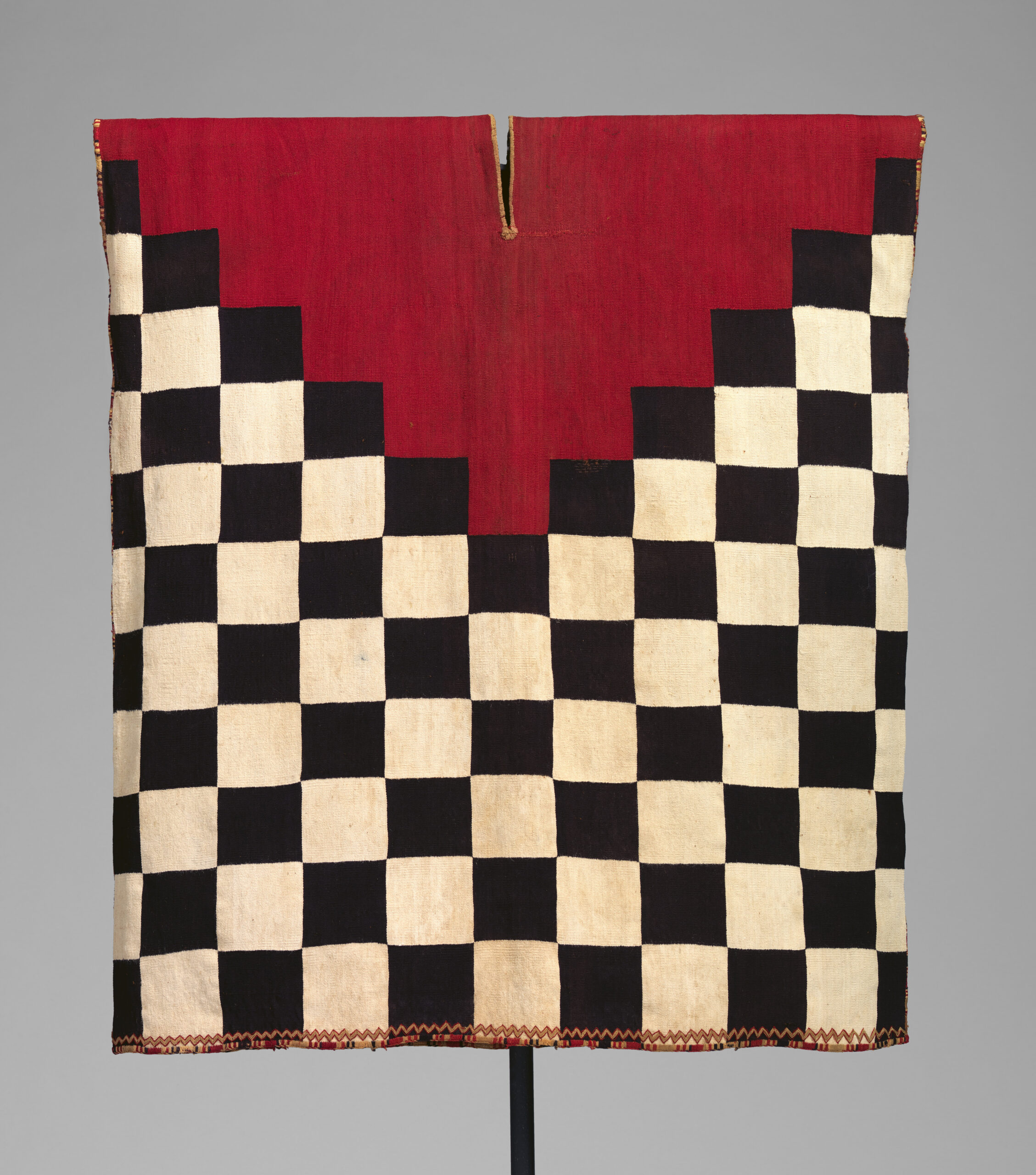
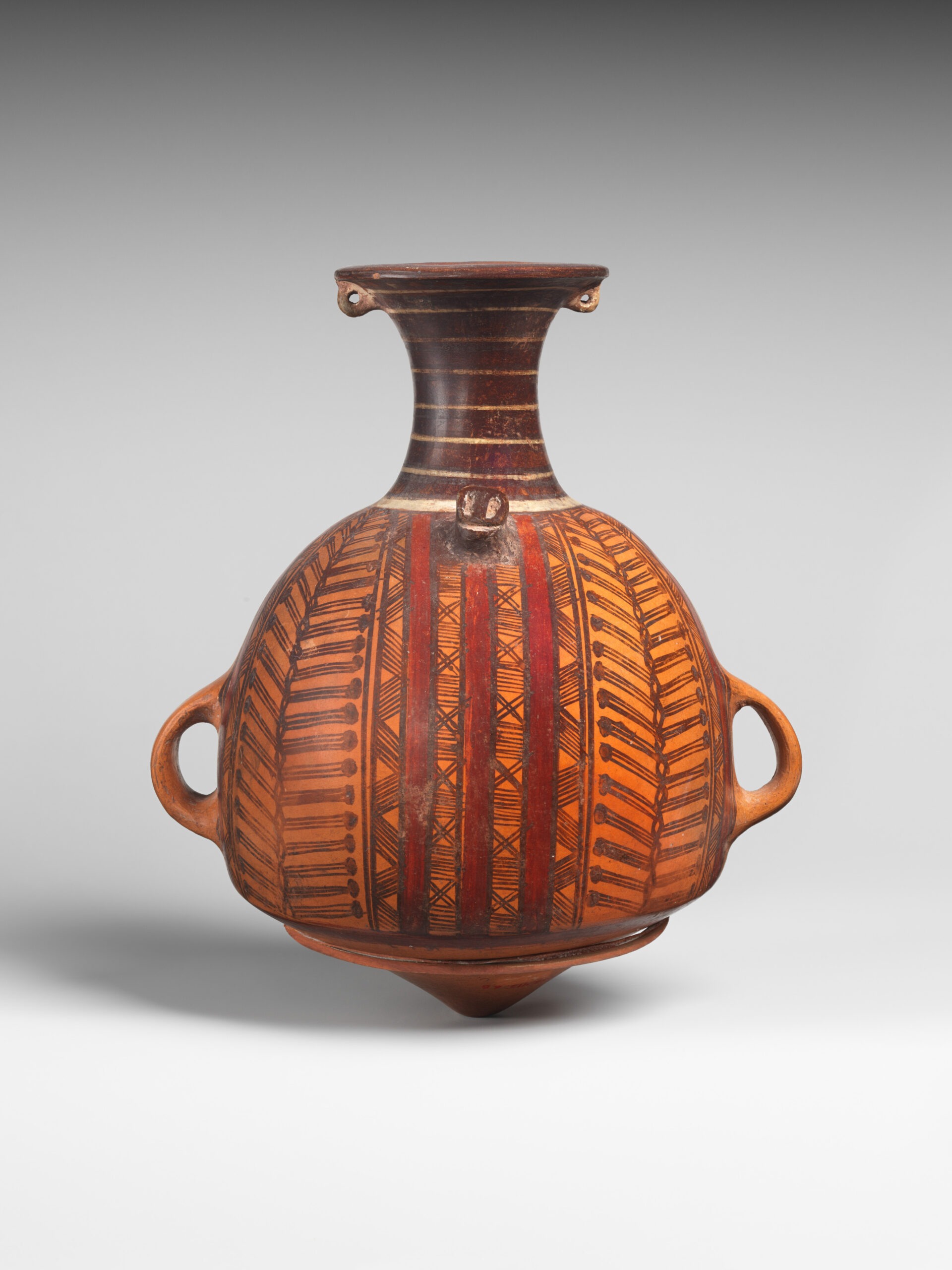
Compare the woven checkerboard, the painted jar and the small metal camelid: each organizes form through a different material and purpose.
Scope: the Inca world, not all ancient American art
This guide concerns the arts of the Inca world in the Andes, particularly the imperial period represented by the museum objects below. Inca is not a blanket label for every precolonial American civilization or for all Andean production. Earlier traditions, regional communities and later colonial works require their own identification. The three documented objects here are dated by the Metropolitan Museum to 1400–1535 CE.
Tawantinsuyu was connected through a vast road system centered on Cusco. UNESCO’s account of Qhapaq Ñan emphasizes infrastructure linking production, settlement and worship, incorporating earlier Andean knowledge. That setting helps explain why portable objects and monumental construction belong in the same overview, while remaining different kinds of evidence. Visual resemblance alone cannot establish an object’s date, makers or cultural identity.
Textiles: structure, pattern and the body
The featured museum tunic, accession 2017.674, is made of camelid fiber. Its black-and-cream checkerboard and red upper area create a strong arrangement across the garment. The neck opening and overall shape remind us that the pattern belongs to clothing, not an isolated modern graphic. The museum record discusses the social significance of such finely made textiles; its attribution and material identification are more reliable than guesses from color alone.
For close looking, trace the large color divisions before inspecting individual threads. Ask how the pattern meets an edge or opening and how repetition changes near the shoulders. A photograph cannot convey the full weight, flexibility or handling of a textile. Do not infer a universal symbolic dictionary from one garment, and do not treat every geometric unit in an invented design as an authentic Inca sign.
Ceramics: a vessel is a designed volume
The Met’s urpu, accession 1978.412.68, is a ceramic jar with slip decoration. A large rounded body, narrow neck, flared rim and pointed base distinguish its profile. The side handles and projecting lug relate to carrying arrangements; vessels of this type were used for storage and transport, including chicha and other provisions. The museum record provides the object-specific context.
Look around the pictured volume rather than reading its decoration as a flat strip. Vertical painted bands divide the curved body; their apparent widths change as they turn away from the viewer. For a drawing exercise, outline the silhouette first, add the openings and attachments, and only then study the pattern. This order makes the vessel’s construction visible and prevents ornament from concealing impossible geometry.
Metalwork: small scale, careful identification
The miniature camelid effigy, accession 1974.271.36, measures only about five centimeters high. The Met identifies its material as an alloy of silver, gold and copper and describes its casting. It should not be labeled simply a solid-gold llama. Its upright neck, compact body and separate legs make a small form immediately legible.
The museum discusses broader ritual associations of such figures, but that does not justify inventing an excavation site or specific ceremony for this object. Keep the distinction between an object’s documented record and a general cultural comparison. Its photograph is also a reminder that a gleaming surface alone cannot identify a metal or demonstrate how an object was made.
Architecture, terrain and continuing heritage
UNESCO describes Machu Picchu through the relationship between construction and its dramatic mountain setting. The important visual question is how built form occupies terrain, rather than whether a generated wall looks impressively old. Qhapaq Ñan adds another scale: roads, steps and related structures organize movement across varied landscapes. Both sources place architecture within wider systems of use.
The Inca imperial state belongs to history; Andean communities do not belong only to the past. UNESCO identifies present-day communities as custodians of road segments and associated knowledge. Avoid language suggesting that the people and practices of the Andes simply disappeared. Contemporary work should be identified through its actual makers and context, not automatically assigned to the imperial period.
Reading the gallery and its evidence
The three standalone examples are museum photographs, credited with collection records, dates, materials and accession numbers. They are documentary reference images. The banner and titled collage are newly generated AOI material studies: fibers, clay, stone, metal and a mountain-shaped setting. They are contemporary editorial compositions, not photographs or reconstructions of Inca artifacts.
This separation is deliberate. The material studies introduce tactile contrasts without manufacturing ceremonial objects or borrowed cultural symbols. Use them to discuss roughness, interlacing, curvature and reflected light. Use the museum records to discuss historical identification. A visually convincing generated object cannot substitute for provenance, archaeological documentation or a collection record.
An original material-first workshop
Choose one problem before making an image: woven repetition, a rounded clay volume, or fitted stone relationships. Draw three small studies of the same problem with different proportions. Keep the material readable at each scale. For weaving, follow a consistent crossing rhythm; for clay, preserve the vessel wall and opening; for stone, consider how neighboring masses meet and carry weight.
Then create a contemporary composition using that material problem without claiming it belongs to an Inca maker. A plain woven surface beside a clay form can explore contrast between linear and curved structures. Write a caption stating what you invented and what you studied. If a historical object is referenced, identify the source record separately so the viewer can check it.
Palette, prompt vocabulary and boundaries
The selected tunic and jar suggest useful study palettes of dark, cream, red and earthy tones; the metal figure adds a different surface response. This is a palette drawn from these examples, not a universal rule for Inca art. Avoid adding gold, mountains and geometric borders merely to make an image appear “ancient.” Ask whether each choice explains a material or an observed form.
Useful contemporary prompt language includes interlaced threads, restrained color blocks, a clearly shaped clay volume, fitted joints, and controlled reflections. Avoid mixing Mesoamerican pyramids or unrelated masks into an Inca overview. Do not ask a generator to invent authentic sacred symbols, archaeological finds or legible historical inscriptions. When authenticity matters, start with documented objects and the people qualified to interpret them.
About this guide and its illustrations
This is an AI-authored AOI guide under Penny Wraiter, AOI’s editorial persona. Three credited Met Open Access photographs document historical objects. The new banner and collage are AI-generated contemporary material studies, not Inca artifacts or archaeological reconstructions. The exercises and poem are original AOI interpretations.
A small poetic detour
Original words from the AOI studio.
Poetry
Thread crosses thread, and keeps the work of meeting.
Clay gathers space inside a patient curve.
A little metal creature lifts its listening;
a stone finds where another stone can rest.
We look more closely when we name the making,
more carefully when names are not our own.
Let every borrowed image keep its history;
let what we newly make be clearly shown.
The prompt workshop
Original creative exercises. These prompts create new illustrations, not documentary evidence.
Study material without inventing an artifact
Create a contemporary editorial still life of interlaced undyed fibers beside a plain red-clay volume and gray stone. Emphasize tactile differences and quiet light. No cultural symbols or claims of historical authenticity; label it an original material study.
Let construction organize the image
Create a new abstract composition comparing a woven surface, a curved ceramic surface and fitted stone joints. Use restrained cream, charcoal and ocher, plausible material structure and calm spacing. Do not reproduce an artifact or add unrelated pyramids, masks or sacred imagery.
Compare the same structure at three scales
Design three contemporary studies of a simple interlacing pattern: close material detail, a medium field of repeating threads, and a distant arrangement of color blocks. Keep the design original and identify it as a weaving exercise, not an authenticated Inca textile.
A smile from the studio
Jokes
A studio exercise: give thread, clay and stone the same simple shape. Then let each material explain, in its own way, why it would prefer a different one.