
Painting tendency
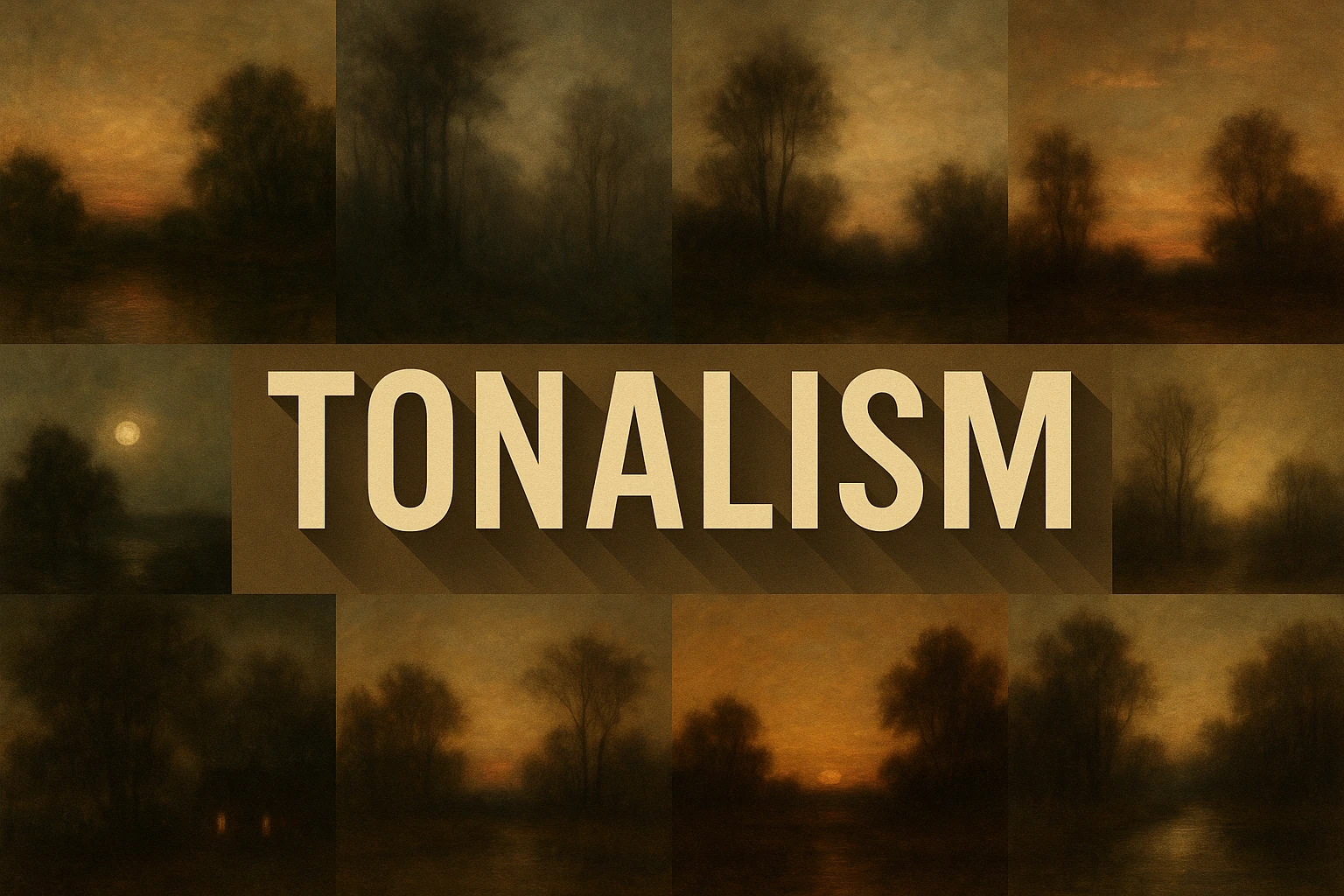
Tonalism directs attention to close value relationships and atmosphere. Quiet color can still support a precise and compelling composition.
A closer look
Choose a time of day or weather condition that naturally simplifies color.
Understanding the subject
Tonalism is associated with landscape painting in which a restricted range of tones and atmospheric unity play a major role. Individual painters and works differ, so it should not be reduced to a brown filter applied to any scene. Soft transitions can connect land, water and sky, but the underlying arrangement of masses remains important. Museum examples help distinguish an intentional tonal structure from merely low contrast.
AOI looking and making workshop
Choose a time of day or weather condition that naturally simplifies color. Establish the largest dark and light areas first, then decide how much separation each boundary needs. A single tree, shoreline or reflection can anchor a quiet image. Keep one subtle contrast more decisive than the rest so the viewer has somewhere to begin. For generated work, request specific value relationships rather than only “moody.” Inspect whether the softness preserves form; an atmospheric picture should not dissolve into accidental blur.
The prompt workshop
Original creative exercises. These prompts create new illustrations, not documentary evidence.
Quiet marsh
Create an original tonal landscape of a marsh at dusk, closely related gray-green values, a low pale sky and one dark reed cluster. Keep the atmosphere soft but the main masses deliberate.
A restrained reflection
Create a painting-inspired image of a wooded pond under overcast light, muted olive and silver tones and a subtle reflection leading toward a distant opening. Avoid bright accent colors.
Near-monochrome rhythm
Create an abstracted landscape using five closely spaced blue-gray values, one dark vertical tree and broad horizontal fields. Preserve a quiet focal contrast without adding dramatic light beams.
Your next inspiration
Discover another art style
Follow a visual thread to the next subject.

Sources and further exploration
Niagara by George Inness: Familiar and Strange | Smithsonian American Art Museum
Percy Gray – Rising Road with Mount Tamalpais – American – The Metropolitan Museum of Art
Creative studies to try
Explore these collected prompts as creative interpretations. They are starting points for image-making, not reproductions of historical artworks or evidence about a tradition.
Visual cues: broken light, atmospheric color, observed mood; A quiet veil of atmosphere
Study 1 — Tonalism
Ultra-wide panoramic banner, a human hand and a sleek robotic hand reaching toward each other, fingertips almost touching, a bright luminous spark of intelligence between them, a subtle world map behind them with global data network lines, symbolizing human-AI collaboration and digital transformation, rendered in Tonalism style, with visible brushstrokes, broken color, atmospheric glow, soft luminous edges, high quality, high detail, balanced composition, no text, no logo, no watermark, exact aspect ratio 1584:396
Prompt source: 1001 Art Styles. Select the text to copy, then adapt the subject and composition.
Study 2 — Tonalism
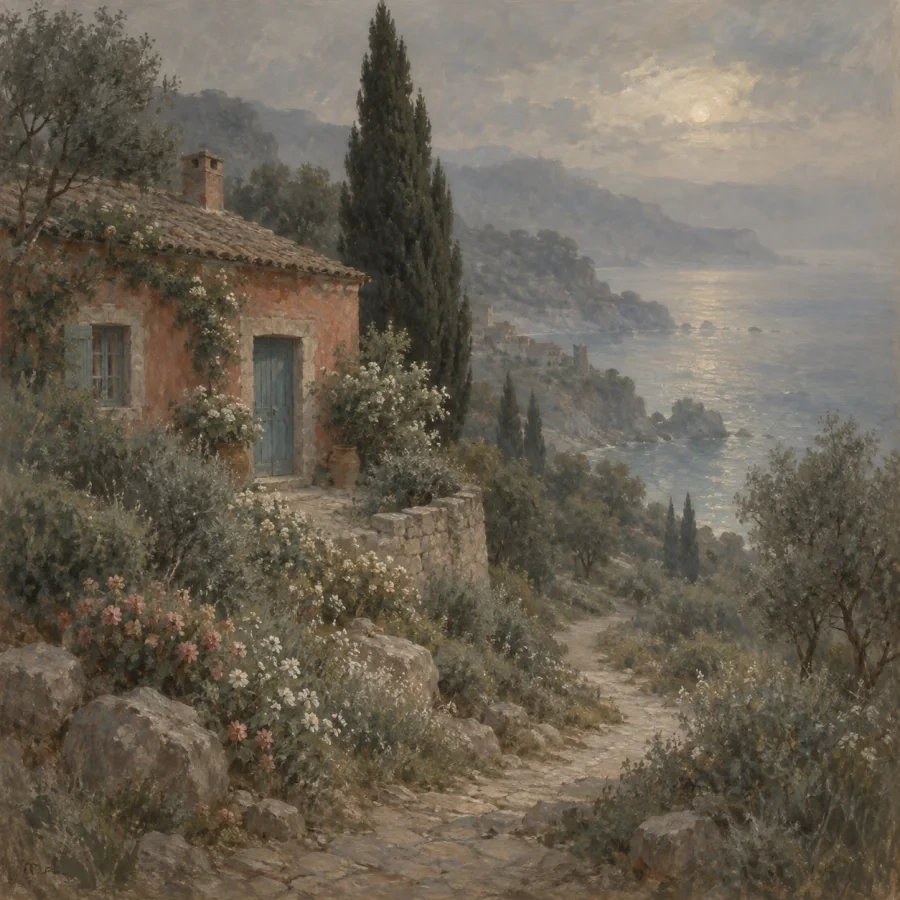
Apply the following visual style to my subject or project, preserving its core content and purpose. Paint a subdued tonal scene using closely related muted browns, grays, and blue-greens. Soften contours with luminous haze and unify the image through subtle value shifts and contemplative atmosphere. Adapt the composition and palette to suit my subject. Do not add text unless my project calls for it.
Prompt source: Emergent Mind Style Atlas. Select the text to copy, then adapt the subject and composition.