
Abstract painting tendency
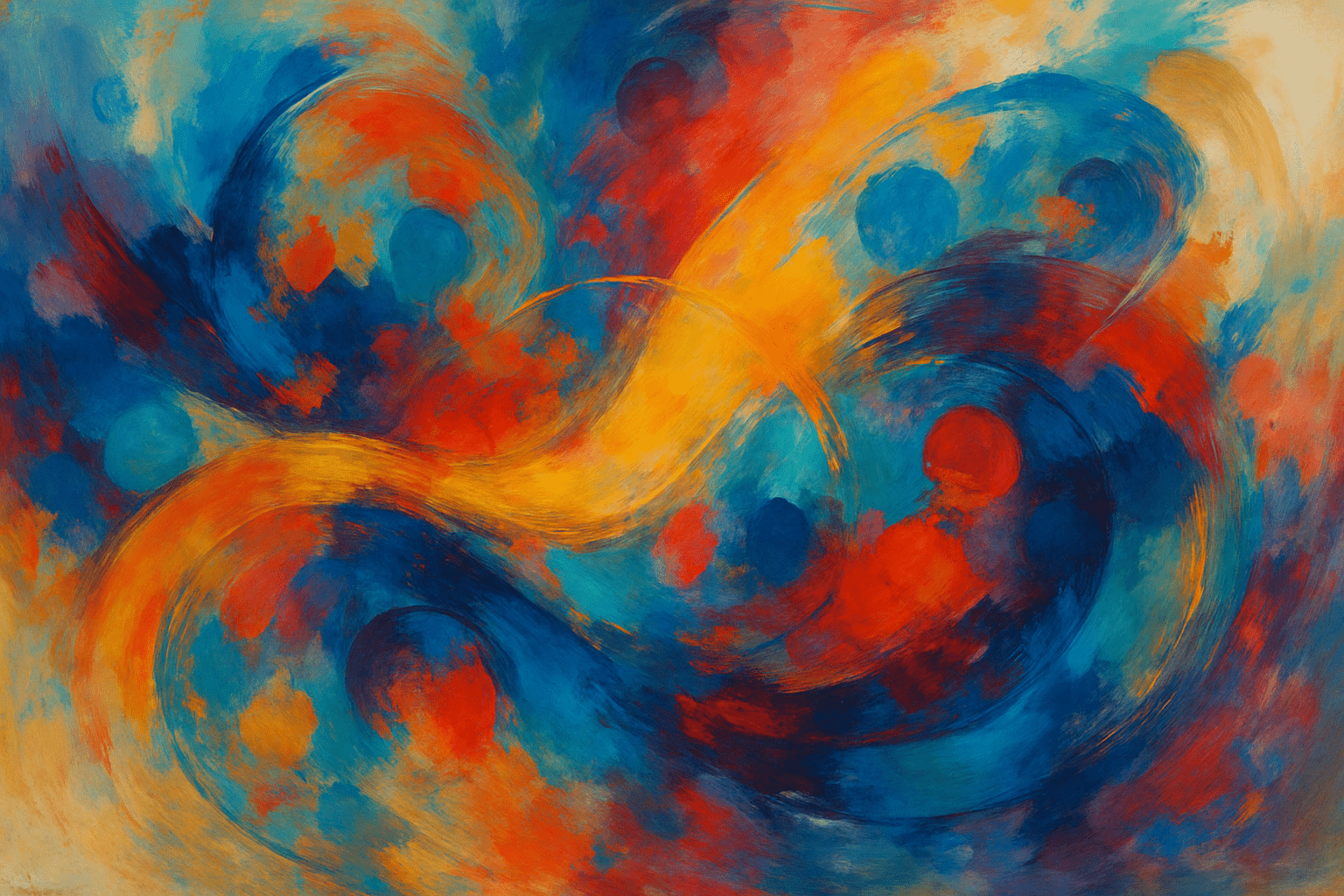
Lyrical abstraction invites expressive movement through color and gesture, but the term has been used in more than one historical context.
A closer look
Begin with a movement you can describe: a sweep, a drift, a pause or an interruption.
Understanding the subject
Lyrical abstraction is not a single universally bounded school with one appearance. The term has been used for different bodies of abstract work, often emphasizing fluidity, intuitive gesture or expressive color. Specific works and contexts matter more than an invented universal origin story. A loose mark can be deliberate, revised and carefully placed; spontaneity in appearance does not prove that a painting was made without planning.
AOI looking and making workshop
Begin with a movement you can describe: a sweep, a drift, a pause or an interruption. Let a limited set of marks establish that movement, then use quieter areas to keep it readable. Color can organize space through temperature and contrast without representing an object. Review the composition at a distance to see whether every gesture competes equally. In a digital exercise, vary edge, transparency and scale rather than repeating one brush texture. Leave room for ambiguity without substituting randomness for structure.
The prompt workshop
Original creative exercises. These prompts create new illustrations, not documentary evidence.
A slow drift
Create an original lyrical abstract painting of translucent blue sweeps crossing a warm pale ground, with one small rust-colored interruption. Use varied edges and generous quiet areas.
Gesture and pause
Create an abstract composition of broad green arcs, thin charcoal-like traces and soft cream intervals. Establish a clear directional rhythm while allowing a few marks to hesitate or break.
A restrained improvisation
Create an original abstract study using only violet, gray and paper white, alternating dense marks with almost empty areas. Let changes in scale and transparency suggest an improvisational rhythm.
Your next inspiration
Discover another art style
Follow a visual thread to the next subject.
Sources and further exploration
Serge Poliakoff | The Guggenheim Museums and Foundation
Rudolf Bauer | Invention (Composition 31) | The Guggenheim Museums and Foundation
Creative studies to try
Explore these collected prompts as creative interpretations. They are starting points for image-making, not reproductions of historical artworks or evidence about a tradition.
Visual cues: shape, rhythm, pressure, and visual argument; Flowing color and open gestural space
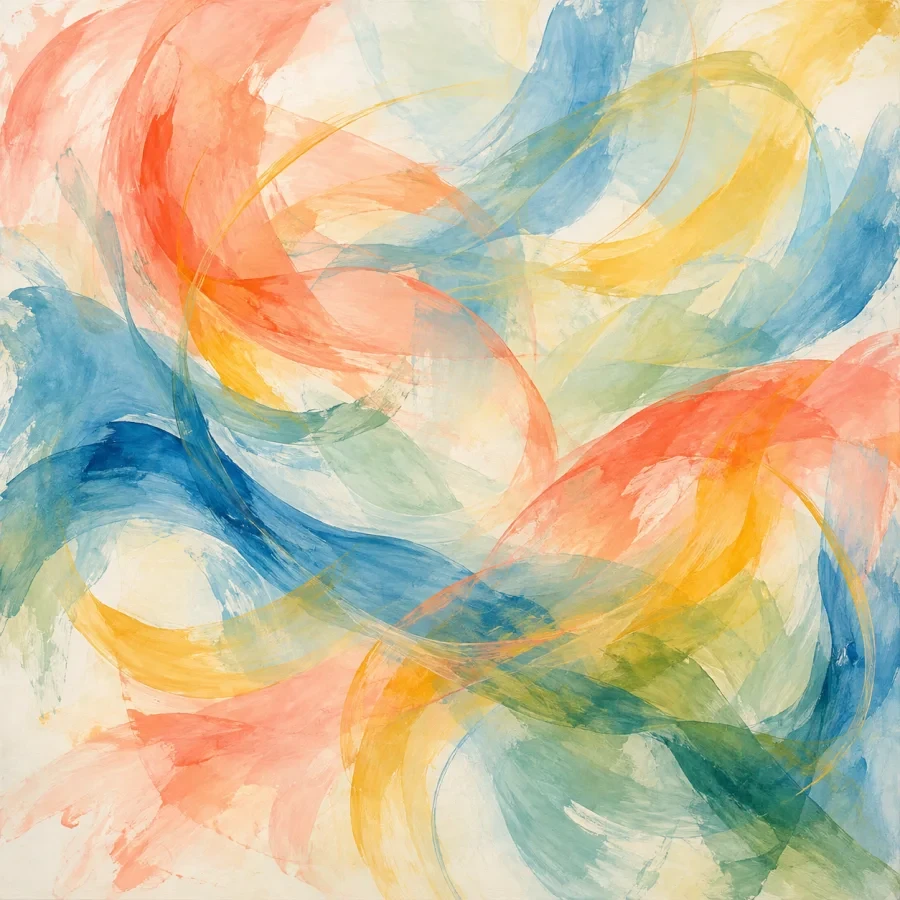
Study 1 — Lyrical Abstraction
Ultra-wide panoramic banner, a human hand and a sleek robotic hand reaching toward each other, fingertips almost touching, a bright luminous spark of intelligence between them, a subtle world map behind them with global data network lines, symbolizing human-AI collaboration and digital transformation, rendered in Lyrical Abstraction style, with refined composition, distinctive materials, elegant lighting, high-detail artistic finish, high quality, high detail, balanced composition, no text, no logo, no watermark, exact aspect ratio 1584:396
Prompt source: 1001 Art Styles. Select the text to copy, then adapt the subject and composition.
Study 2 — Lyrical Abstraction
Apply the following visual approach to my subject or project, preserving its core content and purpose. Translate the subject into fluid nonrepresentational gestures, luminous color veils, and spacious rhythmic movement. Treat this as a contemporary interpretation, not a historical artifact. Adapt the composition to my subject. Do not add text unless my project calls for it.
Prompt source: Emergent Mind Style Atlas. Select the text to copy, then adapt the subject and composition.