
Japanese art movement
Mono-ha turns attention toward materials and their relationships in space. Placement can matter as much as the individual object.
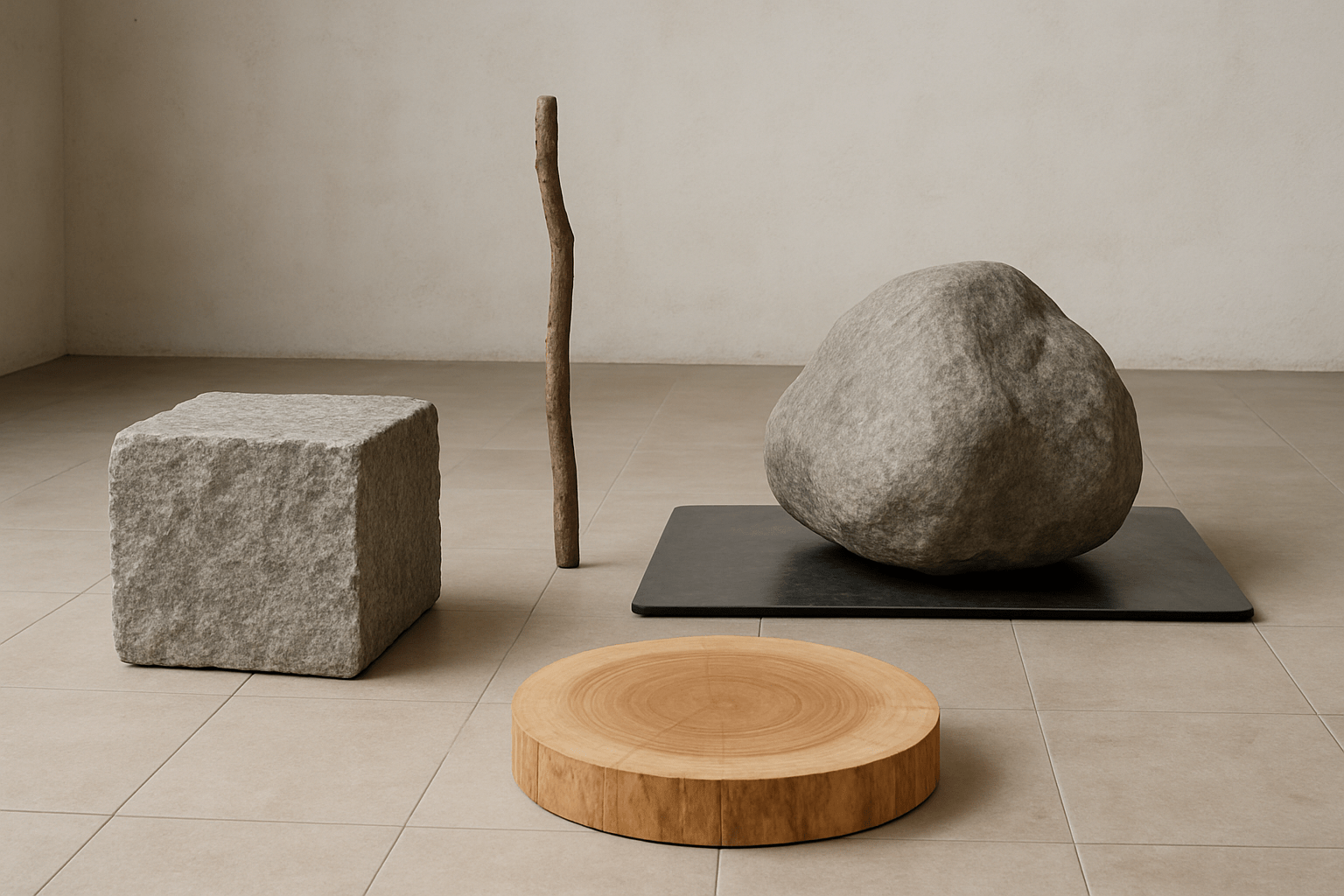
A closer look
For an original spatial study, choose two materials with a visible difference: rigid and flexible, transparent and opaque, heavy and light.
Understanding the subject
Mono-ha is associated with artists working in Japan who explored encounters among materials, objects, space and viewers. It should not be reduced to a generic minimalist decoration style. Stone, wood, glass or other materials can be presented in relationships that direct attention to weight, contact and surroundings. Individual works require their own context rather than a universal rule that materials must always remain untouched.
AOI looking and making workshop
For an original spatial study, choose two materials with a visible difference: rigid and flexible, transparent and opaque, heavy and light. Arrange them so their point of contact becomes important. Consider the floor, wall and viewer’s position as parts of the composition. Avoid adding symbolic explanations that the image cannot support. A generated installation view is a proposal, not documentation of an existing artwork. Test whether the relationship remains interesting without dramatic lighting; the materials should do more work than the photographic effects.
The prompt workshop
Original creative exercises. These prompts create new illustrations, not documentary evidence.
Weight and transparency
Create an original speculative installation view of a rough stone beside a clear glass sheet on a plain floor, soft daylight and a visible point of near-contact. Keep the room quiet.
A material encounter
Design an original installation proposal where a curved timber beam rests against a taut fabric plane, emphasizing weight, tension and surrounding space. Use neutral lighting and no gallery labels.
Space between things
Create a restrained image of three different stones separated by carefully varied gaps on a pale floor. Make spacing and shadows the subject, without claiming the arrangement is an existing artwork.
Your next inspiration
Discover another art style
Follow a visual thread to the next subject.

Sources and further exploration
Series of Works | Lee Ufan: Marking Infinity | Guggenheim Museum