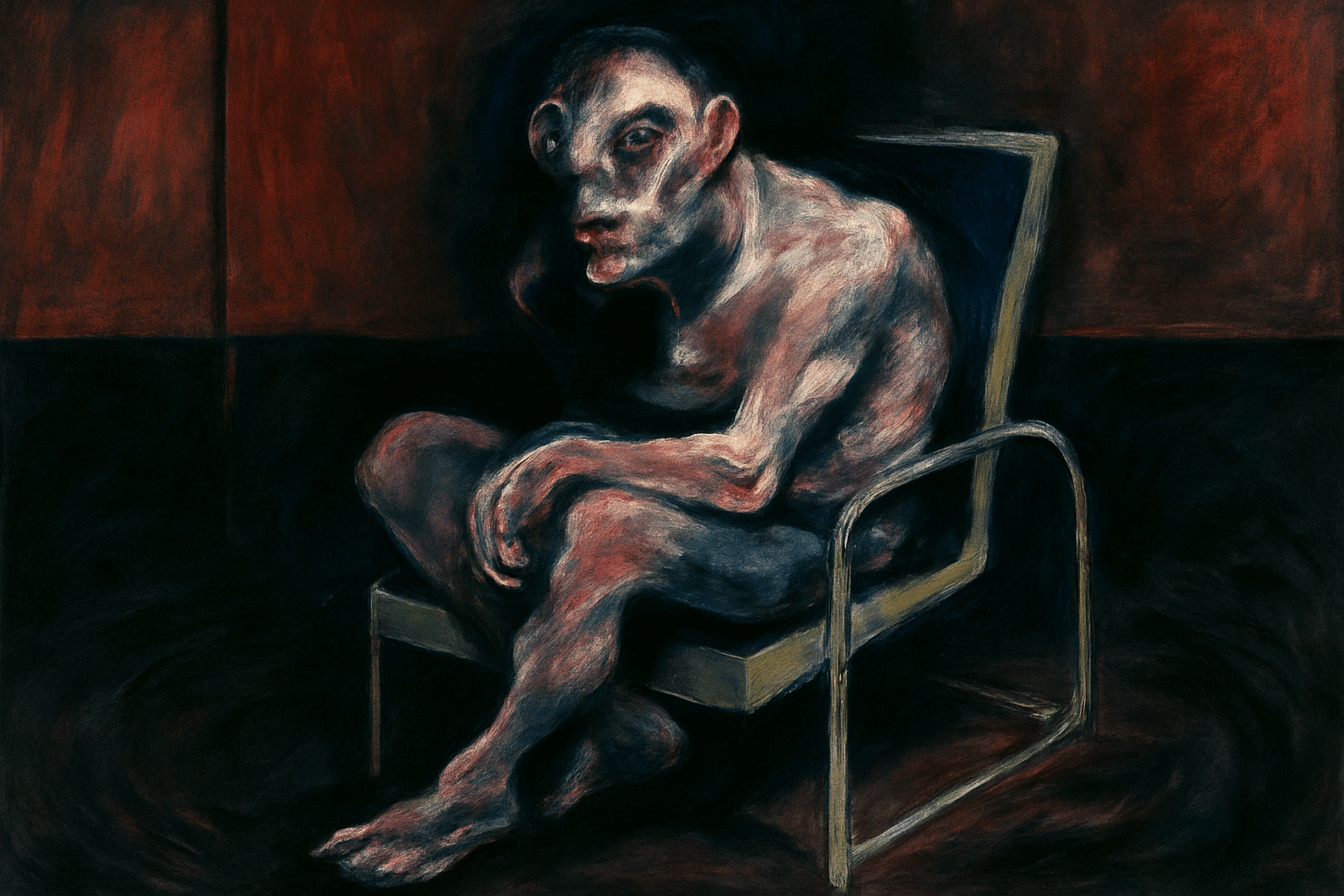
Artist study
Thomas Hart Benton’s figurative compositions offer a study in how bodies, landscapes and machinery can form a continuous visual rhythm.

A closer look
For an original multi-figure scene, map the largest curves before detailing faces or tools.
Understanding the subject
Thomas Hart Benton’s America Today is a mural cycle made for the New School for Social Research. The Metropolitan Museum relates its imagery to his travels and preparatory studies and discusses its restless figurative organization. A tractor study in the collection shows one stage of that preparation. These works provide a specific context for examining rhythmic form rather than reducing Benton’s career to a generic picture of rural America.
AOI looking and making workshop
For an original multi-figure scene, map the largest curves before detailing faces or tools. Let a bent arm connect visually with a hill, a cable or a machine’s arc, while keeping each action understandable. Alternate crowded areas with openings so the rhythm can travel. Check the figures’ contact with the ground even when their proportions are stylized. A mural-like composition can combine several activities, but it needs clear transitions rather than a collage of unrelated episodes. Use the whole surface as an organized sequence of actions.
The prompt workshop
Original creative exercises. These prompts create new illustrations, not documentary evidence.
A rhythm of work
Create an original mural-like painting of people repairing a community garden, curved figure poses connected with paths and tool handles, strong earth colors and readable actions. Avoid copying a historical mural.
People and machinery
Create an original figurative composition of a small workshop and surrounding fields, repeated arcs linking workers, belts and hills. Balance dense activity with open intervals and coherent physical support.
A continuous scene
Create an original panoramic painting of a neighborhood preparing a festival, several connected activities organized by a sweeping path and repeated gestures. Keep each group distinct within the larger rhythm.
Your next inspiration
Discover another art style
Follow a visual thread to the next subject.