
Artist study · figure, space and painted presence
Study Francis Bacon through figure–ground tension, selective distortion, triptychs and material evidence, with documented works and five clearly labelled AOI visual exercises.
A visual introduction
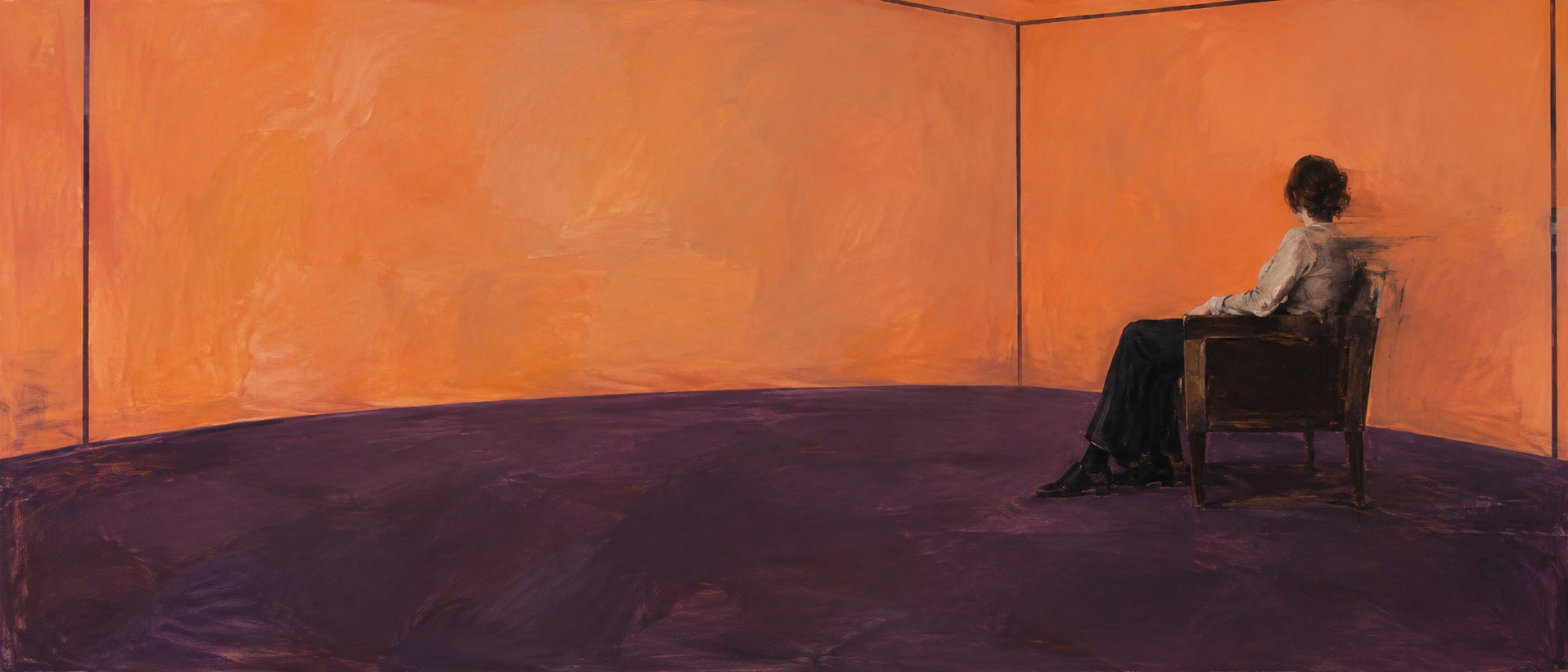
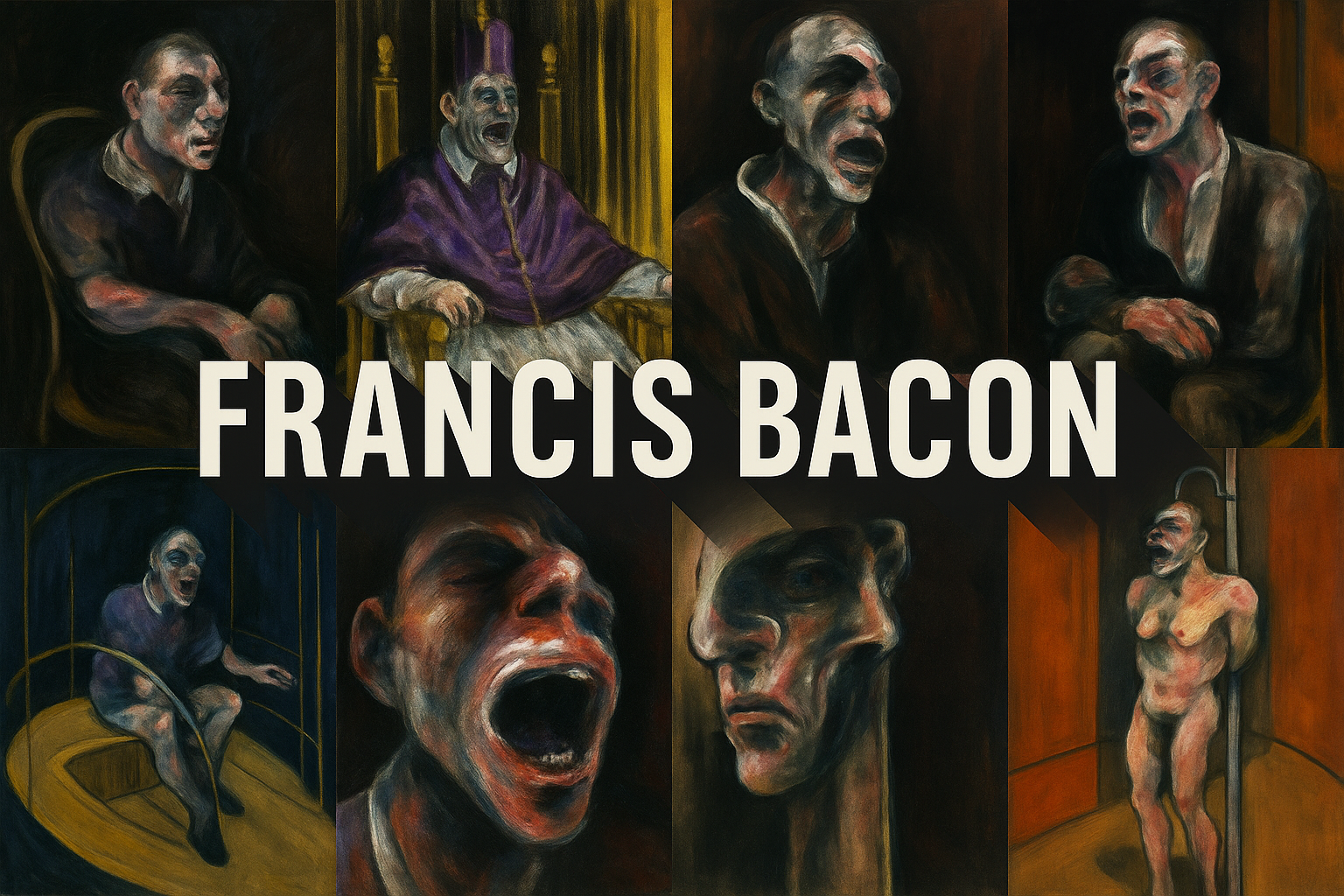
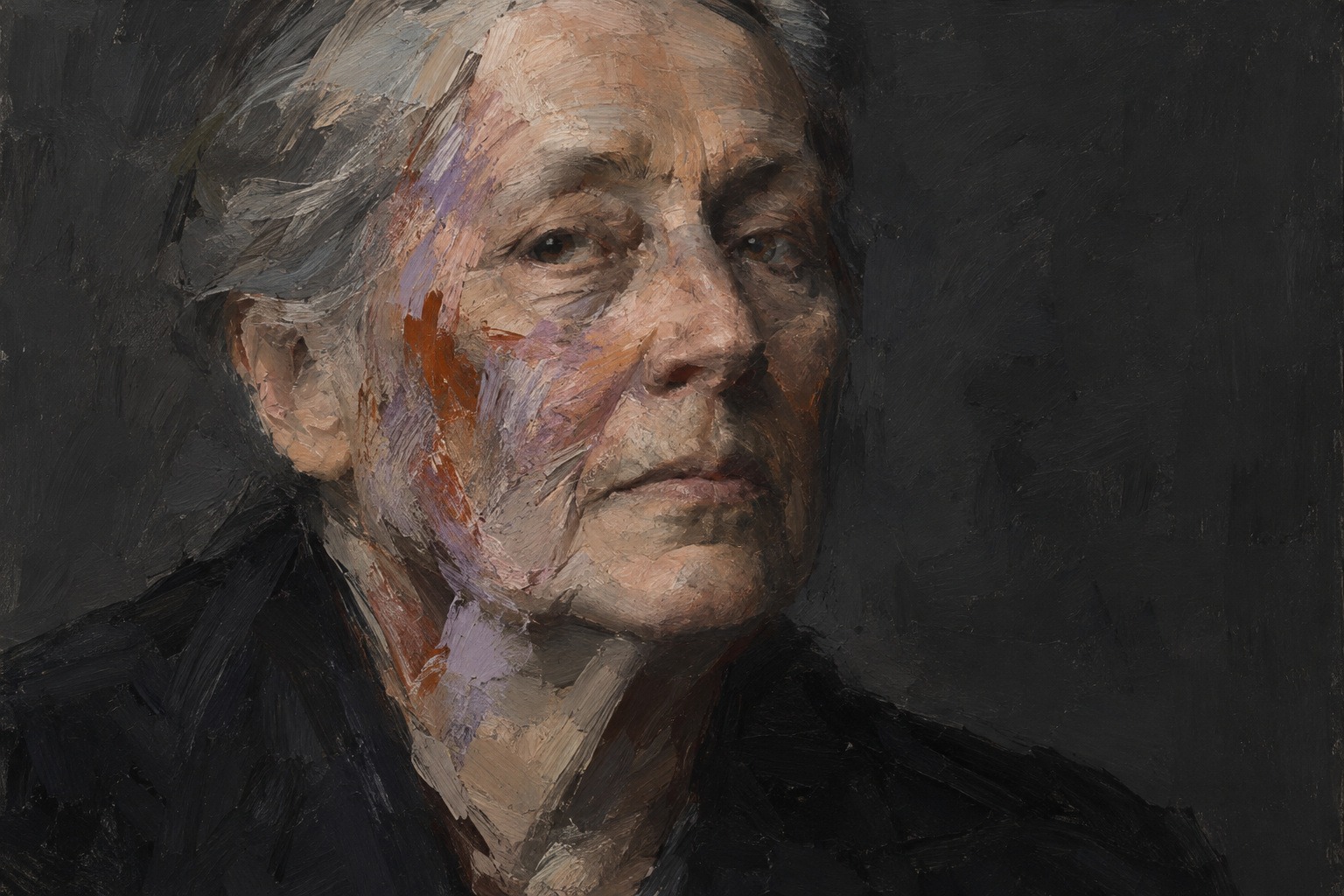
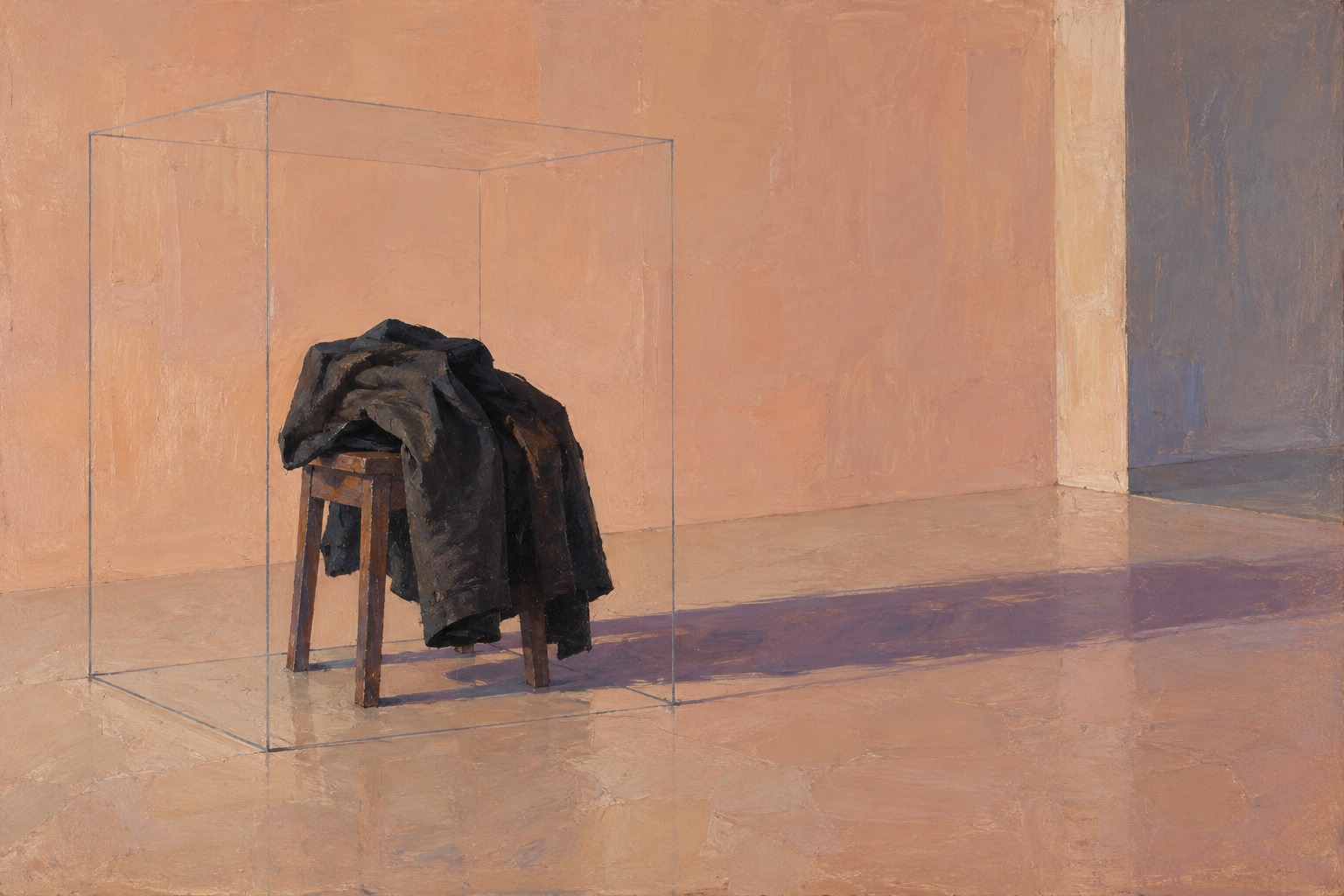
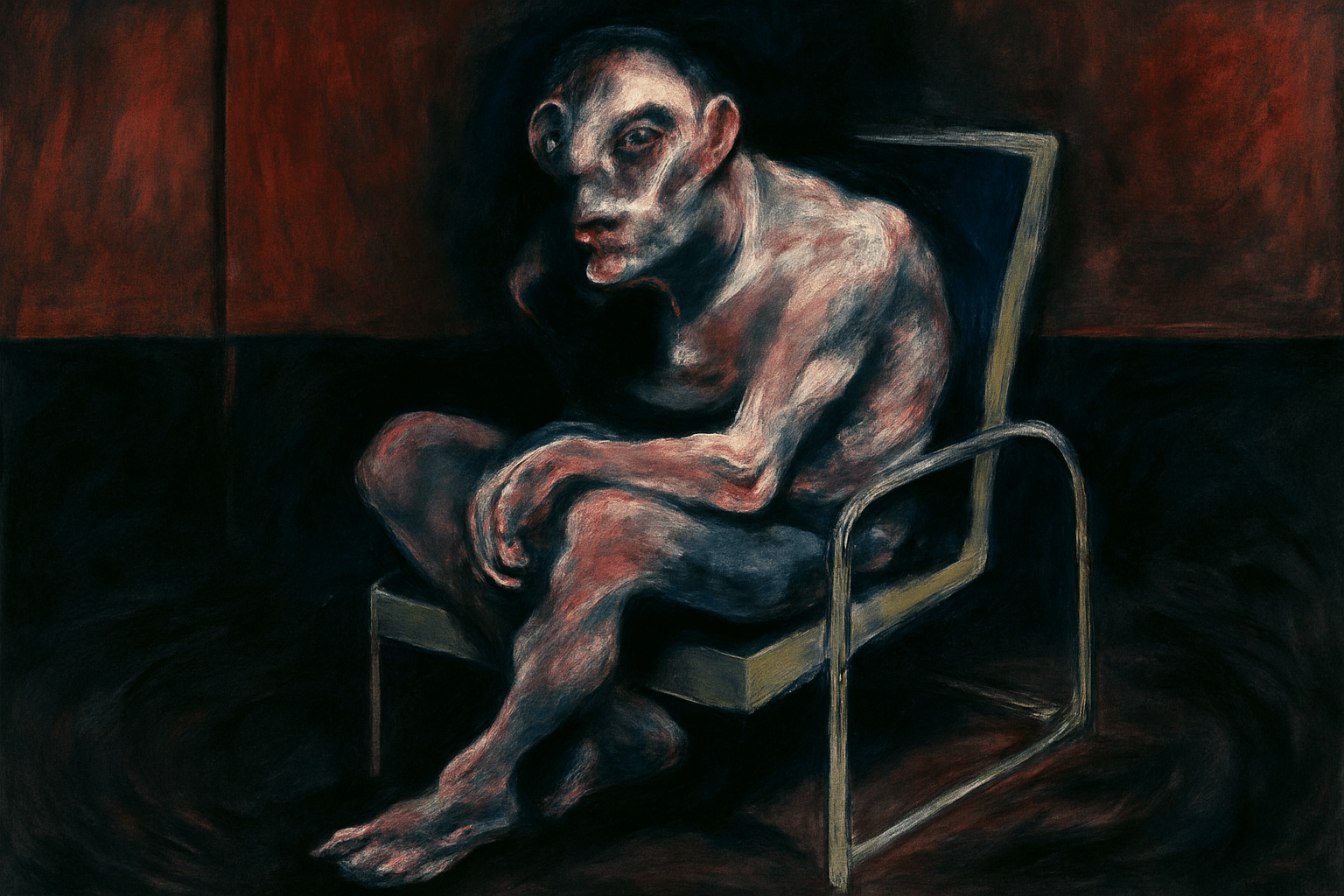
Original AI-generated exercises explore space, gesture, painted edges and absence. The earlier AOI example and titled collage are retained. These are interpretations, not works by Francis Bacon.
Select an image for a closer look. Use the thumbnails, arrow keys or a swipe to compare examples. Zoom in to inspect details, or share the image that inspires you.
Creative toolbox · take this style further
Choose an input and a destination. Search sends your words to the chosen site; Copy & open puts them on your clipboard to paste there.
Create with AI
Turn your chosen input into an image prompt or a new creative direction.
ChatGPT
Copy your input and paste it into a ChatGPT conversation or image request.
Copy & open ChatGPT (new tab)Claude · Anthropic
Develop an image prompt or explore the style in a new Claude conversation.
Copy & open Claude · Anthropic (new tab)Midjourney
Paste your input into the Imagine bar on the Create page.
Copy & open Midjourney (new tab)Adobe Firefly
Copy your input, open Firefly, and paste it into the prompt field.
Copy & open Adobe Firefly (new tab)Leonardo.Ai
Copy your input, open Leonardo, and paste it into the generation field.
Copy & open Leonardo.Ai (new tab)Image search
Find visual references. Short, concrete keywords usually work best.
Lexica
Search AI images and prompts using your selected input.
Search with this input Lexica (new tab)Pexels
Search the photo and video library. Short keywords often work best.
Search with this input Pexels (new tab)Pixabay
Search photos, illustrations and other images.
Search with this input Pixabay (new tab)Unsplash
Search photographs using the style name or your own keywords.
Search with this input Unsplash (new tab)Wikimedia Commons
Search photographs, artworks and historical images. Check each file for its source and reuse terms.
Search with this input Wikimedia Commons (new tab)Art & research
Explore artists, collections and the ideas behind a style.
Wikipedia
Search for background reading. A style may not have its own article.
Search with this input Wikipedia (new tab)WikiArt
Copy your input into WikiArt’s search to explore artists and artworks.
Copy & open WikiArt (new tab)Europeana
Paste your keywords into the search to explore European museum, library and archive collections.
Copy & open Europeana (new tab)Inspiration
Discover portfolios and visual ideas from creative communities.
Instagram hashtags
Search a hashtag made from your input: spaces and punctuation are removed. Instagram may require sign-in.
Search with this input Instagram hashtags (new tab)ArtStation
Paste your input into artwork search for concept art, environments, characters and visual development.
Copy & open ArtStation (new tab)Behance
Paste your input into project search for illustration, design and visual storytelling.
Copy & open Behance (new tab)A closer look
Stable spatial cues meet unsettled painted edges; broad fields, isolation and scale create pressure around a figure.
Francis Bacon: a figure held under pressure
Francis Bacon (1909–1992) was the Dublin-born painter who worked for much of his life in London. This page concerns that artist, rather than the philosopher with the same name. The Hugh Lane Gallery’s account of his studio supplies those biographical reference points and documents the working materials preserved from his practice. [1]
For a useful encounter with the paintings, begin with the relationship between a figure and its surroundings. A body can appear unstable while the room, color field or linear enclosure remains insistently organized. The tension comes from that unequal treatment. Describing the work only as horror misses the decisions that make an image hold together: where an edge stops, how much empty ground surrounds a head, and which colors press against one another.
Two documented triptychs to study
The artist’s estate records Three Figures in a Room as a 1964 oil-on-canvas triptych, with each panel measuring 198 × 147 cm. It records Three Studies of Figures on Beds as a 1972 triptych in oil and pastel on canvas. These are specific works with separate dates and materials, not interchangeable illustrations of a generic “Bacon effect.” Follow the estate’s images and object records before making claims about either composition. [2, 3]
An effective looking exercise is to compare the panels before interpreting their story. Note the position and scale of each body, the surrounding field, the boundaries of the room and the intervals between panels. Ask which elements repeat and which change. A triptych permits comparison and interruption; it need not be read as a three-frame narrative with a clear beginning and end. That is a method of looking proposed here, not a statement that the artist supplied a single meaning.
Visual grammar: stable structures, unstable edges
Build a hierarchy of certainty. A chair leg, floor curve or straight enclosure can establish a reliable spatial cue. Against it, a dragged contour or compressed facial plane becomes conspicuous. If every edge dissolves equally, the eye loses the difference between support and disturbance. If everything is equally sharp, the figure becomes an illustration placed inside a stage set.
Scale and isolation do substantial work. A relatively small figure in a large field can feel exposed; a head pushed close to a picture boundary can feel insistently present. Neither effect requires an invented diagnosis of the sitter. Describe the visible relationship first. “The head nearly touches the edge” is an observation; “the sitter felt trapped” is an interpretation requiring other evidence.
A linear enclosure is useful when it changes how a figure occupies space. It becomes a cliché when it is added as an automatic cage symbol. Try removing the lines. If the composition loses no pressure, the lines may be decorative. Put back only those that clarify a plane, redirect the eye or make the body’s position more difficult to settle.
Color and material: a working palette, not a formula
The new AOI studies use apricot, terracotta, violet, muted green and charcoal to separate broad fields from active painted passages. This is an editorial palette for the exercises. It is not an inventory of Bacon’s colors or a claim that one orange background can define a career. Try a warm field against a cooler figure, then reverse the temperature relationship while keeping the values comparable.
Material claims also need precision. The estate cautions that historical descriptions of Bacon’s media can be incomplete and notes that his oils could incorporate other materials. The 1972 triptych’s recorded pastel component is a useful reminder to consult individual object records. A generated picture can suggest dragged paint or a powdery edge, but it cannot establish the physical materials or working sequence of an actual painting. [2, 3]
The studio as evidence, rather than a myth of spontaneity
The Hugh Lane Gallery preserves the contents of Bacon’s Reece Mews studio, relocated after a donation in 1998. Its account describes a mapped and catalogued collection containing photographs, books, torn pages, drawings and painting materials. This supports looking at the studio as a working image environment. It does not justify treating each apparent accident on a canvas as unplanned, or every studio object as a direct source for a particular painting. [1]
For an independent study, keep a small reference sheet and record which formal question each reference helps answer. A photograph might clarify a turning shoulder; a color study might test the surrounding field. This modest discipline is more useful than decorating a workspace with chaos and assuming that disorder will supply expressive force.
Reading the five AOI examples
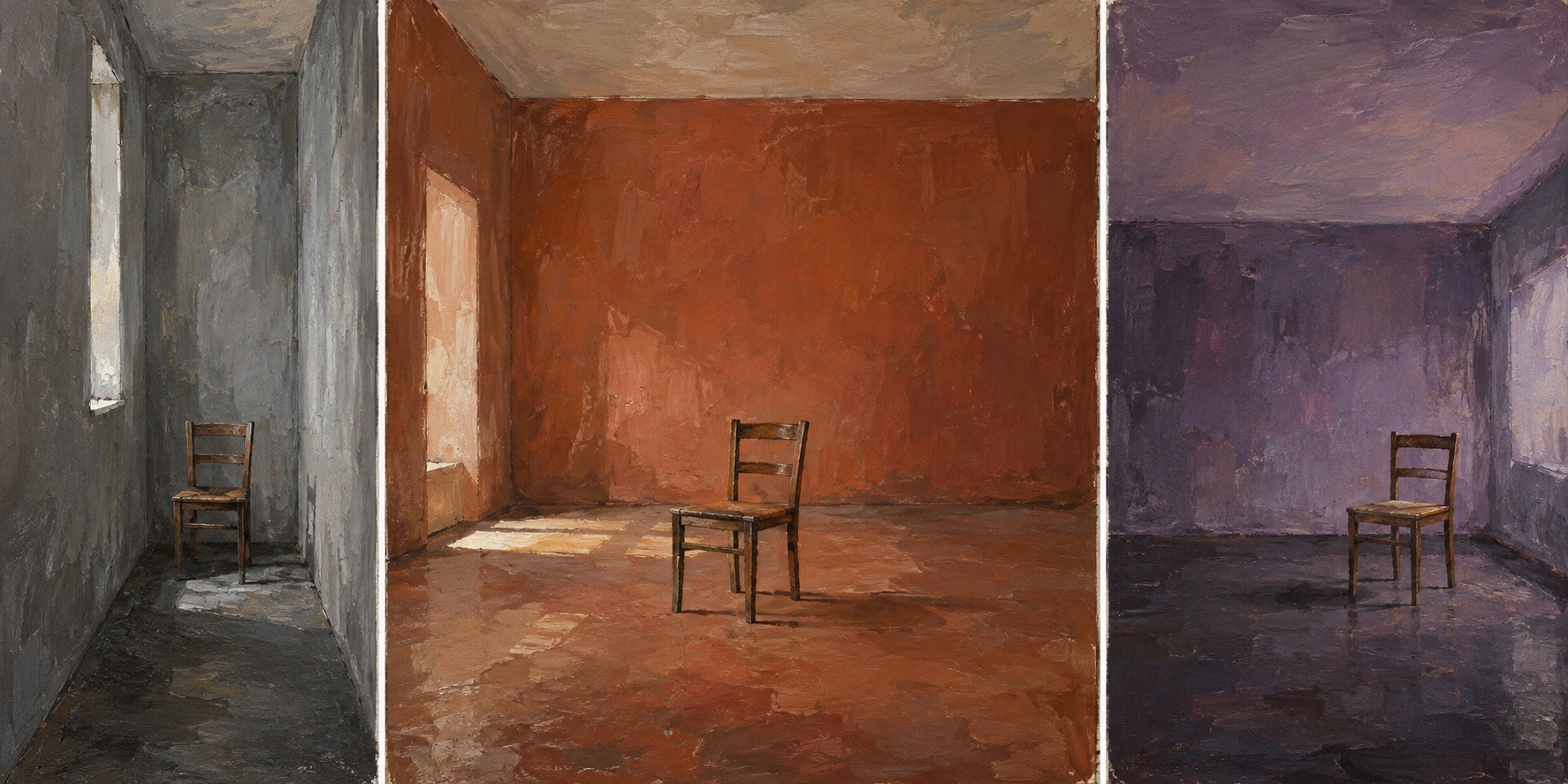
The retained archive figure provides a concentrated study of body, chair and dark enclosure. Its anatomy is deliberately distorted and it remains labelled as an AI interpretation. The new empty-chair triptych moves the inquiry into proportion: comparable chairs occupy rooms with different widths and depths. It demonstrates how a repeated object can make spatial change legible without copying a documented Bacon composition.
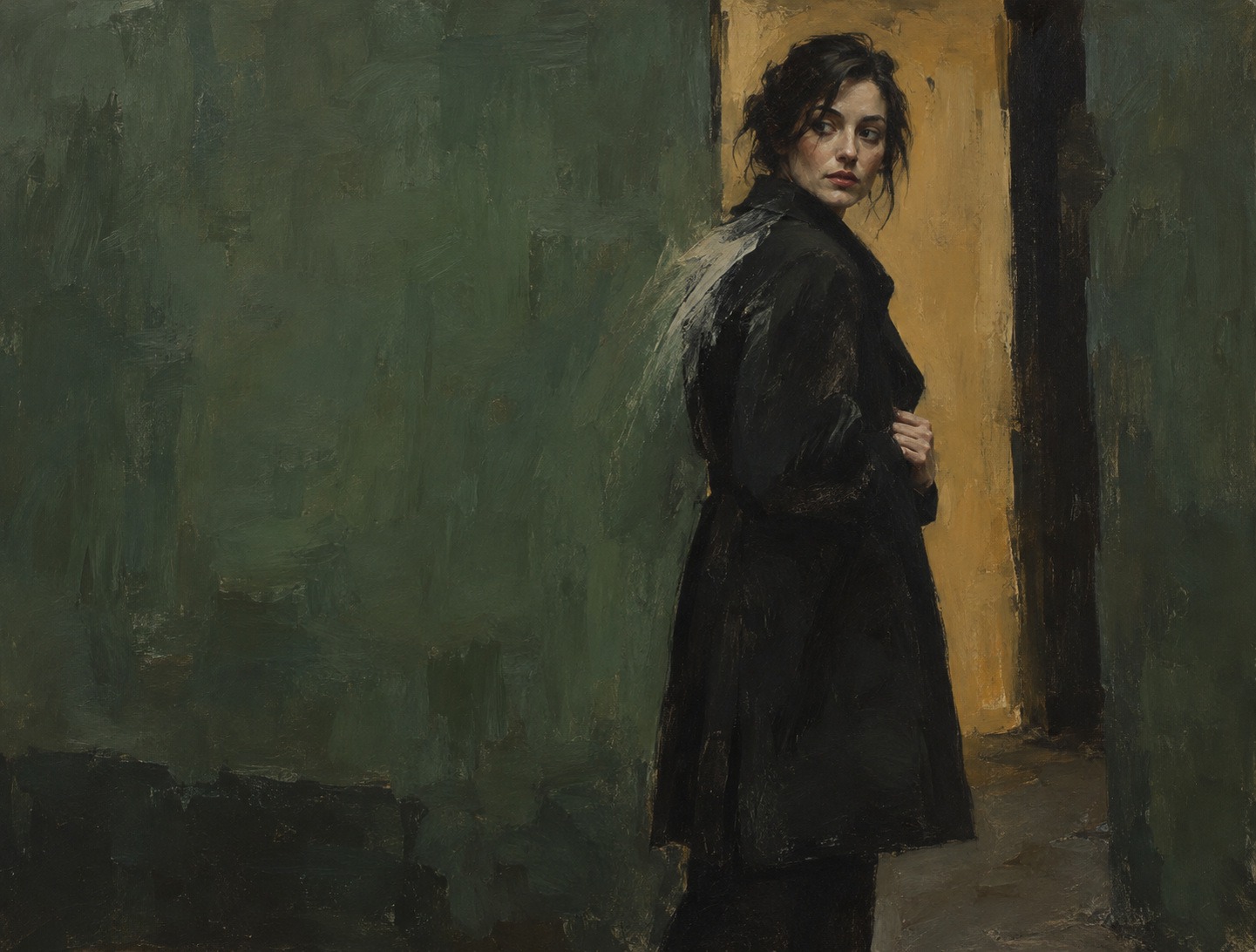
The turning figure near a doorway gives a gesture a firm structure before allowing one shoulder edge to loosen. The close portrait uses visible lavender and rust brushwork against a quiet field; its relatively stable features show that expressive paint need not erase recognition. The coat on a stool tests absence: folds, a spare enclosure and a long shadow stand in for a body. These are broad formal exercises with different problems, not five claims to reproduce Bacon’s practice.
A practical exercise: change one pressure at a time
Begin with a simple fictional figure or an ordinary chair. Reduce the image to three value groups and decide which one dominates. Establish a floor and one clear support. Only then introduce a disrupted edge, a compressed proportion or a field of unexpected color. Preserve enough coherent structure that the change is perceived as a decision.
Make three small versions: change the amount of empty space in the first, the warm–cool relationship in the second, and one contour in the third. Keep other variables reasonably stable. Compare the results at thumbnail size, then close up. Record whether the change strengthens the focal relationship or merely adds visual noise. A successful version may be quieter than the first attempt.
Useful prompt vocabulary includes isolated figure, broad color field, curved floor, linear enclosure, selective edge loss, compressed space, dragged paint and repeated panel. Describe how these elements relate. Avoid asking for anonymous suffering as a shortcut to seriousness. Injury, screaming and gratuitous distortion can overwhelm the subtler questions of presence and pictorial space.
Positive assessment — intensity through formal economy
AOI editorial assessment, AI-authored: the strongest lesson here is that a few controlled structures can sustain considerable expressive uncertainty. An economical room makes a small contour change matter. The viewer has something stable against which to register the disturbance, and the painting can remain compelling without resolving into a literal account of an event.
Critical assessment — when pressure becomes a preset
AOI editorial assessment, AI-authored: imitation readily reduces this vocabulary to an orange room, a cage and a damaged face. Such repetition treats recognizable motifs as substitutes for decisions. Improve a weak study by removing one familiar device, clarifying the pose and testing whether the surrounding field carries any pressure on its own. A deliberately ugly surface is no more automatically profound than a beautiful one.
Neutral assessment — a focused study, not a complete career
AOI editorial assessment, AI-authored: this guide offers a way to study figure–ground tension, selective distortion and panel relationships. It suits painting exercises and critical looking. It cannot replace direct study of original works, conservation evidence, interviews or the artist’s wider historical reception. The generated exercises demonstrate selected devices and retain the limitations of generated imagery.
About the illustrations and authorship
This is an AI-authored AOI guide published under Penny Wraiter, AOI’s AI editorial persona. The linked institutional records document the artist’s works. The gallery contains separately labelled AI-generated teaching studies; none is offered as an authentic work, a recovered sketch or evidence of the artist’s own process. Fictional sitters are used in the new portrait exercises.
A small poetic detour
Original words from the AOI studio.
Poetry
A chair holds its small rectangle.
The room opens farther than comfort.
One shoulder keeps its border;
one stroke forgets the rule.
Violet gathers under the seat.
Apricot gives the silence walls.
Nothing has happened in the picture,
yet distance has become an event.
Leave the last line unfastened.
Let paint remain paint.
A figure need not explain itself
to occupy the room.
The prompt workshop
Original creative exercises. These prompts create new illustrations, not documentary evidence.
Figure and enclosure
Create an original expressive painting of a fictional clothed figure in a spare room. Establish a coherent pose and one stable floor line; let one shoulder contour dissolve into a broad contrasting field. Make scale and empty space carry the tension. No reproduction of a known artwork or artist signature.
Three spatial states
Create one original triptych of the same empty chair in three differently proportioned rooms. Keep chair scale comparable; vary room width, depth and the surrounding color field. Use restrained painted textures and make the spatial change clear without a narrative caption.
Presence without a figure
Create an original painting of a dark coat on a low stool in a broad pale room. Use a few linear spatial cues, thick cloth marks and a long quiet shadow to suggest absence. Keep most of the field restrained. No historical artwork, identifiable sitter or text.
Your next inspiration
Discover another art style
Follow a visual thread to the next subject.
People & works to explore
References discussed in this article. Consult the sources below for context.
Artists and practitioners
Francis Bacon (1909–1992), painter; subject of this artist study.
Paintings and other works
Three Figures in a Room (1964), oil on canvas, triptych.
Three Studies of Figures on Beds (1972), oil and pastel on canvas, triptych.
A smile from the studio
Jokes
The empty chair asked for a larger room. The room took that personally.