
Historical artistic and literary tendency
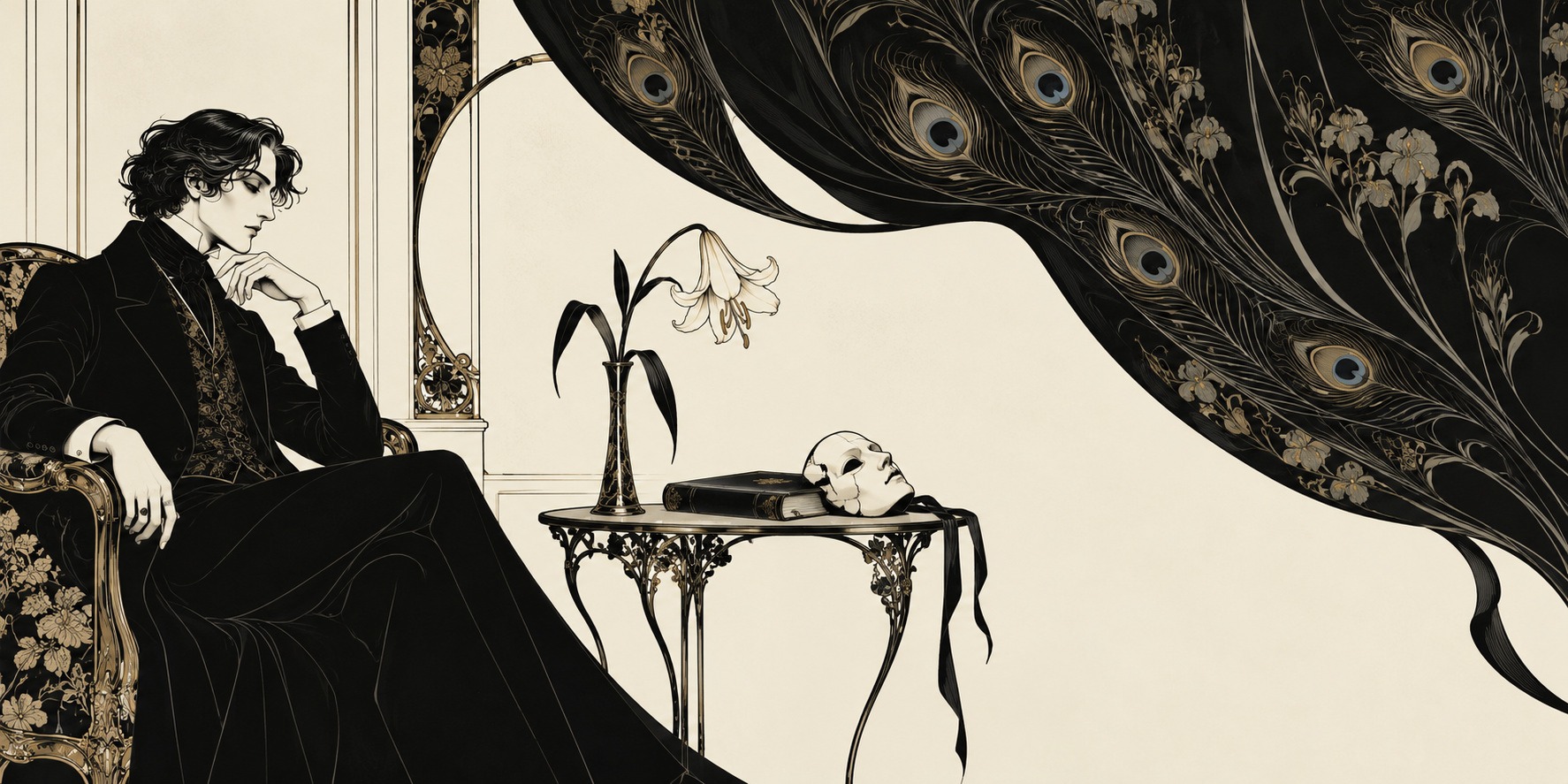
Decadence is a late nineteenth-century artistic and literary tendency in which cultivated beauty meets artificiality, unease and challenges to convention. Its visual range includes austere black-and-white illustration as well as elaborate symbolic painting; lavish decoration alone is not enough to define it.
A visual introduction
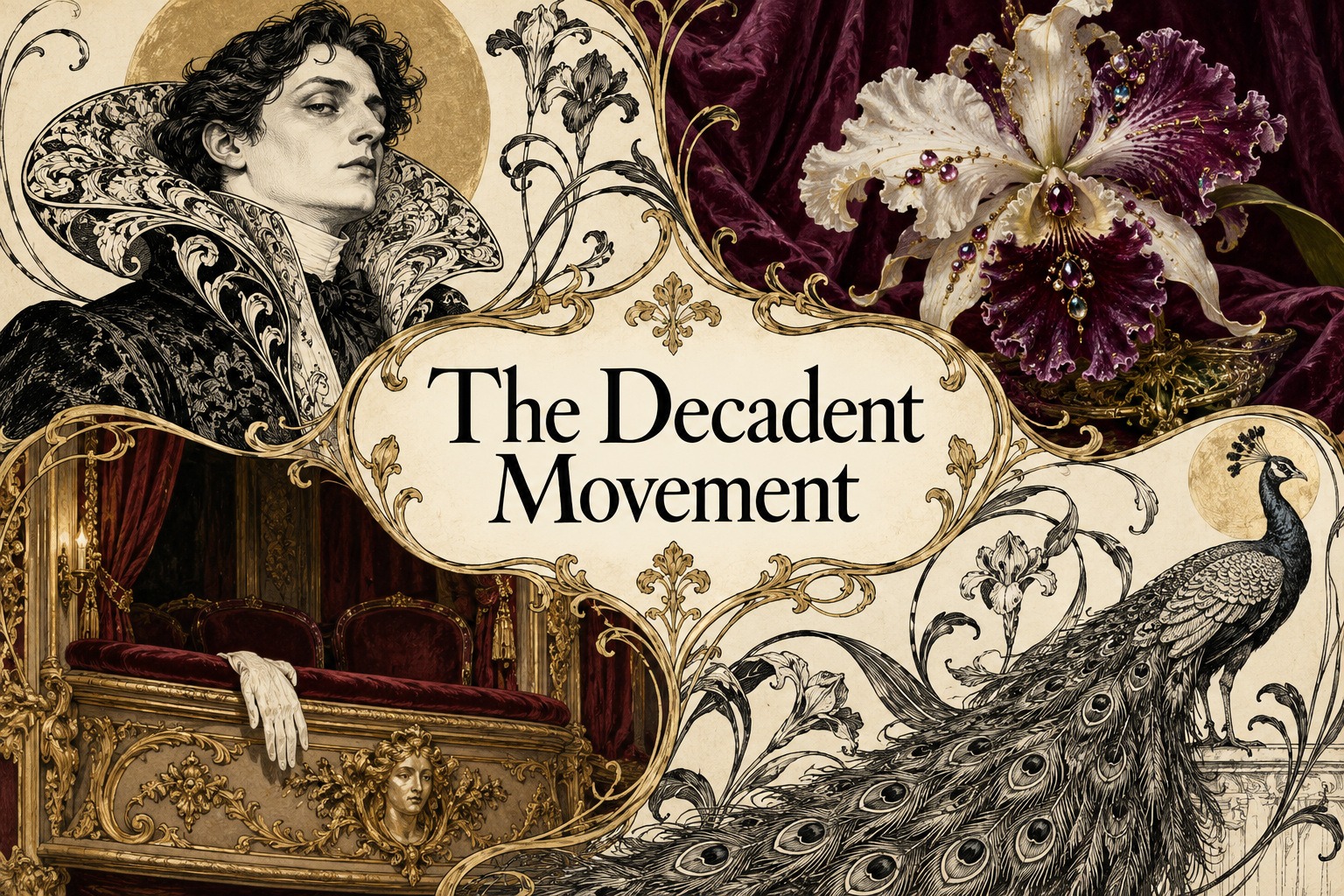
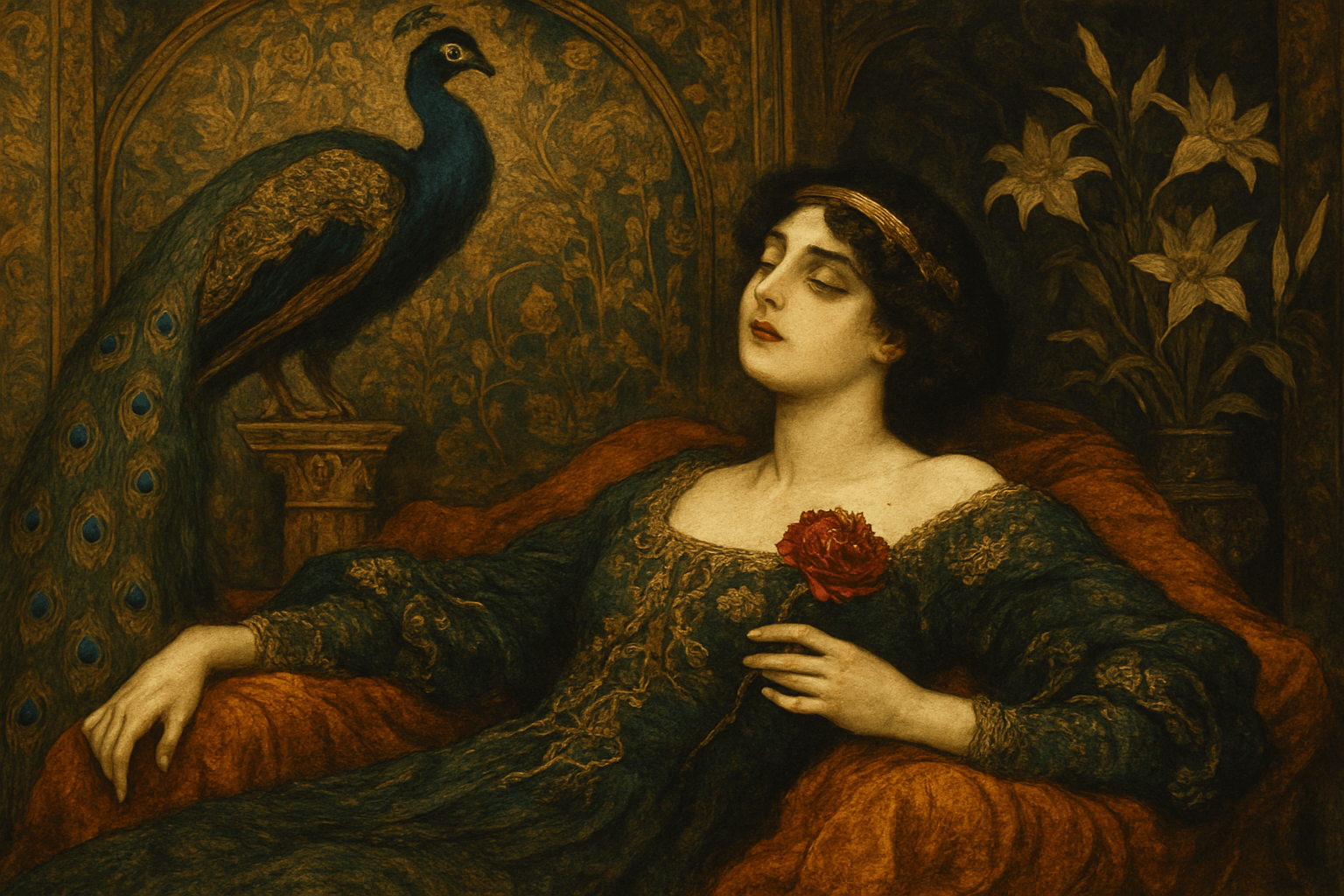
Compare monochrome line, symbolic still life and richly painted ornament. The new studies and retained AOI portrait are contemporary interpretations of Decadent visual tensions, not reproductions of historical works.
Select an image for a closer look. Use the thumbnails, arrow keys or a swipe to compare examples. Zoom in to inspect details, or share the image that inspires you.
Creative toolbox · take this style further
Choose an input and a destination. Search sends your words to the chosen site; Copy & open puts them on your clipboard to paste there.
Create with AI
Turn your chosen input into an image prompt or a new creative direction.
ChatGPT
Copy your input and paste it into a ChatGPT conversation or image request.
Copy & open ChatGPT (new tab)Claude · Anthropic
Develop an image prompt or explore the style in a new Claude conversation.
Copy & open Claude · Anthropic (new tab)Midjourney
Paste your input into the Imagine bar on the Create page.
Copy & open Midjourney (new tab)Adobe Firefly
Copy your input, open Firefly, and paste it into the prompt field.
Copy & open Adobe Firefly (new tab)Leonardo.Ai
Copy your input, open Leonardo, and paste it into the generation field.
Copy & open Leonardo.Ai (new tab)Image search
Find visual references. Short, concrete keywords usually work best.
Lexica
Search AI images and prompts using your selected input.
Search with this input Lexica (new tab)Pexels
Search the photo and video library. Short keywords often work best.
Search with this input Pexels (new tab)Pixabay
Search photos, illustrations and other images.
Search with this input Pixabay (new tab)Unsplash
Search photographs using the style name or your own keywords.
Search with this input Unsplash (new tab)Wikimedia Commons
Search photographs, artworks and historical images. Check each file for its source and reuse terms.
Search with this input Wikimedia Commons (new tab)Art & research
Explore artists, collections and the ideas behind a style.
Wikipedia
Search for background reading. A style may not have its own article.
Search with this input Wikipedia (new tab)WikiArt
Copy your input into WikiArt’s search to explore artists and artworks.
Copy & open WikiArt (new tab)Europeana
Paste your keywords into the search to explore European museum, library and archive collections.
Copy & open Europeana (new tab)Inspiration
Discover portfolios and visual ideas from creative communities.
Instagram hashtags
Search a hashtag made from your input: spaces and punctuation are removed. Instagram may require sign-in.
Search with this input Instagram hashtags (new tab)ArtStation
Paste your input into artwork search for concept art, environments, characters and visual development.
Copy & open ArtStation (new tab)Behance
Paste your input into project search for illustration, design and visual storytelling.
Copy & open Behance (new tab)A closer look
Refined contour, theatrical pose, suggestive objects and deliberate contrasts between ornament and emptiness can create an atmosphere of beauty under pressure. Monochrome ink and restrained jewel tones offer different routes; neither is a universal historical formula.
Beauty with a disturbing edge
The Decadent Movement belongs to the cultural tensions of the late nineteenth century, especially the fin de siècle. It crossed literature and visual art rather than operating as a school with one agreed painting method. Artifice, heightened sensation and resistance to conventional taste are useful starting points. The mood may be languid or theatrical, but it can also be sharply satirical. A room full of gold does not become Decadent simply because it looks expensive.
The central question is what happens to beauty when something troubles it. An exquisitely drawn figure may seem remote; an elegant contour may enclose a grotesque form; an ornament may almost overwhelm the person wearing it. These tensions make the viewer’s attraction less comfortable. Decadence is therefore more useful as a historically situated set of attitudes and relationships than as a filter that adds velvet, skulls and perfume bottles.
A documented visual focus: Beardsley
The V&A’s account of Aubrey Beardsley connects his elegant line and subversive subjects with the culture of the 1890s. His illustrations for Oscar Wilde’s Salome appeared in 1894, and his work for The Yellow Book exploited the possibilities of black-and-white reproduction. Flowing contours, patterned surfaces and startling areas of empty paper could be as provocative as sumptuous color. The example matters because it corrects the idea that Decadence always means densely painted luxury.
Related contexts require care. The V&A describes the Aesthetic Movement’s pursuit of beauty and its later encounter with French literary influences. The National Galleries of Scotland explains Symbolism’s emphasis on imagination, melancholy and escape from a changing society. Decadence overlaps these histories, but Aestheticism and Symbolism are not simply alternative names for it. An artist’s work may participate in more than one context without every image belonging to the same category.
Line, surface and the deliberate pause
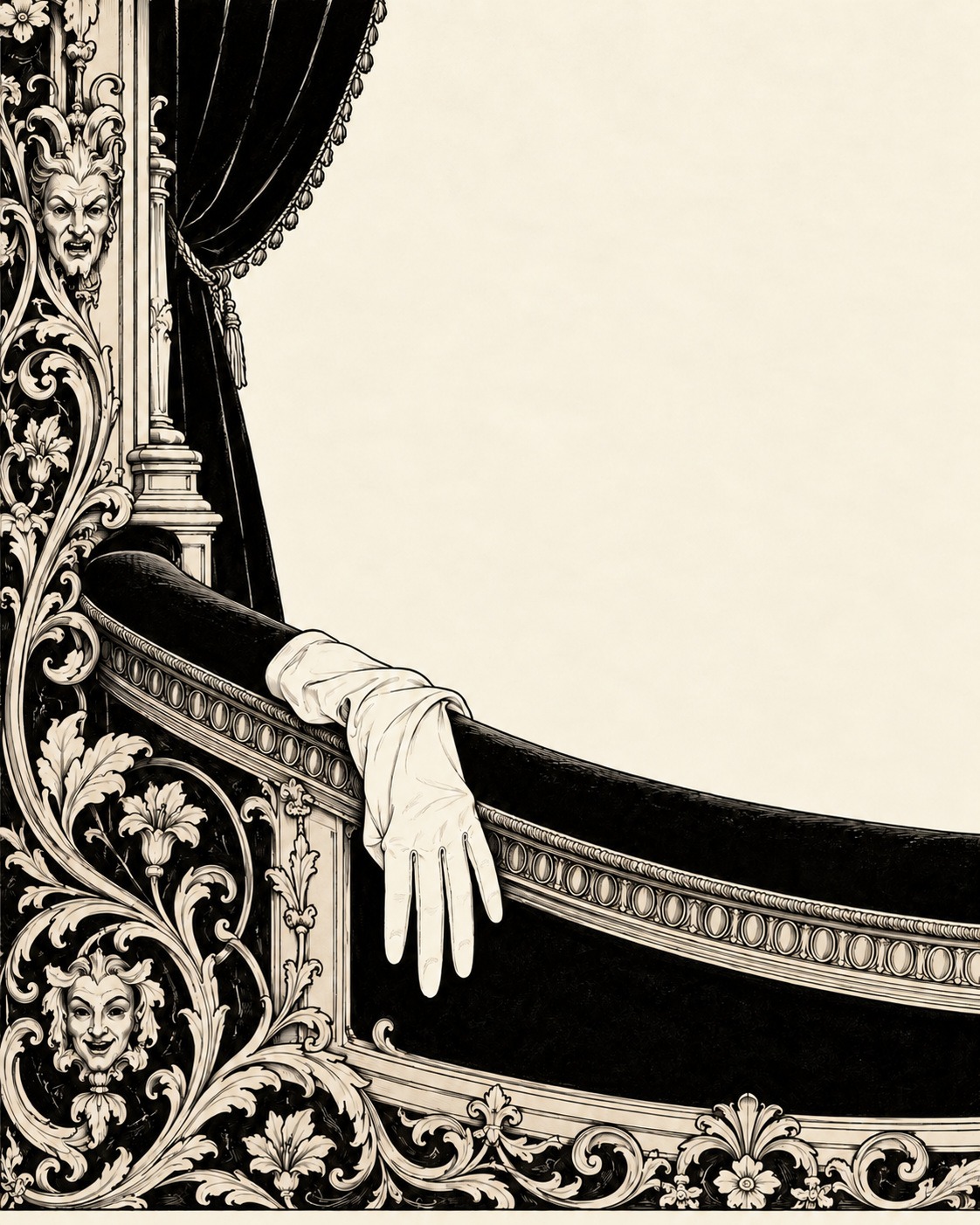
For an original ink study, begin with two or three large shapes: a dark garment, a pale face and an ornamental field. Vary the contour from a fine continuous line to a solid silhouette. Place dense detail where it matters, then leave a conspicuous area quiet. The empty interval can isolate a gesture or make an elaborate object feel excessive. If every centimeter receives identical pattern, ornament loses its dramatic role.
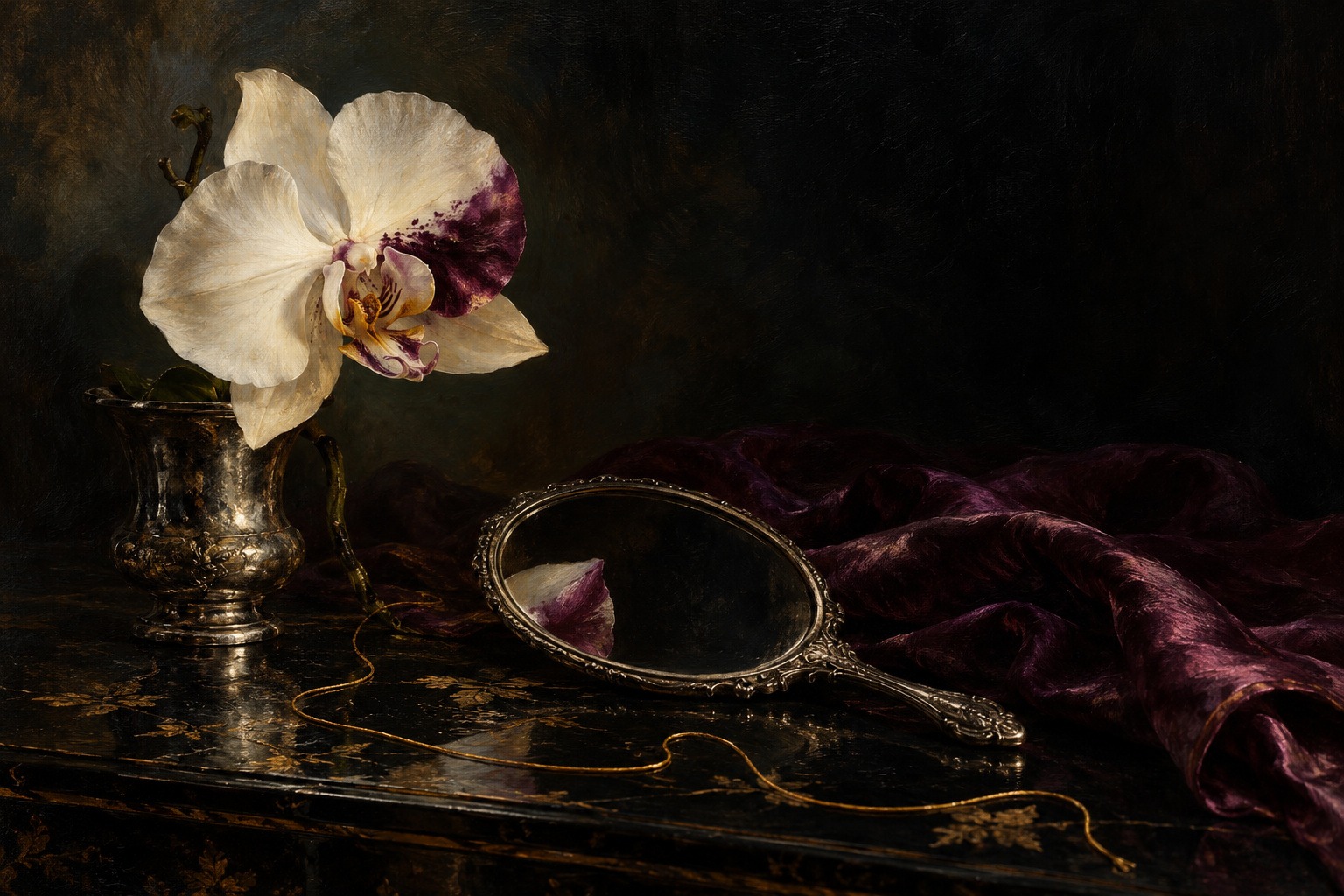
For a color study, choose a restricted relationship such as plum, tarnished gold and chalky ivory. Let one small surface catch the light while surrounding material absorbs it. A fresh flower beside a bruised petal can introduce time without relying on a skull. These are contemporary compositional exercises, not a claim that historical artists followed a fixed palette or assigned identical meanings to every object.
Symbols need a context
A mask, glove, mirror or flower can suggest an absent person, performance or fragility, but the surrounding scene determines the reading. Avoid treating motifs as a universal code. Likewise, historical depictions of desire and danger reflect particular social attitudes; their stereotypes need not become the assumptions of a new image. A restrained still life can explore artificiality and unease without reproducing a stock threatening woman.
Prompt with intention
State the medium, balance of dark and light, focal gesture and one source of tension. Ask for a patterned curtain enclosing an otherwise empty room, rather than requesting every decorative motif at once. Review generated images for coherent hands, deliberate negative space and legible ornament. The gallery pairs retained AOI imagery with new interpretations. None is presented as an authentic Beardsley work or evidence of a historical event.
About this guide
This AI-authored AOI guide appears under Penny Wraiter, AOI’s editorial persona. Sources support the historical context; exercises, prompts and poetry are original editorial interpretations. Image captions distinguish generated studies from documented works.
A small poetic detour
Original words from the AOI studio.
Poetry
The curtain curls across the light,
A glove outwaits the vanished hand;
One lily bends toward polished night,
One mirror fails to understand.
The gold has learned a darker tone,
The ink leaves half the page unsaid;
A lovely room is left alone,
Its finest guest a fallen thread.
The prompt workshop
Original creative exercises. These prompts create new illustrations, not documentary evidence.
Let the empty space speak
Original Decadent-inspired black-ink illustration: one white glove rests on the rail of an empty theater box. Dense arabesque ornament occupies the left edge; the rest opens into a large untouched ivory field. Fine sinuous contour against solid black, asymmetrical balance, implied absent figure, no lettering or copied composition.
Stage beauty under pressure
An original symbolic still life: a pale orchid, one bruised petal, a tarnished silver mirror and a folded plum silk cloth. Restrained plum, ivory and muted gold palette, shallow stage-like space, one narrow beam of light, precise tactile surfaces. Make the reflection incomplete and the atmosphere quietly uneasy, without horror effects.
Compare ornament and silhouette
Design a monochrome scene with a fully clothed adult dandy in profile beneath an oversized curling patterned curtain. Thin contours define the face, solid black shapes define the coat, and large ivory gaps isolate a drooping lily. Elegant but unsettling, clear anatomy, no text or direct imitation of a historical artwork.
A smile from the studio
Jokes
The dandy requested a more interesting silence. The room added another curtain.