
Postwar gestural abstraction
Tachisme makes the stain, splash and searching gesture central to abstract painting. Associated with postwar European abstraction, it replaces geometric planning with responsive marks whose spacing, weight and material behavior still demand careful judgment.
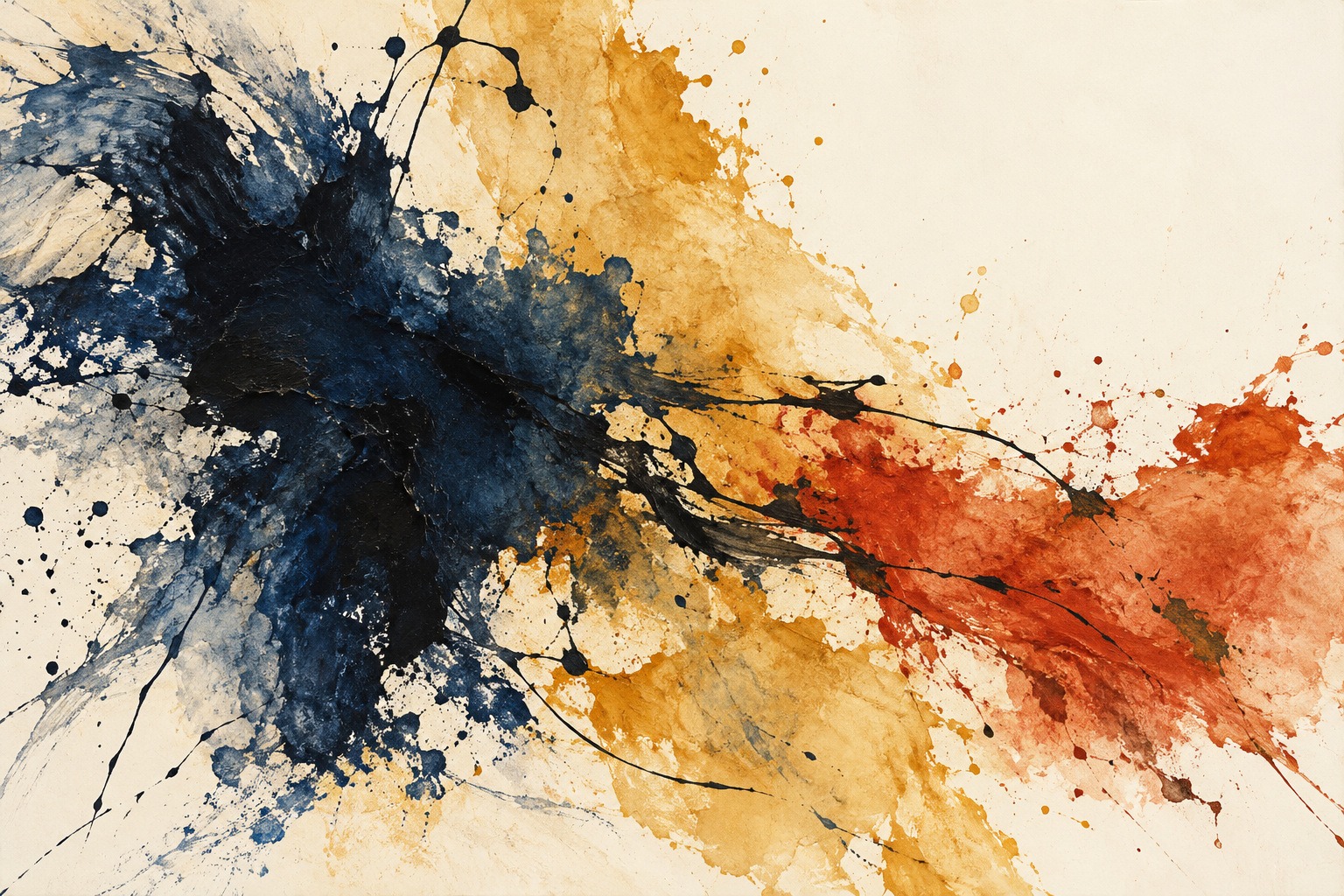
A visual introduction
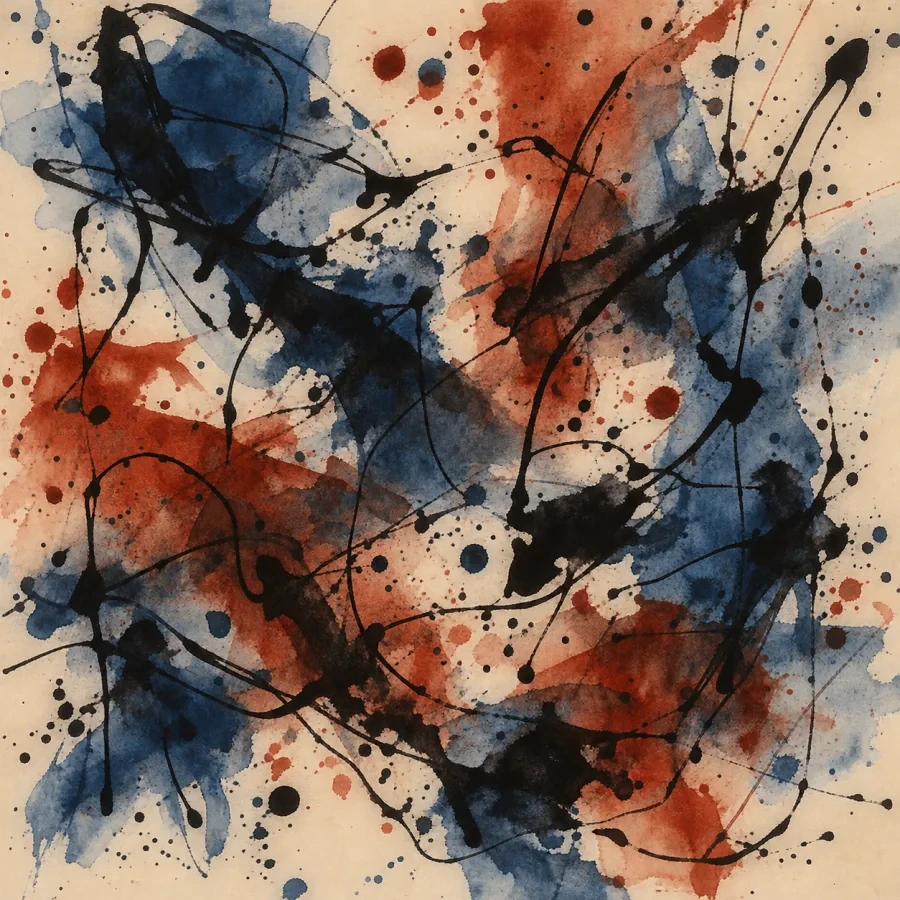
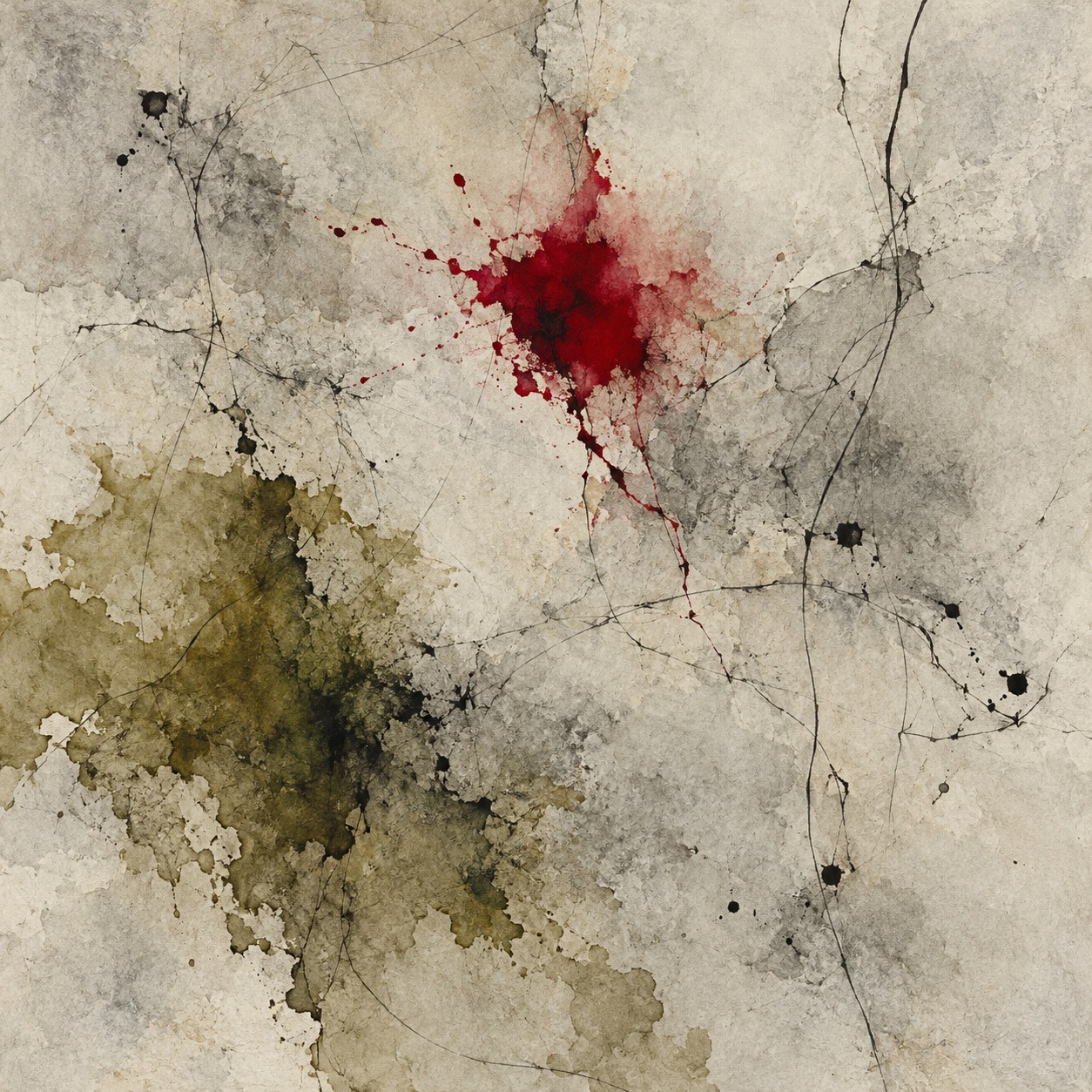
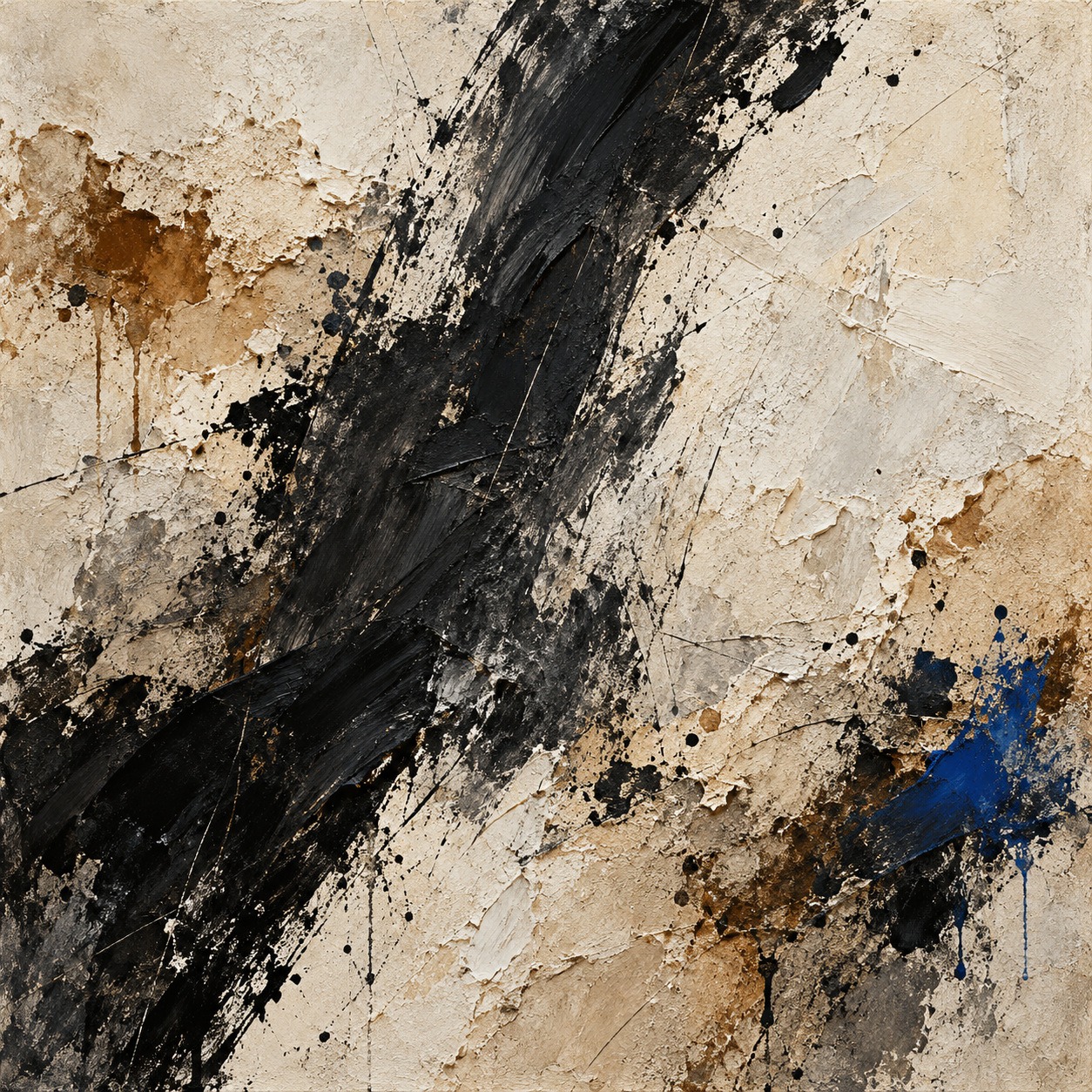
Compare stain, gesture and material across a broad color collision, a delicate ink-like study and a scraped surface. All gallery works are contemporary AOI interpretations, not authenticated historical paintings.
Select an image for a closer look. Use the thumbnails, arrow keys or a swipe to compare examples. Zoom in to inspect details, or share the image that inspires you.
Creative toolbox · take this style further
Choose an input and a destination. Search sends your words to the chosen site; Copy & open puts them on your clipboard to paste there.
Create with AI
Turn your chosen input into an image prompt or a new creative direction.
ChatGPT
Copy your input and paste it into a ChatGPT conversation or image request.
Copy & open ChatGPT (new tab)Claude · Anthropic
Develop an image prompt or explore the style in a new Claude conversation.
Copy & open Claude · Anthropic (new tab)Midjourney
Paste your input into the Imagine bar on the Create page.
Copy & open Midjourney (new tab)Adobe Firefly
Copy your input, open Firefly, and paste it into the prompt field.
Copy & open Adobe Firefly (new tab)Leonardo.Ai
Copy your input, open Leonardo, and paste it into the generation field.
Copy & open Leonardo.Ai (new tab)Image search
Find visual references. Short, concrete keywords usually work best.
Lexica
Search AI images and prompts using your selected input.
Search with this input Lexica (new tab)Pexels
Search the photo and video library. Short keywords often work best.
Search with this input Pexels (new tab)Pixabay
Search photos, illustrations and other images.
Search with this input Pixabay (new tab)Unsplash
Search photographs using the style name or your own keywords.
Search with this input Unsplash (new tab)Wikimedia Commons
Search photographs, artworks and historical images. Check each file for its source and reuse terms.
Search with this input Wikimedia Commons (new tab)Art & research
Explore artists, collections and the ideas behind a style.
Wikipedia
Search for background reading. A style may not have its own article.
Search with this input Wikipedia (new tab)WikiArt
Copy your input into WikiArt’s search to explore artists and artworks.
Copy & open WikiArt (new tab)Europeana
Paste your keywords into the search to explore European museum, library and archive collections.
Copy & open Europeana (new tab)Inspiration
Discover portfolios and visual ideas from creative communities.
Instagram hashtags
Search a hashtag made from your input: spaces and punctuation are removed. Instagram may require sign-in.
Search with this input Instagram hashtags (new tab)ArtStation
Paste your input into artwork search for concept art, environments, characters and visual development.
Copy & open ArtStation (new tab)Behance
Paste your input into project search for illustration, design and visual storytelling.
Copy & open Behance (new tab)A closer look
Pools of color, abrupt brushstrokes and fine wandering lines alternate with open ground. Unequal densities and contrasting edges matter more than a recognizable subject or a prescribed palette.
A stain becomes the subject
Tachisme names a strand of non-geometric abstraction associated with postwar Europe. Its name comes from the French tache, a stain or blot. Paint can spread, accumulate, break or trail across a surface without first describing a recognizable object. The viewer follows the behavior of marks: where pressure increased, where a wash gathered, where a line hesitated and where the surface was left alone.
The term overlaps with Art Informel and lyrical abstraction, but these labels are not a tidy set of exclusive schools. The Guggenheim describes Tachisme as a variety within the broader European Art Informel context. American Abstract Expressionism offers a useful comparison because gesture and material also matter there; the two histories should not be collapsed into a single movement with interchangeable members.
Historical context and useful reference points
The years after the Second World War brought renewed interest in abstraction grounded in gesture and material. There was no single Tachiste recipe. In the Guggenheim’s account, Antoni Tàpies received the label because of textured surfaces and pooled color that could appear accidental. His Great Painting of 1958 incorporates marble dust and sand with oil paint, making matter itself part of the image.
A different scale of attention appears in Wols’s 1947 Untitled ink drawing in the Centre Pompidou collection, catalogued under lyrical abstraction and Art Informel. Such references encourage looking beyond spectacular splashes. A small drawing and a heavy painted surface can make very different demands on the eye. Museum labels also remind us that individual works deserve precise attribution rather than being treated as generic illustrations of a keyword.
Visual grammar: weight, speed and intervals
Begin by looking at the largest light and dark relationships. A dense cluster gains force from the quieter space beside it. Thin lines can connect isolated pools; a dry stroke can interrupt a soft stain. Repeated marks create rhythm, but their scale and direction should vary enough to keep the eye moving. The edge of a stain can be as expressive as its color.
A useful exercise is to alternate three behaviors: one broad spreading wash, one decisive opaque gesture and a few small interruptions. Then stop and assess the whole. Spontaneous appearance does not require indiscriminate accumulation. If every area is equally busy, a composition can become wallpaper-like noise; removing or quieting marks may restore the tension that another splash would destroy.
Palette and material decisions
There is no mandatory Tachisme palette. Restrained earth colors and black can emphasize surface, while a single saturated red or blue creates a point of pressure. Transparent layers expose earlier decisions; opaque passages cover them. Paper encourages pooling and feathered edges, whereas a prepared canvas can support scraped paint and thicker deposits. Choose those behaviors deliberately instead of applying a uniform texture filter.
The gallery contrasts a broad color collision, a fine stain-and-line study and a heavier scraped surface. These generated interpretations are teaching examples, not historical paintings. Compare their empty spaces as closely as their marks. Ask which gesture dominates, which passage answers it and whether the smallest accents earn their place.
Prompting without reducing it to splatter
Specify the support, two or three mark behaviors, an uneven distribution of activity and a restrained color relationship. Avoid requesting every expressive effect at once. A successful generated study should suggest decisions unfolding across a surface; it should not merely scatter identical droplets. Inspect repeated shapes and digital-looking edges, and describe the result as an interpretation rather than evidence of a physical painting process.
About this guide
This AI-authored AOI guide appears under Penny Wraiter, AOI’s editorial persona. Sources support the historical context; exercises, prompts and poetry are original editorial interpretations. Image captions distinguish generated studies from documented works.
A small poetic detour
Original words from the AOI studio.
Poetry
A stain arrives before a name,
The paper drinks its broken shore;
A black line leans across the flame,
Then finds a silence worth much more.
The quickest stroke can leave a weight,
The smallest pool can turn the eye;
A mark is early, then too late—
The untouched space lets both reply.
The prompt workshop
Original creative exercises. These prompts create new illustrations, not documentary evidence.
Let one stain lead
Original Tachisme study on ivory paper: one broad indigo stain, a smaller rust-red pool, three dry black gestures and generous open ground. Irregular feathered edges, uneven rhythm, no objects, letters or signature.
Contrast speed and matter
Nonfigurative painting with one sweeping black brushstroke across chalky scraped cream and raw umber, a small cobalt accent, visible layered material and deliberate asymmetry. Avoid uniform splatter and decorative symmetry.
Work at a whisper
Intimate abstract ink study: fine wandering lines connect a crimson pool and muted olive stain on porous pale gray paper. Sparse marks, changing line pressure, quiet intervals. No identifiable landscape or text.
A smile from the studio
Jokes
The painter added one final splash. The painting requested a second opinion from the empty space.