
Animation studio companion and original observational landscape study
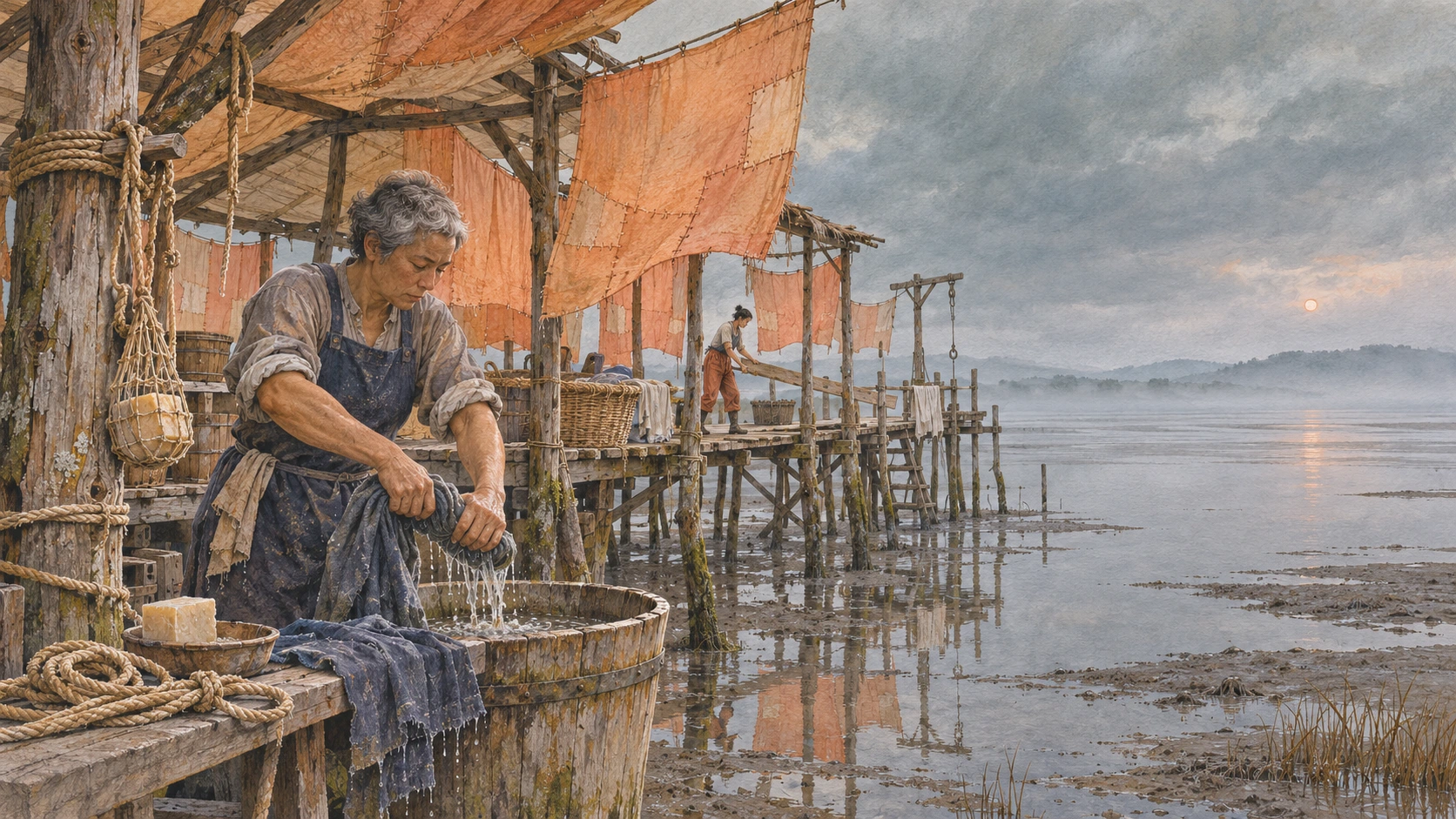
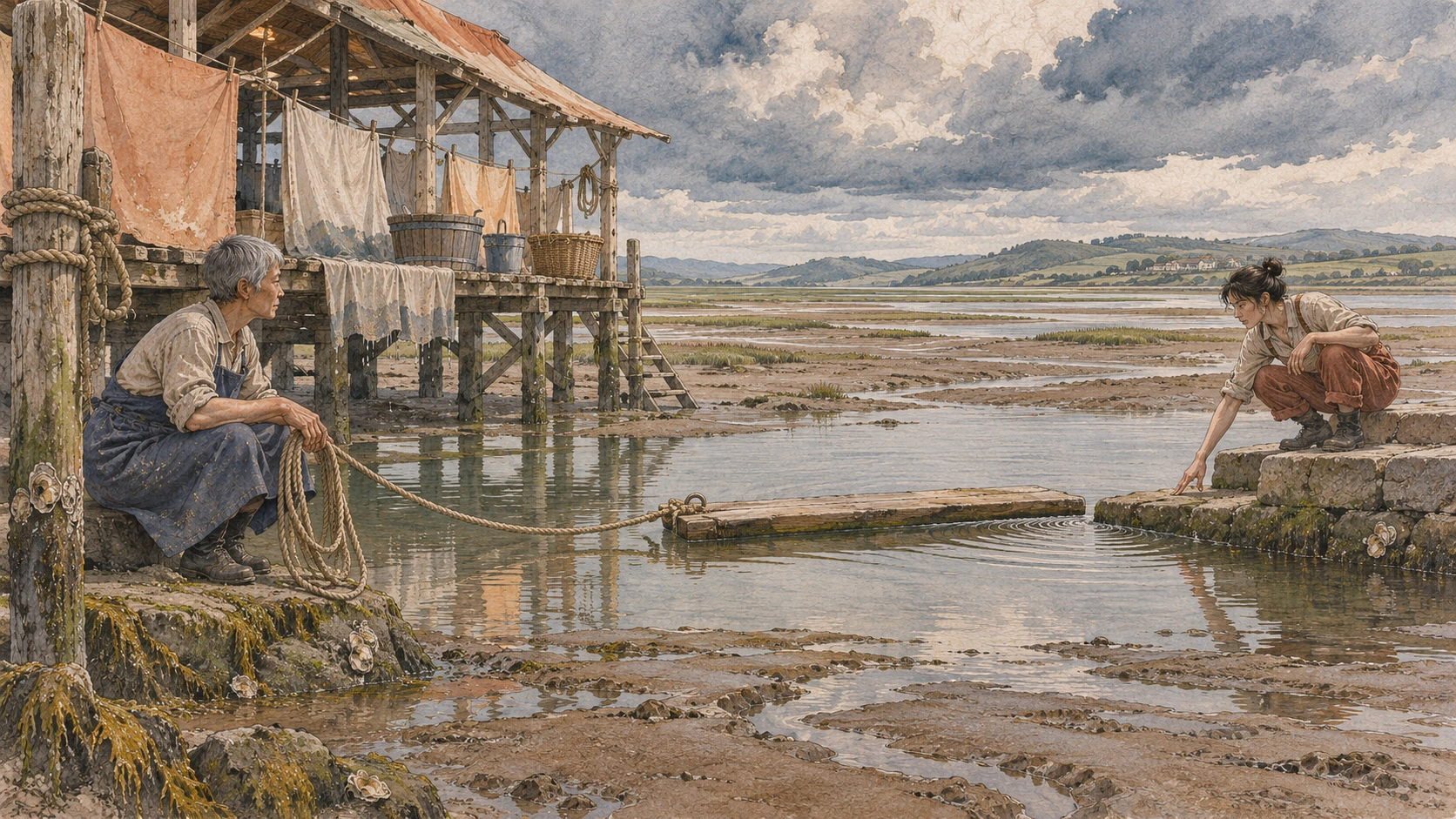
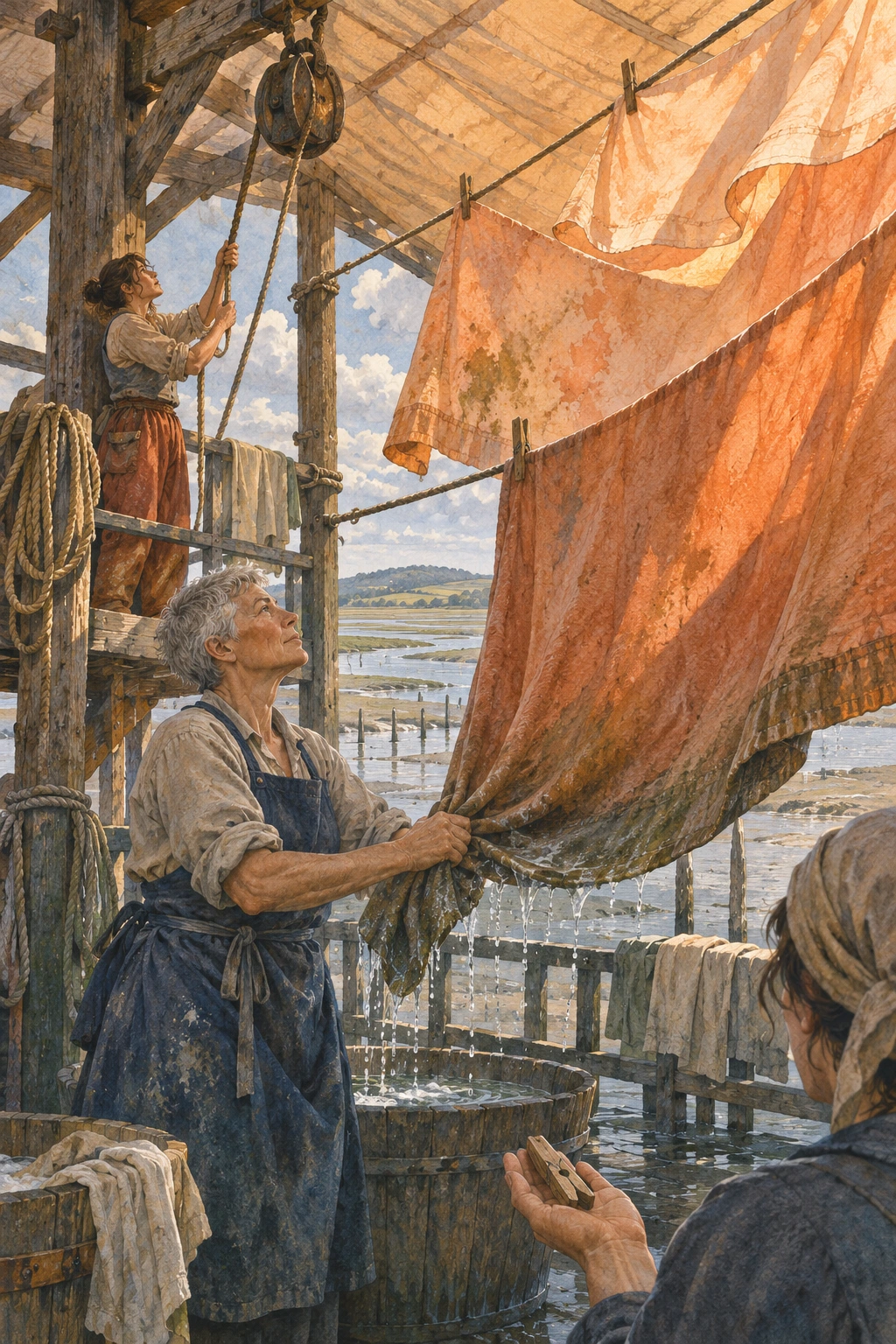
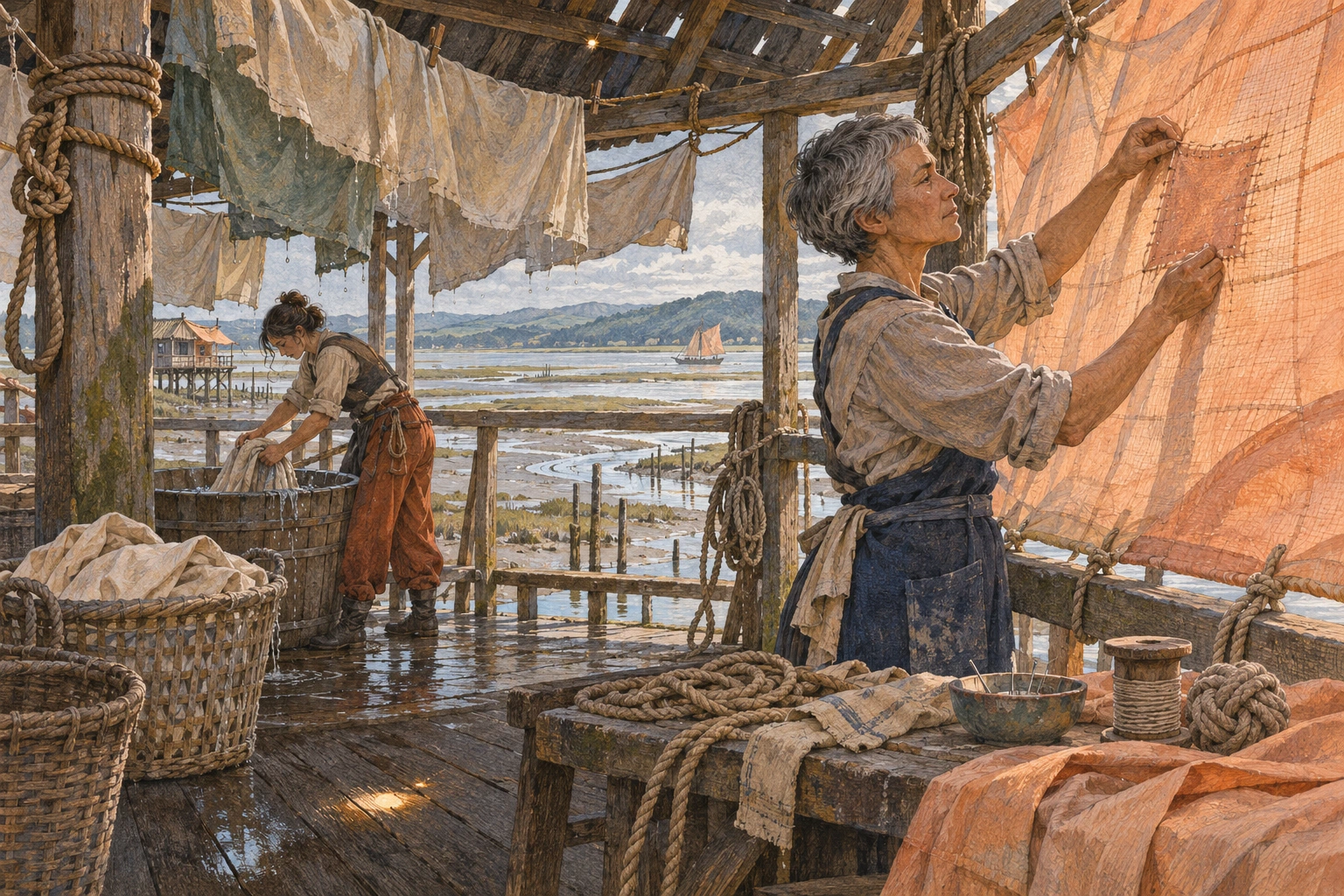
The tide keeper has time to loosen one swollen knot before the plank floats free of its step. She knows this from the post beside her. At Silt Reach, an invented estuary laundry, ordinary work supplies the clock. How much time can a still landscape give us without showing a clock face?
A visual introduction
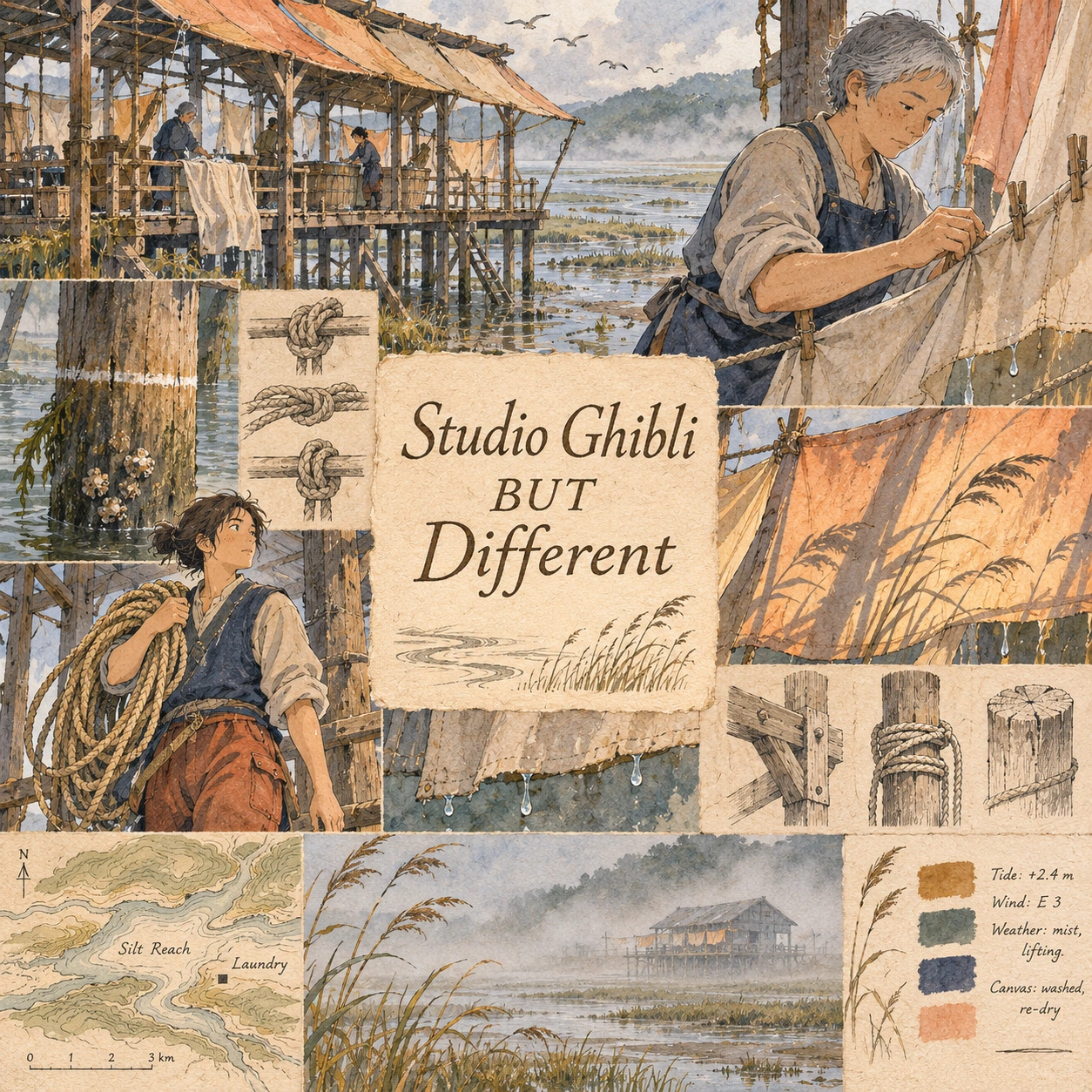
Seven original AI interpretations visit the invented Silt Reach laundry. The film records and the museum archive are the documentary references. The keeper, shed and estuary belong to this visual study.
Select an image for a closer look. Use the thumbnails, arrow keys or a swipe to compare examples. Zoom in to inspect details, or share the image that inspires you.
Creative toolbox · take this style further
Choose an input and a destination. Search sends your words to the chosen site; Copy & open puts them on your clipboard to paste there.
Create with AI
Turn your chosen input into an image prompt or a new creative direction.
ChatGPT
Copy your input and paste it into a ChatGPT conversation or image request.
Copy & open ChatGPT (new tab)Claude · Anthropic
Develop an image prompt or explore the style in a new Claude conversation.
Copy & open Claude · Anthropic (new tab)Midjourney
Paste your input into the Imagine bar on the Create page.
Copy & open Midjourney (new tab)Adobe Firefly
Copy your input, open Firefly, and paste it into the prompt field.
Copy & open Adobe Firefly (new tab)Leonardo.Ai
Copy your input, open Leonardo, and paste it into the generation field.
Copy & open Leonardo.Ai (new tab)Image search
Find visual references. Short, concrete keywords usually work best.
Lexica
Search AI images and prompts using your selected input.
Search with this input Lexica (new tab)Pexels
Search the photo and video library. Short keywords often work best.
Search with this input Pexels (new tab)Pixabay
Search photos, illustrations and other images.
Search with this input Pixabay (new tab)Unsplash
Search photographs using the style name or your own keywords.
Search with this input Unsplash (new tab)Wikimedia Commons
Search photographs, artworks and historical images. Check each file for its source and reuse terms.
Search with this input Wikimedia Commons (new tab)Art & research
Explore artists, collections and the ideas behind a style.
Wikipedia
Search for background reading. A style may not have its own article.
Search with this input Wikipedia (new tab)WikiArt
Copy your input into WikiArt’s search to explore artists and artworks.
Copy & open WikiArt (new tab)Europeana
Paste your keywords into the search to explore European museum, library and archive collections.
Copy & open Europeana (new tab)Inspiration
Discover portfolios and visual ideas from creative communities.
Instagram hashtags
Search a hashtag made from your input: spaces and punctuation are removed. Instagram may require sign-in.
Search with this input Instagram hashtags (new tab)ArtStation
Paste your input into artwork search for concept art, environments, characters and visual development.
Copy & open ArtStation (new tab)Behance
Paste your input into project search for illustration, design and visual storytelling.
Copy & open Behance (new tab)A closer look
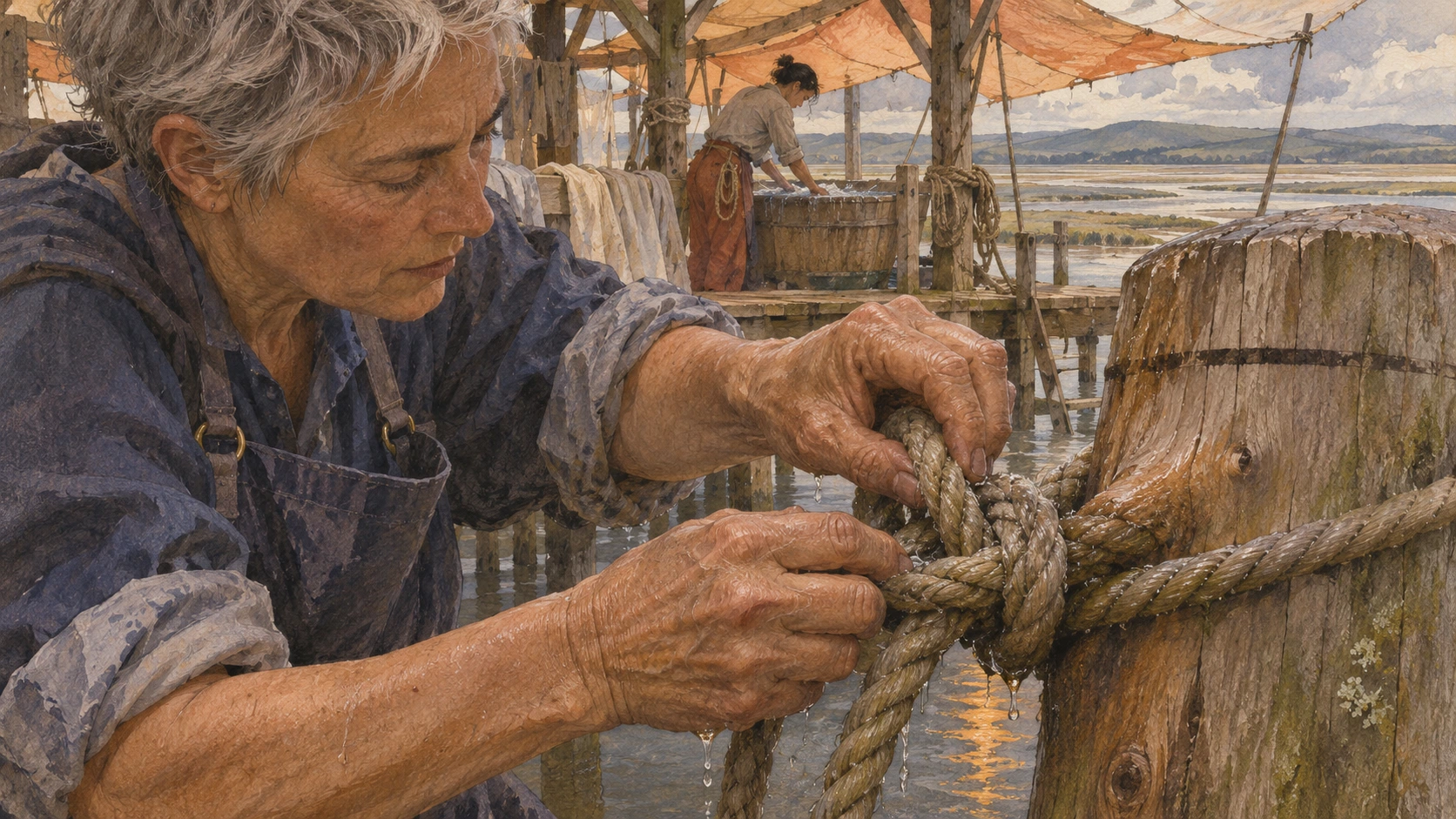
Graphite gathers at knots, pegs and the edges of work sleeves. Ochre mud and slate-green water occupy long stretches of the page. Dampness darkens a cloth hem. The hands, the post and the cloth are likely to give three slightly different answers to the question of how late it is.
A studio contains several ways of looking
Studio Ghibli credits Isao Takahata as director of Only Yesterday (1991) and Hayao Miyazaki as director of My Neighbor Totoro (1988). Those are two starting points for looking, each with its own makers and decisions. The Academy Museum’s Miyazaki exhibition also makes a distinction that matters at a drawing table. Its archival objects include imageboards, layouts and backgrounds alongside examples of finished imagery.
The broader Studio Ghibli guide introduces the studio. For this companion I gave the setting a job before giving it a mood. The laundry serves a tidal crossing. Somebody has to dry and repair its canvas screens, and somebody else needs a plank at the right height. The weather has an appointment with both.
Give time a material witness
A dark strip of wet wood above today’s water level carries a small piece of yesterday. Lay a rope over it and give the rope a pale patch where many hands have pulled. Now the board beside it can remain very simply drawn. Two precise observations are often enough to persuade the eye that the rest of the bank has been there for years.
Try a close view with a background that explains why the hand moves. A tightening loop and a submerged step belong in the same world. If the background becomes all soft nostalgia, bring back one unromantic detail, perhaps the rubbed face of a peg or a repair put in at a slightly hurried angle.
Let waiting alter the composition
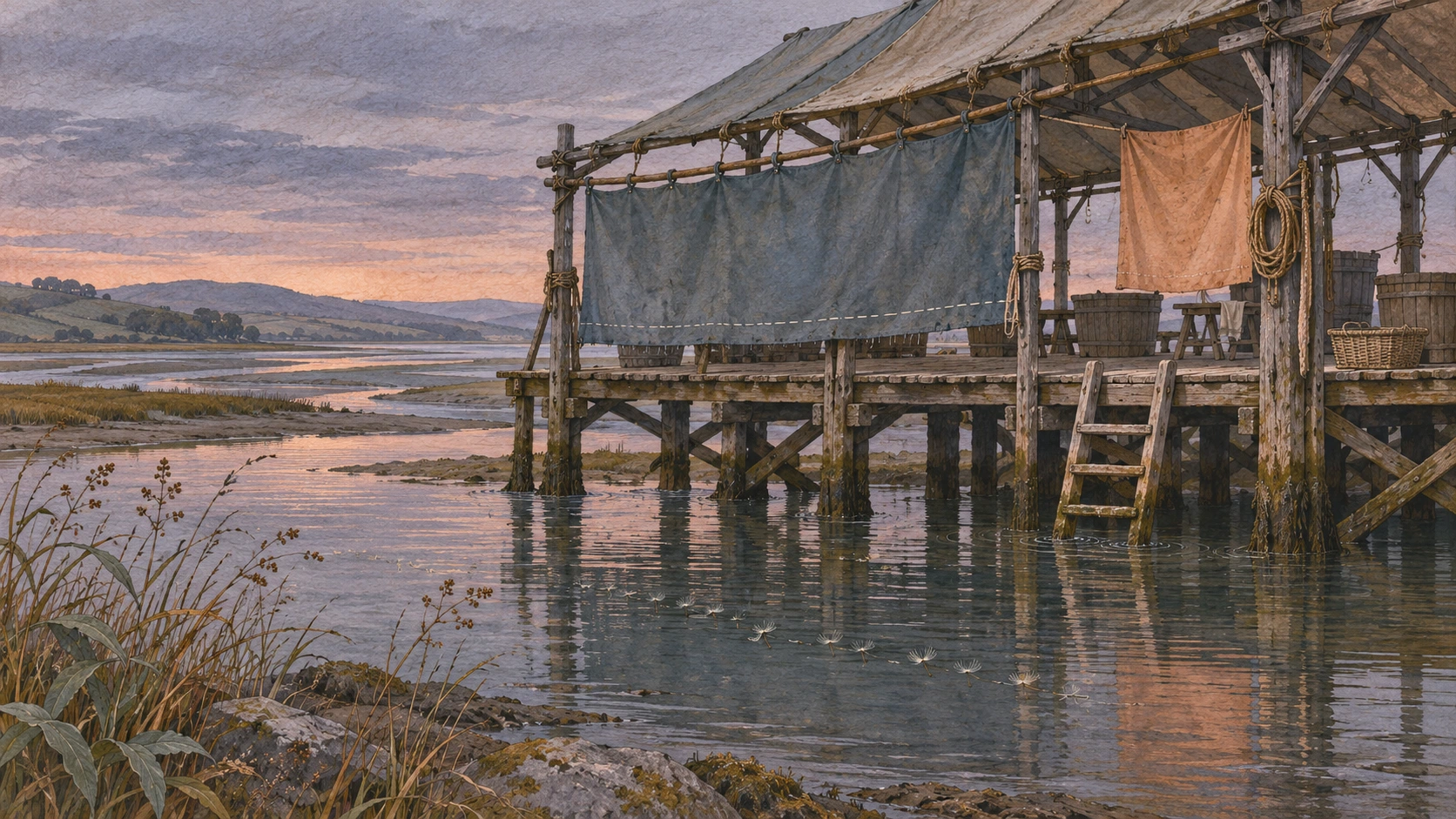
At low water there is a wide strip of mud between worker and shed. At high water the same surfaces give back the sky. Keep the camera and the building fixed while changing the ratio of solid ground to reflection. A reader can feel an afternoon pass between the two views without being told the temperature or the hour.
I particularly like the experiment of taking the workers out of the final view. Fold one corner of the canvas as somebody would fold it to keep a seam clear of spray. That is enough to leave company in an empty picture. As a workshop exercise, ask a second reader what happened here today and which detail gave them that idea.
Three readings from Penny’s desk
Positive review. The estuary becomes a place I could work in once a tide line and a rope mark account for each other. Its beauty comes partly from being intelligible to the hands.
Negative review. A field of mist is an easy substitute for looking. I would keep at least one difficult edge in every view, especially where cloth touches wet timber.
Neutral review. A reader who likes action may read the empty bank as an ending. Someone used to a tidal crossing may read it as a place waiting for the next shift. Both readings grow out of the same arrangement.
A small poetic detour
Original words from the AOI studio.
Poetry
A peg has worn a hollow in the rail.
A noon of water fills it to the brim.
The keeper puts her thumb there once in passing.
The river carries on its bit of sky.
The prompt workshop
Original creative exercises. These prompts create new illustrations, not documentary evidence.
Draw a job before the weather
Invent a stilt laundry beside a wide estuary. One keeper loosens a swollen line attached to a windscreen. Give the knot, the tide mark and the hand three different edges. Leave the far bank quiet.
Repeat one viewpoint
Draw the same plank and stone step at low and rising tide. Keep the shed posts fixed. Change the width of wet mud, the place where a ripple begins and the slack in a coil of line.
Leave evidence of a person
Paint an empty bank at dusk. Hang one recently repaired apricot cloth from a line. A short ladder, a high waterline and one turned hem should suggest a day of labour to the next person who arrives.
A smile from the studio
Jokes
The keeper’s new tide clock is a perfectly good plank. It loses a little time whenever somebody borrows it to cross the creek.